Items Similar to Large Korean Ten-Fold Floor Screen of Chinese Poem in Seal Script by Du Fu
Want more images or videos?
Request additional images or videos from the seller
1 of 16
Large Korean Ten-Fold Floor Screen of Chinese Poem in Seal Script by Du Fu
$8,000
£5,980.21
€6,898.30
CA$11,200.01
A$11,834.66
CHF 6,364.74
MX$141,682.90
NOK 79,742.78
SEK 73,032.82
DKK 51,522.24
About the Item
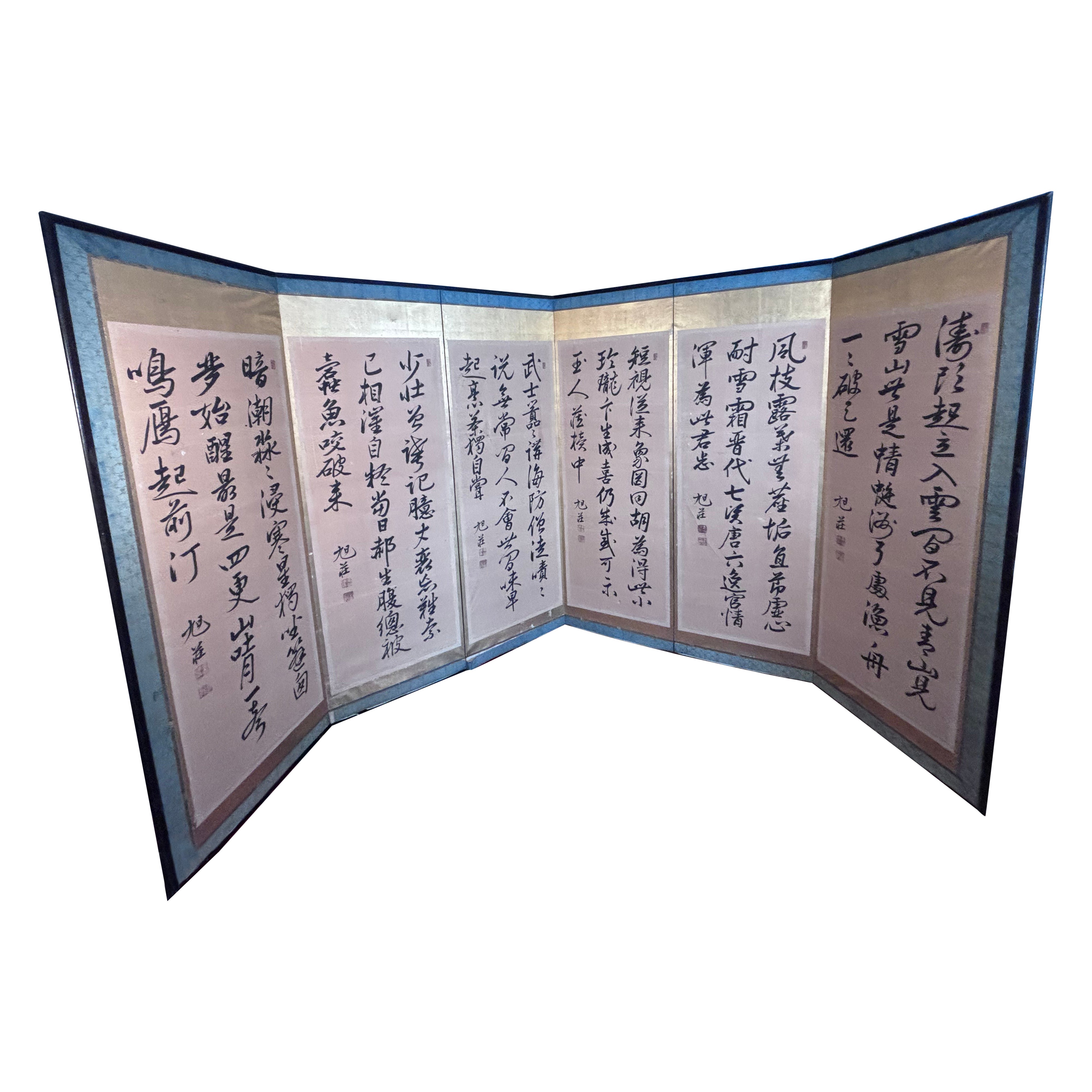
A large and striking ten-fold Korean floor screen of ink calligraphy in ancient Chinese seal script, beautifully matted with two color-way golden silk border, light wood frame and white copper corner hardware.
The calligraphy is a poem entitled "The Song of Eight Drunken Deities in Wine" by celebrated Tang Dynasty poet Du Fu (712-770). The poem is a "portrait" work of the author's eight contemporary friends who loved wine, including the most famous poet, Li Bai. These literati gentlemen, their open and free-spirited manners, reflect the mentality of the society during the peak of Tang dynasty. Distributed in ten vertical panels, the poem was written in an archaic Chinese calligraphic form call "Seal Script". The particular variation is called Small Seal, a lineage evolved within the state of Qin during the Eastern Zhou dynasty (771–221 BC). It was later standardized under the first Chinese emperor Qin Shi Huang (221–210 BC). The script is known for its more uniform form with smooth and slightly curvy strokes and beautiful archaic appearance. The calligrapher was identified as Chinese ink artist by his literary name "He Ting" (The islet where crane rests). His real name is Xue YongShun (Born 1953), who was an academically trained master of calligraphy from Beijing. The work was commissioned by the previous owner and custom mounted as a large floor screen in Korea, likely circa 1980-90s.
Impressive piece that will be the focal point of any room.
- Dimensions:Height: 74 in (187.96 cm)Width: 182 in (462.28 cm)Depth: 0.5 in (1.27 cm)
- Style:Other (Of the Period)
- Materials and Techniques:
- Place of Origin:
- Period:
- Date of Manufacture:20th Century
- Condition:Repaired: 1st left panel may have a thin crack line on border that was possibly restored. The black fabric backing the two end panels have a few small tears that stabilized with black fabric patches, which do not compromise the aesthetic appeal of the piece. Wear consistent with age and use. Overall fine condition on the front. Large and impressive presence.
- Seller Location:Atlanta, GA
- Reference Number:1stDibs: LU945046956772
About the Seller
4.9
Platinum Seller
Premium sellers with a 4.7+ rating and 24-hour response times
Established in 2006
1stDibs seller since 2010
595 sales on 1stDibs
Typical response time: 1 hour
- ShippingRetrieving quote...Shipping from: Atlanta, GA
- Return Policy
More From This Seller
View AllJapanese Gohonzon Buddhist Calligraphy Mandala Scroll Meiji Period
Located in Atlanta, GA
A Japanese sumi ink calligraphy Buddhist mandala mounted as a paper hanging scroll known as Kakejiku or sometimes Moji mandala. Termed as gohonzon in Japanese, it is a venerated object within Nichiren Buddhism (Hokkeshu; lotus sect). The originally concept was developed by the 13th century Buddhist priest Nichiren to guide the energy of the devotional chanting to...
Category
Antique Early 1900s Japanese Meiji Paintings and Screens
Materials
Paper
Japanese Gohonzon Buddhist Calligraphy Mandala Scroll Meiji Period
Located in Atlanta, GA
A Japanese sumi ink calligraphy Buddhist mandala mounted as a paper hanging scroll known as Kakejiku or sometimes Moji mandala. Termed as gohonzon in Japanese, it is a venerated object within Nichiren Buddhism (Hokkeshu; lotus sect). The originally concept was developed by the 13th century Buddhist priest Nichiren to guide the energy of the devotional chanting to...
Category
Antique 1890s Japanese Meiji Paintings and Screens
Materials
Paper
Early Japanese Gohonzon Buddhist Calligraphy Mandala Scroll Edo Period
Located in Atlanta, GA
A Japanese sumi ink calligraphy Buddhist mandala mounted as a paper hanging scroll known as Kakejiku or sometimes Moji mandala. Termed as gohonzon in Japanese, it is a venerated object within Nichiren Buddhism (Hokkeshu; lotus sect). The originally concept was developed by the 13th century Buddhist priest Nichiren to guide the energy of the devotional chanting to...
Category
Antique 1810s Japanese Edo Paintings and Screens
Materials
Paper
Rare Antique Japanese Folding Screen by Kano Tanshin
By Kano Tanshin
Located in Atlanta, GA
An exquisite Japanese folding screen painted and signed by Kano Tanshin (Morimasa) (1658-1719), circa early Edo Period. An important member of the Kano painter family, the son of Kano Tanyu...
Category
Antique 17th Century Japanese Japonisme Paintings and Screens
Materials
Brass
Korean Folding Chaekgeori Painted Scholar Floor Screen
Located in Atlanta, GA
A six-panel painted folding floor screen from Korea circa early 20th century. This type of screen is called Chaekgeori (books and things) which is quite unique to Korea. It became popular at the end of 18th century favored and encouraged by King Jeongjo (1752-1800) as a political tool to promote social conservatism such as the traditional Confucianism value, especially considered important in a time when waves of new ideology influx came to Korea. Initially commissioned for the royal court, they became increasingly popular with the scholars of noble and affluent households and were used widely in their halls and studies. Early screens were painted with trompe-l’oeil bookcases displaying books and arrays of collectibles. Later, the bookcases were eliminated to focus on the assemblage of neatly stacked books and objects of scholarly pursue. On this screen, the six panels were neatly presented and framed in woven brocade borders. Among the stacked volumes, one can find many fine porcelain vases with flowers, potted orchids, pen holders with brush pens and scroll paintings, incense burner, ink stone, teapot, fan with ink painting, vessels of fruits, exotic plants such as lotus, plumeria and even a pair of glasses. It feels like a pleasant visual measure hunting for the viewers. Several words in Chinese found their way into the picture as well, including filial (xiao), longevity (shou) and luck (fu).
The painting was done in a meticulous way with no details overlooked and also with a rather western still-life dimensional perspective. In a rather unusual maximal but also minimalistic way, the screen exudes a historical charm with a folky flair but appears modern at the same time.
Each panel is 17.5"w by 70.2"h.
For general information on the subject see reference: Chaekgeori the Power and Pleasure of Possessions in Korean Painted Screens...
Category
20th Century Korean Folk Art Paintings and Screens
Materials
Brocade, Silk, Wood, Paper
Japanese Silk Scroll Painting of Moneys Edo Period Mori Tetsuzan
Located in Atlanta, GA
A Japanese mounted vertical hanging scroll painting by Mori Tetsuzan (Japanese, 1775-1841) circa 19th century Edo period. The watercolor and ink on silk ...
Category
Antique 19th Century Japanese Japonisme Paintings and Screens
Materials
Silk, Paper
You May Also Like
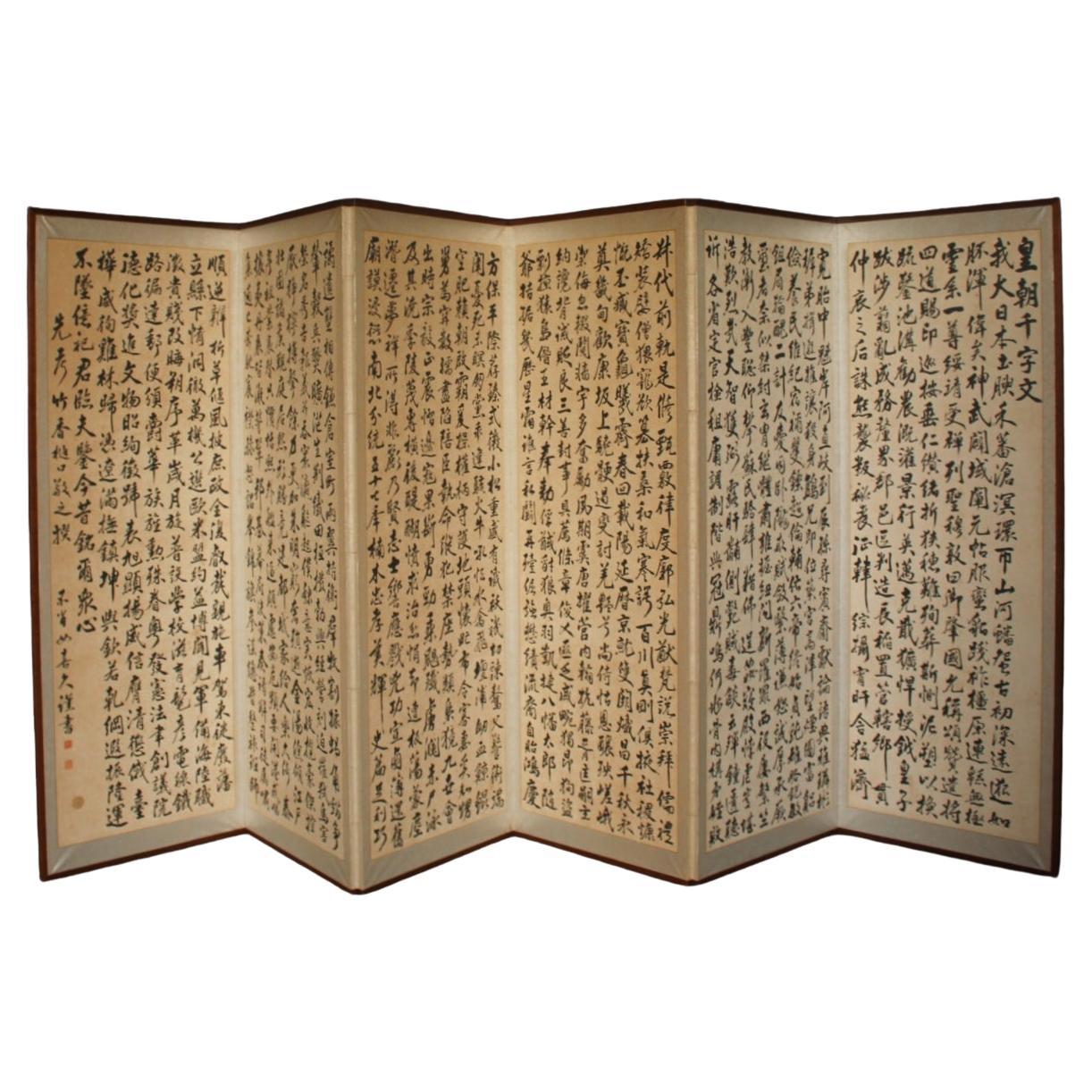
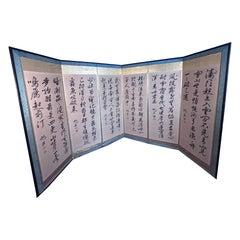
B62 Old Japanese Calligraphy Thousand Characters, folding screen, 6anel
Located in Niiza, JP
Unfolded size: 3680 x 1700 x 20 mm
Foldable: 625 x 1700 x 110 mm, 15kg
Estimated size after packaging (sandwiched between 5-10 mm plywood):
17 cm x 69 cm x 180 cm Weight 27 KG
This ...
Category
20th Century Japanese Paintings and Screens
Materials
Wood, Paper
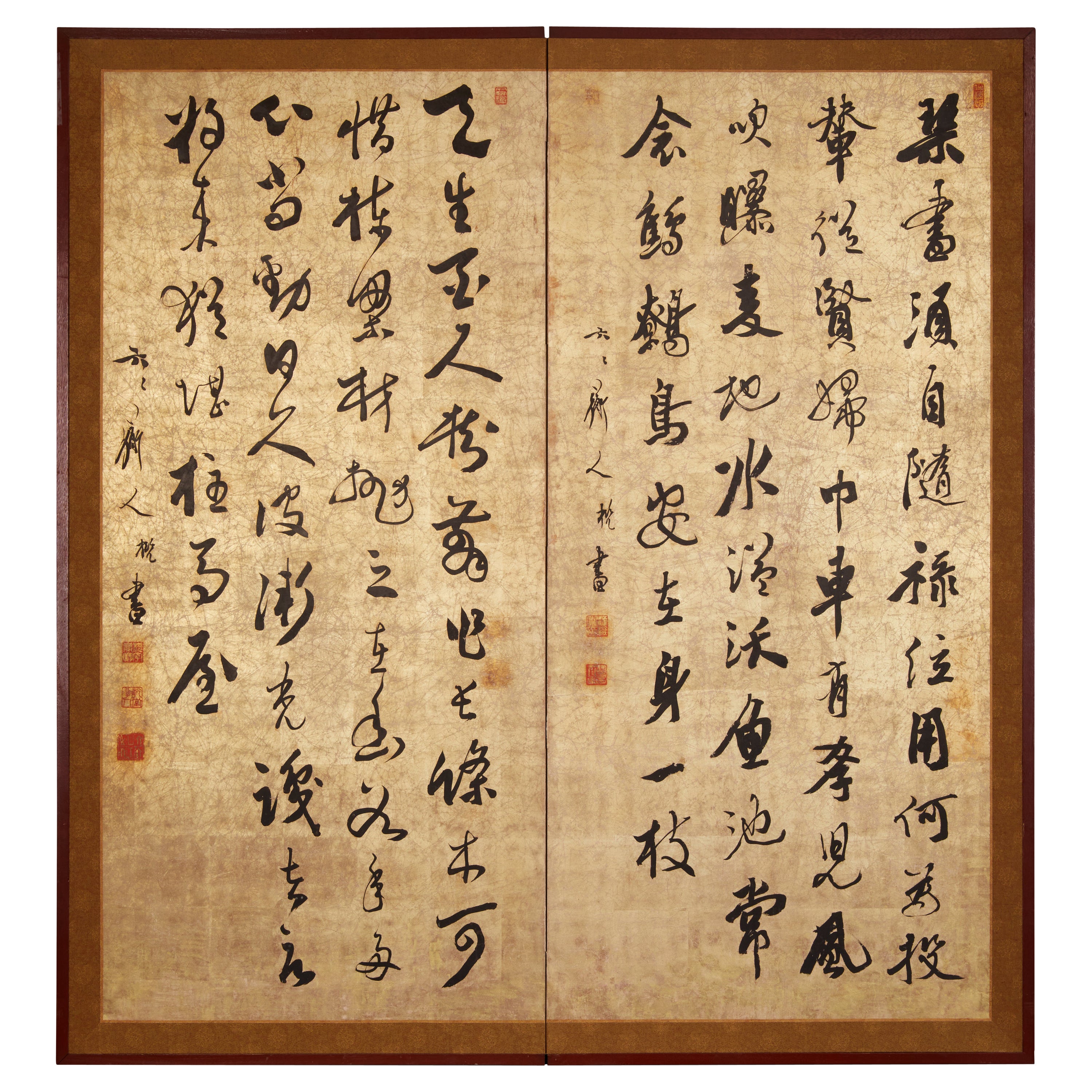
Japanese Two Panel Screen: Ink Calligraphy Poem of the Moon
Located in Hudson, NY
Poems refer to moon gazers. Ink on mulberry paper with a silk brocade border. Seals read: Roku-roku sai.
Category
Antique 19th Century Japanese Paintings and Screens
Materials
Brocade, Silk, Paper
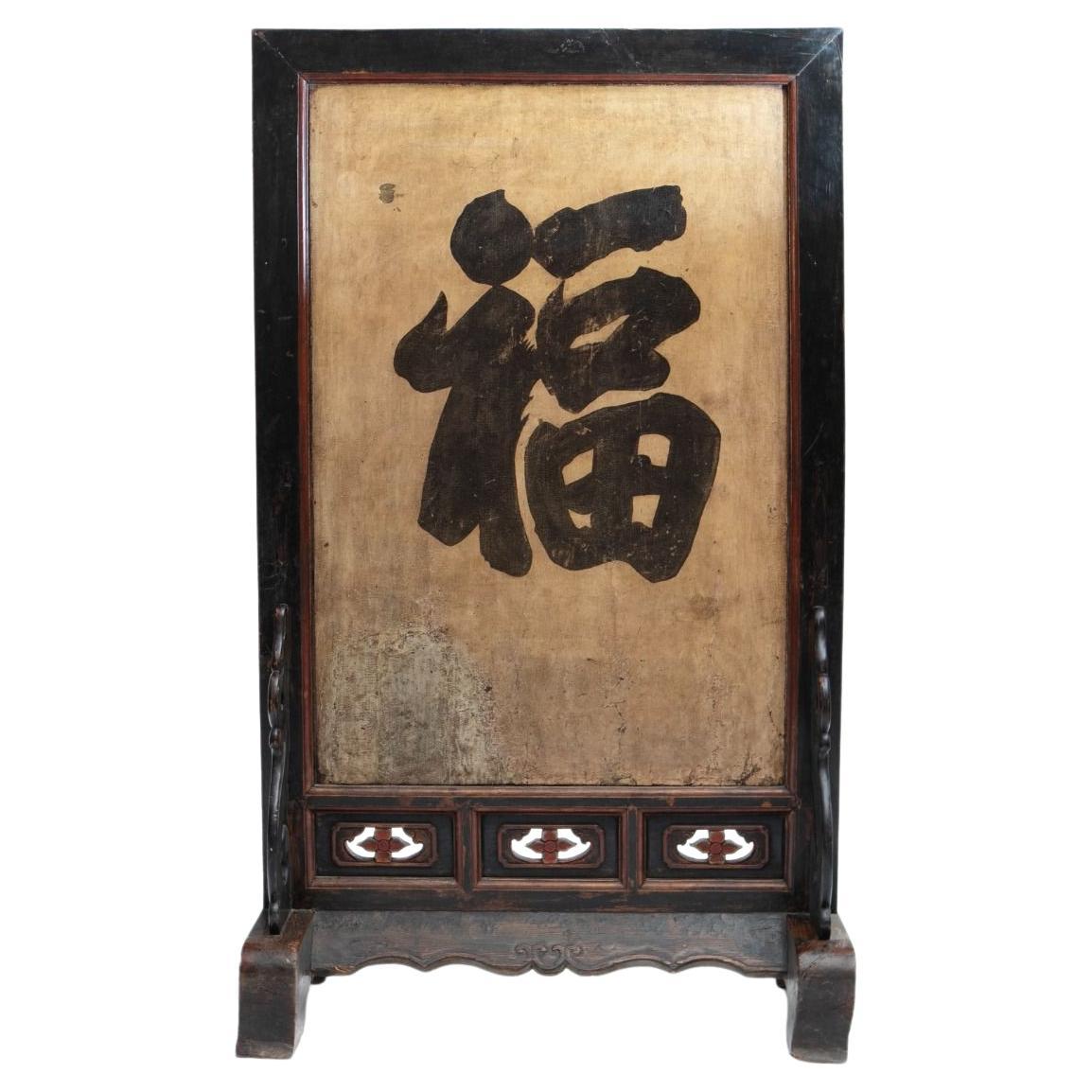
18th Century Qing Dynasty Chinese Lacquer Screen with Calligraphy
Located in Kastrup, DK
Rare 18th-Century Lacquer Screen / Room Divider, Qing Dynasty
A rare lacquer screen from the 18th century, crafted in wood.
The screen features a sturdy frame with openwork panels at...
Category
Antique Mid-18th Century Chinese Qing Paintings and Screens
Materials
Wood
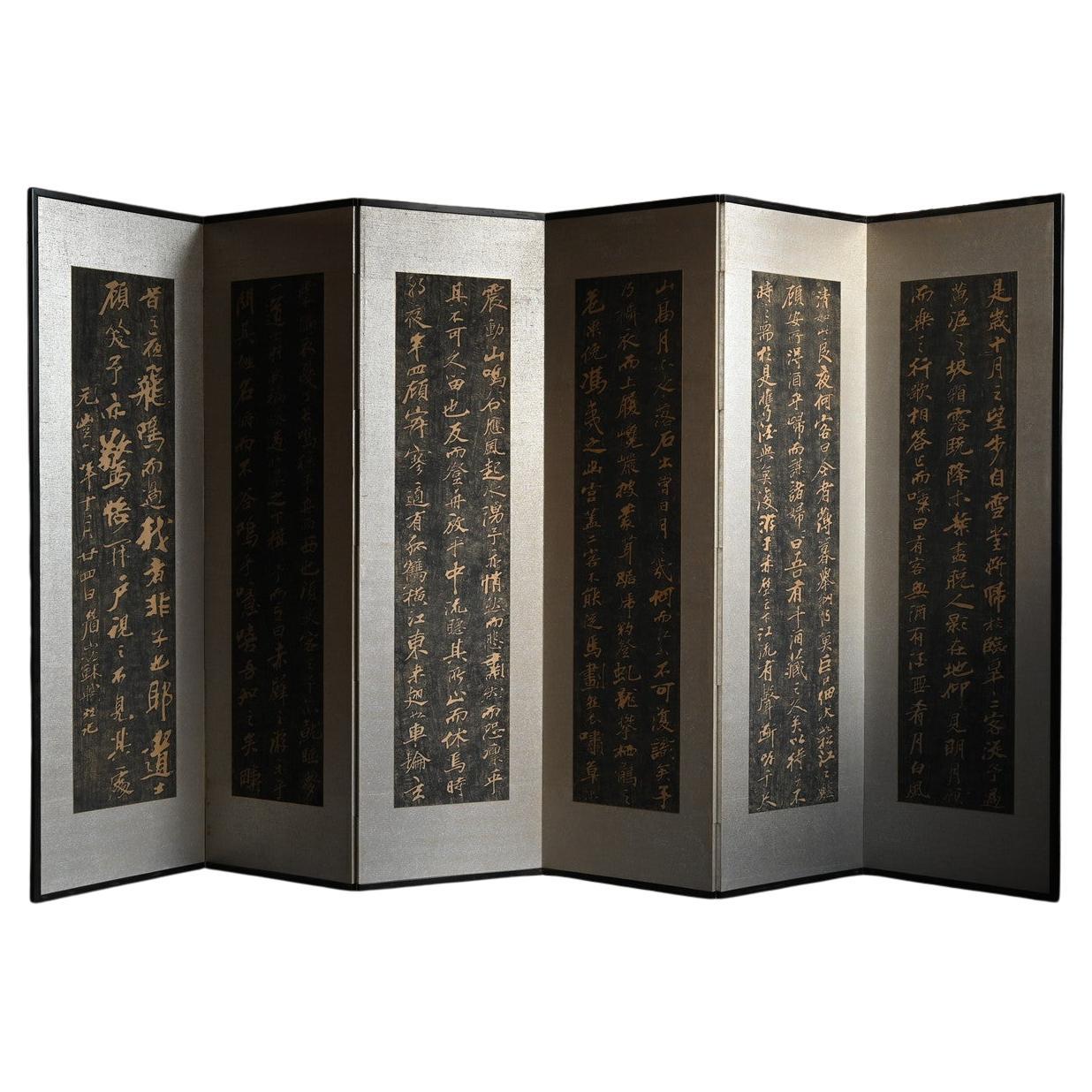
Old Japanese woodblock print folding screen/room partition/object
Located in Sammu-shi, Chiba
This is a woodblock-printed folding screen made in Japan during the Showa period, featuring writings by a Chinese calligrapher.
It is a passage from a story written by a famous Chin...
Category
20th Century Japanese Showa Paintings and Screens
Materials
Paper
Japanese Two-Panel Screen Chinese Style Painting with Calligraphy
Located in Hudson, NY
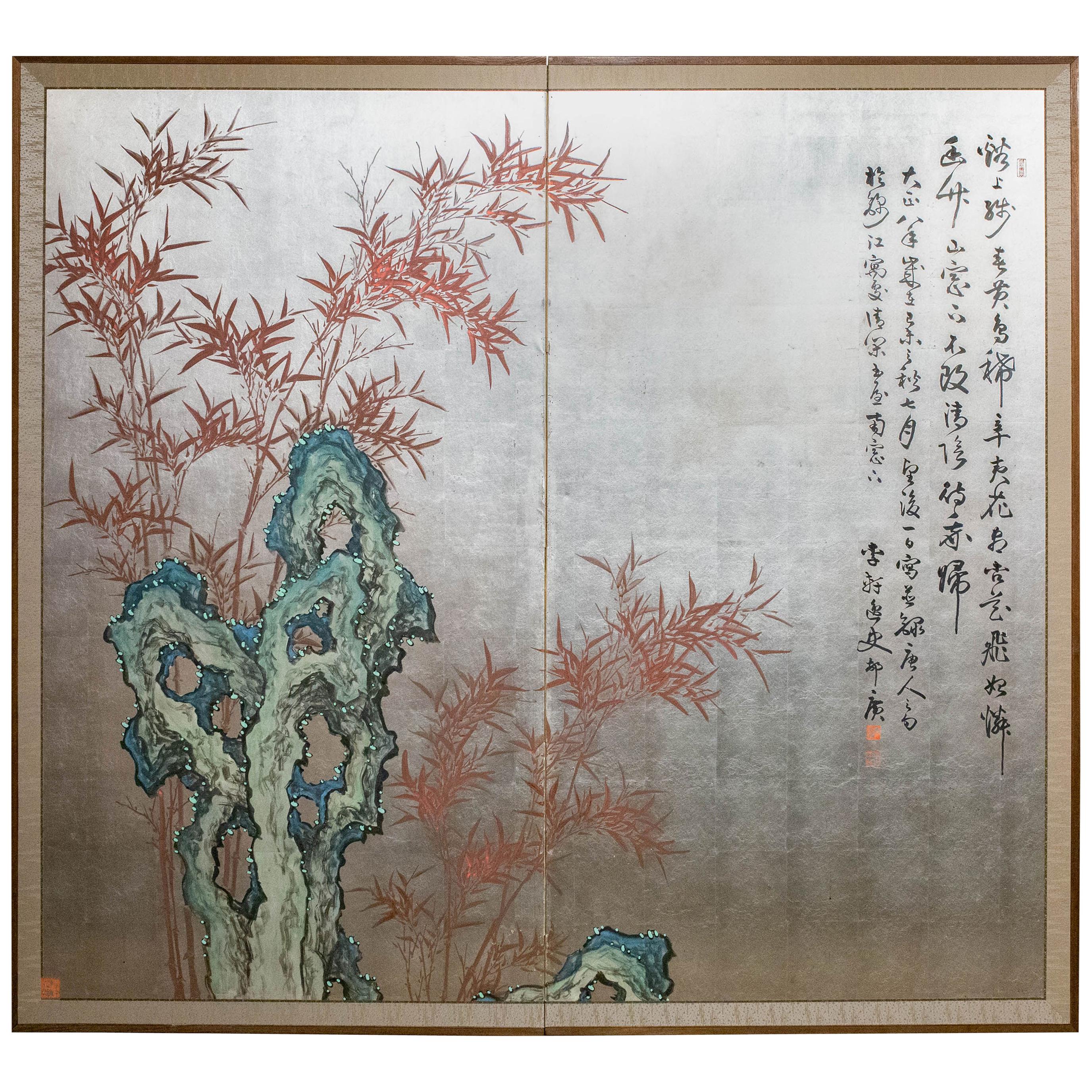
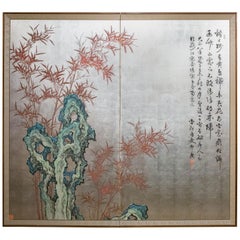
Painting of a perforated garden stone with red bamboo growing behind. Chinese zekku poem reads, "Returning home to my grass hut on a spring evening," by the Tang-poet Qian Qi. Screen...
Category
Early 20th Century Japanese Taisho Paintings and Screens
Materials
Silk, Paper, Wood
Japanese Fine Antique Screen Hand Painted "Buddhist Nature" in Sumi Ink
Located in South Burlington, VT
From our recent Japanese Acquisition Travels
Praised as "the crown of poets from the eastern lands."
Japan, a good antique six-panel screen Byobu depicting hand painted on paper w...
Category
Early 20th Century Japanese Taisho Paintings and Screens
Materials
Paper
$1,440 Sale Price
40% Off