Fabric Paintings and Screens
to
159
440
145
679
81
7
35
24
16
6
3
3
1
1
1
1
57
267
355
88
131
95
29
20
2
13
12
1
9
17
10
11
2
777
767
732
536
475
681
623
514
78
31
767
746
751
25
4
2
2
2
Material: Fabric
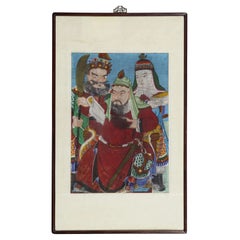
Framed Korean Folk Painting of General Guan Gong
Located in Atlanta, GA
A Korean folk Shamanism watercolor on textile matted with woven brocade and presented in a wood frame with an oriental style metal hanging hardware. The painting was estimated to be from early 20th century circa 1910-1930s. It depicts Guan Yu (160-220AD), a legendary Chinese warrior and general from Eastern Han Dynasty. Long worshiped in China as a deity, across all three major religions, Guan Gong...
Category
Early 20th Century Korean Folk Art Fabric Paintings and Screens
Materials
Textile, Brocade
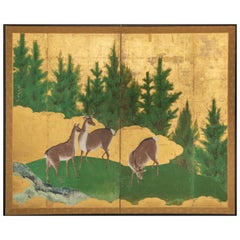
Japanese Two-Panel Screen, Deer in Cedar Landscape
Located in Hudson, NY
Originally fusuma doors, three deer stand in a clearing in a pine forest with gold leaf mist. Mid Edo period painting in mineral pigments on gold leaf wi...
Category
18th Century Japanese Edo Antique Fabric Paintings and Screens
Materials
Gold
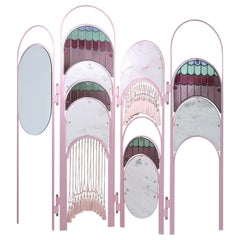
Hawa Beirut Screen by Richard Yasmine
Located in Geneve, CH
Hawa Beirut screen by Richard Yasmine
Materials: Structure in powder coated metal, brushed brass, treated pink marble, stained glass, silk
tassels, Mirror
Dimensions: H 180 x L 20...
Category
2010s Lebanese Modern Fabric Paintings and Screens
Materials
Marble, Metal, Brass

$36,613 / item
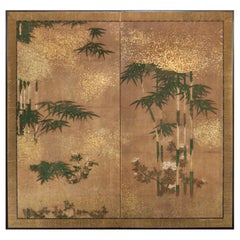
Japanese Two Panel Screen: Bamboo Grove on Mulberry Paper with Gold Dust
Located in Hudson, NY
Kano School painting of a bamboo grove with blooming flowers and gold dust mists. Painted in mineral pigments on mulberry paper with gold dust and a silk brocade border.
Category
Early 19th Century Japanese Antique Fabric Paintings and Screens
Materials
Gold
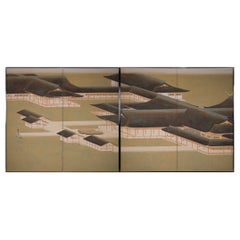
Pair of Japanese Two Panel Screens, Itsukushima Shrine in Miyajima
Located in Hudson, NY
Pigment on silk. Various walkways interconnecting the temple complex with one lone figure of a woman. Back paper is hand-stamped with mica paint. Signature and seal read: Gekkan
Category
Early 20th Century Fabric Paintings and Screens
Materials
Silk
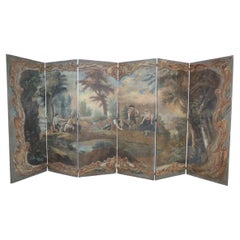
Italian Neo-Classical Style Landscape Painting 6-Paneled Folding Screen
Located in Queens, NY
Antique Italian neo-classical-style six-paneled canvas folding screen connected with brass hinges and painted with a vignette of figures at a river's edge surrounded by a painted, or...
Category
20th Century Neoclassical Fabric Paintings and Screens
Materials
Canvas, Wood, Acrylic
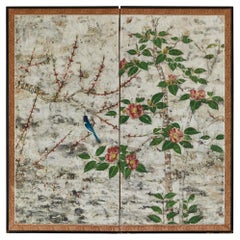
Japanese Two-Panel Screen Pink and White Magnolias in Early Bloom
Located in Hudson, NY
Japanese two-panel screen: Pink and white magnolias in early bloom, Taisho period (1912-1926) painting of Japanese magnolia tree branches as the flowers...
Category
1920s Japanese Taisho Vintage Fabric Paintings and Screens
Materials
Silk, Wood, Paper

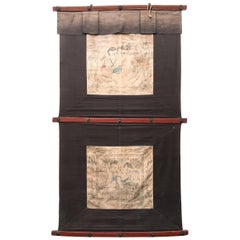
Love and Lotus Boys
Early 20th Century Chinese Folk Painting
Located in Chicago, IL
Drawn with a fine line and fresh, sketched quality, this folk hanging unites two scenes of lucky hoho lotus boys circumscribed in frames punctuated with fruits such as pomegranate, symbolic of prosperity and good fortune. On top, the two explore the natural wonders of the world...
Category
Early 20th Century Chinese Qing Fabric Paintings and Screens
Materials
Wood, Linen
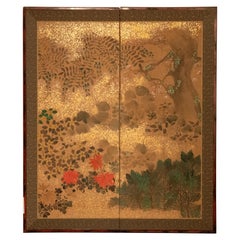
Japanese Two Panel Screen: Rimpa Flowers
Located in Hudson, NY
with gold flake design. Mineral pigments on mulberry paper, with silk brocade border, and red negoro style lacquer trim.
Category
Early 20th Century Japanese Fabric Paintings and Screens
Materials
Gold
Japanese Two Panel Screen: Floral Tarashikomi
Located in Hudson, NY
An unusual floral screen covered entirely in the tarashikomi technique of the famed Rimpa School creating an archaic feel. Mineral pigments and ink on silver with a silk brocade bord...
Category
Late 19th Century Japanese Antique Fabric Paintings and Screens
Materials
Silver
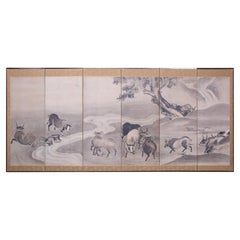
Japanese Six Panel Screen Bulls in a Gentle Landscape
Located in Hudson, NY
Sumi (ink) painting of bulls next to a stream with minimal colors on mulberry paper with silk brocade border.
Category
19th Century Japanese Antique Fabric Paintings and Screens
Materials
Silk, Paper
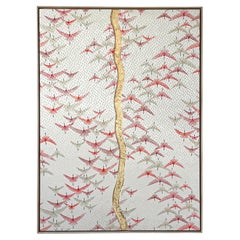
Vintage kimono textile art " Cranes ~ Kintsugi ~ " by ikasu White Red Gold Japan
By Kimono ikasu
Located in Setagaya City, JP
<
The frame for this work is made of paulownia wood taken from antique Kiritansu - chest-of-drawers for kimono.
I use antique kiritansu that can’t be used as furniture anymore to create basis and frames for my works. It adds them even more authentic atmosphere of traditional wabisabi spirit. Can you feel it?
The piece uses the concept of "kintsugi" - it "unites" the pieces of antique kimono back together with golden leaf to give it a second wind as art work.
<< Period / Story
The kimono used in this piece was originally crafted during the late Showa period (1960-80ies).
<< Explanation and meaning of pattern and colors
The Japanese saying goes, "A crane lives a thousand years, a tortoise lives ten thousand years," making cranes a symbol of longevity.
Cranes are also known for staying with the same partner for their entire lives, which is why they are often used at weddings and other celebrations to symbolize "marital bliss" and the desire for harmony between husband and wife.
On this particular piece, cranes are flying through snow woven on the fabric, as if they are overcoming all the disasters to get to their beloved ones.
The color scarlet, or deeply dyed red, used for the most of the cranes here, has long been associated with the meaning of "warding off evil." It is believed to possess the power to repel malevolent forces and invite good fortune.
During the Heian period, scarlet was reserved for sacred buildings and ceremonial objects that held great significance. Ordinary people were prohibited from wearing scarlet-red kimonos, which made it a highly special color.
<< Characteristics of the fabric
Cranes, going up and down, are generously decorated by kimpaku here. "Kimpaku" (金箔) refers to gold leaf/foil in Japanese. Gold leaf is a traditional material used in various aspects of Japanese culture, including art, crafts, and even in culinary applications.
In traditional Japanese art, gold leaf is often applied to religious objects, sculptures, paintings, and lacquerware to create a luxurious and decorative effect. The use of gold leaf in art dates back centuries and is associated with a sense of wealth, prestige, and the divine.
Traditional kimpaku technique is used here to make an accent decoration in the middle.
<< About the frame
This artwork frame is crafted from paulownia wood, a uniquely Japanese material closely tied to the world of kimonos, and it serves to convey the refined beauty of Japanese nature.
Paulownia wood is known as the lightest wood in Japan, prased for its natural luster, resistance to moisture, and resilience against cracking. Since ancient times, it has been used in crafting furniture, chests, and musical instruments.
Paulownia wood is closely linked to kimono culture. During the Edo period, it became customary to store cherished kimonos in paulownia chests...
Category
Late 20th Century Japanese Japonisme Fabric Paintings and Screens
Materials
Gold Leaf
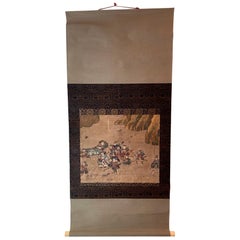
Antique Japanese Hanging Scroll Attributed to Iwasa Matabei
Located in Atlanta, GA
An antique ink and color on paper hanging scroll (kakejiku) with brocade border. It appears to be a fragment of a larger hand scroll depicting a procession of a lord with his entoura...
Category
Early 17th Century Japanese Japonisme Antique Fabric Paintings and Screens
Materials
Silk, Paper
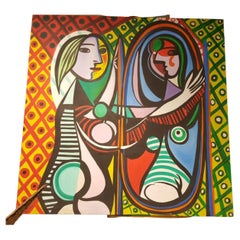
1946 Vintage Ray Martinez Oil on Canvas Rendering of the Girl before a Mirror
Located in Monrovia, CA
1946 Vintage Ray Martinez oil on canvas rendering of the girl before a mirror.
1946 oil on canvas rendering by artist Ray Martinez during Picas...
Category
Mid-20th Century Mexican Modern Fabric Paintings and Screens
Materials
Canvas, Paint
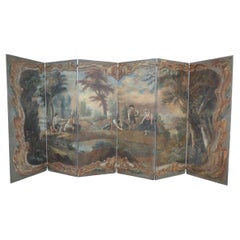
Italian Neo-Classical Style Landscape Painting 6-Paneled Folding Screen
Located in Queens, NY
Antique Italian Neo-Classical-style six-paneled canvas folding screen connected with brass hinges and painted with a vignette of figures at a river's edge surrounded by a painted, or...
Category
20th Century Neoclassical Fabric Paintings and Screens
Materials
Canvas, Acrylic, Wood
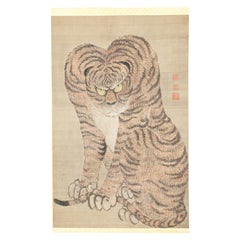
Large Japanese Scroll of a Tiger
Located in Hudson, NY
Wonderfully large and bold tiger painted in ink and mineral pigments on silk mounted with silk brocade border. Seal reads: Miyaguchi (alternative reading: ...
Category
Early 1800s Japanese Edo Antique Fabric Paintings and Screens
Materials
Silk
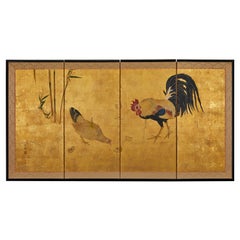
Japanese Four Panel Screen: Family of Chickens
Located in Hudson, NY
Meiji period painting (1868 - 1912) of rooster, hen, and chicks in mineral pigments and ink on mulberry paper with silk brocade border. Signed Soken.
Category
19th Century Japanese Antique Fabric Paintings and Screens
Materials
Brocade, Silk, Paper
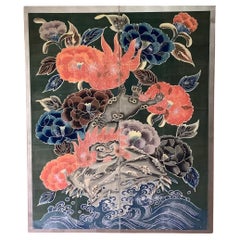
Late Edo period Tsutsugaki 筒描 Auspicious Shishi Batik Screen
Located in Fukuoka, JP
Auspicious Shishi Batik Screen
Period: Late Edo
Size: 145x173 cm (57x68 inches)
SKU: PTA62
Step into the mythical world of late Edo Japan with our radiant batik screen depicting the...
Category
19th Century Japanese Edo Antique Fabric Paintings and Screens
Materials
Cotton, Wood
$2,690 Sale Price
50% Off
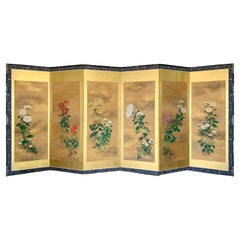
Meiji Chrysanthemum Masterpiece
Located in Fukuoka, JP
Step into a world of timeless beauty with our exceptional six-panel screen from the Edo-Meiji period. In impeccable condition, each panel features stunning paintings of chrysanthemum...
Category
19th Century Japanese Meiji Antique Fabric Paintings and Screens
Materials
Gold
$4,624 Sale Price
40% Off
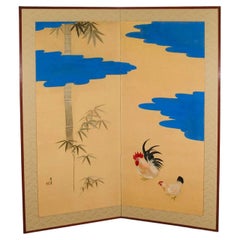
Japanese Meiji Two-Panel Embroidery Screen w/ Rooster and Chicken, Ca. 1890s
Located in New York, NY
Japanese Meiji Period Two-Panel Embroidery Screen with Rooster and Chicken, Ca. 1890s
Meiji Period (1868-1912) – Ca. 1890/1910
Signed
DIMENSIONS
Width: 60 inches
Heigh...
Category
1890s Japanese Japonisme Antique Fabric Paintings and Screens
Materials
Silk
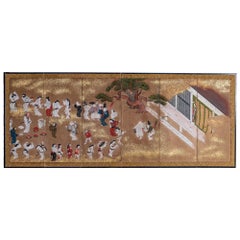
Japanese Six Panel Screen: Tosa School Painting of Theatre Scene
Located in Hudson, NY
with thought to be Izumo no Okuni (1578-1613). Mineral pigments and gold dust on mulberry paper with silk brocade border.
Category
18th Century Japanese Antique Fabric Paintings and Screens
Materials
Gold
K18 Japanese Antiques A Silk hanging scroll, Lion painted
Located in Niiza, JP
Color on silk, Scroll head: Wood
Image size: 420(W) x 1160(H) [mm]
Scroll mounting: 570(W) x 1930(H) [mm]
Box size: 80(W) x 80(H) x 660(D) [mm] 900g
Estimated packing size: 150(W) x ...
Category
20th Century Japanese Fabric Paintings and Screens
Materials
Silk
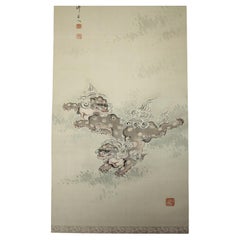
A Burmese painting showing a colourful scene of a a ceremonial celebration
Located in Central England, GB
This most eye catching piece of fine artwork dates to circa 1930 and is a Burmese painting on fine canvas laid onto a card and shows a kaleidoscope typ...
Category
Mid-20th Century Burmese Primitive Fabric Paintings and Screens
Materials
Canvas, Wood

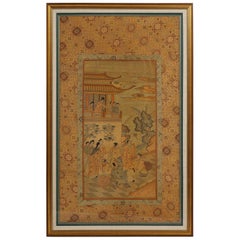
Chinese Silk Woven Panel
Located in Lyndhurst, NJ
The silk woven panel depicting a scene of figures in and around a courtyard. The central panel having a separate woven border and all mounted in a giltwood...
Category
Late 19th Century Antique Fabric Paintings and Screens
Materials
Silk
$1,600
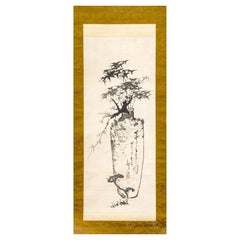
Antique Japanese Ink Hanging Scroll Hidaka Tetsuo with Wood Storage Box
Located in Atlanta, GA
A hanging ink (Sumi-e) silk scroll by Japanese Zen artist Hidaka Tetsuo (1791-1871). Well presented in brocade boarders and mounted on paperback, this scroll depicts "Three Noble Friends in Winter" in a poetic and novel way. One of the favorite subjects by Chinese painters, the three noble friends in winter consists of pine, bamboo and plum flowers. They were admired for their characters of strength in cold resistance to remain evergreen and even blossom in unfavorable condition. The artist, however, composited the subjects in a none-conventional way as Ikebana. Bamboo and flowering plum branches were presented in an oversized pot...
Category
19th Century Japanese Japonisme Antique Fabric Paintings and Screens
Materials
Brocade, Wood, Paper
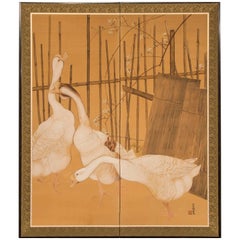
Japanese Two-Panel Screen: Geese in a Country Setting
Located in Hudson, NY
Country farm geese with early spring blossoms and a bamboo fence. Beautiful details on the feathers. Signature and seal read Keibo Joshi (Ms. Keibo) min...
Category
Early 20th Century Japanese Meiji Fabric Paintings and Screens
Materials
Silk, Wood, Paper
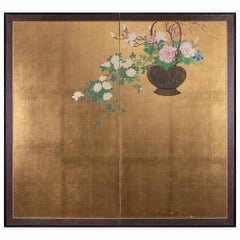
Japanese Two-Panel Screen Ikebana on Gold
Located in Hudson, NY
Japanese two-panel screen: Ikebana on gold. Meiji period (1868-1912) painting of a basket with beautifully arranged spring flowers in the style of ikebana (Japanese traditional flowe...
Category
Late 19th Century Japanese Meiji Antique Fabric Paintings and Screens
Materials
Gold Leaf
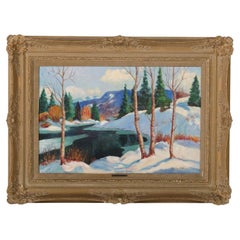
Oil On canvas Signed By Anita McNamee, Winter Snow Landscape
Located in West Palm Beach, FL
This is an original painting, oil on canvas by Anita McNamee (FL, Circa mid 20th century.)
This is a post impressionism Winter Snow Landscape wi...
Category
Mid-20th Century American Prairie School Fabric Paintings and Screens
Materials
Canvas, Wood, Paint
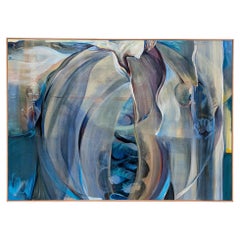
Abstract Expressionist Oil Painting,
Africa
by Mary H., Framed Canvas, 1988
Located in Rancho Cucamonga, CA
An elegant Vintage Original abstract canvas painting crafted in oil on canvas with a A monumental abstract painting titled Africa, signed and dated 1988 by an artist whose signature reads “Mary Heel—”. Executed in sweeping layers of blue, gray, and ochre, the work captures a powerful sense of rhythm and organic motion that feels at once bodily and elemental.
The composition unfolds in dynamic curved planes that suggest both landforms and the human form—evoking themes of ancestry, creation, and interconnectedness. Within these flowing shapes, subtle figural details emerge: a mask-like visage recalling African fertility sculpture...
Category
Late 20th Century American Post-Modern Fabric Paintings and Screens
Materials
Canvas
Japanese Two Panel Screen: Trees in Floral Landscape
Located in Hudson, NY
Japanese Two Panel Screen: Trees in Floral Landscape, Edo period painting (mid 19th century) of pine and other trees amongst flowers, with bamboo shoots on the right panel, and white...
Category
Mid-19th Century Japanese Antique Fabric Paintings and Screens
Materials
Gold Leaf

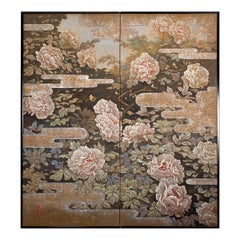
Japanese Two Panel Screen Peonies In the Mist
Located in Hudson, NY
Japanese Two Panel Screen: Peonies In the Mist. Showa period (1926 - 1945) painting in oil on canvas of peonies with gold and silver dust clouds. Signature reads, Seishu.
Category
1930s Japanese Showa Vintage Fabric Paintings and Screens
Materials
Gold Leaf, Silver Leaf
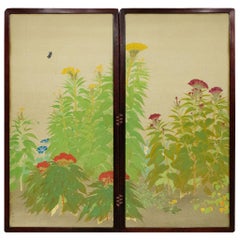
Japanese Two-Panel Screen, Cockscomb and Morning Glories
Located in Hudson, NY
Nihonga style, finely painted spring flowers with a dragonfly detail in mineral pigments on silk. Signed and sealed: "Seichu". Real name: Aoki Keinosuke (1891-1973), born in Kyoto, s...
Category
Early 20th Century Japanese Fabric Paintings and Screens
Materials
Cotton, Silk, Lacquer
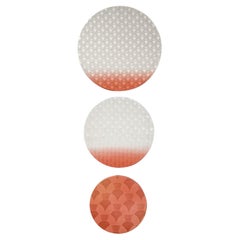
Vintage kimono textile art " Plum Gradation " by ikasu Pink White Japan
By Kimono ikasu
Located in Setagaya City, JP
This canvas featuring a plum color gradient kimono showcases a unique decorative variation of the popular seigaiha (青海波) sea waves pattern.
The artwork got a Mr.
Mrs. Abe Arts ...
Category
1980s Japanese Japonisme Vintage Fabric Paintings and Screens
Materials
Canvas, Silk
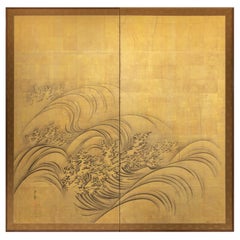
Japanese Two Panel Screen: Waves on Gold
Located in Hudson, NY
Ink on gold leaf with a silk brocade border. Signature reads: Nakajima Raishou (1796-1872). Student of Maruyama Okyo (one of Japan's most famous artists).
Category
Mid-19th Century Japanese Antique Fabric Paintings and Screens
Materials
Brocade, Silk, Paper
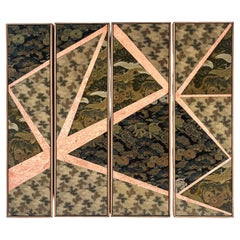
19th Century obi textile art " Pine forest ~ Longivety ~ " by ikasu Green Japan
By Kimono ikasu
Located in Setagaya City, JP
<< Story behind the work
Obi fabric I used for this artwork is taken from three different over 100-years-old antique sashes, and is framed in wood taken from antique ...
Category
Early 20th Century Japanese Japonisme Fabric Paintings and Screens
Materials
Gold Leaf
Large Antique Zen Japanese Ink Scroll After Sesson Shukei
Located in Atlanta, GA
A Japanese Sumi ink painting with light color wash mounted with brocade borders as a hanging scroll (Kakejiku). The painting depicts the famously eccentric Buddhist monks Hanshan and Shide (known in Japan as Kanzan and Jittoku). Often as a pair, they have been a popular motif in Japanese Zen painting...
Category
18th Century Japanese Japonisme Antique Fabric Paintings and Screens
Materials
Silk, Paper
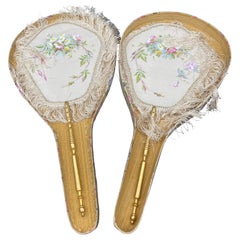
19th Century a Pair of Chinese Silk Fans with Giltwood Handles
Located in Brea, CA
Antique 19th century hand painted floral motifs on silk Chinese fans Qing dynasty, the fan in silk with silk fringe and giltwood handles, housed within a conforming paper covered box...
Category
Late 19th Century Chinese Qing Antique Fabric Paintings and Screens
Materials
Silk
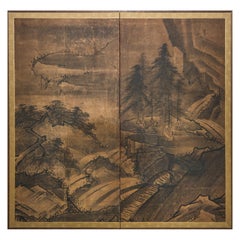
Japanese Two Panel Screen Suiboku Landscape in Sesshu Style
Located in Hudson, NY
Suiboku is a style of ink painting that is reminicent of the way calligraphers paint. Masterfully painted Muromachi Period (1336-1573) painting, unique in style and strength for the period with very bold lines. Sesshu Toyo...
Category
16th Century Japanese Antique Fabric Paintings and Screens
Materials
Silk, Paper
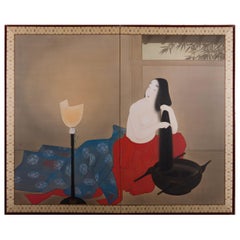
Japanese Two-Panel Screen Woman Washing Her Hair by Candlelight
Located in Hudson, NY
Japanese two-panel screen: Woman washing her hair by candlelight, beautifully painted with striking colors and an unusual subject. A skillful expression of an intimate moment. Taisho...
Category
Early 20th Century Japanese Taisho Fabric Paintings and Screens
Materials
Silk, Wood
Antique Impressionist Oil Painting by A. Michaelis
Located in London, GB
A beautiful and interesting original antique oil painting signed by the artist A. Michaelis. This is dated from 1937, it is in the impressionist manner.
It is beautifully executed...
Category
Early 20th Century European Fabric Paintings and Screens
Materials
Canvas
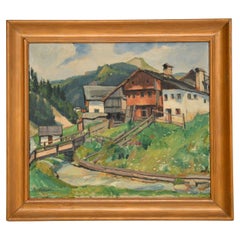
Japanese Two-Panel Screen Mountain Shrine on Craggy Ledge
Located in Hudson, NY
Nicely painted mineral pigments on silk with a silk brocade border. Signature reads: Kosho.
Category
Early 20th Century Japanese Taisho Fabric Paintings and Screens
Materials
Silk, Wood
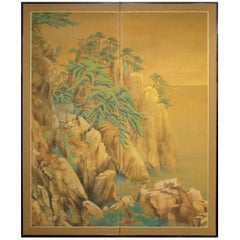
Japanese Two Panel Screen: Mountains in the Mist
Located in Hudson, NY
Chinese School landscape ink painting on gilded silk by Yukimatsu Shunpo, signed and dated 1924. Yukimatsu Shunpo was born in Oita in 1897 and studied under Himejima Chikugai in Osak...
Category
Early 20th Century Japanese Taisho Fabric Paintings and Screens
Materials
Silk
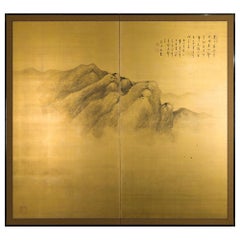
Antique kimono textile art " Plum Blossom Night ~ Resilience ~ " by ikasu Japan
By Kimono ikasu
Located in Setagaya City, JP
This artwork uses antique fabric from Taisho era (early 1920ies) kimono and paulownia wood taken from antique kiritansu - chest-of-drawers used initially to keep kimonos.
It is el...
Category
1920s Japanese Japonisme Vintage Fabric Paintings and Screens
Materials
Silver Leaf
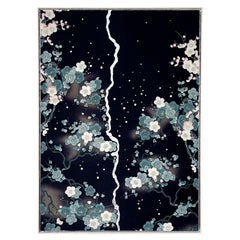
Japanese Two-Panel Screen Three Jewels of Buddhism
Located in Hudson, NY
Japanese two-panel screen: Three Jewels of Buddhism. Meiji period (1868-1912) painting. The three jewels of Buddhism are the teacher, the lesson, and the ...
Category
Late 19th Century Japanese Meiji Antique Fabric Paintings and Screens
Materials
Silk, Wood, Paper
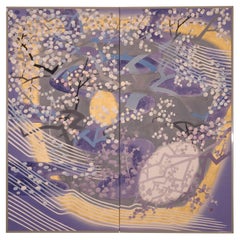
Japanese Two Panel Screen: Yozakura (Cherry Blossom Viewing at Night)
Located in Hudson, NY
Unusual subject matter of cherry blossoms in the moonlight on dyed silk and applied gold in a grey lacquer trim. Signature and seal read: Adachi Masakazu. ...
Category
20th Century Japanese Fabric Paintings and Screens
Materials
Gold
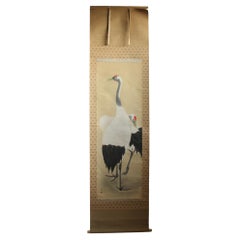
K7 Japanese Antiques Hanging scroll, silk, crane
Located in Niiza, JP
Hanging scroll, silk, crane
Image size: 420 (W) x 1270 (H) [mm] Scroll size: 560 (W) x 2120 (H) [mm]
Box size: 80 x 75 x 630 mm, 830 g
Colored cloth and silk, wooden tip
The crane...
Category
19th Century Japanese Antique Fabric Paintings and Screens
Materials
Silk
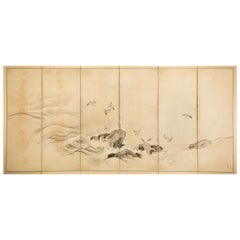
Japanese Six-Panel Screen Plovers in Flight Over Coastal Landscape
Located in Hudson, NY
Japanese six-panel screen: Plovers in flight over coastal landscape. Late Edo - Early Meiji period, circa 1870, painting of plovers flying over cresting waves. Sumi ink on mulberry p...
Category
1870s Japanese Antique Fabric Paintings and Screens
Materials
Silk, Wood, Paper
Japanese Two-Panel Screen Peony and Cherry
Located in Hudson, NY
Japanese two-panel screen: Peony and Cherry, Edo period (circa 1800) painting, formerly fusuma (Japanese sliding doors), executed in the Kano school style, featuring a cherry tree in...
Category
Early 1800s Japanese Edo Antique Fabric Paintings and Screens
Materials
Gold Leaf
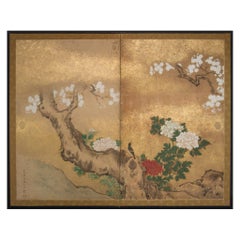
VIntage kimono textile art " Geometry ~ Chrysanthemums ~" by ikasu White Japan
By Kimono ikasu
Located in Setagaya City, JP
<
This work is inspired by traditional Japanese natural symbolism, and is framed in paulownia wood originally used for a kimono chest-of-drawers.
It is elegantly framed with...
Category
1960s Japanese Japonisme Vintage Fabric Paintings and Screens
Materials
Silk, Wood

Vintage obi textile art "Under the Sun ~ Serendipity ~" by ikasu Red Beige Japan
By Kimono ikasu
Located in Setagaya City, JP
<
This artwork creatively uses tree bark to evoke the imagery of woods and mountains during both the morning and nighttime on left and right. It is elegantly framed with paulownia wood, a tree closely connected to kimono culture, and is filled with storytelling and sense of luxury.
By incorporating both the front and back sides of the same obi fabric woven in different colors, the play of light and shadow on the mountains is depicted through the contrasting appearances of these surfaces.
The intention behind this piece is to convey the exquisite beauty of Japanese mountains and the lush forests that inhabit them. To achieve this, traditional elements of Japanese culture, such as obi textiles and craftsmanship involving wood, were used.
The outer side and inner linings of the same obi, no longer suitable for clothing, along with bark material that would normally be discarded, have been repurposed to create this exceptional upcycle artwork.
The fusion of Japanese natural materials – silk, paulownia wood, and pine bark for the central decoration – along with the so-called "Tozan" pattern, a unique Japanese natural design showing mountains from far-away point, captures the magnificent beauty of Japanese nature from various perspectives.
The central bark decoration stands out as a distinctive feature of this work. Pine, oak, and other tree barks are interwoven among the mountains woven into the obi, creating a tangible and authentic natural atmosphere.
<< Period / Story
The obi used in this piece was originally crafted during the late Showa period (1960-80ies).
<< Explanation and meaning of pattern and colors
This upcycle artwork uses an obi with a tozan pattern woven in two colors. The design is inspired by a distant mountain range, a motif that has been used in paintings and crafts since ancient times. However, in this particular design, the mountains are depicted not as distant peaks but as graceful semicircles giving it a mild atmosphere.
<< Characteristics of the fabric
This upcycled Fukuro-obi (two-side obi) showcases a festive color pattern of mountains intricately woven with gold threads against a beige front and red on the back.
The way this obi interacts with light allows it to shift in expression, much like a mountain revealing different facets over time. It can transform from deep shades of color to the appearance of gold shimmering against bright hues, depending on the lighting and viewing angle.
<< About the frame
Kiritansu - chest-of-drawers for kimono, is traditionally made from paulownia wood, a uniquely Japanese material closely tied to the world of kimonos.
Paulownia wood is known as the lightest wood in Japan, prased for its natural luster, resistance to moisture, and resilience against cracking. Since ancient times, it has been used in crafting furniture, chests, and musical instruments.
During the Edo period, it became customary to store cherished kimonos in paulownia chests...
Category
Late 20th Century Japanese Japonisme Fabric Paintings and Screens
Materials
Silk, Wood
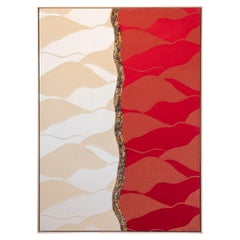
Japanese Six Panel Screen, Peonies and Young Growth on Gold Silk
Located in Hudson, NY
Rimpa floral scene. Pigment on gilded silk, signature and seal read: Hattori Shunyo. Bold colors and strong design elements combined with the trademark tarashikomi (diluted elements created when water is applied to the surface before or after pigments causing them to diffuse) exhibit the artists deep devotion to this important Japanese painting tradition. Notes about artist: Hattori Shunyo (b. 1883) was an artist from Kyoto who graduated the (now) Kyoto Municipal University of Art and fell under the circle of Yamamoto Shunkyo...
Category
Early 20th Century Japanese Fabric Paintings and Screens
Materials
Brocade, Silk

Japanese Two Panel Screen: Antique Kimono Fabric Mounted on Screen
Located in Hudson, NY
Japanese Two Panel Screen: Late Nineteenth Century Kimono Fabric Mounted on Early Twentieth Century Screen. In the Heian period (eighth century to the twelfth century), noblemen wou...
Category
Early 20th Century Japanese Meiji Fabric Paintings and Screens
Materials
Silk, Wood, Paper
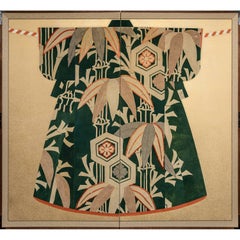
Japanese Six Panel Screen Pine Trees and Boats at Water’s Edge
Located in Hudson, NY
Hamamatsu (Pine Tree Island). Kano School painting in mineral pigments on gold leaf and mulberry paper with brocade border.
Category
Late 19th Century Japanese Antique Fabric Paintings and Screens
Materials
Brocade, Paper
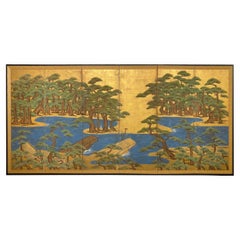
Vintage obi textile art " Broken Vase ~ kintsugi ~" by ikasu Black Gold Japan
By Kimono ikasu
Located in Setagaya City, JP
<
This textile artwork uses a vintage obi dated around 1980ies, with a feather motif, and arranges it so that it looks like a vase.
Antique obi, just as it is a broken vase, is united back again with black obijime - a string used to tie up obi when it’s worn. Framed in kiritansu (antique chest) paulownia wood.
It is elegantly framed with paulownia wood originally used for kimono chest-of-drawers, and is filled with storytelling and sense of luxury.
I used pieces of kimono that could no longer be used as clothing and kiritansu chest-of-drawers that would normally be discarded to create the ultimate upcycled piece.
<< Explanation and meaning of pattern and colors
Feathers hold various meanings and symbolism in Japanese traditional culture, often reflecting themes of spirituality, symbolism, and folklore. Here are some of the meanings associated with feathers in Japanese tradition:
・Divine Protection: Feathers are often seen as symbols of divine protection and spiritual guidance. Feathers, especially those from birds, are considered to be imbued with the protective energy, offering spiritual guardianship and safeguarding against negative forces.
・Connection to the Spirit World: Feathers are sometimes associated with the spirit world and the realm of the divine. In folklore and mythology, feathers are depicted as messengers between the earthly realm and the celestial realms.
・Symbol of Beauty and Elegance: Feathers are admired for their natural beauty, grace, and elegance. In traditional Japanese arts such as Noh theater, Kabuki, and dance performances like Kagura, actors and performers often use feathered costumes or accessories to enhance their appearance and convey a sense of refinement and sophistication.
・Sign of Good Luck and Prosperity: In Japanese folklore, certain birds like cranes and pheasants are considered symbols of good fortune, longevity, and prosperity. Feathers from these birds are often depicted in art and craftwork as auspicious symbols believed to bring blessings and positive energy to the bearer.
<
Kiritansu - chest-of-drawers for kimono, is traditionally made from paulownia wood, a uniquely Japanese material closely tied to the world of kimonos.
Paulownia wood is known as the lightest wood in Japan, prased for its natural luster, resistance to moisture, and resilience against cracking. Since ancient times, it has been used in crafting furniture, chests, and musical instruments.
During the Edo period, it became customary to store cherished kimonos in paulownia chests...
Category
1980s Japanese Japonisme Vintage Fabric Paintings and Screens
Materials
Silk, Wood
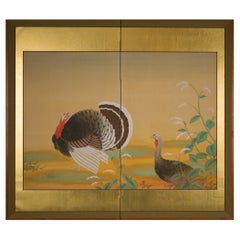
Japanese Two Panel Screen, Turkeys
Located in Hudson, NY
Mineral pigments on silk, mounted on a gold panel, in silk border. Signature and seal read: Yoho.
Category
Early 20th Century Japanese Fabric Paintings and Screens
Materials
Silk
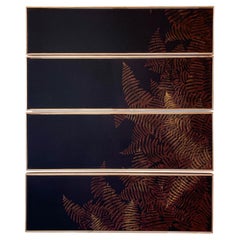
Vintage kimono textile art " Fern ~ Connection to Nature ~" by ikasu Black Japan
By Kimono ikasu
Located in Setagaya City, JP
This work uses an antique tomesode (festive kind of kimono) with fern design to evoke feelings of tranquility, harmony, and appreciation for the beauty of the environment. Can be used both vertically and horizontally.
It is elegantly framed with paulownia wood originally used for kimono chest-of-drawers, and is filled with storytelling and sense of luxury.
I used pieces of kimono that could no longer be used as clothing and kiritansu chest-of-drawers that would normally be discarded to create the ultimate upcycled piece.
<< Explanation of colors and patterns
In Japanese traditional culture, ferns, particularly the Japanese painted fern (Athyrium niponicum), hold several meanings and symbolisms:
・Elegance and Beauty: Ferns are admired for their graceful, delicate appearance and intricate leaf patterns. In Japanese aesthetics, they are appreciated for their natural beauty and are often used in gardens, landscapes, and floral arrangements to add a sense of refinement and elegance.
・Resilience and Perseverance: Ferns are known for their ability to thrive in diverse environments, including shady forests, rocky cliffs, and damp soil. Their resilience in the face of challenging conditions is seen as a symbol of endurance and perseverance. In Japanese culture, ferns may represent the ability to overcome adversity and flourish despite obstacles.
・Connection to Nature and Tranquility: Ferns are native to forested areas and are often associated with the natural world. In Japanese traditional culture, they symbolize a deep connection to nature and the importance of maintaining harmony with the environment. The lush green foliage of ferns evokes feelings of tranquility and peacefulness, making them popular motifs in Zen gardens and traditional landscape paintings.
・Purity and Simplicity: Ferns are emblematic of simplicity and purity in Japanese aesthetics. Their unassuming beauty and understated elegance reflect the principles of wabi-sabi, an aesthetic worldview that values imperfection, impermanence, and simplicity. Ferns may be used in tea ceremonies, Ikebana (flower arranging), and other traditional arts to evoke a sense of tranquility and appreciation for life's fleeting moments.
Overall, ferns in Japanese traditional culture symbolize elegance, resilience, connection to nature, purity, and simplicity. Their presence in art, literature, and landscape design underscores their enduring significance as symbols of natural beauty and spiritual resonance.
<< Characteristics of the fabric
This vintage textile is hand-painted with a traditional Japanese technique called "yuzen".
<< About the frame
Kiritansu - chest-of-drawers for kimono, is traditionally made from paulownia wood, a uniquely Japanese material closely tied to the world of kimonos.
Paulownia wood is known as the lightest wood in Japan, prased for its natural luster, resistance to moisture, and resilience against cracking. Since ancient times, it has been used in crafting furniture, chests, and musical instruments.
During the Edo period, it became customary to store cherished kimonos in paulownia chests...
Category
1960s Japanese Japonisme Vintage Fabric Paintings and Screens
Materials
Silk, Wood
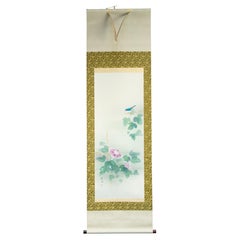
Nightingale on Branch Meiji Period Scroll Japan 19/20c
Located in Amsterdam, Noord Holland
Very Lovely painting.
Category
Mid-19th Century Japanese Meiji Antique Fabric Paintings and Screens
Materials
Silk
$1,188 Sale Price
20% Off
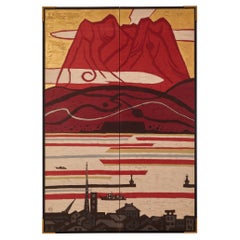
Japanese Two-Panel Screen, Harbor Scene in a Modernist View
Located in Hudson, NY
Bountiful mountain overlooking a city, divided by an occupied river. The shapes and colors that make up this unique painting allow for an unconventional take on a modern harbor view....
Category
Early 20th Century Japanese Fabric Paintings and Screens
Materials
Gold, Brass
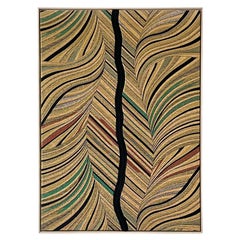
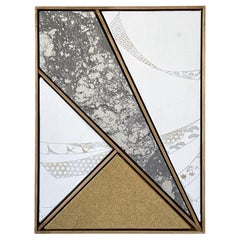
VIntage kimono textile art " Geometry ~ Marble ~" by ikasu Gold White Grey Japan
By Kimono ikasu
Located in Setagaya City, JP
This work is inspired by traditional Japanese nature motifs symbolism, and is framed in paulownia wood originally used for a kimono chest-of-drawers.
It is elegantly framed with pau...
Category
1960s Japanese Japonisme Vintage Fabric Paintings and Screens
Materials
Silk, Wood
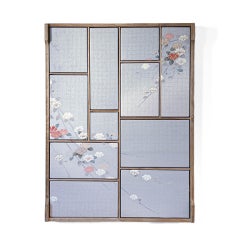
Vintage obi textile art " Camellia ~ Serendipity ~" by ikasu Blue Japan
By Kimono ikasu
Located in Setagaya City, JP
[Story behind the work]
This work is inspired by traditional Japanese nature motifs symbolism, and is framed in paulownia wood originally used for a kimono chest-of-drawers.
It is elegantly framed with paulownia wood originally used for kimono chest-of-drawers, and is filled with storytelling and sense of luxury.
In this artwork, the aim was to capture the the auspicious symbol of camellia used in antique kimono. Traditional Japanese culture, represented by the kimono, and wood, an integral element of Japanese craftsmanship, were used to bring this vision to life.
I used pieces of kimono that could no longer be used as clothing and kiritansu chest-of-drawers that would normally be discarded to create the ultimate upcycled piece.
[Explanation and meaning of pattern and colors]
This delicate piece features hand-drawn camellia motifs flowing gracefully on a softly brightened grayish background.
Camellias, native to Japan, bloom from winter to early spring. As an evergreen tree with green leaves throughout the year, it symbolizes the anticipation of spring and is considered an auspicious plant. Due to its seasonal significance and auspicious meanings, camellias have been used as motifs symbolizing good fortune. Additionally, they were highly valued for their use in oil, cosmetics, and medicine, representing nobility. Believed to possess the power to ward off misfortune, camellias also carry the meaning of "protection from calamity" and have strong ties to traditional ceremonies. In this artwork, camellias are delicately depicted alongside flowing branches, subtly representing good fortune with their pale pink and white hues.
"Sora-iro nezumi 空色鼠" refers to a light grayish color with a hint of blue, reminiscent of the slightly brightened sky on a lightly cloudy day. Popular during the late Edo period (19th cent.), it elegantly captures the slightly brighter sky pattern seen on lightly overcast days. Notably, the term "nezumi-iro" (mouse gray), popular during the late Edo period, was paired with brown tones, collectively known as "Forty-eight Teas and a Hundred Mice 四十八茶百鼠." Colors within the "nezumi" (gray) spectrum, particularly "sora-iro nezumi," were favored by young people for their cool and sophisticated appeal.
[Characteristics of the fabric]
The fabric features intricately woven patterns that reveal subtle gradations through dyeing, creating a grid pattern that transforms depending on the light conditions.
Originally, this fabric was part of a formal kimono known as a "hōmongi 訪問着," featuring motifs along the hem, shoulders, and sleeves. These motifs have been carefully selected and combined to create a unified piece of artwork.
[About the frame]
Kiritansu - chest-of-drawers for kimono, is traditionally made from paulownia wood, a uniquely Japanese material closely tied to the world of kimonos.
Paulownia wood is known as the lightest wood in Japan, prased for its natural luster, resistance to moisture, and resilience against cracking. Since ancient times, it has been used in crafting furniture, chests, and musical instruments.
During the Edo period, it became customary to store cherished kimonos in paulownia chests...
Category
1960s Japanese Japonisme Vintage Fabric Paintings and Screens
Materials
Silk, Wood
Still Thinking About These?
All Recently ViewedMore Ways To Browse
Chinese Woodblock Print
Fusuma Doors
Japanese Screen Kano School
Japanese Tiger Screen
Ogata Korin
Painted Panel Screen Birds
Antique Chinese Black Lacquer Screen
Antique Falconry
Carved Stone Panel
Chinese Carved Hardwood Screen
Chinese Folding Silk Screen Art
Chinese Paint Brushes
Chinese Pearl And Lacquer Screen
Gold Screen Crane
Japanese 4 Panel Screen
Japanese Autumn Screen
Japanese Calligraphy Screen
Japanese Cherry Blossom Screen