Wicker Paintings and Screens
to
1
1
1
1
1
3,349
776
774
732
545
1
1
1
1
1
Material: Wicker
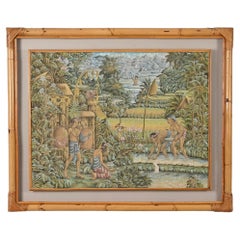
Mid-Century Balinese Painting on Silk with Bamboo and Woven Rattan Frame, 1960s
Located in Roma, IT
Spectacular large Balinese Painting on Silk with an outstanding bamboo and woven rattan frame. This marvellous painting was realized in Bali around the 1960s and is signed on the bot...
Category
Mid-20th Century Italian Mid-Century Modern Wicker Paintings and Screens
Materials
Bamboo, Wicker, Cane, Rattan, Silk, Glass, Paint
Related Items
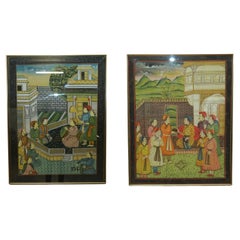
Pair of Collectable Antique Persian Hand Painted Oriental Scenes on Silk Framed
Located in West Sussex, Pulborough
We are delighted to offer for sale this lovely pair of circa 1880-1900 Persian hand painted silk wall hangings depicting oriental scenes.
A very...
Category
Early 1900s French French Provincial Antique Wicker Paintings and Screens
Materials
Silk, Paint

$4,094
H 42.33 in W 32.49 in D 0.99 in
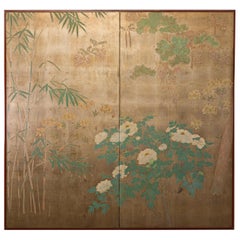
Japanese Two-Panel Screen Peony, Wisteria, Cherry and Bamboo on Soft Silver
Located in Hudson, NY
Japanese two-panel screen: Peony, Wisteria, cherry and bamboo on soft silver, Meiji period (1868-1912) painting of a garden in spring. Painted in mineral pigments on oxidized silver ...
Category
Early 1900s Japanese Meiji Antique Wicker Paintings and Screens
Materials
Silver Leaf
$35,000
H 59.25 in W 62.5 in D 0.75 in
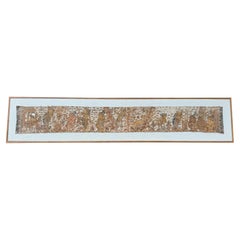
Bali Hindu Textile Framed
Kamasan
Painting, Indonesia C. 1900
Located in Jimbaran, Bali
This Antique Balinese Kamasan painting, rendered on handwoven cotton, beautifully captures the timeless elegance of classical Wayang-style storytellin...
Category
Early 1900s Balinese Folk Art Antique Wicker Paintings and Screens
Materials
Cotton, Paint
$1,360 Sale Price
20% Off
H 58.47 in W 12.21 in D 1.97 in
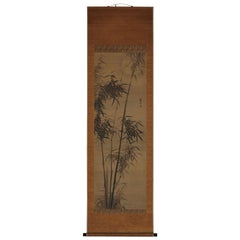
Japanese Painting, Hanging Scroll, 19th Century Bamboo in Moonlight
Located in Kyoto, JP
Bamboo in moonlight
Gamo Rakan (1784-1866)
Hanging scroll, ink on silk.
Dimensions:
Scroll: 201 cm x 58 cm
Image: 137 cm x 45 cm
In this early 19th century work by Gamo Rakan a light ink wash applied to the silk background silhouettes the moon and suggests the atmosphere of early evening. Even though it is a literati subject, Rakan’s bamboo is quite realistic with a strong decorative style. The painting finds its inspiration from Chinese Ming dynasty painters who often used a single-tone, jet black stroke to emphasize the calligraphic nature of bamboo.
In a different era, decorative would have been seen as somewhat unrefined. But increasingly in the Edo period, it was the hallmark of high style. The Japanese people, in particular the rising merchant class, had gradually become apathetic toward the traditional Sesshu and Kano schools of painting. Chinese professional and amateur painters living in the port of Nagasaki during the 18th century had a profound effect on Japanese painting and the freshness of their style and its decorative appeal contributed greatly to its popularity. Gamo Rakan’s teacher, Tani Buncho...
Category
Early 19th Century Japanese Edo Antique Wicker Paintings and Screens
Materials
Silk
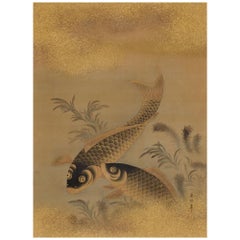
Japanese Painting, Hanging Scroll, Mid 19th Century, Koi and Water Plants
By Iwase Hirotaka
Located in Kyoto, JP
Iwase Hirotaka (1808-1877)
Koi and Water Plants
Hanging scroll, ink, color, gold wash and gold flecks on silk
Inscription: Hirotaka
Seal: Ille...
Category
1860s Japanese Edo Antique Wicker Paintings and Screens
Materials
Silk
$6,500
H 56.5 in W 21.5 in D 0.75 in
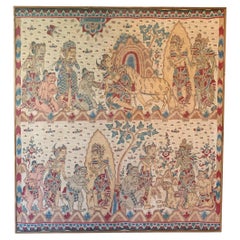
Bali Hindu Textile Framed
Kamasan
Painting, Indonesia C. 1950
Located in Jimbaran, Bali
A mid-20th century 'Kamasan' cotton textile painting from Bali, Indonesia. The hand-painted image has great detail and depicts Balinese Hindu mythology. Key features of this image ar...
Category
1950s Balinese Folk Art Vintage Wicker Paintings and Screens
Materials
Cotton, Paint
$1,760 Sale Price
20% Off
H 56.7 in W 53.94 in D 1.97 in
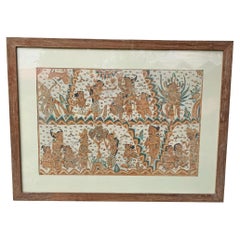
Bali Hindu Textile Framed
Kamasan
Painting, Indonesia, Early 20th Century
Located in Jimbaran, Bali
An early 20th century 'Kamasan' cotton textile painting from Bali, Indonesia. The hand-painted image has great detail and depicts Balinese Hindu mythology. It has been framed with a ...
Category
Early 20th Century Balinese Folk Art Wicker Paintings and Screens
Materials
Cotton, Paint
$1,480 Sale Price
20% Off
H 44.49 in W 59.45 in D 1.97 in
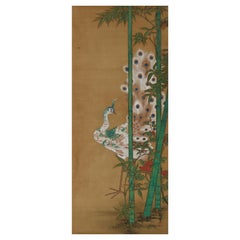
19th Century Japanese Silk Painting by Kano Chikanobu, Peacock
Bamboo
Located in Kyoto, JP
Birds & Flowers of the Seasons
Pheasants & Plum in Snow
Unframed painting. Ink, pigment and gofun on silk
Kano Chikanobu 1819-1888
Signature...
Category
Mid-19th Century Asian Edo Antique Wicker Paintings and Screens
Materials
Silk
$4,500
H 46 in W 19.5 in D 0.01 in
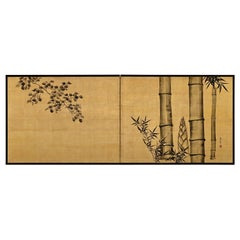
19th Century Japanese Screen for Tea-Ceremony, Ink Bamboo and Plum on Gold Leaf
Located in Kyoto, JP
Three Friends of Winter
Nakajima Raisho (1796-1871)
Late Edo period, circa 1850
Ink and gold leaf on paper.
This is a double-sided Japanese Furosaki or tea-ceremony screen from the mid 19th century; bamboo and plum on the front, young pines the back. It by Nakajima Raisho, a master painter of the Maruyama school in the late Edo and early Meiji periods. In this work Raisho combines exquisite ink brushwork with large open spaces of brilliant gold-leaf to inspire the viewers imagination. Rather than naturalism, he is searching for the phycological impression of the motifs, resulting in abstraction and stylization. His simplification of the motifs the result of looking to capture the inner nature of the objects. This art motif is known as Sho Chiku Bai, or the Three Friends of Winter. Evergreen pine connotes steadfastness, bamboo suggests both strength and flexibility, while plum blossoms unfurling on snow-laden branches imply hardiness. Combined, this trio is emblematic of Japanese new year. Chinese literati were the first to group the three plants together due to their noble characteristics. Like these resilient plants flowering so beautifully in winter, it was expected of the scholar-gentleman to cultivate a strong character with which he would be able to show the same degree of perseverance and steadfastness even during times of adverse conditions.
The screen would have been placed near the hearth of a room used for the Japanese tea ceremony, shielding the fire from draughts and also forming a stimulating and decorative backdrop behind the tea utensils. It would have been used in the Hatsugama, or first tea-ceremony of the new year.
Nakajima Raisho (1796-1871) originally studied under Watanabe Nangaku before entering the school of Maruyama Ozui. He was the highest ranking Maruyama school painter at the end of the Edo period and was known as one of the ‘Four Heian Families’ along with Kishi...
Category
Mid-19th Century Japanese Edo Antique Wicker Paintings and Screens
Materials
Gold Leaf
$9,200
H 29 in W 74 in D 0.75 in
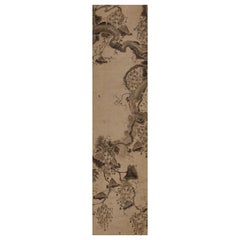
17th Century Korean Grapevine and Squirrel Scroll Painting, Mid Joseon Period
Located in Kyoto, JP
Anonymous. Korean, 17th century. Joseon period.
Hanging scroll. Ink on paper.
Seal: Shinso
Dimensions:
Scroll: H. 200 cm x W. 31 cm (79” x 12”)
Image: H. 122 cm x W. 29.5 cm (48” x 11.5”)
The grapevine came to China and then Korea from western Asia via the silk road trade routes. By the mid-Joseon period, it was one of the most popular subjects for Korean literati painters. Grapevines were painted as a singular subject or, less commonly, in combination with squirrels, which are associated with children due to their playful nature. Together, grapevines and squirrels embody wishes for abundant offspring and wealth.
For the Korean literati artist the twisting vines, curling tendrils and round, plump grapes provided ample opportunity for expressive "brush play”. In this painting the artist has abstracted the scene and is seemingly unconcerned with discontinuities and proportion. Vines spring up from nowhere, grapes hang in random clusters and the squirrel’s head appears as if twisted backwards. For the vines and leaves we can feel a sense of speed in the brushstrokes, imparting a dynamic feel which is at once intense and animated. This contrasts dramatically with the countless tiny strokes of ink which realistically capture the texture of the squirrel’s fur...
Category
17th Century Korean Other Antique Wicker Paintings and Screens
Materials
Paper
$18,000
H 79 in W 12 in D 1 in
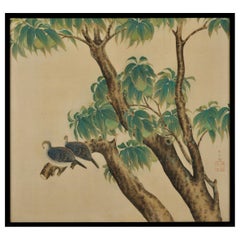
Japanese Framed Silk Painting, Turtledoves and Peaches, Taisho Era, circa 1920
Located in Kyoto, JP
Nakamura Daizaburo
Turtledoves in a Peach Tree
Taisho period, circa 1920
Framed painting. Mineral pigments, ink and gofun on silk
Signed: Daizaburo
Dimensions (framed)...
Category
1910s Japanese Taisho Vintage Wicker Paintings and Screens
Materials
Wood, Silk
$18,000
H 35 in W 37.5 in D 1 in
1844 - Chichi, Japanese Scroll Painting. Colour on Silk
Located in Kyoto, JP
Mother’s Breast (Chichi) 1844
Hanging scroll. Ink, pigments and gofun on silk.
Inscription:
Kouka era, dragon year, late winter, painted by Shozan Yashou
Artist’ seals:
...
Category
1840s Japanese Edo Antique Wicker Paintings and Screens
Materials
Silk