Items Similar to Mid 19th Century Framed Japanese Painting. Spider
Morning Glory.
Want more images or videos?
Request additional images or videos from the seller
1 of 7
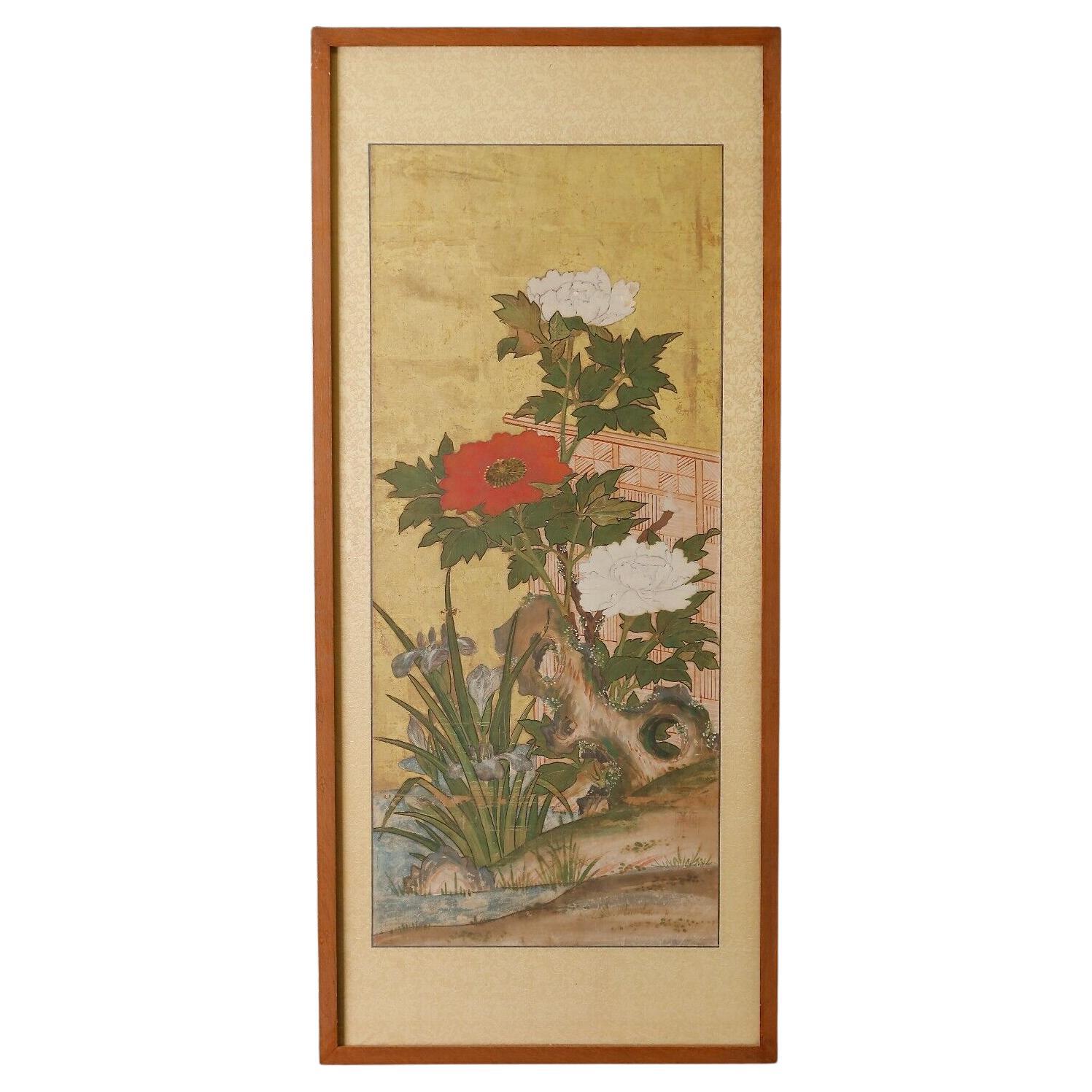
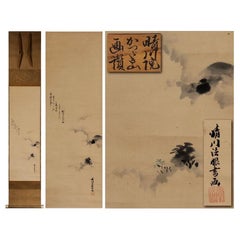
Mid 19th Century Framed Japanese Painting. Spider
Morning Glory.
$4,800
£3,628.24
€4,161.75
CA$6,691.40
A$7,284.13
CHF 3,866.42
MX$87,643.79
NOK 48,992.80
SEK 44,891.25
DKK 31,079.68
About the Item
Obata Tosho (1812-1886)
Spider
Morning Glory
Late Edo period, mid 19th Century
Framed Japanese Painting. Ink and color on paper.
Individually framed 19th century bird and flower paintings by the Tottori feudal painter Obata Tosho. Each painting is meticulously and realistically depicted with delicate brushwork and subtle yet gorgeous coloring. The flora has been entirely rendered in the ‘boneless’ technique of applying ink or pigment directly to the paper in a manner that emphasizes washes instead of lines. The representation of the insects and mice are detailed almost to the point of scientific exactness. The flora and fauna represented are associated with the four seasons and the twelve months and convey a sense of time passing and celebration of the unique characteristics of the season.
The paintings show the distinct influence of Nakabayashi Chikuto, Obata Tosho’s second teacher. Chikuto was a leading painter and theorist within a circle of mid-19th century Japanese scholars who were intensely interested in Chinese literati ideals. Chikuto specialized in Chinese-style landscape painting, but he also produced a number of bird and flower works that were likely inspired by the careful and delicate approach of the Chinese master Yun Shou-ping (1633-1690).
Obata Tosho (1812-1886) was born in Tottori prefecture. He first learned Nanpin style painting techniques from Kuroda Toko, and his talent was recognized from a young age. He is an important member of the Tottori School. During the construction of the new Ninomaru building of Tottori Castle in 1845 he contributed a number of paintings and folding screens. In 1846 he went to Kyoto to study painting under the literati painter Nakabayashi Chikuto. He was simultaneously employed as an artist for the Tottori domain. He worked there for over 20 years during the turbulent period from the Edo to the Meiji era, and became, along with Oki Morikata (1841-1912), the last official artist of the Tottori domain. The 45 sliding door paintings that decorate the entire main hall of Jitoku-ji Temple (Hyogo Prefecture) are said to be Tosho’s masterpiece, and feature vivid depictions of a variety of subjects such as "Playing Carp," "Dragon and Clouds," "Fierce Tiger," "Reeds and Geese," and "Peony and Peacock."
- Dimensions:Height: 51.5 in (130.81 cm)Width: 21.5 in (54.61 cm)Depth: 0.75 in (1.91 cm)
- Style:Edo (Of the Period)
- Materials and Techniques:
- Place of Origin:
- Period:
- Date of Manufacture:Circa 1850
- Condition:Refinished. Wear consistent with age and use. Recently restored and framed in Kyoto by traditional craftsmen.
- Seller Location:Kyoto, JP
- Reference Number:1stDibs: LU2472341454152
About the Seller
5.0
Recognized Seller
These prestigious sellers are industry leaders and represent the highest echelon for item quality and design.
Gold Seller
Premium sellers maintaining a 4.3+ rating and 24-hour response times
Established in 2001
1stDibs seller since 2016
75 sales on 1stDibs
Typical response time: 6 hours
- ShippingRetrieving quote...Shipping from: Kyoto, Japan
- Return Policy
More From This Seller
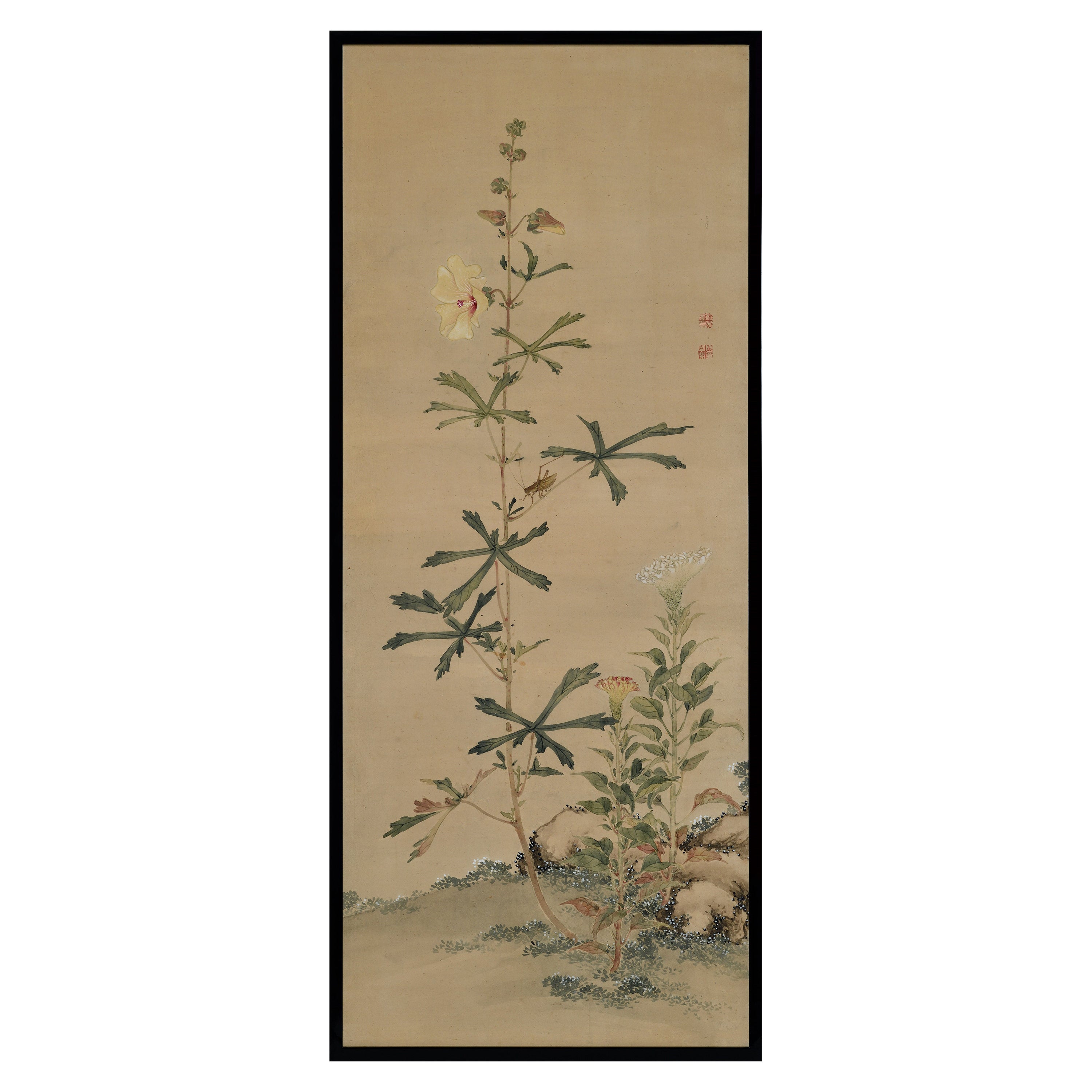
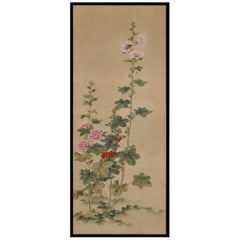
View AllMid 19th Century Framed Japanese Painting. Grasshopper
Hibiscus.
Located in Kyoto, JP
Obata Tosho (1812-1886)
Grasshopper & Hibiscus.
Late Edo period, mid 19th Century
Framed Japanese Painting. Ink and color on paper.
Individually framed 19th century bird and flow...
Category
Antique Mid-19th Century Japanese Edo Paintings and Screens
Materials
Paper
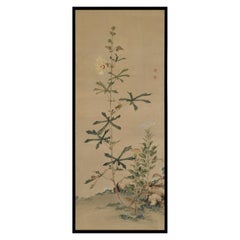
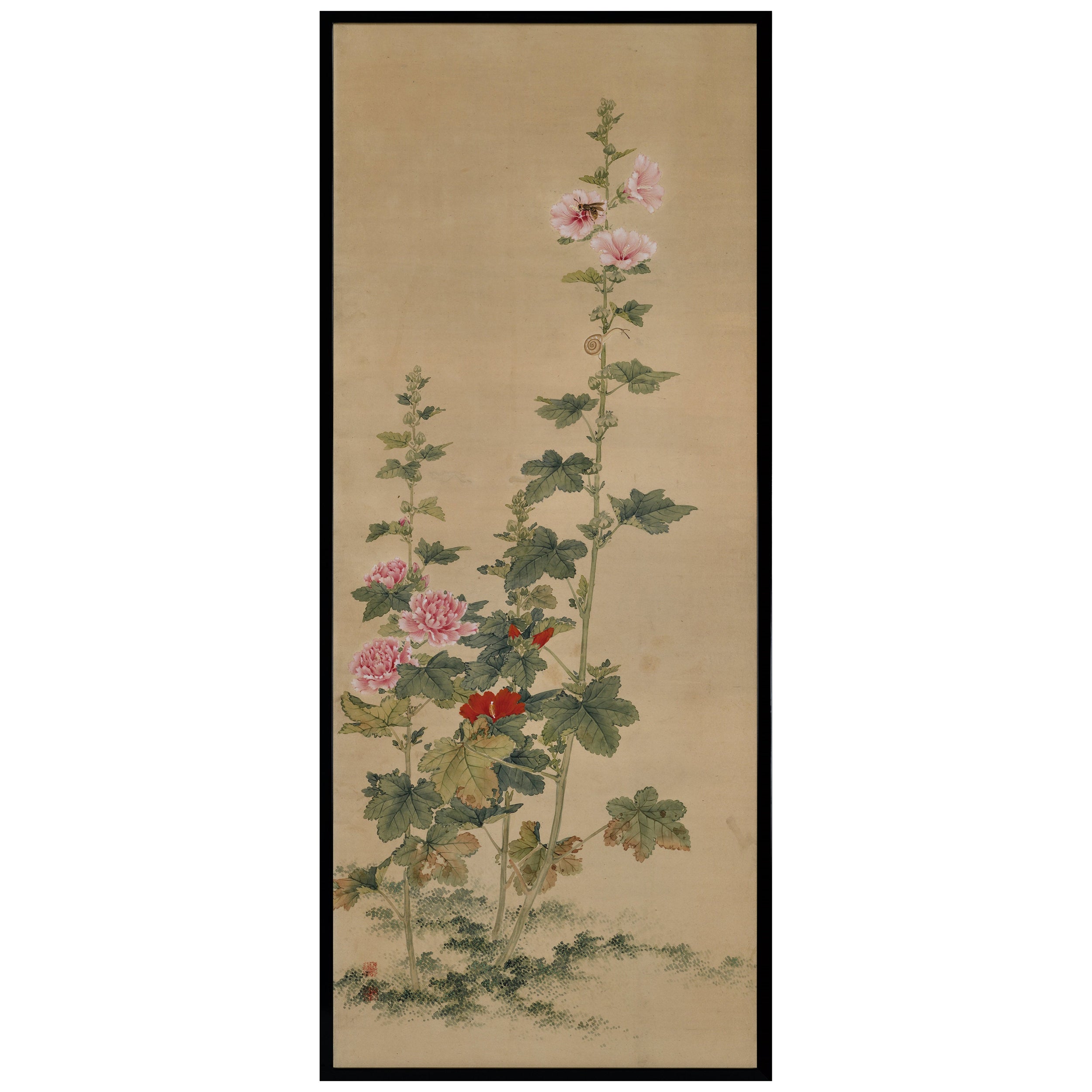
Mid 19th Century Framed Japanese Painting. Snail, Wasp
Hollyhock.
Located in Kyoto, JP
Obata Tosho (1812-1886)
Snail, Wasp & Hollyhock
Late Edo period, mid 19th Century
Framed Japanese Painting. Ink and color on paper.
Individually framed 19th century bird and flow...
Category
Antique Mid-19th Century Japanese Edo Paintings and Screens
Materials
Paper
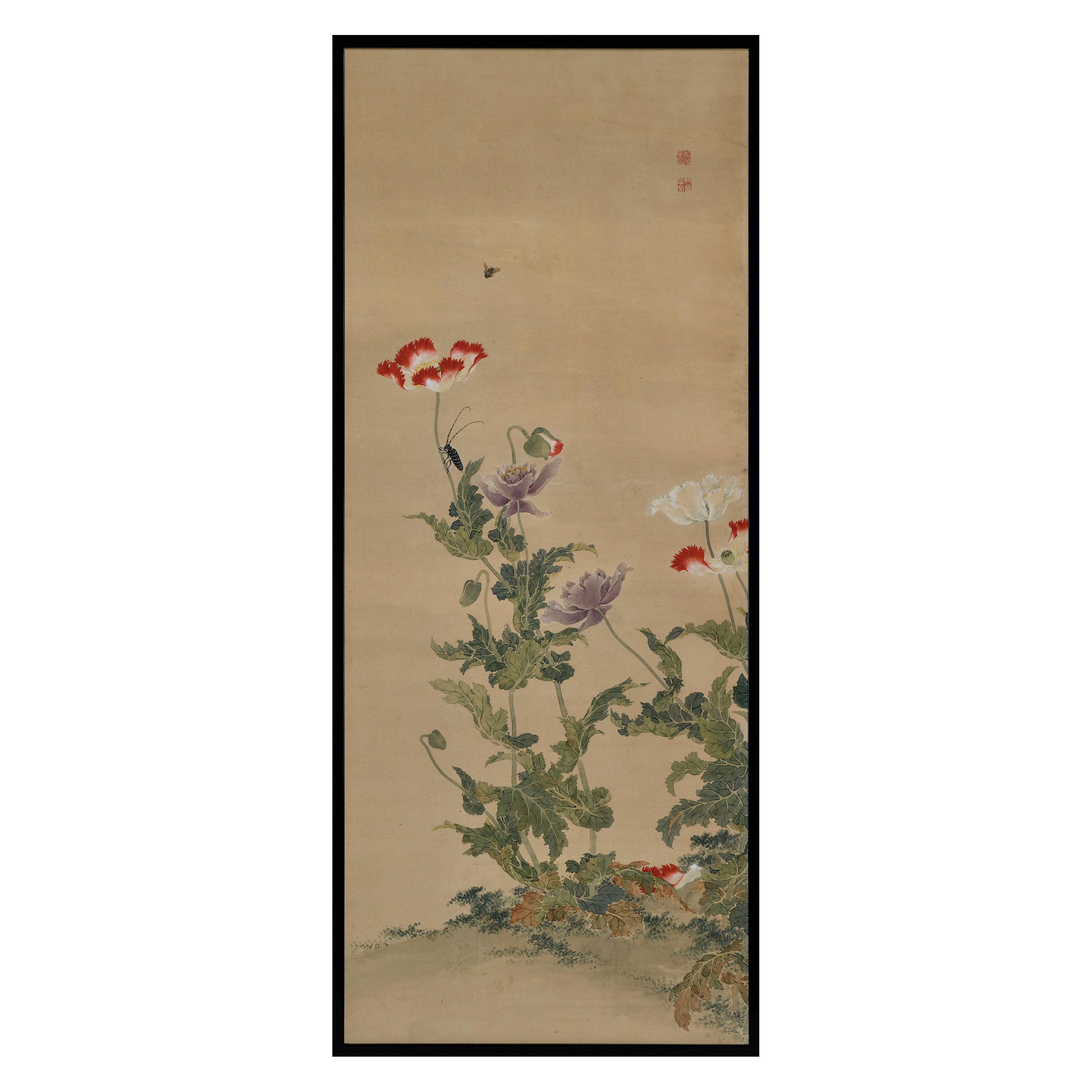
Mid 19th Century Framed Japanese Painting. Longhorn Beetle
Poppies.
Located in Kyoto, JP
Obata Tosho (1812-1886)
Longhorn Beetle & Poppies.
Late Edo period, mid 19th Century
Framed Japanese Painting. Ink and color on paper.
Individually framed 19th century bird and f...
Category
Antique Mid-19th Century Japanese Edo Paintings and Screens
Materials
Paper
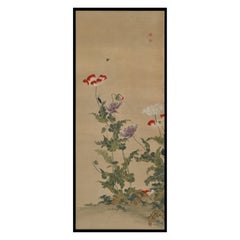
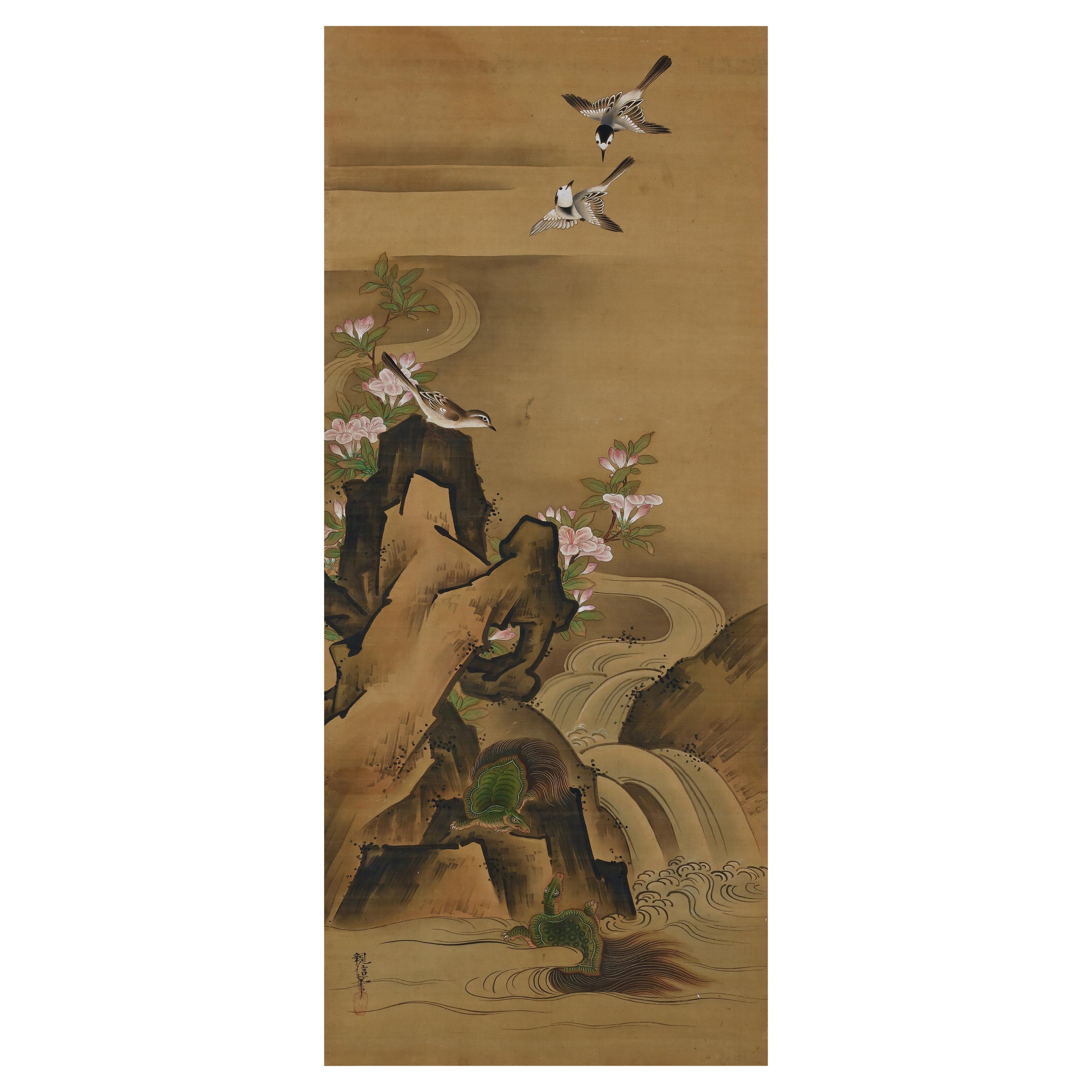
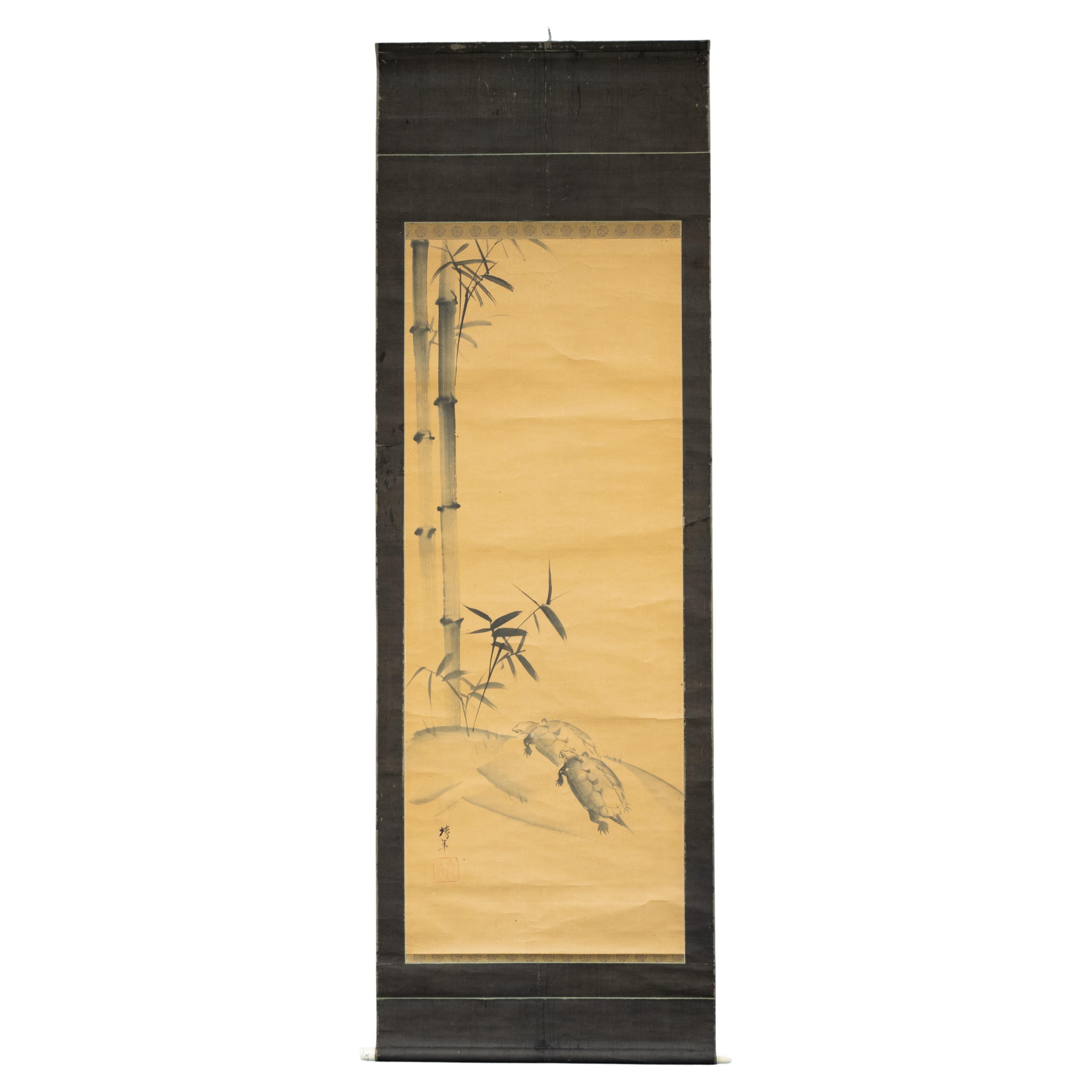
19th Century Japanese Silk Painting by Kano Chikanobu, Turtles
Azalea
Located in Kyoto, JP
Birds & flowers of the seasons
Pheasants & plum in snow
Unframed painting. Ink, pigment and gofun on silk
Kano Chikanobu 1819-1888
Signature...
Category
Antique Mid-19th Century Asian Edo Paintings and Screens
Materials
Silk
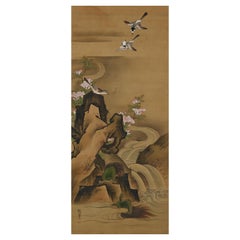
Mid 19th Century Framed Japanese Painting. Mice
Millet
Located in Kyoto, JP
Obata Tosho (1812-1886)
Mice & Millet
Late Edo period, mid 19th Century
Framed Japanese Painting. Ink and color on paper.
Individually framed 19th century bird and flower paintin...
Category
Antique Mid-19th Century Japanese Edo Paintings and Screens
Materials
Paper
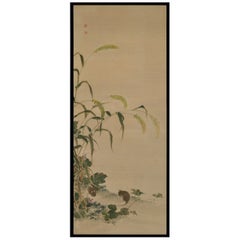
19th Century Japanese Scroll Painting by Igarashi Chikusa, Poppies
Butterflies
Located in Kyoto, JP
Poppies & Butterflies
Ink, pigment and gofun on silk
Igarashi Chikusa (1774-1844)
Signature: Chikusa Ran Zen
Upper Seal: Ran Shuzen
Lower Seal: Kyoho
Dimensions:
Scroll: H. 68” x W. 18” (172cm x 45cm)
Image: H. 38.5’’ x W. 12.5’’ (98cm x 32cm)
This composition shows elegant images of poppies and the butterflies that are inevitably drawn to them. It captures a momentary glimpse into a world both visually dazzling and startlingly realistic. The painting is infused with sensitivity and attention to seasonal change and weather conditions. The thin and fragile poppies are beautifully depicted with brilliant colors and the butterflies are similarly infused with life. The painting is on silk which requires extremely precise painting skills as no element once painted can be removed.
Poppies were a favorite subject of Rinpa school artists through the ages. Originally they were somewhat abstracted but by the age of Sakai Hoitsu...
Category
Antique Early 19th Century Japanese Edo Paintings and Screens
Materials
Silk
You May Also Like
Japanese Edo Period Painting Scroll Ônishi Chinnen
1792 - 1851
Artist Signed
Located in Amsterdam, Noord Holland
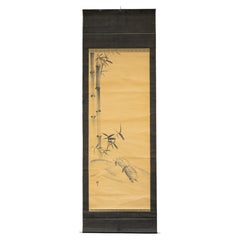
Ônishi Chinnen (1792 - 1851) Schilpadden en bamboo
Rolschildering / scroll op papier, benen rollers. B 125.7 x 48.9 / 179.5 x 59.5 cm
125.7 x 48.9 / 179.5 x 59.5 cm.
Category
Antique Mid-19th Century Japanese Meiji Paintings and Screens
Materials
Silk
$1,487 Sale Price
20% Off
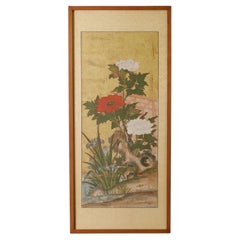
Edo Period (19th) Japanese antique painting of flowers
Located in Fukuoka, JP
Japanese antique painting of flowers 19 C
Weight 3kg ( 6.6lb)
Category
Antique Mid-19th Century Japanese Edo Paintings and Screens
Materials
Silk, Paper
Japanese Nihonga Painting 19th c Edo Scroll by Seiki Yokoyama Landscape Shijo
Located in Amsterdam, Noord Holland
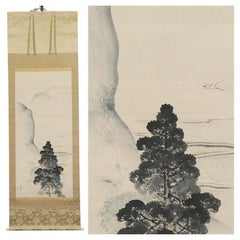
[Authentic work] ◆ Seiki Yokoyama ◆ Landscape ◆ Rural landscape ◆ Japanese painting ◆ Shijo school ◆ Hand-painted ◆ Paperback ◆ Hanging scroll ◆
Seiki Yokoyama
[Art yearbook appra...
Category
Antique 19th Century Edo Paintings
Materials
Silk
$1,246 Sale Price
20% Off
Japanese Painting 18c Edo Scroll Chikuseki Nagamachi Nihonga Landscape Painting
Located in Amsterdam, Noord Holland
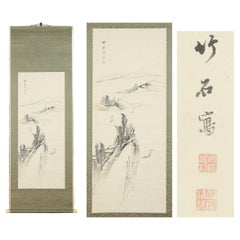
[Authentic Artwork] ◆ Nagamachi Chikuseki ◆ Landscape ◆ Edo Period ◆ Mitsuishi Origin ◆ Kagawa Prefecture ◆ Handwritten ◆ Paperback ◆ Hanging Scroll ◆ k891 ◆ Nagamachi Chikuseki
Explore the artistry of Chikuseki Nagamachi...
Category
Antique 18th Century Edo Paintings
Materials
Silk
$1,822 Sale Price
20% Off
Lovely Japanese 18/19th c Edo Scroll Kano Osanobu Nihonga Painting Mountain
Located in Amsterdam, Noord Holland
Kano Osanobu (狩野養信)
Osanobu Kano (born August 18, 1796; died June 12, 1846) was the ninth painter of the Kobikicho Kano School in the Edo period. His common name was Shozaburo. His father was Naganobu KANO, and Tadanobu KANO was his son. His Go (pen name) was Osanobu Seisenin, Kaishinsai, and Gyokusen.
Brief Personal History
He was born the eldest son of Naganobu ISENIN during the Edo period. He was first sent to serve at Edo Castle at the age of 15, and it appears that he was apparently pushed by his father to perform various public tasks for the Kanon School. He kept a diary for 36 years, starting from the day before he first went into service at Edo Castle until the day before he died. The diary is entitles "Official Service Diary" (it consists of 52 volumes that are maintained at the Tokyo National Museum, and 4 volumes that are separately maintained at the different families), and have become the focus of a lot of attention in recent years for the detailed information they present on the daily life and work of a prestigious official painter. The reading of the characters of his name was originally "Takenobu"; however, with the birth of the first son of the Shongun Ieyoshi TOKUGAWA in 1813, whose name was Takechiyo, having a sylable with the same pronunciation of "Take"was deemed to be inappropriate, and was therefore changed to "Osanobu". Because Takenobu died the following year, after which he was referred to as Gyokujuin, Osanobu changed his pen name Gyokusen he had used until that point to Seisenin, in order to avoid using the same Chinese charcter pronounced alike. In 1819, he attained the second highest rank for a Buddhist priest, Hogen, and assumed the role of head of the family after his father passed away in 1828. In 1834 he attained the highest rank for a Buddhist priest, Hoin. He oversaw the rennovation of the wall paintings of Nishinomaru Palace of Edo Castle from 1838 to 1839, and Honmaru Palace of it from 1844 to 1846. It is thought that Osanobu later died due to the fatigue...
Category
Antique 18th Century Edo Paintings
Materials
Silk
$1,726 Sale Price
20% Off
Landscape and Waterfall Nihonga Scene Showa Period Scroll Japan Artist
Located in Amsterdam, Noord Holland
Some errors will occur in the dimensions. Please understand.
Status: The condition is good, but please understand stains, wrinkles, and stains.
Measures: Axis vertical 193 cm, hori...
Category
Vintage 1930s Japanese Showa Paintings and Screens
Materials
Silk
$815 Sale Price
20% Off
More Ways To Browse
19th Century Flower Paintings
Morning Glory
The Four Seasons 19th Century
Morning Glory Antique
Antique Mice
Edo Frames
Mother Of Pearl Panel
18th Century Hand Screen
Asian Antique Landscape Paintings
Chinese Reverse Glass Paintings
Chinese Four Panel Lacquer Screen
Ebonized Japanese
Asian Screen Vintage
Silk Screen Artists
Vintage Asian Screens
Asian Bird Paintings
Chinese Reverse Painted Glass
Japanese Taisho Screen