Items Similar to Mid 20th Century kimono textile art " Growing ~ Longevity ~" by ikasu Pink Japan

Video Loading
Want more images or videos?
Request additional images or videos from the seller
1 of 22
Mid 20th Century kimono textile art " Growing ~ Longevity ~" by ikasu Pink Japan
$720
£547.02
€628.64
CA$1,011.33
A$1,100.81
CHF 583.28
MX$13,238.85
NOK 7,416.22
SEK 6,796.15
DKK 4,695.93
About the Item
<< About this canvas
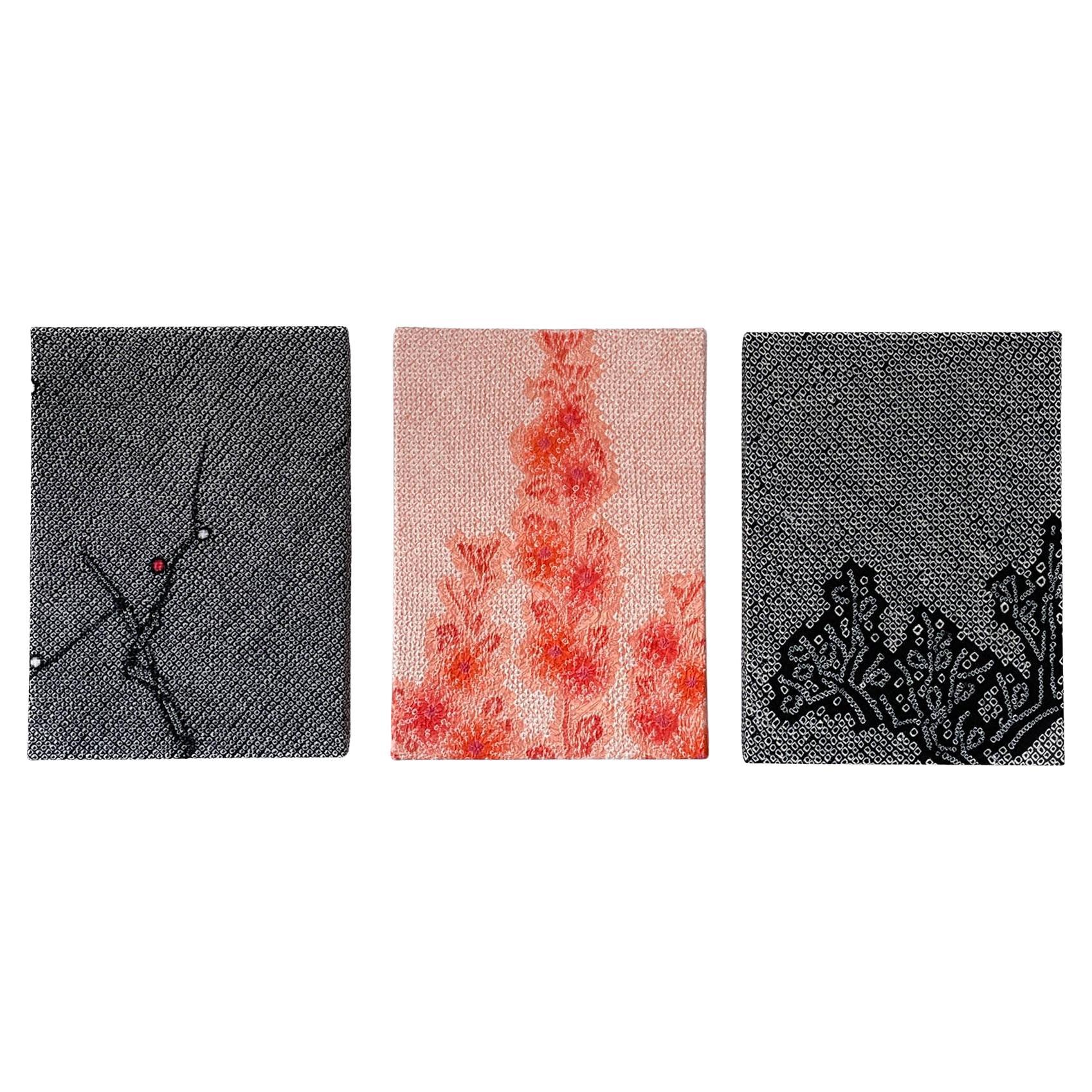
This set is a depiction of a tall chrysanthemum stem, entirely dyed in a traditional shibori technique.
<< Period / Story
The haori featured in this canvas was created and used during the late Showa period (1960-80ies).
<< Explanation and meaning of pattern and colors
A charming chrysanthemum flowers all around a stem seem to reach the heavens.
The chrysanthemum flower, which retains its vitality long after being cut, symbolizes longevity, purification from malevolent spirits, and good fortune. In ancient times, during the Kamakura period (1185-1333), emperors loved the chrysanthemum pattern, and it remains the most prestigious flower and the emblem of the Japanese imperial family to this day.
The entire artwork is dyed in a gentle vermilion hue. Vermilion, also known as "shu-iro," is a vibrant red shade with yellow undertones. In the past, the finest red pigment was referred to as "shu-iro."
Vermilion also carries the symbolism of authoritative power, and it is said that when ancient tombs are excavated, vermilion is often found alongside the remains of nobility. Beyond its historical significance, vermilion holds various other meanings, such as the warmth of fire, the brilliance of the sun, protection against malevolent forces, prevention of misfortune, the blessing of offspring, and fertility.
<< Characteristics of the fabric
The kimono fabrics in this set are all meticulously dyed using a tie-dyeing technique known as "soshibori," which has been practiced in Japan since the 6th to 7th century.
In this intricate process, the fabric is bound using threads, boards, and specialized tools to create areas where the dye cannot penetrate. Once the entire cloth is dyed, the threads are carefully untied, leaving behind the bound areas untouched. As a result, the colors emerge in a three-dimensional textures, forming intricate patterns.
Because tie-dyeing is a labor-intensive, handcrafted method, only a limited number of pieces, ranging from a few hundred to a few thousand, can be produced in a day. It's worth noting that this process can take several months to a year or even longer to complete, as more than 200,000 knots need to be tied for a single kimono.
The "Kanoko shibori" applied to the entire fabric of this haori is a particular type of so-called "fawn" shibori, known for its resemblance to the spots on a young deer, which adds to its unique and appealing appearance.
- Creator:Kimono ikasu (Artist)
- Dimensions:Height: 31.5 in (80 cm)Width: 13.39 in (34 cm)Depth: 0.79 in (2 cm)
- Style:Japonisme (In the Style Of)
- Materials and Techniques:
- Place of Origin:
- Period:
- Date of Manufacture:2024
- Condition:All the works are made from real kimonos, antiques and vintages. For this reason, the fabric may have traces of long-term use and minor fabric damages. - In case there are any scratches or stains, we always add a photo of the area on the item page.
- Seller Location:Setagaya City, JP
- Reference Number:1stDibs: LU10079243699182
About the Seller
No Reviews Yet
Vetted Professional Seller
Every seller passes strict standards for authenticity and reliability
1stDibs seller since 2024
- ShippingRetrieving quote...Shipping from: Setagaya City, Japan
- Return Policy
More From This Seller
View AllVintage kimono textile art " Flowers ~ Life Circle ~" by ikasu Pink Black Japan
By Kimono ikasu
Located in Setagaya City, JP
<< About this canvas
This canvas is crafted from three different haori fabrics, each adorned with a shibori dyeing flower motif going through entire fabric. These fab...
Category
Vintage 1970s Japanese Japonisme Paintings and Screens
Materials
Canvas, Silk
Vintage kimono textile art " Snowflake ~ New Beginnings ~" by ikasu Purple Japan
By Kimono ikasu
Located in Setagaya City, JP
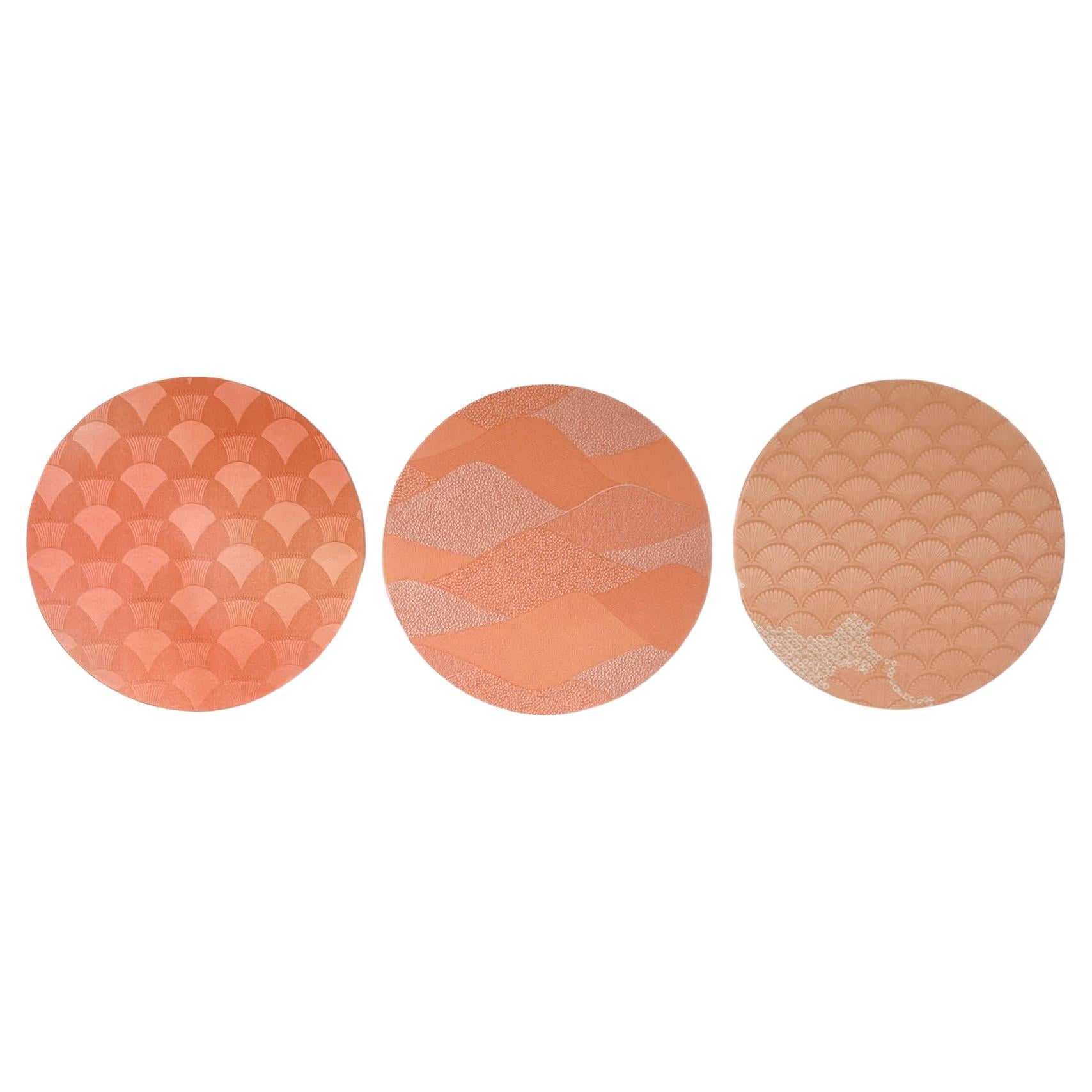
Six canvases (Diameter approx. 30cm, 25cm, 20cm) use the fabric taken from antique kimono, its' various parts, to create one harmonious fluid image of a snowflake - a symbol of new b...
Category
Vintage 1970s Japanese Japonisme Paintings and Screens
Materials
Canvas, Silk
Vintage Obi textile art " From the Ashes ~ Serendipity ~" by ikasu Beige Japan
By Kimono ikasu
Located in Setagaya City, JP
<
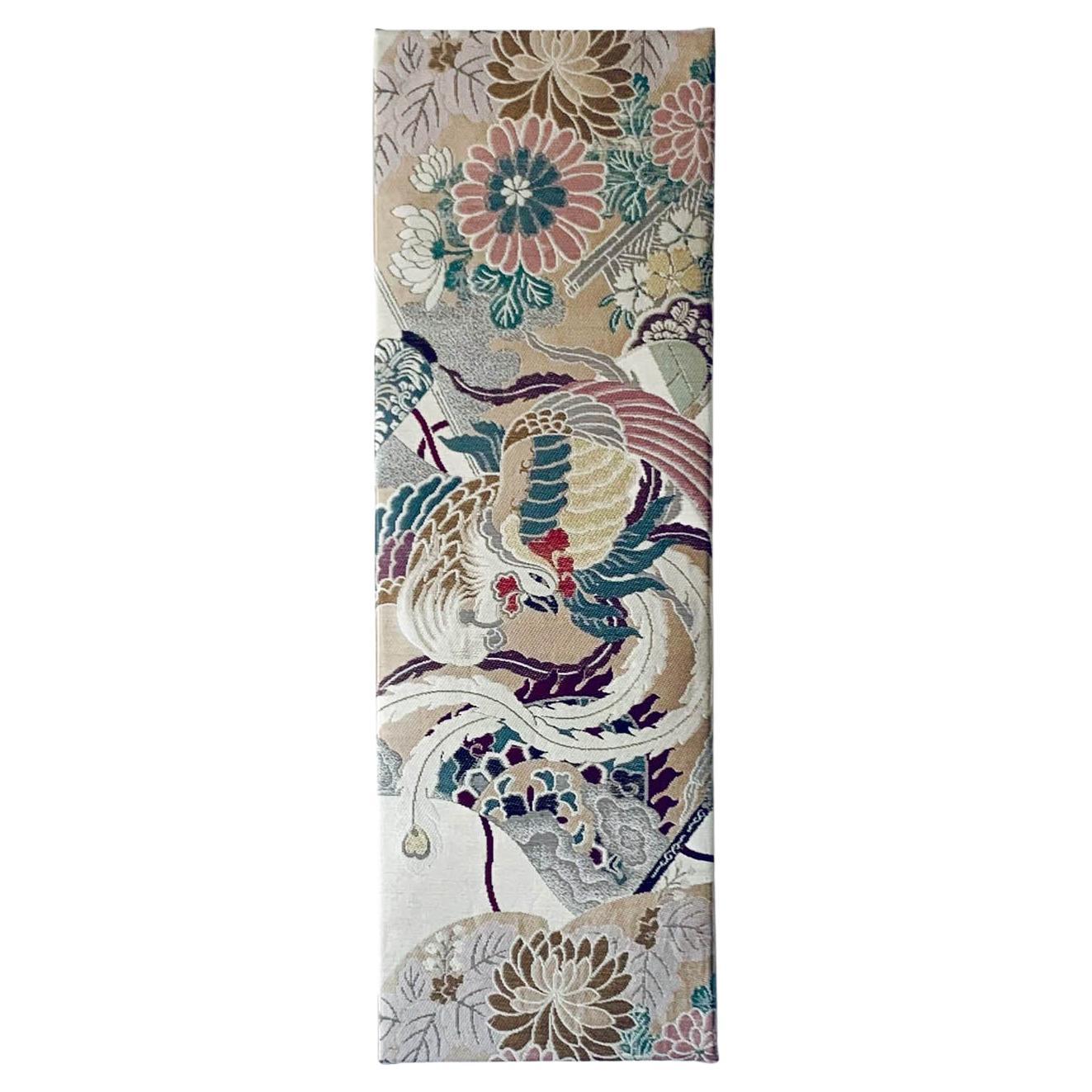
This canvas has been upcycled from an early 20th-century maru-obi, featuring a subtle yet sophisticated depiction of the phoenix—a legendary symbol of peace and renewal. Ren...
Category
Vintage 1910s Japanese Japonisme Decorative Art
Materials
Canvas, Silk
Vintage kimono textile art "On Coral Waves ~ Everlasting ~" by ikasu Pink Japan
By Kimono ikasu
Located in Setagaya City, JP
<< About this canvas
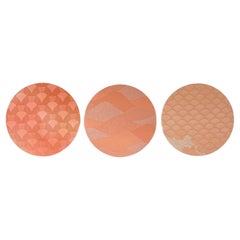
This kimono canvas set of three pieces portrays mountains surrounded by the sea. While each of the three pieces is crafted from different kimonos...
Category
Vintage 1970s Japanese Japonisme Paintings and Screens
Materials
Silk, Canvas
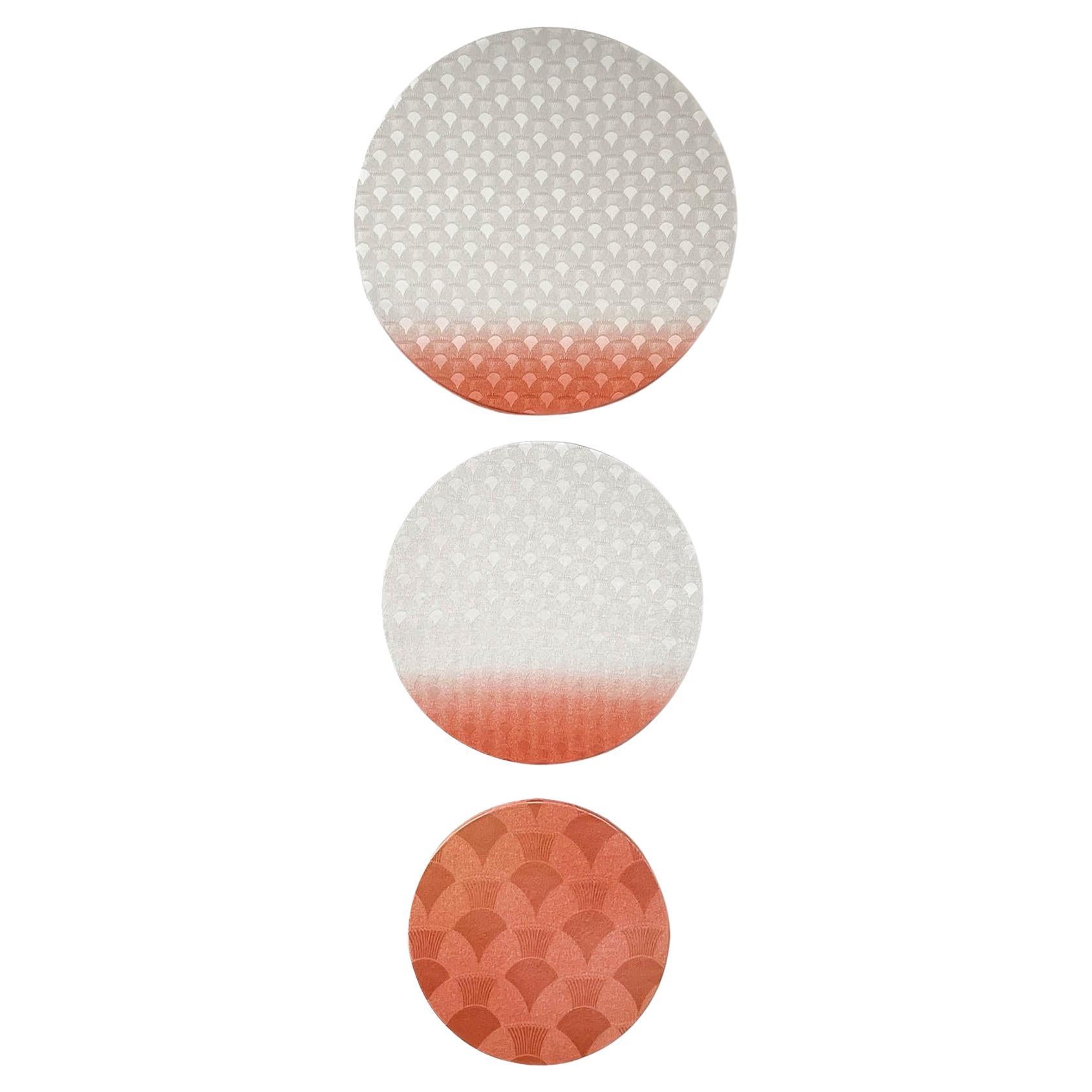
Vintage kimono textile art " Sunset Timelapse ~ Ephemerality ~" ikasu Red Japan
By Kimono ikasu
Located in Setagaya City, JP
<
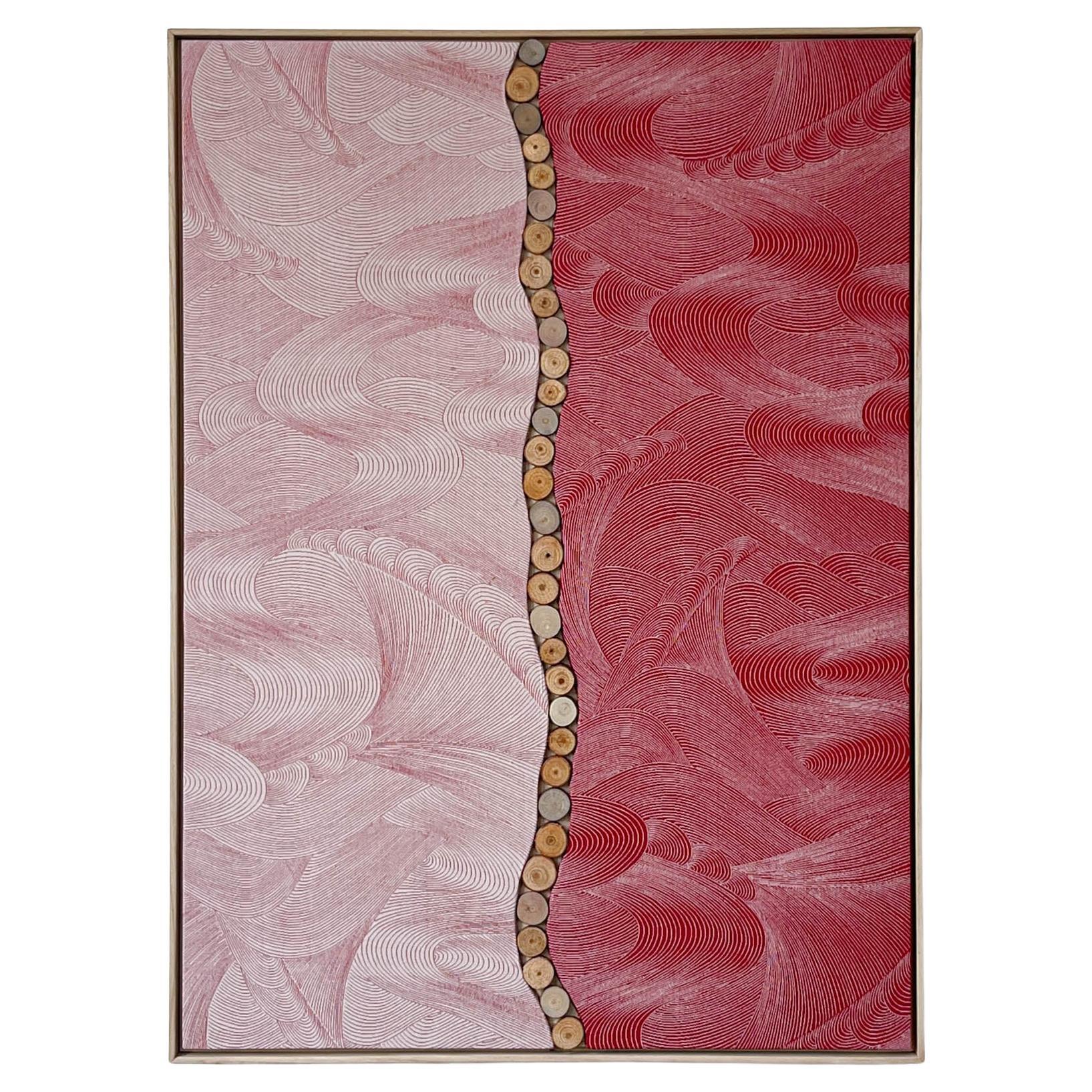
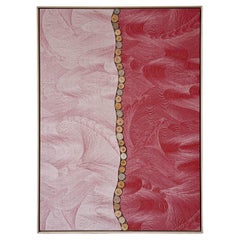
The art piece uses two sides - front and reverse - of the same kimono, to show beautiful sea surrounding Japan, in hues and in late sunset, as a timelapse.
The frame for this work is made of paulownia wood taken from antique Kiritansu - chest-of-drawers for kimono.
I use antique kiritansu that can’t be used as furniture anymore to create basis and frames for my works. It adds them even more authentic atmosphere of traditional wabisabi spirit. Can you feel it?
<< Period / Story
The kimono used in this piece was originally crafted during Showa period (around 1960ies).
<< Explanation and meaning of pattern and colors
Sea waves, depicted in two color variations here, are a symbol of transience and Impermanence in Japanese culture. The ebb and flow of the tides, the ever-changing currents, and the relentless motion of the waves serve as reminders of the fleeting nature of life. This artwork featuring the sea convey themes of impermanence, reminding viewers to cherish the present moment and appreciate the beauty of life's fleeting moments.
The theme of impermanence is strengthen by two colors of the sea - the lighter in early hues and the darker when the sun is just about to set in the sea.
<< About the frame
This artwork frame is crafted from paulownia wood, a uniquely Japanese material closely tied to the world of kimonos, and it serves to convey the refined beauty of Japanese nature.
Paulownia wood is known as the lightest wood in Japan, prased for its natural luster, resistance to moisture, and resilience against cracking. Since ancient times, it has been used in crafting furniture, chests, and musical instruments.
Paulownia wood is closely linked to kimono culture. During the Edo period (17th cent.~), it became customary to store cherished kimonos in paulownia chests...
Category
Vintage 1960s Japanese Japonisme Paintings and Screens
Materials
Silk, Wood
Vintage kimono textile art " Plum Gradation " by ikasu Pink White Japan
By Kimono ikasu
Located in Setagaya City, JP
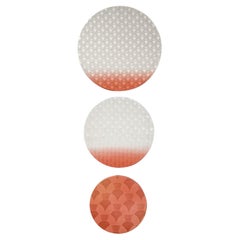
This canvas featuring a plum color gradient kimono showcases a unique decorative variation of the popular seigaiha (青海波) sea waves pattern.
The artwork got a Mr.
Mrs. Abe Arts ...
Category
Vintage 1980s Japanese Japonisme Paintings and Screens
Materials
Canvas, Silk
You May Also Like
Vintage Japanese Obi Textile, Mid-20th C
Located in Istanbul, TR
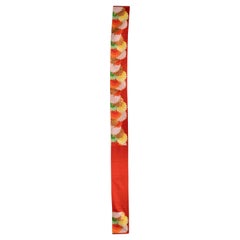
An obi in very good condition that can be utilized as a table runner, wall hanging.
Category
Mid-20th Century Japanese Pillows and Throws
Materials
Silk
Vintage Japanese Obi Textile, Mid 20th C
Located in Istanbul, TR
An obi in very good condition that can be utilized as a table runner, wall hanging.
Category
Mid-20th Century Japanese Pillows and Throws
Materials
Silk
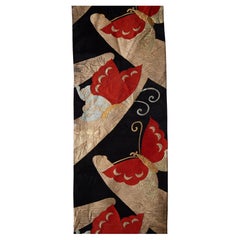
Vintage Japanese Obi Textile, Mid-20th C
Located in Istanbul, TR
An obi in very good condition that can be utilized as a table runner, wall hanging.
Category
Mid-20th Century Japanese Pillows and Throws
Materials
Silk
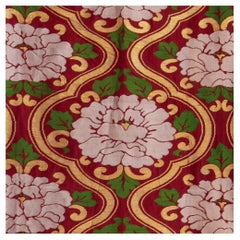
Antique Japanese Obi Textile Panel with Birds and Camellia Flowers, Meiji Period
Located in Fukuoka, JP
A magnificent antique Japanese silk obi fragment from the Meiji period (1868–1912), showcasing exceptional hand embroidery and gold leaf overlay.
This refined textile features a pai...
Category
Antique 19th Century Japanese Meiji Textiles
Materials
Silk
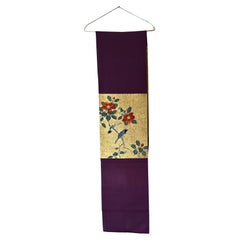
Vintage Hand-Painted Japanese Wedding Kimono
Located in Fort Washington, MD
Stunning Japanese Wedding Kimono, hand painted with exceptional details in rich warm colores
Has a red silk interior, wooden rod is NOT included
An inc...
Category
Mid-20th Century Japanese Japonisme Textiles
Materials
Silk
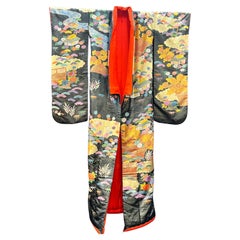
Old Japanese Kimono / 1912-1945 / Wall Hanging Decoration / Tapestry
Located in Sammu-shi, Chiba
I think this is a kimono woven from the Taisho era to the early Showa era (1912-1945) in Japan.
It is a modern design.
In the Taisho era, various things were made with reference to...
Category
Early 20th Century Japanese Taisho Tapestries
Materials
Cotton
More Ways To Browse
Pink Vintage Furniture
Japanese Kimono
Japanese Used Kimono
Vintage Kimonos
Shibori
Fawn Vintage
Kimono Painting
Chrysanthemum Pattern
Japanese Screen Kimono
Hand Painted Kimono
Vintage Silk Screens
Kamakura Period
Vintage Kimono Fabrics
Shibori Kimono
Wood Crane
Gilt Lacquer Panel
Antique Table Screen
Asian Art Painting Pair Wood Panel