Items Similar to Old Japanese woodblock print folding screen/room partition/object
Want more images or videos?
Request additional images or videos from the seller
1 of 21
Old Japanese woodblock print folding screen/room partition/object
$2,000
£1,495.05
€1,724.58
CA$2,800
A$2,958.67
CHF 1,591.19
MX$35,420.72
NOK 19,935.70
SEK 18,258.20
DKK 12,880.56
About the Item
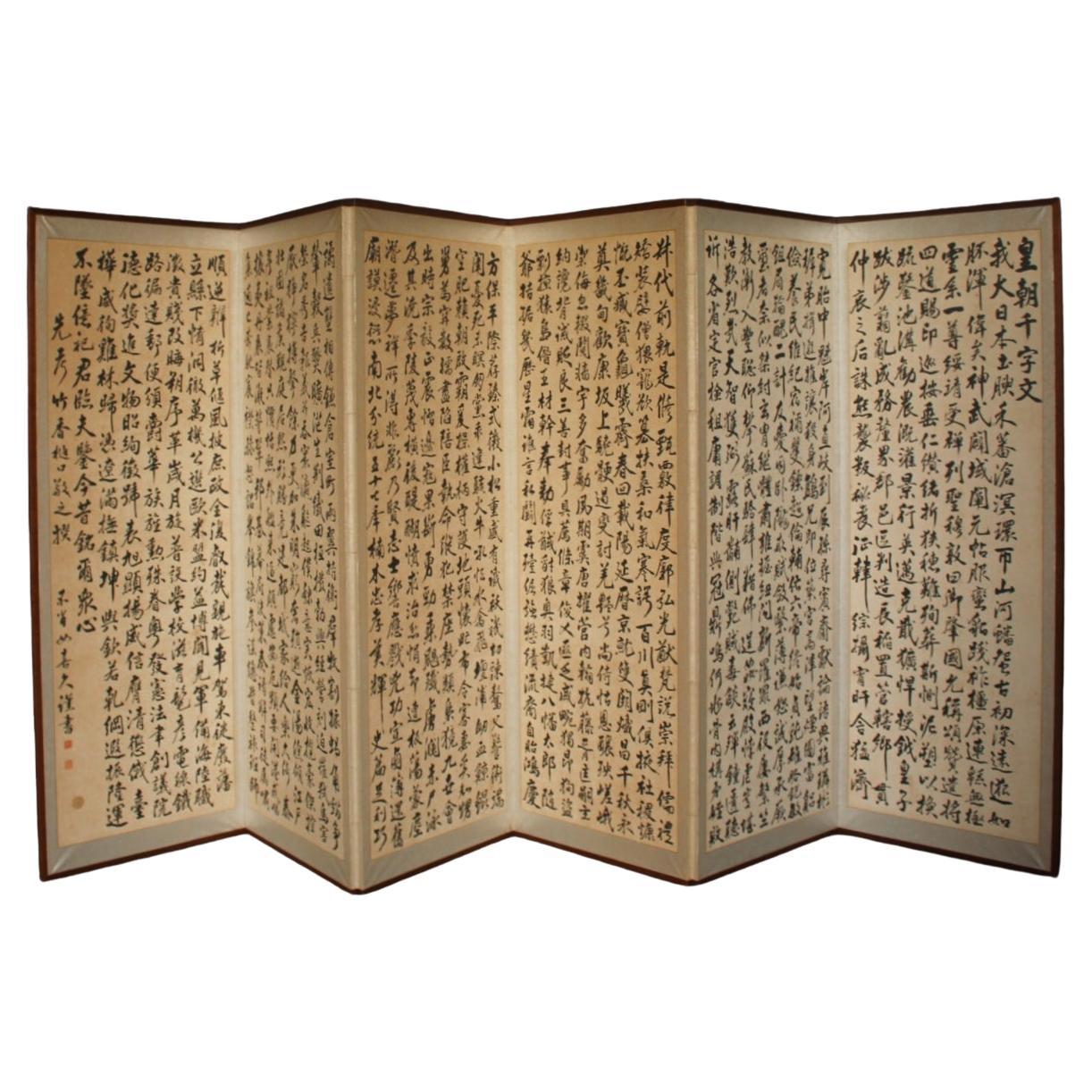
This is a woodblock-printed folding screen made in Japan during the Showa period, featuring writings by a Chinese calligrapher.
It is a passage from a story written by a famous Chinese politician and writer named "So-sho-ku."
The original was a stone slab carved into the wood, but it is thought that this was made by woodblock printing based on a "rubbing" that was transferred from the original.
The Battle of Red Cliffs, famous in the Romance of the Three Kingdoms, took place in 208 AD, and about 800 years later, the screen depicts the scenery of the ancient battlefield that "So-sho-ku." visited, and his feelings as he faced it.
The contrast of the black printing paper pasted on the shiny silver base is very beautiful, and while it is clean, it also has a wabi-sabi atmosphere, making it a perfect match for antiques and modern furniture.
Since it is an old item, there are small tears and peeling paper, such as the red circled areas. Please see the detailed image.
The surface is relatively clean.
It is an attractive item that can be incorporated into your interior decor.
This is a highly recommended item!
・Size when unfolded as shown in the photo
W240cmD33cmH167.5cm
・Width when fully unfolded
W295cmD1.8cmH167.5cm
・Folded
W50.5cmD11.2cmH167.5cm
We mainly sell old Japanese items, but also items from around the world.
We have seen tens of thousands of items so far.
Using that experience, we list appealing items here.
This is something we can do because of our long experience.
If you are looking for something special, we encourage you to purchase it on our site.
- Dimensions:Height: 65.95 in (167.5 cm)Width: 94.49 in (240 cm)Depth: 13 in (33 cm)
- Style:Showa (Of the Period)
- Materials and Techniques:Paper,Japanned
- Place of Origin:
- Period:
- Date of Manufacture:1930-1980
- Condition:Since it is an old item, there are small tears and peeling paper, such as the red circled areas. Please see the detailed image.
- Seller Location:Sammu-shi, JP
- Reference Number:1stDibs: LU5487243739562
About the Seller
5.0
Platinum Seller
Premium sellers with a 4.7+ rating and 24-hour response times
Established in 2015
1stDibs seller since 2020
1,719 sales on 1stDibs
Typical response time: 6 hours
- ShippingRetrieving quote...Shipping from: senzoku, Japan
- Return Policy
More From This Seller
View AllJapanese paintings with old kanji characters/20th century
Located in Sammu-shi, Chiba
This is a painting of kanji drawn in Japan around the 20th century.
The artist's name is unknown.
It is hand-drawn.
This is 24 Japanese kanji, each of which is pronounced "kai" or "g...
Category
20th Century Japanese Showa Paintings
Materials
Paint
Japanese antique sketch scroll / 1800-1900 / Flower, bird and animal paintings
Located in Sammu-shi, Chiba
This is a rough sketch of a Japanese painting drawn around the late Edo period to the early Meiji period (1800-1900) in Japan.
A picture is drawn by sticking and connecting short pi...
Category
Antique 19th Century Japanese Edo Paintings and Screens
Materials
Paper
Antique Japanese Ink Painting Curtain/Wabi-Sabi Tapestry/1868-1920
Located in Sammu-shi, Chiba
This is an old Japanese noren curtain. It is believed to be made from a traditional Japanese fabric called asa or basho, made from banana leaf fibers. Noren curtains were originally hung at the entrances of shops and homes, gently blocking outside views and breezes while also conveying a sense of the presence of people and the changing seasons, a presence born from Japan's unique lifestyle and culture. More than simply a room divider, noren curtains also quietly convey the aesthetic sense of the people and businesses that inhabit them.
The greatest appeal of this work lies in the ink paintings executed on the fabric. The moon, bamboo grass, rocks, and flowing river are depicted, making ample use of the white space, creating a tranquil worldview reminiscent of Chinese and Japanese landscape paintings. However, the depiction is by no means verbose; the bamboo grass is depicted with minimal, omitted lines, and the river is not depicted in full, leaving it to the viewer's imagination. In the center, a full moon is depicted only as an outline, and its understated depiction evokes a sense of transience and lingering beauty.
A two-character signature can be seen in the corner of the painting, but details about the artist are unknown. However, noren curtains painted directly onto them in ink like this are extremely rare, and I have only seen them a few times before. I think it is particularly noteworthy that such poetic, highly refined pictorial expression has been applied to a noren curtain, which is supposed to be a practical item.
Over the years, the entire fabric has taken on a slight brownish tinge, taking on the depth and tranquility that only comes with aging. This color blends with the pale ink colors of the ink, quietly blending into the space without making a strong statement. It pairs particularly well with white walls, and I highly recommend using it not only as a noren curtain, but also hanging it on the wall like a tapestry for viewing. I believe that just hanging one in a space will bring a sense of dignified space and the depth of time.
Size & Specifications
Cloth Width: Approx. 87.5 cm
Height: Approx. 150.5 cm
Cloth Thickness: Very thin (approx. 0.05 mm; exact measurements not taken)
Top Bamboo Rod Length: Approx. 98.5 cm
Item Number
OB314
It's impossible to say when we'll ever be able to find another antique noren...
Category
Antique Late 19th Century Japanese Meiji Tapestries
Materials
Hemp

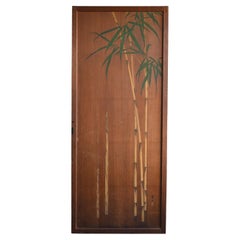
Wooden door with old Japanese bamboo painting/Wall hanging painting/Wooden door
Located in Sammu-shi, Chiba
This is a one-panel wooden door made in Japan around the 20th century. The material used is presumed to be Japanese cypress or Japanese cedar, and the delicately straight grain of th...
Category
20th Century Japanese Taisho Paintings
Materials
Cedar
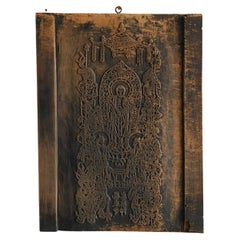
Japanese antique wooden blocks/1800-1920/paper charms/Buddhist art
Located in Sammu-shi, Chiba
This is a wooden woodblock produced in Japan from the late Edo period to the Taisho period (about 1800s to 1920s). The material used is something like beech wood, and the wood is dec...
Category
Antique Late 19th Century Japanese Edo Wall-mounted Sculptures
Materials
Beech
Antique Japanese Buddhist pagoda hanging scroll /Buddhist painting/Edo
Located in Sammu-shi, Chiba
This is a slightly different Buddhist painting believed to have been created by a Japanese temple monk during the Edo period (late 17th to 19th century). Rendered in ink on paper, th...
Category
Antique 18th Century Japanese Edo Paintings
Materials
Paper

You May Also Like
Rare Antique Japanese Folding Screen by Kano Tanshin
By Kano Tanshin
Located in Atlanta, GA
An exquisite Japanese folding screen painted and signed by Kano Tanshin (Morimasa) (1658-1719), circa early Edo Period. An important member of the Kano painter family, the son of Kano Tanyu...
Category
Antique 17th Century Japanese Japonisme Paintings and Screens
Materials
Brass
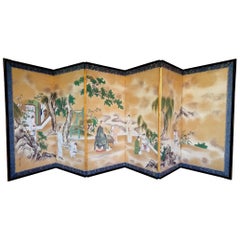
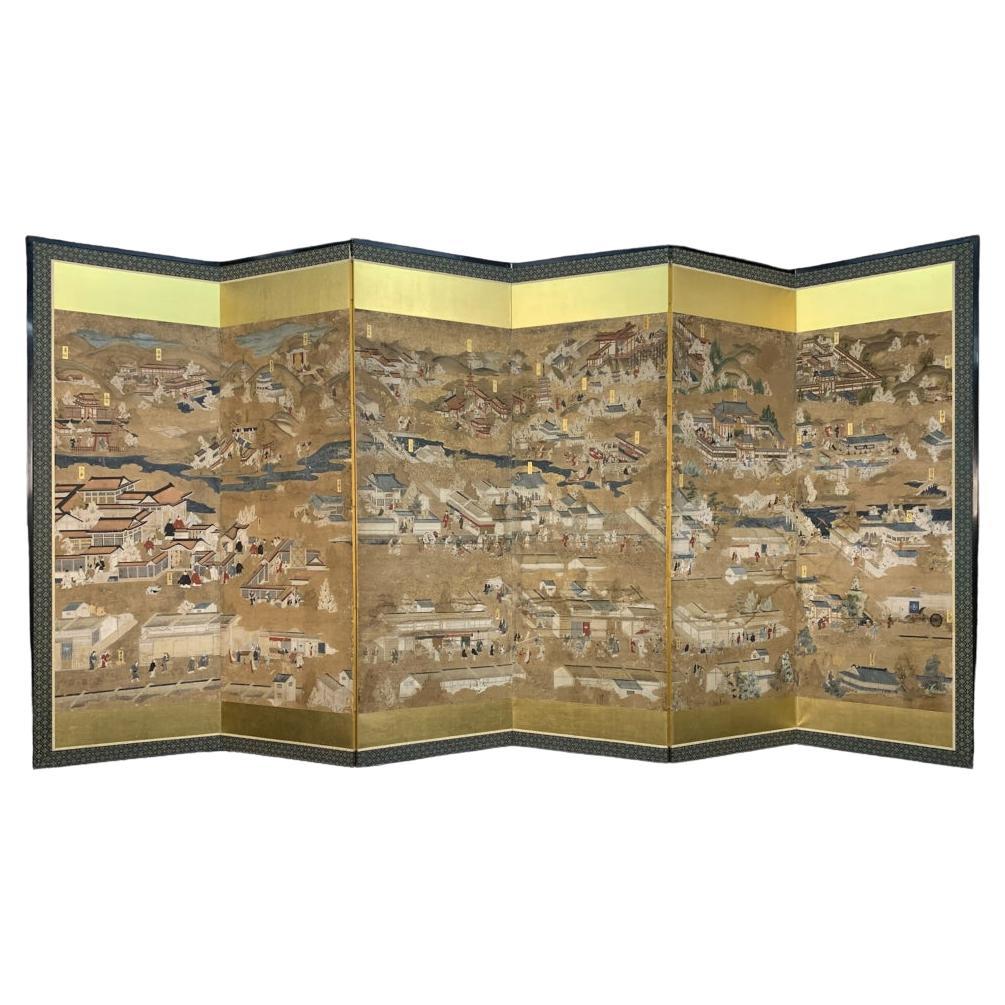
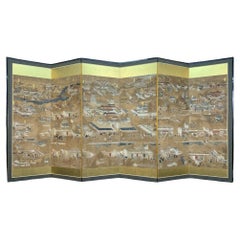
Edo Period Kyoto Screen (2/2)
Located in Fukuoka, JP
Edo Period Kyoto Screen
Period: Edo period
Size: 343 x 176 cm (134.6 x 69 inches)
This stunning Edo period screen depicts typical scenes of daily life...
Category
Antique 18th Century Japanese Edo Paintings and Screens
Materials
Paper, Wood, Silk
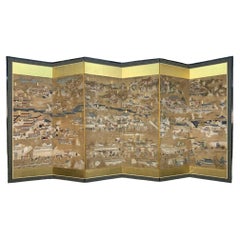
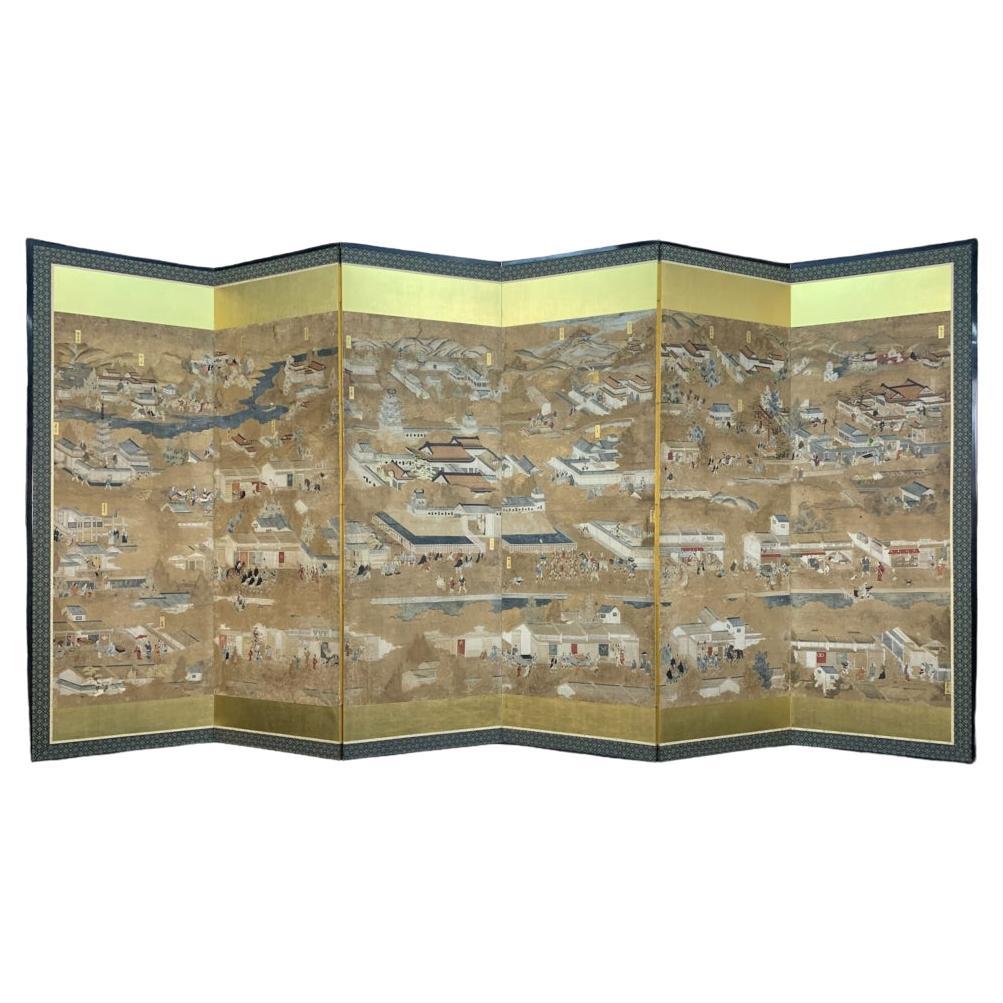
Edo Period Kyoto Screen
Located in Fukuoka, JP
Edo Period Kyoto Screen
Period: Edo period
Size: 343 x 176 cm (134.6 x 69 inches)
SKU: RJ69
This stunning Edo period screen depicts typical scenes of d...
Category
Antique 18th Century Japanese Edo Paintings and Screens
Materials
Silk, Wood, Paper
$9,450
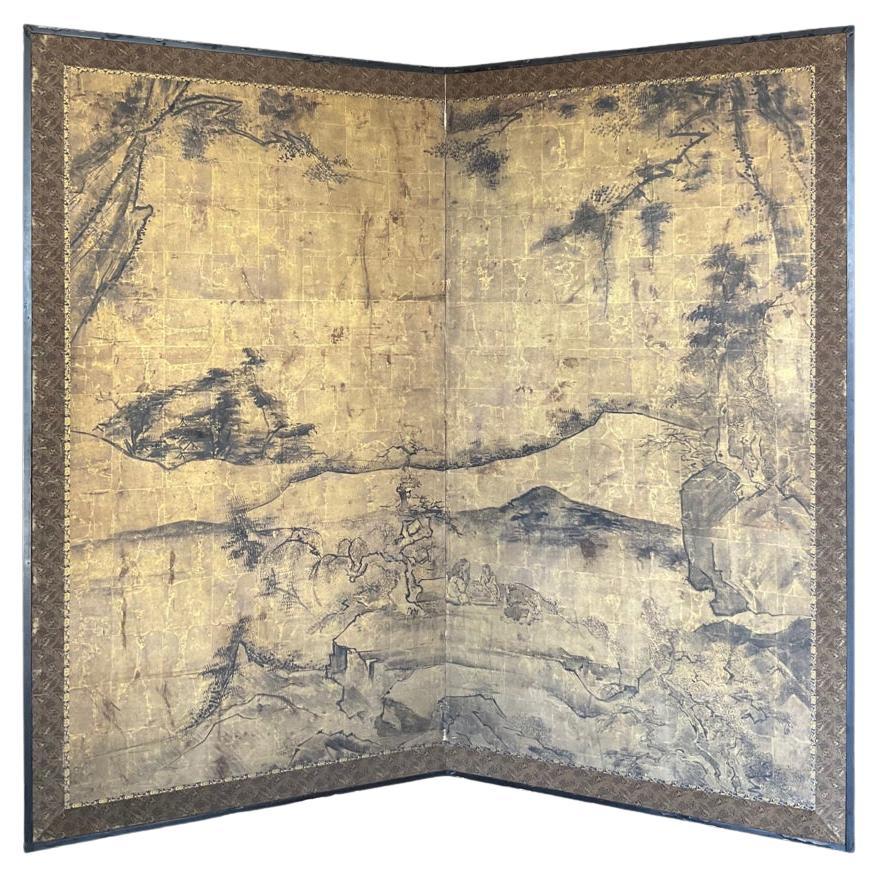
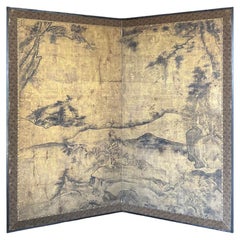
Early Edo Period Chinese-Inspired Screen
Located in Fukuoka, JP
This remarkable screen from the early Edo period, circa the 17th century, showcases the influence of early Chinese art forms with its intricate ink work on a gold leafed surface. The...
Category
Antique 17th Century Japanese Edo Paintings and Screens
Materials
Gold Leaf
$3,496 Sale Price
56% Off
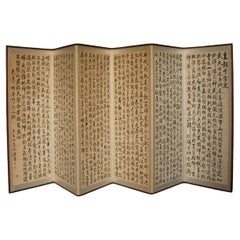
B62 Old Japanese Calligraphy Thousand Characters, folding screen, 6anel
Located in Niiza, JP
Unfolded size: 3680 x 1700 x 20 mm
Foldable: 625 x 1700 x 110 mm, 15kg
Estimated size after packaging (sandwiched between 5-10 mm plywood):
17 cm x 69 cm x 180 cm Weight 27 KG
This ...
Category
20th Century Japanese Paintings and Screens
Materials
Wood, Paper
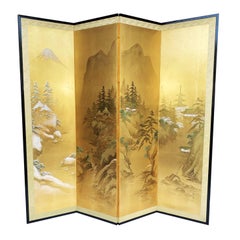
Japanese Four Panel Screen
Located in Pomona, CA
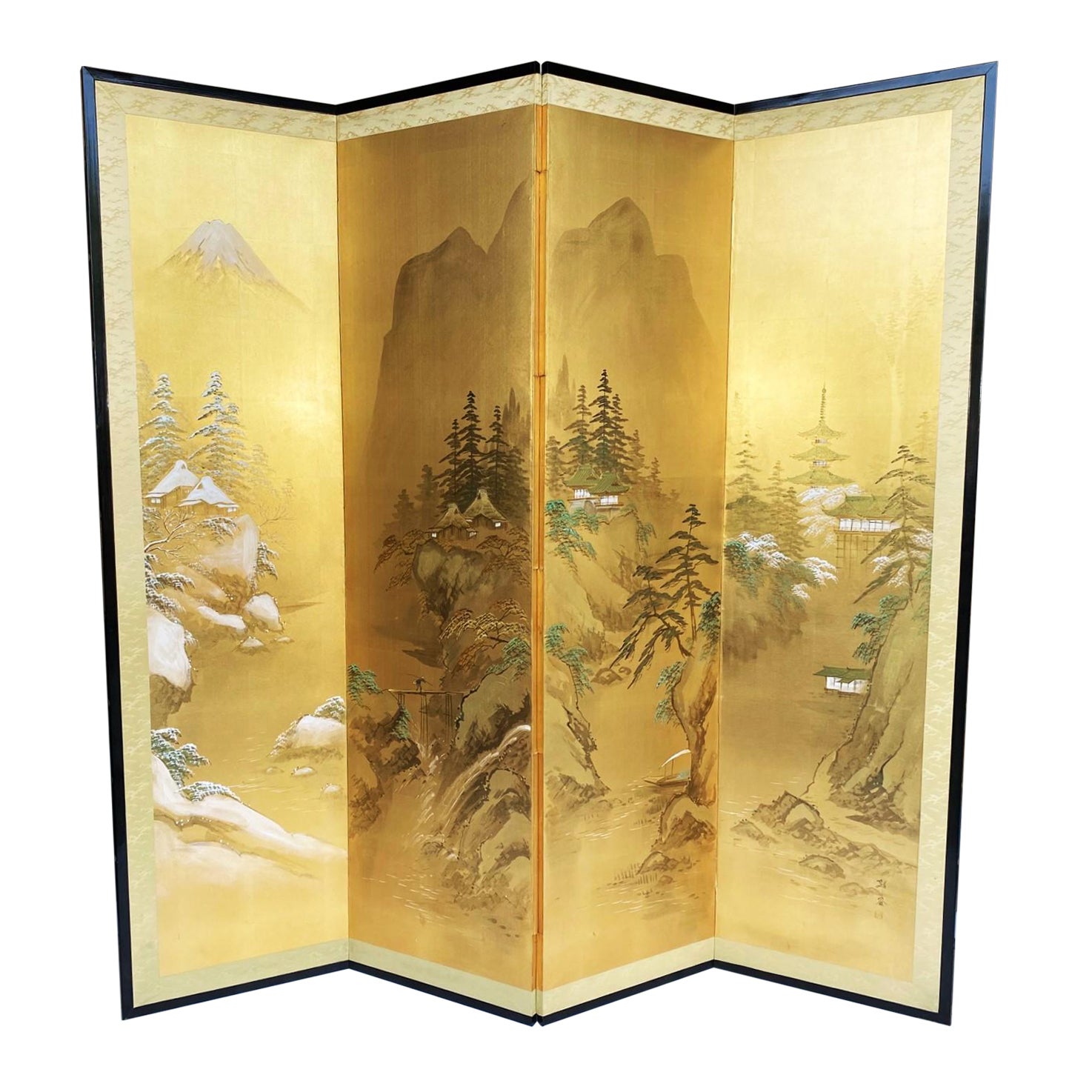
Hand-painted on silk Japanese four-panel screen. Decorations of temples, trees, and mountains.
Category
Vintage 1960s Japanese Screens and Room Dividers
Materials
Paint
More Ways To Browse
Woodblock Japan
Partition Vintage
20th Century Folding Screen
Used Stone Slabs
Folding Screens Black
Japanese Screen Black
Room Partition
Vintage Japanese Screen Print
Wood Crane
Gilt Lacquer Panel
Antique Table Screen
Asian Art Painting Pair Wood Panel
Japanese Birds Painted On Silk
Japanese Maple
Qing Dynasty Panels
18th Century Japanese Silk Painting
De Gournay
Hand Painted Silk Panels