Items Similar to Pair Large Framed Japanese Calligraphy "Dragon"
"Tiger", Mid 20th Century
Want more images or videos?
Request additional images or videos from the seller
1 of 8
Pair Large Framed Japanese Calligraphy "Dragon"
"Tiger", Mid 20th Century
$43,000per set
£32,503.02per set
€37,282.32per set
CA$59,943.77per set
A$65,253.68per set
CHF 34,636.68per set
MX$785,142.25per set
NOK 438,893.86per set
SEK 402,150.80per set
DKK 278,422.10per set
About the Item
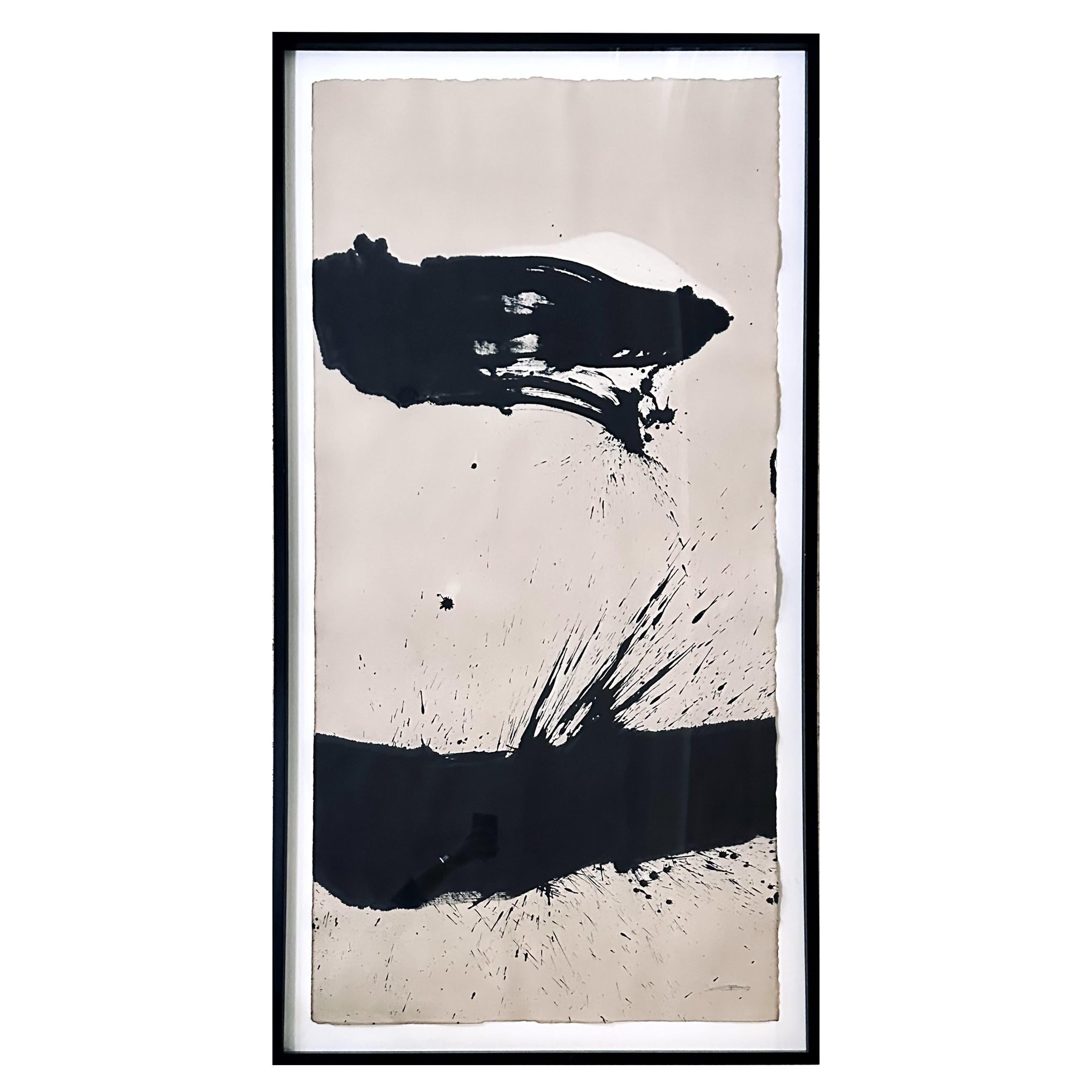
A large and powerful pair of Japanese calligraphic works, mid 20th century, Japan. One reading "Dragon", the other reading "Tiger". Ink on handmade paper, framed.
The brush strokes bold and brash, using the force the painter to move the ink around the wonderfully thick and textured handmade paper. The energy of the calligrapher is evident in each stroke and splash of ink.
Taken together, the paintings are about balance, capturing the essence of "inyo" (yin and yang). In Japanese culture, the tiger represents the earth and feminine energy, "in", while the dragon represents the heavens and the masculine energy, "yo".
The artist has captured both energies perfectly. The tiger expresses the feminine energy through graceful curves and undulations. Even more impressive is that this appears to be a single stroke painting, meaning the painting was completed in one continuous motion, without the brush leaving the paper.The dragon expresses the masculine energy through bold and aggressive strokes, with the ink splattering in dramatic ways across the painting.
The paintings mounted floating within a black framed shadowbox with natural linen background and acrylic front. Each with two hooks for hanging on the back.
Provenance:
Christie's, NY
Michael Smith's Palladian Villa.
- Dimensions:Height: 62.25 in (158.12 cm)Width: 37.25 in (94.62 cm)Depth: 2 in (5.08 cm)
- Sold As:Set of 2
- Style:Expressionist (Of the Period)
- Materials and Techniques:
- Place of Origin:
- Period:
- Date of Manufacture:Mid-20th Century
- Condition:Wear consistent with age and use. Minor scratching to the sides of the frames.
- Seller Location:Austin, TX
- Reference Number:1stDibs: LU894721024112
About the Seller
5.0
Platinum Seller
Premium sellers with a 4.7+ rating and 24-hour response times
Established in 2001
1stDibs seller since 2010
356 sales on 1stDibs
Typical response time: 2 hours
- ShippingRetrieving quote...Shipping from: Austin, TX
- Return Policy
More From This Seller
View AllJapanese "Magpie and Peony" Two Panel Screen, Edo Period, 18th/19th century
Located in Austin, TX
A sublime Japanese two panel "Magpie and Peony" screen, ink and color on paper, Edo Period, late 18th or early 19th century, circa 1800, Japan.
The two panel screen features a wond...
Category
Antique Early 19th Century Japanese Edo Paintings and Screens
Materials
Copper
Large Framed Japanese Buddhist Amida Temple Hall Painting, Mid-19th Century
Located in Austin, TX
A large and incredible Japanese painting of a Buddhist temple hall with Amida Nyorai, late Edo or early Meiji period, mid-19th century, Japan. Mounted wit...
Category
Antique Mid-19th Century Japanese Meiji Paintings and Screens
Materials
Brocade, Silk, Acrylic, Wood, Paint
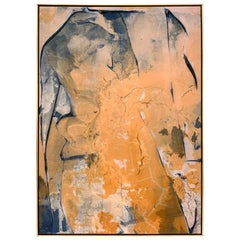
Walter Darby Bannard "Soft Companion", 1977, Acrylic on Canvas
Located in Austin, TX
A wonderful abstract painting by Walter Darby Bannard (1934-2016), entitled "Soft Companion", dated 1977, acrylic on canvas, in a wood and brass frame.
A wonderful abstract or lyr...
Category
Vintage 1970s American Expressionist Paintings
Materials
Canvas, Acrylic
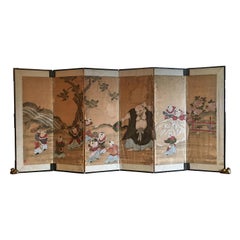
Japanese Six Panel Screen with Hotei, Edo Period, Early 19th Century
Located in Austin, TX
A delightful Japanese six panel painted paper screen featuring the beloved figure Hotei, Edo Period, early 19th century.
Hotei, called Budai in China, and known as the Laughing Buddha or Fat Buddha in the West, is considered to be an emanation of Maitreya, the Buddha of the Future.
In Japan, he also holds a special place as one of the Seven Lucky Gods, being the god of fortune, and protector of children.
He is always portrayed as a mirthful and corpulent man, dressed in loose robes that show off his round belly. He carries a sack with him, said to be filled with treasure. As the protector of children, he is often portrayed with them playing on or around him, as he is here. The children portrayed in this screen are dressed in Chinese style clothing...
Category
Antique Early 19th Century Japanese Edo Paintings and Screens
Materials
Silk, Paper
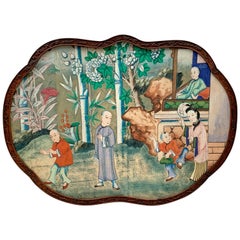
Large Antique Chinese Hand Painted Wallpaper Section in Carved Hardwood Frame
Located in Austin, TX
A wonderfully charming large and colorful Chinese hand painted wallpaper section in a carved and shaped hardwood frame. The wallpaper dates to the first half of the 20th century or e...
Category
Early 20th Century Chinese Chinese Export Paintings and Screens
Materials
Hardwood, Paper
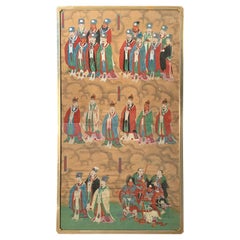
Chinese Early Qing Dynasty "Water and Land Ritual" Painting, 17th Century
Located in Austin, TX
An important Chinese 17th century early Qing Dynasty "Water and Land Ritual" painting, mineral pigment and ink on silk, mounted as a scroll, framed and glazed.
The painting depicting groups of heavenly court officials and deities descending from the clouds to participate in the Liberation Rite of Land and Water. The figures all wear full, sumptuous robes, complete with hats indicating their station. The blue, green, red, black and white of the robes decorated with gilt dragon and geometric designs.
This painting is interesting in that it incorporates Daosit deities and heavenly officials coming down to participate in the Buddhist rite. There are five distinct groups of figures, each with a small inscribed plaque. Some of the groups are identified as Tian Xian, or Heavenly Immortals.
The group at the bottom left are identified as the Sanguan Dadi, or Three Great Emperor-Officials. The Emperor of Heaven is dressed in blue robes with gilt painted dragons. The Emperor of Water wears black robes. The Emperor of Earth wears yellow robes...
Category
Antique 17th Century Chinese Qing Paintings and Screens
Materials
Silk, Glass, Giltwood, Paint
You May Also Like
Large Framed Abstract Ink Painting by Qin Feng
Located in Atlanta, GA
Artist: Qin Feng (Chinese B. 1961)
Title: West Wind East Water #0616
Medium: Ink and Coffee on Silk and Cotton paper
Year of Creation: 2006
Mark: Signed with artist's mark lower right
Measurement: 74 1/2" x 37 1/4" (with frame)
Provenance: From a prominent American British collection.
Purchased from Michael Goedhuis in 2006 for 55000usd (A copy of Art Metadata entry from the previous owner will be included).
Biography (Courtesy of Artsy)
Considered a leading ink painter, Qin Feng represents China’s avant-garde movement. Invited by the German government to curate an exhibition in Germany in order to promote cultural exchange between the two countries, Qin moved to Berlin in the ’90s where he began to fuse Western modernism and the Chinese ink tradition in abstract compositions. Feng uses traditional calligraphic materials but employs his brush with the unrestrained energy of the Abstract Expressionists. Inspired by his upbringing in Xinjiang, a multicultural intersection of the silk roads, Qin has incorporated Chinese, Uighur, Arabic, and Russian language into his work. In recent years, Qin has overlaid pieces of ancient Chinese furniture...
Category
Early 2000s German Post-Modern Paintings and Screens
Materials
Paper
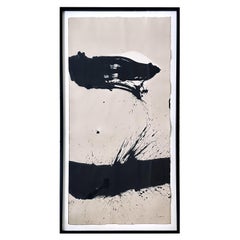
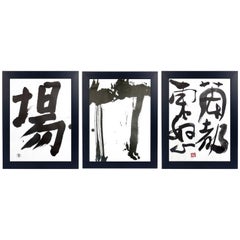
Collection of Abstract Japanese Calligraphy Prints
By Sōfu Teshigahara
Located in Atlanta, GA
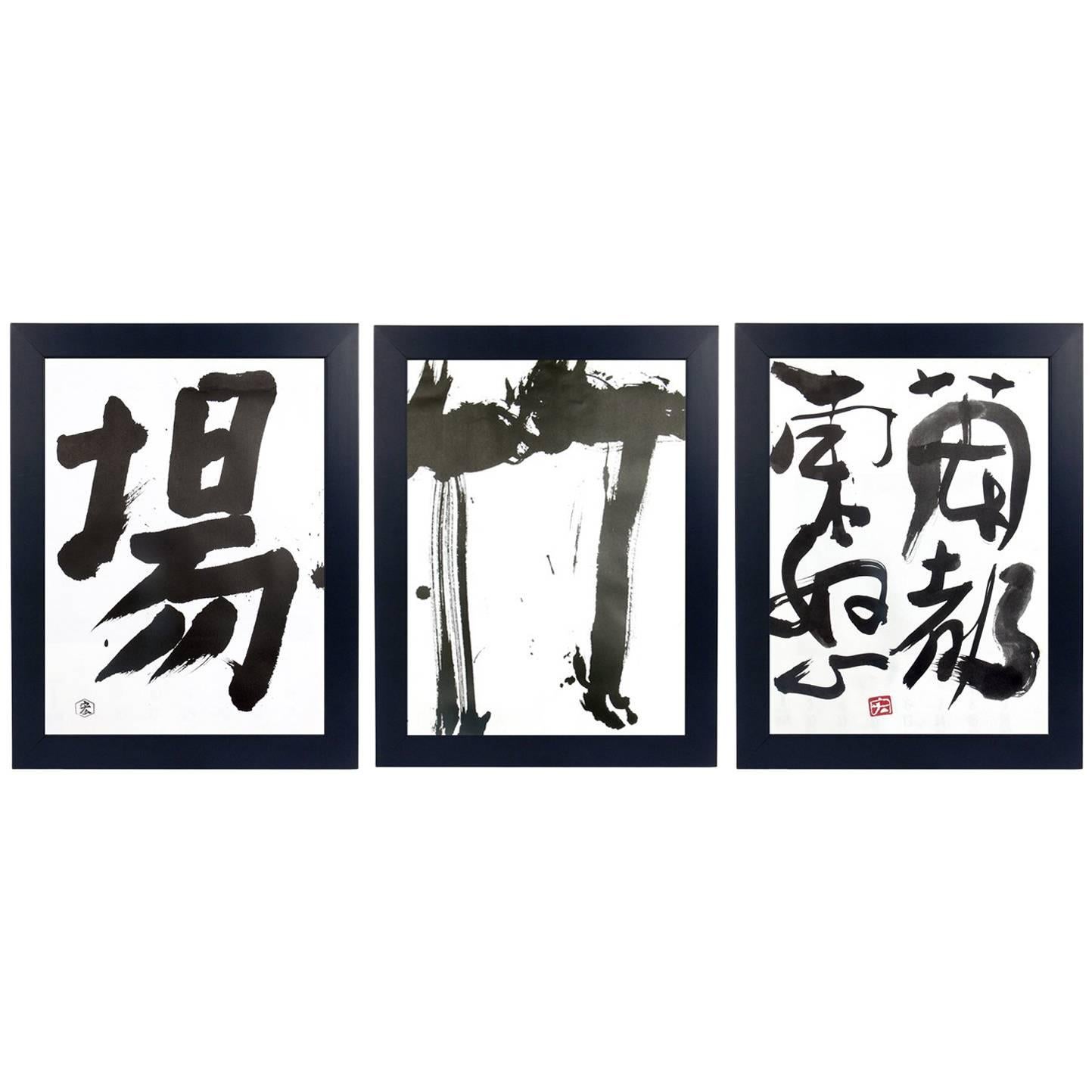
Collection of abstract Japanese calligraphy prints, possibly after Sofu Teshigahara, Japan, circa 1970s. These were from a collection that we purchase...
Category
Vintage 1970s Japanese Mid-Century Modern Prints
Materials
Glass, Wood, Paper
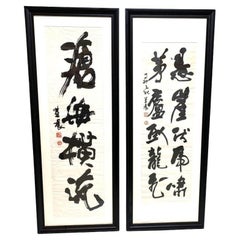
Pair of Chinese Calligraphy Scrolls in Mark Humphrey Gallery Frames
Located in Bridgeport, CT
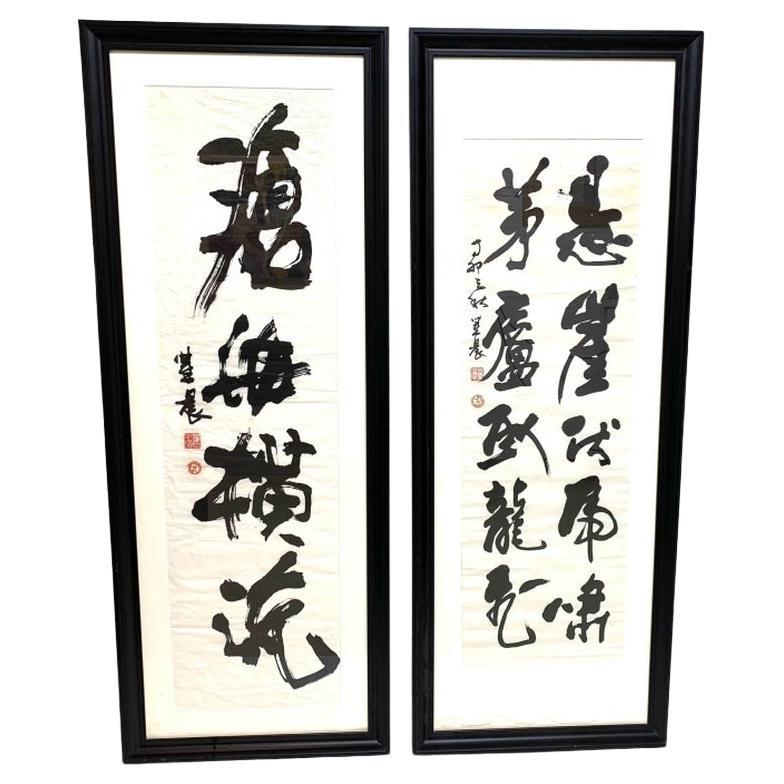
A pair of boldly brushed Rice Paper Calligraphy Panels having a particularly fine Asian presentation. One panel with 10 Calligraphic characters and the other with 4 and both with red...
Category
20th Century Asian Ming Paintings and Screens
Materials
Wood, Paper
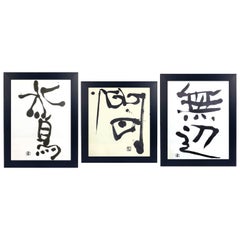
Collection of Abstract Japanese Calligraphy Prints
By Sōfu Teshigahara
Located in Atlanta, GA
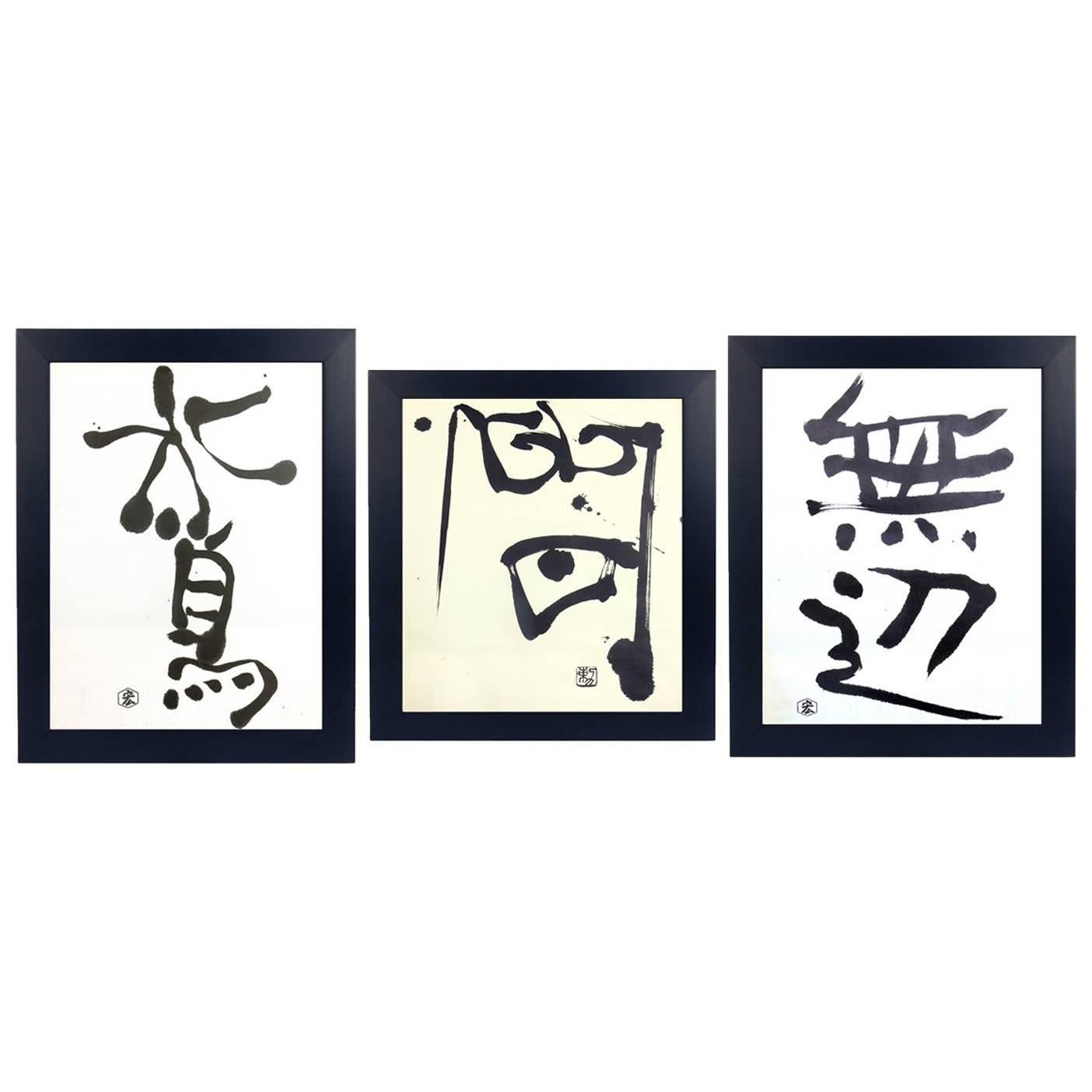
Collection of abstract Japanese calligraphy prints, possibly after Sofu Teshigahara, Japan, circa 1970s. These were from a collection that we purchase...
Category
Vintage 1970s Japanese Mid-Century Modern Prints
Materials
Glass, Wood, Paper
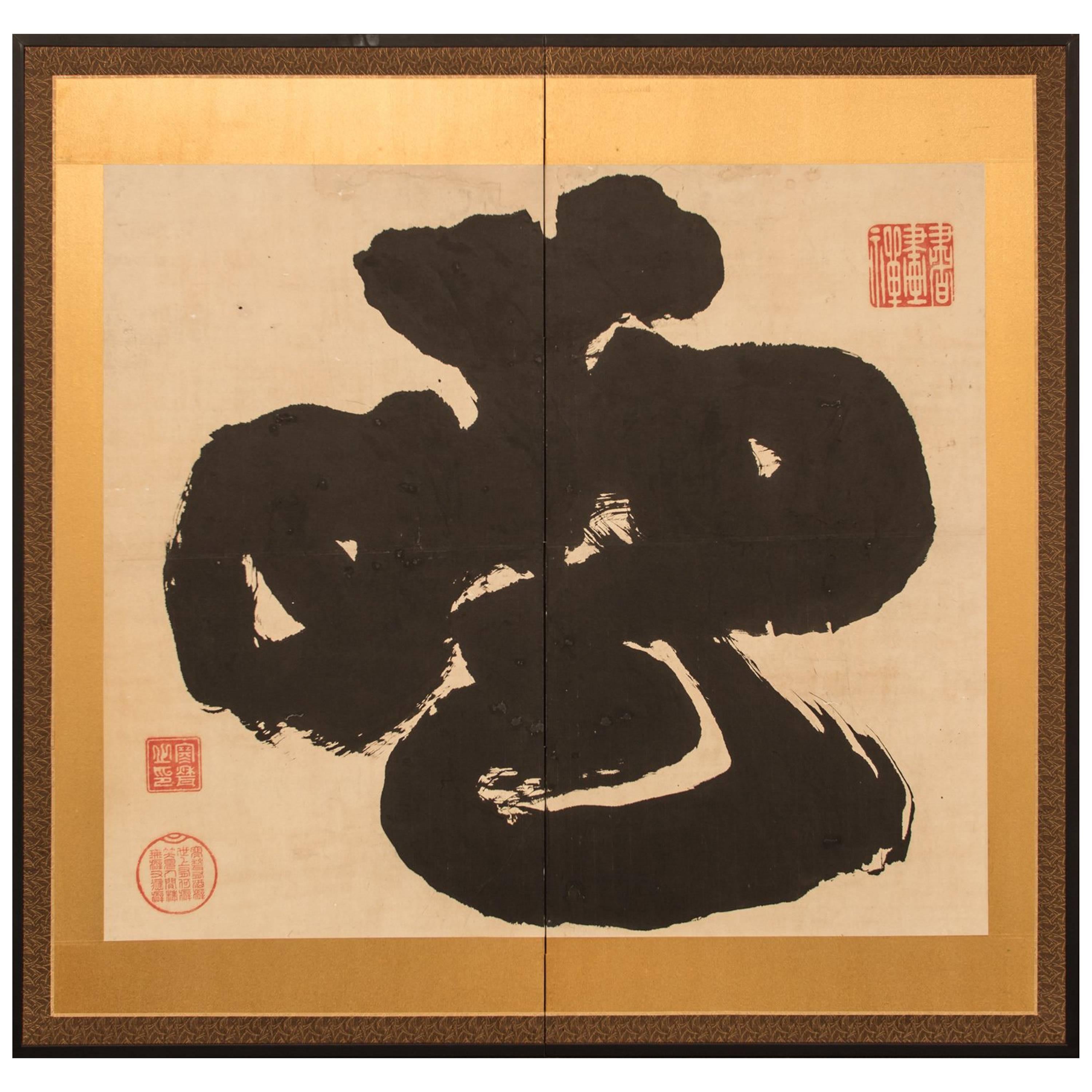
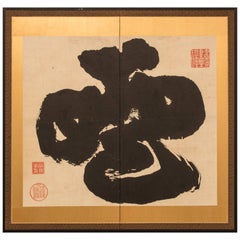
Japanese Two Panel Screen, Zen Calligraphy Character Cloud
Located in Hudson, NY
Meiji period (1868 - 1912) calligraphy painting. Abstract character reads: Kumo (cloud). Seal on the upper right reads Shogazen, seal on the upper left reads Hosai. Ink on mulberr...
Category
Early 20th Century Japanese Meiji Paintings and Screens
Materials
Silk, Wood, Paper
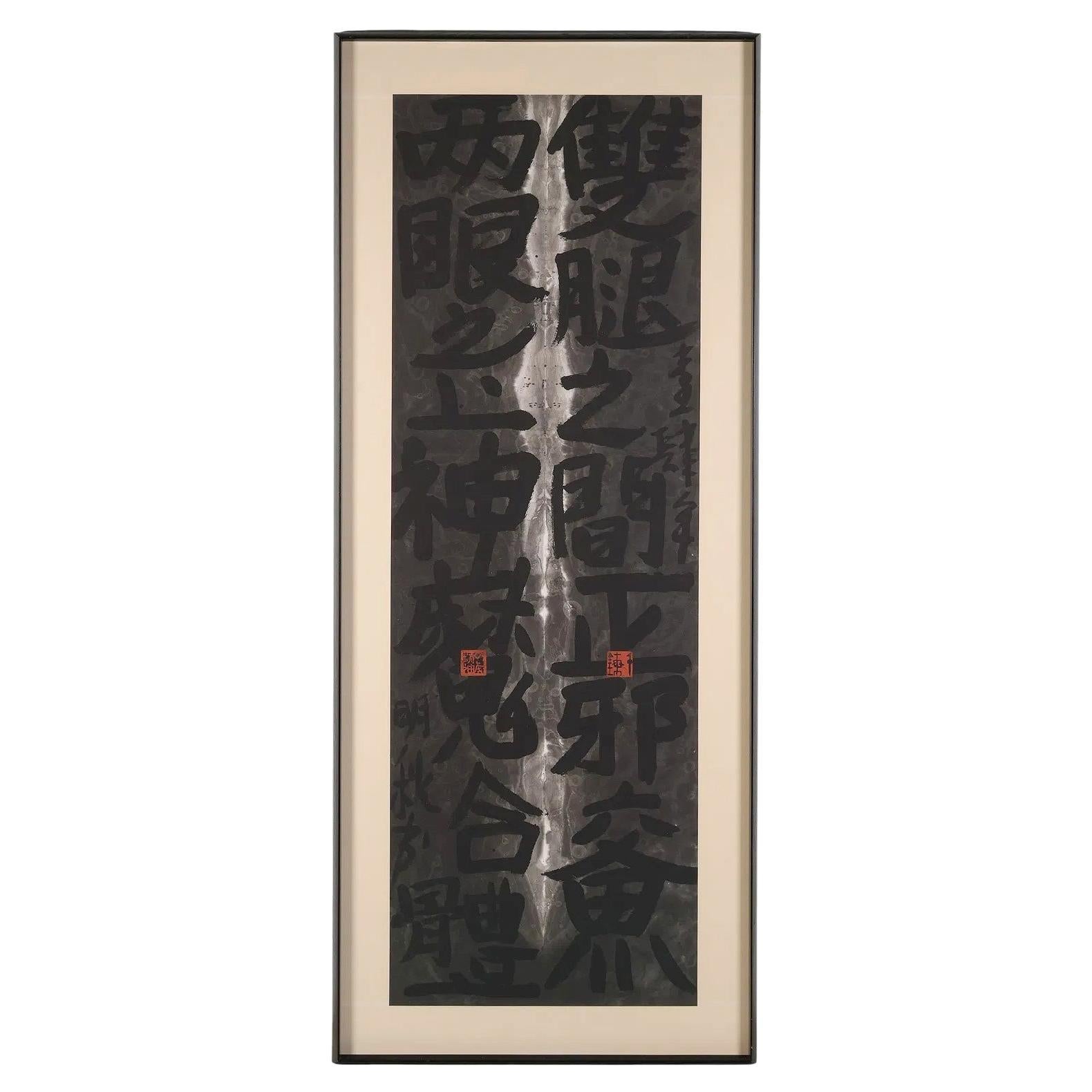
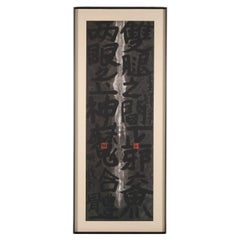
Framed Chinese Ink Art Calligraphy by Fung Ming Chip
Located in Atlanta, GA
A large contemporary ink work by Chinese artist Fung Min Chip (China, 1951-). The calligraphic work was created on traditional Chinese Xuan paper and features a vertical pair of coup...
Category
21st Century and Contemporary Hong Kong Modern Paintings and Screens
Materials
Wood, Paper
More Ways To Browse
Japanese Mid Century
Japanese Mid Century Furniture
Mid Century Screen
Midcentury Japanese Art
20th Century Japanese Screens
Asian Tiger
Japanese Dragon
Japanese Mid Century Painting
Pair Large Paintings
Vintage Yin Yang
Asian Tiger Art
Calligraphy
Japanese Tiger
Tiger Screen
Japanese Calligraphy Paintings
Japanese Painting Large
Japanese Screens Large
Tiger Painting Midcentury