Items Similar to Pair of Japanese hinagata byôbu 雛形屏風 (small folding screens) with flower carts
Want more images or videos?
Request additional images or videos from the seller
1 of 19
Pair of Japanese hinagata byôbu 雛形屏風 (small folding screens) with flower carts
$4,299.18per set
£3,212.42per set
€3,600per set
CA$5,930.07per set
A$6,496.21per set
CHF 3,419.35per set
MX$77,533.93per set
NOK 43,588.06per set
SEK 39,846.06per set
DKK 27,429.18per set
About the Item
An amazing pair of six-panel hinagata byôbu (doll festival folding screens) with a continuous painting on gold leaf showcasing flower carts (hana’guruma) at the edge of a winding river.
Both laden with a large bamboo basket (hanakago) overflowing with large pink peonies (botan). Behind one cart stands a maple tree in full autumn colours (momiji), and behind the other an elegant weeping cherry tree (shidare’zakura) bearing pink blossoms.
Dense silver leaf clouds outline the scene at the bottom.
The painting is surrounded by a thin green and a broad greenish brown brocade silk border. Protected by a black wooden frame with its original hardware. The backing paper embellished with a cute hand-stamped design of a bunny in a flower cartouche.
Including original wooden tomobako (storage box) with dated inscription in black ink. Dating the pieces to: ‘An auspicious day in March of the year of the metal dragon, the 3rd year of the Bunsei period’, Anno 1820.
Dimensions:
Total width together: 116.06 in/294.8 cm.
Total width single screen: 58.03 in/147.4 cm (2 x 9.96 in/25.3 cm and 4 x 9.52 in/24.2 cm), Height 21.69 in/55.1 cm.
The folding screens are ideal for mounting flat on a wall and presenting as a single work of art.
When shipped we will add a certificate of authenticity.
Price including insured shipping.
- Dimensions:Height: 21.7 in (55.1 cm)Width: 58.04 in (147.4 cm)Depth: 0.36 in (9 mm)
- Sold As:Set of 2
- Materials and Techniques:
- Place of Origin:
- Period:
- Date of Manufacture:Bunsei 3 - Anno 1820
- Condition:Repaired. Wear consistent with age and use. Minor losses. Considering the age they are in a good condition. There are some to be expected sign of age and wear, and some old restorations. Like a some browned spots and small tears in the paper. Please check the pictures as a condition reference.
- Seller Location:Amsterdam, NL
- Reference Number:Seller: B3045+B30461stDibs: LU7165235922592
About the Seller
4.8
Vetted Professional Seller
Every seller passes strict standards for authenticity and reliability
Established in 1996
1stDibs seller since 2022
22 sales on 1stDibs
- ShippingRetrieving quote...Shipping from: Zwanenburg, Netherlands
- Return Policy
More From This Seller
View AllLarge Japanese 6-panel byôbu 屏風 (folding screen) with Edo genre painting
Located in Amsterdam, NL
An elaborate, large six-panel byôbu (folding screen) featuring a detailed genre painting on gold leaf, capturing the vibrancy of festive scenes from the Edo period.
Central to the p...
Category
Antique Early 19th Century Japanese Paintings and Screens
Materials
Metal, Gold Leaf
Large Japanese 6-panel byôbu 屏風 (folding screen) with genre painting
Located in Amsterdam, NL
Fascinating large six-panel byôbu (folding screen) with a detailed genre painting on goldish silver leaf with different scenes of people at work in a rural mountain village during th...
Category
Early 20th Century Japanese Paintings and Screens
Materials
Silver Leaf
Large Japanese 6-panel byôbu 屏風 (folding screen) with chrysanthemum garden
Located in Amsterdam, NL
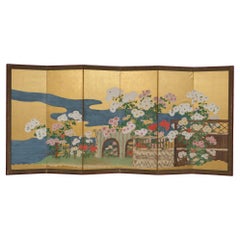
A very colourful and captivating large six-panel byôbu (folding screen) with a refined continuous painting of a luscious flower garden filled with many different types of chrysanthemums (kiku), next to a winding river.
This multi-coloured painting is set on a shiny gold-leaf background, and the chrysanthemum flowers are painted by using shell paste (gofun) in low relief.
Several clutches with a great variety of chrysanthemum flowers are in full bloom and they each show their unique form and colour. Varying from white, red, yellow and pink. The flowers bloom all around and on different kinds of bamboo fences and trellises.
In Japan chrysanthemums are believed to represent happiness, love, longevity and joy.
The panels are surrounded by two silk borders, a thin black one, and a wide brown one. The screen is protected by a black and red negoro’nuri...
Category
Antique Late 19th Century Japanese Paintings and Screens
Materials
Gold Leaf
Mid-size 6-panel byôbu 屏風 with a scene from The Tale of Genji
Located in Amsterdam, NL
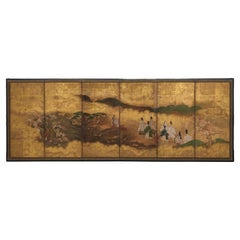
A refined medium-sized six-panel byôbu (folding screen) showcasing a classical autumn court scene from chapter 7 of The Tale of Genji (Genji Monogatari), titled Momiji no Ga (The Aut...
Category
Antique 17th Century Japanese Paintings and Screens
Materials
Metal, Gold Leaf
Pair of Japanese kakejiku 掛け軸 (hanging scrolls) depicting Niô guardians 仁王
Located in Amsterdam, NL
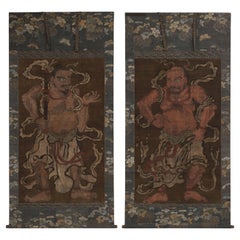
Pair of impressive, antique kakejiku (hanging scrolls) showcasing the awe-inspiring Niô guardians, also referred to as heavenly kings.
Each painting cap...
Category
Antique Early 18th Century Japanese Paintings and Screens
Materials
Brocade, Silk, Paint
$16,719 / set
Free Shipping
Rare set of 2 Japanese suits-of-armour, complete with 2 matching folding screens
Located in Amsterdam, NL
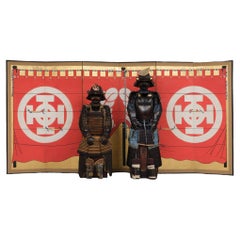
Important unique set of two suits-of-armour (yoroi), complete with two high six-panel screens, that belong together as is indicated by the used family crests (mon). Two crests are used, both belonging to the Nakagawa family of Oka Castle, Ôita prefecture on Kyûshû.
They are:
– the Nakagawa-kurusu, a circle depicting a Celtic-like cross through a ring.
The cross was originally a Christian symbol but after the ban on Christianity in Japan the use of a hidden cross in family crests could continue.
– the Nakagawa-kashiwa, two leaves of the Japanese Emperor Oak turned to each other (dakikashiwa mon).
The remarkable aspect of this ensemble is the presence of matching crests on both the yoroi and the accompanying folding screens. The kurusu and kashiwa crests adorning the yoroi are elegantly replicated on the screens, providing compelling evidence that these pieces form a harmonious and unified set. This exceptional cohesion between the armour and screens further enhances their artistic and historical value.
After the warlord Toyotomi Hideyoshi (1537-1598) had interfered in the battle between the Lord of Bungo Province Ôtomo Yoshi-mune (1558-1605) and the Shimazu of Hyûga Province, he split the Bungo Province in a number of small fiefs and transferred in 1594 Nakagawa Hideshige (1570-1612) from Miki Castle
in the Harima Fief to Oka Castle in Kyûshû.
The Nakagawa family stayed in possession of Oka Castle till the abolishment of the military use of castles in 1873. In 1884 the Nakagawa family received the title of Count (a title in use till the abolishment of aristocracy in 1947).
After the Nakagawa’s left, the castle and the building soon dilapidated and is now known as Oka Castle Ruins. The castle is located in Taketa Village part of Taketa Town in Ôita Province on Kyûshû.
> Set of two tall byôbu (folding screens),
painted with large red jinmaku (camp enclosure curtain) on a gold leaf ground. The curtains show both crests of the Nakagawa family: one screen depicts two Nakagawa-kurusu crests next to a Nakagawa-kashi crest in the middle, and the other shows the symbols the other way round.
Dimensions:
Total width 148.66 in/377.6 cm (2 x 25.35 in/64.4 cm, 4 x 24.48 in/62.2 cm); Height 72.63 in/184.5 cm.
Period: Japan – Late Edo period (First half 19th century), and maybe even older.
> Yoroi with Nakagawa-kashiwa crest:
A Japanese black lacquered suit-of-armour (yoroi) completely laced with orange cords (kuro’urushinuri hi’ito odoshi nimai’dô’maru).
A thirty-two plate suji’bachi kabuto (helmet with raised ridges) with in front a maedate (fore crest) -with traces of gilding- in the shape of flames, resembling a mythical flaming bird flying down. The fukikaeshi (face guards) and the mabizashi (visor) have the Nakagawa-kashiwa crest in gold maki-e lacquer.
Five curved ‘itazane’-plate neck guards (shikoro) laced with orange cords.
Together with an ‘angry man...
Category
Antique 18th Century Japanese Antiquities
Materials
Gold Leaf, Iron, Metal
You May Also Like
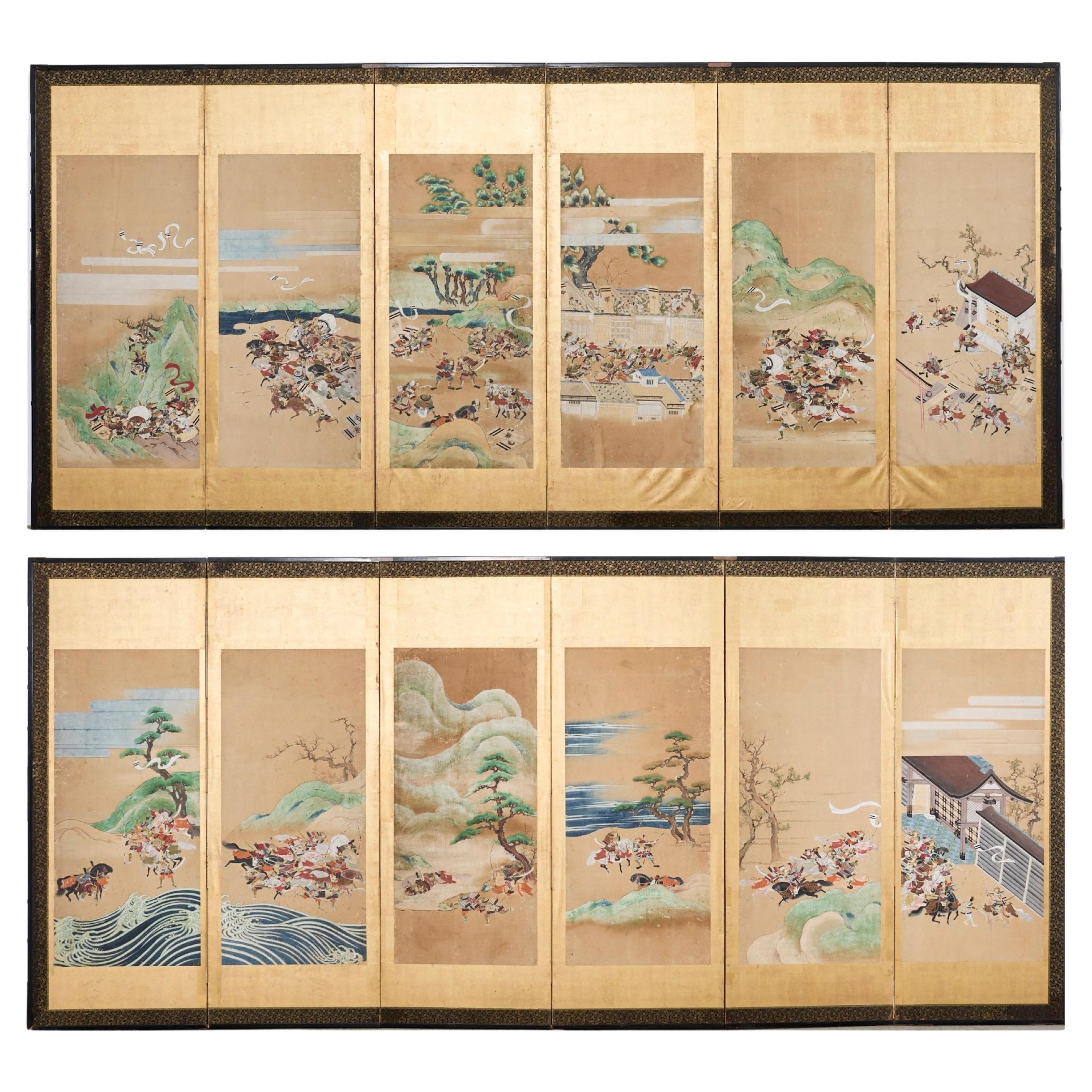
Pair of Japanese Edo/Tokugawa Screens Tale of Heiki
Located in Rio Vista, CA
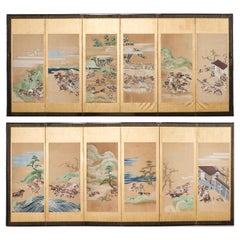
Monumental pair of late 18th century Japanese Edo/Tokugawa period byobu screens depicting the battles between Taira and Minamoto. The screens have six panels each with individual sce...
Category
Antique 19th Century Japanese Edo Paintings and Screens
Materials
Brass, Gold Leaf
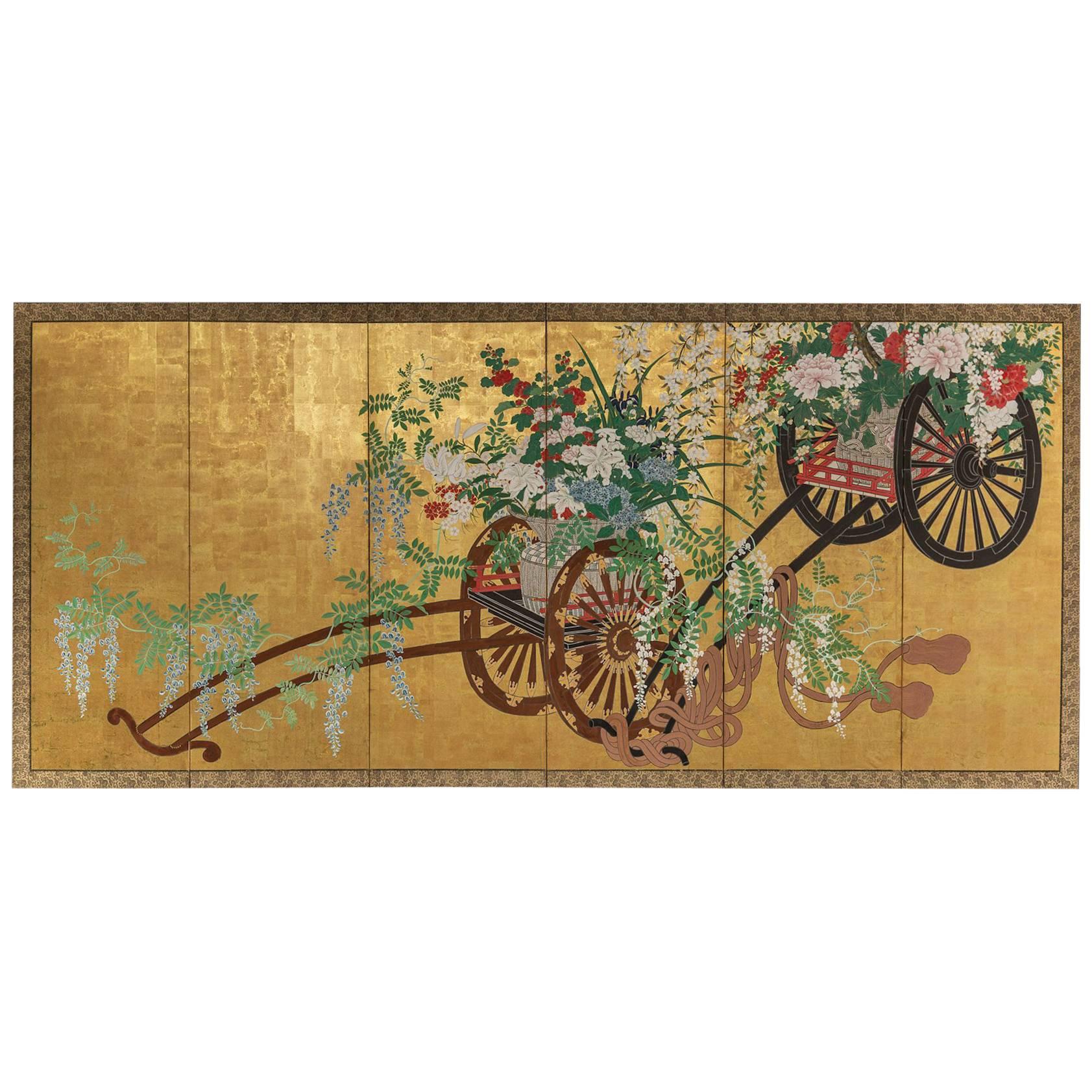
Japanese Six Panel Screens: Pair of Festival Carts
Located in Hudson, NY
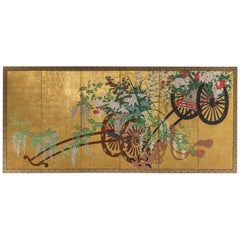
Antique Japanese screen with Festival Cart design. Edo period painting (First half of the 19th century) of one brown lacquer cart and one bla...
Category
Antique Early 19th Century Japanese Edo Paintings and Screens
Materials
Gold Leaf
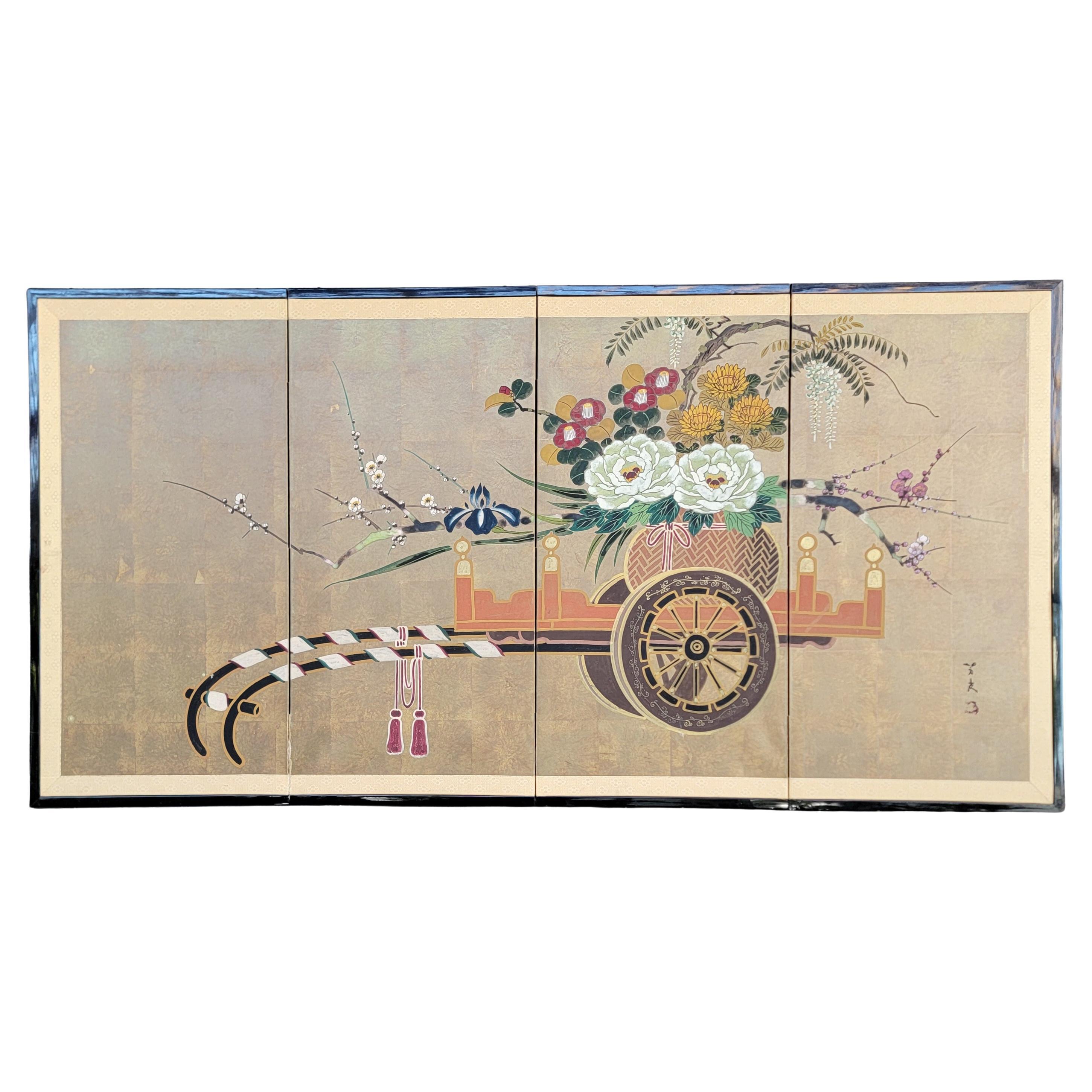
Japanese Folding Screen Flower Cart Showa Period
Located in Fulton, CA
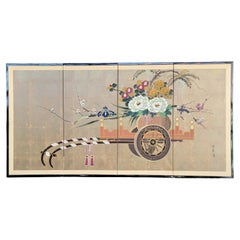
A 4 panel Showa period Japanese folding screen depicting a flower cart. Hand-painted flowers in a hand cart. Black lacquer wood frame. Artist signed. Circa. 1950's 60's.
70 inches ...
Category
Mid-20th Century Japanese Showa Paintings and Screens
Materials
Wood, Paint
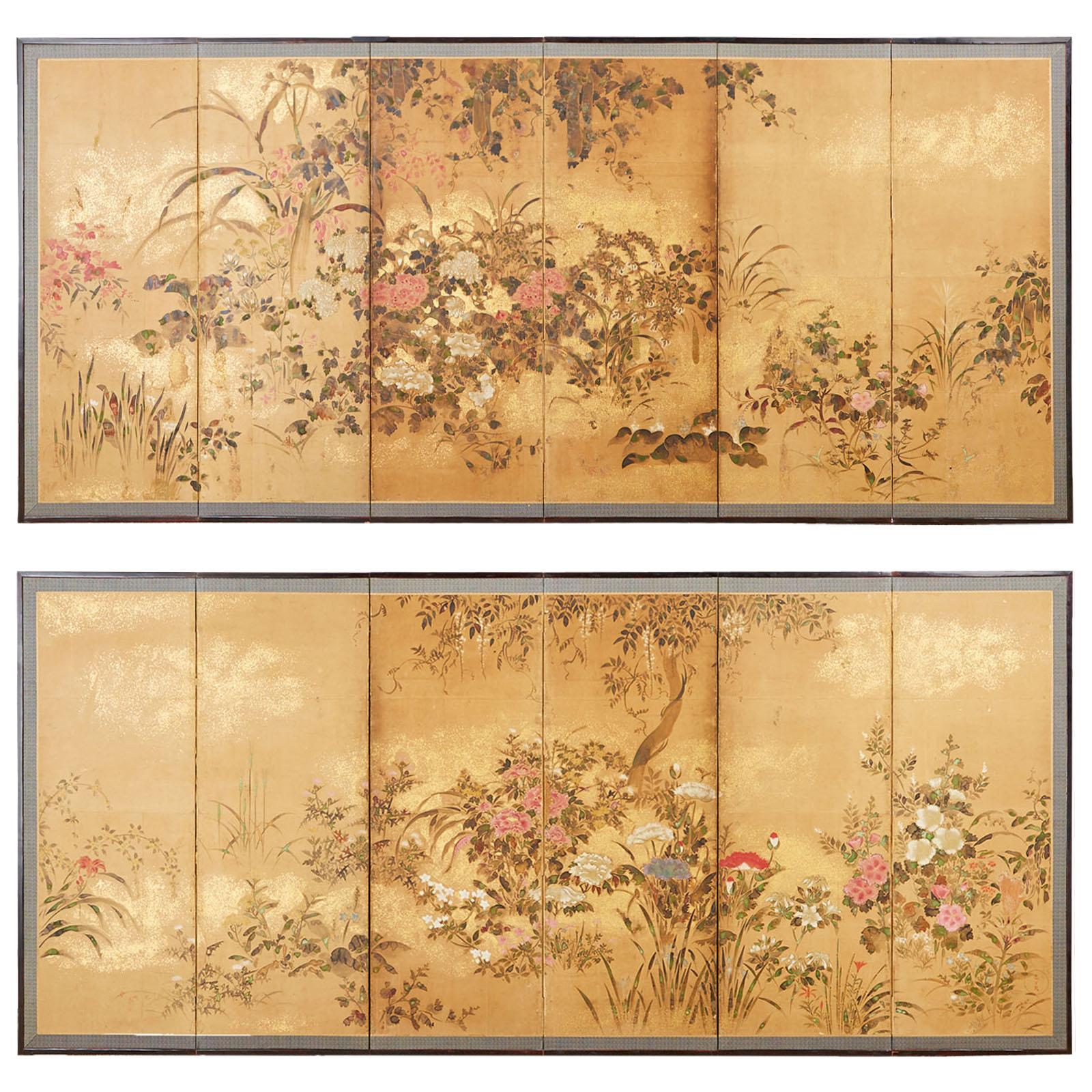
Pair of Japanese Edo Rimpa School Screens after Tawaraya Sōtatsu
Located in Rio Vista, CA
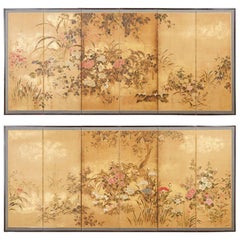
Impressive pair of 17th century Japanese Edo period Rinpa school screens made in the manner and style of Autumn Grasses by Tawaraya Sōtatsu (1570-1640). Beautifully decorated with wi...
Category
Antique 17th Century Japanese Edo Paintings and Screens
Materials
Gold Leaf
Pair of Japanese Taisho Period Screens Paragons of Filial Piety
Located in Rio Vista, CA
Impressive pair of Japanese screens from the Taisho period meiji. Each six-panel screen depicts an image from the 24 paragons of filial piety ...
Category
20th Century Japanese Taisho Paintings and Screens
Materials
Brass, Gold Leaf
Pair of Rare Antique Japanese Folding Screens with Provenance
Located in Atlanta, GA
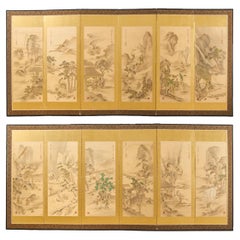
An amazing pair of matching antique Japanese folding screen predating 1812-1813, most likely from Kano School. Six panels each depict C...
Category
Antique 1810s Japanese Japonisme Paintings and Screens
Materials
Brass
More Ways To Browse
Antique Folding Screen
Silver Antique Japanese Boxes Silver Boxes
Antique Bamboo Baskets
Japanese Painting Silk Gold
Japanese Flower Painting
Japanese Folding Screen Art
Byobu Panel
Wooden Storage Boxes
Gold Folding Screen
Japanese Byobu
Antique Japanese Lacquer Screens
Lacquered Folding Screen
Folding Trolley
Hand Painted 4 Panel Screen
19th Century Japanese Lacquer Screen
Japanese Screens Flowers
Antique Wooden Storage Box
Antique Asian Folding Screen