Items Similar to Pair of Japanese Screens: Ink paintings of peacocks on gold leaf by Imao Keinen

Want more images or videos?
Request additional images or videos from the seller
1 of 11
Pair of Japanese Screens: Ink paintings of peacocks on gold leaf by Imao Keinen
$30,000per set
£22,792.59per set
€26,193.48per set
CA$42,138.68per set
A$45,866.89per set
CHF 24,303.22per set
MX$551,618.76per set
NOK 309,009.30per set
SEK 283,172.83per set
DKK 195,663.68per set
About the Item
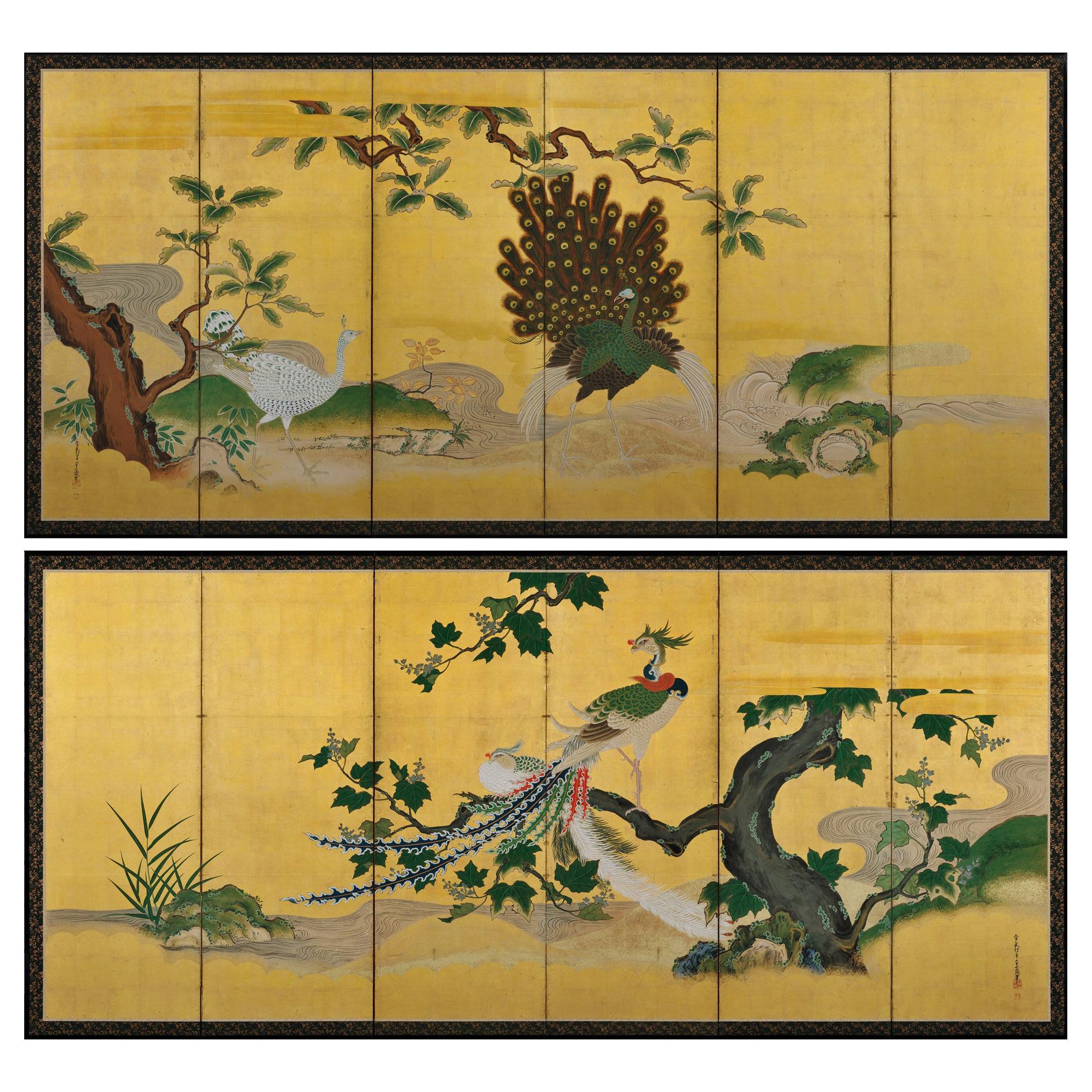
A pair of screens by Imao Keinen featuring peacocks painted in ink on gold leaf. Lacquered wood frame, brocade border, incised copper hardware.
Dimensions: H 175cm x W 352cm
Biography of Imao Keinen (1845-1924).
Imao Keinen was born in Kyoto in 1845, the fifth son of Imao Inosuke.
He first studied Ukiyo-e style with Umegawa Tōkyo, later he became a pupil of Suzuki Hyakunen, studying painting and calligraphy. He also studied other styles than those of his masters, which resulted in an eclectic style. He combined his part-time study and work in his father’s business with painting in the evenings. In 1868, after the family business was lost in the upheaval marking the end of the Tokugawa period, he began his own studio. At this time Nanga painting was at its summit and many artists turned to Nanga, but Keinen remained true to his own style. At the same time he worked as a design adviser for a textile company to make a living.
In 1888 he became professor at the Kyoto Prefectural School of Painting. Keinen was a frequent exhibitor and prize-winner at many shows and exhibitions in Japan and in Paris and an important figure in Kyoto art circles. In 1904 he became a member of the Art Committee of the Imperial Household, and in 1907 a juror for the first Bunten. In 1919 he became a member of the Imperial Art Academy. In this period of his life he was probably the most famous painter of his time.
His recurring themes are flowers, birds and landscapes. He refrained from figure-painting.
Imao Keinen had many pupils, some of the best known are his son Imao Keishō (1902-1993), Konoshima Ōkoku (1877-1938), Ueda Banshū, Kobayashi Gokyō and Shiba Kaisen. He died in 1924.
References:
Araki, Tsune (ed), Dai Nihon shôga meika taikan, Tokyo 1975 (1934), p.2049
Morioka, Michiyo and Paul Berry, Modern Masters of Kyoto, Seattle 1999, pp. 122-125
Roberts, Laurance P., A Dictionary of Japanese Artists, New York, 1976, p. 53.
- Creator:Imao Keinen (Artist)
- Dimensions:Height: 69.3 in (176 cm)Width: 128.35 in (326 cm)Depth: 7.88 in (20 cm)
- Sold As:Set of 2
- Style:Meiji (Of the Period)
- Materials and Techniques:
- Place of Origin:
- Period:
- Date of Manufacture:Unknown
- Condition:
- Seller Location:Prahran, AU
- Reference Number:Seller: JS77-Pair of Peacock screens1stDibs: LU125622195982
About the Seller
5.0
Vetted Professional Seller
Every seller passes strict standards for authenticity and reliability
Established in 1979
1stDibs seller since 2015
82 sales on 1stDibs
- ShippingRetrieving quote...Shipping from: Prahran, Australia
- Return Policy
More From This Seller
View AllPair of Antique Japanese Paintings of Karashishi, Edo Period, 18th Century
Located in Prahran, Victoria
A rare pair of antique Japanese Karashishi paintings in a landscape of rocks and peony flowers on gold leaf ground in fine handmade frames, Edo period, early 18th century. The Karash...
Category
Antique Early 18th Century Japanese Edo Paintings and Screens
Materials
Gold Leaf
Pair of Antique Japanese Flower Paintings by Yanagisawa Kien, circa 18th Century
By Yanagisawa Kien
Located in Prahran, Victoria
Pair of antique Japanese Nagasaki School paintings by Yanagisawa Kien (1704-1758), depicting classical ikebana flower arrangements. Each painted on silk in mineral pigments and beari...
Category
Antique Mid-18th Century Japanese Edo Paintings and Screens
Materials
Silk
Japanese antique screen - EDO period - Willow over a stream
Located in Prahran, Victoria
Antique Japanese 6 panel screen from the early Edo period (C1650). One of a pair (both available). This magnificent golden screen shows...
Category
Antique 1650s Japanese Edo Paintings and Screens
Materials
Gold Leaf
Antique Japanese Six-Panel Screen by Kano Chikanobu "Shushin"
Located in Prahran, Victoria
Late 17th century Kano school peony landscape screens. Both screens signed: Hogan Josen Fujiwara Chikanobu Hitsu - Kano Chikanobu (Shushin) (1660 - 1728...
Category
Antique Early 18th Century Japanese Edo Paintings and Screens
Materials
Gold Leaf
Large Antique Japanese Scroll Depicting a Nesting Crane, Taisho Period
Located in Prahran, Victoria
Large and exceptional Japanese hanging scroll with a realistically painted depiction of a nesting crane by Yoshifuji Yoshio, Taisho/Showa perio...
Category
Early 20th Century Japanese Taisho Paintings and Screens
Materials
Paper, Silk
$7,040 Sale Price
20% Off
Antique Japanese Kano School Painting by Yosenin Korenobu
Located in Prahran, Victoria
Six-panel Kano School tiger screen by Yosenin Korenobu (1753-1808). Sumi-e ink on paper, late 18th century.
Dimensions: H 169cm x W 382cm.
Category
Antique Late 18th Century Japanese Edo Paintings and Screens
Materials
Wood, Paper
You May Also Like
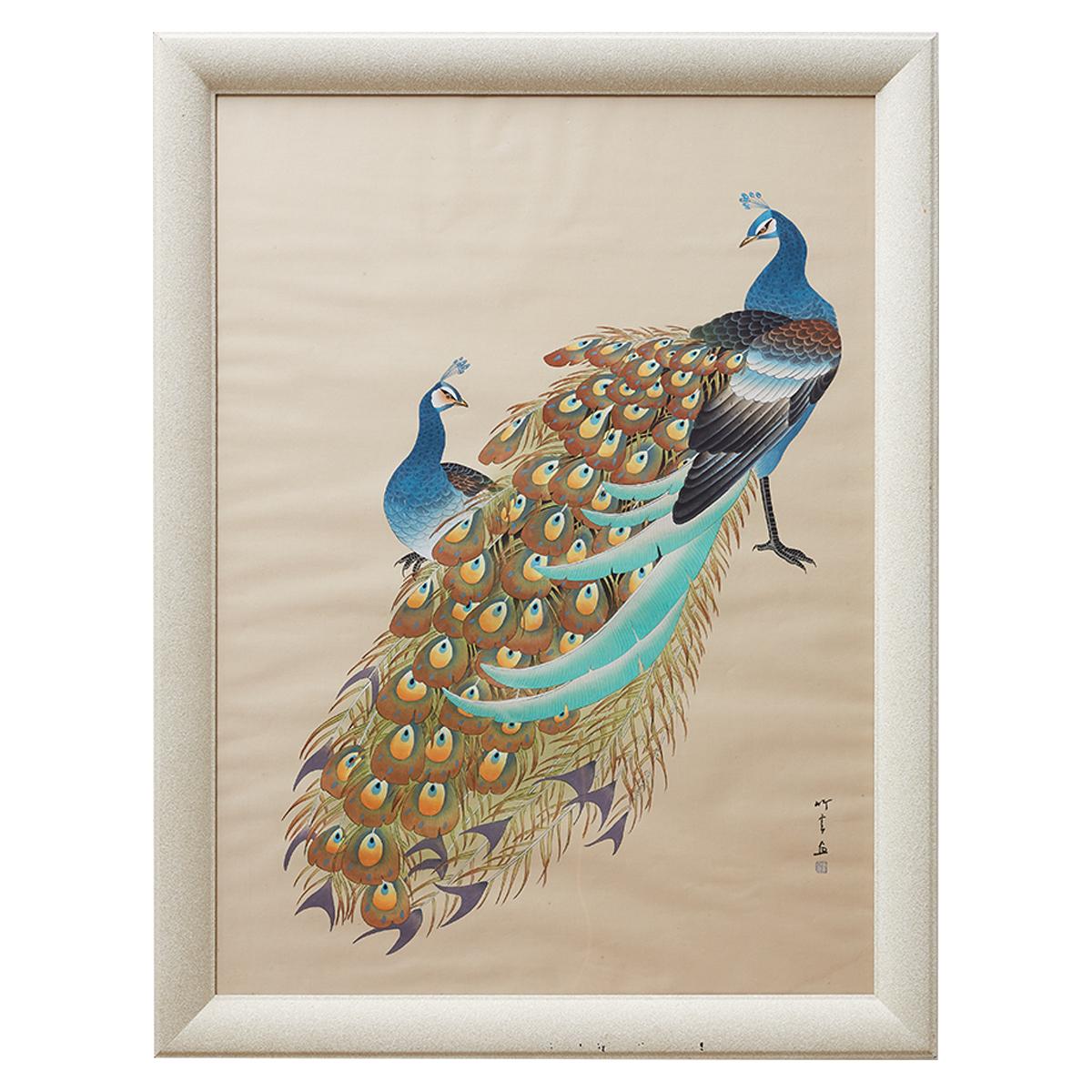
Japanese Showa Period Peacocks Painted on Silk
Located in Rio Vista, CA
Colorful Japanese ink and color on silk Showa painting of a pair of peacocks. Vivid colors and beautiful details with a signature and seal on right side bottom. Framed in a midcentur...
Category
20th Century Japanese Showa Paintings and Screens
Materials
Silk, Plexiglass, Paper, Wood
$1,440 Sale Price
20% Off
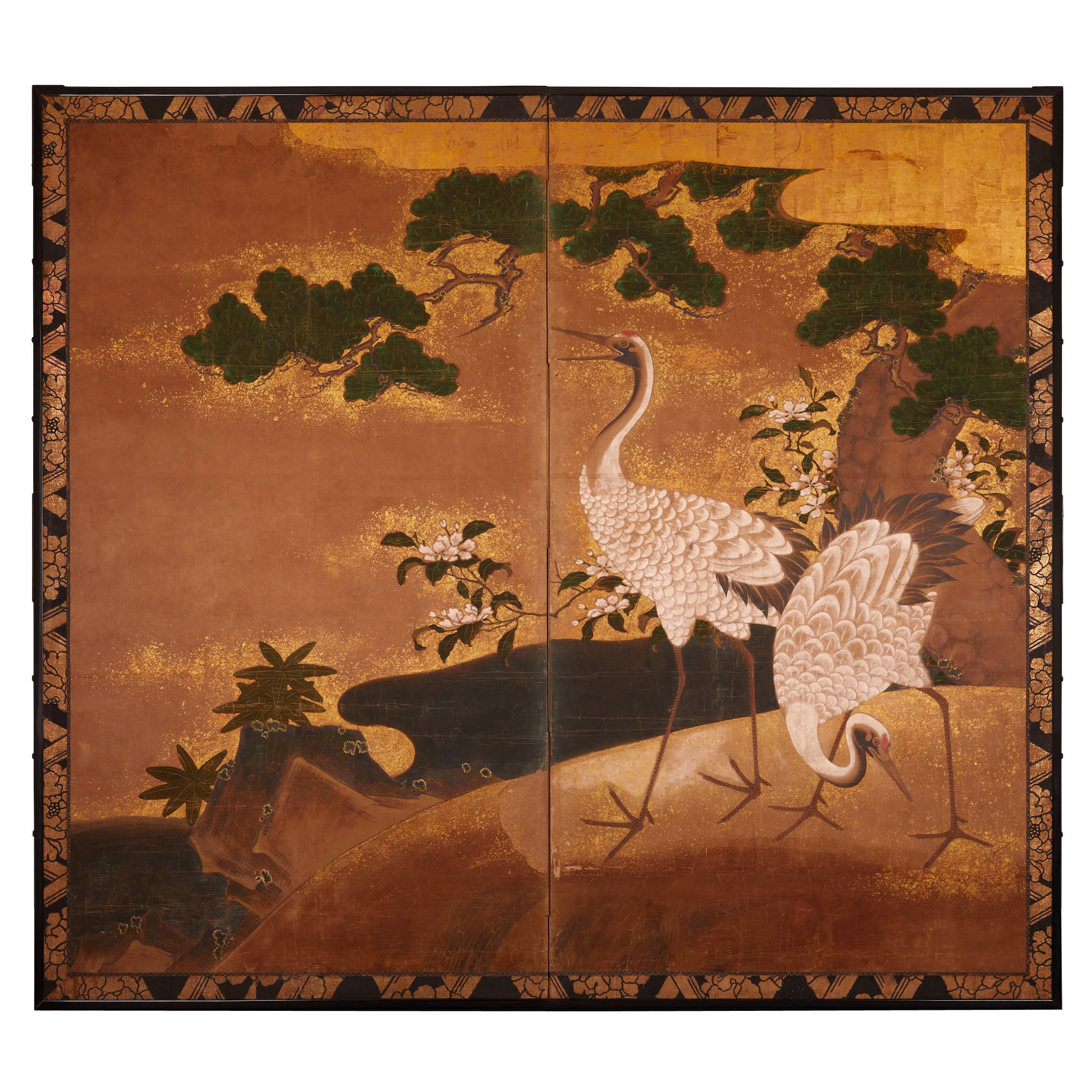
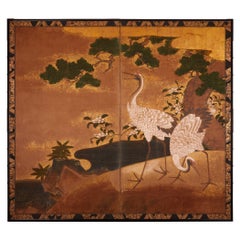
Japanese Two-Panel Screen: Cranes on Gold
Located in Hudson, NY
Early Kano School painting of pine trees overlooking two beautifully painted cranes and floral design in a natural setting by water’s edge. Mineral pig...
Category
Antique Late 18th Century Japanese Paintings and Screens
Materials
Gold, Gold Leaf
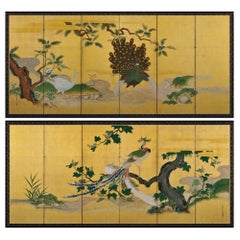
Japanese Screen Pair, circa 1730, Peacocks and Phoenix, Kano School
Located in Kyoto, JP
Phoenix and Peacocks.
A pair of six-panel Japanese folding screens by Tsunetake Yotei (n.d.)
First half of the 18th century.
The signature reads 67 year old Tsunetake.
The seals read:
-Tsunetake no in,
-Yotei,
-Seishin
Dimensions:
Each screen – H. 69” x W. 149” (176 cm x 378 cm)
A pair of Kano Grand Picture (Waga) screens depicting phoenix and peacocks rich with symbolic meaning. Dating to the first half of the 18th century, from the Kobikicho Kano school in Edo, this pair of folding...
Category
Antique Early 18th Century Asian Edo Paintings and Screens
Materials
Gold Leaf
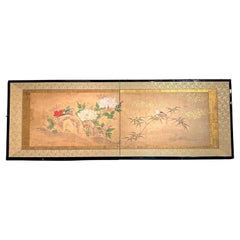
Japanese "Magpie and Peony" Two Panel Screen, Edo Period, 18th/19th century
Located in Austin, TX
A sublime Japanese two panel "Magpie and Peony" screen, ink and color on paper, Edo Period, late 18th or early 19th century, circa 1800, Japan.
The two panel screen features a wond...
Category
Antique Early 19th Century Japanese Edo Paintings and Screens
Materials
Copper
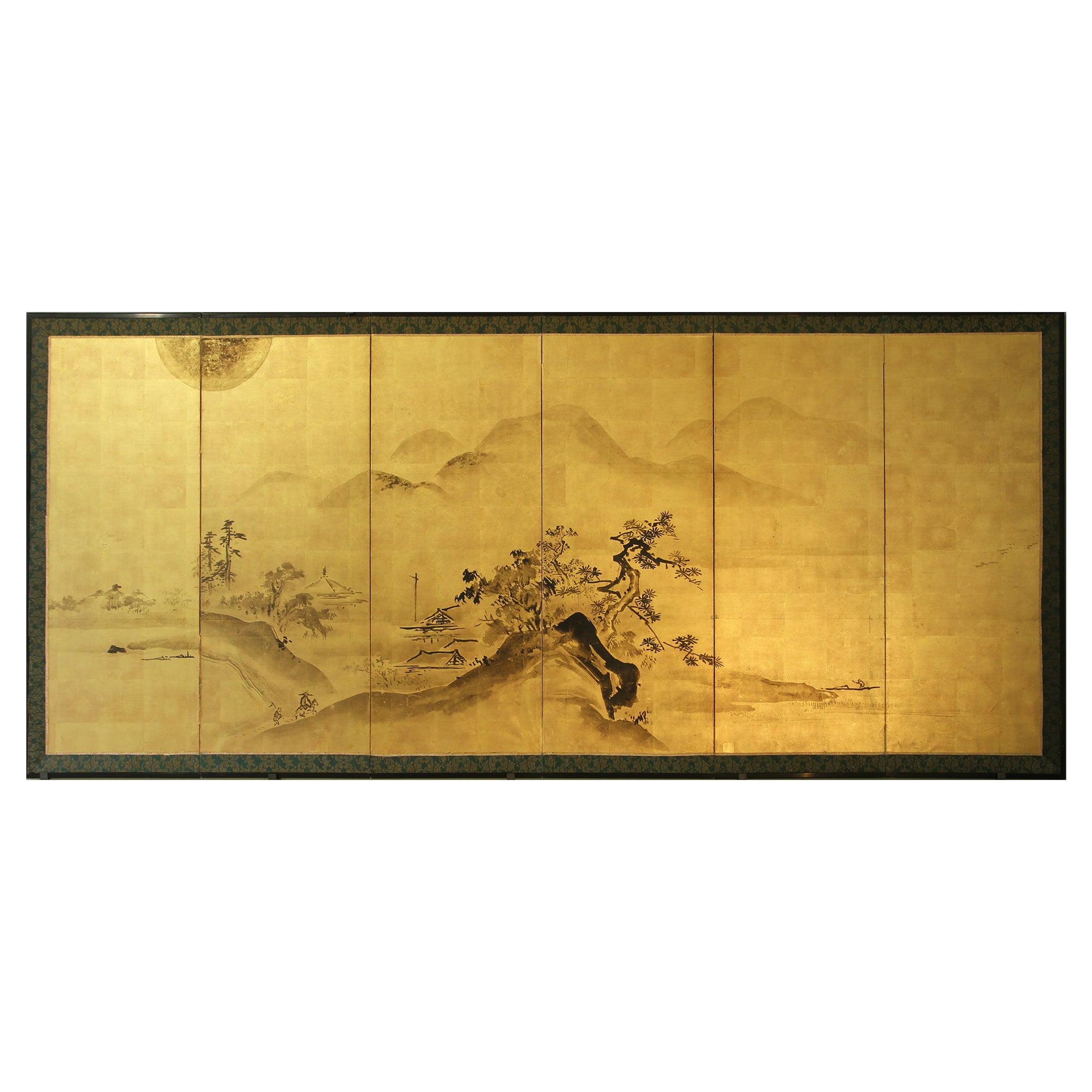
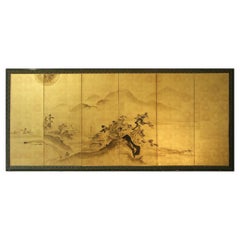
Japanese Screen Landscape on Gold Leaf with Inks
By Japanese Studio
Located in Brescia, IT
Six-panel screen from the Tosa school painted with ink on gold leaf depicting a relaxing oriental landscape with pagodas, figures on boats and a beautiful sun in the sky.
The screen ...
Category
Antique Late 19th Century Japanese Meiji Paintings and Screens
Materials
Gold Leaf
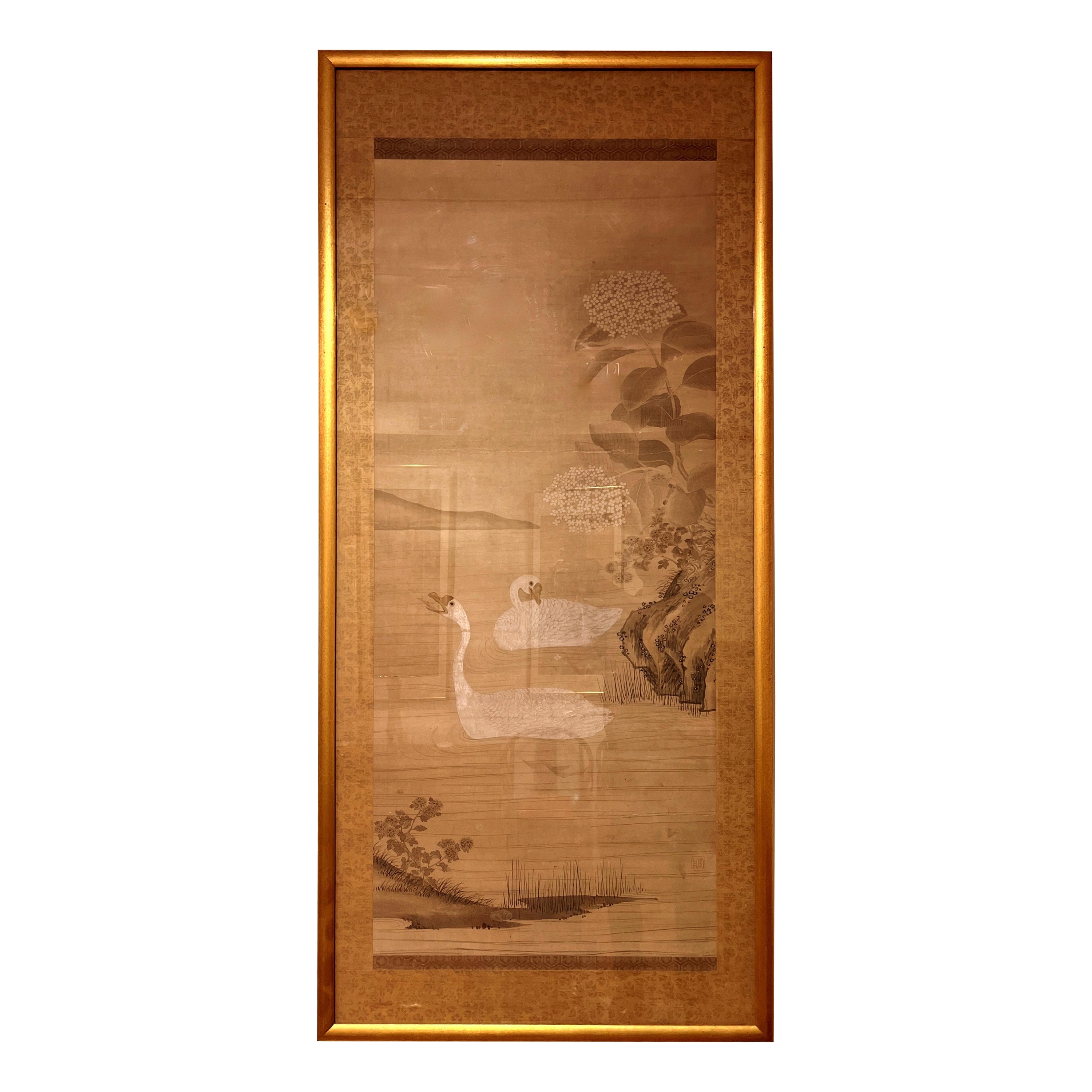
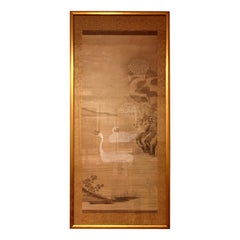
Framed Japanese Brush Painting of Two White Geese Swimming in a Pond
Located in Greenwich, CT
Framed Japanese brush painting of two white geese swimming in a pond,
19th century, ink on paper, original brocade mount.
Overall size with frame: 58" height 26" width
Image size...
Category
Antique 19th Century Japanese Meiji Paintings and Screens
Materials
Paper
$2,800 Sale Price
37% Off
More Ways To Browse
Japanese Gold Leaf
Japan Gold Painting
Japanese Gold Paintings
Gold Leaf Screen
Asian Gold Leaf Art
Japanese Painting Gold Leaf
Antique Lacquer Painting
Japanese Screen Gold Leaf
Antique Gold Leaf Screens
Asian Art On Paper
Antique Japanese Lacquer Screens
Calligraphy
19th Century Japanese Lacquer Screen
Pair Of Japanese Screens
Pair Of Japanese Paintings
Japanese Peacock
Peacock Screen
Antique Peacock Painting