Video Loading
Want more images or videos?
Request additional images or videos from the seller
1 of 22
Pair of Red and White Plum Blossom Screens After Ogata Korin
Price:$6,750
$8,000List Price
About the Item
- Dimensions:Height: 35.5 in (90.17 cm)Width: 49.5 in (125.73 cm)Depth: 0.75 in (1.91 cm)
- Sold As:Set of 2
- Style:Edo (In the Style Of)
- Materials and Techniques:
- Place of Origin:
- Period:
- Date of Manufacture:20th Century
- Condition:Wear consistent with age and use. Beautifully crafted with solid joinery and construction. Very good, well preserved condition as seen in photos. Age appropriate wear and fading. Minor chips and scuffs on frame. Reverse side has small paper losses.
- Seller Location:Rio Vista, CA
- Reference Number:1stDibs: LU1555245421512
About the Seller
5.0
Erin Lane Estate is based in the San Francisco Bay Area, and its team of furniture restorers, art curators, professional appraisers and Asia specialists sources prime vintage and antique furniture from the finest estates in Northern and Southern California. Erin Lane Estate specializes in Hollywood Regency, McGuire, Chinese and Japanese pieces.
Diamond Seller
Premium sellers with a 4.7+ rating and 24-hour response times
Established in 2000
1stDibs seller since 2015
3,116 sales on 1stDibs
Typical response time: 1 hour
Authenticity Guarantee
In the unlikely event there’s an issue with an item’s authenticity, contact us within 1 year for a full refund. DetailsMoney-Back Guarantee
If your item is not as described, is damaged in transit, or does not arrive, contact us within 7 days for a full refund. Details24-Hour Cancellation
You have a 24-hour grace period in which to reconsider your purchase, with no questions asked.Vetted Professional Sellers
Our world-class sellers must adhere to strict standards for service and quality, maintaining the integrity of our listings.Price-Match Guarantee
If you find that a seller listed the same item for a lower price elsewhere, we’ll match it.Trusted Global Delivery
Our best-in-class carrier network provides specialized shipping options worldwide, including custom delivery.You May Also Like
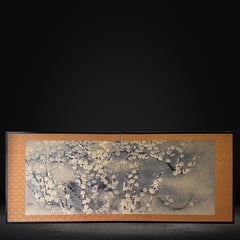
Japanese screen: Whispers of Plum Blossoms
Located in Fukuoka, JP
In Japanese tradition, the plum tree is the first to bloom in late winter, its fragile white flowers defying the cold. It symbolizes perseverance, renewal, and the quiet strength to...
Category
20th Century Japanese Showa Paintings and Screens
Materials
Paper, Wood
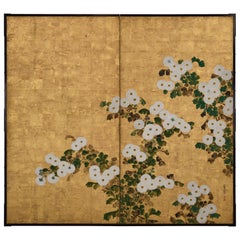
18th Century Japanese Rinpa Screen. White Chrysanthemums. School of Korin.
Located in Kyoto, JP
School of Ogata Korin
White Chrysanthemums
18th Century, Edo period.
A two-panel Japanese screen. Ink, color, gofun and gold leaf on paper.
Dimensions: H. 171 cm x W. 188 cm (67.5” x 74”)
On this two-panel Japanese screen we see blooming chrysanthemums, a flower which embodies the essence of autumn in Japan. Here the traditional floral theme has been simplified and stylized. The bright colors and asymmetrical composition against the delicate gold leaf create a luxurious and ornate work of art. Its background, a strikingly patinated grid of gold leaf, denies any sense of place or time and imbues everything with an ethereal glow. The leaves and stems of the plants are nothing more than pools of mottled color and ink without any outline whatsoever. These are typical Rinpa adaptations of traditional ink painting methods; tarashikomi, or diluted washes of color blended while very wet, and mokkotsu, or “bonelessness,” which creates forms without exterior outlines. The relief work of the rounded flower petals has been obtained by the moriage process (a mixture based on ground shells modeled on the surface of the paper).
On the lower right of the screen, the siganture “Hokyo Korin Jakumyo” and the “Hoshuku” seal can be read. Korin is Ogata Korin, famed for the Irises (Nezu Museum) and Red and White Plum Blossom (MOA Museum of Art) folding screens, both National Treasures. Korin worked in both Kyoto and Edo in the mid-Edo period. Korin was using the art name “Jakumyo” just after he received the Hokyo level, which was in 1701.
This particular screen was published in May of 1961 in the Japanese Sansai Fine Art Magazine*. An in depth article accompanies the photograph of the screen and and a photograph of the signature and seal. This article devotes much of its body to discussing the moriage technique, how it enlivens the chrysanthemum flowers and Korin’s specific skill in using the technique. The article goes on to discuss the most famous works of Korin, utilizing this technique, which were known at the time. Specifically a two-panel screen held in the Honolulu Museum which was discovered in the store-house of Takahashi Soan. A two-panel screen pair which the Nakano family own. A two-panel screen pair with chrysanthemums in moriage in fan designs owned by the Nomura family. Also a small folding screen featuring chrysanthemums held in the Yamato Bunkakan. The article goes on to say that this particular two-fold screen came from the Nijo family. Korin is known to have had a strong connection with the aristocratic Nijo family. The article explains that Korin received a lot of favors from the Nijo family and that this screen would have been gifted to them.
Since that time the Honolulu screen has been amended to ‘attributed to Ogata Korin’ and I do not know further details of the other 3 screens. Other Chrysanthemum screens...
Category
Antique 18th Century Japanese Edo Paintings and Screens
Materials
Gold Leaf
$32,000
H 67.5 in W 74 in D 0.75 in
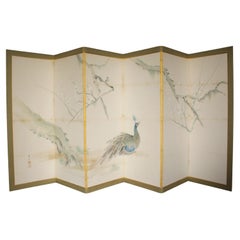
B76 Japanese Antiques 6panels, White Plum Blossoms and Peacock, folding Screen
Located in Niiza, JP
Material: Paper on wooden frame
One piece: W610×H1710mm×D17mm,
Unfolded size: W3690mm
Folded size: W625×H1710×D105mm, 13kg
Estimate packing size: (sandwiched with 5-10mm plywood): 18...
Category
20th Century Japanese Paintings and Screens
Materials
Paper
$1,500
H 67.33 in W 145.28 in D 0.79 in
B78 Japanese Antiques 6panels, White Plum Blossoms and Peacock, folding Screen
Located in Niiza, JP
Material: Paper on wooden frame
One piece: W610×H1710mm×D17mm,
Unfolded size: W3690mm
Folded size: W625×H1710×D105mm, 13kg
Estimate packing size: (sandwiched with 5-10mm plywood): 18...
Category
20th Century Japanese Paintings and Screens
Materials
Paper
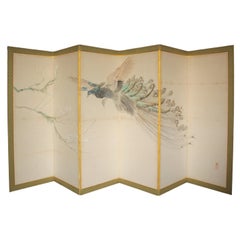
$1,680
H 67.33 in W 145.28 in D 0.79 in
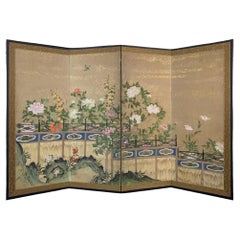
Peony Blossoms Screen
Located in Fukuoka, JP
Peony Blossoms Screen
Period: Edo period 18-19th century
Size: 212 x 138 cm (83.5 x 54.3 inches)
SKU: PJ105
Experience a rare gem from Japan's heritage – an Edo period peony blosso...
Category
Antique 18th Century Japanese Edo Paintings and Screens
Materials
Paper, Silk
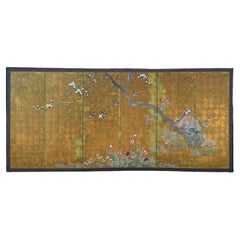
Japanese screen: Melody of Magnolia Blossoms
Located in Fukuoka, JP
Bathed in radiant gold, Melody of Magnolia Blossoms captures the fleeting harmony of nature in bloom. A graceful magnolia branch arcs across the shimmering surface, its petals unfold...
Category
Antique Early 17th Century Japanese Edo Paintings and Screens
Materials
Paper, Wood
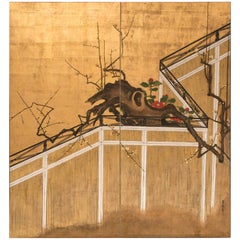
Japanese Two-Panel Screen, Camellia and Plum Blossom over Garden Fence
Located in Hudson, NY
Artist signature reads: Tsunetoki hitsu
Mineral pigments on gold leaf.
Category
Antique Early 19th Century Japanese Paintings and Screens
Japanese Two Panel Screen: Plum Blossom in the Mist
Located in Hudson, NY
Plum blossom, baby pine and bamboo painted in mineral pigments on heavy gold leaf on paper. Silk brocade border with black lacquer trim and bronze hardware.
Category
Antique Early 1800s Japanese Paintings and Screens
Materials
Bronze, Gold Leaf

18th Century Japanese Screen Pair. Plum
Young Pines. Kano School.
Located in Kyoto, JP
Dimensions (Each screen): H. 176 cm x W. 378 cm (69’’ x 149’’)
This pair of Japanese folding screens depict blossoming plum trees amongst young pines. They are designed to capture t...
Category
Antique Late 18th Century Japanese Edo Paintings and Screens
Materials
Gold Leaf
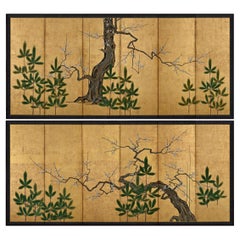
$42,000 / set
H 69 in W 149 in D 0.75 in
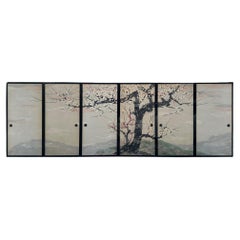
Showa Period Plum Blossoms Fusuma
Located in Fukuoka, JP
Size: The door size is 90 x 188 cm (35.4 x 74 inches)
Number of doors: 6 pieces
Period: Showa (1926-1989)
This exquisite 6-panel fusuma screen, hailing from the Showa period, captures the serene beauty of Japan's beloved plum blossoms. Each panel is meticulously crafted with high-quality Japanese paper, providing a delicate backdrop for the elegantly hand-painted plum tree that spans across the panels. The artwork vividly portrays the fleeting beauty of early spring, where plum blossoms emerge in a burst of life against tranquil landscapes. The fusuma panels...
Category
20th Century Japanese Showa Paintings and Screens
Materials
Wood, Paper
More From This Seller
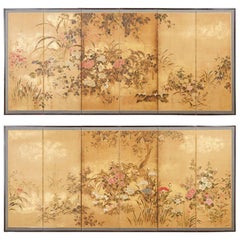
View AllPair of Japanese Meiji Screens Blossoms of Spring, Summer and Autumn
Located in Rio Vista, CA
Amazing pair of late 19th/early 20th century Japanese Meiji period byobu screens depicting flowering plants and blossoms of the spring, summer, and autumn. Painted in the Nihonga sch...
Category
Antique 19th Century Japanese Meiji Paintings and Screens
Materials
Brass, Gold Leaf
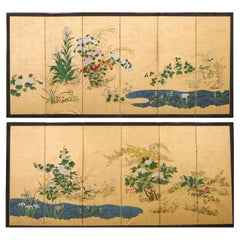
Pair of Japanese Edo Rimpa School Screens after Tawaraya Sōtatsu
Located in Rio Vista, CA
Impressive pair of 17th century Japanese Edo period Rinpa school screens made in the manner and style of Autumn Grasses by Tawaraya Sōtatsu (1570-1640). Beautifully decorated with wi...
Category
Antique 17th Century Japanese Edo Paintings and Screens
Materials
Gold Leaf
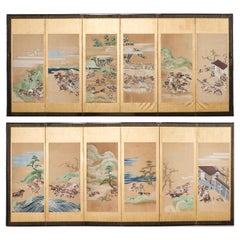
Pair of Japanese Edo/Tokugawa Screens Tale of Heiki
Located in Rio Vista, CA
Monumental pair of late 18th century Japanese Edo/Tokugawa period byobu screens depicting the battles between Taira and Minamoto. The screens have six panels each with individual sce...
Category
Antique 19th Century Japanese Edo Paintings and Screens
Materials
Brass, Gold Leaf
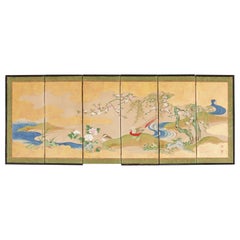
Japanese Edo Six Panel Table Screen After Maruyama Okyo
Located in Rio Vista, CA
Fantastic diminutive Japanese Edo period table top screen depicting a lively water landscape with flora and fauna. The screen is beautifully painted o...
Category
Antique 19th Century Japanese Edo Paintings and Screens
Materials
Brass, Gold Leaf
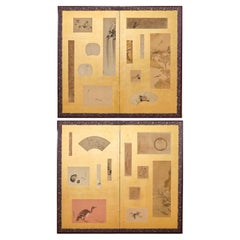
Pair of Japanese Two Panel Screens Edo Period Vignettes
Located in Rio Vista, CA
Impressive pair of Japanese two-panel byobu screens featuring late 18th-century edo period applied vignettes, poems, and paintings in various formats over a dramatic gold leaf square...
Category
Antique 18th Century Japanese Edo Paintings and Screens
Materials
Gold Leaf
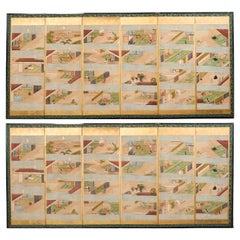
Pair Japanese Edo Six Panel Screens Tale of Genji
Located in Rio Vista, CA
Incomparable pair of late 18th century Japanese Edo period folding six-panel byobu screens depicting all 54 chapters of the tale of Genji in vignettes. Each illustration has a cartou...
Category
Antique 18th Century Japanese Edo Paintings and Screens
Materials
Brass, Gold Leaf
Still Thinking About These?
All Recently ViewedMore Ways To Browse
Plum Wood
Pair Of Japanese Screens
Pair Of Japanese Paintings
Lacquered Red Screens
White Lacquer Asian
Ogata Korin
Japanese Plum Blossom
Chinese Lattice
Japanese Screen Black
Antique Mandala
Chinese Scroll Paintings
Heian Period
Crane Screen
Edo Scroll
Hanging Screen
Japanese Painting Tree
Japanese Screen 20th Century Four Panel
Chinese Dynasty Painting