1 of 7
Scenes from the Tales of Genji
About the Item
The full moon on the upper left refers to the romantic boat scene on a winter night in the Ukifune chapter, seen in the upper center. Here Niou is seated in the boat with Ukifune and, while looking at the hills bathed in moon light, they pledge undying love to each other.
In the Asagao chapter the moon appears again as Genji and Asagao look out at the garden on a winter night and admire the fallen snow. Genji asks the page girls to go out in the garden and roll a snowball, and he and Asagao enjoy the scene bathed in moonlight.
The moon connects these two scenes, which also share the same season and the nocturnal setting. Central to both cases is the joy of love when looking at nature together, specifically on a winter night.
The bridge in the upper right corner refers to the Ukifune love boat scene, which takes place close to Uji Bridge. The bridge is also associated with the excursion to Sumiyoshi Shrine in the Miotsukushi chapter, seen on the right. Waiting inside his carriage, Genji wants to write a love letter and his servant Koremitsu hands him a writing box and brushes. The curved bridge on the screen refers to both scenes, the Uji Bridge and the Sumiyoshi Bridge; the red torii gate in front of the bridge refers to the Sumiyoshi Shrine. Bridges with their many poetic allusions became symbols for travel in nature in the literal and visual culture of the Heian and later period.
The last two scenes that balance the composition on the bottom left and right corners are, on the bottom left, the emperor being presented with pheasants taken in a hunt, bringing nature to the palace; and, on the bottom right, the poignant scene from the Yomogiu chapter where Prince Genji visits his long-lost love, the Safflower Princess, who suffers from poverty in a run-down mansion. Here Prince Genji is led by his servant Koremitsu, who guides him to the dilapidated house through the overgrown garden.
In all of these scenes, we see how the figures negotiate with nature and how nature relates to love, to imperial offerings, to travel and even to poverty. What at first seems to be a set of non-connected scenes are in fact expertly selected moments in the novel that connect by themes from across the panels of the screen.
The screen is attributed to Tosa Mitsuyoshi through similarities in style, facial features, and golden clouds. The golden clouds are made of two types of gold—gold leaf bordered with gold wash on gofun—and the features of the faces are superbly expressive. Mitsuyoshi and his atelier painted a number of Genji screens during his lifetime and examples by him exist in the Metropolitan Museum of Art in New York, the Honolulu Academy of Arts, the Kyoto National Museum and the Idemitsu Museum of Art.
- Dimensions:Height: 63.51 in (161.3 cm)Width: 146.58 in (372.3 cm)
- Materials and Techniques:
- Place of Origin:
- Period:
- Date of Manufacture:Momoyama Period (1568-1615), early 17th C
- Condition:
- Seller Location:New York, NY
- Reference Number:Seller: T-31691stDibs: U10103189885
Authenticity Guarantee
In the unlikely event there’s an issue with an item’s authenticity, contact us within 1 year for a full refund. DetailsMoney-Back Guarantee
If your item is not as described, is damaged in transit, or does not arrive, contact us within 7 days for a full refund. Details24-Hour Cancellation
You have a 24-hour grace period in which to reconsider your purchase, with no questions asked.Vetted Professional Sellers
Our world-class sellers must adhere to strict standards for service and quality, maintaining the integrity of our listings.Price-Match Guarantee
If you find that a seller listed the same item for a lower price elsewhere, we’ll match it.Trusted Global Delivery
Our best-in-class carrier network provides specialized shipping options worldwide, including custom delivery.You May Also Like
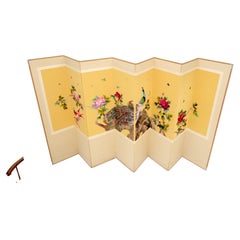
Oriental Decorative 8 Panel Silk Embroidery Peacock Scene Room Divider Screen
Located in Rockaway, NJ
Oriental Chineese decorative 8 panel silk embroidery peacock scene room divider screen.
Category
20th Century Paintings and Screens
Materials
Fabric, Silk
$3,000
H 73 in W 147 in D 1 in
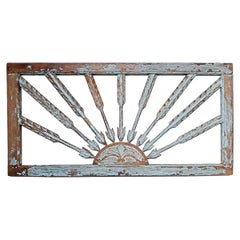
Wood Wall Panel from Indonesia, Mid 20th Century
Located in New York, NY
A vintage wood panel from Indonesia, circa 1920. Hand-carved teak wood, with its original grey/blue color paint in the frame, naturally distressed b...
Category
Vintage 1920s Indonesian Arts and Crafts Paintings and Screens
Materials
Teak
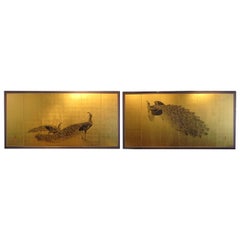
Pair of Japanese Screens: Ink paintings of peacocks on gold leaf by Imao Keinen
By Imao Keinen
Located in Prahran, Victoria
A pair of screens by Imao Keinen featuring peacocks painted in ink on gold leaf. Lacquered wood frame, brocade border, incised copper hardware.
Dimensions: H 175cm x W 352cm
Biogr...
Category
Antique Late 19th Century Japanese Meiji Paintings and Screens
Materials
Gold Leaf
$30,000 / set
H 69.3 in W 128.35 in D 7.88 in
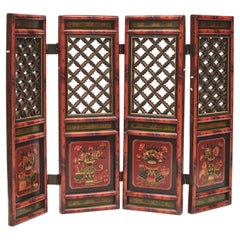
A Set Of 4 Screens / Room Dividers. c 1860 - 1880
Located in Kastrup, DK
A set of 4 screens, made in elm wood. Lacquer decorated in polychrome.
Panels decorated with vases, flowers, etc.
Former screen wall from house in Shanxi pro...
Category
Antique Late 19th Century Chinese Qing Screens and Room Dividers
Materials
Elm
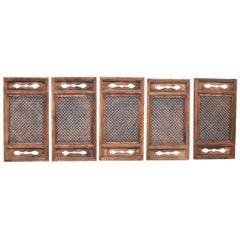
Chinese Antique Screen Set of 5 Cube Ming Design
Located in Somis, CA
Set of five 19th century Ming style Chinese antique window screens featuring stylized, hand-carved ruyi and small cube design. The cubes are form...
Category
Antique 19th Century Chinese Ming Paintings and Screens
Materials
Wood
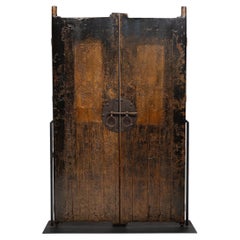
Pair of Chinese Crackle Lacquer Courtyard Doors, c. 1800
Located in Chicago, IL
The countless layers of black lacquer that texture these 19th-century doors have aged with a dark patina and an inimitable crackle that only time can achieve. Crafted of northern elm...
Category
Antique Early 19th Century Chinese Qing Paintings and Screens
Materials
Elm
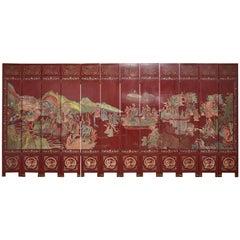
Chinese Twelve-Panel Red Lacquer Coromandel Screen of Xiwangmu
Located in Rio Vista, CA
Monumental Chinese export twelve-panel red lacquered Coromandel screen of Chinese mythological Daoist character Xiwangmu (Queen mother of the West). Remarkable large scale screen full of vibrant color on incised lacquer...
Category
20th Century Chinese Chinese Export Paintings and Screens
Materials
Brass
$11,250 Sale Price
25% Off
H 108 in W 224 in D 1 in
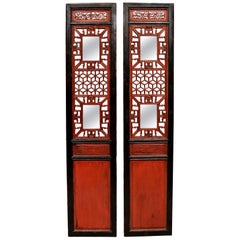
Pair of Antique Double Sided Red and Black Chinese Screens
Located in Somis, CA
A pair of beautiful double sided Chinese Antique screens in black and red lacquer. The main openwork was created using the painstaking joinery method. Every little piece is joined to...
Category
Antique 19th Century Chinese Paintings and Screens
Materials
Wood
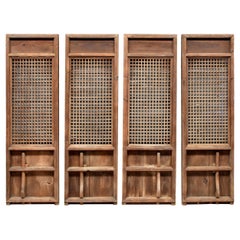
Chinese Antique Screen Set of 4 Ming Style with Flower Pegs
Located in Somis, CA
This is a set of beautiful, all original, rare, 19th-early 20th century Ming style Chinese antique window screens. The simple, elegant design is ...
Category
Early 20th Century Chinese Ming Paintings and Screens
Materials
Wood
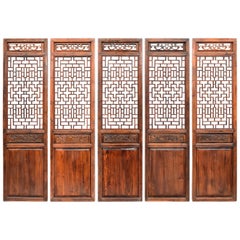
Antique Chinese Carved Wood Lattice Screen Panels Set of Five
Located in Somis, CA
This exquisite set of five antique Chinese wooden screens is crafted in a beautiful natural wood finish and showcases remarkable traditional artistry. Each tall panel features a fine...
Category
Antique 19th Century Chinese Ming Paintings and Screens
Materials
Wood
$11,000 / set
H 79 in W 21.75 in D 1.75 in
Still Thinking About These?
All Recently ViewedMore Ways To Browse
Torii Gate
Tale Of Genji
Antique Love Letter
Tale Of Genji Japanese Screen
Genji Painting
Uji Bridge
Hanging Screen
Japanese Screen 20th Century Four Panel
Chinese Dynasty Painting
Chinoiserie Art Panel
Gold Chinese Screen
Japanese Four Panel Silk Screen
Japanese Paper Flowers
Pair Of Japanese Screens
Four Panel Japanese Folding Screen
Japan Art Cherry
Dali Marble
Chinese Coromandel Lacquer Screen