Items Similar to Set of screens by Nitten artist Tozaburo Ohno (大野藤三郎)
Want more images or videos?
Request additional images or videos from the seller
1 of 21
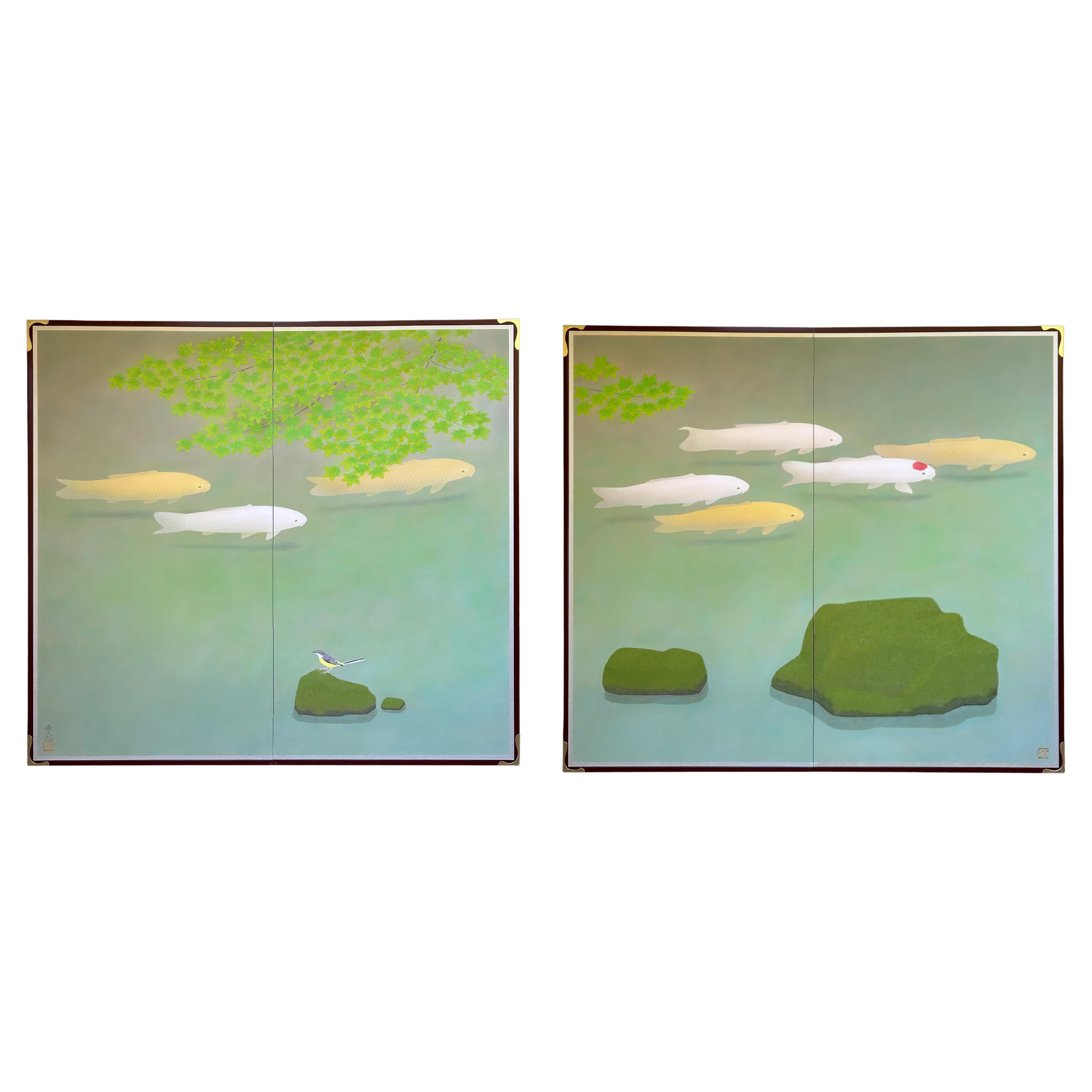
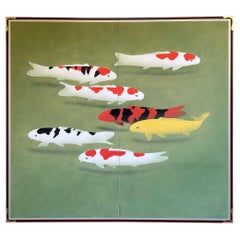
Set of screens by Nitten artist Tozaburo Ohno (大野藤三郎)
$10,300per set
£7,806.21per set
€8,953.07per set
CA$14,391.06per set
A$15,699.86per set
CHF 8,326.89per set
MX$189,147.93per set
NOK 105,684.37per set
SEK 96,756.91per set
DKK 66,866.01per set
About the Item
Tozaburo Ohno (大野藤三郎)
A Japanese-style painter known for his refined depictions of koi carp and seasonal flowers. Born in 1917 in Osaka (though some sources cite Kyoto), he studied under the prominent Nihonga master Kinshima Keika, whose influence is evident in Ohno’s lyrical brushwork and classical compositions. He began exhibiting at the prestigious Nitten (Japan Fine Arts Exhibition) in 1947 and remained a regular participant for many years. In 1971, he was awarded the Tokusen prize, one of Nitten’s highest honors, for a painting of koi—his signature motif.
Ohno’s style is grounded in the kachō-ga tradition (flower-and-bird painting), blending naturalism with decorative elegance. His favorite subjects were koi swimming beneath blossoming peony trees or drifting through golden backgrounds, often rendered on byōbu (folding screens) or large-format paintings. His compositions are characterized by flowing movement, delicate use of color, and a deep sense of harmony. Koi, in his works, are not only decorative but symbolic—embodying persistence, prosperity, and seasonal beauty.
Throughout the 1960s and 70s, Ohno held solo exhibitions at major department store galleries, including Takashimaya. In 1988, a retrospective catalog titled “Flowers and Koi” (花と鯉) was published, commemorating his work. He retired from public exhibitions in his early 60s due to health concerns.
The folding screens presented in our collection were formerly part of a museum collection and have been exceptionally well preserved. All are in perfect condition, showcasing the full beauty of Ohno’s craftsmanship and his distinctive artistic voice.
- Dimensions:Height: 67.72 in (172 cm)Width: 74.41 in (189 cm)Depth: 1.58 in (4 cm)
- Sold As:Set of 2
- Style:Showa (Of the Period)
- Materials and Techniques:
- Place of Origin:
- Period:
- Date of Manufacture:unknown
- Condition:
- Seller Location:Fukuoka, JP
- Reference Number:1stDibs: LU10055246847492
About the Seller
No Reviews Yet
Vetted Professional Seller
Every seller passes strict standards for authenticity and reliability
Established in 2023
1stDibs seller since 2024
18 sales on 1stDibs
Typical response time: 5 hours
- ShippingRetrieving quote...Shipping from: Chiang Mai, Thailand
- Return Policy
More From This Seller
View AllSet of screens by Nitten artist Tozaburo Ohno (大野藤三郎)
Located in Fukuoka, JP
Tozaburo Ohno (大野藤三郎)
A Japanese-style painter known for his refined depictions of koi carp and seasonal flowers. Born in 1917 in Osaka (though some sources cite Kyoto), he studied ...
Category
20th Century Japanese Showa Paintings and Screens
Materials
Wood, Paper
Group of Koi (Carp) screen ) by Nitten artist Tozaburo Ohno (大野藤三郎)
Located in Fukuoka, JP
Tozaburo Ohno (大野藤三郎)
A Japanese-style painter known for his refined depictions of koi carp and seasonal flowers. Born in 1917 in Osaka (though some sources cite Kyoto), he studied ...
Category
20th Century Japanese Showa Paintings and Screens
Materials
Wood, Paper
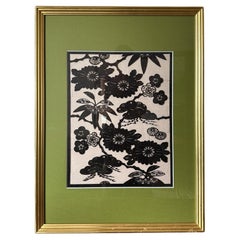
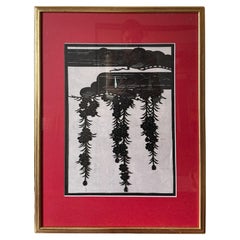
Antique Handcrafted 20th-Century Japanese Katagami Stencil (Kimono Dyeing Stenci
By Japanese Studio
Located in Fukuoka, JP
This elegant 20th-century Japanese katagami is a finely hand-cut stencil traditionally used for decorating kimono textiles. Crafted from multiple layers of washi paper strengthened w...
Category
20th Century Japanese Prints
Materials
Paper
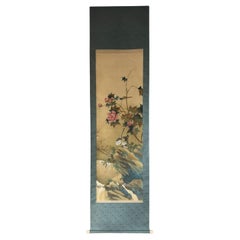
Japanese Hanging Scroll with Peony Flowers – 20th Century
Located in Fukuoka, JP
Dimensions: 53 × 194 cm (overall), 40 × 127 cm (painting)
Box size: 61 × 7 cm
A refined 20th-century Japanese hanging scroll (kakejiku) depicting delicate pink peony blossoms and de...
Category
20th Century Japanese Paintings and Screens
Materials
Wood, Paper
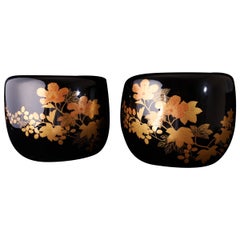
Pair of Japanese Lacquer Hibachi with Tropical Motifs — Taishō to Early Shōwa Pe
Located in Fukuoka, JP
Dimensions: each approx. 23 × 23 × 26 cm
Material: Black lacquer with gold maki-e decoration
Condition: Very good, minor wear consistent with age
A rare matched pair of Japanese lac...
Category
Early 20th Century Japanese Taisho Lacquer
Materials
Copper, Gold Leaf
Antique Handcrafted 20th-Century Japanese Katagami Stencil (Kimono Dyeing Stenci
By Japanese Studio
Located in Fukuoka, JP
This elegant 20th-century Japanese katagami is a finely hand-cut stencil traditionally used for decorating kimono textiles. Crafted from multiple layers of washi paper strengthened w...
Category
20th Century Japanese Prints
Materials
Paper
You May Also Like
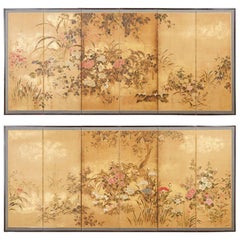
Pair of Japanese Edo Rimpa School Screens after Tawaraya Sōtatsu
Located in Rio Vista, CA
Impressive pair of 17th century Japanese Edo period Rinpa school screens made in the manner and style of Autumn Grasses by Tawaraya Sōtatsu (1570-1640). Beautifully decorated with wi...
Category
Antique 17th Century Japanese Edo Paintings and Screens
Materials
Gold Leaf
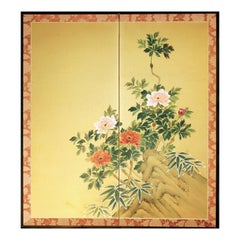
Japanese screen
By Japanese Studio
Located in Brescia, IT
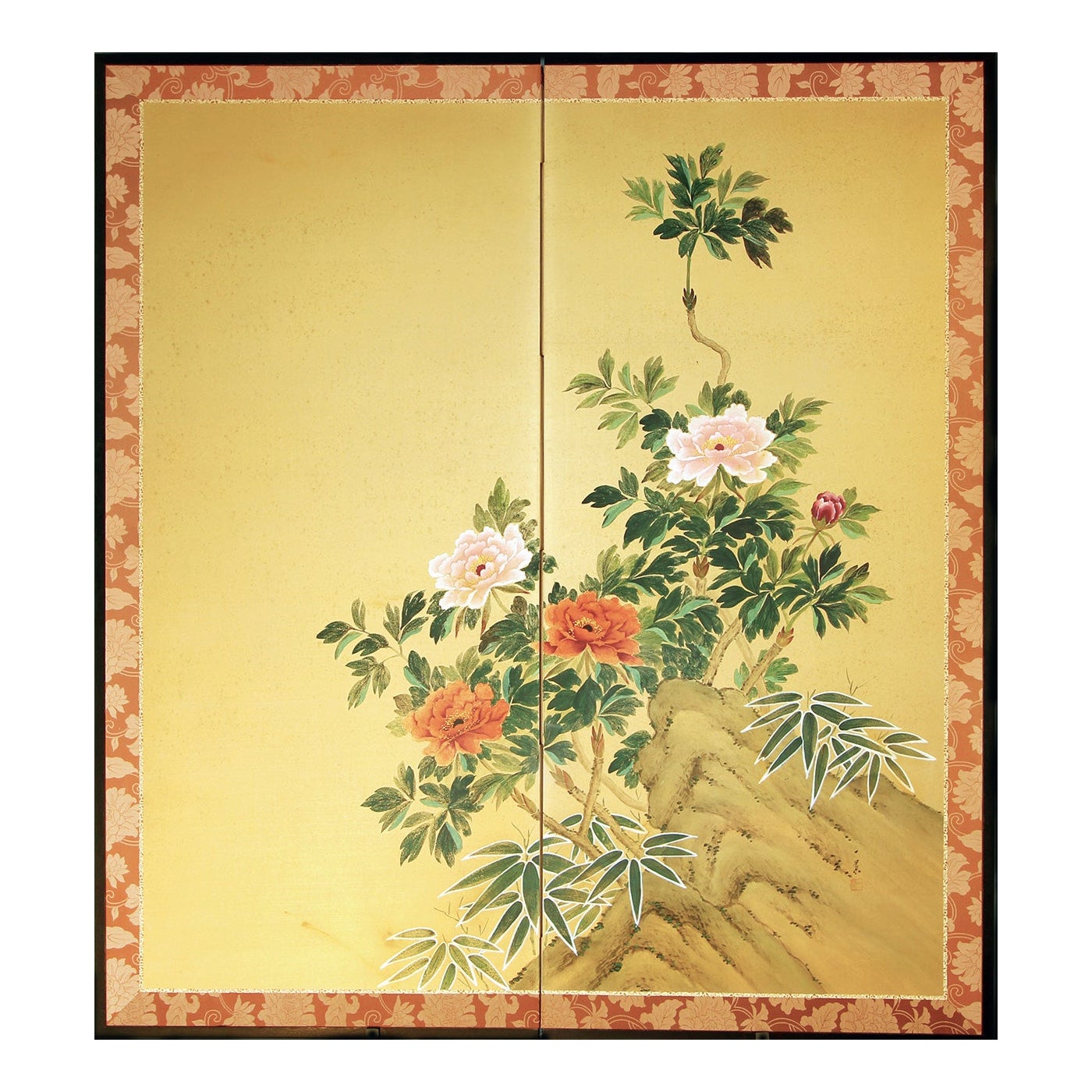
Two-panel screen of Rinpa school painted with mineral pigments on silk and rice paper.
It depicts colorful peony flowers. This is the flower of spring, symbolizing success and pro...
Category
20th Century Japanese Showa Paintings and Screens
Materials
Silk, Paper
$7,061
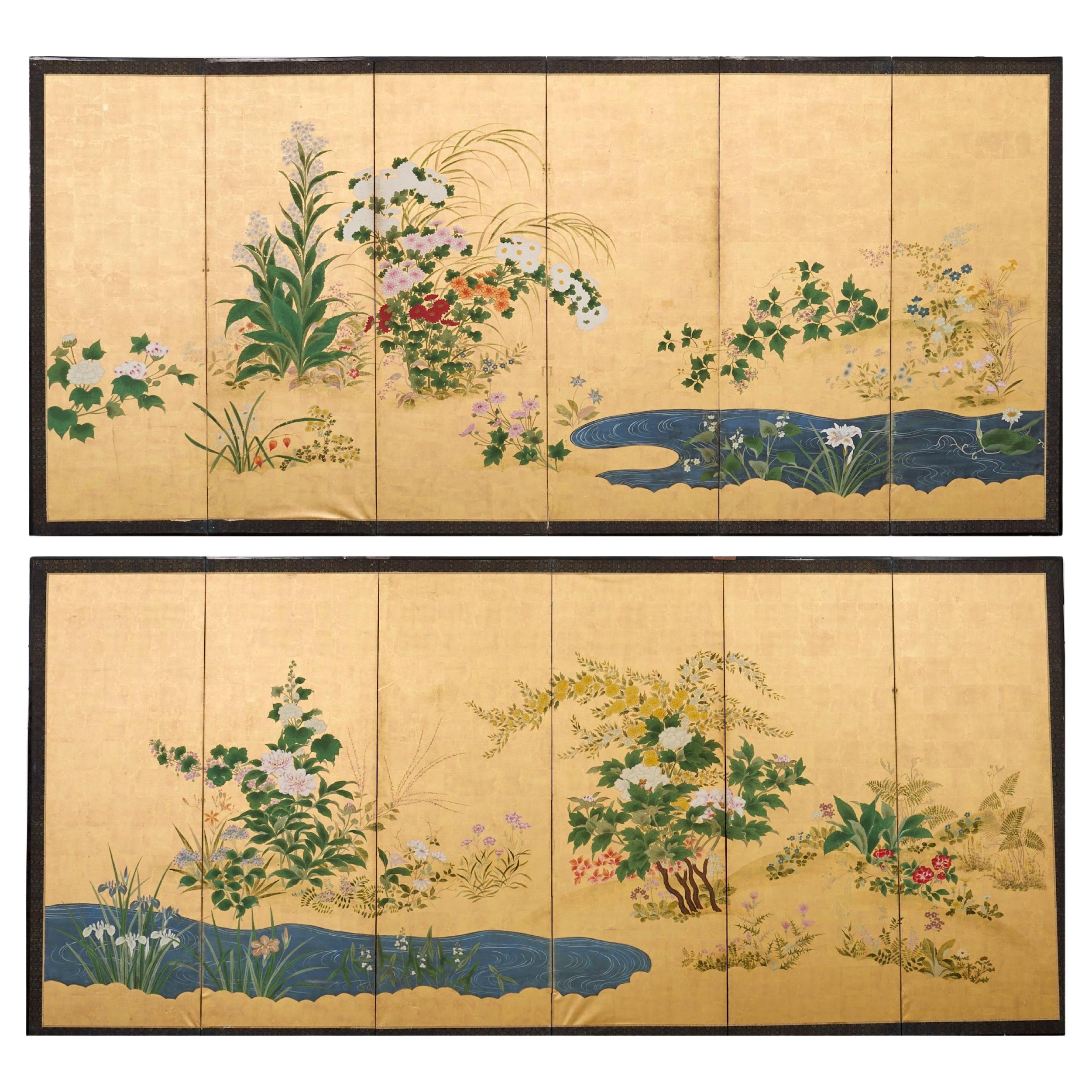
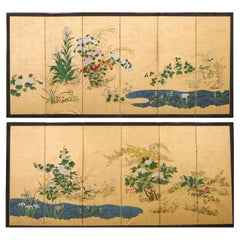
Pair of Japanese Meiji Screens Blossoms of Spring, Summer and Autumn
Located in Rio Vista, CA
Amazing pair of late 19th/early 20th century Japanese Meiji period byobu screens depicting flowering plants and blossoms of the spring, summer, and autumn. Painted in the Nihonga sch...
Category
Antique 19th Century Japanese Meiji Paintings and Screens
Materials
Brass, Gold Leaf
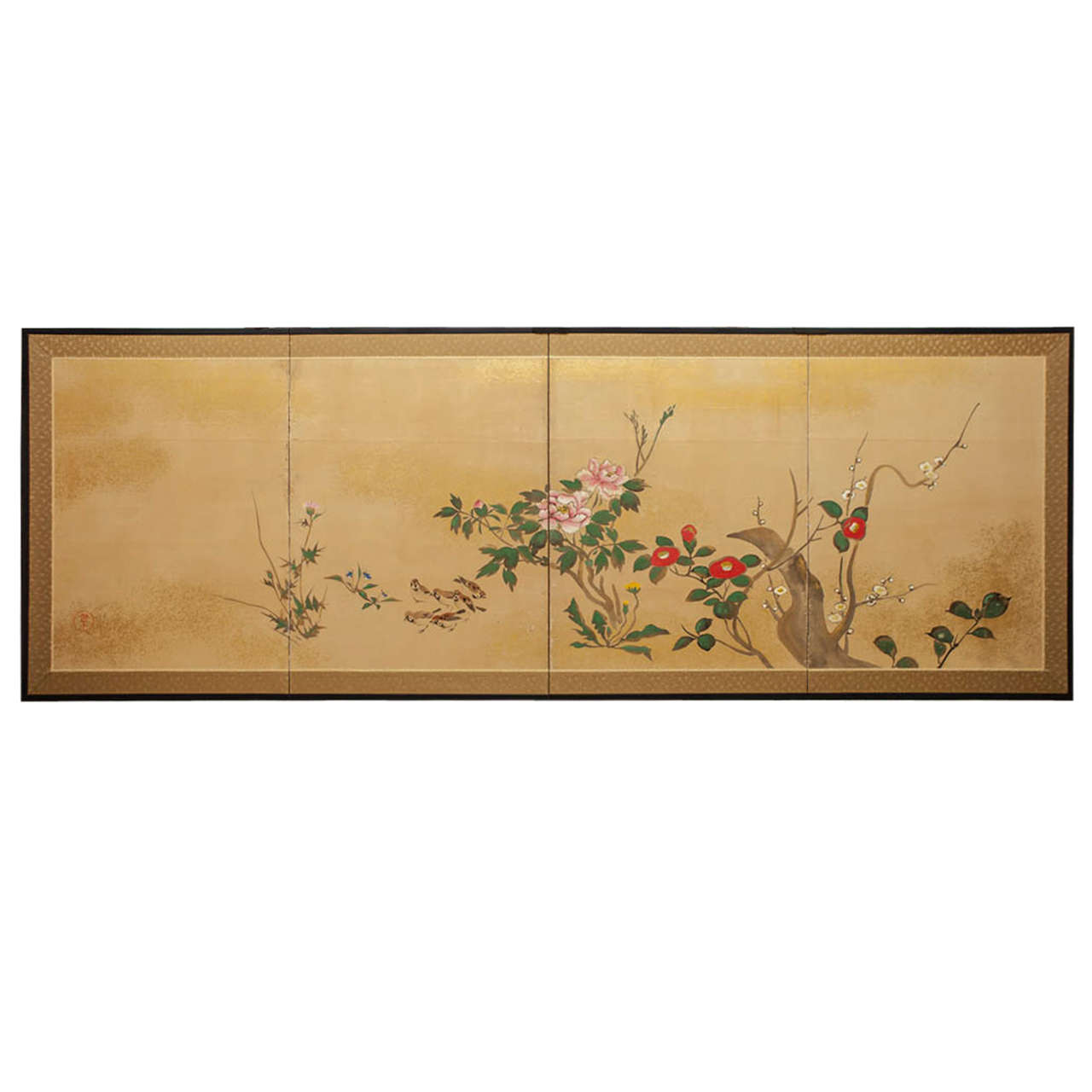
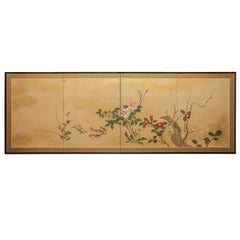
Japanese Four Panel Screen: Early Spring Into Summer
Located in Hudson, NY
Japanese Four Panel Screen: Early Spring Into Summer, Meiji period (1868 -1912) painting of plum in bloom with red camellias on the right and peony and thistle on the left. A clutc...
Category
Antique Early 1900s Japanese Meiji Paintings and Screens
Materials
Gold Leaf
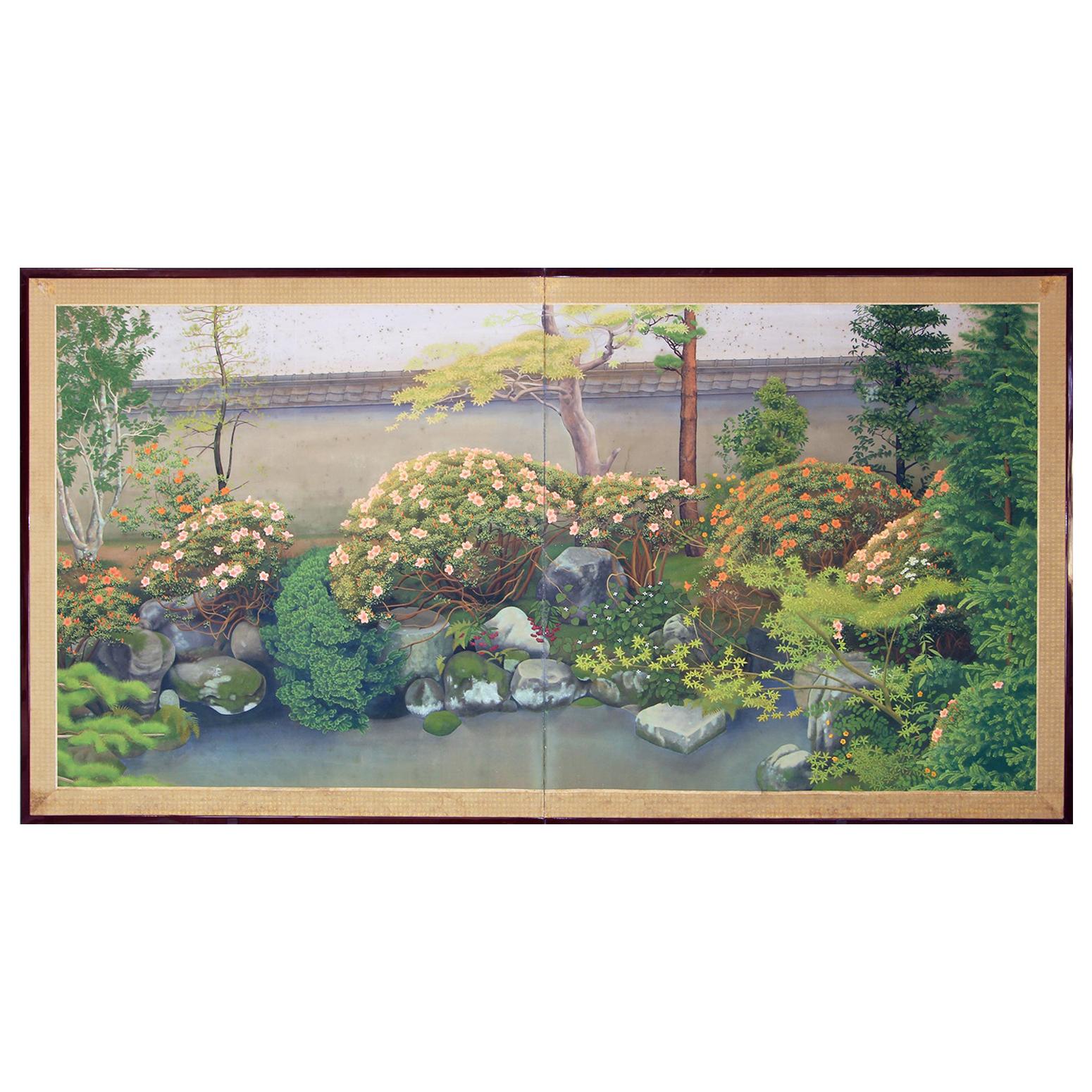
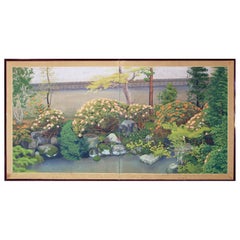
20th Century Showa Period Beautiful Spring Garden Folding Screen Two Panels
Located in Brescia, IT
Japanese screen with two doors painted with mineral pigments on rice paper. Early Showa period.
Category
Late 20th Century Japanese Showa Paintings and Screens
Materials
Paper
Pair of Japanese Taisho Period Screens Paragons of Filial Piety
Located in Rio Vista, CA
Impressive pair of Japanese screens from the Taisho period meiji. Each six-panel screen depicts an image from the 24 paragons of filial piety ...
Category
20th Century Japanese Taisho Paintings and Screens
Materials
Brass, Gold Leaf