Items Similar to Two-panel folding screen, Nihonga, Hirai Baisen (1889–1969), early Shōwa era (19
Video Loading
Want more images or videos?
Request additional images or videos from the seller
1 of 16
Two-panel folding screen, Nihonga, Hirai Baisen (1889–1969), early Shōwa era (19
$6,725.59
£4,981.92
€5,600
CA$9,202.29
A$10,012.80
CHF 5,301.65
MX$120,460.77
NOK 67,319.16
SEK 61,592.32
DKK 42,676.58
About the Item
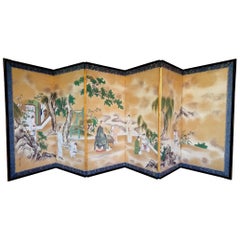
Two-panel folding screen, Nihonga, Hirai Baisen (1889–1969), early Shōwa era (1940s)
This two-panel screen is signed by Hirai Baisen (1889–1969), a major Nihonga painter who is only now being rediscovered after decades of neglect. Born in Kyoto, Baisen chose not to apprentice under any established master, opting instead to develop his own artistic path. A decisive moment in his career was a trip to China in 1913, which profoundly influenced his work. From then on, he frequently painted landscapes inspired by the Chinese continent, integrating bold perspectives and expressive, wet brushwork. His style is often compared to that of Maeda Seison (1885–1977), and by the 1920s, their works were considered representative of new trends in Nihonga painting.
Between 1907 and 1931, Baisen’s works were regularly selected for the Bunten, the official state-sponsored exhibition in Japan. However, despite a promising start, his career gradually faded as he became a victim of the increasingly conservative tendencies within the Nihonga establishment. Only recently, with the renewed interest in art from the Taishō and early Shōwa periods, has his work regained recognition — notably through institutions such as the Portland Museum, the Honolulu Museum of Art, the Seattle Art Museum, the Metropolitan Museum of Art in New York, the Kyoto Municipal Museum of Art, and several private collections.
This folding screen reflects the evolution of Baisen’s landscape painting: the fluidity of the washes and the layering of mineral pigments convey a poetic vision of the natural world. The scene shows a winding stream flowing through a forest bathed in soft light, where maple trees in golden and pink hues evoke a near-spring atmosphere despite the autumnal setting. The attention to air and light exemplifies the Nihonga artists’ ambition to renew Japanese painting in response to Western standards, while remaining rooted in Asian traditions.
A rare example of Baisen’s later work, this screen reveals both the unique sensitivity of his brush and his key role in the development of Nihonga in the 20th century.
Mineral pigments and gofun on paper, mounted on a wooden structure with lacquered framing strips.
Minor restoration on the side of the right panel, small dents on the back of the frame.
Height: 140 cm. Total width: 154 cm (each panel: 77 cm).
- Dimensions:Height: 55.12 in (140 cm)Width: 60.63 in (154 cm)Depth: 0.79 in (2 cm)
- Materials and Techniques:
- Place of Origin:
- Period:
- Date of Manufacture:1940
- Condition:Wear consistent with age and use.
- Seller Location:PARIS, FR
- Reference Number:1stDibs: LU6491244162052
About the Seller
5.0
Recognized Seller
These prestigious sellers are industry leaders and represent the highest echelon for item quality and design.
Established in 1982
1stDibs seller since 2022
7 sales on 1stDibs
- ShippingRetrieving quote...Shipping from: PARIS, France
- Return Policy
More From This Seller
View AllRare Japanese Folding Screen, Kayo Zu, Falcons on a Perch, Soga School, Edo
Located in PARIS, FR
Six-Panel Folding Screen, Kayo Zu, Falcons on a Perch, Soga School, Edo Period, 18th Century
This six-panel folding screen, of the oshi-e hari type (paintings mounted on screens), i...
Category
Antique Mid-18th Century Asian Edo Paintings and Screens
Materials
Wood, Lacquer, Paper
Rare Japanese painting, Skeletons Studying, Shaku Kaiyin, Japan Meiji Period
Located in PARIS, FR
Skeletons Studying, Shaku Kaiyin, Japan Meiji Period
This ink-on-paper painting, mounted as a scroll with colored paper borders, is titled Skeletons Studying. It portrays a circle of...
Category
Antique Late 19th Century Japanese Paintings and Screens
Materials
Paper
$1,825 Sale Price
20% Off
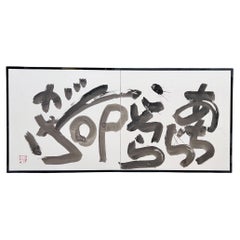
Screen Calligraphy, Risking One’s Life Here and There – Sakae Umezu (1926-2013)
Located in PARIS, FR
Screen Calligraphy, Risking One’s Life Here and There – Sakae Umezu (1926-2013)
This two-panel folding screen, created by Sakae Umezu, is a powerful and expressive calligraphic work....
Category
Late 20th Century Japanese Screens and Room Dividers
Materials
Paper
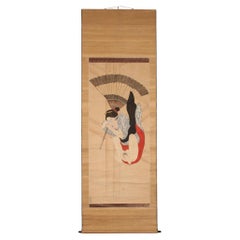
Scroll paintingJapan, Woman jumping from the balcony of Kiyomizu-dera Edo period
Located in PARIS, FR
Japan, Woman jumping from the balcony of Kiyomizu-dera Edo period
Japanese scroll painting – Woman jumping from the balcony of Kiyomizu-dera temple, Edo period
Ink and pigments on pa...
Category
Antique 1790s Japanese Paintings
Materials
Paper
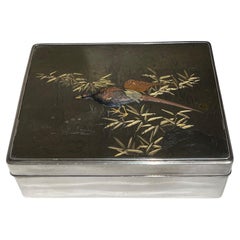
Box signed Katsutoshi Koku, Japan, Meiji period (1868-1912)
Located in PARIS, FR
Box signed Katsutoshi Koku, Japan, Meiji period (1868-1912)
Rectangular silver box bearing the Japanese junjin hallmark, signifying pure silver, made during the Meiji period (1868-1...
Category
Antique Late 19th Century Japanese Decorative Boxes
Materials
Silver
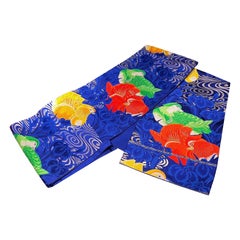
Spectacular Nishinjin silk and metal threads Obi, Japan, circa 1960-70
Located in PARIS, FR
A very special high quality Nishijin, traditionaly wowen Japanese belt.
It can be used as a runner or as a wall decoration.
The wowen silk is more than 4 meters long!
the back is li...
Category
Vintage 1960s Japanese Pillows and Throws
Materials
Silk
$350 Sale Price
20% Off
You May Also Like
Antique Japanese Taisho Period Byobu Four Panel Folding Screen
Located in New York, NY
Antique Byobu Four Panel Screen.
Japan, late 19th to early 20th century. Taisho period.
Category
Antique Late 19th Century Japanese Paintings and Screens
Materials
Paper
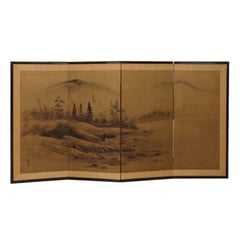
Antique 19th Century Japanese Two-Panel Screen ‘Byobu’, Kano School, Edo Period
Located in London, GB
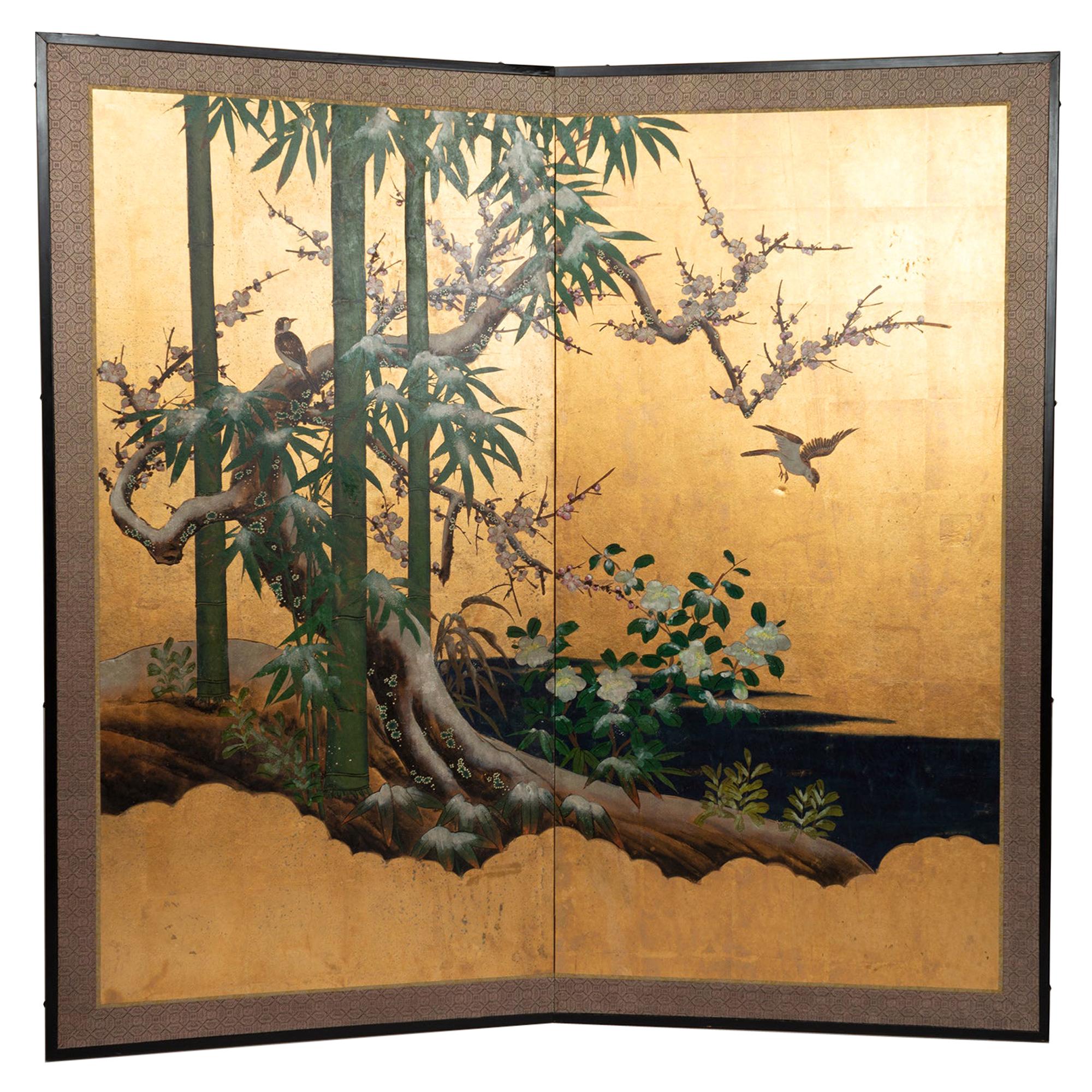
Japanese Kano School Edo period two-panel screen depicting flowering prunus and bamboo on a rock formation, with colorful birds next to a body of water. ...
Category
Antique Mid-19th Century Japanese Edo Paintings and Screens
Materials
Gold Leaf

Byobu - Japanese Folding Screen
By Japanese Studio
Located in Brescia, IT
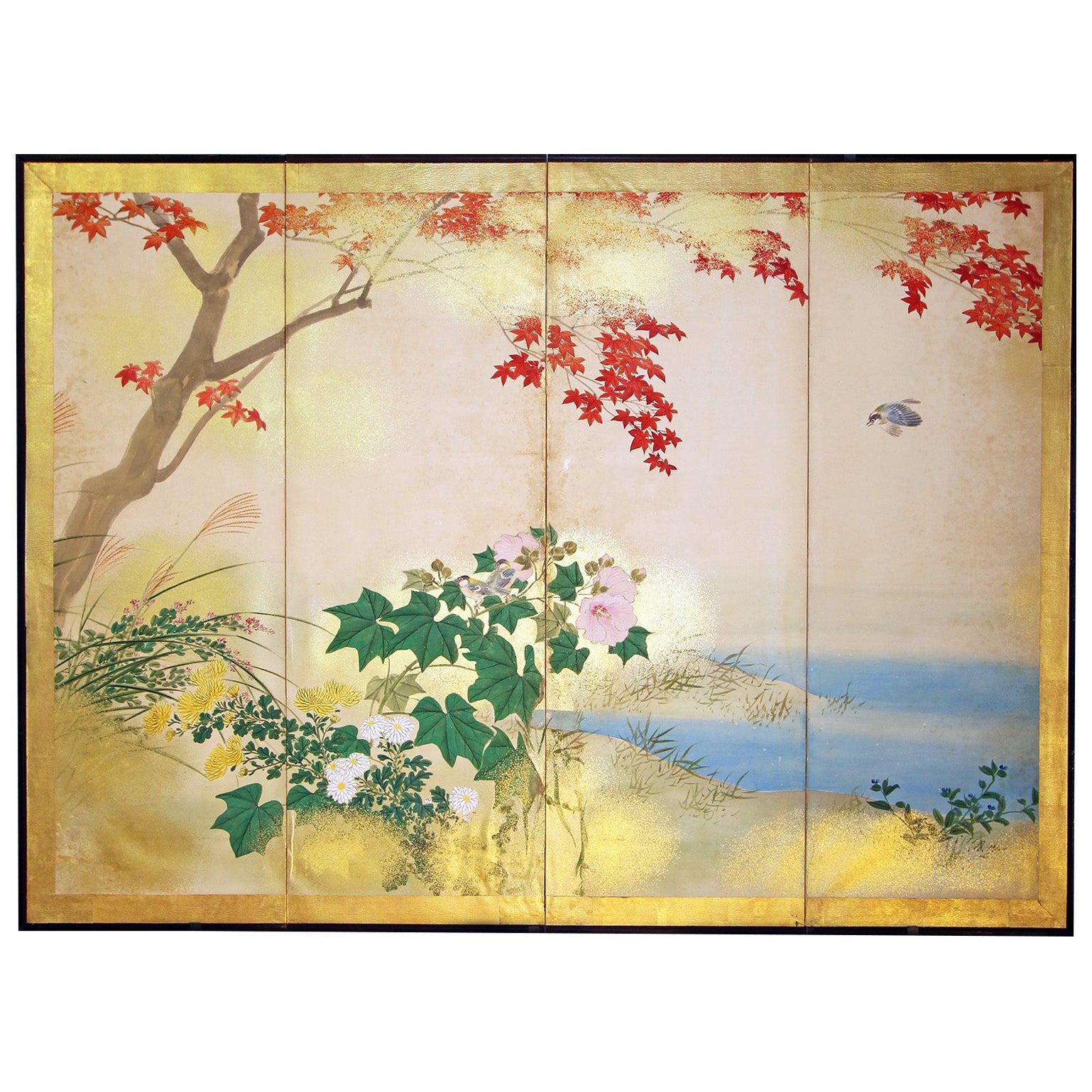
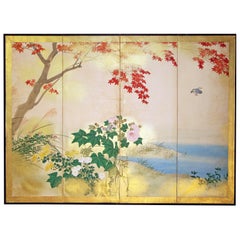
Nice four-panel Japanese screen painted on vegetal paper, depicting a landscape with a red maple, flowers and birds.
The size is very refined and easy to place in a design project.
Category
Mid-20th Century Japanese Showa Paintings and Screens
Materials
Paper
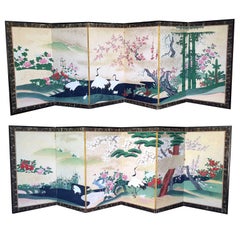
Pair of Rare Antique Japanese Folding Screens with Provenance
Located in Atlanta, GA
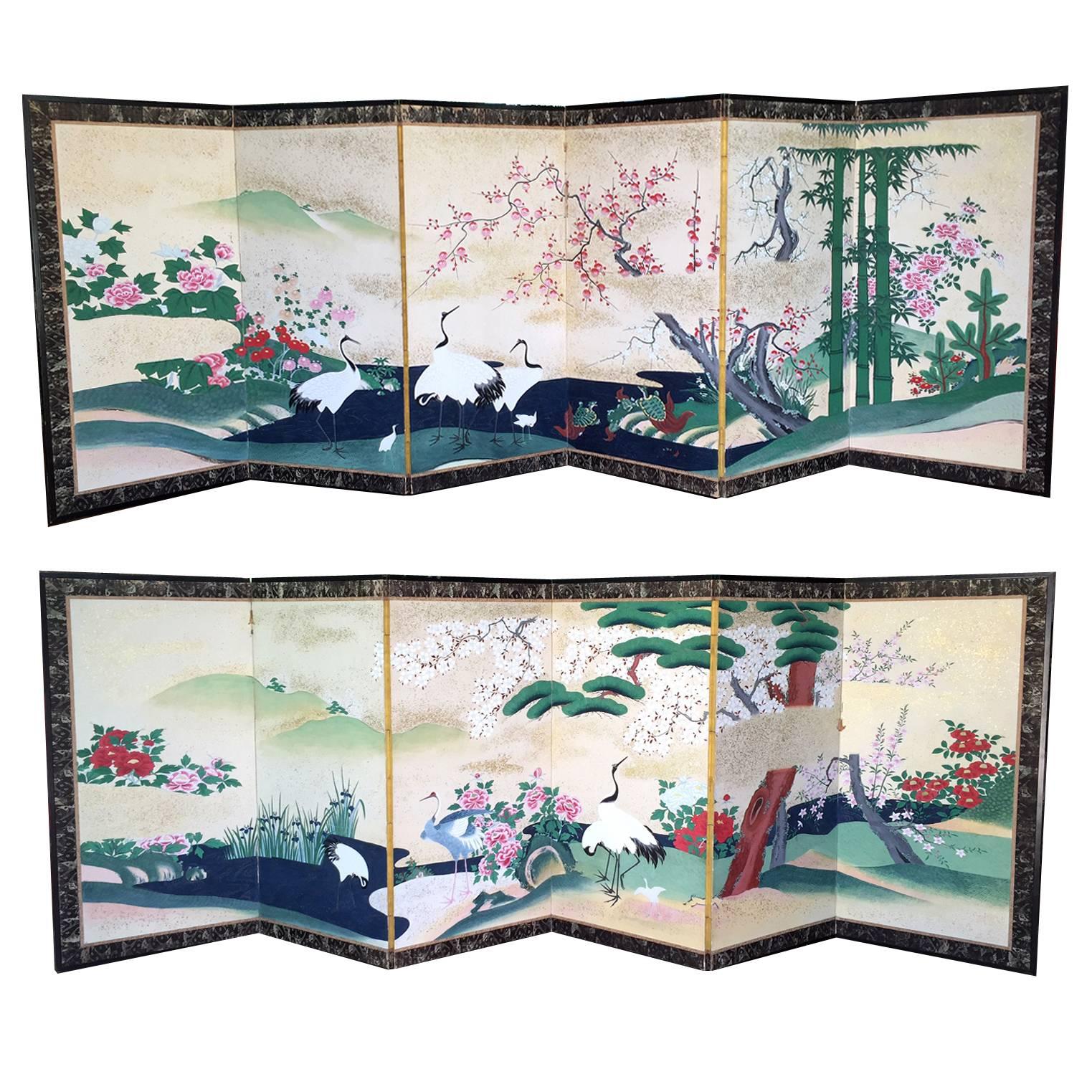
An amazing pair of matching antique Japanese folding screen predating 1812-1813, most likely from Kano School. Six panels each depict C...
Category
Antique 1810s Japanese Japonisme Paintings and Screens
Materials
Brass
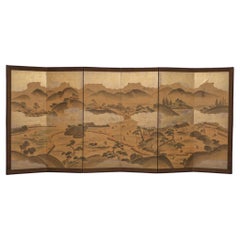
Large Japanese 6-panel byôbu 屏風 (folding screen) with genre painting
Located in Amsterdam, NL
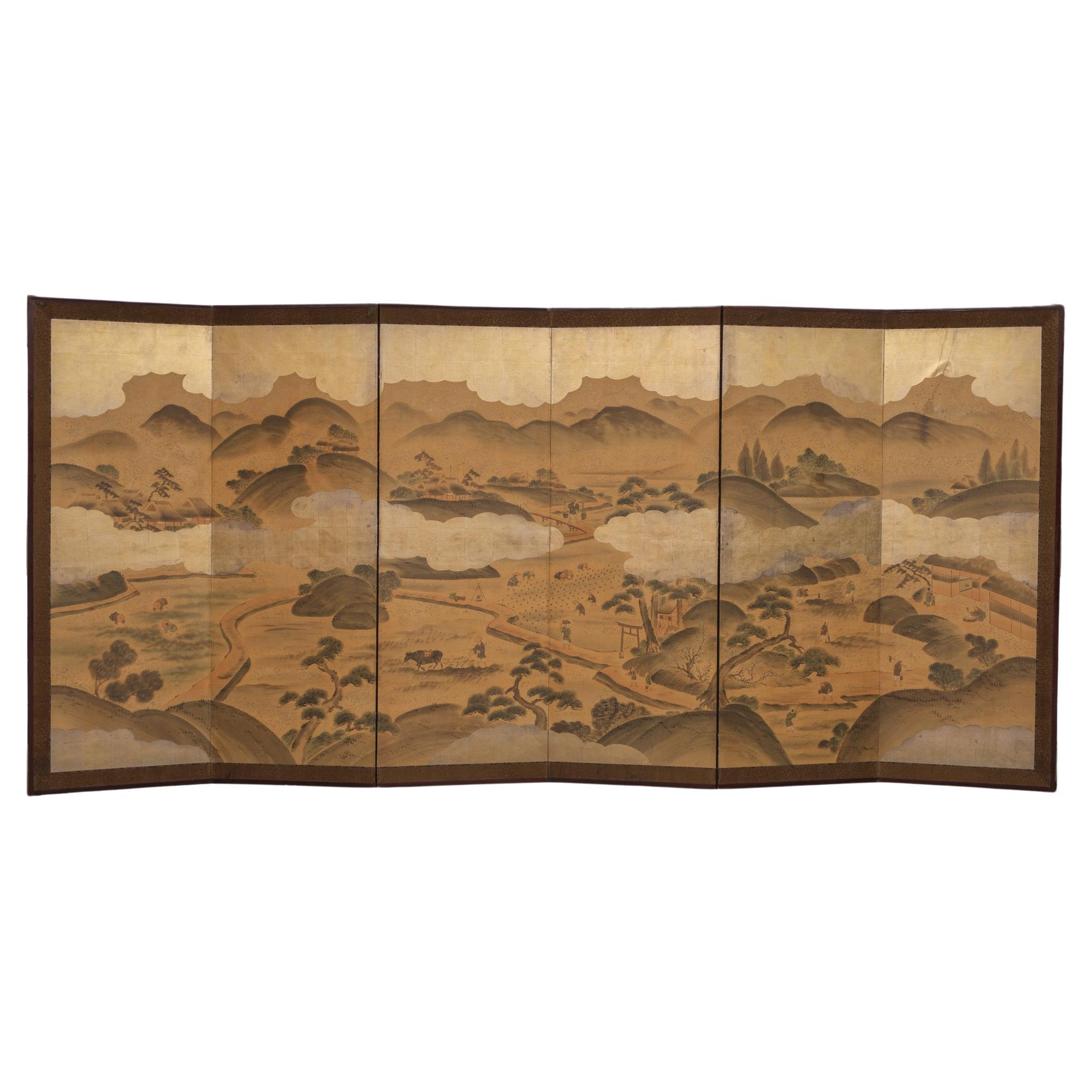
Fascinating large six-panel byôbu (folding screen) with a detailed genre painting on goldish silver leaf with different scenes of people at work in a rural mountain village during th...
Category
Early 20th Century Japanese Paintings and Screens
Materials
Silver Leaf
Rare Antique Japanese Folding Screen by Kano Tanshin
By Kano Tanshin
Located in Atlanta, GA
An exquisite Japanese folding screen painted and signed by Kano Tanshin (Morimasa) (1658-1719), circa early Edo Period. An important member of the Kano painter family, the son of Kano Tanyu...
Category
Antique 17th Century Japanese Japonisme Paintings and Screens
Materials
Brass
More Ways To Browse
20th Century Folding Screen
Japanese Signed Two Panel Screen
Nihonga Screens
Two Panel Folding Screen
Japanese Maple
Qing Dynasty Panels
18th Century Japanese Silk Painting
De Gournay
Hand Painted Silk Panels
Japanese Screens Byobu
Wood Carved Asian Screen
Chinese Gold Leaf Painting
Japanese Paper Scroll
Japanese Screen Silver
Tibetan Thangka
Chinese Lattice
Chinese Scroll Art
Japanese Screen Black