Items Similar to Vintage Geisha Portrait, Japanese Textile Relief Costume Picture, Art Deco, 1940
Want more images or videos?
Request additional images or videos from the seller
1 of 11
Vintage Geisha Portrait, Japanese Textile Relief Costume Picture, Art Deco, 1940
$1,734.99
£1,259
€1,473.21
CA$2,374.47
A$2,585.57
CHF 1,367.90
MX$31,181.01
NOK 17,404.42
SEK 15,911.30
DKK 11,002.55
About the Item
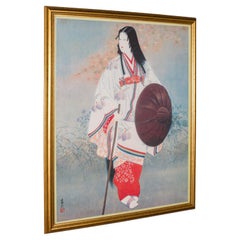
This is a vintage Geisha portrait. A Japanese, padded textile relief costume study in silk cotton, dating to the Art Deco period, circa 1940. A fascinating and decorative study, rich in texture and cultural interest.
Displays a desirable aged patina and in good order throughout
Crafted as a Geisha costume study, using individual textile samples to create a relief image
Traditional woodblock-inspired composition, redolent of Meiji period portraiture
Figure’s face and hands delicately hand painted, adding fine detail and expression
Set upon a silk cotton ground with a wider silk cotton border
Presented within an ebonised composite frame, behind clear protective glass
Dressed to the rear with hanging wire for ease of wall display
A visually striking and tactile Japanese textile artwork, offering strong Art Deco appeal and ideal for adding cultural depth and colour to a refined interior.
Dimensions:
Max Width: 40.5cm (16'')
Max Depth: 2cm (.75'')
Max Height: 53cm (20.75'')
Picture Width: 26cm (10.25'')
Picture Height: 37.5cm (14.75'')
- Dimensions:Height: 20.87 in (53 cm)Width: 15.95 in (40.5 cm)Depth: 0.79 in (2 cm)
- Style:Art Deco (Of the Period)
- Materials and Techniques:
- Place of Origin:
- Period:
- Date of Manufacture:Circa 1940
- Condition:Wear consistent with age and use. Presented in good vintage condition.
- Seller Location:Hele, Devon, GB
- Reference Number:Seller: 257751stDibs: LU2645348125842
About the Seller
5.0
Platinum Seller
Premium sellers with a 4.7+ rating and 24-hour response times
Established in 2005
1stDibs seller since 2017
1,088 sales on 1stDibs
Typical response time: <1 hour
- ShippingRetrieving quote...Shipping from: Hele, Devon, United Kingdom
- Return Policy
More From This Seller
View All4
Tall Vintage Wall Panel, Oriental, Watercolour on Silk, Framed Art, Art Deco
Located in Hele, Devon, GB
This is a tall vintage wall panel. An Oriental, watercolour on silk depicting a golden pheasant and foliate scene, dating to the Art Deco period, circa 1930. A striking decorative ar...
Category
Vintage 1930s Chinese Art Deco Paintings and Screens
Materials
Silk, Glass

Vintage Geisha Print, Japanese, Framed, Female Figure, Art Deco, Decorative Art
Located in Hele, Devon, GB
This is a vintage geisha print. A Japanese, gilt framed female figure from the late Art Deco period, circa 1950.
Evocative woodblock-type geisha figure...
Category
Mid-20th Century Japanese Decorative Art
Materials
Wood
Vintage Framed Art Print, Japanese, Female, Geisha Figure, Art Deco, Circa 1950
Located in Hele, Devon, GB
This is a vintage framed art print. A Japanese, female geisha figure from the late Art Deco period, circa 1950.
In the manner of traditional Japanese wo...
Category
Mid-20th Century Japanese Decorative Art
Materials
Wood
Antique Photographic Prop Screen, Japanese, Silk Cotton, Room Divider, Victorian
Located in Hele, Devon, GB
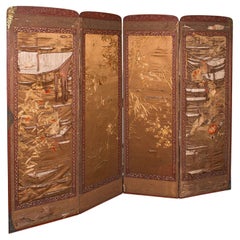
This is an antique photographic prop screen. A Japanese, silk cotton embroidered 4-fold room divider, dating to the late Victorian period, circa 1900.
Delicate time-worn condition ideal for set dressing or decorative purposes
Displays a desirable aged patina, in original order
Four fold frame dressed in textiles and wooden panels
Golden silk cotton shimmers delightfully in the light
Embroidered with charming birds and foliate decor
Each panel adorned with carved fretwork borders and domed crowns
This is a charmingly time worn antique photographic prop screen, with an appealing Japanese decor...
Category
Antique Late 19th Century Japanese Late Victorian Paintings and Screens
Materials
Silk
Pair of Vintage Portrait Picture Frames, English, Silver Plate, 5x7, Art Deco
Located in Hele, Devon, GB
This is a pair of vintage picture frames. An English, silver plated 5x7 ratio photo display, dating to the Art Deco period, circa 1930. Charming pair of frames with a quality appeara...
Category
Vintage 1930s British Art Deco Picture Frames
Materials
Silver Plate
Vintage Framed Bird Scene, Japanese, Silk Cotton Embroidery, Art Deco, C.1940
Located in Hele, Devon, GB
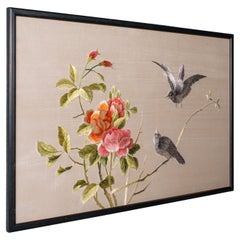
This is a vintage framed bird scene. A Japanese, silk cotton embroidery display, dating to the Art Deco period, circa 1940.
Attractive Oriental ...
Category
Early 20th Century Japanese Art Deco Decorative Art
Materials
Silk
You May Also Like
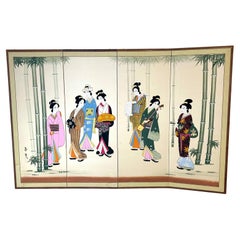
Vintage Handpainted Silk Japanese Geisha Screen With Ricepaper Backing
Located in Waxahachie, TX
1960-1970s
Hand painted silk.
Rice paper backing.
Made in Japan.
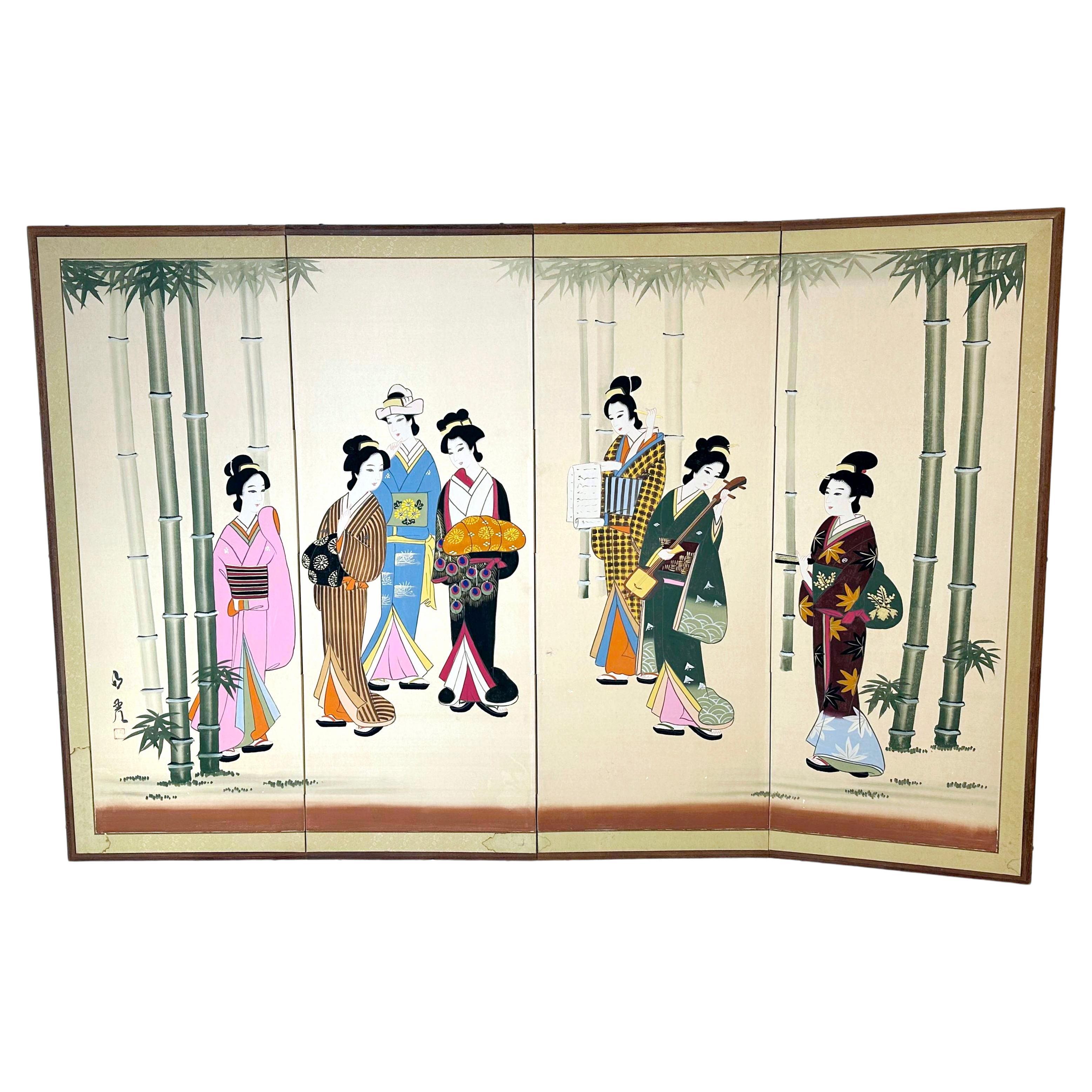
Six colorful Geisha surrounded by bamboo trees.
Little details, a shamisen, or Japanese guitar, a rice paper scroll...
Category
Vintage 1970s Japanese Edo Paintings and Screens
Materials
Silk, Wood
$595 Sale Price
65% Off
VIntage kimono textile art " Geometry ~ Chrysanthemums ~" by ikasu White Japan
By Kimono ikasu
Located in Setagaya City, JP
<
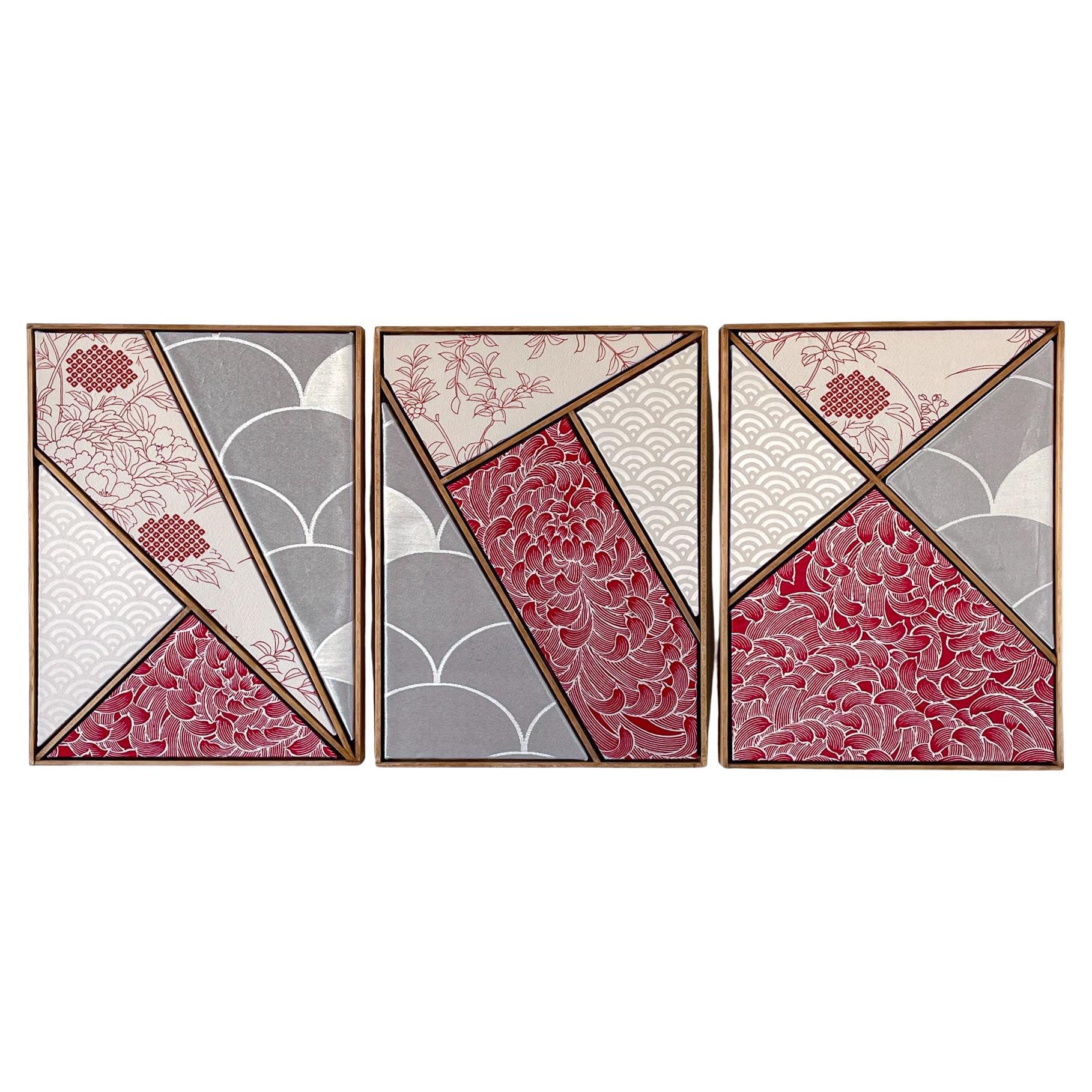
This work is inspired by traditional Japanese natural symbolism, and is framed in paulownia wood originally used for a kimono chest-of-drawers.
It is elegantly framed with...
Category
Vintage 1960s Japanese Japonisme Paintings and Screens
Materials
Silk, Wood

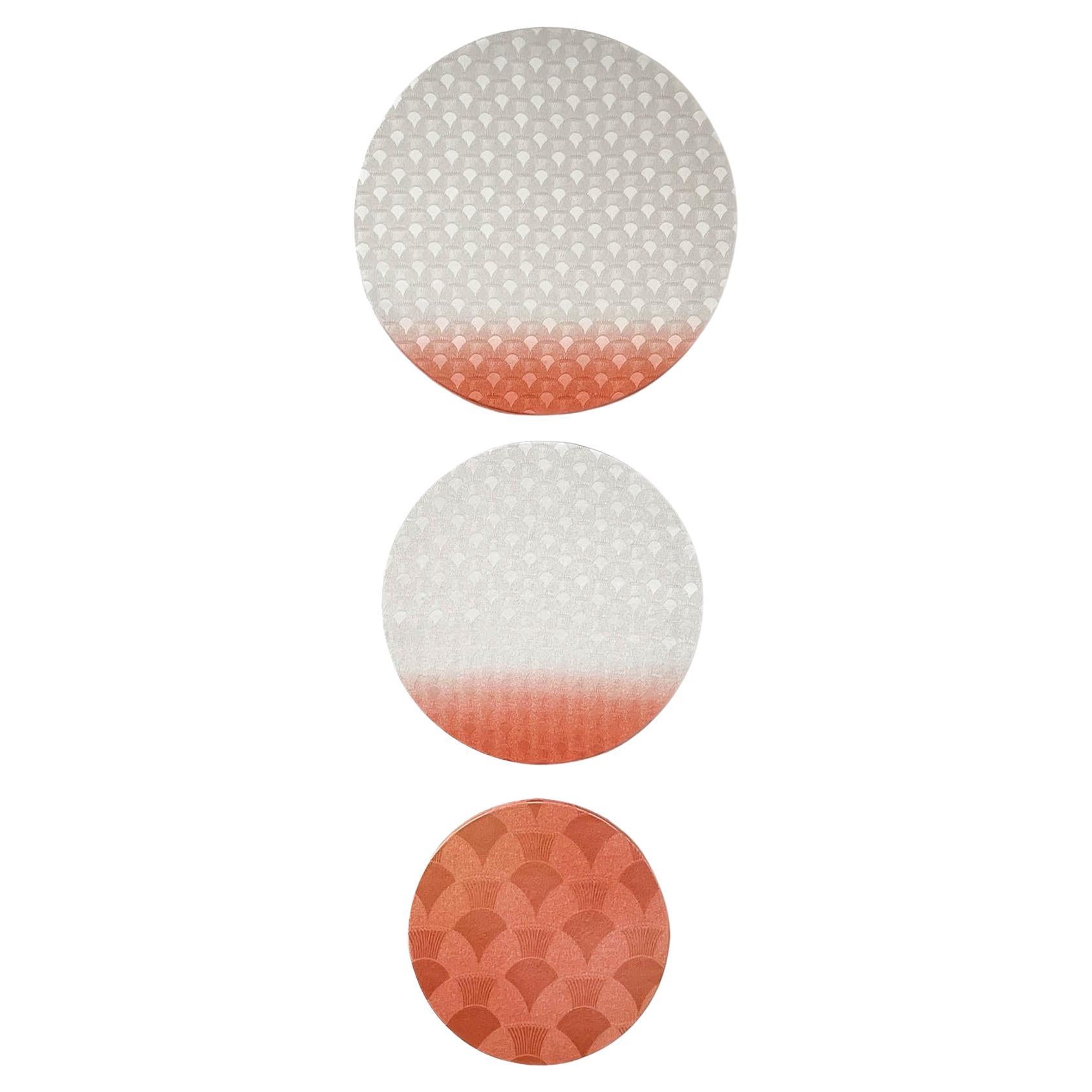
Vintage kimono textile art " Sunset Timelapse ~ Ephemerality ~" ikasu Red Japan
By Kimono ikasu
Located in Setagaya City, JP
<
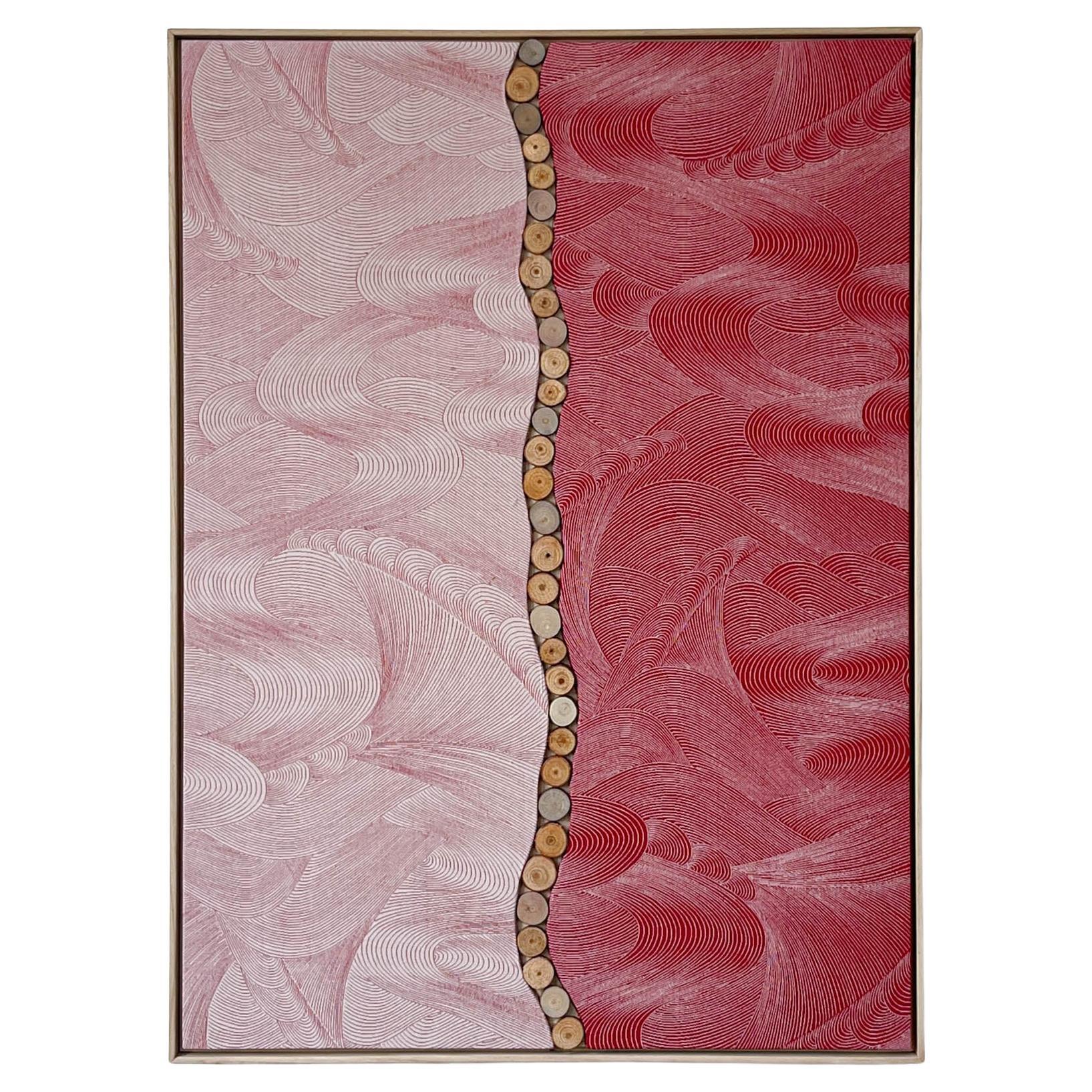
The art piece uses two sides - front and reverse - of the same kimono, to show beautiful sea surrounding Japan, in hues and in late sunset, as a timelapse.
The frame for this work is made of paulownia wood taken from antique Kiritansu - chest-of-drawers for kimono.
I use antique kiritansu that can’t be used as furniture anymore to create basis and frames for my works. It adds them even more authentic atmosphere of traditional wabisabi spirit. Can you feel it?
<< Period / Story
The kimono used in this piece was originally crafted during Showa period (around 1960ies).
<< Explanation and meaning of pattern and colors
Sea waves, depicted in two color variations here, are a symbol of transience and Impermanence in Japanese culture. The ebb and flow of the tides, the ever-changing currents, and the relentless motion of the waves serve as reminders of the fleeting nature of life. This artwork featuring the sea convey themes of impermanence, reminding viewers to cherish the present moment and appreciate the beauty of life's fleeting moments.
The theme of impermanence is strengthen by two colors of the sea - the lighter in early hues and the darker when the sun is just about to set in the sea.
<< About the frame
This artwork frame is crafted from paulownia wood, a uniquely Japanese material closely tied to the world of kimonos, and it serves to convey the refined beauty of Japanese nature.
Paulownia wood is known as the lightest wood in Japan, prased for its natural luster, resistance to moisture, and resilience against cracking. Since ancient times, it has been used in crafting furniture, chests, and musical instruments.
Paulownia wood is closely linked to kimono culture. During the Edo period (17th cent.~), it became customary to store cherished kimonos in paulownia chests...
Category
Vintage 1960s Japanese Japonisme Paintings and Screens
Materials
Silk, Wood
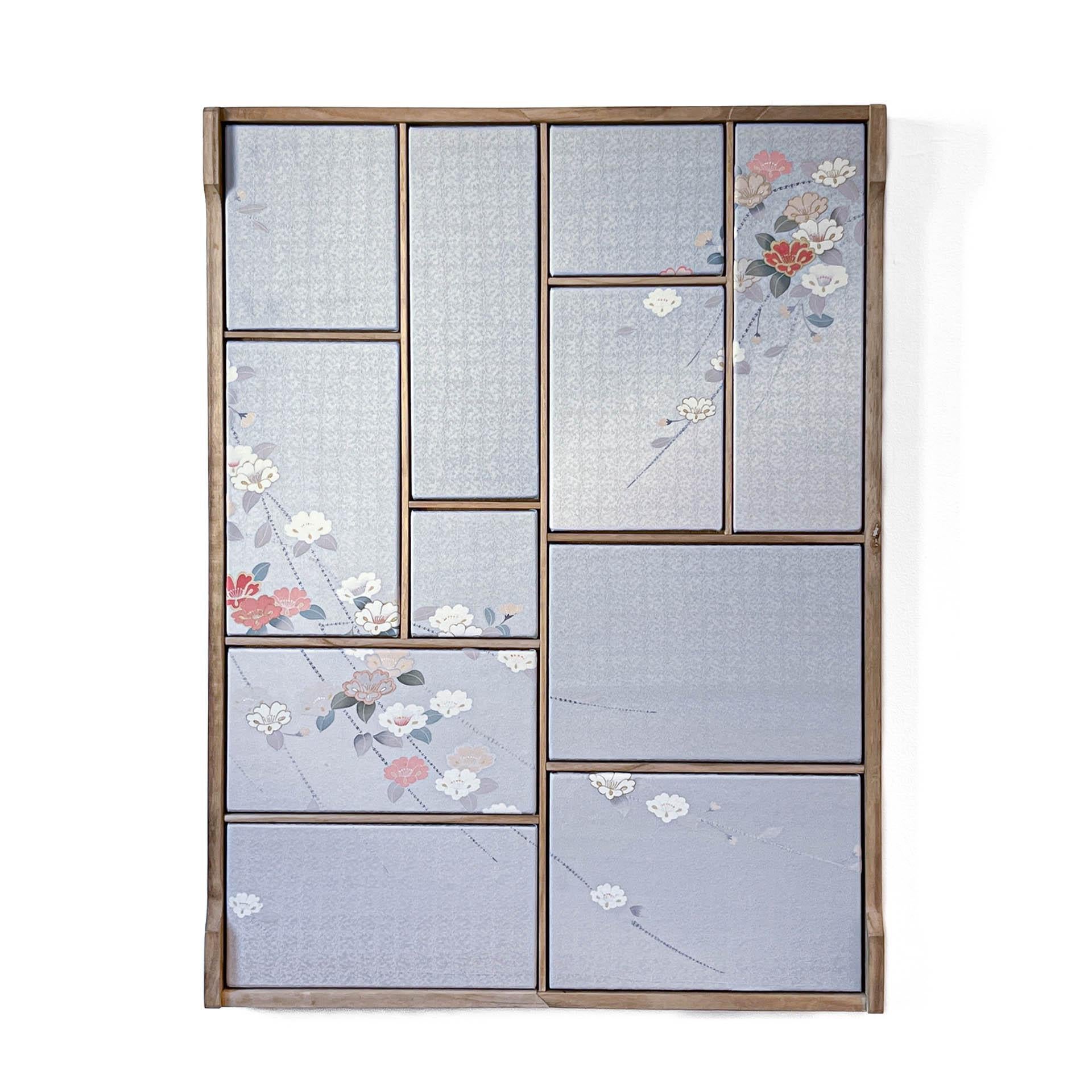
Vintage obi textile art " Camellia ~ Serendipity ~" by ikasu Blue Japan
By Kimono ikasu
Located in Setagaya City, JP
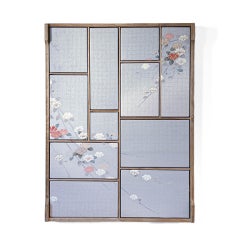
[Story behind the work]
This work is inspired by traditional Japanese nature motifs symbolism, and is framed in paulownia wood originally used for a kimono chest-of-drawers.
It is elegantly framed with paulownia wood originally used for kimono chest-of-drawers, and is filled with storytelling and sense of luxury.
In this artwork, the aim was to capture the the auspicious symbol of camellia used in antique kimono. Traditional Japanese culture, represented by the kimono, and wood, an integral element of Japanese craftsmanship, were used to bring this vision to life.
I used pieces of kimono that could no longer be used as clothing and kiritansu chest-of-drawers that would normally be discarded to create the ultimate upcycled piece.
[Explanation and meaning of pattern and colors]
This delicate piece features hand-drawn camellia motifs flowing gracefully on a softly brightened grayish background.
Camellias, native to Japan, bloom from winter to early spring. As an evergreen tree with green leaves throughout the year, it symbolizes the anticipation of spring and is considered an auspicious plant. Due to its seasonal significance and auspicious meanings, camellias have been used as motifs symbolizing good fortune. Additionally, they were highly valued for their use in oil, cosmetics, and medicine, representing nobility. Believed to possess the power to ward off misfortune, camellias also carry the meaning of "protection from calamity" and have strong ties to traditional ceremonies. In this artwork, camellias are delicately depicted alongside flowing branches, subtly representing good fortune with their pale pink and white hues.
"Sora-iro nezumi 空色鼠" refers to a light grayish color with a hint of blue, reminiscent of the slightly brightened sky on a lightly cloudy day. Popular during the late Edo period (19th cent.), it elegantly captures the slightly brighter sky pattern seen on lightly overcast days. Notably, the term "nezumi-iro" (mouse gray), popular during the late Edo period, was paired with brown tones, collectively known as "Forty-eight Teas and a Hundred Mice 四十八茶百鼠." Colors within the "nezumi" (gray) spectrum, particularly "sora-iro nezumi," were favored by young people for their cool and sophisticated appeal.
[Characteristics of the fabric]
The fabric features intricately woven patterns that reveal subtle gradations through dyeing, creating a grid pattern that transforms depending on the light conditions.
Originally, this fabric was part of a formal kimono known as a "hōmongi 訪問着," featuring motifs along the hem, shoulders, and sleeves. These motifs have been carefully selected and combined to create a unified piece of artwork.
[About the frame]
Kiritansu - chest-of-drawers for kimono, is traditionally made from paulownia wood, a uniquely Japanese material closely tied to the world of kimonos.
Paulownia wood is known as the lightest wood in Japan, prased for its natural luster, resistance to moisture, and resilience against cracking. Since ancient times, it has been used in crafting furniture, chests, and musical instruments.
During the Edo period, it became customary to store cherished kimonos in paulownia chests...
Category
Vintage 1960s Japanese Japonisme Paintings and Screens
Materials
Silk, Wood
Vintage kimono textile art " Plum Gradation " by ikasu Pink White Japan
By Kimono ikasu
Located in Setagaya City, JP
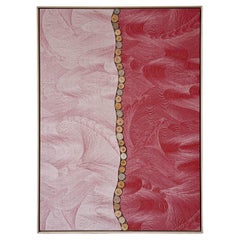
This canvas featuring a plum color gradient kimono showcases a unique decorative variation of the popular seigaiha (青海波) sea waves pattern.
The artwork got a Mr.
Mrs. Abe Arts ...
Category
Vintage 1980s Japanese Japonisme Paintings and Screens
Materials
Canvas, Silk
Vintage kimono textile art " Turquoise Forest ~ Strength ~ " by ikasu Blue Japan
By Kimono ikasu
Located in Setagaya City, JP
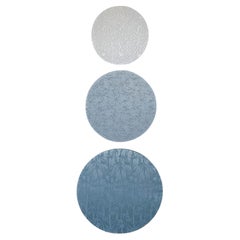
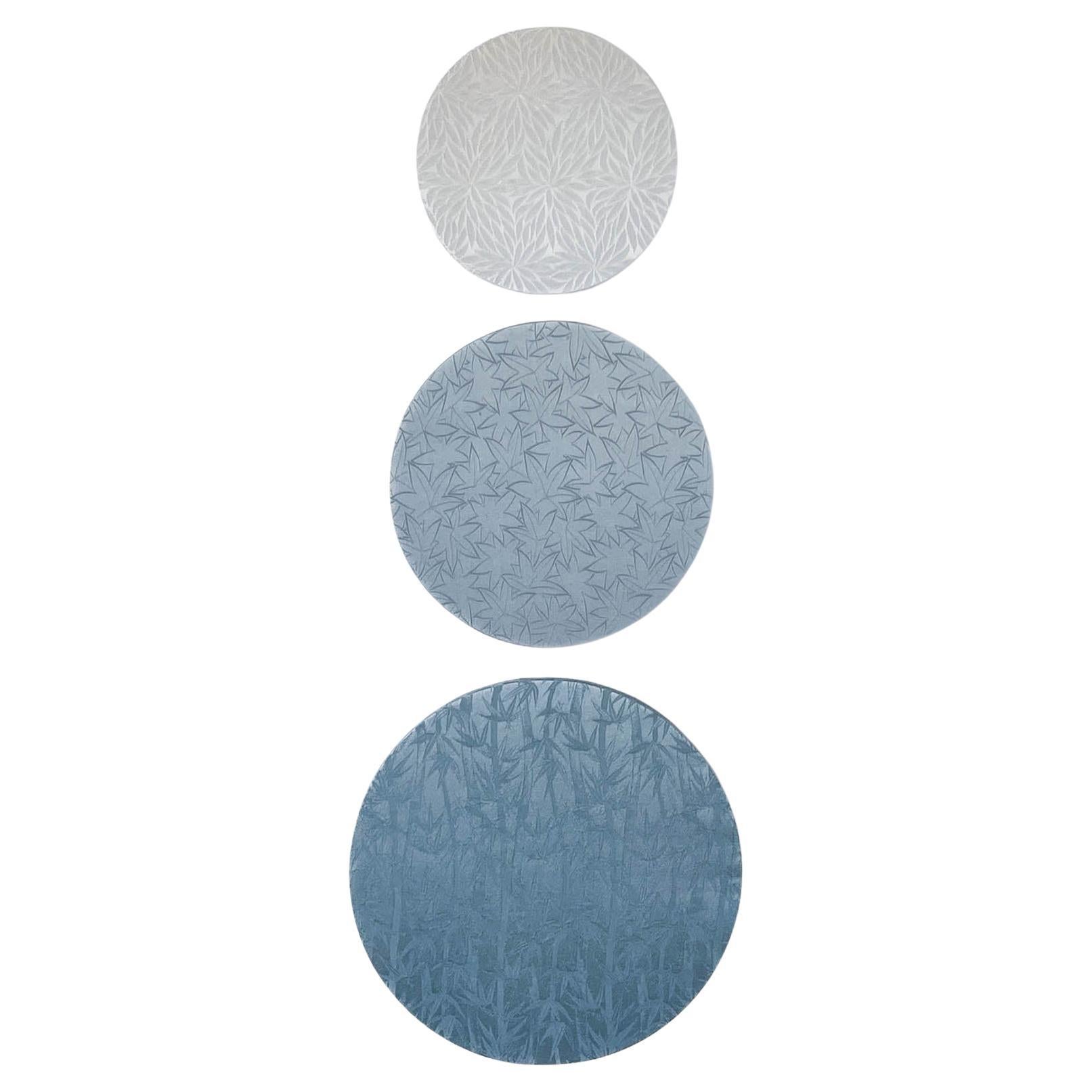
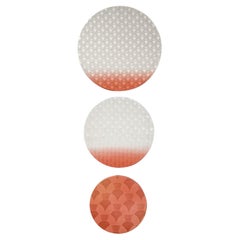
Fabrics featuring iconic Japanese plants like chrysanthemum, maple, and bamboo were gathered from various long underwear and kimono pieces to create a set of canvases (diameter 30, 25 and 20cm) showcasing exquisite gradations.
The top canvas, in pristine white, originates from long under-kimono, while the middle and bottom canvases are skillfully upcycled from kimono fabrics.
<< Period / Story
The long under-kimono and kimono fabrics used in these canvases were originally crafted and worn during the late Showa period (1960-80ies).
<< Explanation and meaning of pattern and colors
The pattern on the top canvas features a chrysanthemum, an auspicious emblem symbolizing longevity. It is affectionately referred to as the "raccoon dog chrysanthemum" due to the large, overlapping petals resembling the fur of a muzina, a creature similar to a raccoon dog or badger. This motif is highly popular in various plant-inspired designs and frequently seen in Edo komon, katazome, and jimon textiles.
The top canvas naga-juban under-kimono, being entirely white and devoid of any additional dyes, suggests its use as formal wear. Its pristine white hue accentuates the silk's luster when exposed to light and highlights the beauty of the woven patterns.
The fabric used here is rinzu, a type of fabric thinner than crepe de chine, characterized by its soft, smooth texture and subtle sheen. This particular lintel distinguishes itself with the way its ground pattern emerges and also incorporates a woven chrysanthemum pattern.
The central canvas showcases a maple tree, symbolizing longevity, which changes its colors with the seasons, bringing joy and happiness to people's lives.
The bamboo featured on the lower canvas has been regarded as a symbol of good fortune since ancient times, given its straight and vigorous growth, along with the Chinese legend that a phoenix consumes its fruit. It embodies concepts such as "immortality," "longevity," and "strength" because it remains green even in winter. The hollow stem also signifies "innocence," suggesting that there are no hidden agendas.
All three canvases are adorned with ground patterns that, when viewed from a distance, appear as modern works of art, yet upon closer inspection, they reveal a distinct Japanese ambiance.
<< Characteristics of the fabric
All three canvases are made of fabrics with jimon. The unique and high level of Japanese weaving...
Category
Vintage 1970s Japanese Japonisme Paintings and Screens
Materials
Canvas, Silk