Items Similar to Vintage kimono textile art " Monochrome Geometry " by ikasu Gold Grey Japan
Video Loading
Want more images or videos?
Request additional images or videos from the seller
1 of 18
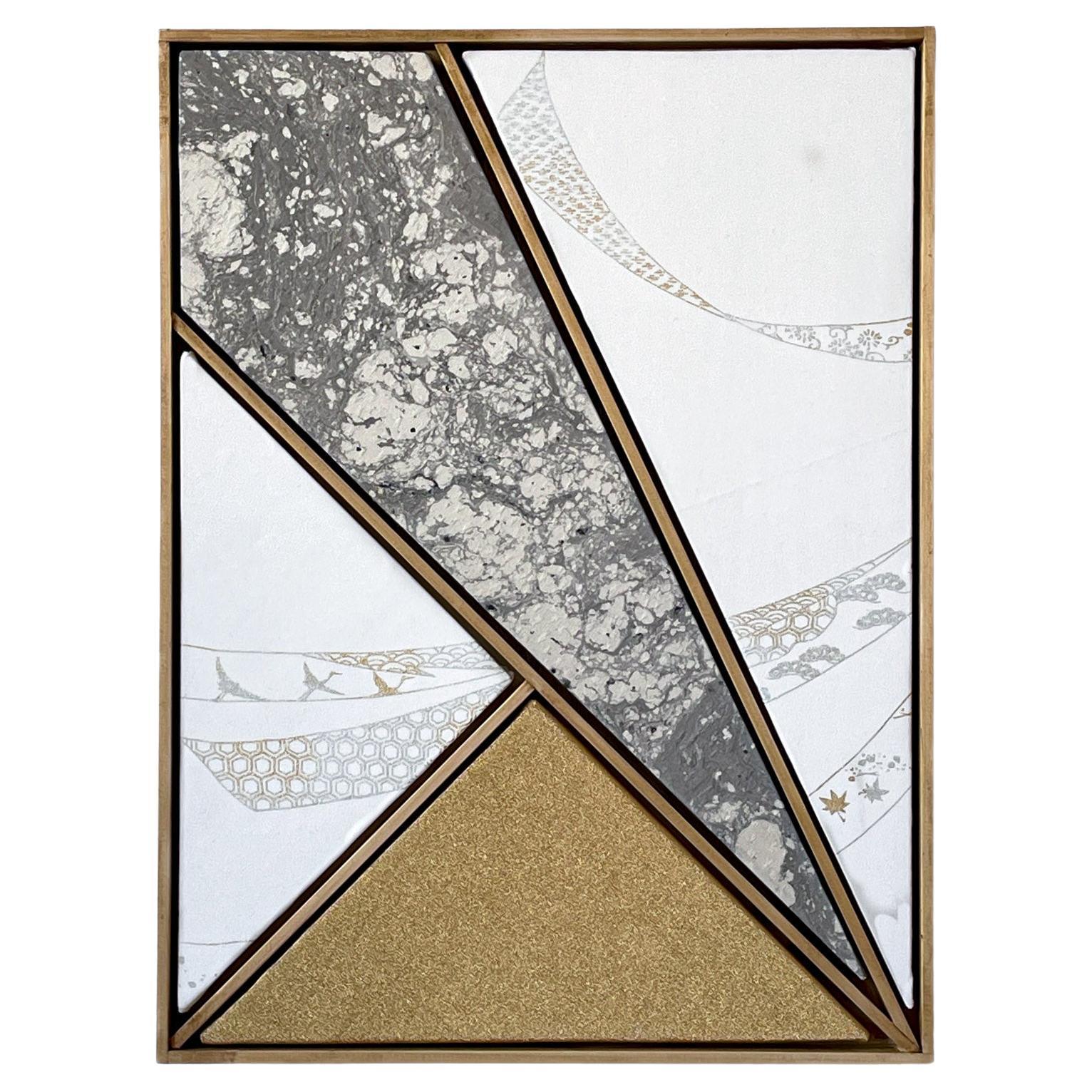
Vintage kimono textile art " Monochrome Geometry " by ikasu Gold Grey Japan
$730
£556.83
€634.40
CA$1,026.02
A$1,119.36
CHF 592.70
MX$13,413.15
NOK 7,548.31
SEK 6,902.37
DKK 4,737
About the Item
This work is inspired by traditional Japanese nature colors symbolism, and is framed in paulownia wood originally used for a kimono chest-of-drawers.
It is filled with storytelling and sense of luxury.
<< Explanation and meaning of pattern and colors
In Japanese tradition, monotone colors, carry meanings of simplicity, elegance, and restraint, often tied to the concept of wabi-sabi (侘寂), which appreciates beauty in simplicity and imperfection. Monotone color schemes in art, clothing, and design emphasize subtlety and serenity, creating a calm, reflective atmosphere. These colors are also associated with mindfulness, focusing attention on texture, form, and craftsmanship rather than vibrant colors.
In kimonos and traditional textiles, monotone or subdued color palettes can symbolize maturity, dignity, and refined taste, particularly for formal or ceremonial occasions. This aesthetic reflects a broader cultural appreciation for nature’s subtle hues and a reserved, introspective approach to beauty.
<< Characteristics of the fabric
I used pieces of kimono, obi belt, haori coat, and obiage - a full attire, that could no longer be used as clothing and kiritansu chest-of-drawers that would normally be discarded to create the ultimate upcycled piece.
<< About the frame
Kiritansu - chest-of-drawers for kimono, is traditionally made from paulownia wood, a uniquely Japanese material closely tied to the world of kimonos.
Paulownia wood is known as the lightest wood in Japan, prased for its natural luster, resistance to moisture, and resilience against cracking. Since ancient times, it has been used in crafting furniture, chests, and musical instruments.
During the Edo period, it became customary to store cherished kimonos in paulownia chests, which offered fire resistance and protection from moisture and insects.
Traditionally, when a daughter was born, a paulownia tree would be planted. Upon her marriage, the tree would be cut down, and the wood would be used to craft a chest for her as a wedding gift.
Following the Ansei Earthquake during the late Edo period in 1855, paulownia chests gained popularity due to their ability to withstand fires and even float in water, thereby safeguarding their contents during floods.
I use antique kiritansu that can’t be used as furniture anymore to create basis and frames for my works. It adds them even more authentic atmosphere of traditional wabisabi spirit. Can you feel it?
- Creator:Kimono ikasu (Artist)
- Dimensions:Height: 15.75 in (40 cm)Width: 11.82 in (30 cm)Depth: 1.58 in (4 cm)
- Style:Japonisme (In the Style Of)
- Materials and Techniques:
- Place of Origin:
- Period:
- Date of Manufacture:2024
- Condition:All the works are made from real kimonos, antiques and vintages. For this reason, the fabric may have traces of long-term use and minor fabric damages. - In case there are any scratches or stains, we always add a photo of the area on the item page.
- Seller Location:Setagaya City, JP
- Reference Number:1stDibs: LU10079243379282
About the Seller
No Reviews Yet
Vetted Professional Seller
Every seller passes strict standards for authenticity and reliability
1stDibs seller since 2024
- ShippingRetrieving quote...Shipping from: Setagaya City, Japan
- Return Policy
More From This Seller
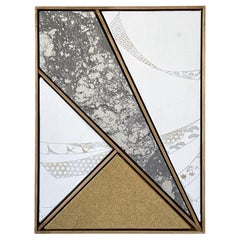
View AllVIntage kimono textile art " Geometry ~ Marble ~" by ikasu Gold White Grey Japan
By Kimono ikasu
Located in Setagaya City, JP
This work is inspired by traditional Japanese nature motifs symbolism, and is framed in paulownia wood originally used for a kimono chest-of-drawers.
It is elegantly framed with pau...
Category
Vintage 1960s Japanese Japonisme Paintings and Screens
Materials
Silk, Wood
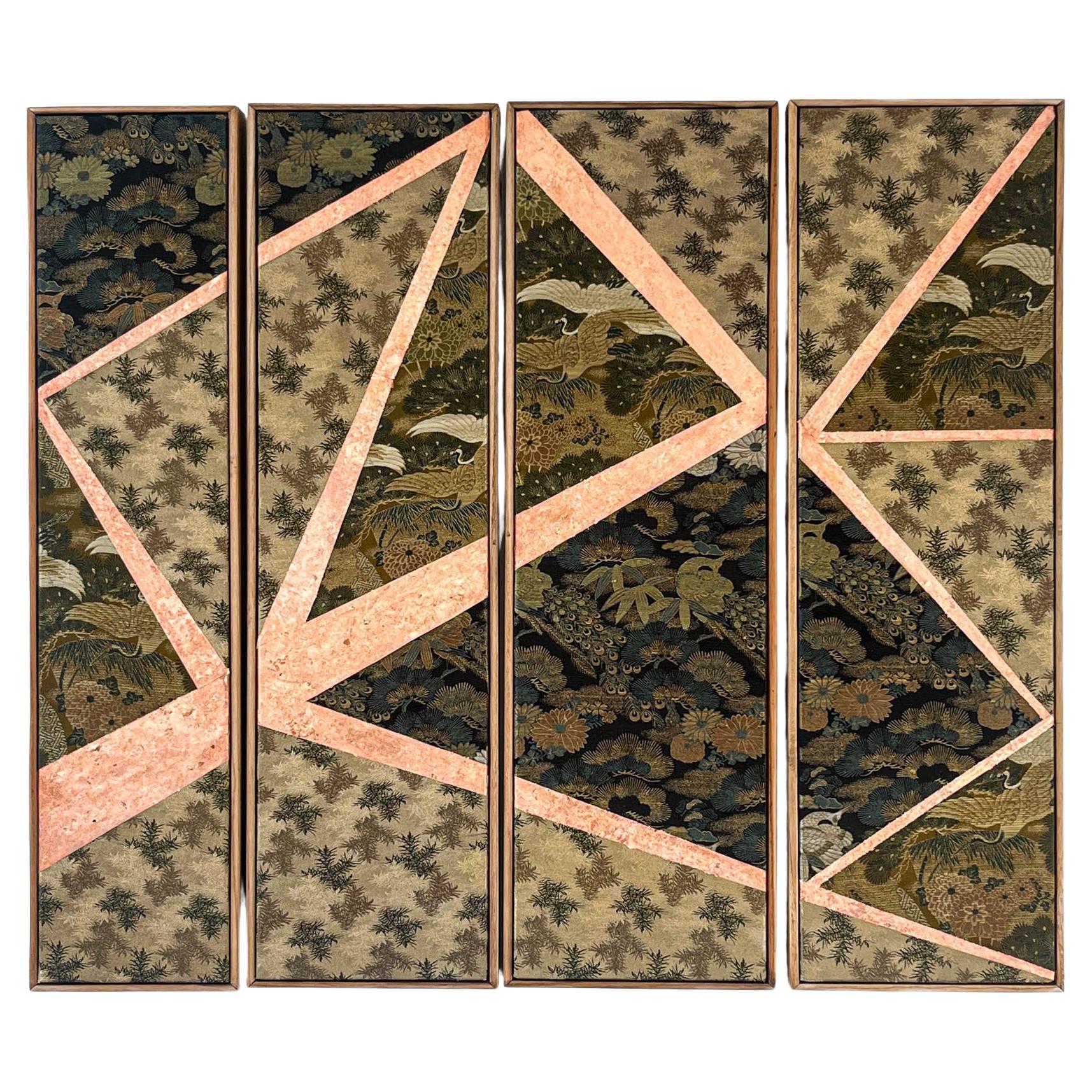
VIntage kimono textile art " Geometry ~ Chrysanthemums ~" by ikasu White Japan
By Kimono ikasu
Located in Setagaya City, JP
<
This work is inspired by traditional Japanese natural symbolism, and is framed in paulownia wood originally used for a kimono chest-of-drawers.
It is elegantly framed with...
Category
Vintage 1960s Japanese Japonisme Paintings and Screens
Materials
Silk, Wood

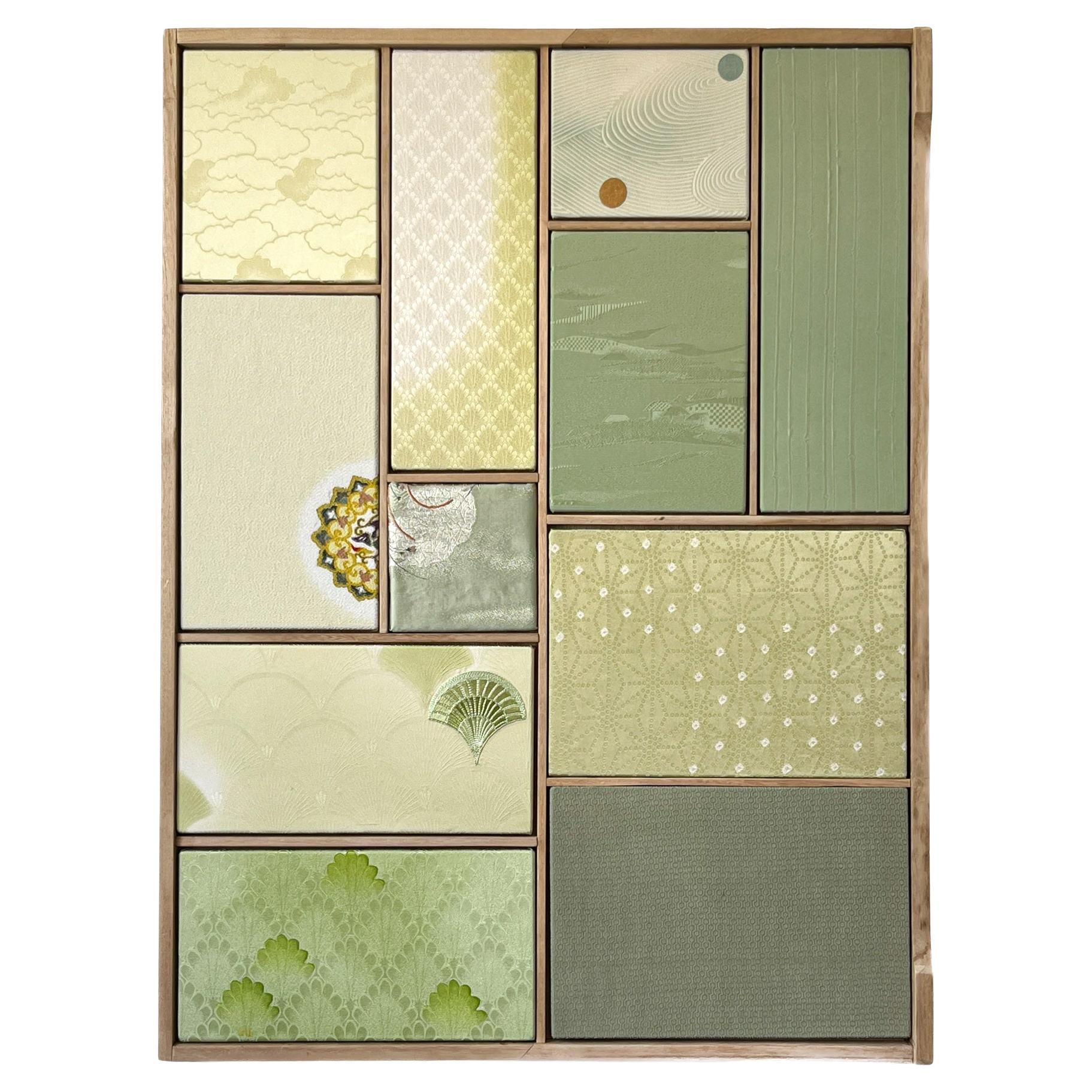
Antique kimono textile art " Kobachi ~ Green Collection ~" by ikasu Japan
By Kimono ikasu
Located in Setagaya City, JP
[Story behind the work]
This work is inspired by the green color palette, and is framed in paulownia wood originally used for a kimono chest-of-drawers.
It is elegantly framed with ...
Category
Vintage 1920s Japanese Japonisme Paintings and Screens
Materials
Silk, Wood
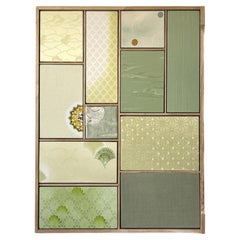
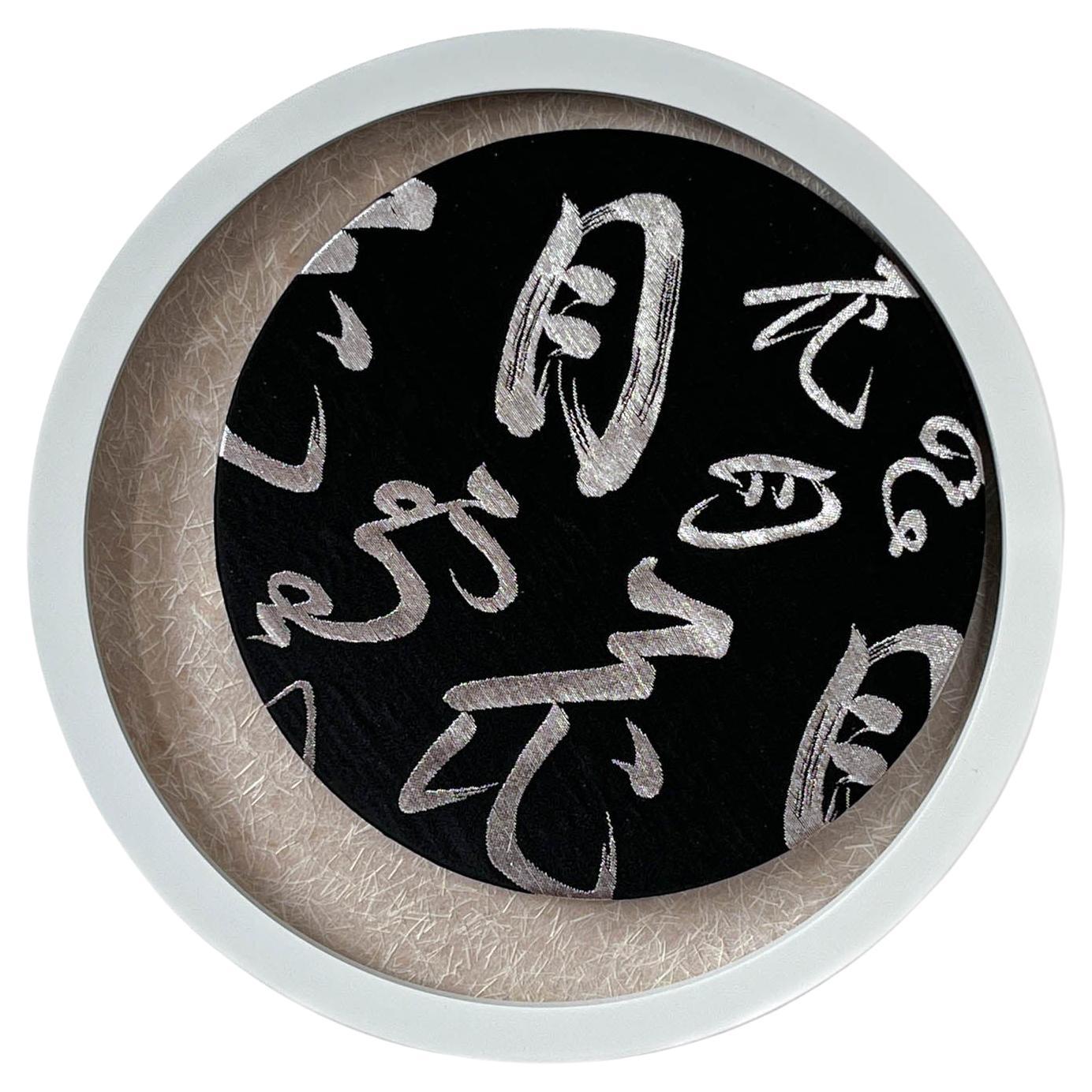
Mid 20th Century obi textile art " Moon phase II " by ikasu Silver Black Japan
By Kimono ikasu
Located in Setagaya City, JP
<< About this artwork
This artwork has been upcycled from a stunning obi, which is adorned with calligraphy weaving saying "moon" and "moonlight".
<< Period /...
Category
Vintage 1970s Japanese Japonisme Paintings and Screens
Materials
Silver Leaf

19th Century obi textile art " Pine forest ~ Longivety ~ " by ikasu Green Japan
By Kimono ikasu
Located in Setagaya City, JP
<< Story behind the work
Obi fabric I used for this artwork is taken from three different over 100-years-old antique sashes, and is framed in wood taken from antique ...
Category
Early 20th Century Japanese Japonisme Paintings and Screens
Materials
Gold Leaf
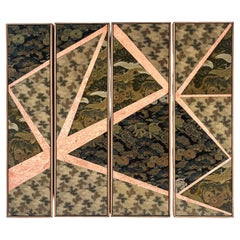
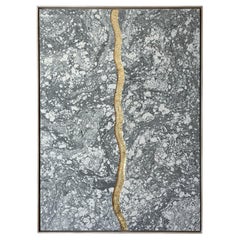
Vintage kimono textile art " Marble Story ~ Healing ~" by ikasu Grey Japan
By Kimono ikasu
Located in Setagaya City, JP
<
This work uses a vintage kimono fabric with marble pattern, that makes it look like a real piece of marble.
The line in the middle symbolizes “kintsugi” - concept of wabi-sabi, which values imperfection, impermanence, and the beauty of aging.
It is elegantly framed with paulownia wood originally used for kimono chest-of-drawers, and is filled with storytelling and sense of luxury.
I used pieces of kimono that could no longer be used as clothing and kiritansu chest-of-drawers that would normally be discarded to create the ultimate upcycled piece.
<< Explanation and meaning of pattern and colors
Kintsugi (金継ぎ), which translates to "golden joinery" or "golden repair," is a traditional Japanese art form of repairing broken pottery with lacquer mixed with powdered gold, silver, or platinum. I used this tecnique here to "repair" antique kimono by transforming it into art work. Beyond its literal meaning of mending broken ceramics, kintsugi carries profound philosophical and cultural significance in Japanese tradition:
・Embracing Imperfection: Kintsugi celebrates imperfection and impermanence. Rather than disguising or concealing flaws, it highlights them, treating the breakage as part of the object's history. This philosophy encourages acceptance of imperfection as an essential aspect of life, beauty, and human experience.
・Wabi-Sabi Aesthetic: Kintsugi embodies the principles of wabi-sabi, an aesthetic worldview centered on the acceptance of transience and imperfection. Wabi-sabi values simplicity, authenticity, and the beauty of things that are imperfect, impermanent, and incomplete. Kintsugi exemplifies these principles by turning what might be considered flaws into features that enhance the object's beauty and character.
・Resilience and Transformation: The act of repairing broken things with precious metals symbolizes resilience and transformation. Instead of discarding or replacing the broken object, kintsugi honors its history and transforms it into something new and valuable. This reflects broader philosophical themes of overcoming adversity, finding beauty in imperfection, and embracing change.
・Honoring the Past: Kintsugi preserves and honors the history of the object. Rather than erasing or ignoring its past, it acknowledges and celebrates it. This aspect of kintsugi can be seen as a metaphor for honoring our own personal histories, including the challenges and setbacks we have faced, and recognizing how they have shaped us into who we are today.
・Spiritual and Philosophical Symbolism: Kintsugi has spiritual and philosophical implications, reflecting concepts such as the interconnectedness of all things, the cycle of life and death, and the pursuit of harmony and balance. The process of repairing broken objects with precious metals is seen as a metaphor for spiritual growth, enlightenment, and the journey towards wholeness.
Overall, kintsugi represents not only a practical technique for repairing ceramics but also a profound philosophical and cultural perspective on life, beauty, and the human experience. It embodies values such as resilience, acceptance, and the transformative power of embracing imperfection.
<< Characteristics of the fabric
This vintage textile is hand-painted with a traditional painting technique where the colors are added on wet surface, which creates an effect of marble.
<< About the frame
Kiritansu - chest-of-drawers for kimono, is traditionally made from paulownia wood, a uniquely Japanese material closely tied to the world of kimonos.
Paulownia wood is known as the lightest wood in Japan, prased for its natural luster, resistance to moisture, and resilience against cracking. Since ancient times, it has been used in crafting furniture, chests, and musical instruments.
During the Edo period, it became customary to store cherished kimonos in paulownia chests...
Category
Vintage 1960s Japanese Japonisme Paintings and Screens
Materials
Gold Leaf
You May Also Like
Japanese Two Panel Screen Geometric Design on Mounted Textile
Located in Hudson, NY
In strong primary colors. Makers seal reads: Yu.
Category
Mid-20th Century Japanese Paintings and Screens
Materials
Paint
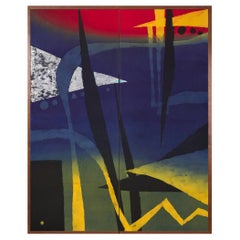
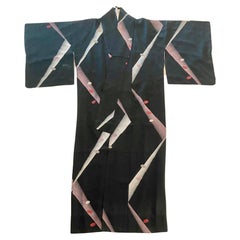
Vintage Japanese Silk Meisen Kimono with Geometrical Design
Located in Atlanta, GA
A vintage Japanese formal silk Kimono in an "ink green" color with striking geometrical design. The garment is hand-stitched Meisen kimono from a crepe l...
Category
Mid-20th Century Japanese Japonisme Textiles
Materials
Silk
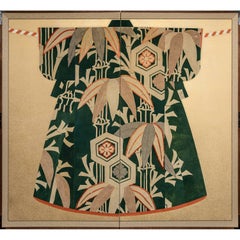
Japanese Two Panel Screen: Antique Kimono Fabric Mounted on Screen
Located in Hudson, NY
Japanese Two Panel Screen: Late Nineteenth Century Kimono Fabric Mounted on Early Twentieth Century Screen. In the Heian period (eighth century to the twelfth century), noblemen wou...
Category
Early 20th Century Japanese Meiji Paintings and Screens
Materials
Silk, Wood, Paper
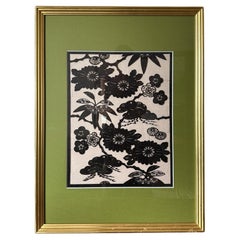
Antique Handcrafted 20th-Century Japanese Katagami Stencil (Kimono Dyeing Stenci
By Japanese Studio
Located in Fukuoka, JP
This elegant 20th-century Japanese katagami is a finely hand-cut stencil traditionally used for decorating kimono textiles. Crafted from multiple layers of washi paper strengthened w...
Category
20th Century Japanese Prints
Materials
Paper
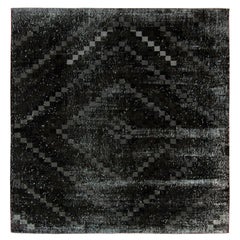
1960s Vintage Art Deco Rug in Black
Gray Geometric Pattern by Rug
Kilim
Located in Long Island City, NY
A square 6x6 vintage rug exemplifying Turkish Art Deco sensibilities, among the latest to join our Mid Century Pasha Collection. Coming from an acclaimed Turkish designer, this 1960s...
Category
Vintage 1960s Turkish Art Deco Turkish Rugs
Materials
Wool
Japanese Ink and Wash Scroll Painting by Watanabe Seitei
Located in Atlanta, GA
Watanabe Seitei, also known as Watanabe Shotei (1851–1918), was born in late Edo period. He was one of the earliest Japanese artists who visited and be...
Category
Antique Early 1900s Japanese Japonisme Paintings and Screens
Materials
Brocade, Silk, Paper