Want more images or videos?
Request additional images or videos from the seller
1 of 16
VIntage kimono textile art " Wish for prosperity " by ikasu Gold, Black, Japan
$730List Price
About the Item
- Creator:Kimono ikasu (Artist)
- Dimensions:Height: 15.75 in (40 cm)Width: 11.82 in (30 cm)Depth: 1.58 in (4 cm)
- Style:Japonisme (In the Style Of)
- Materials and Techniques:
- Place of Origin:
- Period:
- Date of Manufacture:around 1960ies
- Condition:
- Seller Location:Setagaya City, JP
- Reference Number:1stDibs: LU10079243698852
About the Seller
No Reviews Yet
Vetted Professional Seller
Every seller passes strict standards for authenticity and reliability
1stDibs seller since 2024
Authenticity Guarantee
In the unlikely event there’s an issue with an item’s authenticity, contact us within 1 year for a full refund. DetailsMoney-Back Guarantee
If your item is not as described, is damaged in transit, or does not arrive, contact us within 7 days for a full refund. Details24-Hour Cancellation
You have a 24-hour grace period in which to reconsider your purchase, with no questions asked.Vetted Professional Sellers
Our world-class sellers must adhere to strict standards for service and quality, maintaining the integrity of our listings.Price-Match Guarantee
If you find that a seller listed the same item for a lower price elsewhere, we’ll match it.Trusted Global Delivery
Our best-in-class carrier network provides specialized shipping options worldwide, including custom delivery.You May Also Like
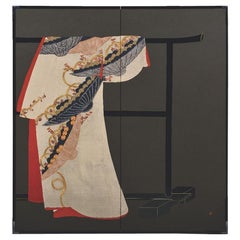
Japanese Contemporary Red Black Cream Folding Screen Silk Brocade Kimono Art, 3
Located in Takarazuka, JP
Exceptional Japanese contemporary two panel "byobu" or folding screen featuring genryoku style handcrafted silk raised kimono Japanese decorative art in crimson red, black and gold o...
Category
21st Century and Contemporary Japanese Meiji Paintings and Screens
Materials
Gold
$9,250
H 60 in W 57 in D 2.5 in
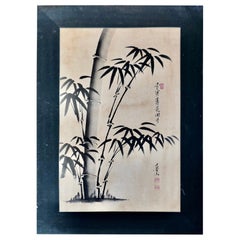
Vintage Bamboo Japanese Art, Wall Art 5 excellent pieces
Located in Godshill, Isle of Wight
Vintage Bamboo Japanese Art, Wall Art
5 excellent pieces, on cartridge paper set on Black Silk
Wonderful Vintage pieces, from 1980, 21.5” high, 15.5” wide
ZX281
Category
Vintage 1980s Japonisme Paintings and Screens
Materials
Paper
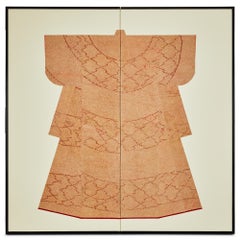
Japanese Two Panel Screen: Kimono
Located in Hudson, NY
Beautiful 19th century shibori (pin dyed) fabric in kimono form mounted on a simple ground of mulberry paper. Black lacquer trim with beautifully designed bronze mounts. The fabric ...
Category
Early 20th Century Paintings and Screens
Materials
Fabric, Wood, Lacquer, Paper
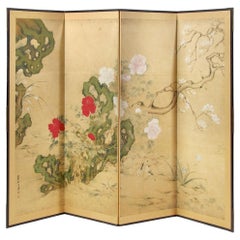
Vintage Japanese Byobu Red Floral Gold Screen
Located in Locust Valley, NY
A vintage Japanese folding four panel screen showcases a serene hand-painted landscape set against a warm, gilded ground. Spanning multiple panels, the composition features gracefull...
Category
20th Century Japanese Japonisme Paintings and Screens
Materials
Silk, Paint, Paper
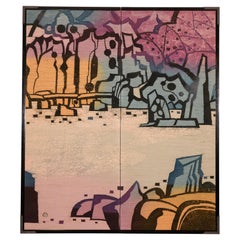
Japanese Two Panel Screen: Textile Landscape
Located in Hudson, NY
"The Garden of Tenryu-ji Temple" Mineral pigments on fabric in a black lacquer trim with bronze mounts. signature and seal read: Minagawa Taizo. ...
Category
20th Century Japanese Paintings and Screens
Materials
Fabric, Lacquer
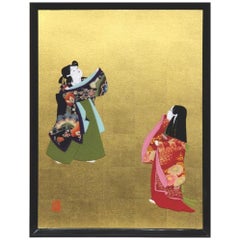
Japanese Contemporary Framed Green Red Black Gold Decorative Art
Located in Takarazuka, JP
Exquisite Japanese contemporary framed three-dimensional decorative art piece in Japanese silk kimono fabric in vivid red, green and black on gold leaf Japanese paper, recreating a s...
Category
21st Century and Contemporary Japanese Meiji Decorative Art
Materials
Gold Leaf
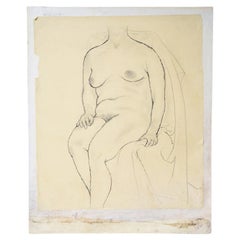
Vintage 20th century Japanese Nude Charcoal Nihonga Drawing by Eiki Tsukioka
Located in Chiba, JP
Charcoal on layered washi (Japanese paper) stuck on wooden canvas, 53 x 65.5 x 1.5cm (20.86 x 25.78 x 0.59in), by Eiki Tsukioka (1916-1997), as one of the leading Showa’s Nihonga (J...
Category
20th Century Japanese Japonisme Paintings and Screens
Materials
Paper, Wood
$250
H 25.79 in W 20.87 in D 0.6 in
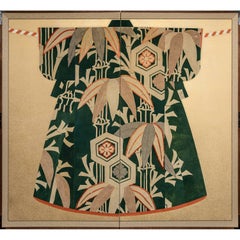
Japanese Two Panel Screen: Antique Kimono Fabric Mounted on Screen
Located in Hudson, NY
Japanese Two Panel Screen: Late Nineteenth Century Kimono Fabric Mounted on Early Twentieth Century Screen. In the Heian period (eighth century to the twelfth century), noblemen wou...
Category
Early 20th Century Japanese Meiji Paintings and Screens
Materials
Silk, Wood, Paper
$17,200
H 67.75 in W 74.5 in D 1 in
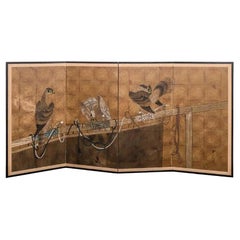
Japanese Art Deco 4-Panel Screen with Falcon, Ca. 1920
Located in New York, NY
Japanese Art Deco 4-Panel Screen with Falcon, Ca. 1920
DIMENSIONS
Height: 36.25 inches
Width: 71.25 inches
Category
Vintage 1920s Japanese Japonisme Paintings and Screens
Materials
Wood
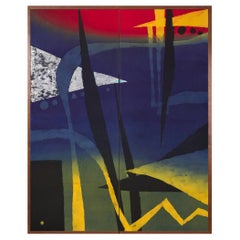
Japanese Two Panel Screen Geometric Design on Mounted Textile
Located in Hudson, NY
In strong primary colors. Makers seal reads: Yu.
Category
Mid-20th Century Japanese Paintings and Screens
Materials
Paint
More From This Seller
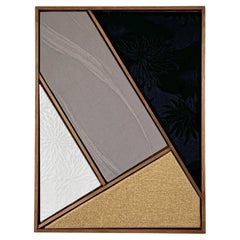
View AllVintage kimono textile art " Monochrome Geometry " by ikasu Gold Grey Japan
By Kimono ikasu
Located in Setagaya City, JP
This work is inspired by traditional Japanese nature colors symbolism, and is framed in paulownia wood originally used for a kimono chest-of-drawers.
It is filled with storytelling ...
Category
Vintage 1960s Japanese Japonisme Paintings and Screens
Materials
Silk, Wood
VIntage kimono textile art " Geometry ~ Chrysanthemums ~" by ikasu White Japan
By Kimono ikasu
Located in Setagaya City, JP
<
This work is inspired by traditional Japanese natural symbolism, and is framed in paulownia wood originally used for a kimono chest-of-drawers.
It is elegantly framed with...
Category
Vintage 1960s Japanese Japonisme Paintings and Screens
Materials
Silk, Wood

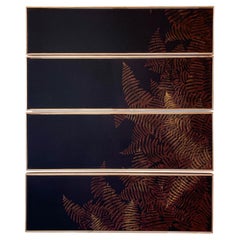
Vintage kimono textile art " Fern ~ Connection to Nature ~" by ikasu Black Japan
By Kimono ikasu
Located in Setagaya City, JP
This work uses an antique tomesode (festive kind of kimono) with fern design to evoke feelings of tranquility, harmony, and appreciation for the beauty of the environment. Can be used both vertically and horizontally.
It is elegantly framed with paulownia wood originally used for kimono chest-of-drawers, and is filled with storytelling and sense of luxury.
I used pieces of kimono that could no longer be used as clothing and kiritansu chest-of-drawers that would normally be discarded to create the ultimate upcycled piece.
<< Explanation of colors and patterns
In Japanese traditional culture, ferns, particularly the Japanese painted fern (Athyrium niponicum), hold several meanings and symbolisms:
・Elegance and Beauty: Ferns are admired for their graceful, delicate appearance and intricate leaf patterns. In Japanese aesthetics, they are appreciated for their natural beauty and are often used in gardens, landscapes, and floral arrangements to add a sense of refinement and elegance.
・Resilience and Perseverance: Ferns are known for their ability to thrive in diverse environments, including shady forests, rocky cliffs, and damp soil. Their resilience in the face of challenging conditions is seen as a symbol of endurance and perseverance. In Japanese culture, ferns may represent the ability to overcome adversity and flourish despite obstacles.
・Connection to Nature and Tranquility: Ferns are native to forested areas and are often associated with the natural world. In Japanese traditional culture, they symbolize a deep connection to nature and the importance of maintaining harmony with the environment. The lush green foliage of ferns evokes feelings of tranquility and peacefulness, making them popular motifs in Zen gardens and traditional landscape paintings.
・Purity and Simplicity: Ferns are emblematic of simplicity and purity in Japanese aesthetics. Their unassuming beauty and understated elegance reflect the principles of wabi-sabi, an aesthetic worldview that values imperfection, impermanence, and simplicity. Ferns may be used in tea ceremonies, Ikebana (flower arranging), and other traditional arts to evoke a sense of tranquility and appreciation for life's fleeting moments.
Overall, ferns in Japanese traditional culture symbolize elegance, resilience, connection to nature, purity, and simplicity. Their presence in art, literature, and landscape design underscores their enduring significance as symbols of natural beauty and spiritual resonance.
<< Characteristics of the fabric
This vintage textile is hand-painted with a traditional Japanese technique called "yuzen".
<< About the frame
Kiritansu - chest-of-drawers for kimono, is traditionally made from paulownia wood, a uniquely Japanese material closely tied to the world of kimonos.
Paulownia wood is known as the lightest wood in Japan, prased for its natural luster, resistance to moisture, and resilience against cracking. Since ancient times, it has been used in crafting furniture, chests, and musical instruments.
During the Edo period, it became customary to store cherished kimonos in paulownia chests...
Category
Vintage 1960s Japanese Japonisme Paintings and Screens
Materials
Silk, Wood
Vintage kimono textile art " Flowers ~ Life Circle ~" by ikasu Pink Black Japan
By Kimono ikasu
Located in Setagaya City, JP
<< About this canvas
This canvas is crafted from three different haori fabrics, each adorned with a shibori dyeing flower motif going through entire fabric. These fab...
Category
Vintage 1970s Japanese Japonisme Paintings and Screens
Materials
Canvas, Silk
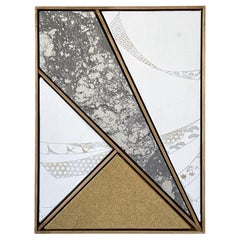
VIntage kimono textile art " Geometry ~ Marble ~" by ikasu Gold White Grey Japan
By Kimono ikasu
Located in Setagaya City, JP
This work is inspired by traditional Japanese nature motifs symbolism, and is framed in paulownia wood originally used for a kimono chest-of-drawers.
It is elegantly framed with pau...
Category
Vintage 1960s Japanese Japonisme Paintings and Screens
Materials
Silk, Wood
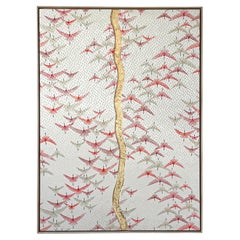
Vintage kimono textile art " Cranes ~ Kintsugi ~ " by ikasu White Red Gold Japan
By Kimono ikasu
Located in Setagaya City, JP
<
The frame for this work is made of paulownia wood taken from antique Kiritansu - chest-of-drawers for kimono.
I use antique kiritansu that can’t be used as furniture anymore to create basis and frames for my works. It adds them even more authentic atmosphere of traditional wabisabi spirit. Can you feel it?
The piece uses the concept of "kintsugi" - it "unites" the pieces of antique kimono back together with golden leaf to give it a second wind as art work.
<< Period / Story
The kimono used in this piece was originally crafted during the late Showa period (1960-80ies).
<< Explanation and meaning of pattern and colors
The Japanese saying goes, "A crane lives a thousand years, a tortoise lives ten thousand years," making cranes a symbol of longevity.
Cranes are also known for staying with the same partner for their entire lives, which is why they are often used at weddings and other celebrations to symbolize "marital bliss" and the desire for harmony between husband and wife.
On this particular piece, cranes are flying through snow woven on the fabric, as if they are overcoming all the disasters to get to their beloved ones.
The color scarlet, or deeply dyed red, used for the most of the cranes here, has long been associated with the meaning of "warding off evil." It is believed to possess the power to repel malevolent forces and invite good fortune.
During the Heian period, scarlet was reserved for sacred buildings and ceremonial objects that held great significance. Ordinary people were prohibited from wearing scarlet-red kimonos, which made it a highly special color.
<< Characteristics of the fabric
Cranes, going up and down, are generously decorated by kimpaku here. "Kimpaku" (金箔) refers to gold leaf/foil in Japanese. Gold leaf is a traditional material used in various aspects of Japanese culture, including art, crafts, and even in culinary applications.
In traditional Japanese art, gold leaf is often applied to religious objects, sculptures, paintings, and lacquerware to create a luxurious and decorative effect. The use of gold leaf in art dates back centuries and is associated with a sense of wealth, prestige, and the divine.
Traditional kimpaku technique is used here to make an accent decoration in the middle.
<< About the frame
This artwork frame is crafted from paulownia wood, a uniquely Japanese material closely tied to the world of kimonos, and it serves to convey the refined beauty of Japanese nature.
Paulownia wood is known as the lightest wood in Japan, prased for its natural luster, resistance to moisture, and resilience against cracking. Since ancient times, it has been used in crafting furniture, chests, and musical instruments.
Paulownia wood is closely linked to kimono culture. During the Edo period, it became customary to store cherished kimonos in paulownia chests...
Category
Late 20th Century Japanese Japonisme Paintings and Screens
Materials
Gold Leaf
Still Thinking About These?
All Recently ViewedMore Ways To Browse
Japanese Kimono
Japanese Used Kimono
Black Kimono
Vintage Kimonos
Kimono Painting
Black Vintage Kimono
Black And Gold Chest Of Drawers
Japanese Screen Black
Gold Kimono
Japanese Screen Kimono
Kimono Gold Japanese
Vintage Silk Screens
Edo Period Chest
Kimono Chest
Paulownia Chest
Wood Crane
Gilt Lacquer Panel
Antique Table Screen