Items Similar to Japanese Color Woodblock Print by Toyohara Chikanobu
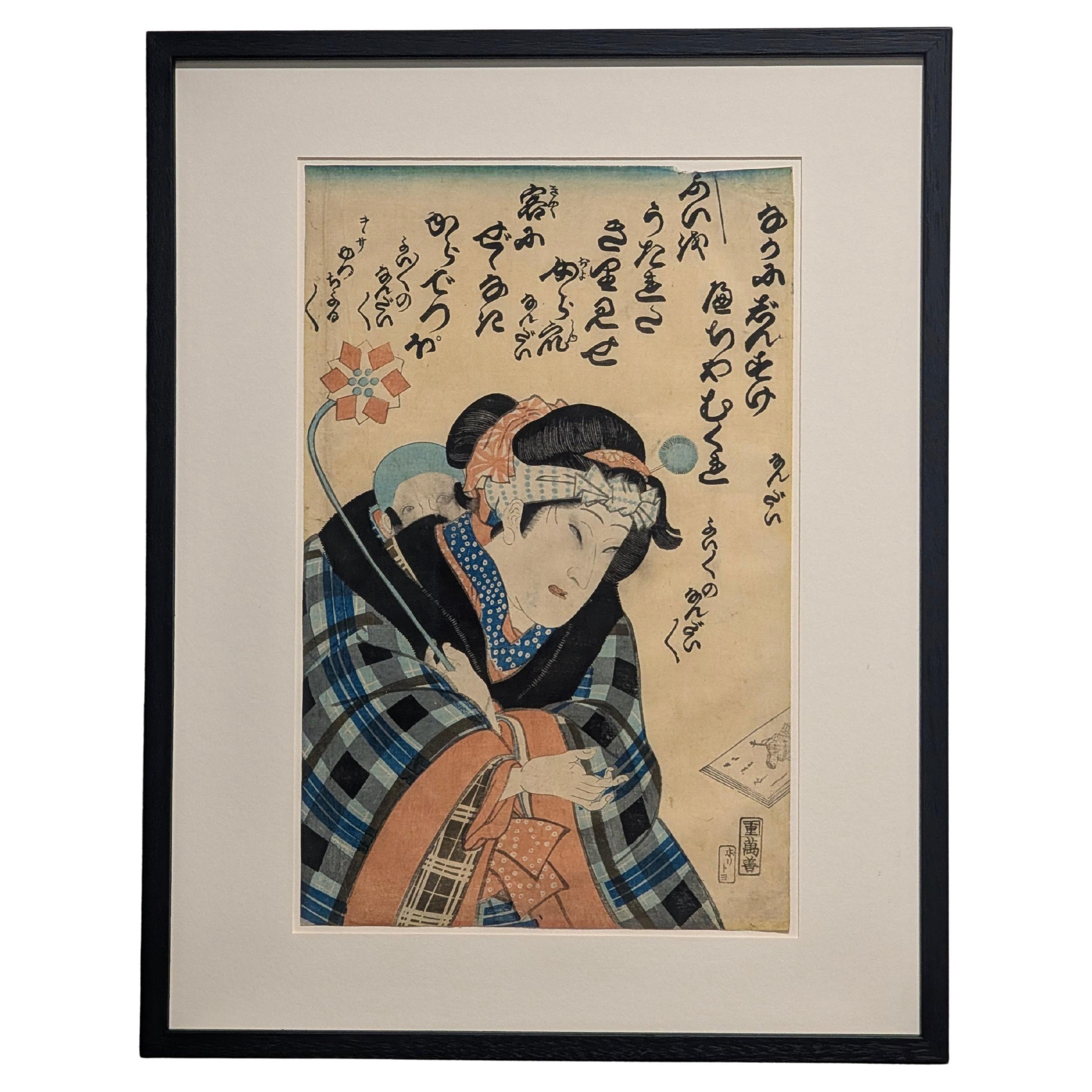
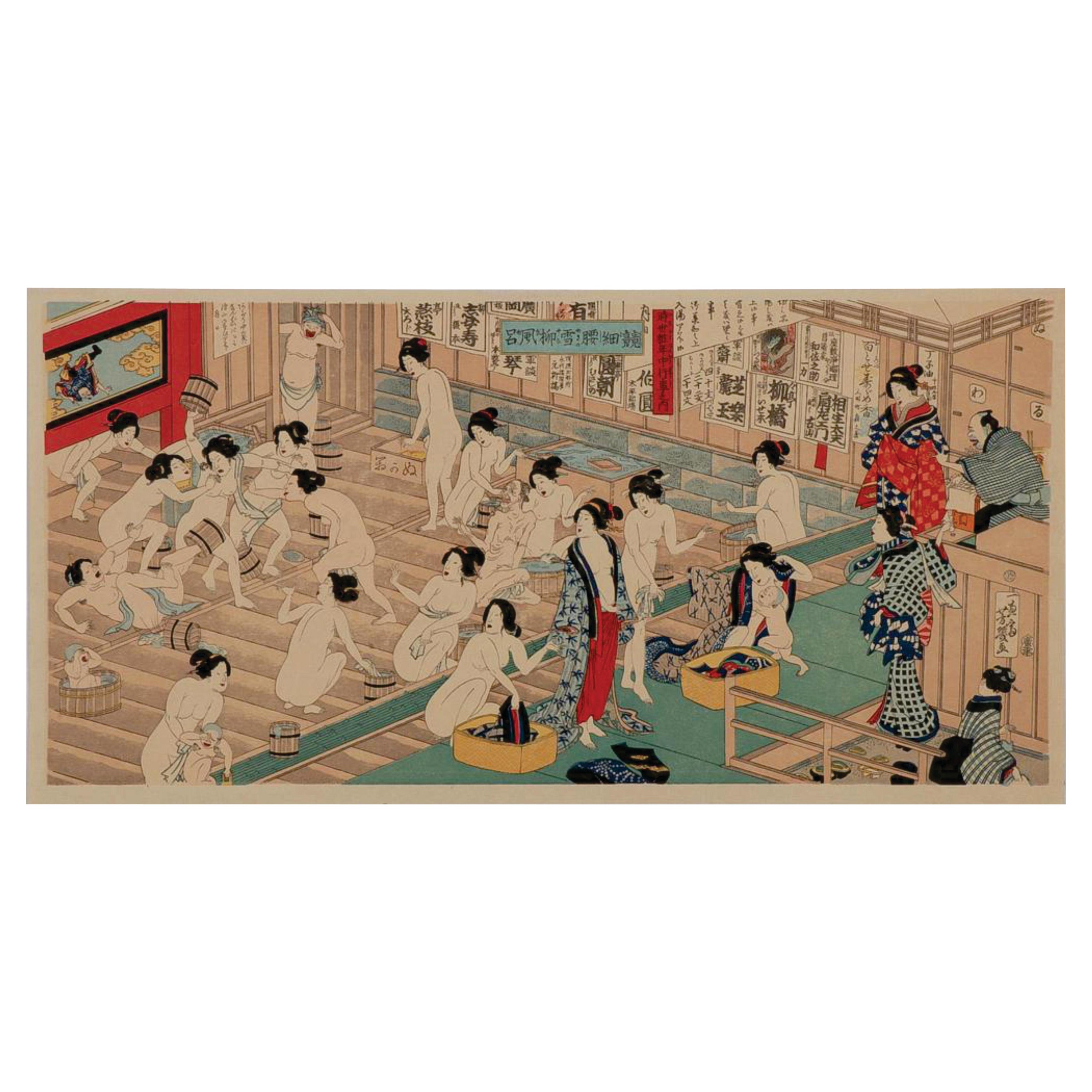
Want more images or videos?
Request additional images or videos from the seller
1 of 7
Japanese Color Woodblock Print by Toyohara Chikanobu
$5,000
£3,807.39
€4,384.11
CA$7,085.44
A$7,621.40
CHF 4,073.10
MX$89,834.64
NOK 51,352.25
SEK 46,945.70
DKK 32,756.73
About the Item
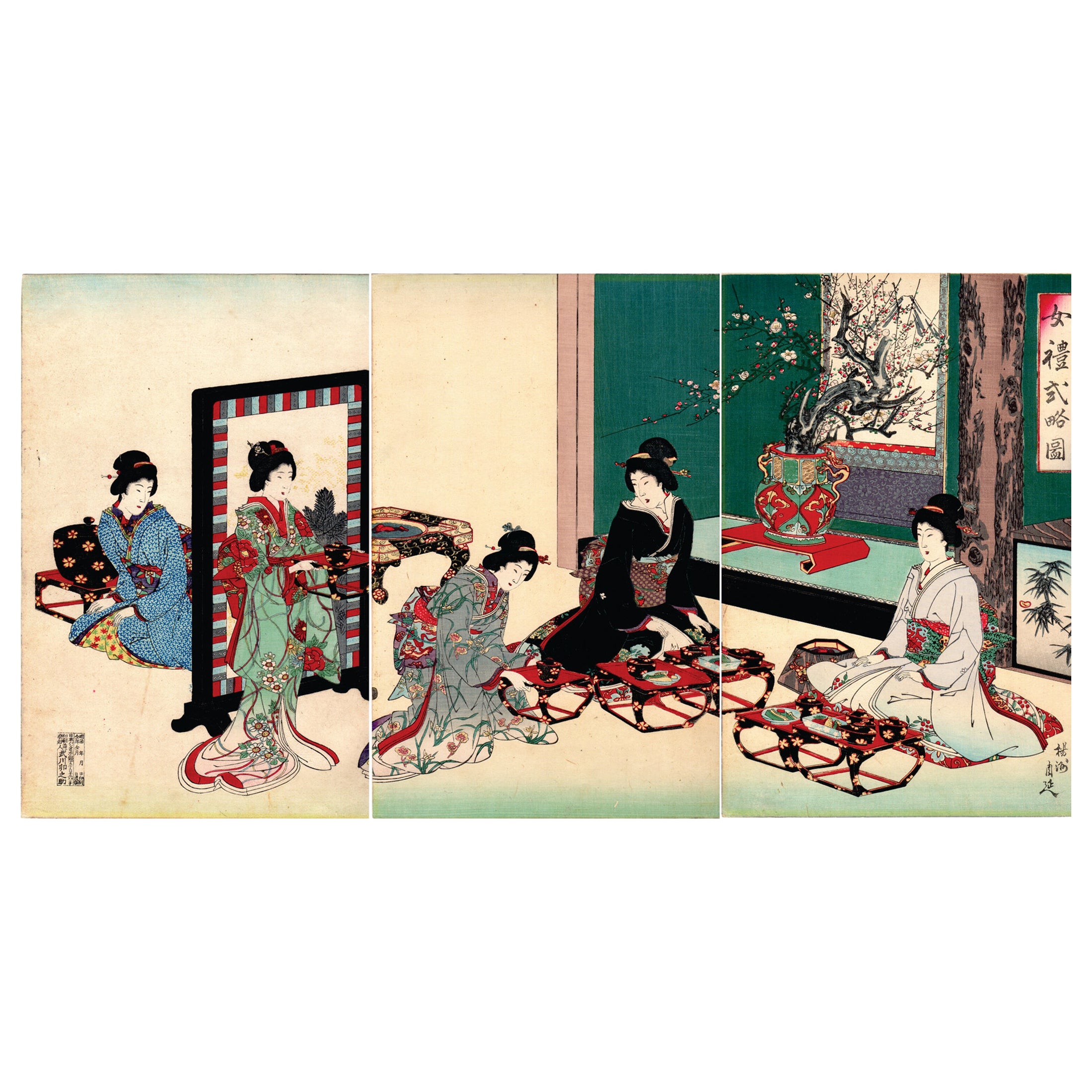
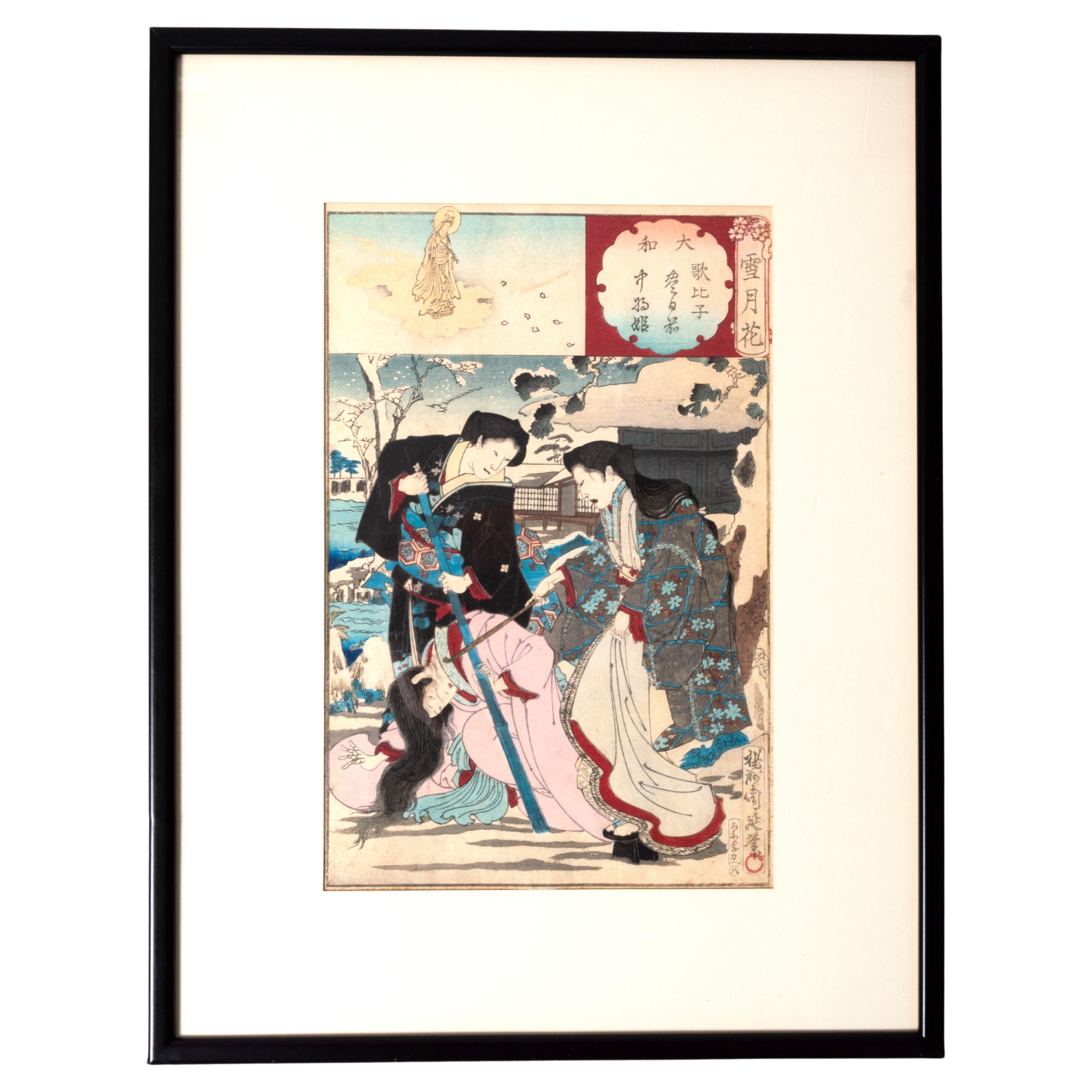
This Meiji-period color woodblock by Toyohara Chikanobu (1838-1912) depicts three elegant female courtiers in traditional dress taking refreshments. This diptych, from the issued triptych, has been mounted in a silk-wrapped mat fitted in a giltwood frame that is painted red on the sides.
- Creator:Toyohara Chikanobu (Artist)
- Dimensions:Height: 19.25 in (48.9 cm)Width: 24 in (60.96 cm)Depth: 2 in (5.08 cm)
- Style:Meiji (Of the Period)
- Materials and Techniques:
- Place of Origin:
- Period:
- Date of Manufacture:circa 1895
- Condition:Wear consistent with age and use.
- Seller Location:New York, NY
- Reference Number:1stDibs: 1506121061472
About the Seller
5.0
Recognized Seller
These prestigious sellers are industry leaders and represent the highest echelon for item quality and design.
Established in 1994
1stDibs seller since 2014
21 sales on 1stDibs
Typical response time: 2 hours
- ShippingRetrieving quote...Shipping from: New York, NY
- Return Policy
More From This Seller
View AllImportant Japanese Color Woodblock Triptych of the Imperial Family
By Toyohara Chikanobu
Located in New York, NY
This iconic woodblock print by Chikanobu Toyohara (1838-1912), titled 'A Mirror of Japanese Nobility,' depicts Emperor Meiji, his consort, and the heir t...
Category
Antique 19th Century Japanese Meiji Prints
Materials
Paper
Elegant Japanese Edo Period Rack
Located in New York, NY
This refined object dates to the first half of the 19th century, and was probably used for obi, kimono sashes, which were hung over it. The gold decorations on the black-lacquered g...
Category
Antique 1830s Japanese Edo Lacquer
Materials
Lacquer
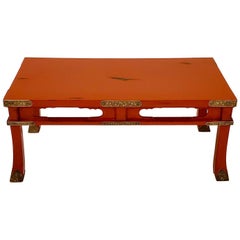
18th Century Japanese Altar Table
Located in New York, NY
This lacquered 18th century Edo period altar table was probably made for the private shrine of an aristocratic home. There, it would have been placed before an image of a deity, and ...
Category
Antique Early 18th Century Japanese Edo Lacquer
Materials
Brass
Mughal Indian Miniature
Located in New York, NY
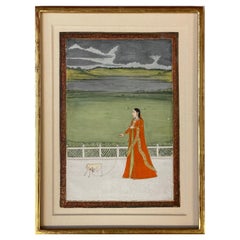
This Mughal miniature was painted at one of the princely courts of India. It depicts a raven-haired princess in a gold-trimmed saffron-colored silk sari. Under a glowering evening sky she dawdles on a white marble terrace, with a pet fawn on a leash, before a landscape dotted with buildings nestled amongst trees beyond a river. Her hair, falling loosely about her shoulders, rather than carefully dressed on her head, indicates that she is a maiden. The overall mood is one of expectancy. Perhaps walking a pet and catching an evening breeze is a pretext to escape palace scrutiny for a lovers’ assignation. In Mughal India tender sentiments were a bridge to the erotic – and if this seems contradictory, so too is the balance of realism and caricature, and naturalism with the schematic. Both are hallmarks of miniatures painted in this place and time.
The earliest Mughal Indian miniatures date to the 16th century. They were inspired by those painted at the refined Moslem courts of the neighboring Persian empire. They incorporated figures in spite of the Moslem faith’s proscription against depicting the human form. Such was the nature of sophisticated courtly life everywhere that beauty and pleasure trumped systems of morality. This was no less the case at the provincial Indian courts, where our miniature, marked by a charming pictorial naiveté, was most likely painted. Yet the artist was undeniably accomplished. His command of perspective, introduced by Jesuit missionaries in the 17th century, is seen in the landscape, which rolls back to a distant horizon, contrary to the flat two-dimensional ones following Indian-painting traditions. And if Mughal artists were influenced by Western art, the compliment was returned by Rembrandt and Sir Joshua Reynolds, among others, who collected Indian miniatures (as did, perhaps, Giovanni Bellini who painted in Mughal style the famous miniature of a Persian man...
Category
Antique 18th Century Indian Anglo-Indian Paintings
Materials
Paper
$12,000
19th Century Chinese Screen
Located in New York, NY
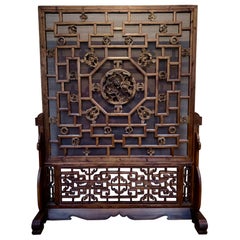
This Chinese standing screen has a main panel, and a lower panel flanked by two smaller ones, which were made in the 19th century as fretwork window panels for a house. In the 20th century they were salvaged, assembled, and mounted in a matching hardwood stand as a freestanding screen...
Category
Antique Late 19th Century Chinese Qing Furniture
Materials
Hardwood
16th Century School of Fontainebleau Engraving
By Master F.G.
Located in New York, NY
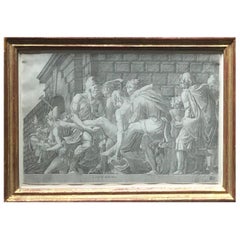
This 16th century French engraving illustrates an episode in the Trojan War – although the actual one illustrated is in question. According to recent scholarship, it depicts the corp...
Category
Antique 16th Century French Renaissance Prints
Materials
Paper
You May Also Like
Original Japanese Triptych Color Woodblock Print by Toyohara Chikanobu
Located in Norton, MA
Original Japanese Triptych Color Woodblock Print by Toyohara Chikanobu
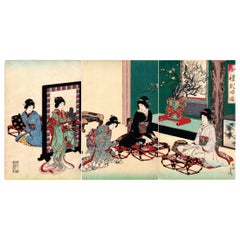
- Title: New Year's Dishes: Etiquette of a Lady
- Publisher: Takekawa Unosuk...
Category
Antique Late 19th Century Japanese Prints
Materials
Paper
Framed Japanese 19th Century Meiji Woodblock Print By Toyohana Chikanobu
Located in London, GB
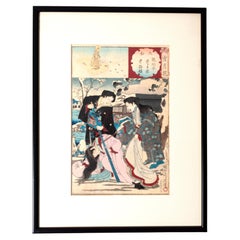
Framed Japanese 19th Century Meiji Woodblock Print By Toyohana Chikanobu
Original Woodcut by Chikanobu Toyoharu.(1838 - 1912)
Published in 1884
...
Category
Antique 19th Century Japanese Prints
Materials
Paper
Print Toyohara Chikanobu Japan Woodcut 1880
By Toyohara Chikanobu
Located in Palermo, Sicily
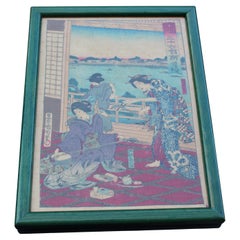
Print Toyohara Chikanobu Japan Woodcut 1880
Category
Antique 1880s Japanese Japonisme Prints
Materials
Paper
$539 Sale Price
30% Off
Print Toyohara Chikanobu Japan Woodcut 1880
By Toyohara Chikanobu
Located in Palermo, Sicily
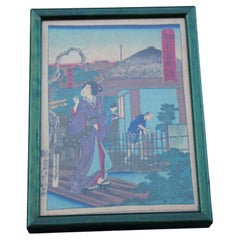
Print Toyohara Chikanobu Japan Woodcut 1880
Category
Antique 1880s Japanese Japonisme Prints
Materials
Paper
$539 Sale Price
30% Off
Authentic 1867 Toyohara Kunichika Woodblock Print Ukiyo-e
By Toyohara Kunichika
Located in TORQUAY, AU
A captivating, intense gaze from the final days of feudal Japan. This is not merely a portrait; it is a time capsule, capturing a moment of profound cultural transformation.
This au...
Category
Antique 1860s Japanese Edo Prints
Materials
Wood, Paper
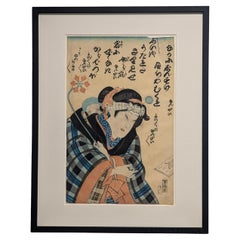
Japanese Woodblock Print by Utagawa Yoshiika 落合芳幾
1833-1904
Located in Norton, MA
Japanese woodblock print by Utagawa Yoshiika 落合芳幾 (1833-1904), unframed.
About the artist
Yoshiiku was a popular ukiyo-e printmaker during the Meiji period. It is thought that he was the son of a tea house proprietor, hence his particular skill success in the portrayal of various beauties from teahouses and restaurants. Yet, he was an artist comfortable across subject matter and is recognized for his fierce portrayal of famous historical warriors. Yoshiiku was a student of Kuniyoshi and a contemporary rival of the famed Yoshitoshi. He signed his name Utagawa Yoshiiku...
Category
Antique Mid-19th Century Japanese Prints
Materials
Paper
More Ways To Browse
Meiji Woodblock
Indonesian Antique Furniture
Japanese Woodblock Prints
Japanese Woodblock Art
Vintage Asian Art Prints
Japanese Print Signed
Hindu Furniture
Japanese Limited Editions
Signed Woodblock Print
20th Century Japanese Woodblock
Japanese Mid Century Woodblock
Japanese Girl
Antique Accordion
Kiyoshi Saito
Meiji Woodblock
Tamil Nadu
17th Century Horse
Japanese Triptych