Items Similar to 13th Century Gold Coin From The Ghurid Rulers Of India MU
IZZ AL-DIN MUHAMMAD
Want more images or videos?
Request additional images or videos from the seller
1 of 6
13th Century Gold Coin From The Ghurid Rulers Of India MU
IZZ AL-DIN MUHAMMAD
$824,180.26
£600,000
€702,860.93
CA$1,132,300.06
A$1,231,038.50
CHF 652,698.02
MX$14,757,030.06
NOK 8,295,456.77
SEK 7,599,766.21
DKK 5,252,995.33
About the Item
Ghurid Rulers Of India, Mu'izz Al-Din Muhammad B. Sam (567-602h). Gold 10-Mithqals/Dinars, Balad Ghazna 601h. Obverse: In Field: La Ilaha Illa Allah Muhammad Rasul Allah Al-Nasir Li-Din Allah Amir Al-Mu'minin; In Field (Above, And To Left And Right): Allah A'la; (Below): Ornament Of Two Intertwined Tendrils; In Margin: Qur'an Ix, 33. Reverse: In Field: Al Sultan Al-A'azam Mu 'Izz Al-Dunya Wa Al-Din Abu'l-Muzaffar Muhammad Bin Sam; In Field (Above, And To Left And Right): Allah A'la; (Below): Ornament Of Two Intertwined Tendrils; In Margin: Mint And Date. Weight: 44.82g.
Published: The Shah Firzan Heritage Of Islamic Coins, P.55. Extremely Fine And Excessively Rare, Believed Unique. 'It Was, Of Course, In India That The Ghurid Legacy Was To Be The Most Lasting, For It Was The Turkish And Khalji Commanders Of Muʿizz-Al-Din Who Laid The Foundations Of The Delhi Sultanate...And Who Permanently Implanted Islam In Northern India.' - C. Edmund Bosworth, Encyclopaedia Iranica, Vol. X, Fasc. 6, P. 589. Originally A Dynasty Of Local Chieftains From Ghur In The Heart Of Present-Day Afghanistan, The Ghurids First Come Into Historical Focus During The First Decades Of The 5th/11th Century When Mahmud Of Ghazna And His Son Mas'ud Launched A Series Of Raids Into Their Territory. By The Beginning Of The 6th/12th Century It Was The Great Seljuqs Under Sanjar Who Had Become The Dominant Force In The Region, But The Defeat Of Sanjar In 548h, Combined With The Decline Of The Ghaznavids, Left A Power Vacuum In The Region Which The Ghurids Were Well-Placed To Fill. Mu'izz Al-Din Muhammad Was The Younger Brother Of Ghiyath Al-Din Muhammad, And Was About 14 Years Old When His Elder Brother Succeeded Sayf Al-Din Muhammad As Ghurid Sultan In 558h. Unlike Their Predecessors, Who Often Fought And Feuded Among Themselves, The Two Brothers Maintained A Successful And Harmonious Partnership Which Endured For Forty Years, Creating Together A Vast Empire Stretching From Northern India To The Margins Of The Caspian Sea. In 569h They Captured Ghazna, Which Now Became Mu'izz Al-Din's Seat, And From Where He Soon Turned His Attention To India. Mu'izz Al-Din's First Raids Took Him Over The Gumal Pass And Into The Punjab. He Captured Multan And Uch In 570h, And By The Late 570s Had Forced The Sumeras In Lower Sindh To Acknowledge Him As Their Overlord. Following A Less Successful Campaign Against Gujarat In The West, Mu'izz Al-Din Turned Next To Northern India, Eliminating The Last Of The Ghaznavids At Lahore In 582h. From Here He Continued Down The Ganges Valley And Twice Fought Prithviraja Iii, The Chahamana King Of Ajmer And Dehli, At Tarain (Now Taraori In Haryana). In The First Battle Of Tarain In 587h, Mu'izz Al-Din Himself Was Injured And Obliged To Retreat, But He Returned In The Following Year And Won An Overwhelming Victory On The Same Field After Surprising Prithviraja By Attacking Before Daybreak. Mu'izz Al-Din Proceeded To Occupy Ajmer Where He Swiftly Moved To Establish Islam, Replace Existing Temples With Mosques And Introducing Islamic Precepts And Legal Principles. Appointing A Local Ruler, Govindaraja, To Govern Ajmer For Him, Mu'izz Al-Din Soon Left India For Khurasan, Where He Rejoined Ghiyath Al-Din In His Struggle Against The Khwarezmshah. But His Mamluk Lieutenants Continued To Build On His Indian Conquests: While He Had No Sons Of His Own, Mu'izz Al-Din Treated His Mamluks As His Heirs, Giving Them Excellent Training Both As Soldiers And Administrators. Three In Particular Went On To Play Important Roles In The History Of India: Nasir Al-Din Qubacha, Who Became Ruler Of Multan, Muhammad Bakhtiyar Khalji, Who Founded The Sultanate Of Bengal, And Perhaps Above All Qutb Al-Din Aybak, Who Established The Sultanate Of Dehli. Ghiyath Al-Din Died In 599h, And Mu'izz Al-Din Succeeded Him As Sole Ghurid Sultan. He Continued To Enjoy Success In India, Where His Commander Muhammad Bakhtiyar Khalji Became The First Muslim Commander To Capture Bengal In The Year 601h, Striking Coins In Mu'izz Al-Din's Name To Mark This Great Victory. With The Whole Of Hindustan Now Under His Control, Mu'izz Al-Din Reportedly Received The New Title Al-Sultan Al-Sharq, 'Sultan Of The East.' But His Final Years Were Marked By Disaster In The West, Where The Ghorids Suffered A Disastrous Defeat At The Hands Of The Khwarezmshahs. Almost The Whole Of Khurasan Was Lost, But Mu'izz Al-Din Himself Managed To Reach Ghur Where He Began To Regroup And Make Preparations For A Counter-Attack. Before This Could Be Launched, However, He Was Summoned To India To Suppress A Revolt. With His Indian Domains Pacified Once More And In The Capable Hands Of Qutb Al-Din Aybak, Mu'izz Al-Din Set Out For Ghazna, But The Man Who Had Changed The Course Of Indian History Was Assassinated In The Punjab In 602h. This Magnificent Gold Coin, Carefully Struck To The Weight Of 10-Mithqals, Is The Only Such Piece Known Bearing The Name Of Mu'izz Al-Din Alone. Similar 10-Mithqal Medallions, Struck At Ghazna In The Joint Names Of Mu'izz And Ghiyath Al-Din, Are Known For The Years 597h And 598h. These Coins Share An Obverse Die, Which Strongly Suggests That Only A Small Number Can Ever Have Been Made, Especially In View Of The Pressures To Which That Single Die Must Have Been Subjected In Striking Such Large And Handsome Coins. While There Is Nothing Explicit In Their Legends, A Connection Between These Special Coins And Mu'izz Al-Din's Indian Victories Has Long Been Proposed – The Cataloguer Of The Specimen Dated 598h Offered By Spink In 1984 (Spink Octagon Issue 40, No. 41) Suggested That It Was 'Probably Specially Struck For A Ceremony Commemorating The Tenth Anniversary Of The Muslim Conquest Of India' – And The Coin Offered Here, Struck In The Year When The Whole Of Hindustan Came Under Mu'izz Al-Din's Sway, Would Certainly Have Been A Fitting Acknowledgement Of His Achievements.
- Dimensions:Height: 0.04 in (1 mm)Diameter: 1.78 in (4.5 cm)
- Materials and Techniques:
- Place of Origin:
- Period:
- Date of Manufacture:13th Century
- Condition:
- Seller Location:London, GB
- Reference Number:Seller: 13591stDibs: LU6022235740252
About the Seller
5.0
Vetted Professional Seller
Every seller passes strict standards for authenticity and reliability
Established in 1989
1stDibs seller since 2021
25 sales on 1stDibs
Typical response time: <1 hour
Associations
LAPADA - The Association of Arts
Antiques Dealers
- ShippingRetrieving quote...Shipping from: London, United Kingdom
- Return Policy
More From This Seller
View AllFine Mamluk Revival Brass Centre Table, Late 19th Century
Located in London, GB
Late 19th century heavily carved Islamic calligraphy and Mamluk motifs brass centre table, the brass top of a round shape raised on a four spiral columns wooden base. Egypt or Syria.
Category
Antique Late 19th Century Egyptian Center Tables
Materials
Brass
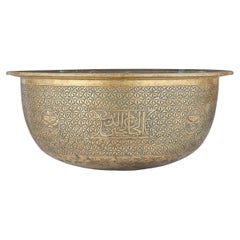
A Mamluk Engraved Brass Basin, Egypt, Early 16TH Century
Located in London, GB
of waisted form with flaring everted rim, engraved with a series of cartouches filled with inscriptions in thuluth interspersed with roundels containing vegetal interlace on a floral...
Category
Antique 16th Century Egyptian Metalwork
Materials
Brass

A Rare Mamluk "Veneto-Saracenic" Candlestick, Late 15TH Century
Located in London, GB
The straight stem with tapering mouth rising from a truncated conical body with flat shoulders, the engraved decoration with cartouches of tightly interlocking straps and knots, inte...
Category
Antique 15th Century and Earlier Metalwork
Materials
Brass
A Large Mamluk Engraved Brass Basin, Egypt, Late 15th-Early 16th Century
Located in London, GB
Of deep rounded form with an everted rim, this impressive Mamluk brass basin is richly engraved throughout. The exterior is decorated with four inscription-filled cartouches alternat...
Category
Antique 16th Century Egyptian Metalwork
Materials
Brass
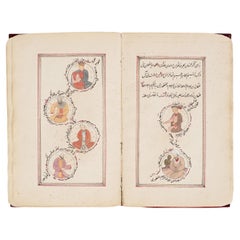
18th Century Book Depicting The Descendants Of The Rulers Of The Ottoman Empire
Located in London, GB
A Rare Ottoman Book Depicting The Descendants Of The Rulers Of The Ottoman Empire Till Sultan Abdul Majid, Signed Mohammed Afandi Almuradi Alnagshabandi, 18th Century.
Category
Antique 18th Century Turkish Scholar s Objects
Materials
Paper
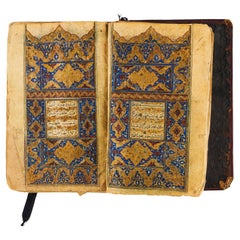
An Illuminated Timurid Quran, 15th Century
Located in London, GB
A rare and beautifully illuminated Quran manuscript from the Timurid period, dating back to the 15th century. The manuscript features intricate floral motifs, vibrant colours, and el...
Category
Antique 15th Century and Earlier Asian Scholar s Objects
Materials
Paper
You May Also Like
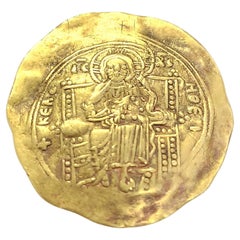
Byzantine Gold Coin
Located in Cairo, EG
Byzantine era high karat gold coin that can be used as pendant dates back to 1221-1254 ruler john 111 doukas vatatzes and virgin nimbate emperor and other co...
Category
Antique 15th Century and Earlier Byzantine Pendant Necklaces
Edward III 1361-1369 Gold Noble Treaty Period 1361 - 1369, London
Located in Braintree, GB
Edward III 1361-1369 Gold Noble Treaty Period 1361 - 1369, London.
Country: England
England
Period: House of Plantagenet
Ruler: Edward III
Phase: treaty period (1361-1369)
Producti...
Category
Antique 15th Century and Earlier British Antiquities
Materials
Gold
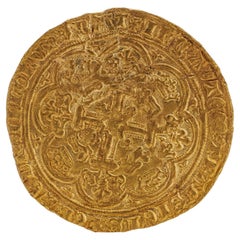
19th Century Copper-Bronze Tinned Ottoman Empire Table and Base
Located in Lomita, CA
An antique low Ottoman Empire cast metal (copper, tin and bronze) circular tray-table, 19th Century or earlier; base late 19th Century or later. The circular piece can also be used ...
Category
Antique Mid-19th Century Turkish Islamic Metalwork
Materials
Bronze, Copper, Tin
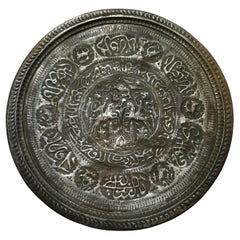
Gilt Bronze Brooch by Line Vautrin
By Line Vautrin
Located in Atlanta, GA
A gilt bronze brooch "Moise ou la Traversee du Desert" by French Jeweler Line Vautrin, circa 1940s.
The patinated surface features amazing details illustrating the biblical story of Moses crossing the desert out of Egypt...
Category
Vintage 1940s French Mid-Century Modern Collectible Jewelry
Materials
Bronze
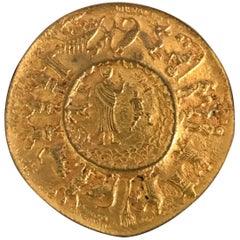
Middle Eastern Brass Bowl with Arabic Calligraphy Writing
Located in Moreno Valley, CA
Large antique 19th century or before brass Middle Eastern Persian Islamic style footed bowl finely and heavily hand-etched and embossed with brass repousse and decorated with calligraphic decoration inscriptions medallions.
A large Mamluk style brass bowl, hammered and engraved brass, with slightly rounded base, inverted sides narrowing to rim, the exterior engraved with a large honorific thuluth inscription, alternating with roundels containing blazons.
Islamic work from the the 19th century, in the style of Mamluk productions.
Handcrafted and embossed with geometric designs and Arabic writing on brass vessel.
Great brass decorative collectible Islamic metal...
Category
Antique Late 19th Century Asian Islamic Decorative Bowls
Materials
Brass
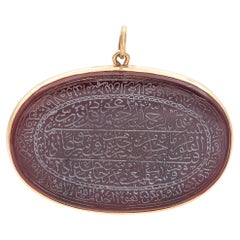
Vintage 14K Yellow Gold Sard Arabic Amulet Pendant
Located in New York, NY
This captivating pendant necklace features an intricately engraved sardonyx stone, set within a sleek yellow gold frame. The detailed script describing protective or spiritual talism...
Category
20th Century Pendant Necklaces
Materials
14k Gold, Yellow Gold
More Ways To Browse
13th Century
Gold Objects Of Art
Antique Ruler
Antique Gold Coins
Antique Vacuum
15th Century India
Old Man Of The Sea
13th Century Furniture
Antique Punjab
Asian Coins
15th Century Coins
Scholars Desk
Antique Chinese Brush Pots
Chinese Scholar Rock
Stone Display Stand
Antique Calligraphy Brushes
Antique Scholars Desk
Gongshi Stones