Items Similar to Japanese tea tray in red and black lacquer
Want more images or videos?
Request additional images or videos from the seller
1 of 6
Japanese tea tray in red and black lacquer
$1,801.50
£1,334.44
€1,500
CA$2,464.90
A$2,682
CHF 1,420.09
MX$32,266.28
NOK 18,031.92
SEK 16,497.94
DKK 11,431.23
About the Item
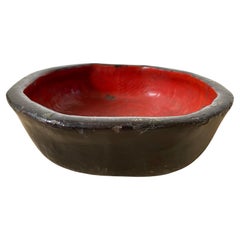
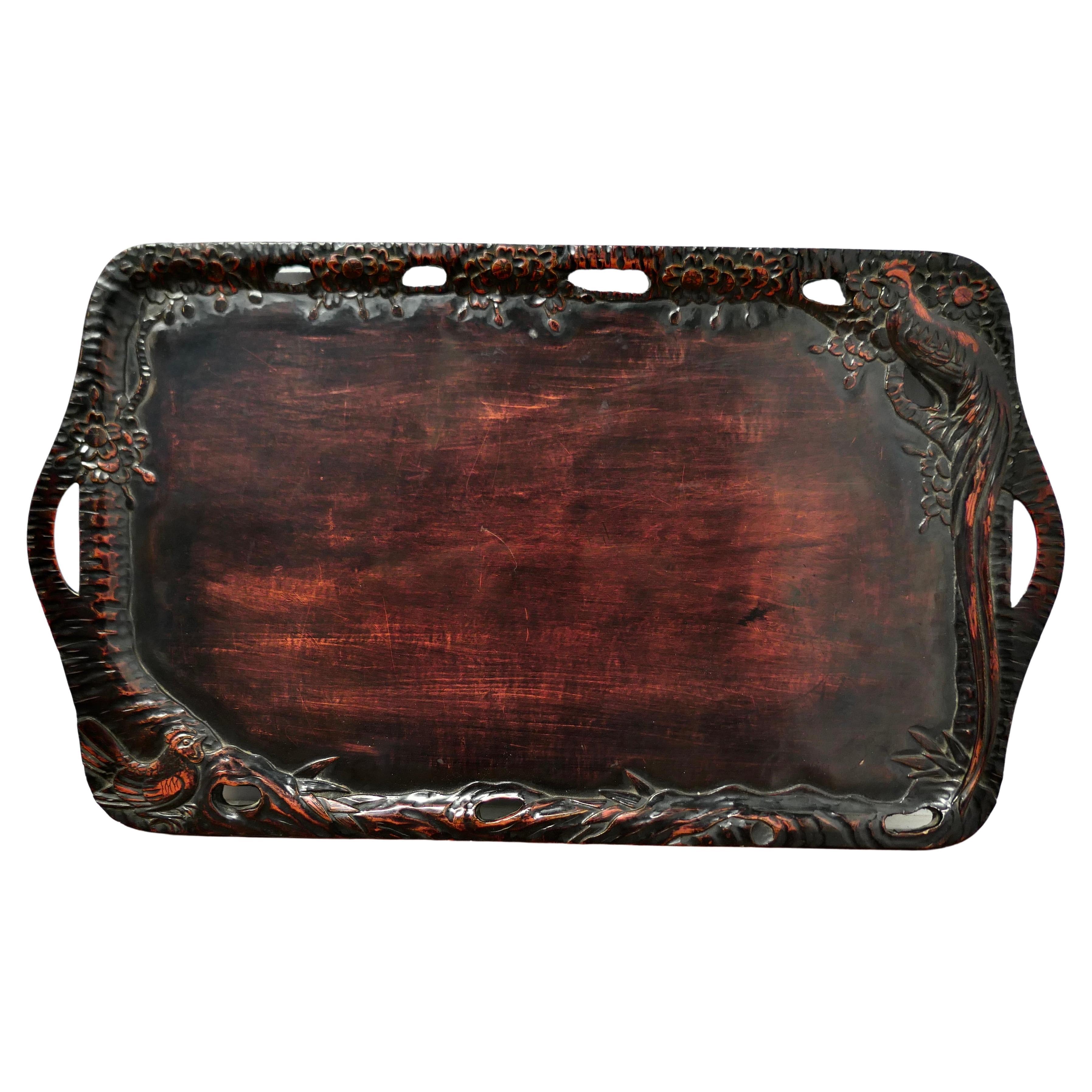
Tea tray realized in a tormented form recalling the knots of old grown roots and stumps. The bottom is lacquered red while the outlines are lacquered black, the outside of the tray is left at its natural brownish color.
Japon – ère Meiji (1868-1912)
Height: 3 cm - length: 37 cm - width: 24.5 cm
- Dimensions:Height: 1.19 in (3 cm)Width: 9.65 in (24.5 cm)Depth: 14.57 in (37 cm)
- Style:Meiji (Of the Period)
- Materials and Techniques:
- Place of Origin:
- Period:
- Date of Manufacture:1868-1912
- Condition:Wear consistent with age and use.
- Seller Location:PARIS, FR
- Reference Number:Seller: 13781stDibs: LU8311247740142
About the Seller
No Reviews Yet
Vetted Professional Seller
Every seller passes strict standards for authenticity and reliability
Established in 2013
1stDibs seller since 2023
- ShippingRetrieving quote...Shipping from: PARIS, France
- Return Policy
More From This Seller
View AllWakasa-Nuri Lacquer Bundai, Ryoshobako, Fubako Set
Located in PARIS, FR
Set of bundai, ryoshibako and fudebako in wakasa lacquer with an old rose background and black traditional Japanese patterns.
The saya pattern (or sayagata) is composed by Chinese svastikas. This symbol linked to Buddhism, mean intelligence, power and peace. It is a good omen sign.
The kanoko pattern reminds stains on fawn back.
The sakura (cherry blossom) pattern is emblematic of Japan. The blossoming in a short time marks spring beginning and is a symbol of renewal and ephemeral beauty.
There are also traces of calligraphy brush, in reference to the function of the objects.
Bundai is a low table used to put books or scrolls and, later, to write.
Rectangular ryoshibako (letter and document box) with a slightly domed
Fudebako (pencil case) of rectangular format very narrow in its length with two rounded corners, flat cover.
Wakasa lacquerware...
Category
Early 20th Century Japanese Lacquer
Materials
Lacquer
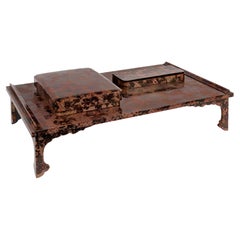
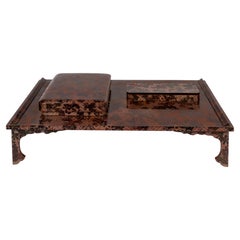
Japanese writting set in waqasa lacquer including bundai ryoshibako and fudebako
Located in PARIS, FR
Set of bundai, ryōshibako and fudebako in wakasa lacquer with an old rose background and black traditional Japanese patterns.
The saya pattern (or sayagata) is composed by Chinese svastikas. This symbol linked to Buddhism, mean intelligence, power and peace. It is a good omen sign.
The kanoko pattern reminds stains on fawn back.
The sakura (cherry blossom) pattern is emblematic of Japan. The blossoming in a short time marks spring beginning and is a symbol of renewal and ephemeral beauty.
There are also traces of calligraphy brush, in reference to the function of the objects.
Bundai is a low table used to put books or scrolls and, later, to write.
Rectangular ryōshibako (letter and document box) with a slightly domed
Fudebako (pencil case) of rectangular format very narrow in its length with two rounded corners, flat cover.
Wakasa lacquerware...
Category
Early 20th Century Japanese Taisho Lacquer
Materials
Lacquer
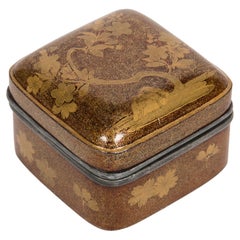
Japanese lacquered Cherry Tree Kobako
Located in PARIS, FR
Kobako in nashiji lacquer of square shape with a hira maki-e décor of a blossoming
cherry tree. Both of the four sides are adorned with golden lacquer cherry flowers,
represented i...
Category
Antique 19th Century Japanese Lacquer
Materials
Lacquer
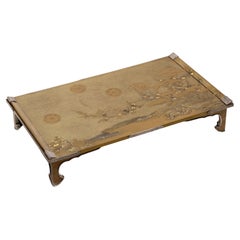
Japanese Bundai or writting table in gold lacquer with a decor of lake landscape
Located in PARIS, FR
Rectangular bundai writing table on four legs in gold lacquer with black highlights on a nashi-ji background. The top is decorated with a lake landscape with plum trees, pine trees a...
Category
Antique Early 18th Century Japanese Edo Lacquer
Materials
Gold, Bronze
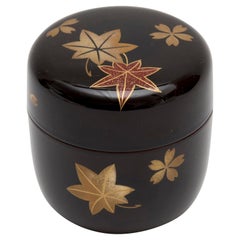
Japanese Lacquered Natsume
Tea Box
Located in PARIS, FR
Natsume in dark red lacquer, decorated with autumn leaves and cherry blossoms in hiramaki-e and nashiji. Interior in black lacquer.
Maple leaves (Momiji) are celebrated in literatur...
Category
Mid-20th Century Japanese Lacquer
Materials
Lacquer
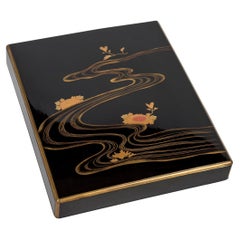
Japanese suzuribako lacquered box peony river
Located in PARIS, FR
Suzuribako box (empty) in black lacquer. Gold maki-e decoration of a river bordered by peonies, one with red highlights. The edges of the lid are in gold lacquer. Nashi-ji interior.
Category
Antique Late 19th Century Japanese Lacquer
Materials
Gold
You May Also Like
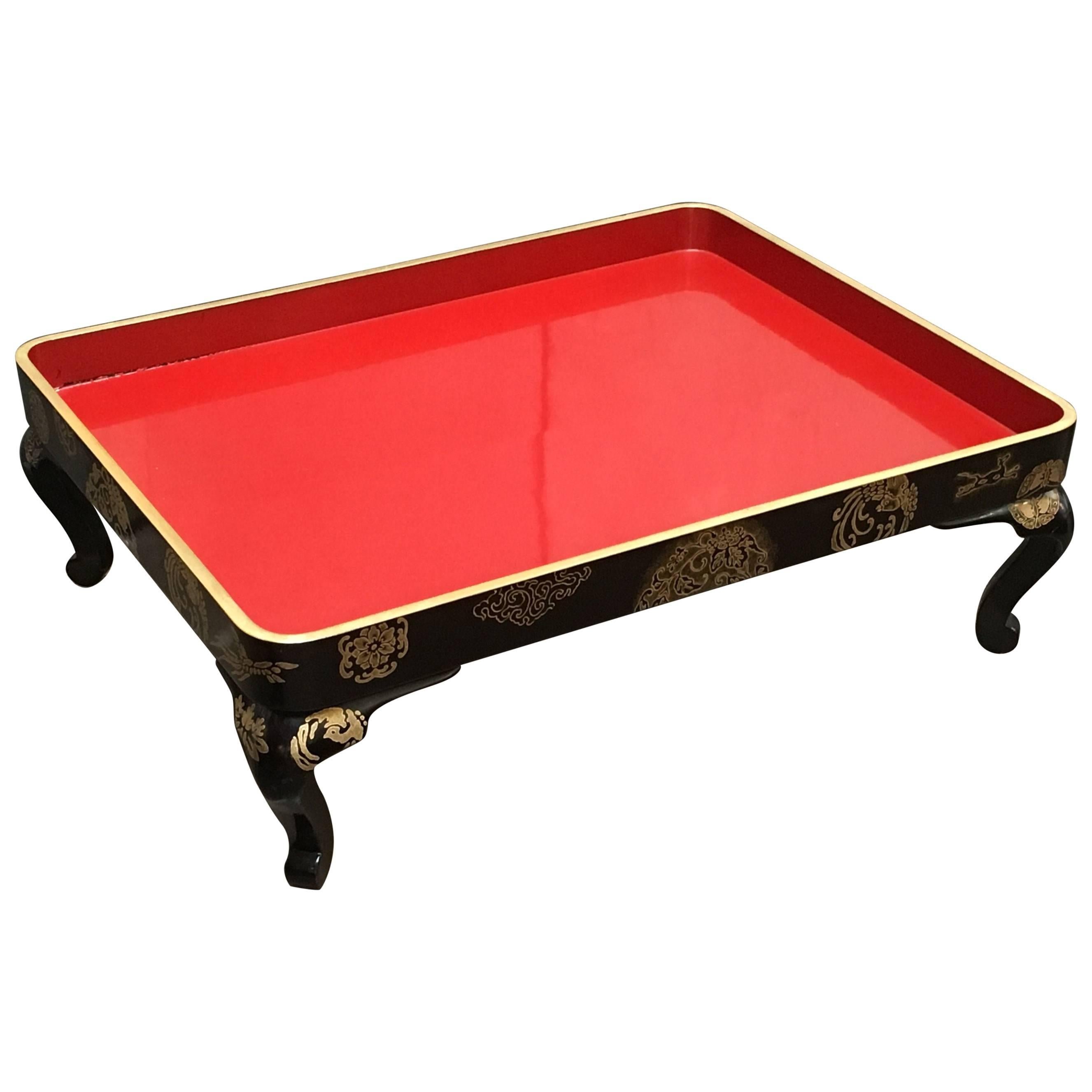
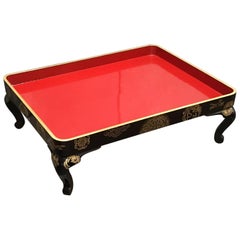
Japanese Red and Black Lacquer Maki-e Decorated Presentation Tray, dated 1917
Located in Austin, TX
A fine Japanese red and black maki-e lacquer presentation tray with original tomobako storage box, Taisho period, dated 1917, Japan.
The large prese...
Category
Vintage 1910s Japanese Taisho Lacquer
Materials
Gold
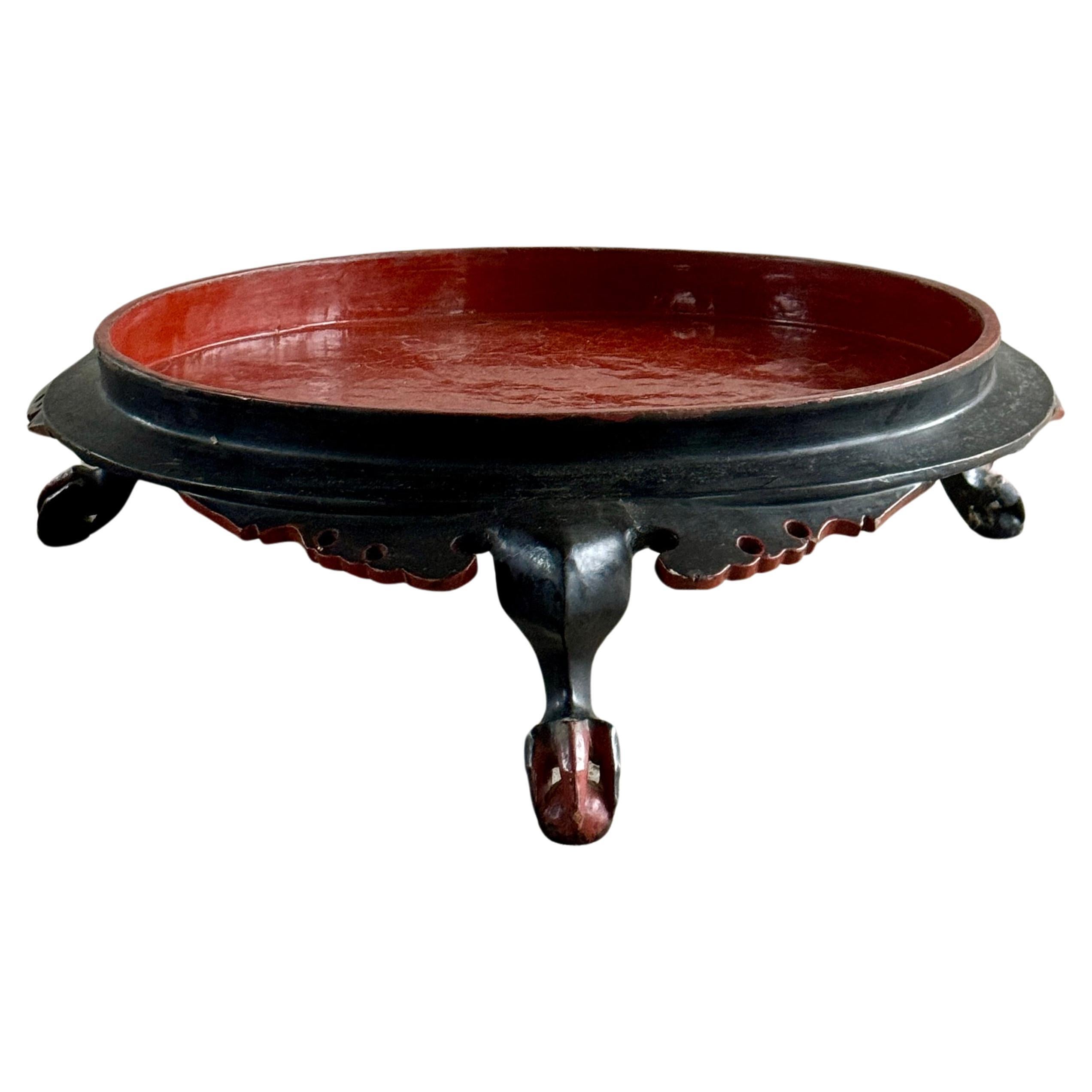
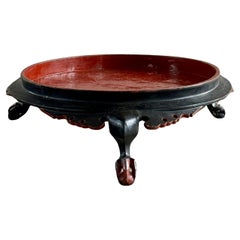
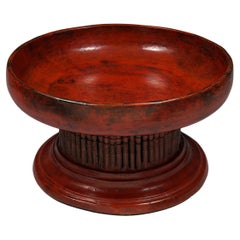
Early 19th Century Burmese Lacquered Footed Offering Tray
Located in Wainscott, NY
Materials and Technique:
These trays were traditionally made from bamboo or wood and coated with layers of lacquer, a process known as "Pan-Yun." Lacquerware is a distinctive and rev...
Category
Antique Early 19th Century Asian Decorative Bowls
Materials
Wood, Lacquer
$1,778 Sale Price
34% Off
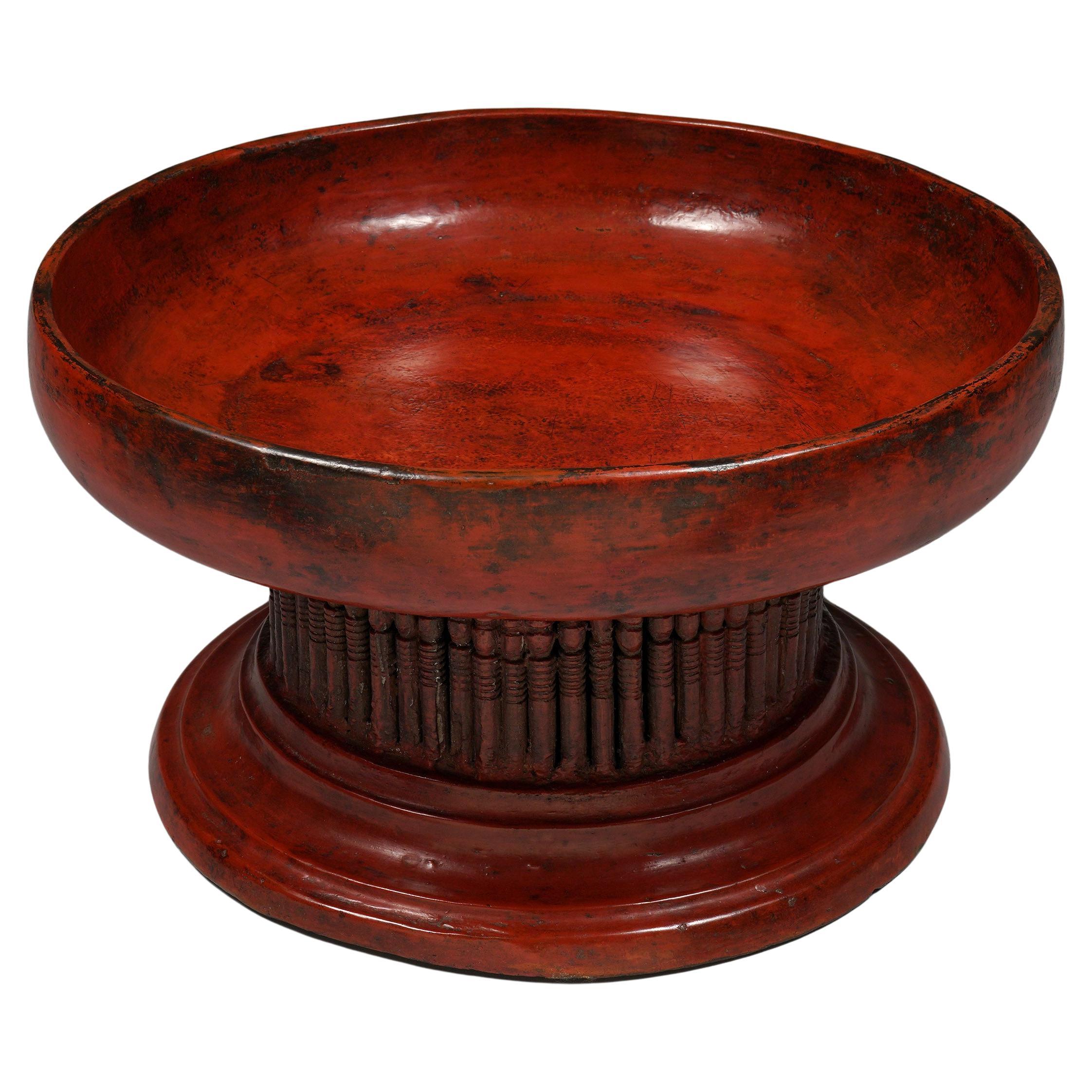
Late 19th/ early 20th Century Large Red Lacquer Offering Tray, Burma
Located in Point Richmond, CA
Large Red Offering Tray, Burma
Late 19th/early 20th century
Bamboo, lacquer ...
Category
Early 20th Century Burmese Tribal Lacquer
Materials
Bamboo, Lacquer
Burmese Yun Lacquer Tray, c. 1900
Located in Chicago, IL
This round tray dates to the early 20th century and is a simple example of Burmese lacquerware. The tray is formed of thin bamboo strips that have been woven and coiled into shape, h...
Category
Early 20th Century Burmese Decorative Dishes and Vide-Poche
Materials
Bamboo
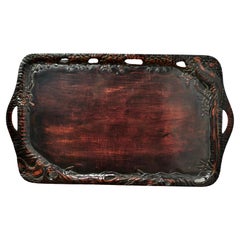
Oriental Folk Art Carved Red Lacquer Tray Decorated with Cockerels
Located in Godshill, Isle of Wight
Oriental Folk Art Carved Red Lacquer Tray Decorated with Cockerels
This is a superb piece of hand carving, the edge of the tray is in the form of a cockerels with their tails entwi...
Category
Vintage 1920s Chinoiserie Tray Tables
Materials
Lacquer
Japanese Red
Black Lacquer Bowl, Early 20th Century
Located in Jimbaran, Bali
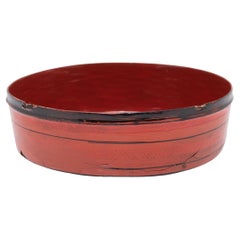
A Japanese red & black lacquer bowl from the early 20th century. Its frame is crafted from woven rattan fibres and covered in multiple layers of lac...
Category
Early 20th Century Japanese Other Decorative Bowls
Materials
Rattan, Lacquer