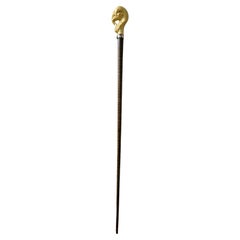
Items Similar to Meiji Period Shagreen Clad Cane with Minamoto Clan Crest
Want more images or videos?
Request additional images or videos from the seller
1 of 8
Meiji Period Shagreen Clad Cane with Minamoto Clan Crest
$7,500
$12,50040% Off
£5,680.55
£9,467.5940% Off
€6,523.16
€10,871.9340% Off
CA$10,510.72
CA$17,517.8640% Off
A$11,431.56
A$19,052.6140% Off
CHF 6,058.31
CHF 10,097.1840% Off
MX$136,974.02
MX$228,290.0340% Off
NOK 76,998.02
NOK 128,330.0340% Off
SEK 70,540.65
SEK 117,567.7540% Off
DKK 48,758.04
DKK 81,263.4040% Off
About the Item
A rare and refined Meiji-period walking cane clad in spiraled ray skin (shagreen), polished and finished in traditional black lacquer. The lacquered shagreen surface reveals the underlying natural texture of the skin beneath its rich, dark sheen—a technique adapted directly from the construction of samurai sword hilts (tsuka), where ray skin was used for its strength and grip, then often sealed with black lacquer for durability and elegance. Here, the same method is applied to a Western-style walking stick, merging Japanese artisanal heritage with Meiji-era modernity.
The cane features a sterling silver cap and foot, with the shaft adorned by a finely cast sterling silver mon (crest) of the Minamoto Clan—one of the most important and powerful families in Japanese history. The emblem, a stylized Sasa Rindō (gentian and bamboo), symbolizes the clan’s noble lineage.
The Minamoto Clan rose to prominence during the late Heian period, and in 1192, Minamoto no Yoritomo became Japan’s first shogun, establishing the Kamakura shogunate. A shogun was a military dictator appointed to rule on behalf of the emperor, who remained a symbolic figure. The shogun held true political and military power, leading a warrior government (bakufu) that oversaw law, land, and military command. This shift marked the formal rise of the samurai class, and Japan would be ruled by successive shogunates for over 600 years.
The shogunate system allowed centralized military rule and social order during eras when the imperial court lacked effective control. Shoguns and their warrior class reshaped Japanese society, culture, and governance, leaving a deep imprint on national identity. The Minamoto Clan’s ascent was the beginning of this era of samurai rule, making their crest a powerful symbol of historical authority and martial heritage.
By the late 19th century, during the Meiji period, Japan was rapidly modernizing—but aristocratic families and former samurai continued to assert their identity through traditional symbols such as clan crests. A cane like this, blending European form with distinctly Japanese materials and emblems, would have been carried by a high-ranking official, noble, or samurai descendant—someone navigating a modernizing world while honoring deep ancestral roots.
An exceptional and symbolically rich object that bridges material craft, historical significance, and the enduring legacy of Japan’s warrior class.
- Dimensions:Height: 35.5 in (90.17 cm)Diameter: 1.5 in (3.81 cm)
- Style:Meiji (Of the Period)
- Materials and Techniques:
- Place of Origin:
- Period:
- Date of Manufacture:1880s
- Condition:Wear consistent with age and use. cap is at an angle, but has been that way for a long time.
- Seller Location:Kilmarnock, VA
- Reference Number:1stDibs: LU883018320192
About the Seller
4.8
Vetted Professional Seller
Every seller passes strict standards for authenticity and reliability
Established in 2004
1stDibs seller since 2009
174 sales on 1stDibs
Typical response time: 1 hour
- ShippingRetrieving quote...Shipping from: Kilmarnock, VA
- Return Policy
More From This Seller
View AllItalian Liberty Style Forged Iron and Hammered Copper Torchiere
By Liberty
Co.
Located in Kilmarnock, VA
An exceptionally well-crafted Italian Liberty Style torchiere, made of hand-forged iron and hammered copper, this piece embodies a rare blend of artistry, material intelligence, and ...
Category
Vintage 1930s Unknown Art Deco Floor Lamps
Materials
Copper, Iron
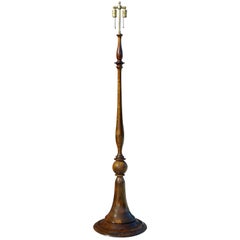
Austrian Turned Walnut Floor Lamp, circa 1915
Located in Kilmarnock, VA
A substantial and sculptural turned walnut floor lamp, crafted in the Biedermeier style, with a commanding 18-inch diameter base and beautifully executed proportions. The warm, highly figured walnut is expertly lathe-turned into a sweeping architectural form that references 19th-century European classicism while remaining strikingly modern in silhouette.
Producing a turned piece of this scale—especially with such balance and clarity—would have required exceptional skill and specialized equipment, particularly during the early to mid-20th century when this lamp was likely produced. The sheer size of the base and the consistency of the turning across its full height suggest a level of craftsmanship often reserved for architectural columns or custom commissions. The result is a floor lamp that feels as much like a piece of sculpture as a functional object.
The lamp is designed in the tradition of Biedermeier, the early 19th-century Central European style known for its simplicity, symmetry, and reverence for fine materials. Though pared down in ornament, this style was favored by intellectuals, artists, and aristocrats for its quiet elegance and timeless restraint.
Originally sourced from David Duncan Antiques...
Category
Vintage 1910s Austrian Biedermeier Floor Lamps
Materials
Walnut, Lacquer
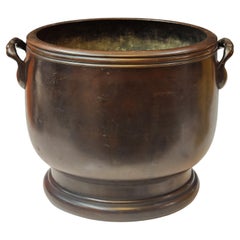
19th century Japanese Bronze Hibachi or cache pot
Located in Kilmarnock, VA
Late 19th Century Patinated Bronze Hibachi – Versatile Cache Pot or Ice Bucket
A charming late 19th-century bronze hibachi featuring a rich, aged patina that highlights its historic...
Category
Antique 1880s Japanese Metalwork
Materials
Bronze
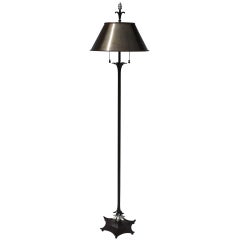
Sculptural Bronze Art Deco Floor Lamp by The Crest Company circa 1930
By The Crest Company, Chicago
Located in Kilmarnock, VA
A striking and rare transitional floor lamp by The Crest Company of Chicago, crafted circa 1930 in a refined interplay of bronze and silvered bronze, topped with its original bronzed...
Category
Vintage 1930s American Floor Lamps
Materials
Bronze
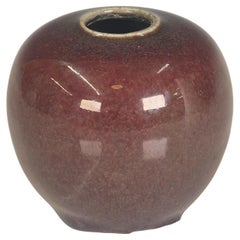
19th-Century Chinese Peach-Blossom Glazed Brush Washer, Qing Dynasty
Located in Kilmarnock, VA
A beautifully rounded Qing Dynasty peach-blossom glazed brush washer, dating to the Daoguang-Xianfeng period (circa 1830-1850). This small scholar's object is a classic example of th...
Category
Antique Mid-19th Century Chinese Vases
Materials
Ceramic
Silvered Bronze Lamp Attributed to E.F. Caldwell
By Edward F. Caldwell
Co.
Located in Kilmarnock, VA
A striking silver-plated bronze table lamp, attributed to E.F. Caldwell & Co., one of the most important American lighting firms of the early 20th century. Dating to around 1910, thi...
Category
Vintage 1910s American Table Lamps
Materials
Bronze, Silver Plate
You May Also Like
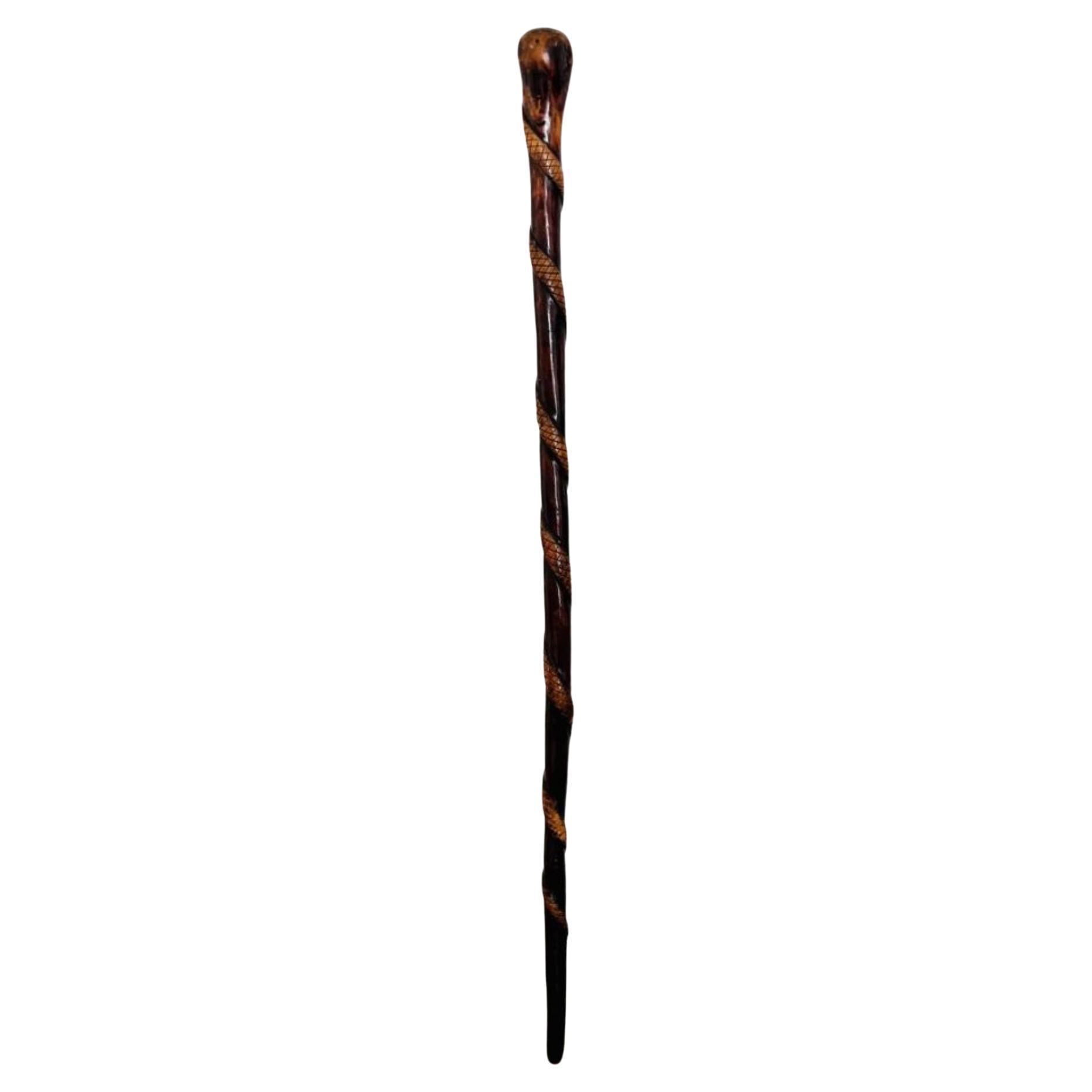
Unusual antique Victorian quality hardwood walking stick
Located in Ipswich, GB
Unusual antique Victorian quality hardwood walking stick having an unusual quality hardwood antique Victorian walking stick with a carv...
Category
Antique Early 19th Century Victorian Sculptures and Carvings
Materials
Hardwood
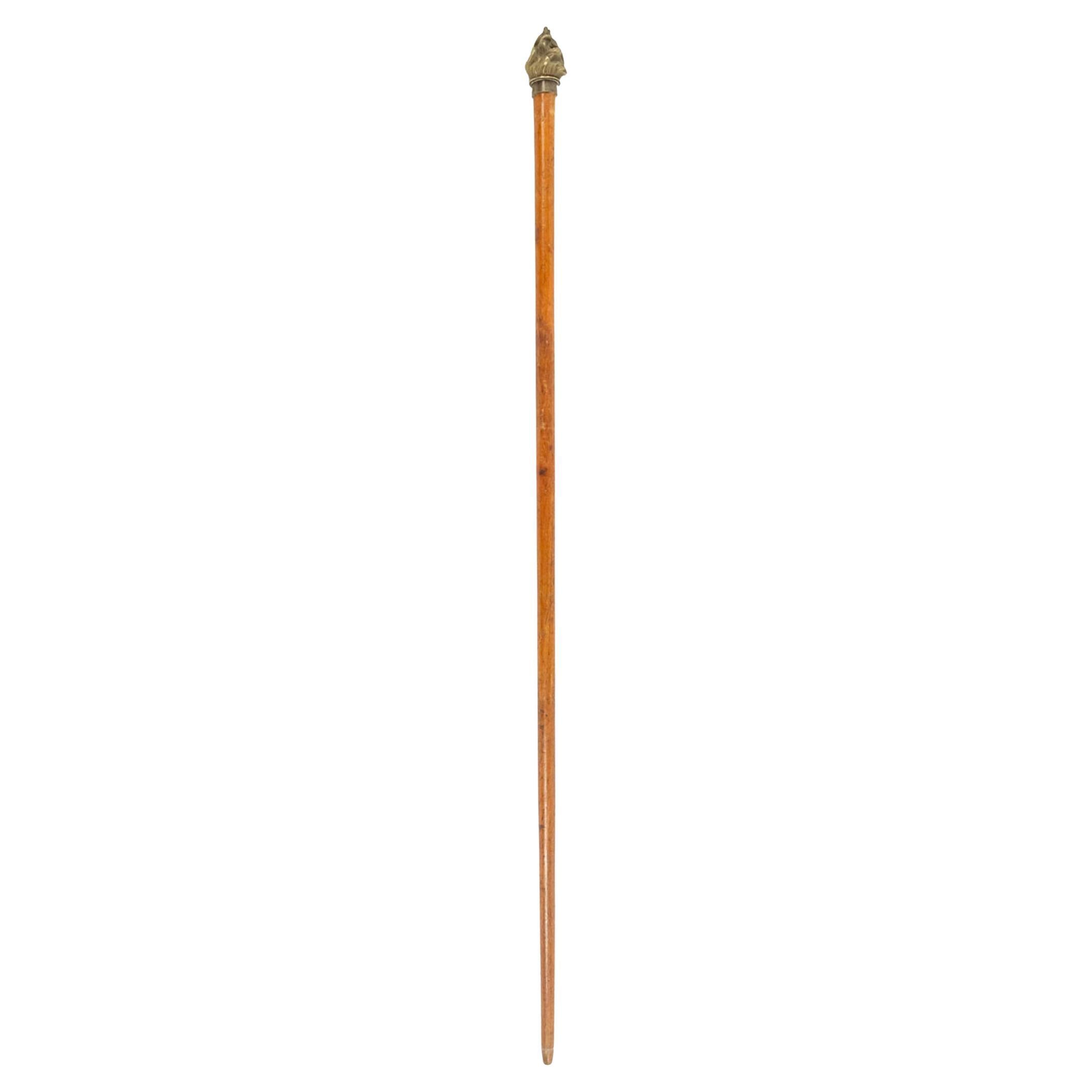
English Victorian Cane with Brass Flame
Located in Queens, NY
English Victorian light oak walking cane with bronze flame form handle and brass tip.
Category
Antique 19th Century British Victorian Antiquities
Materials
Brass
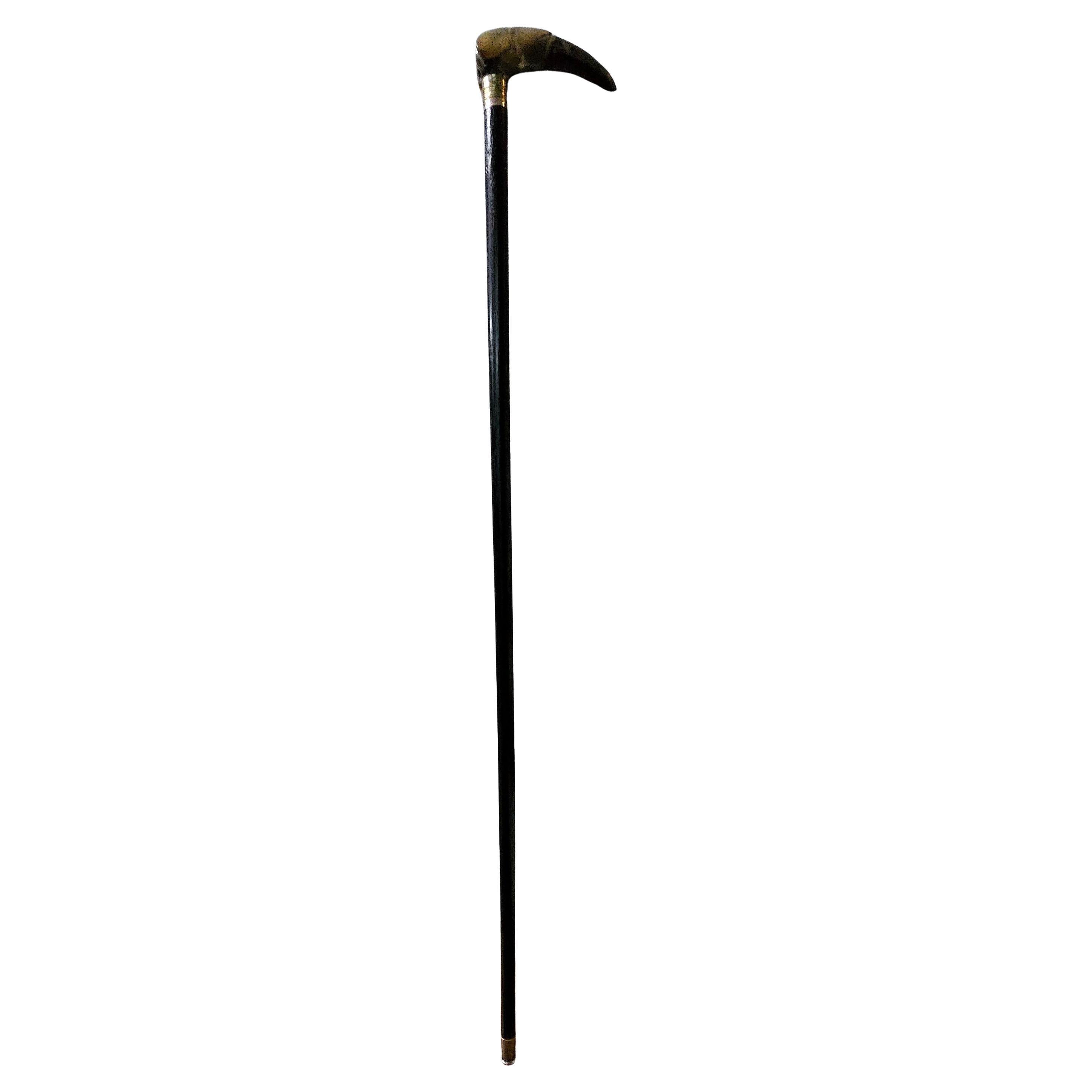
Antique Carved Steer Horn Walking Stick Cane
Located in Norton, MA
Antique Carved Steer Horn of a long-snout dog Walking Stick Cane with black oak shaft and silver end cap.
Category
Antique Late 19th Century English Sports Equipment and Memorabilia
Materials
Silver
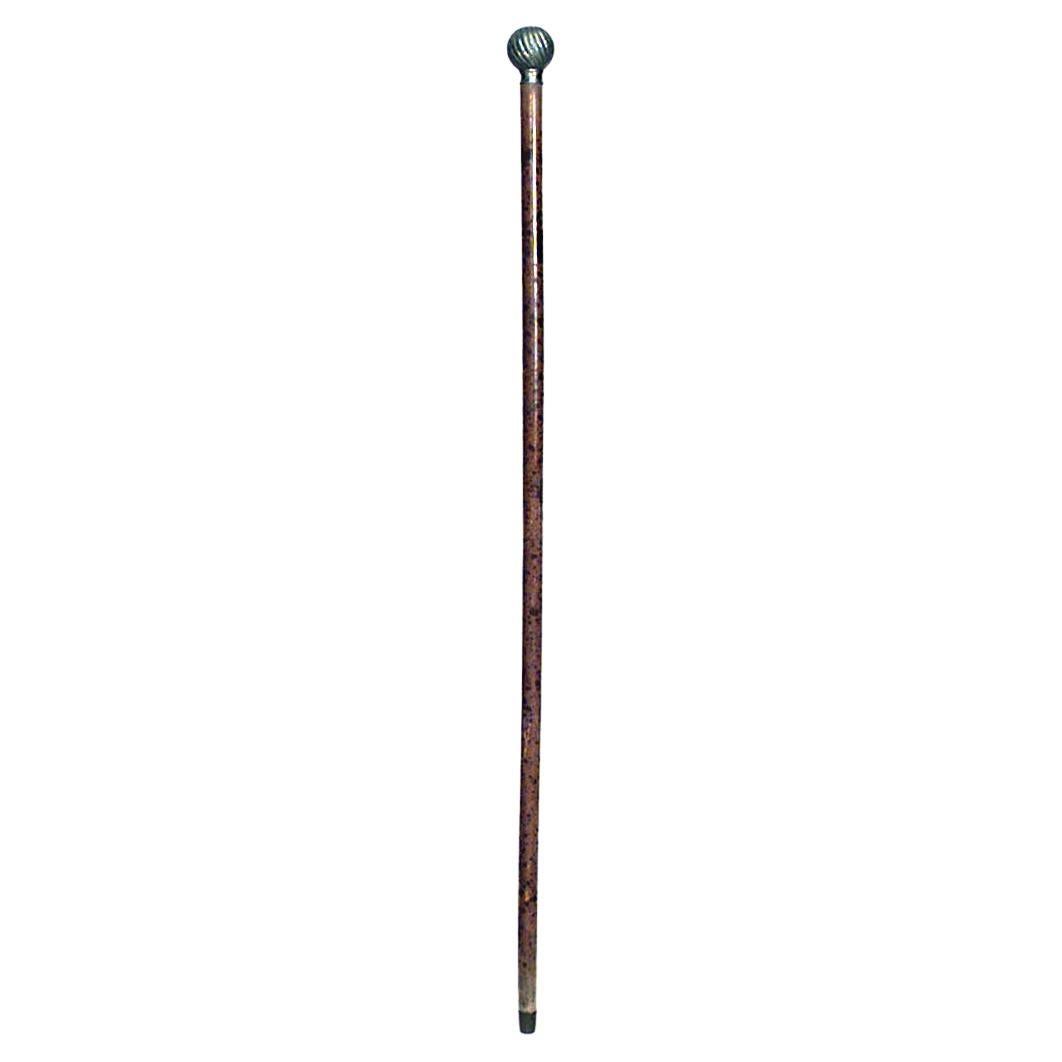
English Victorian Wood and Pewter Cane
Located in Queens, NY
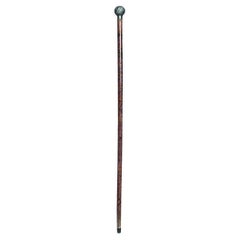
English Victorian-style wood cane with pewter swirl design ball top.
Some losses, top 1.5\" depth
Category
Antique Late 19th Century Victorian Sports Equipment and Memorabilia
Materials
Pewter
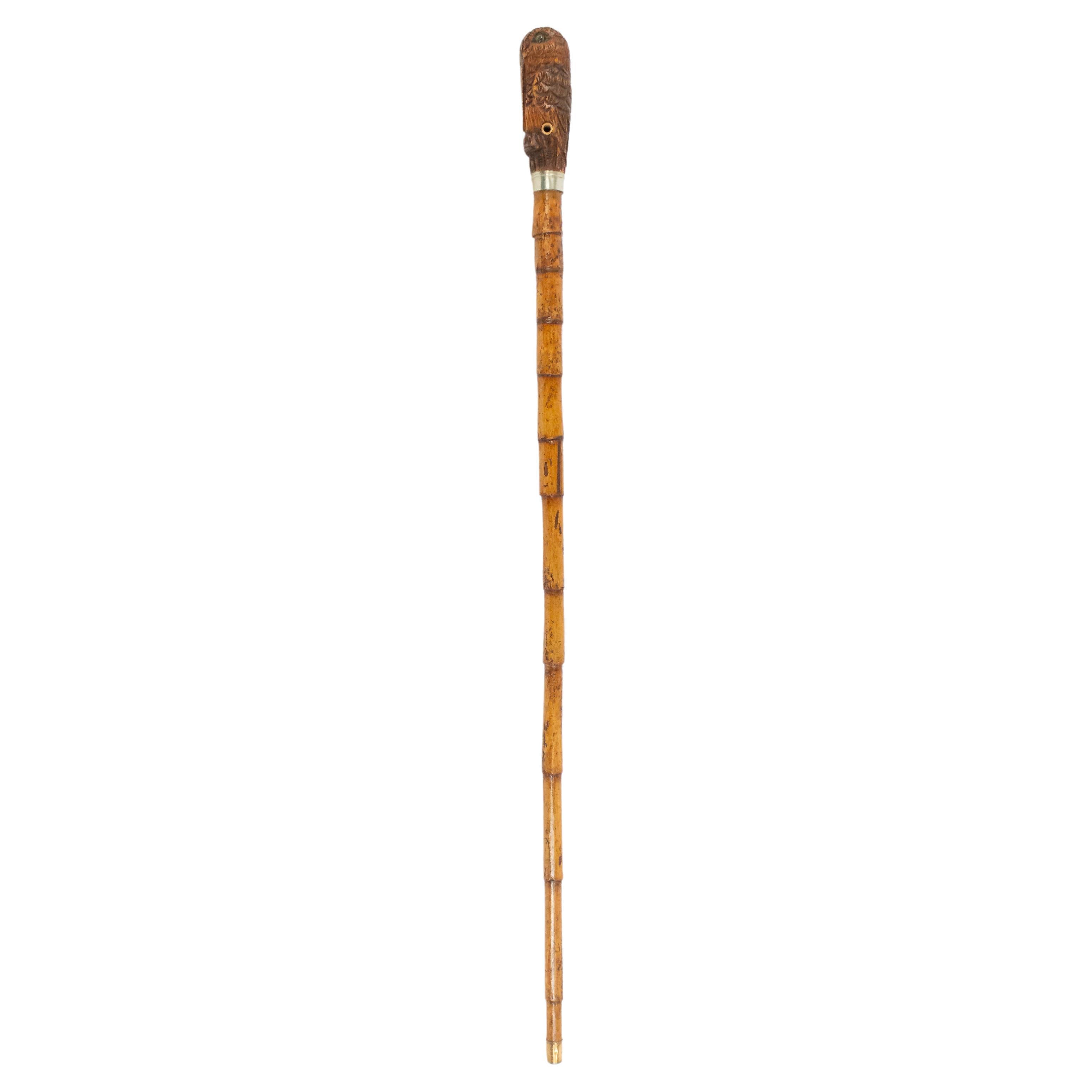
English Victorian Carved Bamboo Pelican Cane
Located in Queens, NY
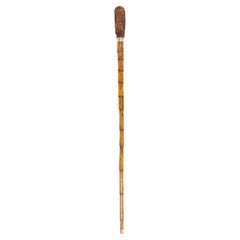
English Victorian bamboo cane having a handle carved as stylized pelican with a silver collar and brass tip.
Category
Antique Late 19th Century British Victorian Sports Equipment and Memorab...
Materials
Silver, Brass
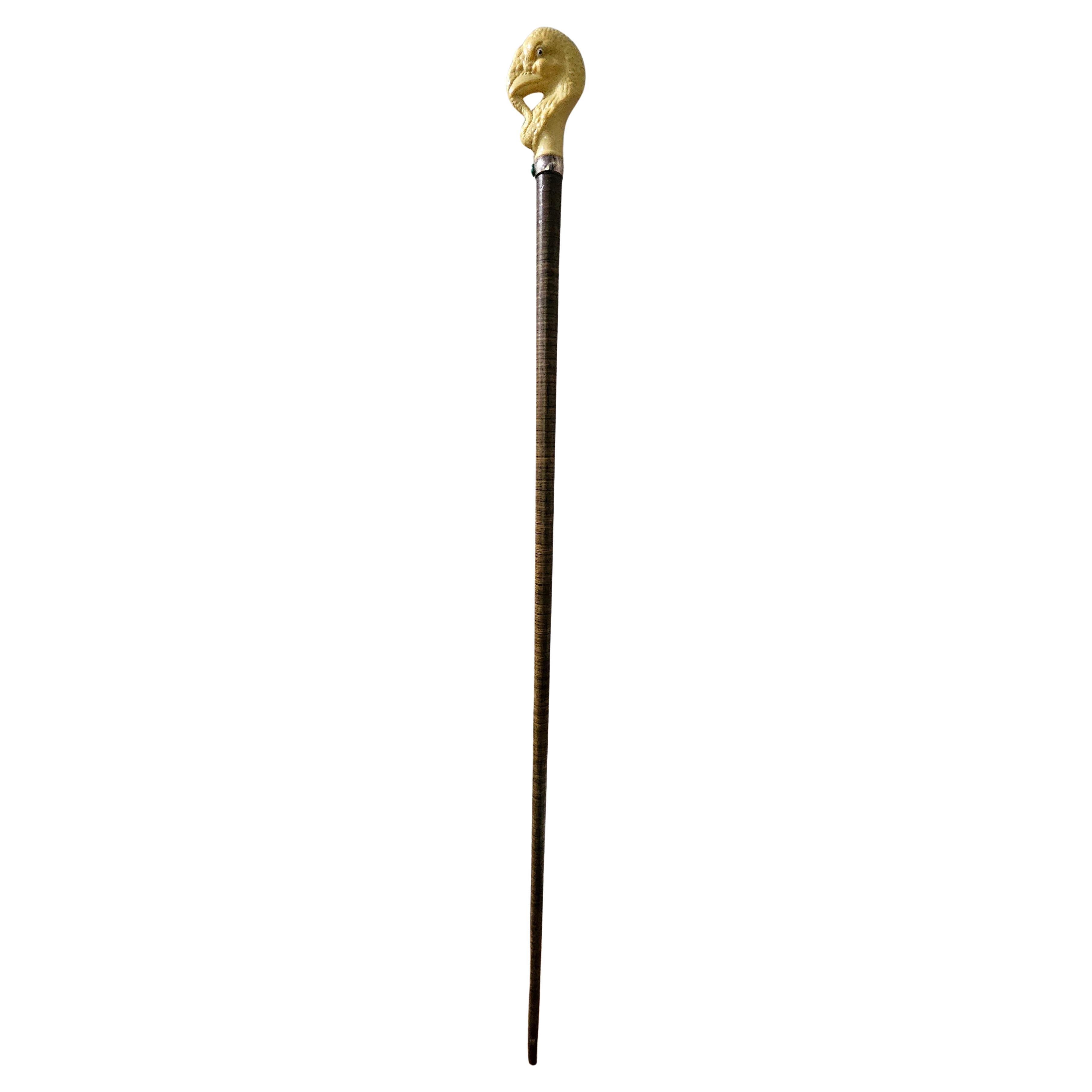
Antique Carved Celluloid Turkey Head Walking Stick Cane
Located in Norton, MA
Antique Carved Celluloid Turkey Head Walking Stick Cane with a flexible shaft (heavy)and silver collar, green turquoise bead, and horn tip base end.
Category
Early 20th Century English Sports Equipment and Memorabilia
Materials
Silver