Items Similar to Pilgrim’s Jacket (Ohenro-gi) with Heart Sutra Text and Pilgrimage Stamps, Japan
Want more images or videos?
Request additional images or videos from the seller
1 of 8
Pilgrim’s Jacket (Ohenro-gi) with Heart Sutra Text and Pilgrimage Stamps, Japan
$1,510
£1,144.26
€1,318.63
CA$2,135.56
A$2,296.61
CHF 1,228
MX$27,696.49
NOK 15,528.94
SEK 14,148.86
DKK 9,853.08
About the Item
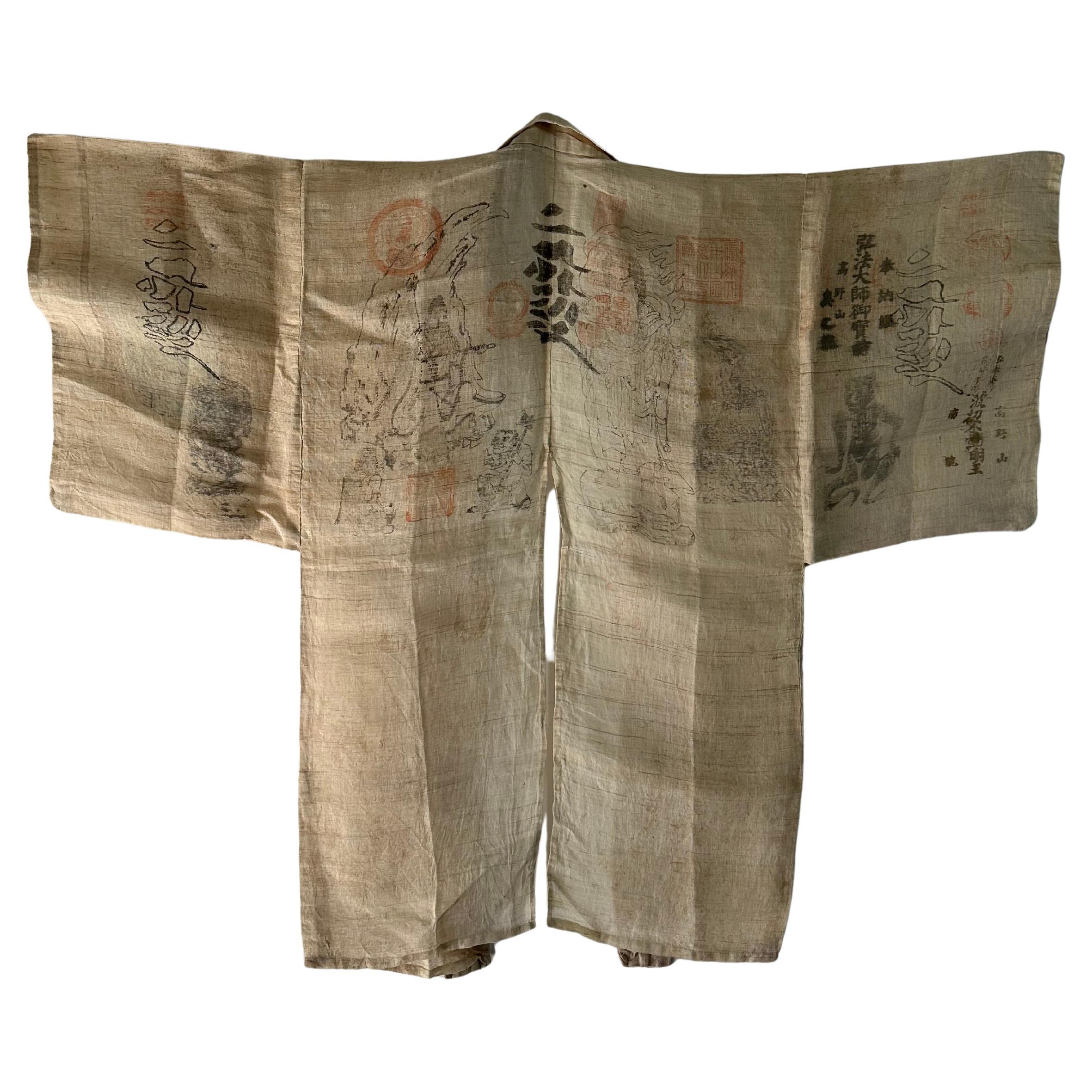
This rare beige linen pilgrim’s jacket, known as an ohenro-gi, was worn by a Buddhist pilgrim undertaking one of Japan’s sacred pilgrimage routes, most notably the Shikoku circuit of eighty-eight temples or other devotional routes comprising thirty-three temples—numbers imbued with deep spiritual significance in Buddhist cosmology.
Serving both as a practical garment and a spiritual document, the jacket was worn over simple clothing during weeks of travel through mountains, forests, and coastal paths. Its surface is inscribed with Sanskrit characters invoking Buddhist deities, including passages associated with the Heart Sutra, transforming the garment into a portable field of prayer and protection.
Scattered across the fabric are vivid cinnabar-red temple stamps and inscriptions (goshuin), applied at individual sacred sites along the pilgrimage route. Each seal records a completed visit and stands as a testament to the pilgrim’s devotion, endurance, and lived spiritual experience. Collectively, these marks transform the jacket into a sacred map—an intimate fusion of text, image, movement, and belief.
In Japanese Buddhism, pilgrimage represents not only physical travel but also an act of purification, merit-making, and inner transformation. Modest in material yet profound in meaning, this ohenro-gi embodies that journey in every fiber, stroke, and seal.
Condition:
Good, with minor abrasions, staining, and areas of gentle yellowing consistent with age. A few small fabric wears are present; however, the textile remains structurally stable. Please refer to the photographs for details.
Dimensions:
Full adult size
Length: 102 cm (40.1 in)
Sleeve-to-sleeve width: 126 cm (49.5 in)
Weight:
300 g (0.7 lb)
⸻
International Buyers — Please Note:
Import duties, taxes, and charges are not included in the item price or shipping costs. These charges are the buyer’s responsibility. Please consult your local customs office prior to purchase.
- Dimensions:Height: 40.16 in (102 cm)Width: 49.61 in (126 cm)Depth: 0.4 in (1 cm)
- Materials and Techniques:
- Place of Origin:
- Period:
- Date of Manufacture:1800-
- Condition:
- Seller Location:Fukuoka, JP
- Reference Number:1stDibs: LU8121248176522
About the Seller
5.0
Vetted Professional Seller
Every seller passes strict standards for authenticity and reliability
Established in 1998
1stDibs seller since 2023
62 sales on 1stDibs
Typical response time: 1 hour
- ShippingRetrieving quote...Shipping from: Fukuoka, Japan
- Return Policy
More From This Seller
View AllPilgrim’s Jacket (Ohenro-gi) with Heart Sutra Text and Pilgrimage Stamps, Japan
Located in Fukuoka, JP
This rare beige linen pilgrim’s jacket, known as an ohenro-gi, was worn by a Buddhist pilgrim undertaking one of Japan’s sacred pilgrimage routes, most notably the Shikoku circuit of...
Category
Antique 19th Century Japanese Scholar s Objects
Materials
Cotton, Linen
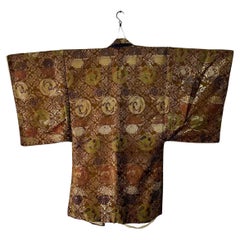
Rare 19th-Century Brocade Silk Robe for Noh Theatre Performance, Japan
Located in Fukuoka, JP
A rare and historically significant brocade silk robe from 19th-century Japan, originally created for use in Noh theatre, one of the country’s oldest and most revered performing arts...
Category
Antique 19th Century Japanese Edo Textiles
Materials
Silk
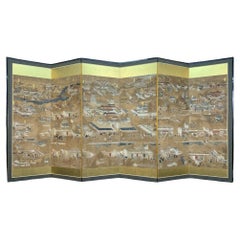
Edo Period Kyoto Screen
Located in Fukuoka, JP
Edo Period Kyoto Screen
Period: Edo period
Size: 343 x 176 cm (134.6 x 69 inches)
SKU: RJ69
This stunning Edo period screen depicts typical scenes of d...
Category
Antique 18th Century Japanese Edo Paintings and Screens
Materials
Silk, Wood, Paper
$9,450
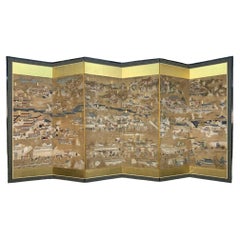
Edo Period Kyoto Screen (2/2)
Located in Fukuoka, JP
Edo Period Kyoto Screen
Period: Edo period
Size: 343 x 176 cm (134.6 x 69 inches)
This stunning Edo period screen depicts typical scenes of daily life...
Category
Antique 18th Century Japanese Edo Paintings and Screens
Materials
Paper, Wood, Silk
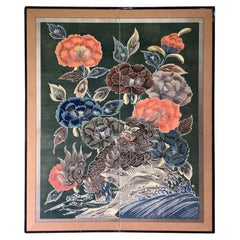
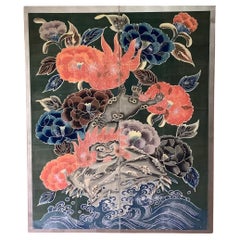
Late Edo period Tsutsugaki 筒描 Auspicious Shishi Batik Screen
Located in Fukuoka, JP
Auspicious Shishi Batik Screen
Period: Late Edo
Size: 145x173 cm (57x68 inches)
SKU: PTA62
Step into the mythical world of late Edo Japan with our radiant batik screen depicting the...
Category
Antique 19th Century Japanese Edo Paintings and Screens
Materials
Cotton, Wood
$2,690 Sale Price
50% Off
Late Edo period Tsutsugaki 筒描 Auspicious Shishi Batik Screen
Located in Fukuoka, JP
Auspicious Shishi Batik Screen
Period: Late Edo
Size: 145x173 cm (57x68 inches)
SKU: PTA62
Step into the mythical world of late Edo Japan with our radiant batik screen depicting the...
Category
Antique 19th Century Japanese Edo Paintings and Screens
Materials
Cotton, Wood
$2,690 Sale Price
50% Off
You May Also Like
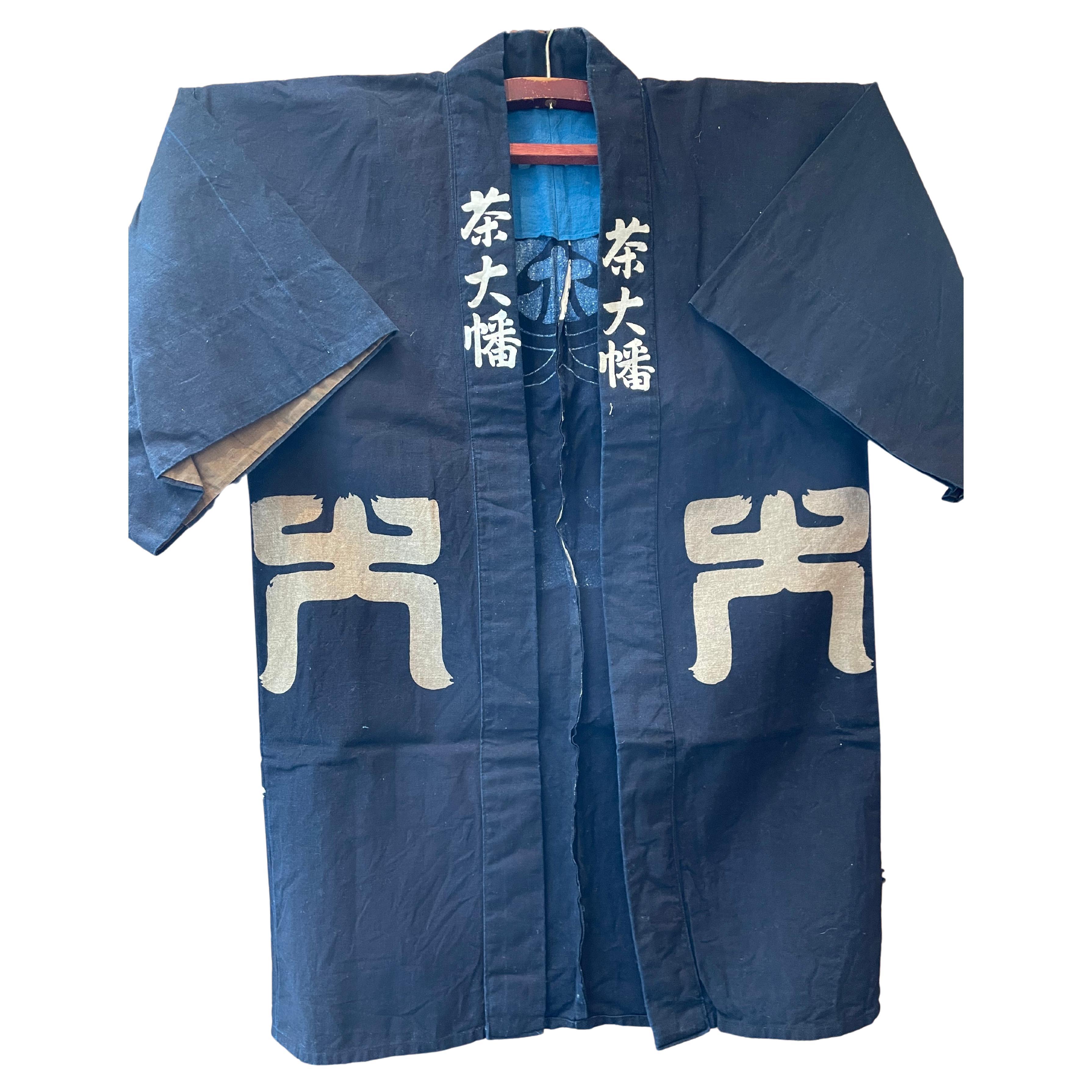
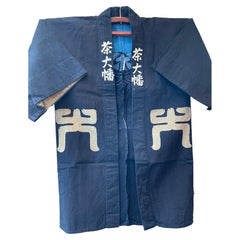
Japanese Antique Shirushi-Hanten Jacket Cotton
Oohata Chaten
1900s
Located in Paris, FR
This is a jacket with cotton which was made in Japan.
These kind of jackets are called Hanten in Japanese.
Hanten is a short jacket similar to a haori, but without a gusset. It is w...
Category
Early 20th Century Japanese Antiquities
Materials
Cotton
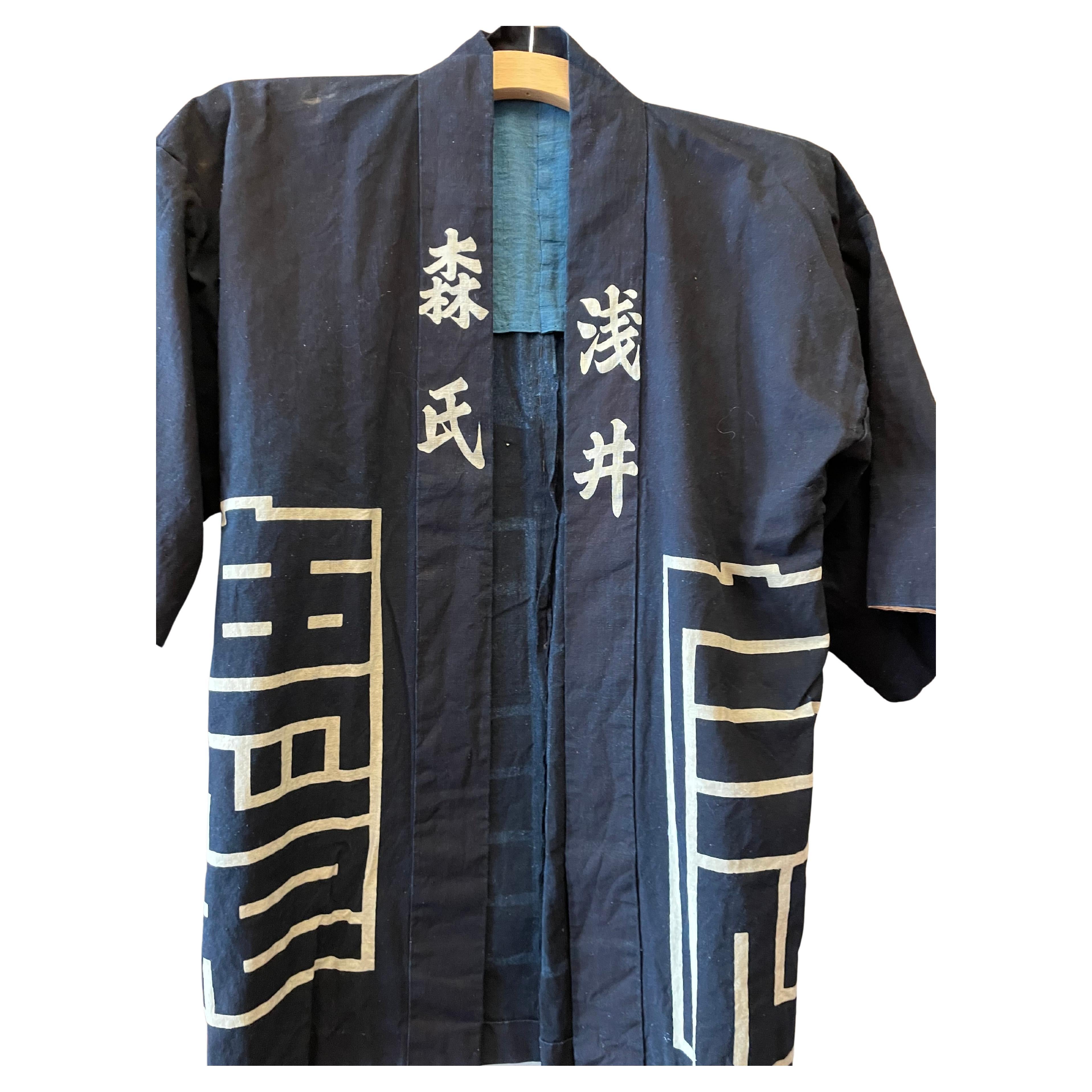
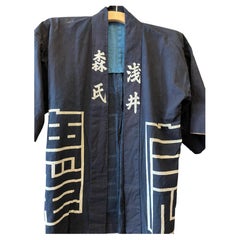
Japanese Vintage Hanten Cotton Jacket
Asai
1940s
Located in Paris, FR
Hanten is a type of traditional Japanese garment that is often referred to as a "short coat" or "jacket". `it has a loose, kimono-like design with a straight collar and is typically ...
Category
Mid-20th Century Japanese Showa Antiquities
Materials
Cotton
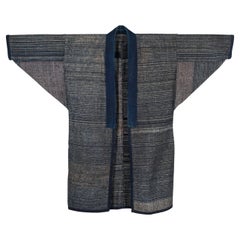
Antique Japanese Recycled Zanshiori Jacket
Located in Point Richmond, CA
Antique Japanese Recycled Zanshiori Jacket
Zanshi-ori cloth is woven from leftover cotton and silk threads, either from commercial kimono production or from home-produced recycled y...
Category
Early 20th Century Japanese Taisho Tribal Art
Materials
Cotton, Silk
Antique Japanese Recycled Saki-Ori Farmer’s Jacket
Located in Point Richmond, CA
Antique Japanese Recycled Saki-Ori Farmer’s Jacket
This early 20th C farmer’s jacket from the northern Japan sea coast region was strip woven from repurposed cotton scraps in a tech...
Category
Early 20th Century Japanese Taisho Tribal Art
Materials
Cotton
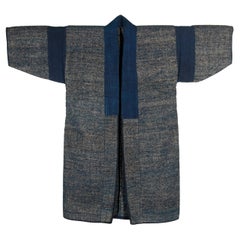
Antique Japanese Textile Art Campaign Jacket Jinbaori with Mon
Located in Atlanta, GA
Known as Jinabori during 16th century when warfare was common in feudal Japan, the sleeveless jacket was created to be worn outside of the armor by samurai warriors. In addition to s...
Category
Antique 19th Century Japanese Japonisme Textiles
Materials
Textile, Silk
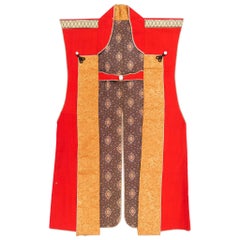
Japanese Brocade Noh Costume Kimono Robe Meiji Period
Located in Atlanta, GA
A Noh costume made from magnificent silk twill brocade woven with metallic gold threads circa 1930s. The robe is identified as "Atsuita", made for male actors in the Noh play. The luxuriant fabric has a deep blue background with golden interlocking hexagon pattern that resembles tortoise shells, the symbol of longevity. The motifs showcase three auspicious symbols in repetitive patterns: roundels of coiled dragon, phoenix and peony. The kimono robe...
Category
20th Century Japanese Meiji Textiles
Materials
Brocade, Silk