Items Similar to Unique Japanese Lacquer Maki-e Suzuribako with Woven Bamboo Cover with Tomobako
Want more images or videos?
Request additional images or videos from the seller
1 of 21
Unique Japanese Lacquer Maki-e Suzuribako with Woven Bamboo Cover with Tomobako
$7,800
£5,892.61
€6,757.55
CA$10,883.41
A$11,844.50
CHF 6,278.76
MX$142,498.32
NOK 79,634.79
SEK 72,860.25
DKK 50,484
About the Item
This Japanese suzuribako (ink box) of late Meiji Period (circa end of 19th century) is uncommon with its surface covered with woven basketry in chevron pattern. Once opened, the viewer is struck with a splendid Maki-e interior decoration in sharp contrast with the plain exterior. With masterful composition and in great and fine details, the decoration under the cover depicts a tranquil nocturnal scenery. Under a full moon among shifting clouds, a fenced thatched roof hut sits under a blooming camellia tree behind rock outcrops by the edge of the water. Hira and takamaki-e were used effectively with kirigane and silver inlays to create a poetic and dimensional image. The workmanship is superb, showing a full mastery of the techniques. The motif continues to the other side of the interior with a brush compartment that features two knotty pines on rocks, and a tray for a removable ink stone and a silver handled waterdrop (suiteki). Extraordinarily, the suzuibako retains a set of five writing instrument in gold lacquer finish and silver ornament. This includes a matching set of two brush pens, a paper knife and a paper pricker and an ink stick inscribed Kyukyodo, which was founded in 1663 and was the official stationer supplier to the imperial house from 1891 to 1945. It is uncommon for a suzuribako to retain its writing accoutrement. The rest of the interior and the base were finished in a dense "pear-skin" nashiji. The rim of the box is lined with a metal rim (appears to be zinc) that shows even aged patina.
The original tomobako storage box measures 10.5" x 8.5" x 4" and it retains two paper labels in Kanji indicating its content. It is translated as "Suzuribako with woven surface; Rock over Waves Internal Maki-e on Nashji background". There is also a red cotton pad for interior protection and a brocade wrapping cloth. A rare and complete set.
- Dimensions:Height: 1.75 in (4.45 cm)Width: 7.25 in (18.42 cm)Depth: 9.25 in (23.5 cm)
- Style:Japonisme (Of the Period)
- Materials and Techniques:
- Place of Origin:
- Period:
- Date of Manufacture:Late 19th-Early 20th Century
- Condition:Wear consistent with age and use. Fine condition with minor wear mostly on the edge and base corners. Aged patina and silver oxidation as expected. Lid is very slightly warped when fitting. Tomobako with overall wear due to age.
- Seller Location:Atlanta, GA
- Reference Number:1stDibs: LU945026996372
About the Seller
4.9
Platinum Seller
Premium sellers with a 4.7+ rating and 24-hour response times
Established in 2006
1stDibs seller since 2010
583 sales on 1stDibs
Typical response time: <1 hour
- ShippingRetrieving quote...Shipping from: Atlanta, GA
- Return Policy
More From This Seller
View AllJapanese Lacquer Maki-E Tiered Suzuribako and Ryoshibako
Located in Atlanta, GA
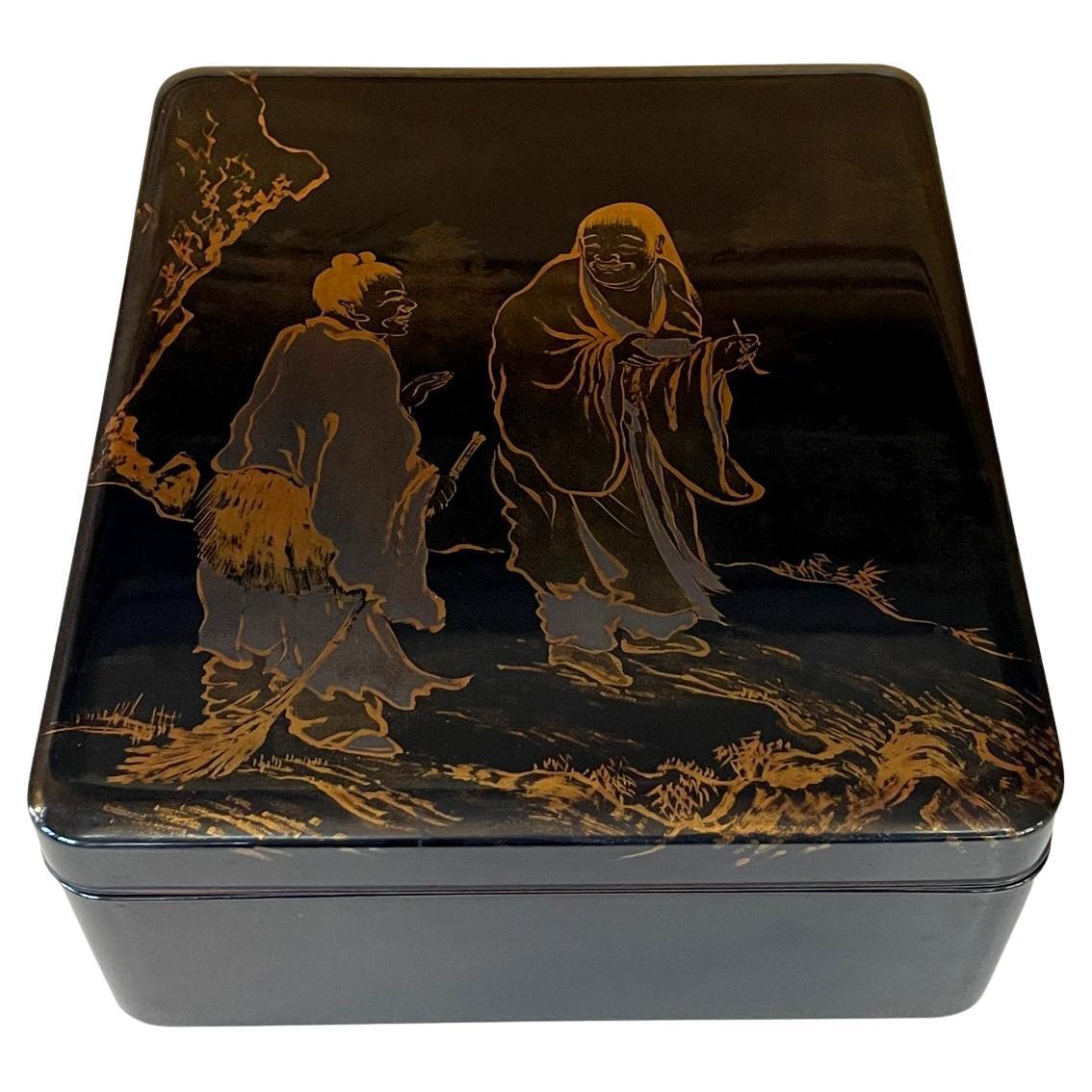
A Japanese roiro lacquer scholar combo box with an upper tier of inkstone box (Suzuribako) and a lower document box (Ryoshibako) circa 1910-30s (end of Meiji to Showa period). The high glossy box was beautifully decorated with an image of the famously eccentric Buddhist monks Hanshan and Shide (known in Japan as Kanzan and Jittoku). Often as a pair, they have been a popular motif in Japanese Zen painting...
Category
Vintage 1920s Japanese Meiji Lacquer
Materials
Stone, Metal
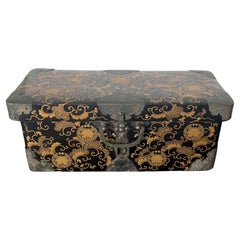
Japanese Lacquered Maki-e Fubako Edo Period
Located in Atlanta, GA
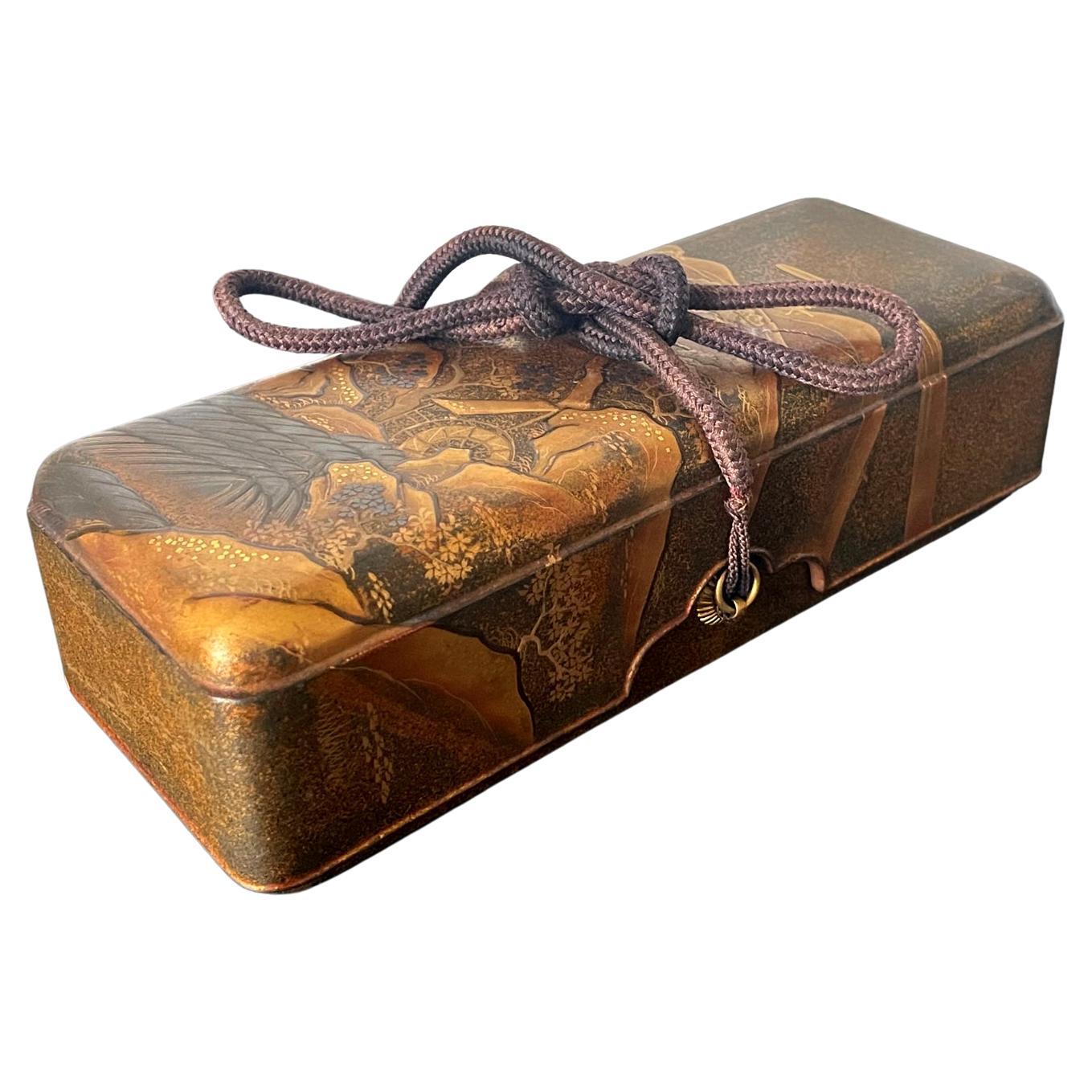
A Japanese lacquered wood fubako (a box used to store document or small scroll painting), circa second half of 19th century late Edo period. The rectangular box features an unusually deep lipped lid with slightly rounded corners, a conforming lower box that is almost entirely covered by the lid which has two bronze medallion rings with tasseled...
Category
Antique 19th Century Japanese Edo Lacquer
Materials
Wood, Lacquer
Japanese Antique Lacquer Maki-E Miniature Hasami-Bako with Copper Mounts
Located in Atlanta, GA
A Japanese lacquered box with lid in the shape of a miniature Hasami-Bako (traveling chest) circa late 18 to early 19th century of the Edo period....
Category
Antique Early 19th Century Japanese Japonisme Lacquer
Materials
Copper
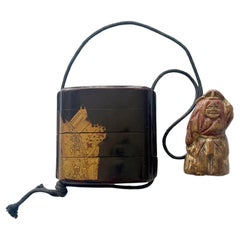
Japanese Lacquer Inro with Gold Maki-e and Carved Wood Netsuke Meiji Period
Located in Atlanta, GA
A Japanese four-case inro with a stringed carved wood netsuke circa 19th century. The inro has a near square form with rounded corners, The surface is decorated with gold hiramaki-e ...
Category
Antique 19th Century Japanese Meiji Lacquer
Materials
Wood, Lacquer
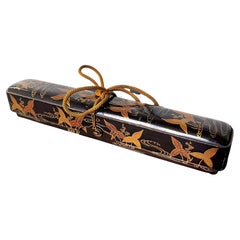
Japanese Lacquered Maki-E Fubako in Kodaiji Style
Located in Atlanta, GA
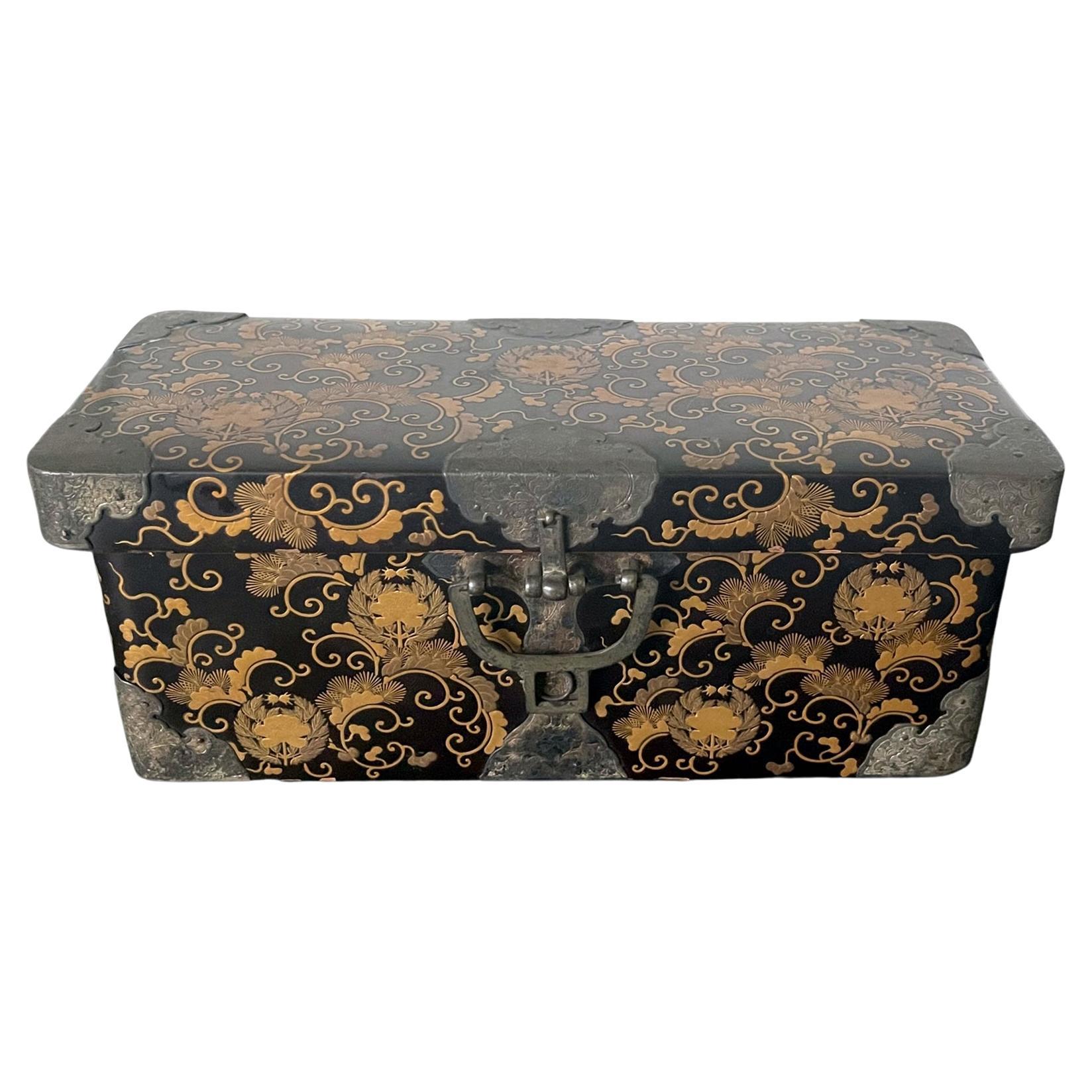
A rare Japanese lacquered wood fubako decorated in Kodaiji maki-e style circa early 17th century the beginning of the Edo period, possibly early toward the end of the Azuchi-Momoyama period. The rectangular, long and slim box features a deep lipped lid with slightly rounded corners, a conforming lower box with two bronze medallion rings with tasseled...
Category
Antique Early 17th Century Japanese Edo Lacquer
Materials
Wood, Lacquer
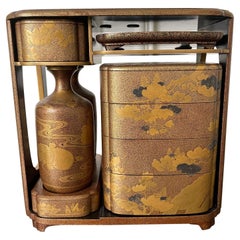
Japanese Maki-e Lacquerware Portable Picnic Set Sagejubako
Located in Atlanta, GA
Sagejubako is a portable picnic set that became popular in the early Edo period when an additional meal was added between breakfast and dinner. It normally consists of a carry case w...
Category
Antique 19th Century Japanese Japonisme Lacquer
Materials
Lacquer
You May Also Like
Japanese Tagasode (Whose Sleeves?) Lacquer Incense Box, Kobako, Meiji Period
Located in Austin, TX
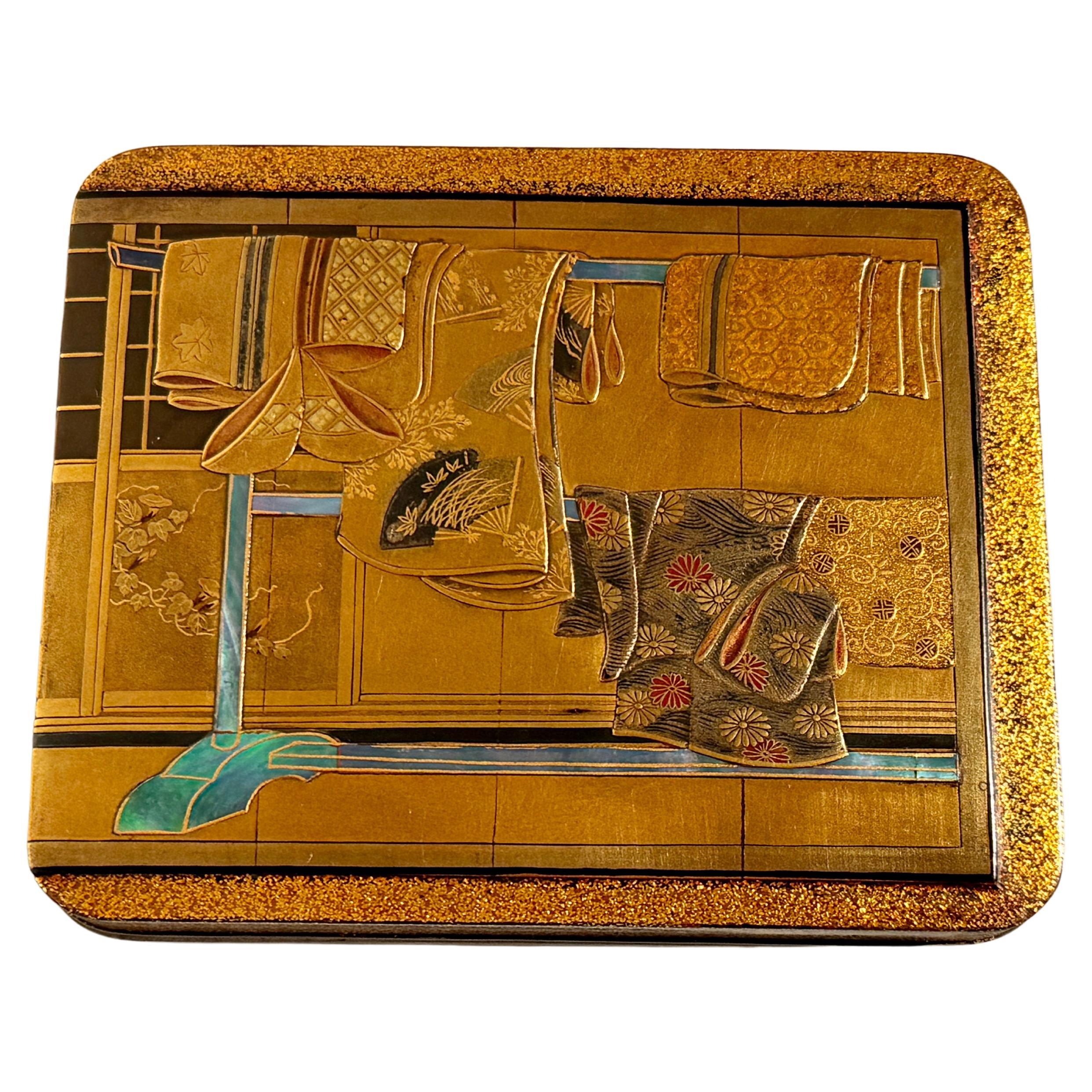
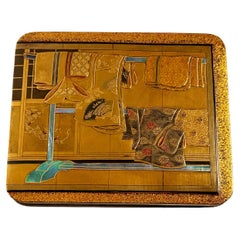
A fine and unusual Japanese lacquer box for incense accessories, kobako, featuring a tagasode (whose sleeves?) design, Meiji Period, circa 1900, Japan.
The exquisite box of simple rectangular shape worked in maki-e lacquer, taka-maki-e, and raden, all against a lush ground of gold nashiji. Fitted with silver rims.
The main decorative element of the box depicts a six panel folding screen, byobu, showing an interior scene with kimono strewn over a rack, a motif known as tagasode (whose sleeves), all in raised taka-maki-e lacquer and inlaid raden.
The screen depicts an intimate room with tatami mats on the floor and sliding shoji doors in the background. The foreground depicts a large clothing...
Category
Antique Early 1900s Japanese Meiji Lacquer
Materials
Silver
Japanese Meiji Lacquer Writing Set
Located in New Orleans, LA
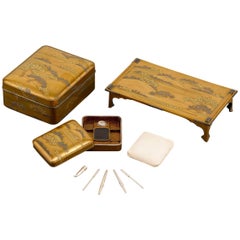
This remarkable Japanese portable writing set contains the instruments of sublime artistic expression. Also known as a yatate, this Meiji-period set i...
Category
Antique 19th Century Japanese Meiji Scholar s Objects
Materials
Stone
Japanese Edo Period Igarashi School Long Lacquer Box, Tanzaku-Bako
Located in Austin, TX
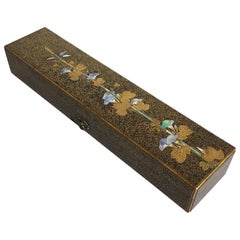
A stunning Japanese Edo period lacquer tanzakubako, box for poem cards, late 18th-early 19th century, Edo Period, Japan.
Attributed to the Igarashi School, this box is masterfully ...
Category
Antique Early 19th Century Japanese Edo Lacquer
Materials
Mother-of-Pearl, Lacquer
Japanese Lacquer Box with Bamboo, Plum, and Family Crest
Located in Hudson, NY
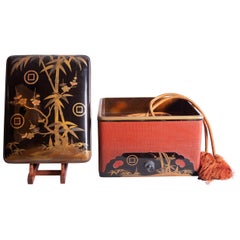
Made with heavy gold flakes and lacquered fabric on wood, with cutout heart designs. Has an interior tray, and comes with silk tasseled ties. (Does not come with presentation stand).
Category
Antique 19th Century Japanese Lacquer
Materials
Lacquer
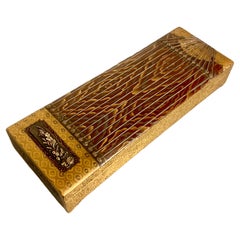
Japanese Lacquer Writing Box, Suzuribako, Edo Period, 18th Century, Japan
Located in Austin, TX
An exceptionally fine and unusual Japanese lacquer writing implements box, suzuribako, in the form of a zither, koto, Edo Period, 18th century, Japan. With a modern wood storage box,...
Category
Antique 18th Century Japanese Edo Lacquer
Materials
Gold, Silver, Copper
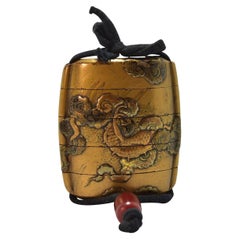
Japanese Inro with 4 Boxes in Gold Lacquer with Mat Kinji Background
Located in Marseille, FR
19th century Japanese inro with 4 boxes in gold lacquer with kinji mat background decorated in taka makiyé of gold of different tones. Lacquered wood siz...
Category
Antique 19th Century Japanese Japonisme More Asian Art, Objects and Furn...
Materials
Giltwood
More Ways To Browse
Paper Knife
Silver Antique Japanese Boxes Silver Boxes
Antique Hut
Antique Rattan And Bamboo
Bamboo Rattan Lacquered
Rattan Japan
Japanese Rattan Furniture
Antique Writing Instruments
Antique Ink Stone
Antique Brush Set
Antique Paper Knife
Japanese Suzuribako
Pen Knife
Chinese Brushes
Viewing Stone
Scholar Stone
Chinese Calligraphy Art
Calligraphy Brush