Want more images or videos?
Request additional images or videos from the seller
1 of 18
19th Century Chinese Qing Warrior Elephant Glazed Ceramic Incense Burner Pair
$995List Priceper set
About the Item
- Dimensions:Height: 14.5 in (36.83 cm)Width: 6 in (15.24 cm)Depth: 9 in (22.86 cm)
- Sold As:Set of 2
- Style:Qing (Of the Period)
- Materials and Techniques:
- Place of Origin:
- Period:
- Date of Manufacture:circa 1800s
- Condition:Wear consistent with age and use. Minor fading. Great original unrestored antique condition with nicely aged dark patina. Moderately wiped down, retaining dark buildup, highly desirable craquelure. Wear consistent with age and indicative of use.
- Seller Location:Forney, TX
- Reference Number:1stDibs: LU5977236463072
About the Seller
4.8
Platinum Seller
Premium sellers with a 4.7+ rating and 24-hour response times
Established in 2013
1stDibs seller since 2021
315 sales on 1stDibs
Typical response time: 1 hour
Authenticity Guarantee
In the unlikely event there’s an issue with an item’s authenticity, contact us within 1 year for a full refund. DetailsMoney-Back Guarantee
If your item is not as described, is damaged in transit, or does not arrive, contact us within 7 days for a full refund. Details24-Hour Cancellation
You have a 24-hour grace period in which to reconsider your purchase, with no questions asked.Vetted Professional Sellers
Our world-class sellers must adhere to strict standards for service and quality, maintaining the integrity of our listings.Price-Match Guarantee
If you find that a seller listed the same item for a lower price elsewhere, we’ll match it.Trusted Global Delivery
Our best-in-class carrier network provides specialized shipping options worldwide, including custom delivery.You May Also Like
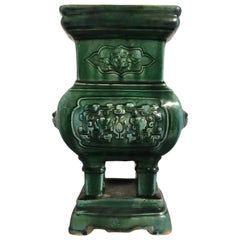
Chinese Qing Dynasty Green Glazed Incense Burner, Late 19th Century
Located in Austin, TX
A charming Chinese green glazed pottery censer or incense burner, Qing Dynasty, late 19th century. Now suitable for use as a jardiniere or vase.
The incense burner in glazed a deep green, in imitation of bronze models, and set on four tapered legs attached to a rectangular stand...
Category
Antique Late 19th Century Chinese Qing Planters, Cachepots and Jardinières
Materials
Pottery
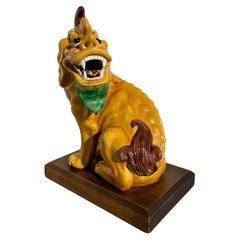
Chinese Yellow Glazed Mythical Beast, Xiezhi, Qing Dynasty, 19th Century, China
Located in Austin, TX
A fantastic and charming Chinese yellow glazed porcelain model of a mythical unicorn, xiezhi, Qing Dynasty, 19th century, China.
The xiezhi is a ...
Category
Antique Early 19th Century Chinese Qing Sculptures and Carvings
Materials
Porcelain, Wood
$3,600
H 16.25 in W 12 in D 8 in
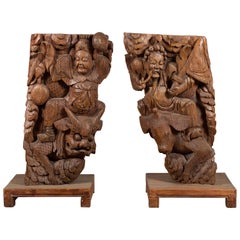
Pair of Qing 19th Century Hand Carved Wooden Temple Corbels with Warriors
Located in Yonkers, NY
A pair of Chinese Qing Dynasty hand carved temple corbels from the early 19th century, depicting warriors. Created in China during the early 19th centur...
Category
Antique 19th Century Chinese Qing Mounted Objects
Materials
Wood
$5,800 / set
H 30 in W 14 in D 6 in
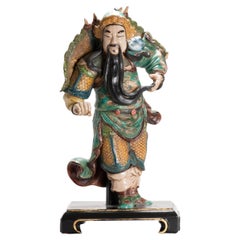
Antique Chinese Glazed Porcelain Roof Tile of a Warrior Figure, 19th C
Located in Amsterdam, Noord Holland
Chinese glazed porcelain roof tile of a warrior. The manufacture of glazed tiles was standardized in the Ming Dynasty and during the Qing Dynasty into the Republican Era, glazed tile...
Category
Antique 19th Century Chinese Qing Sculptures and Carvings
Materials
Porcelain
$1,819 Sale Price
45% Off
H 19.69 in W 0.04 in D 19.69 in
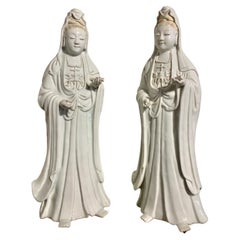
Pair Chinese White Glazed Guanyin, Qing Dynasty, 18th Century, China
Located in Austin, TX
A sublime and rare pair of Chinese white glazed porcelain figures of Guanyin, attributed to Tang Ying (1682 - 1756), Qing Dynasty, Qianlong Period, China.
This ethereal pair of white glazed porcelain figures depict the revered Buddhist Goddess of Mercy, Guanyin. Guanyin is portrayed standing, wearing heavy robes that drape beautifully around her figure. Bare feet peek out from under the hem of the robes. Her hair piled in a high chignon and covered by a cowl. The treatment of the hair, finely textured, unglazed, and with remnants of darker pigment, is typical of works by Tang Yin (1682 - 1756), who was the head of the imperial porcelain works at Jingdezhen.
Guanyin's beatific face is set in a serene smile, with a small, flat nose, and downcast, heavily lidded, almond shaped eyes. A simple beaded necklace graces her chest. Her hands held out, and may have once held attributes.
The hands were originally removable, but have since been permanently attached.
The figures crafted of a fine porcelain and glazed all over in a supple white glaze.
One figure bears a label from the Rafi Mottahedeh collection to the back.
Provenance:
Chinese Porcelain Company...
Category
Antique 18th Century Chinese Qing Ceramics
Materials
Porcelain
$21,000 / set
H 13.25 in W 5 in D 4 in
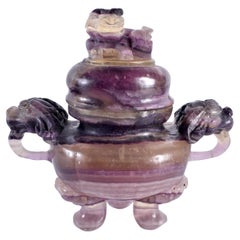
A Chinese carved amethyst incense censor and cover, Qing Dynasty, 19th C
Located in London, GB
A Chinese amethyst carved censor and cover,
Qing Dynasty, 19th century.
the rounded body carved with a pair of dragon mask handles, raised on thr...
Category
Antique 19th Century Chinese Sculptures and Carvings
Materials
Amethyst
$1,158
H 5.52 in W 5.52 in D 5.52 in
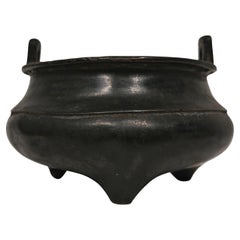
Chinese Antique Bronze Incense Burner
Located in Beograd, RS
In this listing you will find an Antique Chinese miniature 'twisted handle' bronze incense burner, likely from the late Ming to early Qing Dy...
Category
Antique 19th Century Chinese Chinese Export Sculptures and Carvings
Materials
Bronze
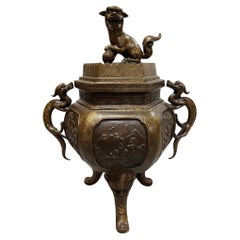
Early 20th Century Large Chinese Bronze Censer Incense Burner
Located in Stamford, CT
Early 20th Century large bronze censer on three legs with a foo dog sitting on top and Chinese dragons on each side. Censers also known as incense burners, have a long history in Chi...
Category
Early 20th Century Chinese Sculptures and Carvings
Materials
Bronze
Fine Pair of Antique Chinese Cast Bronze Foo Lion Incense Burners
Located in Bridgeport, CT
Fabulous Antique Chinese Foo Lion incense burners originally purchased in Bangkok, Thailand. Patinated bronze with cloud-like tails and fierce open...
Category
Antique 19th Century Asian Qing Sculptures and Carvings
Materials
Bronze
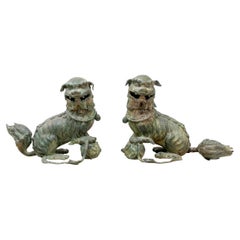
$10,900 / set
H 13 in W 17 in D 9 in
Pair of 19th Century Chinese Qing Dynasty Hand-Carved Wooden Temple Corbels
Located in Yonkers, NY
A pair of Chinese Qing Dynasty period hand-carved temple corbels from the 19th century, mounted on black bases. Created in China during the Qing Dynasty...
Category
Antique 19th Century Chinese Qing Figurative Sculptures
Materials
Wood
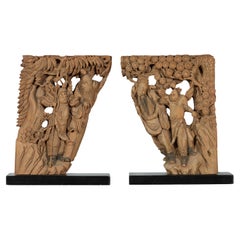
$8,000 / set
H 27.5 in W 22 in D 7 in
More From This Seller
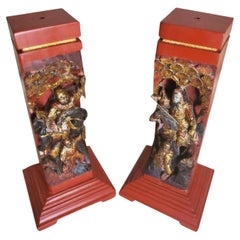
View AllPair of Vintage Chinese Figural Architectural Element Incense Burner Stand
Located in Forney, TX
A wonderful pair of antique Chinese red lacquer and gilt gold painted hand carved wooden figural architectural elements turned incense burner pillars. Highly detailed carvings featuring Asian pine tree motif representing longevity, horseback rider believed warrior Guan Yu...
Category
Early 20th Century Asian Sculptures and Carvings
Materials
Wood, Paint
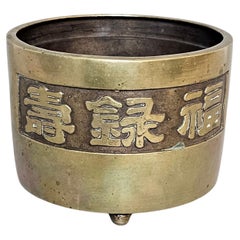
Antique Chinese Qing Bronze Censer Incense Burner Cachepot
Located in Forney, TX
A high quality Qing Dynasty (1636-1912) Chinese bronze brazier censer (today use as an incense burner - cachepot planter - decorative table box) encircled with traditional characters, rising on three ball feet, nicely patinated. Functional and decorative, it's a superb example of antique Asian...
Category
Antique 19th Century Chinese Qing Metalwork
Materials
Bronze
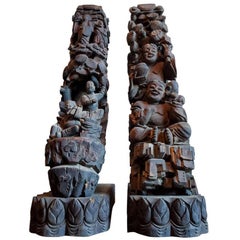
19th Century Chinese Temple Architectural Corbel Carved Sculpture Pair
Located in Forney, TX
A majestic pair of antique architectural salvaged Chinese temple corbels, now mounted as one-of-a-kind wooden sculptures on custom floor standing display pedestal stands.
Originally commissioned for an important religious temple in China, the impressive large scale wall bracket corbels were notoriously difficult as they had to serve as both highly decorative temple ornaments and structural building elements used to support the weight of a wall.
Hand-crafted in the early 19th century, smilarly styled design, each exceptionally hand carved, sculpted, and painted by highly trained artisans. Profusely carved and decorated, featuring very fine quality high relief work throughout, extensive bas relief, pierced openwork, rich carvings and intricate incised detailing, depicting various Chinese folk religion figures and imagery.
Rising on bespoke handmade stands, consistenting of sturdy rectangular shaped thick plank plinth base embellished with foliate carvings, held upright by turned column single support.
Rich in culture and history, interesting, unusual, highly decorative, whimsical and artistic, sure to add sophisticated elegance, rustic character, color, space, texture and lots of visual interest.
Dimensions, largest (approx):
Each: 32.5" H, 19" W, 7.25" D.
Please note, the objects were sourced and transported both legally and ethically, retaining partial original red wax export seal to top.
Display the three Sanxing, in their iconic representation as three, old, bearded, wise men, which dates back to the Ming dynasty, when the Gods of the three stars were represented in human form for the first time. One panel having two monumental smiling figures with hand painted eyes and tongue, the other fragment depicting four figures, seated and standing, likely Immortals, Gods, Shen deity, and other characters from ancient Chinese mythology and folklore. Both pieces with elaborate lotus and pine tree motif, a powerful symbol of wisdom and longevity.
Sanxing figures are an important part of Asian culture. Statues of these three Gods...
Category
Antique 19th Century Chinese Chinese Export Architectural Elements
Materials
Wood, Paint
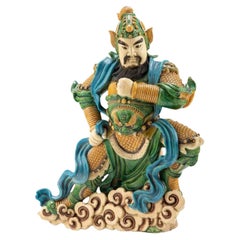
Qing Dynasty Chinese Sancai Temple Guardian Figure
Located in Forney, TX
A large antique Chinese glazed Sancai pottery temple guardian figure, designed to ward off evil spirits and protect the owners tumb. Hand crafted, excep...
Category
Antique 18th Century Sculptures and Carvings
Materials
Pottery
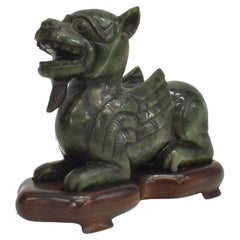
Qing Dynasty Chinese Carved Green Jade Chilong Dragon Sculpture
Located in Forney, TX
A magnificent Chinese carved spinach green jade chilong dragon sculpture, resting on fitted hardwood stand.
Rich deep bright green color with molten shades of lighter pale green, exceptionally carved, with intricate detail throughout. The mythical beast lying ready on all four, head raised, mouth ajar with teeth exposed, wings by its side, spiral scroll incised on hind legs.
Provenance:
Estate of Ali A. Abssi (1934-2020) and Florence Hall Abssi (1919-2014), founders of the Ishtar Gate...
Category
Antique 19th Century Sculptures and Carvings
Materials
Jade
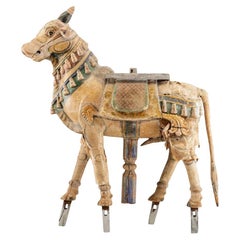
19th Century Hindu Nandi Temple Guardian, Architectural Ornament
Located in Forney, TX
A monumental Hindu Nandi temple gate-guardian architectural ornament, born in India, dating to the 19th century, hand carved and painted, richly detailed, polychrome decorated, the wooden sculpture depicting Nandi, a sacred bull, gatekeeper, and vahana religious deity figure.
Provenance:
Acquired from The Neiman Marcus Corporate Art Collection. Details below.
Dimensions: (approx)
49.5" x 43" x 12"
An important religious folk art work, the Nandi is of carved wood and gessoed cloth, then hand-painted. In Hindu religion, Nandi is the mythical mount of Shiva. The four legs represent truth, righteousness, peace and love.
More than a means of conveyance, Nandi is considered Shiva's constant companion on all his travels, so much so that in any temple dedicated to Shiva, there is a sculpture of Nandi. This symbol is a deity in its own right, and in India there are temples dedicated exclusively to Nandi.
In Hindu symbolism, the bull represents both strength and ignorance. The white or light color of the bull symbolizes purity and justice. Symbolically, the seated Nandi towards sanctum in Shiva temples, represents an individual jiva (soul) and the message that the jiva should always be focused on the Parameshwara. From the yogic perspective, Nandi is the mind dedicated to Shiva, the absolute. In other words, to understand and absorb light, the experience, and the wisdom is Nandi, which is the guru within. The fact that Shiva uses it as a mount symbolizes how this divine figure removes ignorance while instilling strength and wisdom.
A superb example, the life size work is in great overall shape, and presents wonderfully, having beautifully aged patina over the whole, highly desirable original, worn, rustic, naturally distressed, chippy paint, craquelure finish, that's delicate, and enhances the artistic antique character and rich historic depth.
Detailed Condition Report:
Fragile / delicate by design. Loss to one ear, age related checking and separation to carvings, fabric to hind quarters is released and tattered with minor loss, rubbing to paint throughout with wear indicative of age and use; later grey painted mounting blocks are attached to back and hooves.
White glove in-home shipping/delivery available.
Pickup available near Dallas, Texas
Additional Provenance:
Property from the Neiman Marcus Collection. Acquired from Heritage Auction, Design District Gallery, Dallas, Texas.
From The Dallas Morning Newspaper; April 12th, 2021
Neiman Marcus is selling some of its history and valuables that have been displayed and stored for decades as part of the luxury retailer’s corporate art collection.
The Neiman Marcus corporate art collection dates back to 1951, when Stanley Marcus (1905-2002), a life long avid art collector, purchased Mariposa, a large mobile by Alexander Calder and started a long tradition of buying original artwork for new stores as they opened. The Mariposa sold at a Sotheby’s auction last month fetching $18.2 million. The items are being offered through Sotheby's auction house, NYC, New York and Heritage Auction, Dallas, Texas.
Many of the pieces were personally collected by Stanley Marcus from the 1960s through the 1980s.
Some of the pieces are from corporate spaces, stores and the company’s archives, among the items are important antique textiles, tribal robes...
Category
Antique 19th Century Indian Folk Art Sculptures and Carvings
Materials
Gesso, Wood, Paint
Still Thinking About These?
All Recently ViewedMore Ways To Browse
Elephant Carving
Chinese Warrior
Temple Guardian
Guardian Statues
Tomb Figure
Chinese Carving Polychrome
Antique Ceramic Elephants
Foo Dog Statue
Chinese Roof Tiles
Antique Chinese Roof Tile
Asian Warrior Sculpture
Chinese Warrior Sculpture
Mantle Sculpture
Sancai Figure
Sancai Tomb
Sancai Roof Tile
Tomb Attendant
Elephant Incense Burner