Items Similar to Antique Ming Dynasty Chinese Earthenware Horse Sculpture Míngqì Tomb Figure
Want more images or videos?
Request additional images or videos from the seller
1 of 10
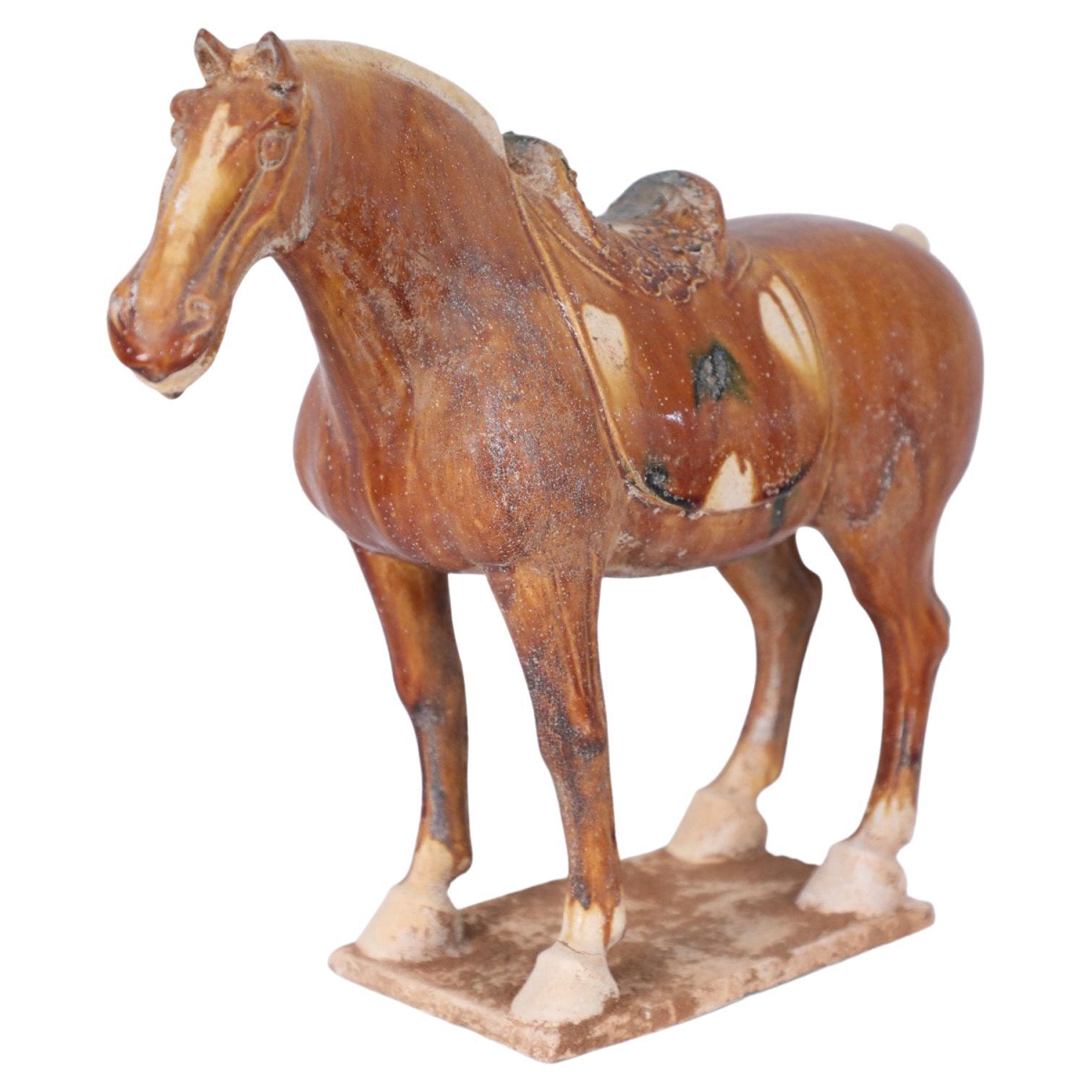
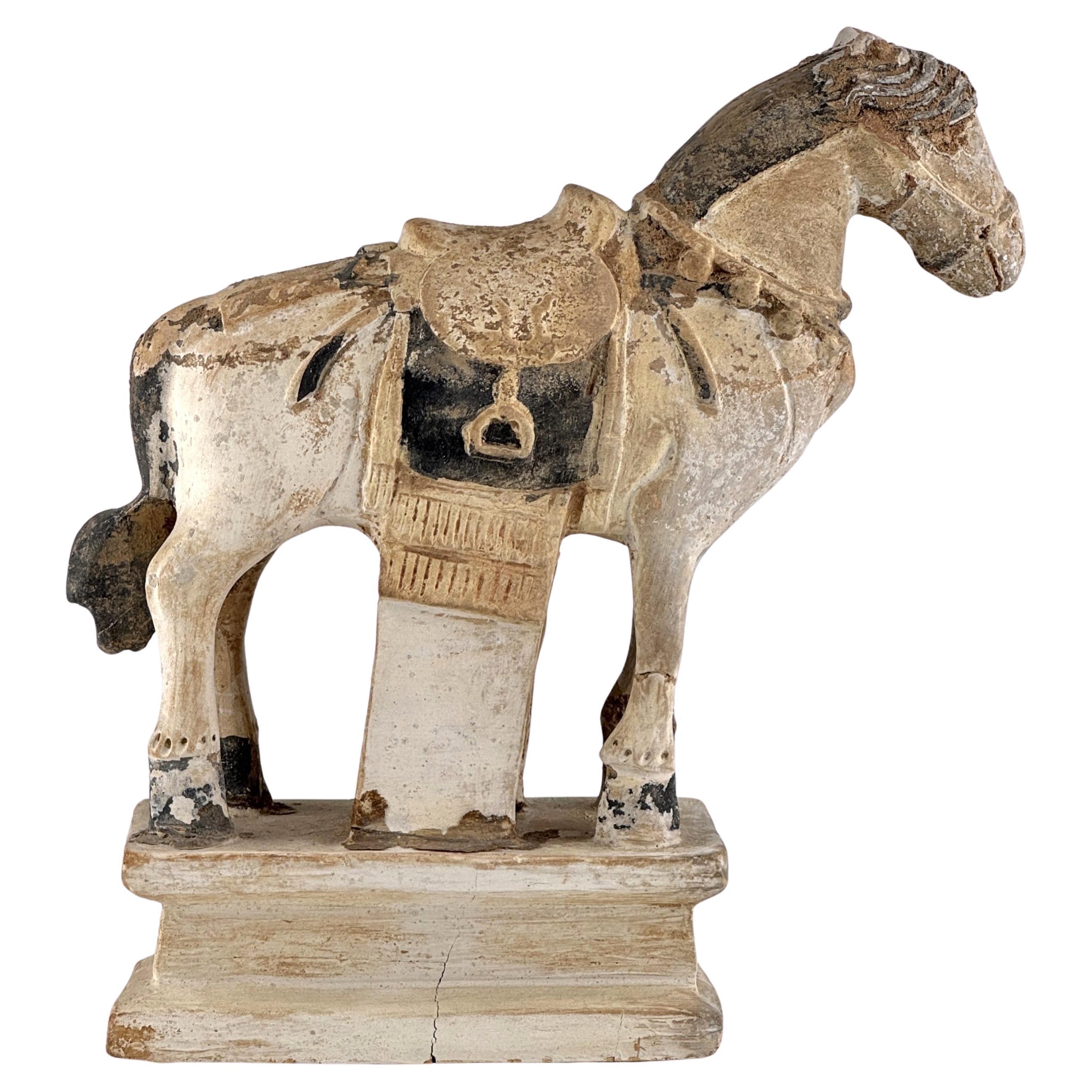
Antique Ming Dynasty Chinese Earthenware Horse Sculpture Míngqì Tomb Figure
$6,500
£4,918.86
€5,639.82
CA$9,093.51
A$9,898.52
CHF 5,250.66
MX$119,165.80
NOK 66,669.54
SEK 61,014.56
DKK 42,122.38
About the Item
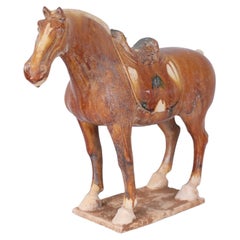
A scarce 600 year old (approx) Chinese pottery Ming Dynasty (1368-1644) large glazed earthenware míngqì tomb figure, modeled as horse sculpture with saddle, stirrups, and integral base.
This hand-crafted Chinese earthenware horse is a type of centuries-old burial figurine known as míngqì. Depicting the pleasures of daily life, míngqì figurines were offerings to one's spirit to ensure comfort and special treatment in the afterlife. Míngqì often take the shape of figural attendant servants, dancers, musicians, warriors, concubines, and livestock. Although míngqì have been constructed of wood and terracotta / clay earthenware pottery since as early as the Han dynasty, intact forms are quite rare, especially of this large size and proportion, making this horse burial figure an extraordinary find!
Dimensions: (approx)
15" Tall, 12" Wide, 5" Deep
A superb museum quality example, the horse statue is in excellent original antique condition, with beautifully aged warm patina, minor rubbing and small fissure to back of body, minimal wear commensurate with age, use, handling, and exposure.
Provenance / Acquisition:
Acquired from the highly reputable auction house, J. Garrett Auctioneers, Dallas, Texas. Turtle Creek
Dallas Estates catalog. Garrett was pleased to present the contents of a fine Turtle Creek estate, as well as selections from the collection of beloved Dallasite, Jane Akin Brasch. Property seized from JMJ Development, the Dallas development firm controlled by Tim Barton and set to become the first Mandarin Oriental hotel in Dallas will also be offered in this two-day auction. Highlights include period antiques, fine art, notable sculpture, sterling silver, fine jewelry and designer handbags
- Dimensions:Height: 15 in (38.1 cm)Width: 12 in (30.48 cm)Depth: 5 in (12.7 cm)
- Style:Ming (Of the Period)
- Materials and Techniques:
- Place of Origin:
- Period:
- Date of Manufacture:1368-1644 A.D.
- Condition:Wear consistent with age and use. Minor fading. A superb museum quality example, the horse statue is in excellent original antique condition, with beautifully aged warm patina, minor rubbing and small fissure to back of body, minimal wear commensurate with age, use, handling, and exposure.
- Seller Location:Forney, TX
- Reference Number:1stDibs: LU5977239594502
About the Seller
4.8
Platinum Seller
Premium sellers with a 4.7+ rating and 24-hour response times
Established in 2013
1stDibs seller since 2021
317 sales on 1stDibs
Typical response time: 1 hour
- ShippingRetrieving quote...Shipping from: Forney, TX
- Return Policy
More From This Seller
View AllLarge Whimsical Antique Hand Carved Wooden Horse Sculpture
Located in Forney, TX
A large antique hand carved wooden horse sculpture on stand. Most likely from Southeast Asia, (Indonesian, Burmese, Thai) early 20th c...
Category
Early 20th Century Folk Art Sculptures and Carvings
Materials
Wood
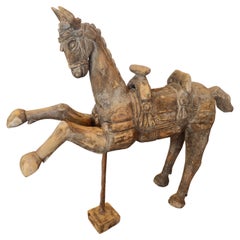
19th Century Hindu Nandi Temple Guardian, Architectural Ornament
Located in Forney, TX
A monumental Hindu Nandi temple gate-guardian architectural ornament, born in India, dating to the 19th century, hand carved and painted, richly detailed, polychrome decorated, the wooden sculpture depicting Nandi, a sacred bull, gatekeeper, and vahana religious deity figure.
Provenance:
Acquired from The Neiman Marcus Corporate Art Collection. Details below.
Dimensions: (approx)
49.5" x 43" x 12"
An important religious folk art work, the Nandi is of carved wood and gessoed cloth, then hand-painted. In Hindu religion, Nandi is the mythical mount of Shiva. The four legs represent truth, righteousness, peace and love.
More than a means of conveyance, Nandi is considered Shiva's constant companion on all his travels, so much so that in any temple dedicated to Shiva, there is a sculpture of Nandi. This symbol is a deity in its own right, and in India there are temples dedicated exclusively to Nandi.
In Hindu symbolism, the bull represents both strength and ignorance. The white or light color of the bull symbolizes purity and justice. Symbolically, the seated Nandi towards sanctum in Shiva temples, represents an individual jiva (soul) and the message that the jiva should always be focused on the Parameshwara. From the yogic perspective, Nandi is the mind dedicated to Shiva, the absolute. In other words, to understand and absorb light, the experience, and the wisdom is Nandi, which is the guru within. The fact that Shiva uses it as a mount symbolizes how this divine figure removes ignorance while instilling strength and wisdom.
A superb example, the life size work is in great overall shape, and presents wonderfully, having beautifully aged patina over the whole, highly desirable original, worn, rustic, naturally distressed, chippy paint, craquelure finish, that's delicate, and enhances the artistic antique character and rich historic depth.
Detailed Condition Report:
Fragile / delicate by design. Loss to one ear, age related checking and separation to carvings, fabric to hind quarters is released and tattered with minor loss, rubbing to paint throughout with wear indicative of age and use; later grey painted mounting blocks are attached to back and hooves.
White glove in-home shipping/delivery available.
Pickup available near Dallas, Texas
Additional Provenance:
Property from the Neiman Marcus Collection. Acquired from Heritage Auction, Design District Gallery, Dallas, Texas.
From The Dallas Morning Newspaper; April 12th, 2021
Neiman Marcus is selling some of its history and valuables that have been displayed and stored for decades as part of the luxury retailer’s corporate art collection.
The Neiman Marcus corporate art collection dates back to 1951, when Stanley Marcus (1905-2002), a life long avid art collector, purchased Mariposa, a large mobile by Alexander Calder and started a long tradition of buying original artwork for new stores as they opened. The Mariposa sold at a Sotheby’s auction last month fetching $18.2 million. The items are being offered through Sotheby's auction house, NYC, New York and Heritage Auction, Dallas, Texas.
Many of the pieces were personally collected by Stanley Marcus from the 1960s through the 1980s.
Some of the pieces are from corporate spaces, stores and the company’s archives, among the items are important antique textiles, tribal robes...
Category
Antique 19th Century Indian Folk Art Sculptures and Carvings
Materials
Gesso, Wood, Paint
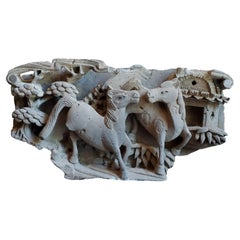
Antique Asian Temple Stone Relief Carved Architectural Element
Located in Forney, TX
A magnificent, rare, one of a kind, ancient Asian temple stone architectural panel, likely frieze fragment. Born in Asia, pre-18th century, most likely mu...
Category
Antique 18th Century Asian Ming Religious Items
Materials
Stone
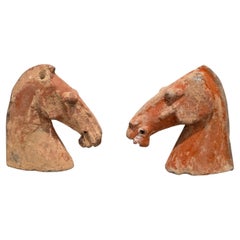
Pair of Antique Chinese Han Dynasty Pottery Red Horse Head Funerary Tomb Figures
Located in Forney, TX
A 2000 year old pair of similarly styled antique Chinese pottery horse heads dating to the Han dynasty (206 BC-AD 220)
Large authentic painted grey clay terracotta sculptural tomb objects, one with red pigment, one with red over white slip decoration, both crisply molded, carved and detailed.
These finely carved horse head funerary figures feature excellent attention to detail and realistic characteristics, moldeled with an upright mane, the wooden ears missing, likely long deteriorated, a normal and expected feature considering the age.
The Han Dynasty horse head...
Category
Antique 15th Century and Earlier Chinese Han Animal Sculptures
Materials
Clay, Earthenware
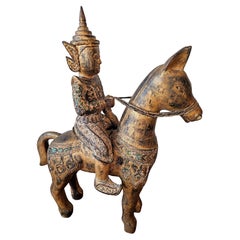
Large Southeast Asian Burmese Thai Jeweled Giltwood Figure On Horse Sculpture
Located in Forney, TX
A large and most impressive Southeast Asian carved giltwood figure of a horse and mounted rider.
Early 20th Century, likely from Burma (present day Myanmar) or Thailand, possibly Hi...
Category
Early 20th Century Southeast Asian Folk Art Sculptures and Carvings
Materials
Metal
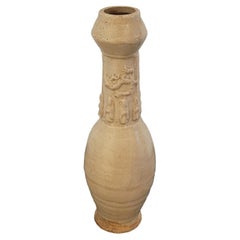
Antique Chinese Glazed Ceramic Song Dynasty Style Funerary Urn
Located in Forney, TX
Antique Chinese Qingbai ware late Southern Song dynasty (960 to 1279) / Yuan dynasty (1271 to 1368) style funerary urn.
High-quality glazed ceramic garlic head vasiform vessel, dec...
Category
Antique 19th Century Chinese Ceramics
Materials
Ceramic
You May Also Like
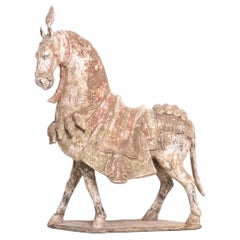
China 549-577 AD Northern Qi Dynasty Ancient Caparisoned Horse in Earthenware
Located in Miami, FL
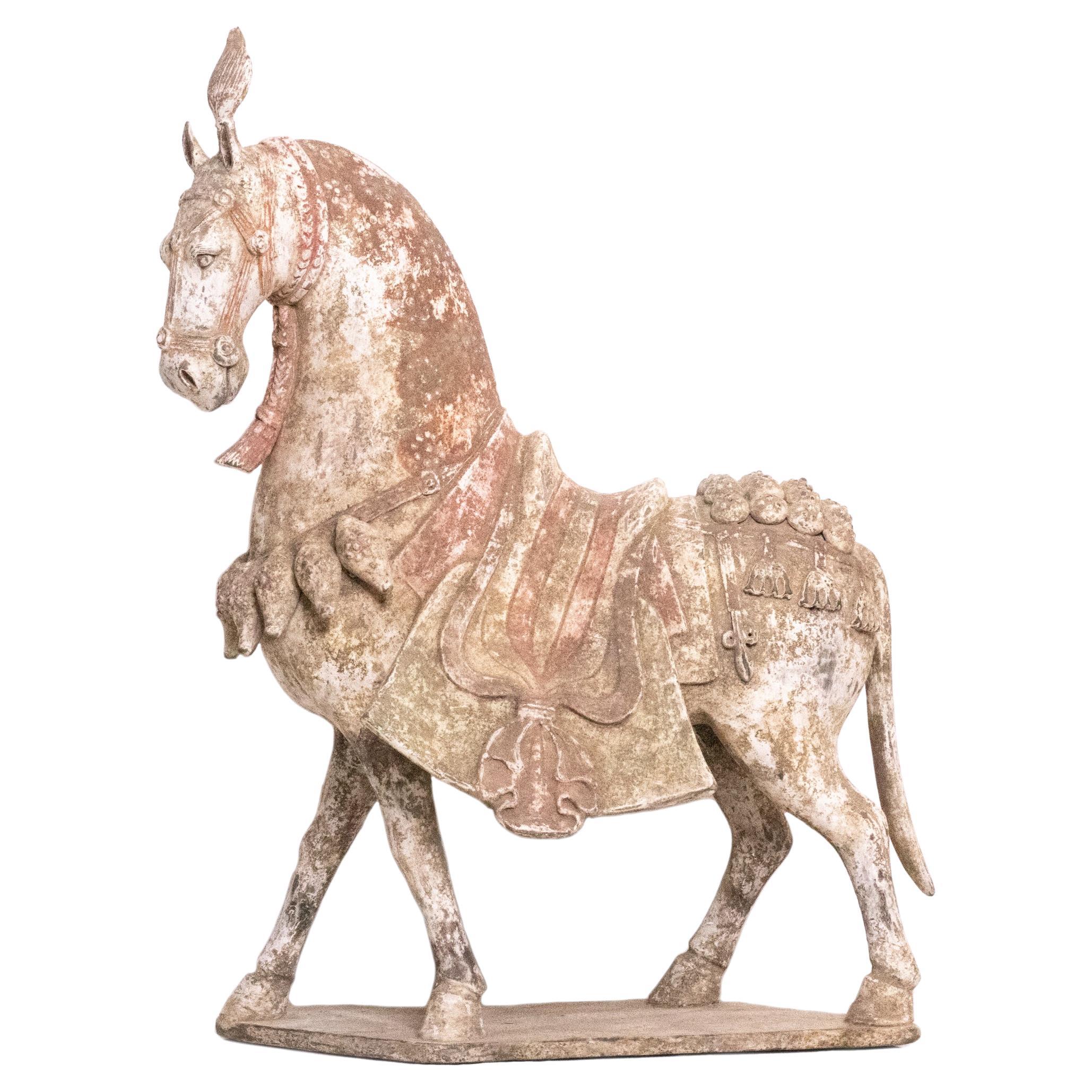
Extremely rare Chinese pottery caparisoned horse from the Northern Qi region.
A beautiful large sculptural piece, created in China during the Northern Qi dynasty period, between the 549 and 577 AD. This horse statue is extremely finely modeled of earthenware pottery, standing in a very elegant and majestic position striding on a trapezoidal shaped base.
The animal has a gracefully arched neck to the left looking forward and its extremely well modeled. The head is adorned with a large detailed tassels of plumes and the body is embellished with a beautiful saddle and intricate harnesses. The trapping around the chest and rump is adorned with elaborated tassels and the straps are accented with multiples florets and bosses in high relief. Decorated with dotted and circles patterns.
The surface is treated with applications of natural color pigments such; red, white and others.
Has a measurements of 435 mm by 319 mm by 243 mm (17.10 x 12.55 x 9.55 Inches) (43.5 x 31.9 x 24.3 Cm).
Northern Qi, was the successor state of the Chinese Xianbei state of Eastern Wei...
Category
Antique 15th Century and Earlier Chinese Archaistic Antiquities
Materials
Earthenware, Clay, Paint
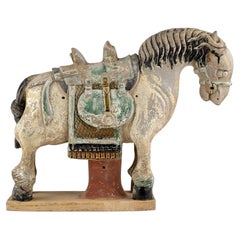
Ming Period Large Pottery Horse with Saddle (15-16th Century)
Located in seoul, KR
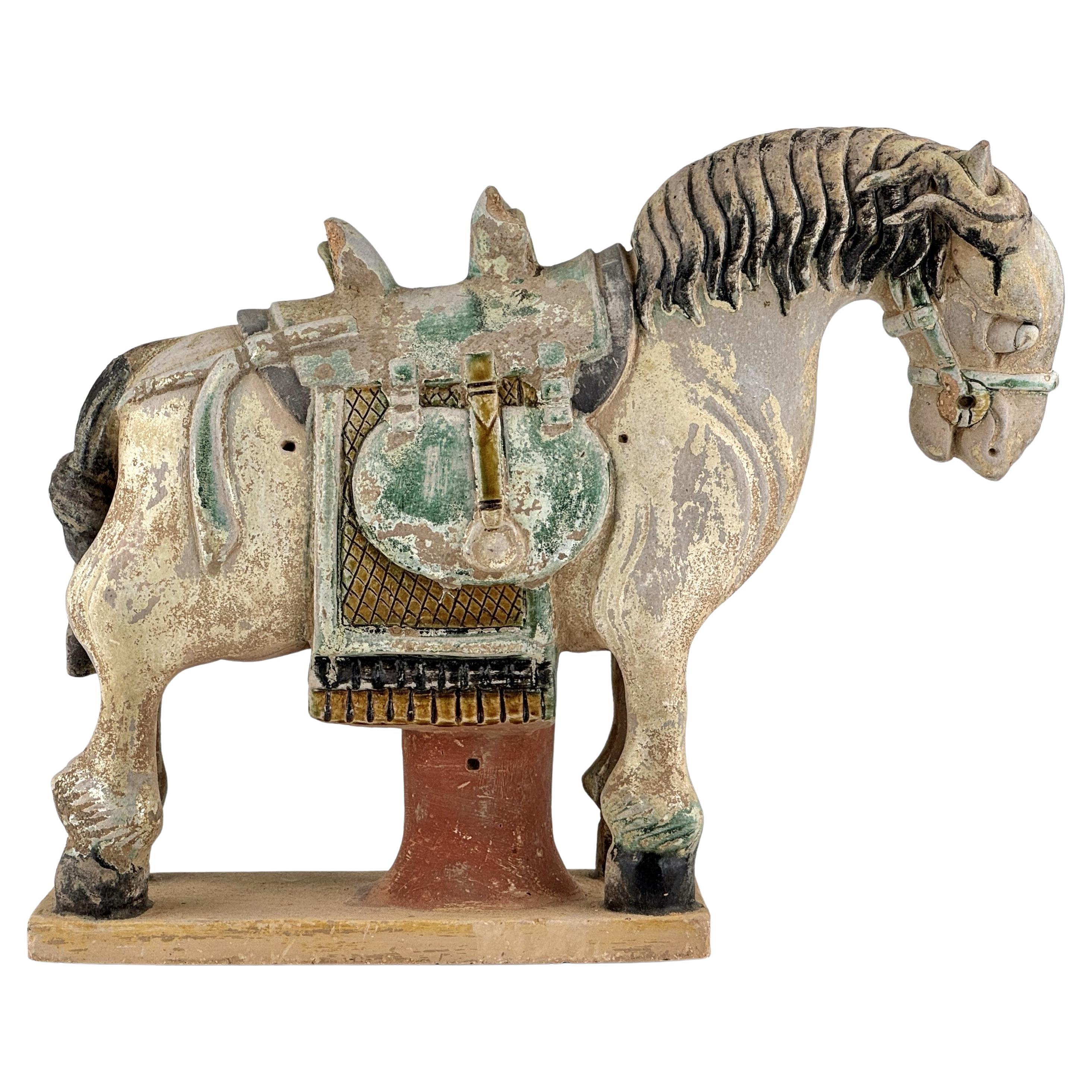
The figure stands on a rectangular base. The horse is depicted in a poised stance, with strong, muscular legs and a slightly bowed head. The mane is carefully sculpted with deep, flowing grooves, adding a dynamic texture to the piece. The head features expressive details, including a well-defined muzzle, flared nostrils. The bridle and harness are delicately painted in faded green, contrasting against the creamy beige body. The saddle is adorned with intricate details, including decorative tassels and a textured pattern, indicative of the elaborate tack used in the Ming period.
Traces of original polychrome pigments in green, black, and ochre remain on the surface, hinting at the sculpture’s once-vibrant appearance. The weathered patina and areas of flaking paint add to its historical authenticity, reflecting centuries of age. The overall craftsmanship and detailing exemplify the Ming Dynasty’s refined ceramic artistry, making this piece a remarkable representation of of asian culture during this period.
Period: Ming Dynasty
Medium: Green, black, and ochre glazed Pottery
Type: Figure
Condition : Good(chips on the upper saddle.)
Provenance : Acquired in late 1990s from Hongkong
Reference : Asian Civilisations Museum - Accession No. C-1384 / 1994-00441 - Ming Dynasty Figure of Horse
(Type : Closely Related)
* Ming Dynasty Glazed Pottery Figures
Ming Dynasty glazed pottery figures are renowned for their bold color palette, intricate detailing, and lifelike forms, distinguishing them from earlier traditions. These figures, which depict officials, warriors, animals, and mythical creatures, are characterized by high-gloss lead-based glazes in green, amber, ochre, and sancai (three-color) combinations. The thickly applied glaze pools in recesses, creating depth and enhancing sculptural details. With dynamic postures, expressive facial features, and meticulously rendered drapery, these figures reflect the period’s advancement in ceramic craftsmanship, offering a greater sense of movement and realism compared to the rigid and stylized forms of earlier dynasties.
A defining characteristic of Ming glazed pottery is its elaborate surface detailing, often achieved through raised relief elements and contrasting glazes. Equestrian figures, for example, feature carefully sculpted saddles, harnesses, and decorative embellishments, while human figures are adorned with intricate robes and headdresses. The large scale of these tomb figures, often more imposing than those from previous periods, underscores the increasing importance of funerary art during the Ming era. Unlike later Qing Dynasty figures...
Category
Antique 15th Century and Earlier Hong Kong Ming Antiquities
Materials
Pottery
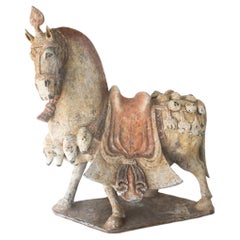
China 549-577 AD Northern Qi Dynasty Ancient Caparisoned Horse In Earthenware
Located in Miami, FL
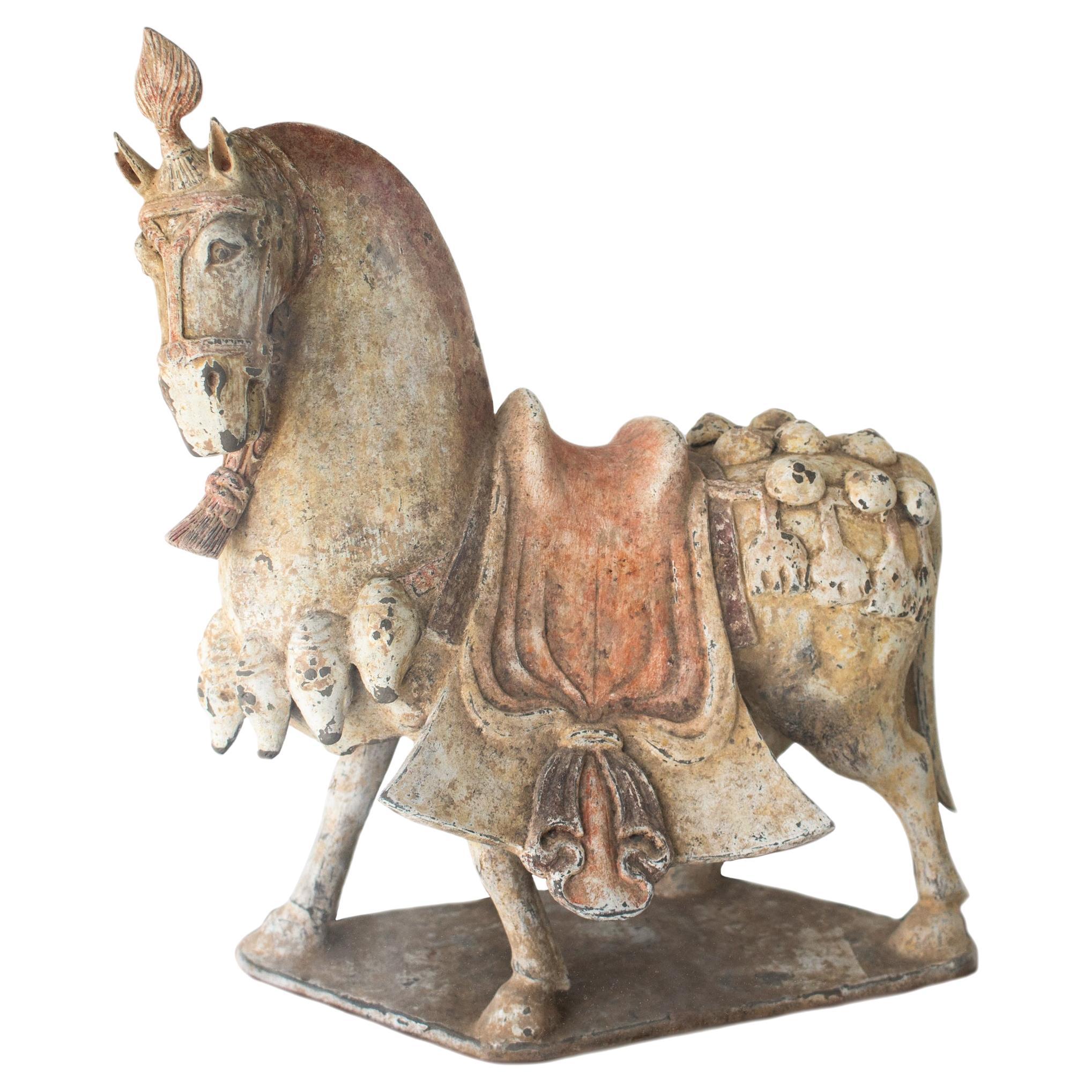
Exceedingly rare Chinese pottery caparisoned horse from the Northern Qi region.
A beautiful sculptural piece, created in China during the Northern Qi dynasty period, between the 549 and 577 AD. This horse statue is extremely finely modeled of earthenware pottery, standing in a very elegant and majestic position striding on a trapezoidal shaped base.
The animal has a gracefully arched neck to the left and its extremely well modeled. The head is adorned with a large detailed tassels of plumes and the body is embellished with a beautiful saddle and intricate harnesses. The trapping around the chest and rump is adorned with elaborated tassels and the straps are accented with multiples florets and bosses in high relief.
The surface is treated with applications of natural pigments such; red, white and others.
Has a measurements of 394 mm by 343 mm by 257 mm (15.53 x 13.52 x 10.15 Inches) (39.4 x 34.3 x 25.7 Cm).
Northern Qi, was the successor state of the Chinese Xianbei state of Eastern Wei...
Category
Antique 15th Century and Earlier Chinese Archaistic Sculptures and Carvings
Materials
Earthenware, Pottery
Chinese Tang Dynasty-Style Sancai Glazed Terra Cotta Horse Tomb Figure
Located in Queens, NY
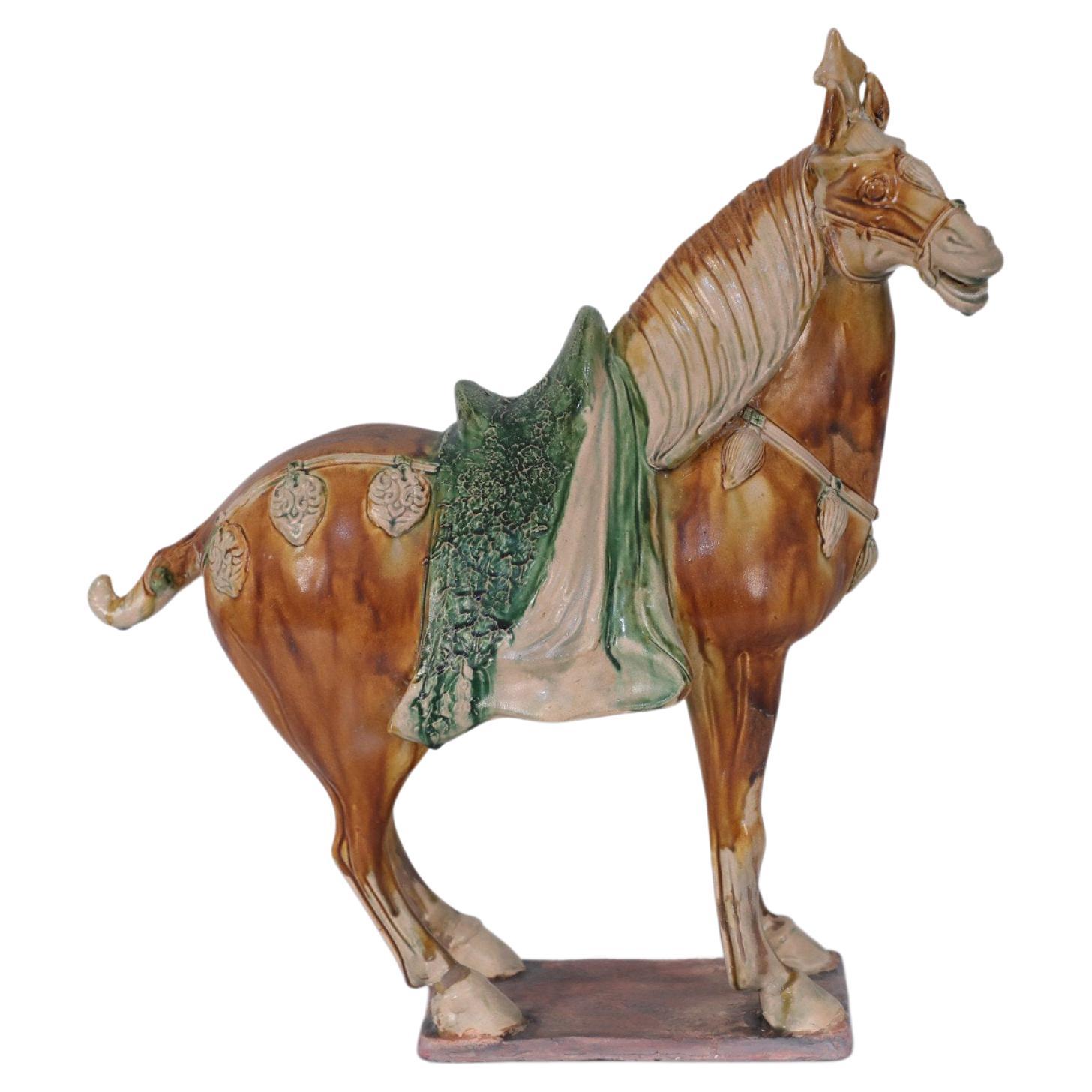
Antique Chinese Tang Dynasty-style terra cotta figure of a horse commonly used as a tomb figure for wealthy burials in the 7-8th centuries, and crafted with traditional tri-color gla...
Category
20th Century Chinese Export Figurative Sculptures
Materials
Terracotta
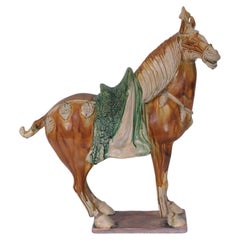
Chinese Sancai Glazed Tang Dynasty-Style Horse Figure
Located in Queens, NY
Antique Chinese Tang Dynasty-style terra cotta figure of a horse commonly used as a tomb figure for wealthy burials in the 7-8th centuries, and crafted with its traditional tri-color...
Category
20th Century Chinese Export Animal Sculptures
Materials
Terracotta
Ming Period Large Pottery Horse with Saddle (15-16th Century)
Located in seoul, KR
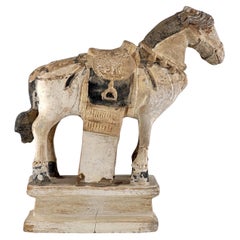
This Ming Dynasty painted pottery horse is depicted standing on a tiered rectangular pedestal. The horse has a well-proportioned body, with sturdy legs and a slightly arched neck. The eyes and muzzle are subtly outlined and incised.
The mane is sculpted with deep, parallel grooves. The tail is long and slightly curved left, extending downward. The saddle is prominently featured at the center of the horse’s back, detailed with a raised, rounded seat and an attached stirrup hanging down one side. The saddlecloth is textured with a crosshatch pattern, bordered by a row of carved fringe-like elements. The horse's legs display subtle musculature, and the hooves are clearly defined, with black pigment accentuating their edges.
The original painted pigments, including white, black, and ochre, are still visible, though faded in some areas. The black pigment highlights the mane, tail, and parts of the bridle, while the ochre tones accentuate the saddle and decorative elements.
Period: Ming Dynasty
Medium: Green, black, and ochre glazed Pottery
Type: Figure
Provenance : Acquired in late 1990s from Hongkong
Reference : Asian Civilisations Museum - Accession No. C-1384 / 1994-00441 - Ming Dynasty Figure of Horse
(Type : Closely Related)
* Ming Dynasty Glazed Pottery Figures
Ming Dynasty glazed pottery figures are renowned for their bold color palette, intricate detailing, and lifelike forms, distinguishing them from earlier traditions. These figures, which depict officials, warriors, animals, and mythical creatures, are characterized by high-gloss lead-based glazes in green, amber, ochre, and sancai (three-color) combinations. The thickly applied glaze pools in recesses, creating depth and enhancing sculptural details. With dynamic postures, expressive facial features, and meticulously rendered drapery, these figures reflect the period’s advancement in ceramic craftsmanship, offering a greater sense of movement and realism compared to the rigid and stylized forms of earlier dynasties.
A defining characteristic of Ming glazed pottery is its elaborate surface detailing, often achieved through raised relief elements and contrasting glazes. Equestrian figures, for example, feature carefully sculpted saddles, harnesses, and decorative embellishments, while human figures are adorned with intricate robes and headdresses. The large scale of these tomb figures, often more imposing than those from previous periods, underscores the increasing importance of funerary art during the Ming era. Unlike later Qing Dynasty figures...
Category
Antique 15th Century and Earlier Hong Kong Ming Antiquities
Materials
Pottery
More Ways To Browse
Antique Horse Sculptures
Antique Earthenware Pottery
Horse Figure
Horse China
Designer Handbags
Horse Statues
Horse Model
Antique Chinese Earthenware
Antique China Horse
Antique Chinese Horses
Antique Stirrups
Chinese Horse Sculpture
Dynasty Horse
Chinese Tomb
Ming Dynasty Sculpture
Ming Figure
Tomb Figure
Horse Stirrups