Want more images or videos?
Request additional images or videos from the seller
1 of 9
Fine and Rare Noh Mask by Nakamura Fuseki 1824 Edo Period
$9,600List Price
About the Item
- Dimensions:Height: 8 in (20.32 cm)Width: 5.3 in (13.47 cm)Depth: 2 in (5.08 cm)
- Style:Japonisme (Of the Period)
- Materials and Techniques:
- Place of Origin:
- Period:
- Date of Manufacture:1824
- Condition:Wear consistent with age and use. Fine antique condition with fine patina, minor wear above the eyes as shown.
- Seller Location:Atlanta, GA
- Reference Number:1stDibs: LU945020750632
About the Seller
4.9
Platinum Seller
Premium sellers with a 4.7+ rating and 24-hour response times
Established in 2006
1stDibs seller since 2010
586 sales on 1stDibs
Authenticity Guarantee
In the unlikely event there’s an issue with an item’s authenticity, contact us within 1 year for a full refund. DetailsMoney-Back Guarantee
If your item is not as described, is damaged in transit, or does not arrive, contact us within 7 days for a full refund. Details24-Hour Cancellation
You have a 24-hour grace period in which to reconsider your purchase, with no questions asked.Vetted Professional Sellers
Our world-class sellers must adhere to strict standards for service and quality, maintaining the integrity of our listings.Price-Match Guarantee
If you find that a seller listed the same item for a lower price elsewhere, we’ll match it.Trusted Global Delivery
Our best-in-class carrier network provides specialized shipping options worldwide, including custom delivery.You May Also Like
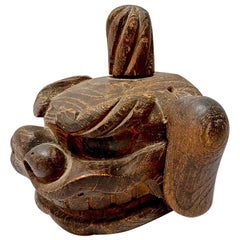
Noh Edo Period Lion Mask
Located in Pasadena, CA
This a well-preserved lion mask that dates to the 18th century (possibly earlier). Lion masks were used in the traditional Gion Matsuri festival lion dances...
Category
Antique Early 18th Century Japanese Edo Sculptures and Carvings
Materials
Wood
Japanese Edo Period Noh Theater Mask with Red, Black and Golden Patina
Located in Yonkers, NY
A Japanese Edo period "Noh" theater mask from the 17th to 19th century. Created in Japan during the Edo period (1603-1868), this mask captures our attention with its striking expression and contrasting colors. Noh, a form of theater involving music, dance and drama and originating in the 14th century, uses...
Category
Antique 19th Century Japanese Edo Sculptures and Carvings
Materials
Wood
$4,500
H 20.5 in W 17 in D 11.5 in
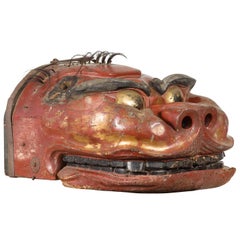
Noh Edo Period Lion Mask II
Located in Pasadena, CA
This another superb example of an Edo Period early 18th century or earlier Lion Mask created for the Lion Dances of the Gion Matsuri Festival. The mask is i...
Category
Antique Early 18th Century Japanese Edo Sculptures and Carvings
Materials
Wood
Extremely Rare Japanese Karakuri Ningyo Holding a Fox Mask, Edo Period, Ca. 1840
Located in New York, NY
Extremely Rare Japanese Karakuri Ningyo Holding a Fox Mask, Edo Period, Ca. 1840
DIMENSIONS
20” high without raised arm
22” high with raised arm holding the fox mask
16" wide
15" de...
Category
Antique 1840s Japanese Japonisme Sculptures and Carvings
Materials
Wood

$36,000
H 22 in W 15 in D 15 in
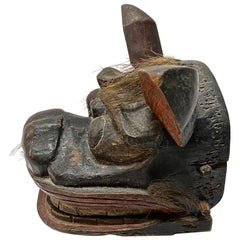
Japanese Edo Period Kyogen Mask o a Guardian, ca. 1750
Located in New York, NY
Japanese Edo Period Kyogen Mask o a Guardian, ca. 1750
DIMENSIONS:
Height: 8.5 inches
Width: 7 inches
Depth: 4.5 inches
ABOUT
A powerful and extremely rare Japanese Edo Period (1603-1868) Kyogen mask of a Nio Guardian...
Category
Antique 1750s Japanese Japonisme Sculptures and Carvings
Materials
Wood
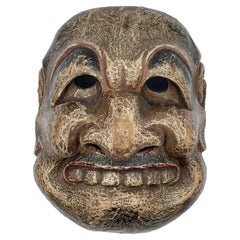
Japanese Noh Mask
Located in Chonburi, TH
This Japanese Noh mask is a finely crafted example of traditional theatrical art, hand-carved from wood and featuring a serene, enigmatic expression typical of classical Noh performa...
Category
20th Century Japanese Showa Sculptures and Carvings
Materials
Wood

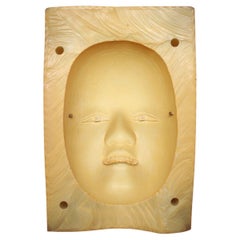
Japanese traditional craft Noh Noh mask mold
Located in Niiza, JP
Japanese traditional craft Noh Noh mask type modern
Material: resin
Size: 185 (W) x 280 (H) x 120 (D) [mm] 5kg
Noh is a traditional Japanese craft.
Old Noh masks and Noh costumes ar...
Category
20th Century Japanese Sculptures and Carvings
Materials
Resin
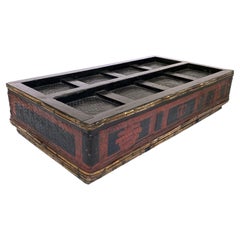
Meiji Period Red and Black Painted Kimono Storage Box, Japan
Located in Point Richmond, CA
Japanese Kimono storage box, constructed of wood and bamboo, painted black with family crest painted in red on the sides. The top has wood slats, which ...
Category
20th Century Japanese Meiji Sculptures and Carvings
Materials
Wood
$600 Sale Price
20% Off
H 7 in W 31 in D 17 in
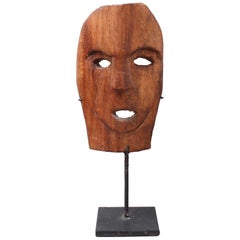
Carved Wooden Traditional Mask from Timor Island, Indonesia, circa 1970s
Located in London, GB
Timor Island sculpted wooden traditional mask (circa 1970s) on contemporary metal stand. This is a traditional mask of a figure with male facial features and two holes as eyes and another for the mouth with a handle below the face. The island of Timor gave rise to a distinctive practice of creating traditional masks whose precise origins and significance remain uncertain. Portraying both male and female ancestors, they were held by men during dances and other ceremonies, including celebrations of victory in war. Carved sculptures and masks are specific to rural villages. Here the practice of animism, or nature-worship, is incorporated with the carving of ancestral statues and masks, which have a ritualistic function. Some occasions that call for these ceremonies may include asking for successful crop planting, for prosperity, for good weather...
Category
Vintage 1970s Indonesian Tribal Sculptures and Carvings
Materials
Wood
$343
H 5.52 in W 3.35 in D 1.19 in
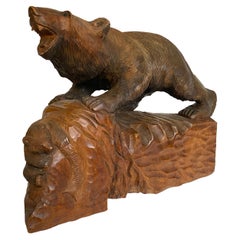
Carved Wood Ainu Bear with Baby and Fish, Hokkaido, Japan, Keyaki, Showa Period
Located in Point Richmond, CA
Ainu Bear with baby and fish, Hokkaido, Japan, Keyaki, Showa period.
Hewn from one solid piece of Keyaki wood, this bear flashes a ferocious expression or...
Category
20th Century Japanese Showa Sculptures and Carvings
Materials
Wood
$1,106 Sale Price
25% Off
H 17 in W 22 in D 10.5 in
More From This Seller
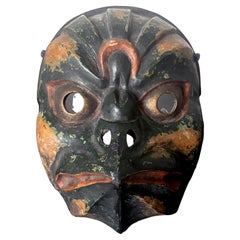
View AllJapanese Wood Bugaku Mask of Korobase Edo Period
Located in Atlanta, GA
A striking Japanese carved wood mask with polychrome paint and lacquer surface. This rare mask is dated to the Edo period (first half of 19th century and possibly earlier). The mask ...
Category
Antique 19th Century Japanese Japonisme Sculptures and Carvings
Materials
Wood, Lacquer, Paint
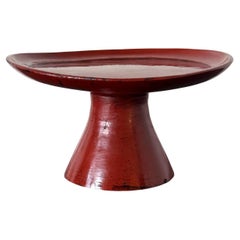
Rare Japanese Negoro Stem Dish Momoyama Edo Period
Located in Atlanta, GA
An antique red lacquer stem dish from Japan, circa 17th century (Momoyama to early Edo period). This type of red lacquer finish is known as Negoro lacquer. It was developed by the me...
Category
Antique 17th Century Japanese Edo Lacquer
Materials
Wood, Lacquer
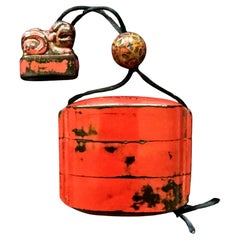
Rare Japanese Inro Netsuke and Omije with Negoro Red Lacquer Edo Period
Located in Atlanta, GA
A Japanese three-case inro with stringed carved netsuke and bead ojime from early Edo period circa 17th century. The trio accoutrement is covered in red Negoro lacquer and displays w...
Category
Antique 17th Century Japanese Edo Lacquer
Materials
Wood, Lacquer
Set of Three Japanese Wood Netsukes
Located in Atlanta, GA
Set of three Japanese netsukes carved out of wood with a reddish stained finish, appear to be circa mid-20th century. One depicts a frog holding a trumpet; one a rooster eating grain...
Category
Mid-20th Century Japanese Japonisme Sculptures and Carvings
Materials
Wood
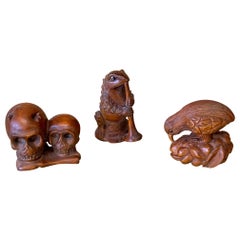
$1,200 / set
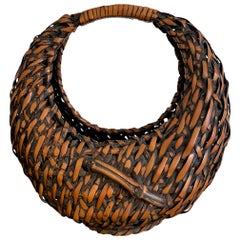
Japanese Bamboo Basket Ikebana
Located in Atlanta, GA
A Japanese woven bamboo basket in the shape of crescent with open top and a wrapped handle circa 1920s-1940s. The basket was woven with "sooted" bamboo (susutake in Japanese). This b...
Category
Early 20th Century Japanese Japonisme Sculptures and Carvings
Materials
Bamboo
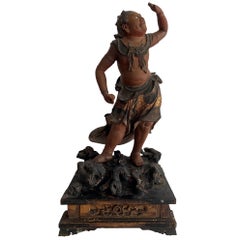
Japanese Lacquered and Gilt Wood Buddhism Statue from Edo Period
Located in Atlanta, GA
An exceptional and wood statue of Buddhism Guardian Seitaka Doji from Japan circa Edo period (1603-1868), likely the earlier part of 17th century. One of two chief attendants of Fudou Myouou (the other being Kongara Doji), the name of Seitaka Doji is a transliteration of Sanskrit "Cetaka", meaning servant, slave, and he is said to personify expedient action. He is most commonly found on the right side of Fudou, together with Kongara Doji on the left, forming the Immovable triad, Fudou Sanzon, the terror of evil doers. Seitaka largely adheres to the iconography of a wrathful youth with fleshy body and face, skin in the color of a red lotus, has his hair tied in five knots, and holds a vajra in his left hand and a vajra-club in his right hand, but the actual artistic representations of him in Japan do...
Category
Antique 17th Century Japanese Japonisme Sculptures and Carvings
Materials
Metal