Items Similar to JAPAN Meiji Period 1880 Namiki Little Cabined Round Tray In Wood, Gold
Silver
Want more images or videos?
Request additional images or videos from the seller
1 of 7
JAPAN Meiji Period 1880 Namiki Little Cabined Round Tray In Wood, Gold
Silver
$1,118.40
$1,39820% Off
£853.99
£1,067.4920% Off
€972.30
€1,215.3720% Off
CA$1,570.41
CA$1,963.0120% Off
A$1,716.77
A$2,145.9620% Off
CHF 908.25
CHF 1,135.3120% Off
MX$20,543.86
MX$25,679.8320% Off
NOK 11,556.13
NOK 14,445.1620% Off
SEK 10,578.47
SEK 13,223.0920% Off
DKK 7,262.46
DKK 9,078.0720% Off
About the Item
A Namiki little round cabinet tray from the Meiji period.
This is an amazing and very decorative presentation round cabinet tray created in the Imperial Japan period during the early Meiji period (1868-1912), circa 1880. The fabulous little tray has been meticulously crafted in precious wood and decorated with Namiki techniques, enhanced with applications of gold and silver. The design depicts a couple of very cute pigeons in the forest. This is a great treasure tray, with exceptional great eye appeal.
Pigeons in the Meiji period
In Japanese culture, pigeons are often revered as sacred messenger birds for the deity Hachiman, found on motifs like shrine decorations and in art. While today often viewed as common, they were historically symbolized as symbols of harmony and permanence in art, and in some areas, like the Miyake Hachiman Jinja Shrine, they are specifically honored with statue and festival imagery, often replacing the typical dog statues.
The Meiji Imperial Period
This is an era of Japanese history that extended from October 23, 1868 to July 30, 1912.The Meiji era was the first half of the Empire of Japan, when the Japanese people moved from being an isolated feudal society at risk of colonization by Western powers to the new paradigm of a modern, industrialized nation state and emergent great power, influenced by Western scientific, technological, philosophical, political, legal, and aesthetic ideas. As a result of such wholesale adoption of radically different ideas, the changes to Japan were profound, and affected its social structure, internal politics, economy, military, and foreign relations. The period corresponded to the reign of Emperor Meiji. It was preceded by the Keiō era and was succeeded by the Taishō era, upon the accession of Emperor Taishō.
Country: Imperial Japan,
Period: Meiji, 1880-1890.
Materials: Wood, lacquer, gold and Namiki technique.
Weight: 5.2 Grams, (2.60 Dwt).
Measurements: Round, 62 mm by 62 mm by 5 mm (2.44 x 2.44 x 0.20 Inches).
Condition: It is in great antique condition, near mint, with all parts secured in the settings. This presentation little cabinet tray has been carefully inspected to guarantee the condition and authenticity.
INVENTORY REF: D111925MENG/.7751
- Dimensions:Height: 0.2 in (5.08 mm)Diameter: 2.44 in (6.2 cm)
- Style:Meiji (Of the Period)
- Materials and Techniques:
- Place of Origin:
- Period:
- Date of Manufacture:1880
- Condition:Wear consistent with age and use. It is in great antique condition, near mint, with all parts secured in the settings. This presentation little cabinet tray has been carefully inspected to guarantee the condition and authenticity.
- Seller Location:Miami, FL
- Reference Number:Seller: D111925MENG/.77511stDibs: LU8303247711832
About the Seller
5.0
Gold Seller
Premium sellers maintaining a 4.3+ rating and 24-hour response times
1stDibs seller since 2023
244 sales on 1stDibs
Typical response time: <1 hour
- ShippingRetrieving quote...Shipping from: Miami, FL
- Return Policy
More From This Seller
View AllMEIJI PERIOD 1890 Maki-e Presentation Tray In Lacquer
Gold With Kanji Wood Box
Located in Miami, FL
A large maki-e presentation tray from the Meiji period.
This is an extraordinary presentation rectangular tray created in the Imperial Japan period during the pinnacle of the Meiji ...
Category
Antique 1890s Japanese Meiji Lacquer
Materials
Gold, Silver
MEIJI Period Japan 1890 Imperial Shakudo Gold Mixed Metals Brush Vase-Pot
Located in Miami, FL
A brush pot from the Meiji imperial period.
This is a beautiful brush vase-pot created in the Imperial Japan during the early Meiji period (1868-1912), circa 1890. The fabulous roun...
Category
Antique 1890s Japanese Meiji Metalwork
Materials
Gold, Silver, Bronze
$4,600 Sale Price
20% Off
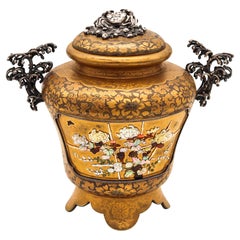
Japan 1890 Meiji Shibayama Round Urn in Gilded Wood and Sterling Silver
Located in Miami, FL
Shibayama urm from the Japan meiji (1858-1912) period.
Gorgeous piece of art, created in the imperial Japan during the Meiji period, circa 1890. This is a little urn with a lid crafted in gilded wood, shibayama panels and sterling silver. Composed by a four footed round vase with two sterling silver handles in the shape of trees and the lid on top accented with the figure of a crab in sterling silver. The gilded wood is decorated with flowers, sea patterns and the imperial flower...
Category
Antique 1890s Japanese Meiji Antiquities
Materials
Multi-gemstone, Gold, Silver, Sterling Silver, Gold Leaf
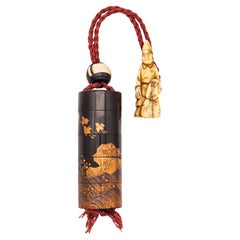
Japan 1870 Meiji Period Round Five Drawer Inro Lacquered Wood With Flying Cranes
Located in Miami, FL
Japanese Inro from the Meiji Period (1868-1912).
Beautiful Inro, created in Japan during the Meiji imperial period, circa 1870. It was carefully crafted in carved precious wood with applications of lacquer and decorated with orientalism patterns. All dan trays are attached together with a himo cord. The detailed craftsmanship was a true pleasure to behold.
Period: Meiji 1868-1912, Period of Emperor Mutsuhito.
Approximate Date: 1870.
Motif: Organic design with cascade landscape scene and five flying cranes.
Drawers: Five.
Shape: Cylinder. Very unusual and rare shape.
Technique: Carved wood, Lacquer, hiramaki-e, takamaki-e, Gilding.
Ojime: 17mm, round with Ebony wood.
Netsuke: Carved dressed...
Category
Antique 1870s Japanese Meiji Lacquer
Materials
Wood, Ebony, Giltwood, Lacquer
$2,388 Sale Price
20% Off
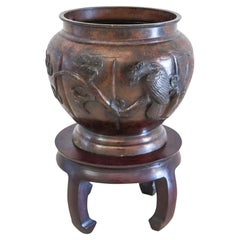
JAPAN 1900 Meiji Period Bronze Planter Vase With Carved Wood Base
Located in Miami, FL
Large Planter Vase from imperial Japan.
This a beautiful piece of Japanese decorative arts, created in Japan during the Meiji imperial period, circa 1900. The oversized vase can be ...
Category
Antique Early 1900s Japanese Meiji Metalwork
Materials
Bronze
$3,188 Sale Price / set
20% Off
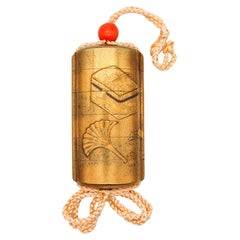
Japan 1800 Edo Period Six Drawer Inro In Lacquered Gilt Wood With Utensils
Located in Miami, FL
Japanese Inro from the Edo Period (1603-1867).
Beautiful Inro, created in Japan during the Edo period (Shogunate), circa 1800. It was carefully crafted in carved precious wood with ...
Category
Antique Early 1800s Japanese Edo Lacquer
Materials
Coral
$2,600 Sale Price
20% Off
You May Also Like
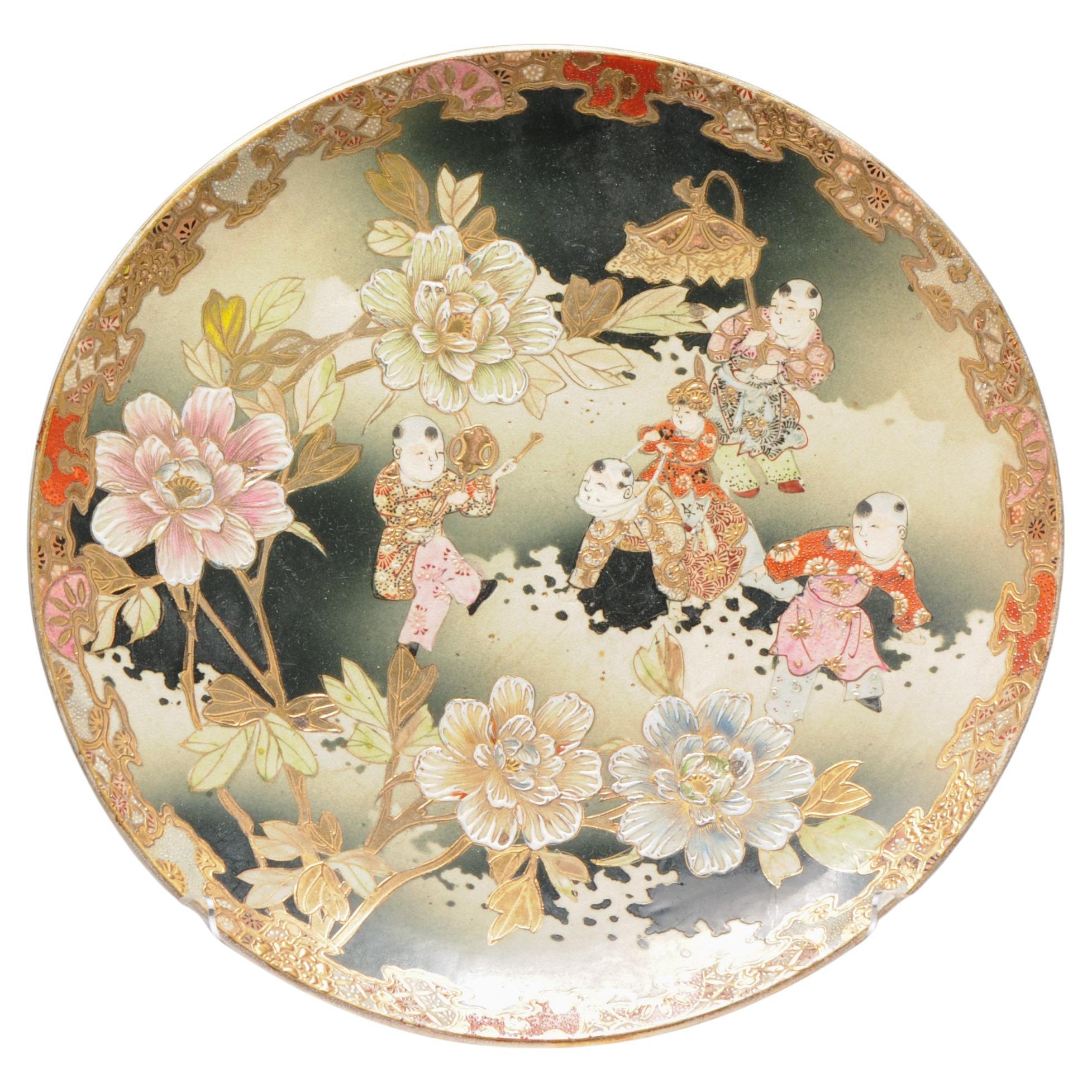
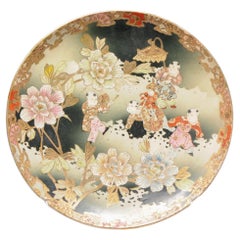
Antique 19th C Meiji Japanese Satsuma Plate, Charger Very Large Unmarked
Located in Amsterdam, Noord Holland
A very large Japanese Satsuma Plate of playing boys, Meiji Period. Incredible and very detailed piece. Just superb
Condition
Perfect, just some usage...
Category
Antique 19th Century Japanese Meiji Ceramics
Materials
Porcelain
$1,117 Sale Price
48% Off
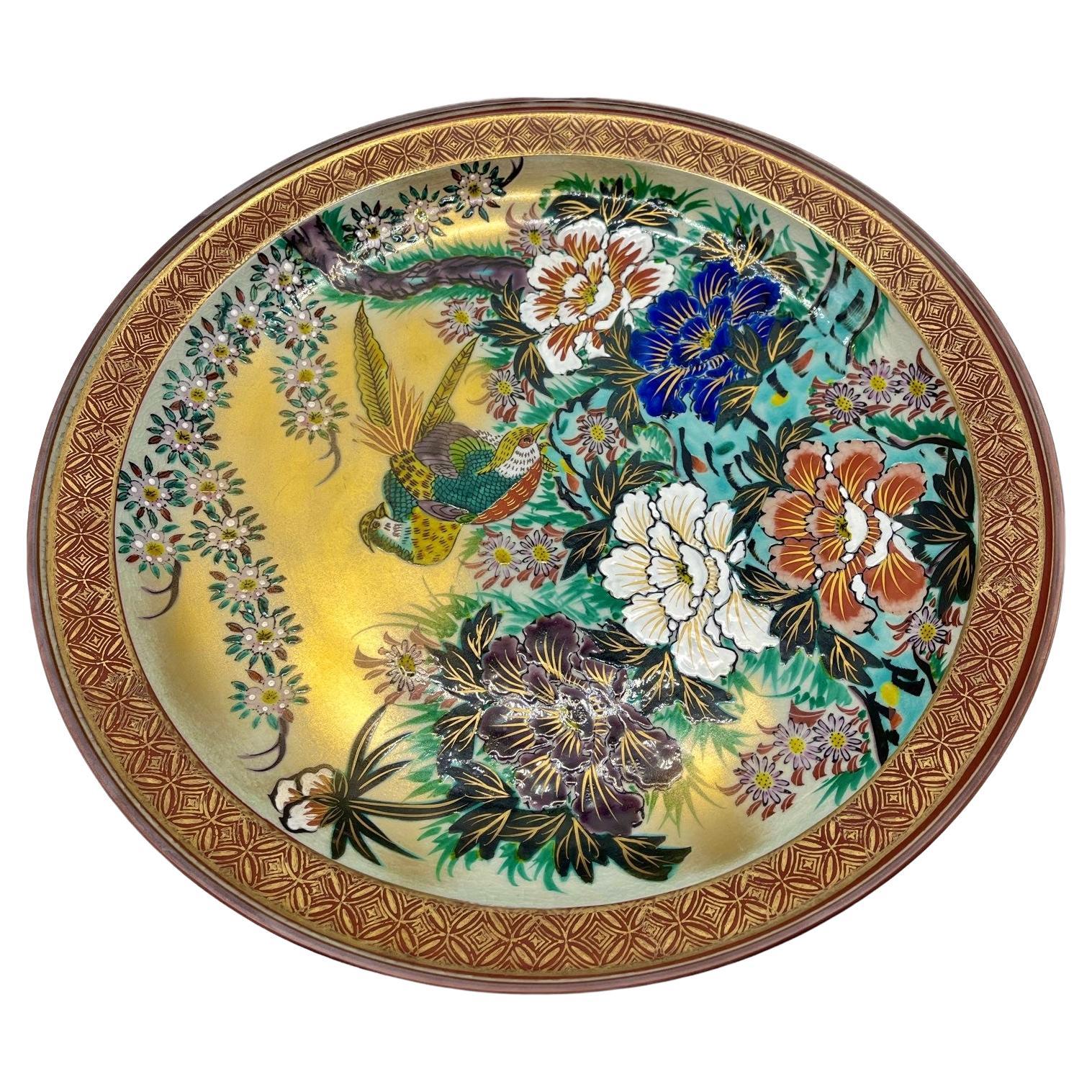
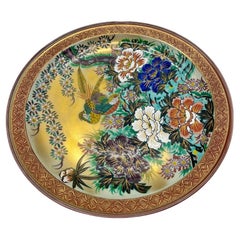
Antique Japanese Plate Kutaniyaki 1950s
By Japanese Studio
Located in Paris, FR
This is Kutani 1950th Century.
This plate was made with porcelain, style of kutaniyaki.
It is a traditional craft of ceramics with overglaze painting and was born in the early Edo period. Kutani ware...
Category
Antique Mid-19th Century Japanese Japonisme Platters and Serveware
Materials
Porcelain
$363 Sale Price
20% Off
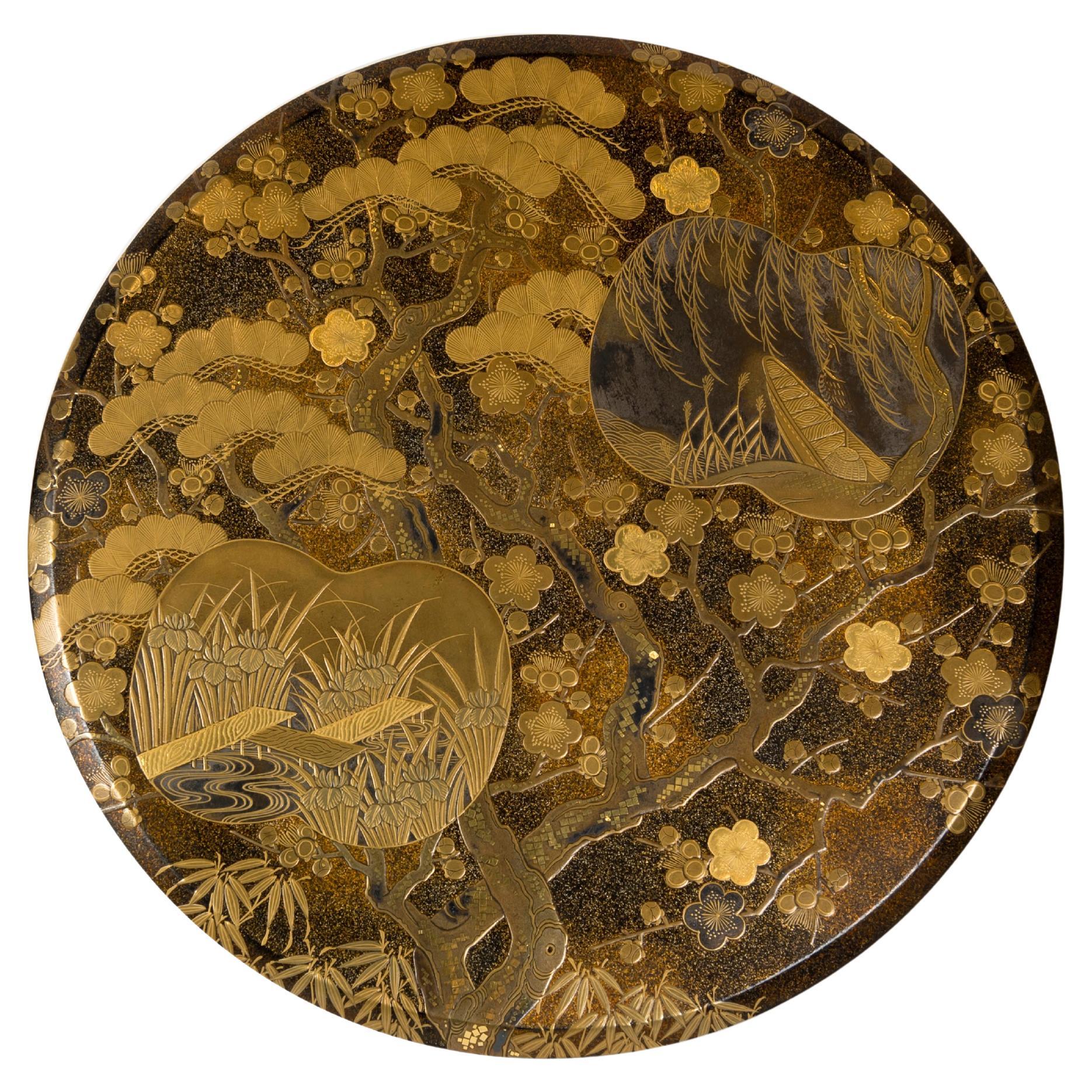
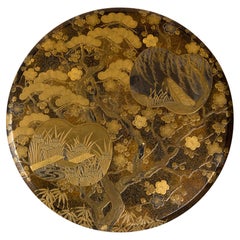
Suzuribako or writting box circular shape in nashiji and gold lacquer
Located in PARIS, FR
Suzuribako (writing box) in black lacquer, rectangular in shape, with a gold lacquer (maki-e) decoration of a pavilion by the edge of a waterfall and a mountain river surrounded by v...
Category
Antique Late 18th Century Japanese Edo Lacquer
Materials
Gold Leaf
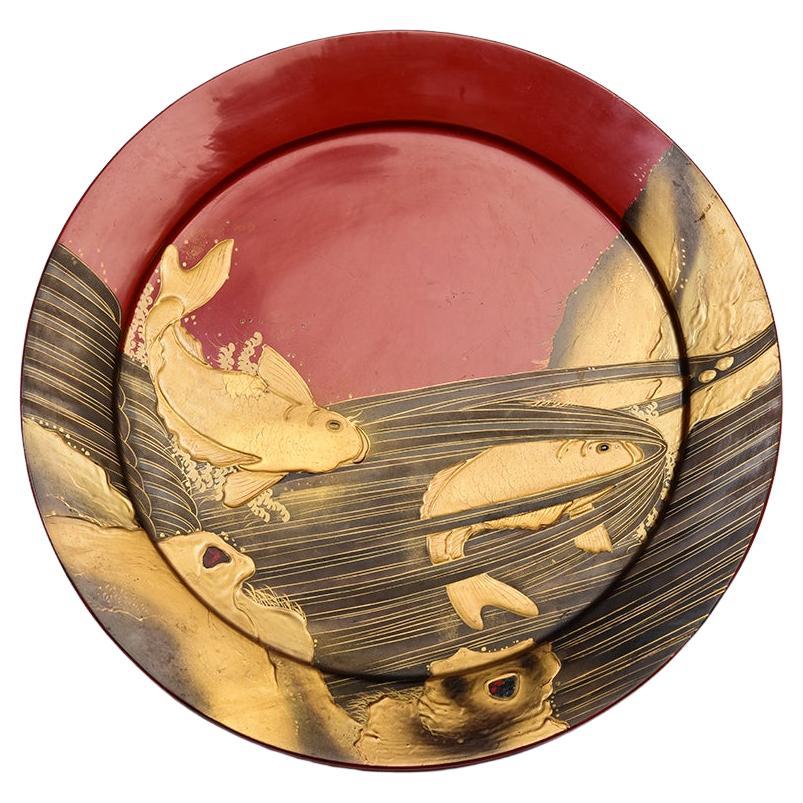
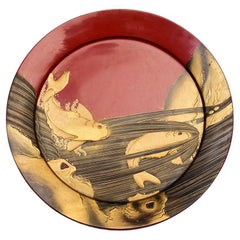
Mid-20th Century, Showa, Large Japanese Wooden Tray with Koi Carp Fish Design
Located in Sampantawong, TH
Large Japanese wooden tray with koi carp fish design.
Age: Japan, Showa Period, Mid-20th Century
Size: Diameter 52.7 C.M. / Height 5.6 C.M.
C...
Category
Mid-20th Century Japanese Sculptures and Carvings
Materials
Wood
$680 Sale Price
20% Off
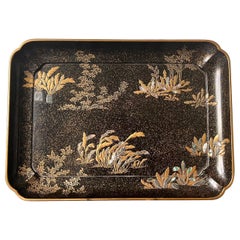
Japanese Lacquer Tray with Maki-e and Inlay Hara Yoyusai Edo Period
Located in Atlanta, GA
A lovely Japanese lacquer rectangular lacquer tray with a slightly scalloped corner and four L shape supporting feet by one of the most celebrated lacquer artist active in Edo period Hara Yoyusai (1772-1845). Yoyusai lived in Edo (Tokyo) and worked under the patronage of Lord Matsudaira. He operated a large workshop and had a very prolific output of lacquer objects. Most survived pieces being inro...
Category
Antique 19th Century Japanese Japonisme Lacquer
Materials
Wood, Lacquer
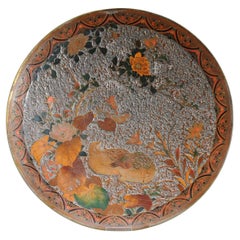
Antique Meiji Period Japanese Wall Dish with Quails Bronze Flowers, 19th Century
Located in Amsterdam, Noord Holland
Lovely and beautifully made piece with different kind of flowers and birds on a tree bark base.
Cloisonné is an enamelling technique in which the pattern is formed by wires soldered...
Category
Antique 19th Century Japanese Meiji Decorative Dishes and Vide-Poche
Materials
Bronze
$1,271 Sale Price
20% Off