Items Similar to Japanese antique stone tower / [Gorinto] / 15th-17th century
Video Loading
Want more images or videos?
Request additional images or videos from the seller
1 of 22
Japanese antique stone tower / [Gorinto] / 15th-17th century
$2,500
£1,908.95
€2,173.41
CA$3,510.39
A$3,837.55
CHF 2,030.24
MX$45,922.44
NOK 25,831.84
SEK 23,646.43
DKK 16,234.03
About the Item
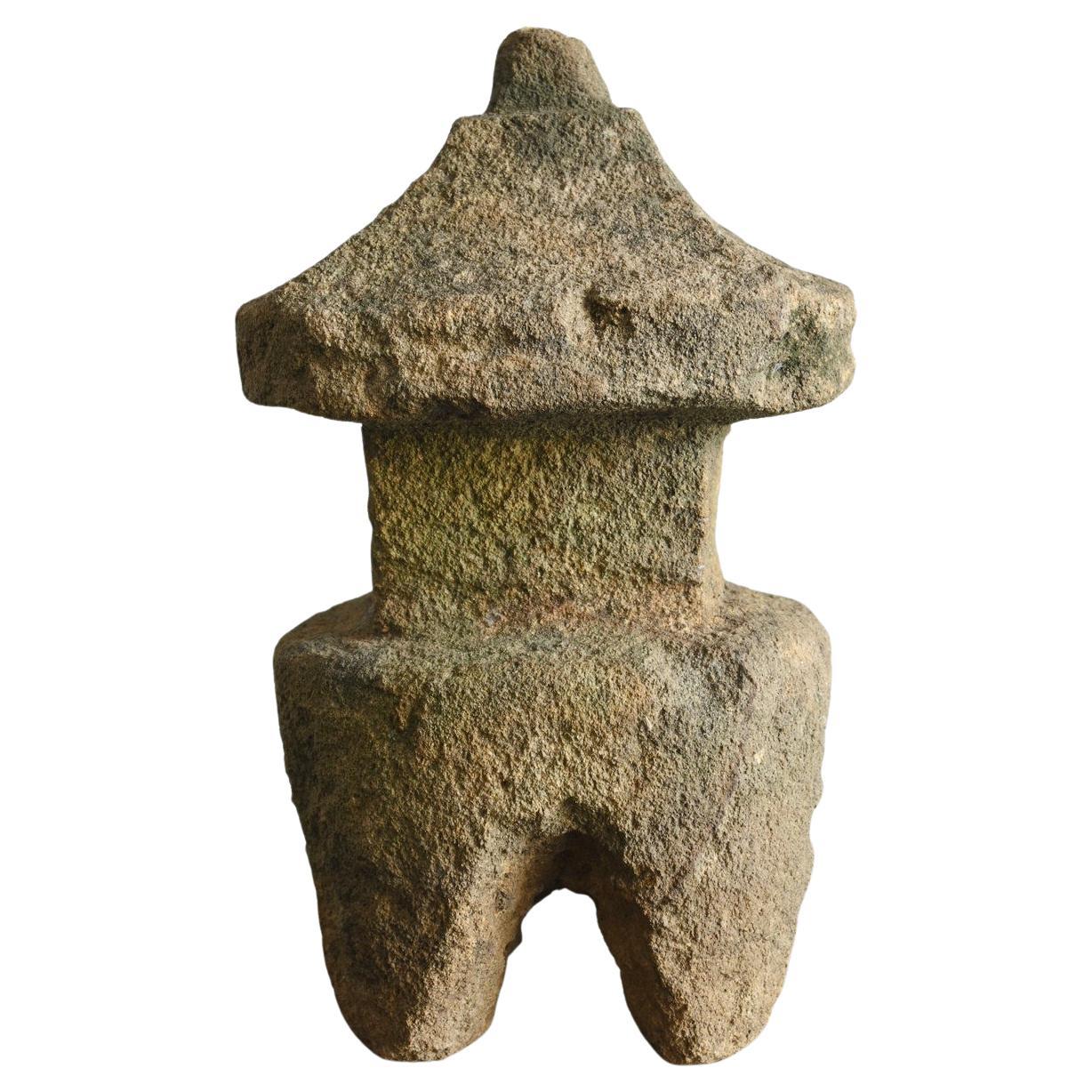
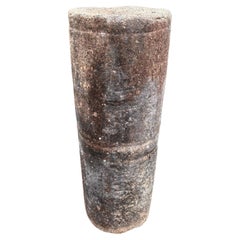
This is an ancient stupa believed to have been made in Japan between the Muromachi and Momoyama periods, or perhaps the early Edo period. It appears to have been made from granite, with its corners rounded over the years and its surface softened by natural weathering. One of the main attractions of this piece is that, despite being a man-made object, it somehow resembles natural stone.
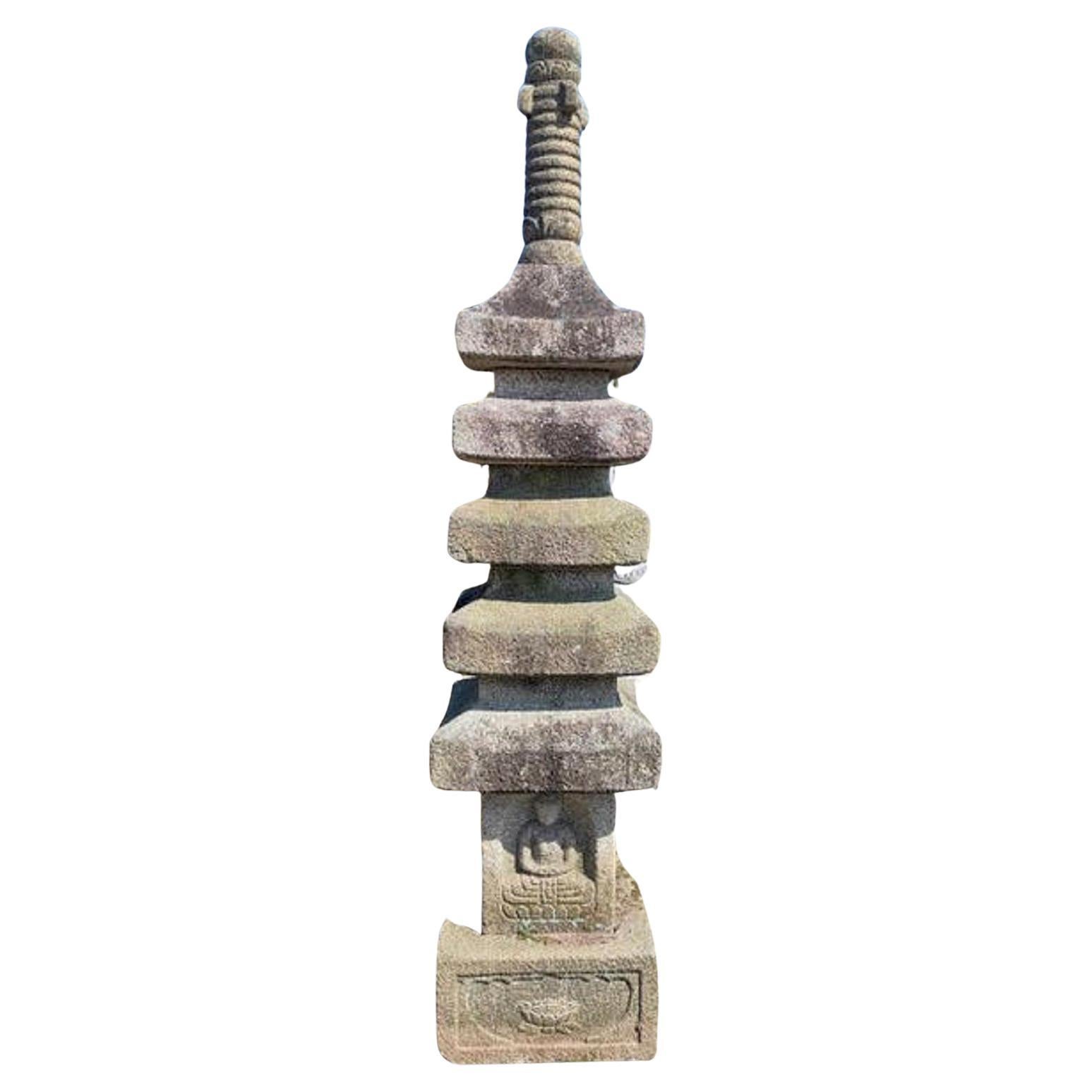
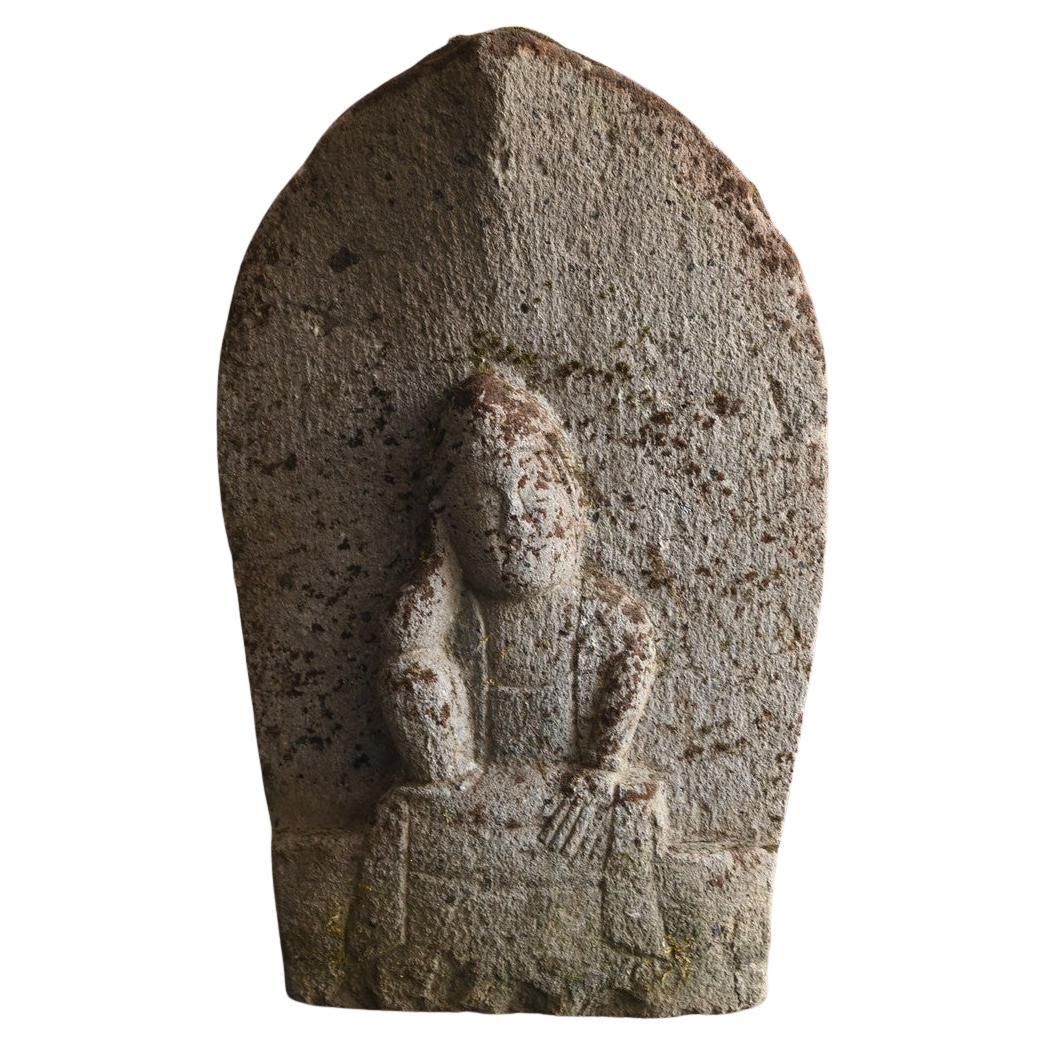
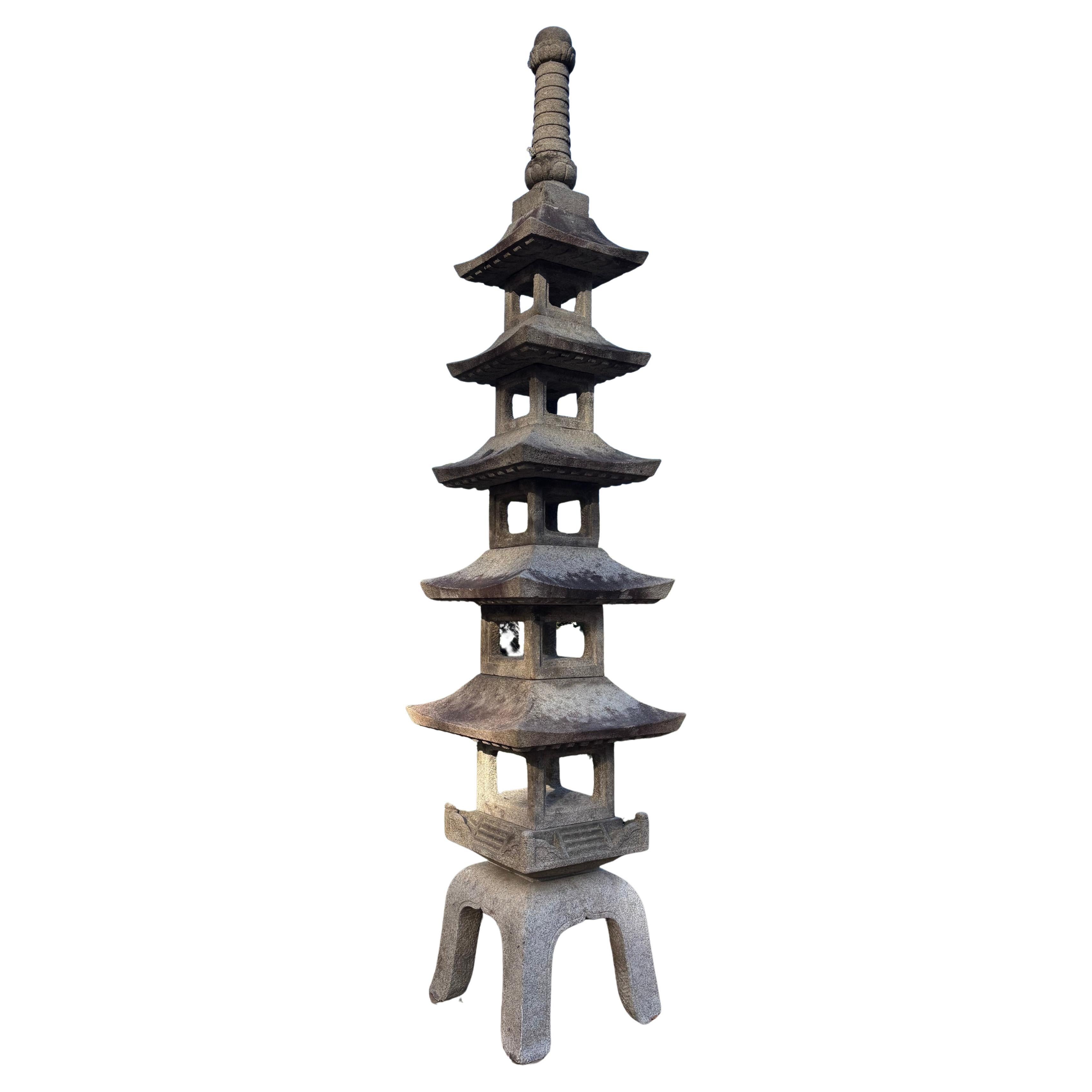
I found a reference photo of a stupa in a specialist book, so I've included it here as well. Of the four stupas, the one on the bottom right dates to the early Muromachi period. The top two date to the Kamakura period or the end of the Kamakura period.
stupas are stone structures of great importance in Japanese Buddhist culture, originating from the end of the Heian period through the Kamakura period. They are memorial towers symbolizing the five elements that make up the universe—earth, water, fire, wind, and sky—and are considered to be a three-dimensional representation of the soul's return to the cosmos after death. The stacked formations, from the bottom up - a square earth ring, a spherical water ring, a cap-shaped fire ring, a crescent-shaped wind ring, and finally a jewel-shaped sky ring at the top - are like a sculpture that expresses the idea itself in stone.
While this work is faithful to the five-ring philosophy, its size and shape suggest it does not date from before the Kamakura period. Gorinto stupas from before the Kamakura period were primarily built as grave markers for temples and influential samurai, and most were extremely large, too heavy and bulky to be carried by one person. In contrast, with the spread of the culture of personal memorial services during the Muromachi period, many relatively small gorinto stupas were produced. Those around 60-70cm tall are typical of the size that became more common from this period onwards.
Another noteworthy feature is the shape of the fire ring, or the so-called cap. Muromachi period stupas tend to have relatively gentle roof curvatures and remain fairly thick. However, from the Momoyama period through the Edo period, the curvature gradually became stronger and the roof became thinner. The fire ring on this piece is somewhat curved, but its thickness is apparent, suggesting that it could date back to the Muromachi period or early Edo period.
It is also highly likely that this stupa is a reconstruction made by stacking multiple stones. Japan is prone to earthquakes, and stupas have repeatedly collapsed or been damaged. For this reason, historically, stupas have been reassembled by combining the remaining stones and re-enshrining them as stupas in various regions. It is believed that the lower and upper two tiers of this piece were originally assembled from separate stupas, but the overall balance is excellent and there is little visual incongruity. Rather, it evokes a sense of deep layers of time, as if multiple eras and prayers overlap.
Fine lettering is faintly carved into parts of the earth and fire rings. These Sanskrit characters, known as sanskrit letters, were carved as "seeds" symbolizing Buddha and Bodhisattva. Sanskrit characters are not simply letters; they symbolize the very objects of worship. Their current appearance, now obscured by weathering, quietly speaks of long hours of prayer.
The total weight is approximately 57.65 kg, making it an extremely substantial structure. However, because the structure itself is simply stacked stones, there is a slight wobble when rocking it back and forth by the top. To enhance stability, insert rubber or felt sheets between the contact surfaces of the stones and fine-tune their position. We have filmed a video for illustrative purposes, so please take a look.
While the stone may appear slightly tilted from the side, it looks most beautiful from the front. Find that position when installing and admiring it.
This stupa can be enjoyed as a decorative piece in your garden, or placed at your entryway, under the eaves, in a dirt floor space, or even indoors, where it exudes a sculptural presence. This piece complements not only traditional Japanese spaces, but also minimalist contemporary architecture and international interiors, quietly establishing the center of gravity of any space.
A stacked stupa in such good condition and with such refined form is rarely found on the market. Even if some remain in temples, they rarely come into private hands. We were fortunate enough to acquire this piece. It combines period, form, and storytelling, making it a highly recommended piece.
Dimensions: W 24cm x D 24cm x H 69.5cm
Weight: 57.65kg
Product Number: SC149
- Dimensions:Height: 27.37 in (69.5 cm)Width: 9.45 in (24 cm)Depth: 9.45 in (24 cm)
- Style:Edo (Of the Period)
- Materials and Techniques:
- Place of Origin:
- Period:
- Date of Manufacture:15th-17th century
- Condition:There is a slight wobble when rocking the stupa by holding it from the top. When installing, you can increase stability by placing rubber or felt sheets between the contact surfaces of the stones and fine-tuning their positioning.
- Seller Location:Sammu-shi, JP
- Reference Number:1stDibs: LU5487247948212
About the Seller
5.0
Platinum Seller
Premium sellers with a 4.7+ rating and 24-hour response times
Established in 2015
1stDibs seller since 2020
1,694 sales on 1stDibs
Typical response time: 5 hours
- ShippingRetrieving quote...Shipping from: senzoku, Japan
- Return Policy
More From This Seller
View AllJapanese antique Kannon stone statue/Edo period/18th to 19th century
Located in Sammu-shi, Chiba
Introducing a stone Buddha of Nyoirin Kannon, created in the mid to late Edo period (circa 1750-1850).
The material used is granite or andesite, and the natural weathering of the sto...
Category
Antique Early 19th Century Japanese Edo Garden Ornaments
Materials
Stone
Small Japanese Antique Stone Lantern / 1868-1920 / Wabi-Sabi Object
Located in Sammu-shi, Chiba
This small stone lantern is thought to have been made between the Meiji and Taisho periods. It's small enough to hold in one hand, yet possesses a solid weight and presence, evoking ...
Category
Antique Late 19th Century Japanese Meiji Sculptures and Carvings
Materials
Stone
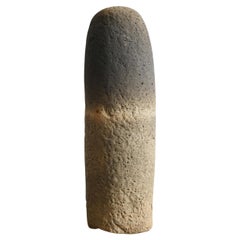
Japanese antique stone objects/rituals/Penis-shaped figurine/before the Edo
Located in Sammu-shi, Chiba
This is an old stone object from Japan, a sculptural piece called a “stone rod” that depicts male genitalia. Based on its shape, material, and discoloration, it is believed to have b...
Category
Antique 19th Century Japanese Other Abstract Sculptures
Materials
Stone
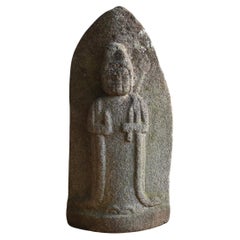
Japanese Edo Period Kannon Stone Buddha/1700-1850/Garden Ornament
Located in Sammu-shi, Chiba
We are pleased to present a simple stone Buddha of Kannon Bosatsu, made in Japan during the Edo period (circa 1700-1850).
Kannon Bosatsu is known in Buddhism as a merciful savior wh...
Category
Antique 18th Century Japanese Edo Garden Ornaments
Materials
Stone, Granite
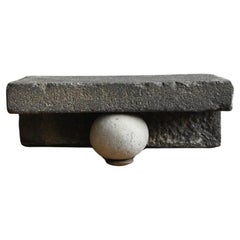
Old Japanese stone and concrete display stand/late 20th century/bonsai stand
Located in Sammu-shi, Chiba
This is a one-of-a-kind exhibition stand that utilizes an old L-shaped concrete made around the latter half of the 20th century.
The L-shaped stone material that serves as the main ...
Category
Late 20th Century Japanese Other Furniture
Materials
Stone, Concrete
Japanese antique stone god/[Daikokuten]/Stone Buddhas from the Edo period
Located in Sammu-shi, Chiba
Do you know what Daikokuten is?
This god in Japan is an old god who has existed since the end of the Muromachi period (16th century) as one of the seven gods who bestow happiness.
He...
Category
Antique 18th Century Japanese Edo Sculptures and Carvings
Materials
Stone
![Japanese antique stone god/[Daikokuten]/Stone Buddhas from the Edo period](https://a.1stdibscdn.com/japanese-antique-stone-god-daikokuten-stone-buddhas-from-the-edo-period-for-sale/f_54872/f_406808721721288384637/f_40680872_1721288385010_bg_processed.jpg?width=240)
You May Also Like
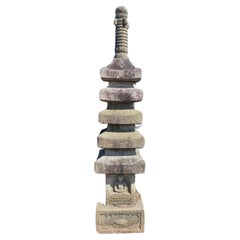
Japanese Early Antique Stone Four Buddhas Pagoda 10 feet, Best In Class
Located in South Burlington, VT
Just discovered from an old Kyoto area garden. Call or message us for details or to reserve.
Please view our video.
For the finest garden- an exceptional and spiritual representation of the Buddha expressed in this unique and substantial 10 feet five roof pagoda with four buddha images carved on base.
Japan, a monumental antique stone pagoda...
Category
Antique Mid-19th Century Japanese Meiji Sculptures and Carvings
Materials
Granite
$38,400 Sale Price
33% Off
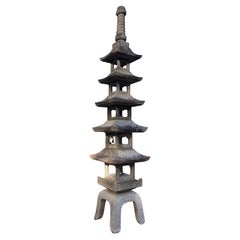
Japanese Monumental Tall Antique Five Elements Stone Pagoda, 150 Inches
Located in South Burlington, VT
Fine Garden Pagoda Lantern - A Best In Class
A spiritual representation of five earthly and celestial elements destined for a fine garden.
Please view our video.
This Japanese monumental antique stone pagoda lantern is about four meters or 150” tall. It is hand carved from solid granite from the early Taisho period circa 1920. The sculpture spiritually represents our five earthly and celestial elements. And this pagoda lantern is similar to the taller example given by Sapporo, Japan to the Portland, Oregon Japanese garden (See Portland's Japanese Garden Pagoda...
Category
Early 20th Century Japanese Taisho Sculptures and Carvings
Materials
Granite
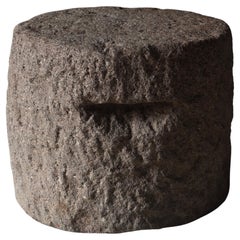
Japanese Antique Stone Display Stand / Objet / Before 1868s / Wabi-Sabi Mingei
Located in Iwate-gun Shizukuishi-cho, Iwate Prefecture
This is an old stone stand in Japan.
I don't know the details if it was used as a stand for beating straw, but it seems to be before the end of the Edo period.
The round silhouette...
Category
Antique Mid-19th Century Japanese Rustic Antiquities
Materials
Stone
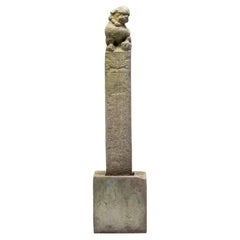
Ming Dynasty Stone Guardian Statue, China, 17th Century
Located in Antwerp, BE
Ming Dynasty stone foo dog from the revered Beijing Summer Palace, dating back to the end of the 17th century. This magnificent sculpture depicts a powerful lion, imbued with the myt...
Category
Antique Late 17th Century Chinese Ming Sculptures and Carvings
Materials
Stone
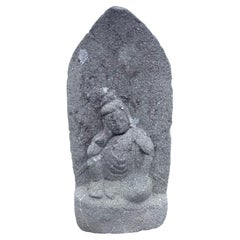
$5,880 Sale Price
20% Off
Japanese Large Antique Stone Garden Kanon Guan Yin in Royal Ease 19thc, signed
Located in South Burlington, VT
Big, Beautiful And Signed
From our recent Japanese Acquisitions
An early and hard to find Japanese larger scale hand carved stone Kanon in a mudra of contemplation. Nyoirin Kannon ...
Category
Antique 19th Century Japanese Edo Sculptures and Carvings
Materials
Stone
$2,280 Sale Price
20% Off
Japanese Antique Hand Carved Temple Garden Stone Display Sign EarIy Inscription
Located in South Burlington, VT
Rare and Hard To Find Temple Pedestal, 19th Century
From Japan , a hard to find solid inscribed and well carved round top temple pedestal - perfect for displaying your indoor or out...
Category
Antique 19th Century Japanese Edo Sculptures and Carvings
Materials
Stone
$1,100 Sale Price
26% Off