Items Similar to Japanese Antique Wooden Horse Tricycle 1860s-1900s / Wabi Sabi Object
Want more images or videos?
Request additional images or videos from the seller
1 of 21
Japanese Antique Wooden Horse Tricycle 1860s-1900s / Wabi Sabi Object
$2,500
£1,905.05
€2,197.04
CA$3,550.75
A$3,815.08
CHF 2,046.78
MX$44,946.05
About the Item
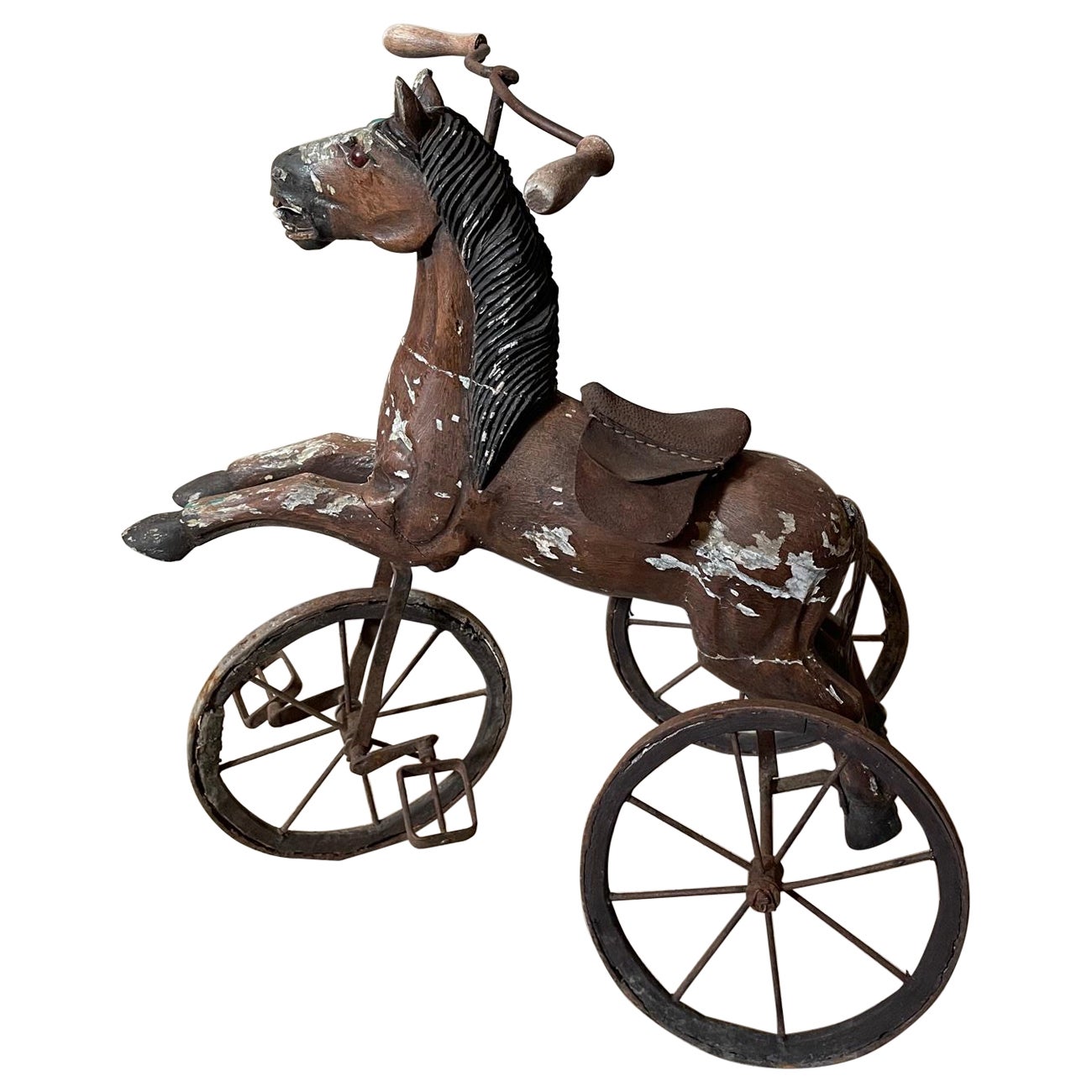
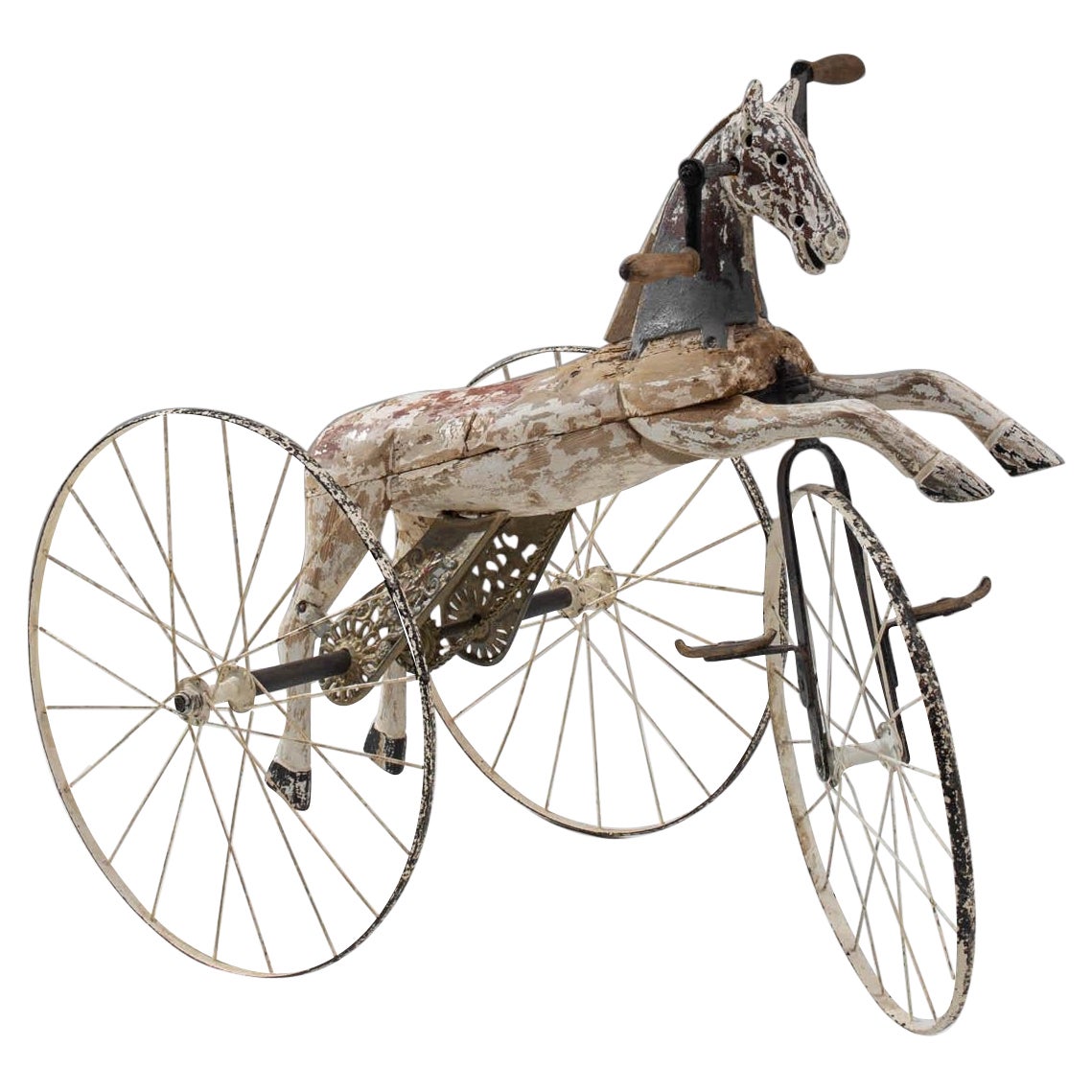
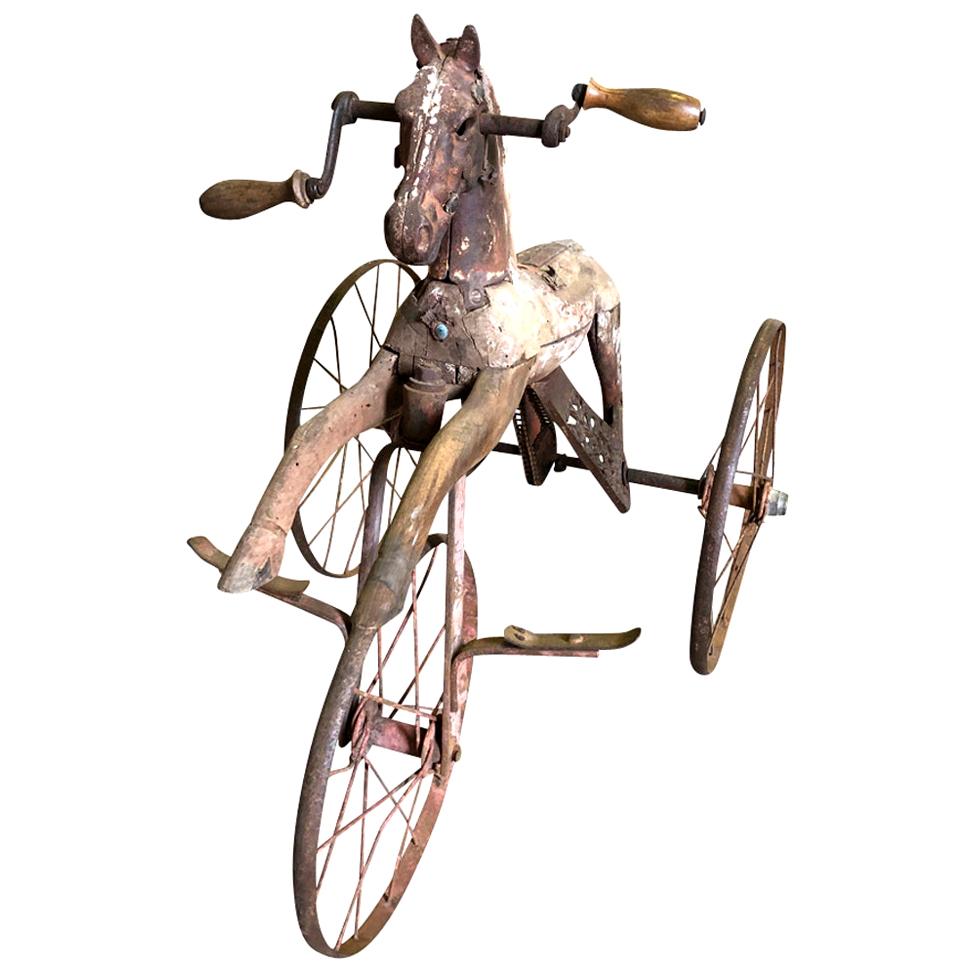
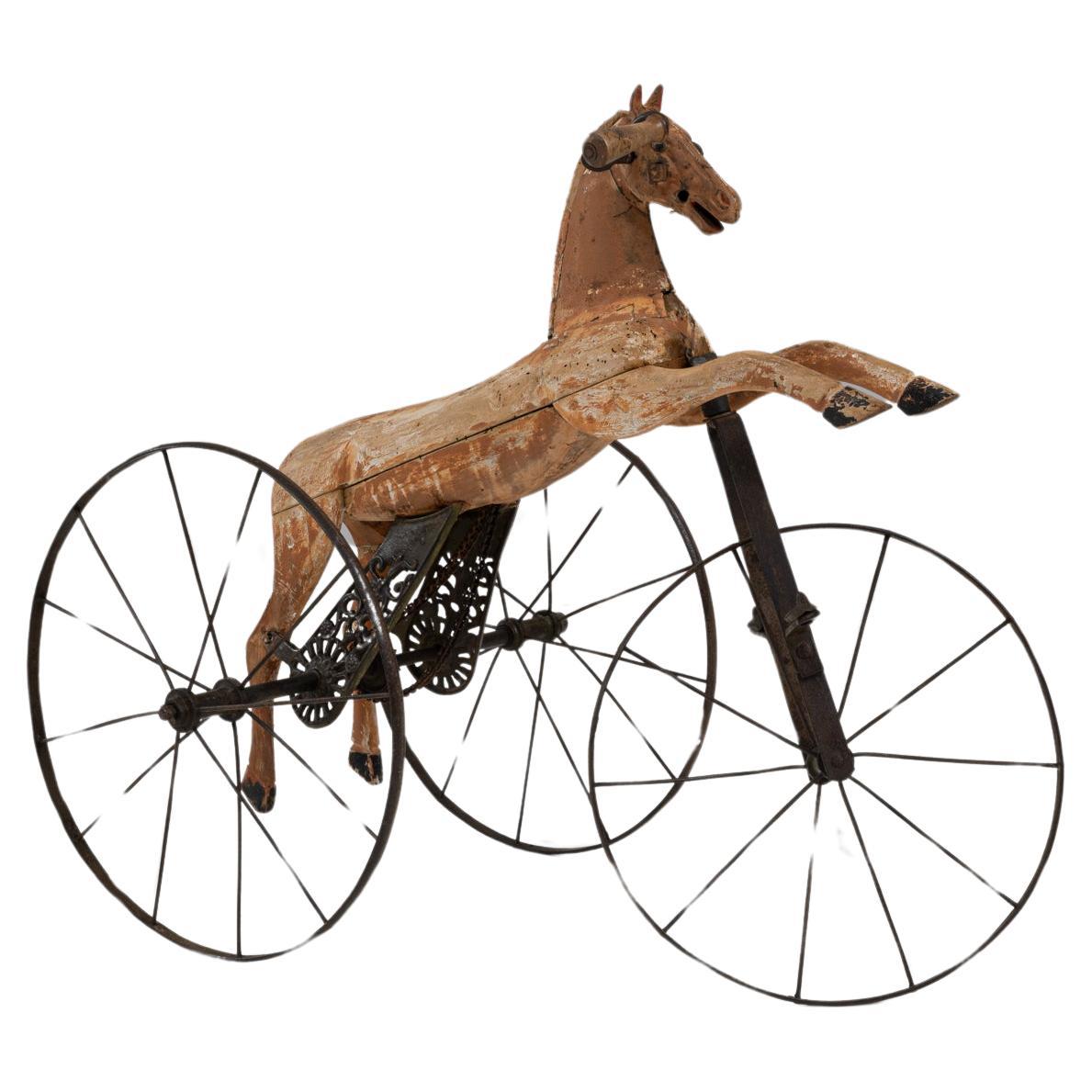
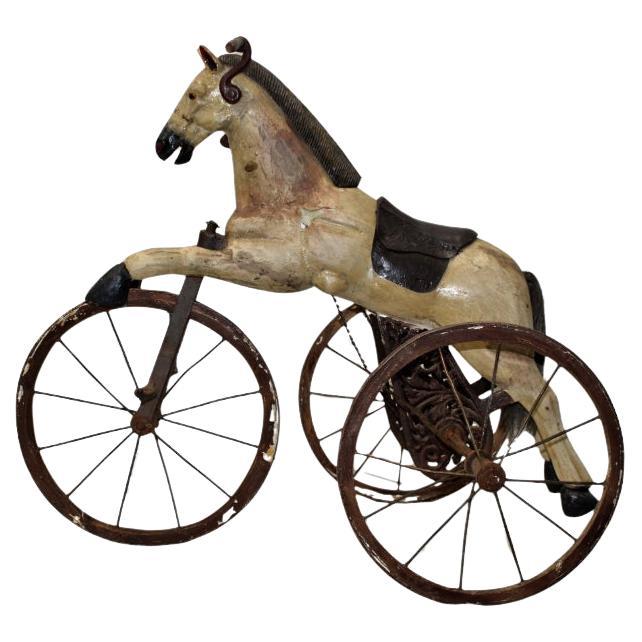
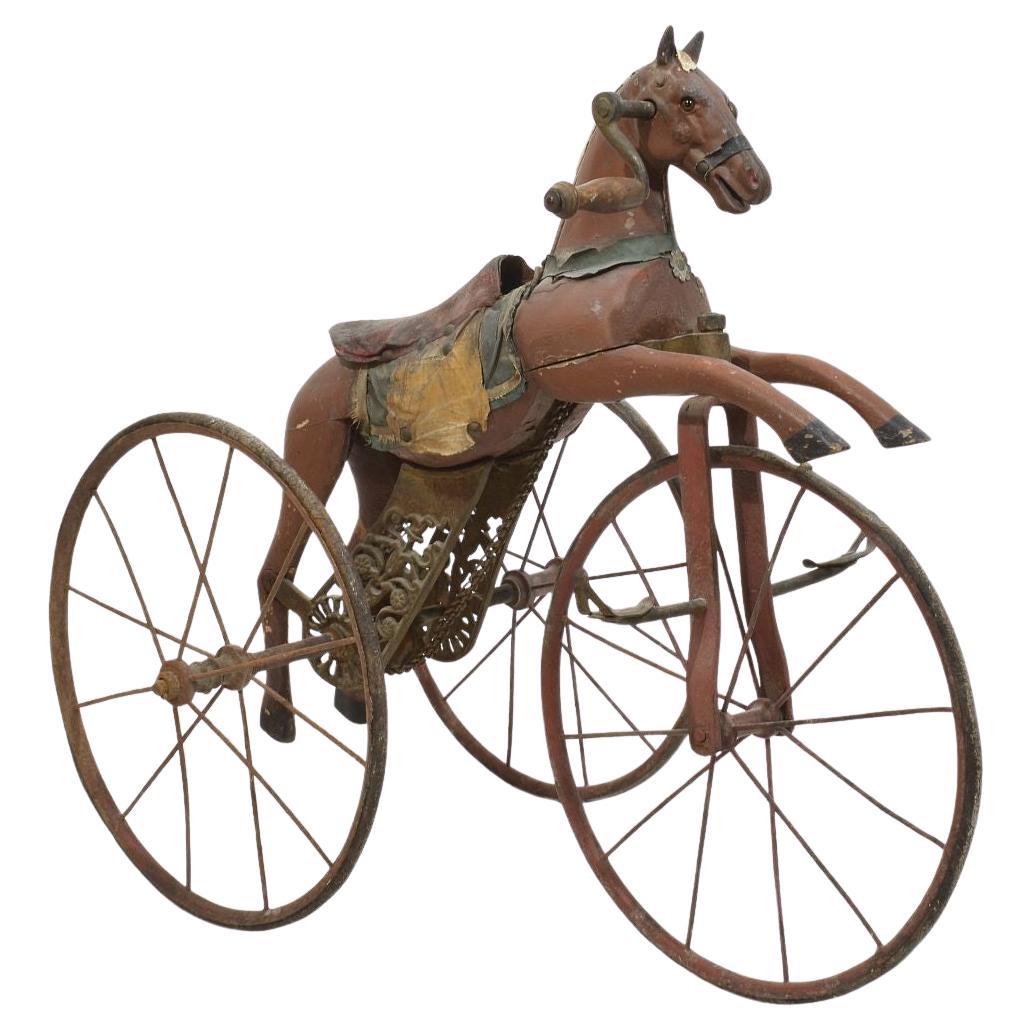
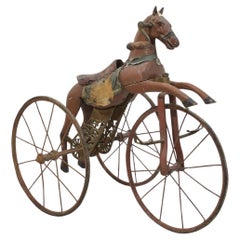
This is an old wooden tricycle made in Japan during the Meiji period (1860s–1900s).
An exceptionally rare piece in the history of Japanese toys, it was once used by children more than a century ago.
During times of war and poverty, such a handmade wooden tricycle would have been a luxury—likely owned only by children of the affluent few.
Reflecting on that era, one cannot help but feel the depth of history and emotion carried within this small object.
Crafted from traditional Japanese sugi (cedar) wood, the body of the horse is boldly carved from a single block and assembled with iron handles and wheels.
The seat retains its original fabric wrapping, now beautifully aged and worn, with subtle tears and faded tones that speak of the passage of time.
The right pedal is missing—a quiet reminder of its long life—yet this imperfection enhances its individuality and poetic beauty.
The rust on the iron, the cracks in the wood, the peeling of the paint—each trace is not accidental but the natural outcome of more than a hundred years of existence.
Made by human hands, cherished by children, and then left to rest, the tricycle now stands in silence, transcending its role as a toy.
It is no longer merely a plaything, but a sculpture of time—a form shaped by memory, use, and decay.
Within this piece resides the Japanese spirit of wabi-sabi—beauty found in imperfection and transience.
The contrast between wood and iron, the textures weathered by age, and the quiet dignity of its form make it utterly unique.
It radiates a calm yet powerful presence, as if time itself had taken shape.
Though its days of play have ended, this wooden tricycle now finds new meaning as an art piece—bringing warmth, depth, and quiet poetry into contemporary spaces.
Weight: 5.5 kg
_________________________
Our Philosophy
Objects always tell the truth.
All I can do is just to face with them sincerely and give
them deep affection as much as I can.
There is no boundary of nationalities and of eras in beauty.
But I think now is the time we choose 'Japanese style' and it
will be the best way to remind us of what we are losing
today and to question us about an essence of beauty again.
I hope that you can touch the memories which the objects here have,
feel and think of something invisible but exists undoubtedly.
- Dimensions:Height: 21.26 in (54 cm)Width: 31.11 in (79 cm)Depth: 18.12 in (46 cm)
- Style:Primitive (In the Style Of)
- Materials and Techniques:
- Place of Origin:
- Period:
- Date of Manufacture:1860s-1900s
- Condition:Wear consistent with age and use.
- Seller Location:Chōsei District Nagara, JP
- Reference Number:1stDibs: LU10403247450142
About the Seller
4.8
Platinum Seller
Premium sellers with a 4.7+ rating and 24-hour response times
Established in 2017
1stDibs seller since 2025
73 sales on 1stDibs
Typical response time: 3 hours
- ShippingRetrieving quote...Shipping from: Chōsei District Nagara, Japan
- Return Policy
More From This Seller
View AllJapanese Antique Sacred Horse "Shinme" 1800s-1860s / Primitive Wabisabi
Located in Chōsei District Nagara, JP
This is an old Japanese carved wooden horse, a highly valuable piece created in the late Edo period (early 1800s–1860s). In Japan, it is known as a "Shinme" (sacred horse), a term re...
Category
Antique Late 19th Century Japanese Edo Sculptures and Carvings
Materials
Cedar, Lacquer
Japanese Antique Sacred Horse Wooden Statue "Shinme" 1800s-1860s / Wabi Sabi
Located in Chōsei District Nagara, JP
This is a very rare carved wooden statue of a sacred horse that was dedicated to a Japanese shrine. It was produced during the Edo period (1800s-1860s), and the main material used is...
Category
Antique Mid-19th Century Japanese Edo Sculptures and Carvings
Materials
Cedar
$5,040 Sale Price
37% Off
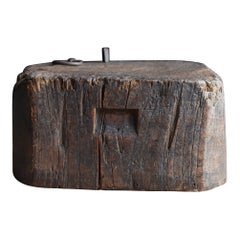
Japanese Antique Wooden Block Workbench 1900s-1940s / Display Stand Wabisabi
Located in Chōsei District Nagara, JP
This is an old Japanese wooden block workbench, believed to have been used in the early Showa period (1900s–1940s). The material is zelkova (keyaki) wood.
The countless scratches, dents, and the smoothness of its surface are proof of the many years of daily use and the touch of human hands that have polished it over time. The iron fittings remaining on the surface tell the story of the work once performed here, while also serving as a striking visual accent.
The inherent durability and beautiful grain of zelkova have gained even greater depth through the passage of time, creating a unique and irreplaceable texture. Left as it is, it stands as a powerful art piece; as a display stand, it functions beautifully to enhance the presence of whatever is placed upon it.
There is a slight tilt, but this too is part of its individuality, telling the tale of its long history. It is not in perfection, but in the imperfections shaped by time, that the Japanese aesthetic of wabi-sabi resides.
This wooden workbench is more than just an old tool — it is a sculptural object that reflects the era and the lives of the people who used it. Whether in a home interior, gallery, or as store display furniture...
Category
Mid-20th Century Japanese Primitive Antiquities
Materials
Wood
Japanese Antique Low Table 1900s-1940s / Sofa Table Display Table Wabi Sabi
Located in Chōsei District Nagara, JP
This is an old Japanese low table dating from the early Showa period (1900s–1940s), discovered in an old farmhouse.
Designed in a separate two-part structure, it is both practical an...
Category
Mid-20th Century Japanese Showa Side Tables
Materials
Cedar

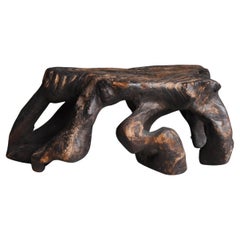
Japanese Antique Primitive Side Chair 1900s-1940s / Display Stand Wabi Sabi
Located in Chōsei District Nagara, JP
This is an old Japanese primitive-style stool or stand, believed to have been crafted in the early Showa period (1900s–1940s). The material appears to be kiri (paulownia wood), known...
Category
Mid-20th Century Japanese Primitive Side Chairs
Materials
Wood
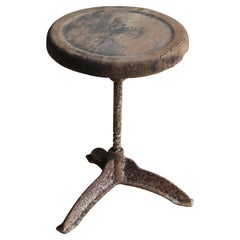
Japanese Old Stool 1940s-1960s / Side Chair Wabisabi
Located in Chōsei District Nagara, JP
This is an old stool made in Japan.
It was made in the mid-Showa period (1940s-1960s). The top surface is made of cedar wood and the legs are made of iron. Despite the combination of...
Category
Late 20th Century Japanese Showa Stools
Materials
Iron
$480 Sale Price
40% Off
You May Also Like
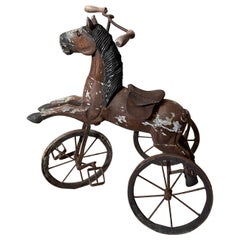
19th Century French Wood and Iron Child Horse Tricycle
Located in LEGNY, FR
Beautiful 19th century French wood and iron child horse tricycle from the 1890s.
The saddle is made with fabric. The painting has peeled off with the age and use.
Nice quality.
Category
Antique 1890s French Children s Furniture
Materials
Iron
$1,708 Sale Price
20% Off
1900s French Wooden and Metal Horse Tricycle
Located in High Point, NC
A wooden and metal horse tricycle created in France circa 1900. Vibrant yet seasoned and matured, this sprung horse glides on metal wheels that roll it gracefully into modernity. Thr...
Category
Antique Early 1900s French Rustic Toys and Dolls
Materials
Metal
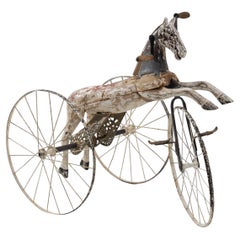
Delightful Early 19th Century Horse Tricycle
Located in Round Top, TX
A very charming early 19th century child's horse tricycle in wood and iron. A wonderful accent piece.
Category
Antique Early 19th Century French Children s Furniture
Materials
Iron
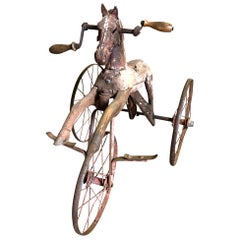
1900s French Wooden
Metal Horse Tricycle
Located in High Point, NC
Step back in time with this exquisite 1900s French Wooden & Metal Horse Tricycle, a charming piece of history that is sure to captivate and enchant. Crafted during a bygone era of me...
Category
Early 20th Century French Animal Sculptures
Materials
Metal
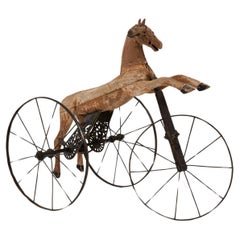
Child
s Painted Wood Horse Tricycle
Located in San Francisco, CA
C. 19th century
Child's painted wood horse tricycle.
Category
Antique 19th Century Children s Furniture
Materials
Wood, Paint
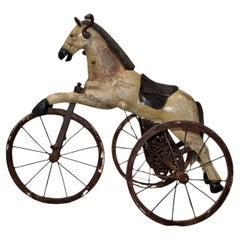
Late 19th Century French Tricycle Horse
Located in Buisson, FR
Beautiful and complete tricycle horse with its cast iron details with a stunning patina. Amazing period piece.
This type of 19th century French velocipede tricycle horse was origina...
Category
Antique 19th Century European Belle Époque Toys and Dolls
Materials
Iron
$1,868 Sale Price
46% Off