Items Similar to Japanese Bronze Pheasant Okimono Genryusai Seiya
Want more images or videos?
Request additional images or videos from the seller
1 of 18
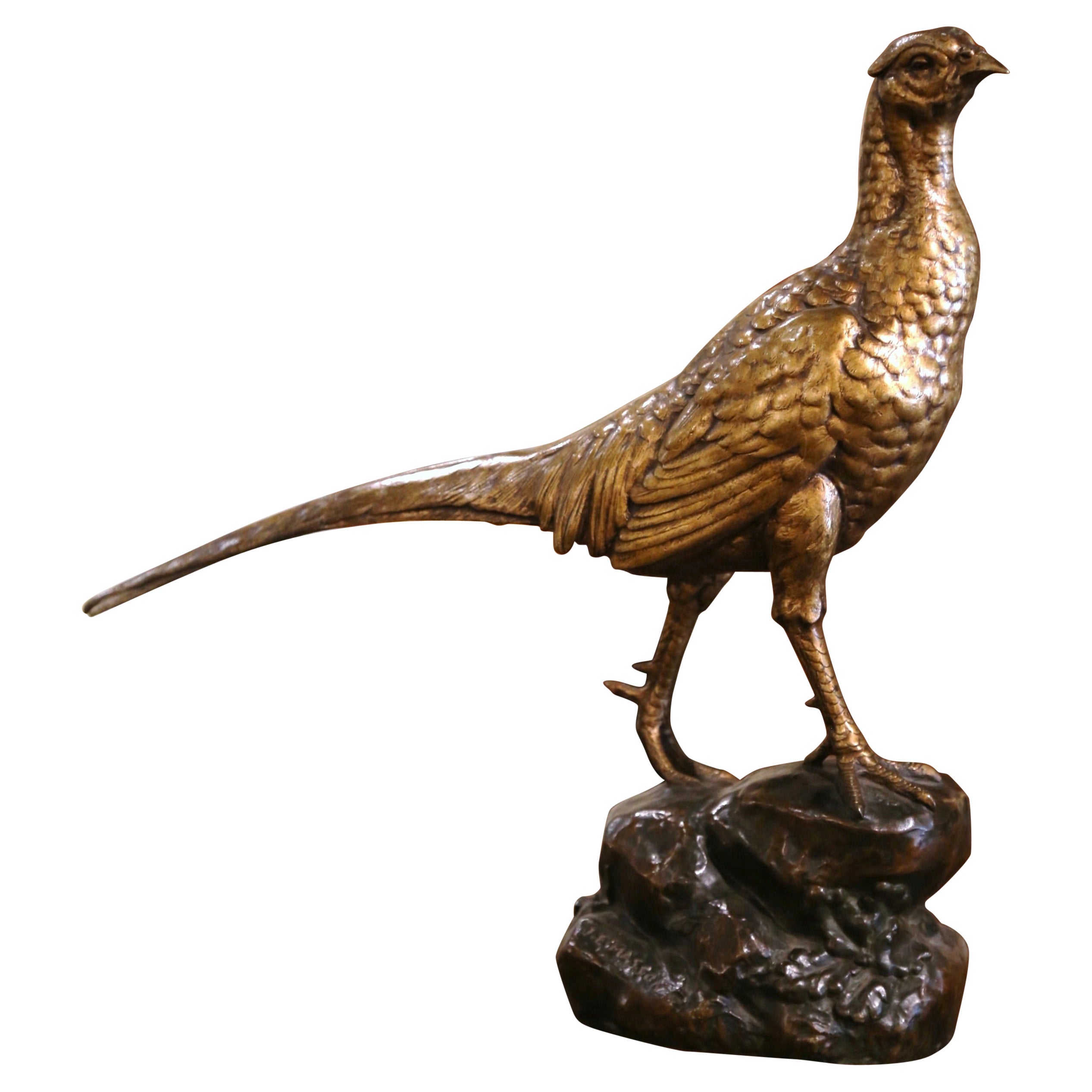
Japanese Bronze Pheasant Okimono Genryusai Seiya
$25,336.79
£18,400
€21,518.36
CA$34,667.06
A$37,720.40
CHF 19,972.49
MX$453,802.20
NOK 253,606.08
SEK 232,031.80
DKK 160,772.07
About the Item
Unusual Casting of a Pheasant in Flight
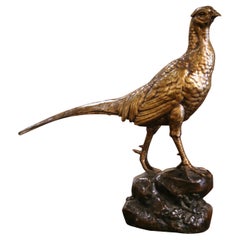
From our Japanese collection, we are delighted to offer this Japanese bronze okimono of a Pheasant upon a naturalistic root wood base. The Pheasant cast from bronze with gilded feathers standing seconds before taking flight. With an extreme attention to detail Seyia has captured a stunning representation of the male pheasant with intricate detailing from the bill to the claws. Signed under the belly within a square tablet, Genryusai Seiya 源龍斎誠谷造. The Bronze Okimono dates to the Meiji Period (1868-1912) circa 1890.
Genryusai Seiya is one of the most celebrated Japanese bronze artists of the Meiji period. His workshop specialised in export wares of supreme quality, including animals, vases, and human figures. Most commonly Seiya bronzes can be seen as tigers and elephants often in single form or small groups. Renowned for his attention to detail, Seiya manages to encapsulate a natural and realistic look to every figure that has you checking twice to see if it is indeed a sculpture.
Meiji Period was an era of Japanese history that spanned from 1868 to 1912. It was the first half of the Empire of Japan, when the Japanese people began to build a paradigm of a modern, industrialised nation state and emergent great power, influenced by Western countries and aesthetics. As a result of radically different ideas, the changes to Japan were profound and it affected the social structure, politics, economy, military, and foreign relations across the board. The period corresponded to the reign of Emperor Meiji and was preceded by the Keio era and was succeeded by the Taisho era.
Cultural Art during the Meiji Period was of particular interest to the government and they overhauled the art export market which in turn promoted Japanese arts via various world’s fairs, beginning in Vienna at the world fair in 1873. The government heavily funded the fairs and took an active role organising how Japan’s culture was presented to the world including creating a semi-public company named Kiritsu Kosho Kaisha (First Industrial Manufacturing Company). The Kiritsu Kosho Kaisha was used to promote and commercialise exports of Japanese art and established the Hakurankai Jimukyoku (Exhibition Bureau) to maintain quality standards. For the 1876 Centennial International Exhibition in Philadelphia, the Japanese government created a Centennial Office and sent a special envoy to secure space for the 30,000 items that would be displayed. The Imperial Household also took an active interest in arts and crafts, commissioning works by select artists to be given as gifts for foreign dignitaries further emphasising the high quality and importance of Japanese art. Just before the end of the 19th century in 1890, the Teishitsu Gigeiin (Artist to the Imperial Household) system was created to recognise distinguished artists. These artists were selected for their exceptionally high quality wares and talent in their own industry. Over a period of 54 years Seventy artists were appointed, amongst these were ceramicist Makuzu Kozan and cloisonné enamel artist Namikawa Yasuyuki.
Measurements (centimetres) 46cm High x 46cm Wide x 25cm Deep inc. Base
- Creator:Genryusai Seiya (Sculptor)
- Dimensions:Height: 18.1 in (45.98 cm)Width: 18.1 in (45.98 cm)Depth: 9.8 in (24.9 cm)
- Style:Meiji (Of the Period)
- Materials and Techniques:
- Place of Origin:
- Period:
- Date of Manufacture:Circa 1890
- Condition:Wear consistent with age and use.
- Seller Location:Newark, GB
- Reference Number:Seller: PRDDS1stDibs: LU6971237393362
About the Seller
5.0
Vetted Professional Seller
Every seller passes strict standards for authenticity and reliability
Established in 2019
1stDibs seller since 2022
40 sales on 1stDibs
Typical response time: 3 hours
- ShippingRetrieving quote...Shipping from: Newark, United Kingdom
- Return Policy
More From This Seller
View AllJapanese Antique Silvered Bronze Minogame by Ryūbundō Meiji Period
Located in Newark, England
FREE WORLDWIDE SHIPPING
LEGENDARY JAPANESE MINOGAME
From our Japanese collection, we’re pleased to offer this Meiji period silvered bronze minogame Okimono by Ryūbundō.
Cast in si...
Category
Antique Early 1900s Japanese Meiji Sculptures and Carvings
Materials
Silver, Bronze
Japanese Bronze Okimono Sculpture by Yamamoto Kozan
Located in Newark, England
YOUNG MAN WOOD CUTTING
From our Japanese collection, we are pleased to offer this Japanese Bronze Okimono by Yamamoto Kozan. The Japanese Bronze Sculpture cast in Bronze with a natu...
Category
Early 20th Century Japanese Meiji Sculptures and Carvings
Materials
Bronze
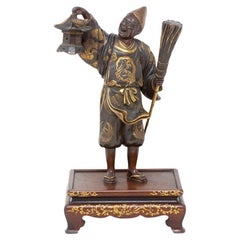
Japanese Bronze Figure by Miyao Eisuke, Meiji Period
By Eisuke Miyao 1
Located in Newark, England
FREE WORLDWIDE SHIPPING
A FINELY DETAILED JAPANESE BRONZE FIGURE BY MIYAO EISUKE, MEIJI PERIOD, CIRCA 1890.
From our Japanese collection, we are delighted to offer this outstanding...
Category
Antique Late 19th Century Japanese Meiji Sculptures and Carvings
Materials
Bronze
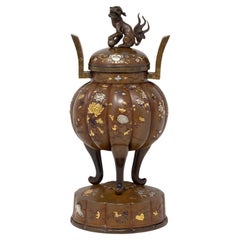
Japanese Bronze and Mixed Metals Koro by Kumagai, Meiji Period
Located in Newark, England
FREE WORLDWIDE SHIPPING
From our Japanese collection, we are pleased to present this Japanese Bronze and Mixed Metals Koro by Kumagai, dating to the Meiji Period (1868–1912).
The ...
Category
Antique Late 19th Century Japanese Meiji Metalwork
Materials
Gold, Silver, Bronze
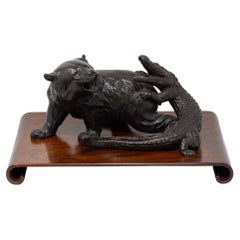
Japanese Meiji Bronze Okimono by Yoshimitsu Depicting a Bear and Alligator
By Saeki Yoshimitsu
Located in Newark, England
FREE WORLDWIDE SHIPPING
A DYNAMIC MEIJI PERIOD BRONZE OKIMONO BY YOSHIMITSU FEATURING A BEAR AND ALLIGATOR IN COMBAT.
From our Japanese collection, we are pleased to present this ...
Category
Antique Late 19th Century Japanese Meiji Animal Sculptures
Materials
Bronze
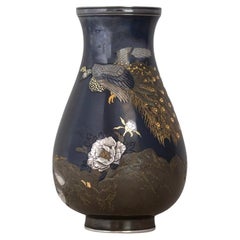
Japanese Shakudo and Mixed Metal Vase by Shuho Meiji Period
Located in Newark, England
FREE WORLD WIDE SHIPPING
From our Japanese collection, we’re thrilled to present this finely made Japanese mixed metals vase from the Meiji period (1868–1912), by Shuho.
The vase ...
Category
Early 20th Century Japanese Meiji Metalwork
Materials
Metal
You May Also Like
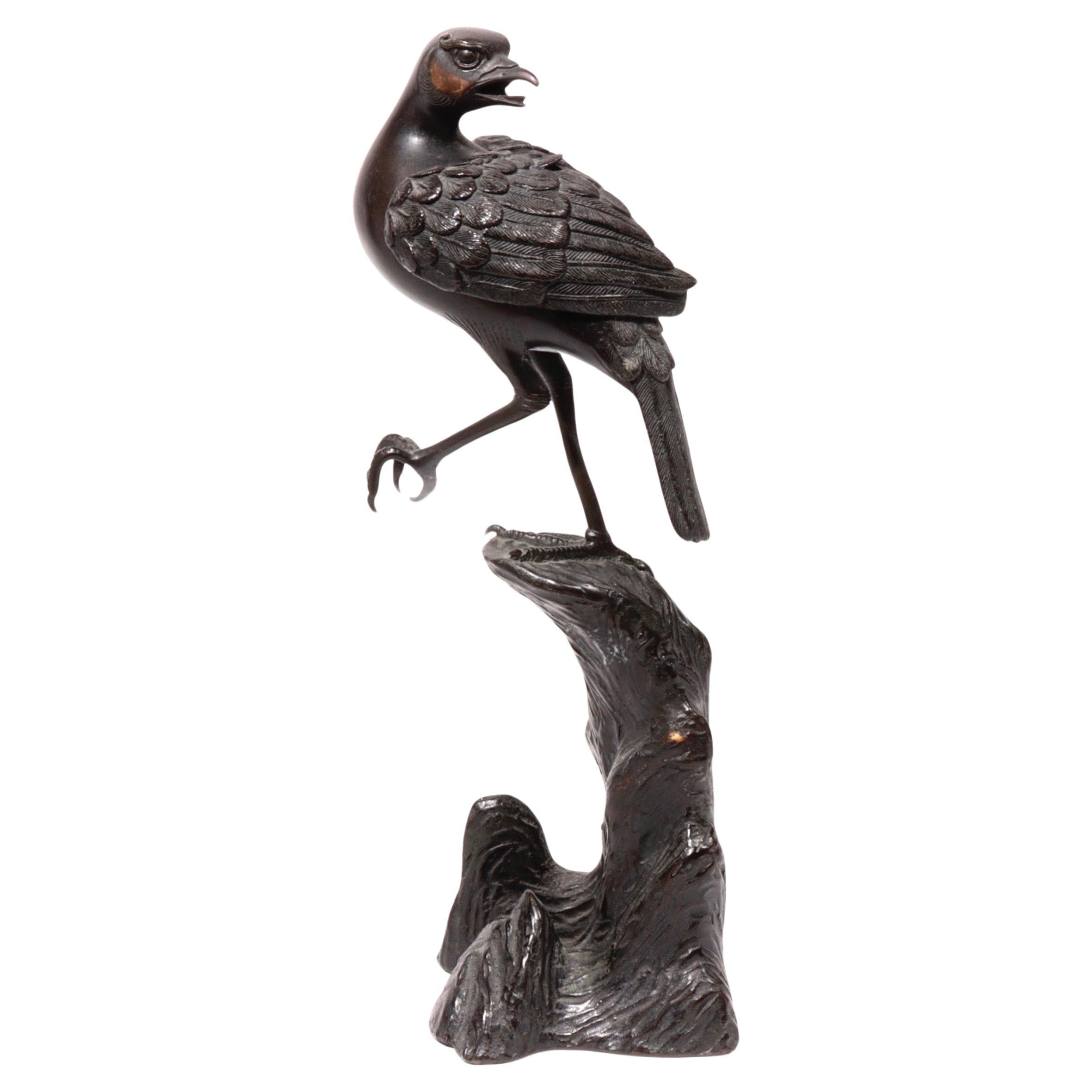
Antique Japanese bronze incense burner, in the form of a bird
Located in Point Richmond, CA
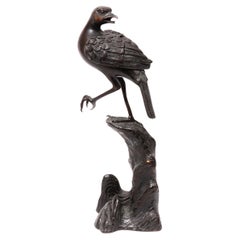
Antique Japanese bronze incense burner, in the form of a bird perched on one foot on a tall rocky outcropping, the bird’s head l...
Category
Antique Late 19th Century Japanese Meiji Metalwork
Materials
Bronze
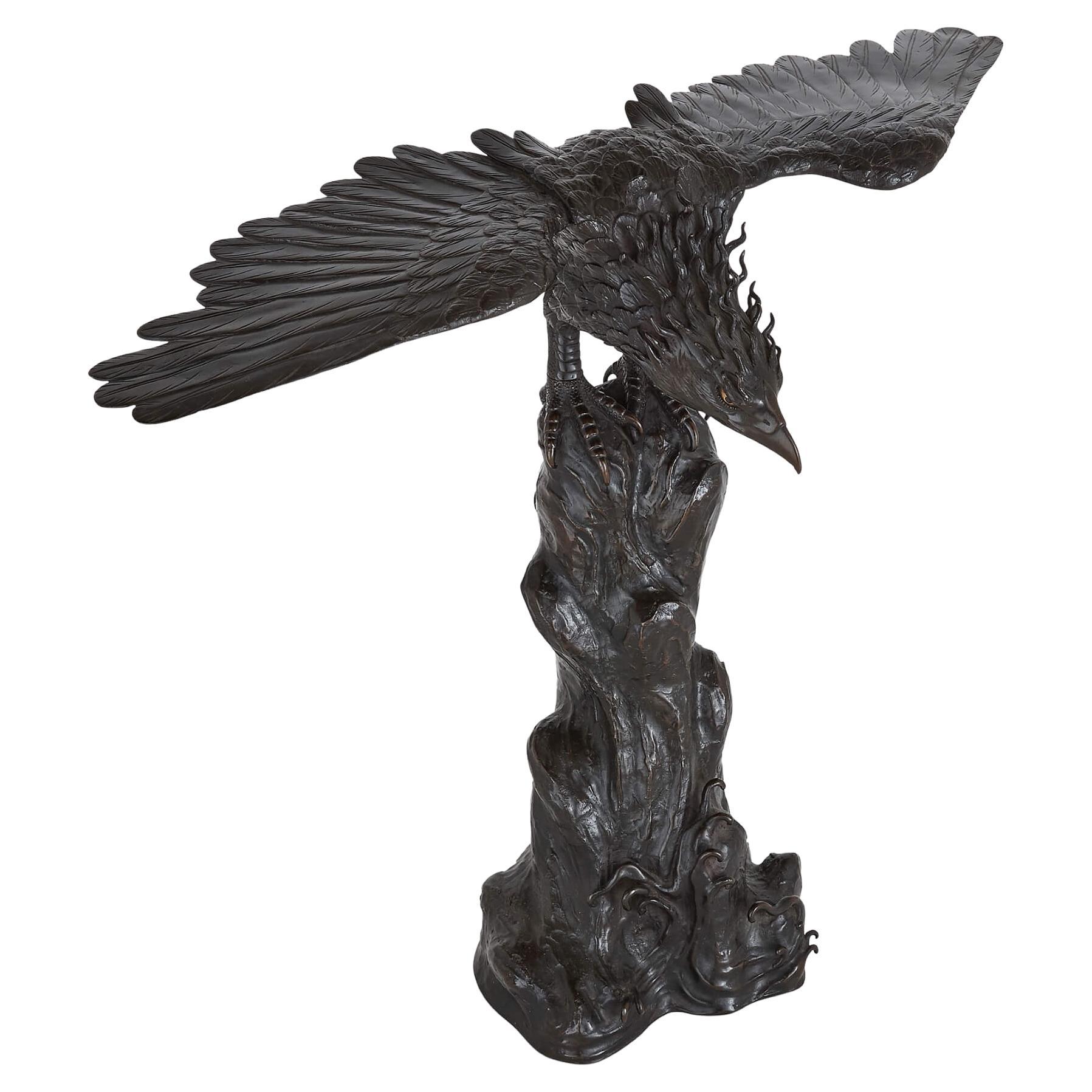
Antique Japanese patinated bronze eagle
Located in London, GB
Antique Japanese patinated bronze eagle
Japanese, c. 1900
Height 54cm, width 67cm, depth 32cm
This fine and naturalistic Meiji period bronze...
Category
Early 20th Century Japanese Meiji Animal Sculptures
Materials
Bronze
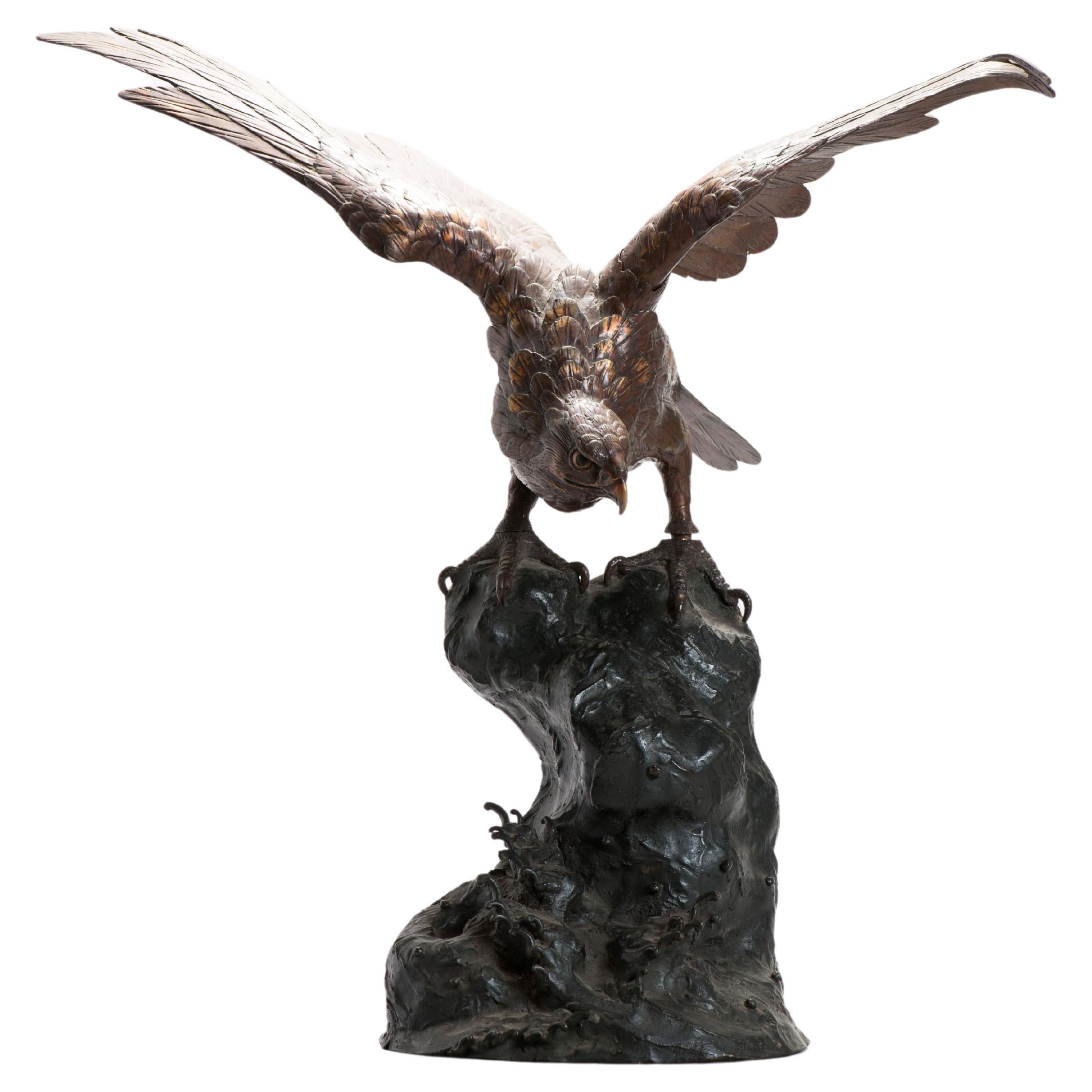
Huge Antique Meiji Japanese Bronze Bird of Prey On a Rock Gold Elements Marked
Located in Amsterdam, Noord Holland
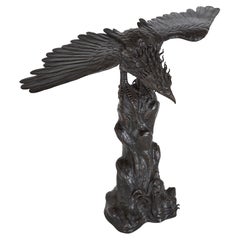
Huge Antique Meiji Japanese Bronze Bird of Prey On a Rock Gold Elements Marked
Condition
Close to perfect condition, just some ware. 40 x 45CM LengthxWidexHeight (including base)
P...
Category
Antique 19th Century Japanese Meiji Ceramics
Materials
Metal, Bronze
$4,917 Sale Price
50% Off
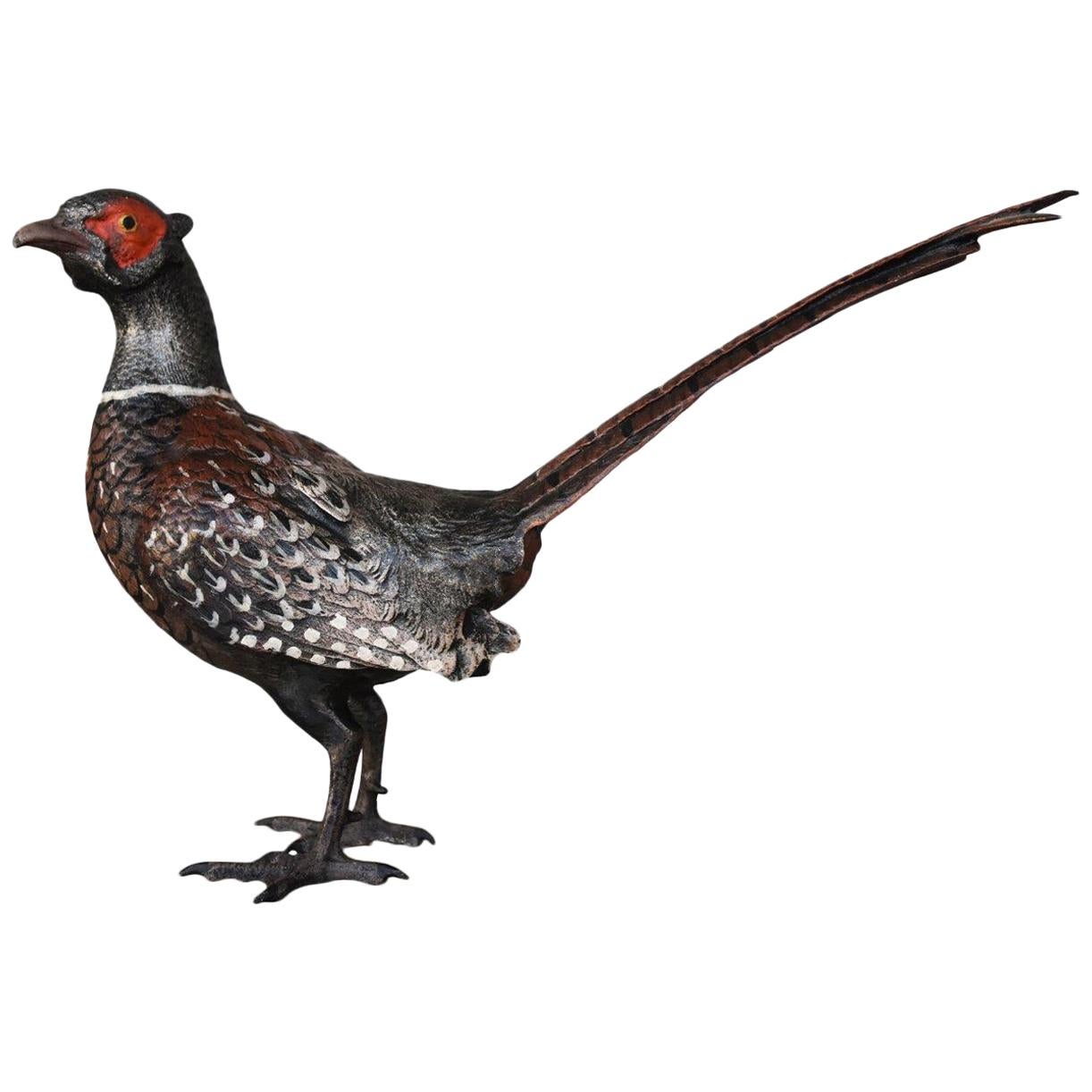
Vienna Bronze Pheasant, circa 1900
By Bergmann Foundry
Located in Marseille, FR
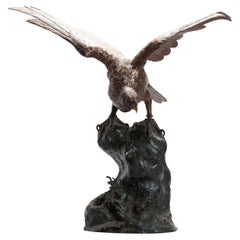
Vienna bronze pheasant, circa 1900.
Category
Early 20th Century Austrian Animal Sculptures
Materials
Bronze
19th Century French Patinated Bronze Pheasant Sculpture Signed J.E. Masson
By Jules Edmond Masson 1
Located in Dallas, TX
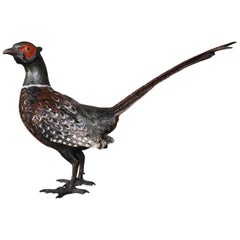
Accessorize a man's office or desk with this elegant antique bronze figure. Crafted in France circa 1895, the large sculpture features a pheasant with long tail standing on rocky grounds; the artwork is signed on the base by French artist J. E. Masson. The bird's head is lifted in full attention, with right foot forward in a walking position. The bird figure is in excellent condition, commensurate with age and use, and adorns a beautiful and rich two tone patinated bronze finish.
Jules Edmond Masson (1871-1932) was born in Paris in 1871. He was the son of Clovis Masson, who was also a renowned sculptor and a pupil of Barye. J.E. Masson specialized in depictions of animals, as well as equestrian monuments...
Category
Antique Late 19th Century French Animal Sculptures
Materials
Bronze
A silvered bronze okimono depicting a rooster signed Yoshiaki
Located in Milano, IT
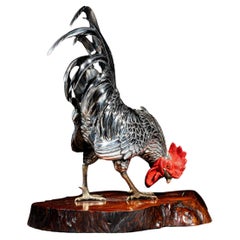
A silvered bronze study of a rooster with golden legs and beak, a red enamel crest, and glass eyes on a root base signed Yoshiaki zō (Made by Yoshiaki).
Work published in the volume ...
Category
Antique Late 19th Century Japanese Metalwork
Materials
Bronze
More Ways To Browse
Antique Pheasants
Centennial 1876
Arts And Crafts Bronze Vase
Pheasant Art
Pheasant Sculpture
Meiji Bronze Sculptures
Bronze Tiger
Japanese Okimono
Meiji Wood Sculpture
Bronze Pheasant
Antique Bronze Tiger
Elephant And Tiger
Meiji Okimono
Carved Pheasant
Japanese Pheasant
Genryusai Seiya
Wood Okimono
Japanese Wood Okimono