Hardwood Sculptures and Carvings

to
36
163
56
211
30
5
14
2
2
2
2
1
19
76
116
35
56
33
7
12
6
6
5
6
3
7
57,846
1,667
1,058
935
739
186
107
68
59
37
246
235
236
19
5
1
1
Material: Hardwood
A Fine Shunga Mask Netsuke of Okame with Hidden Erotic Carving. Late Edo
Located in London, GB
A Fine Shunga Mask Netsuke of Okame with Hidden Erotic Carving Japan, Edo to Meiji period (circa 1850–1900) Material: Stained boxwood A charming a...
Category

19th Century Japanese Antique Hardwood Sculptures and Carvings

Materials

Boxwood

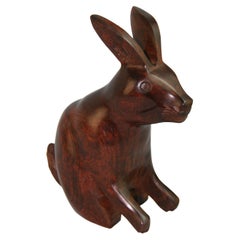
Japanese Hand Carved Rosewood Rabbit
Located in Douglas Manor, NY
Japan hand carved rosewood rabbit.
Category

1960s Vintage Hardwood Sculptures and Carvings

Materials

Hardwood

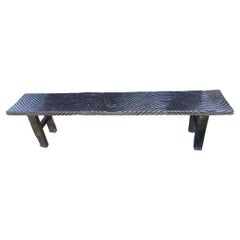
Japanese Rare Mid Century "Wave" Pattern Garden Bench
Located in South Burlington, VT
Extraordinary mid century design This is a handsome Japanese mid century heavy hardwood bench hand chiseled on plank in a dramatic "wave" pattern using traditional Japanese tools "Oire Nomi". The butterfly joint at the end reminds us of George Nakashima's popular technique he used on his famous mid century tables. Solid and Heavy. Genuinely old waxed chocolate patina from care. We have applied a further protective coat of bees wax to ensure continued weather resistant use. Dimensions: Seat height: 18 inches x width: 71 inches x depth: 11.5 inches, 65 pounds Pair available. About Japan's hand chisels "Oire Nomi" The renowned metal-working arts of Japan are reflected in Japanese chisels...
Category

Mid-20th Century Indonesian Hardwood Sculptures and Carvings

Materials

Hardwood

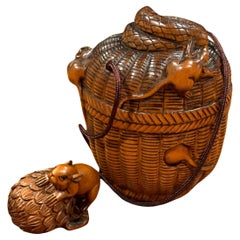
Japanese Boxwood Inro Netsuke of Rats and Snakes in Basket
Located in San Diego, CA
A really nice vintage Japanese boxwood inro and netsuke of rats and snakes on a round basket, circa early 1940s. The piece is well carved with wonderful detail and in very good vint...
Category

Early 20th Century Japanese Hardwood Sculptures and Carvings

Materials

Boxwood

A boxwood netsuke depicting a monkey with an Okame mask, signed Shinzan
Located in Milano, IT
A boxwood netsuke depicting a seated monkey in the act of putting on an inverted Okame mask, which it holds up before its face, signed Shinzan. Incised signature to the reverse. Pe...
Category

Late 19th Century Japanese Antique Hardwood Sculptures and Carvings

Materials

Boxwood

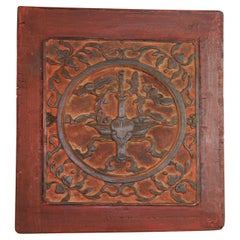
19th Century Carved Wood Panel
Located in New York, NY
19th Century carved wood panel with lotus bud motive. An Architectural Element from a Buddhist Monastery in Northen Thailand. A Lotus Bud representi...
Category

Early 1800s Thai Other Antique Hardwood Sculptures and Carvings

Materials

Teak

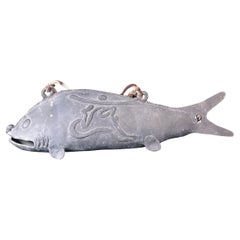
Japanese Huge Antique Bronze Fish Bell Gong With Striker
Located in South Burlington, VT
Huge fish gong bell- first we have seen in this rare large scale size, 22 inches in length Immediately useable. Crafted using the ancient lost wax technique, this bell is a Japanes...
Category

Early 20th Century Japanese Showa Hardwood Sculptures and Carvings

Materials

Bronze

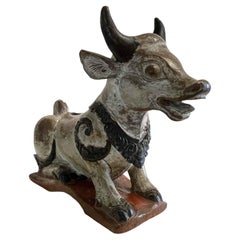
Nandi Cow Oriental Indian Sculpture In Carved And Lacquered Wood 19th Century
Located in Milano, MI
Nandi Cow In Carved And Lacquered Wood visibly antique and hand-carved, from India. This wood carving has a wonderful patina due to age and has been hand-painted with a mix of brigh...
Category

Mid-19th Century Indian Anglo-Indian Antique Hardwood Sculptures and Carvings

Materials

Hardwood

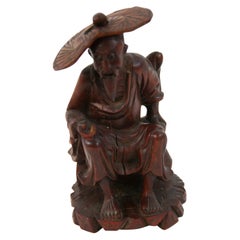
Chinese Sculpture Hand Carved Farmer
Located in Douglas Manor, NY
8-163 small hand carved figure of a peasant with a removable straw hat. circa 1920-30's.
Category

1920s Chinese Vintage Hardwood Sculptures and Carvings

Materials

Fruitwood

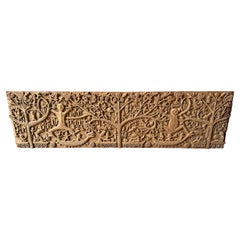
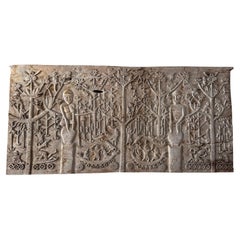
Hand-Carved Teak Wood Sculpture Panel Depicting Dayak Mythology
Located in Jimbaran, Bali
This unique teak carved panel depicts Dayak Tribal mythology. The Dayak people are some hundreds of various native groups found in the interior rainforests of Borneo. This carving depicts the tree of life, which the Dayak people believe exists on “Linden Tarung”, a mythical rock island where they believe humans first came to existence. “Linden Tarung” is the ancient and ancestral home of the Dayak peoples. It is this tree of life that reminds the Dayak people not to get too attached to worldly possessions. The tree of life also symbolizes heaven, earth and the underworld. The top of tree features hornbills that are the symbol of heaven. The middle represents the present earth and bottom of the tree the underworld. To achieve such detail & depth required immense patience, craftsmanship and many months by a skilled artisan to complete. The medium for this carving was an antique teak door...
Category

21st Century and Contemporary Indonesian Organic Modern Hardwood Sculptures and Carvings

Materials

Teak

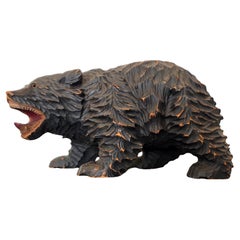
1960s Japanese Signed Ainu Hokkaido Wooden Bear Carving Sculpture
Located in Forney, TX
A rare and most impressive 1960s Japanese Ainu bear sculpture. Artist signed and dated. Indigenous Ainu Peoples, probably Ashikawa, Hokkaido, Japan's northernmost island. This ext...
Category

Mid-20th Century Japanese Black Forest Hardwood Sculptures and Carvings

Materials

Hardwood

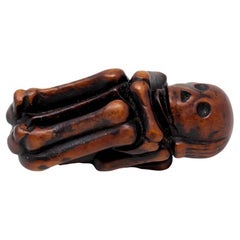
Japanese Edo Period (1603-1868) Skeleton Foetus Netsuke
Located in Newark, England
Laying Foetus From our Japanese collection, we are pleased to offer this Japanese Edo Period Skeleton Netsuke. The Skeleton Netsuke is carved from Boxwood depicting a skeleton in t...
Category

Mid-19th Century Japanese Edo Antique Hardwood Sculptures and Carvings

Materials

Wood, Boxwood

Hand-Carved Teak Wood Sculpture Panel Depicting Dayak Mythology
Located in Jimbaran, Bali
This unique teak carved panel depicts Dayak Tribal mythology. The Dayak people are some hundreds of various native groups found in the interior rain...
Category

21st Century and Contemporary Indonesian Organic Modern Hardwood Sculptures and Carvings

Materials

Teak

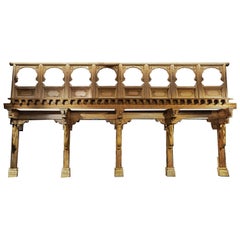
Monumental 19th Century Indian Building Facade
Located in Chicago, IL
This magnificent building facade was once part of a grand mansion in Gujarat, India. It is entirely made from Teakwood, which is highly resistant to in...
Category

19th Century Indian Anglo Raj Antique Hardwood Sculptures and Carvings

Materials

Teak

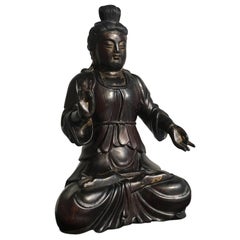
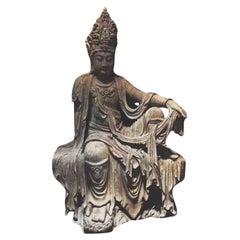
Chinese Carved Zitan Figure of a Bodhisattva, Qing Dynasty
Located in Austin, TX
A finely carved Chinese zitan wood figure of an unidentified bodhisattva, possibly Guanyin, late Qing Dynasty, circa 1900, China. The androgynous figure has a plump, almost matronly face, with downcast eyes and a gentle smile. The hair in long tresses, gathered and tied in a high chignon. The enlightened being is portrayed seated in dhyanasana, bare feet resting on crossed legs, both soles pointing up. Thick robes billow and drape around the full figured body. The hands display...
Category

Early 20th Century Chinese Qing Hardwood Sculptures and Carvings

Materials

Lapis Lazuli

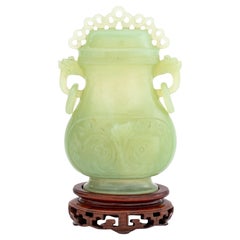
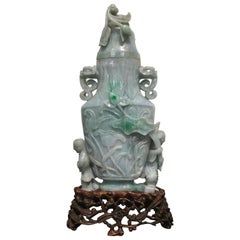
Chinese Carved Jade Covered Hu Vase
Located in Astoria, NY
Chinese Carved Jade Covered Hu Vase, with two mask head with rings handles, incised taotie design to each side, and on a fitted carved wood stand. Overall: 7.5" H x 4.25" W x 2.25" D...
Category

Early 20th Century Chinese Qing Hardwood Sculptures and Carvings

Materials

Jade

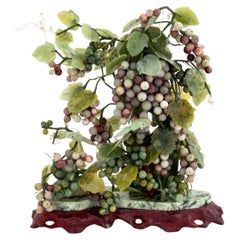
Chinese Grapevine Jade Sculpture
Located in Astoria, NY
Chinese Grapevine Jade Sculpture, mounted atop a hardwood sculpture. 15.25" H x 13.5" W x 5.5" D. Provenance: From a Fifth Avenue Collection.
Category

20th Century Chinese Qing Hardwood Sculptures and Carvings

Materials

Jade

Chinese Grapevine Jade Sculpture
$850 Sale Price
34% Off
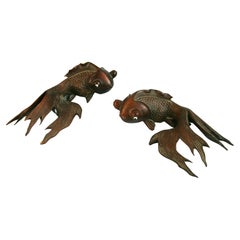
Japanese Pair Hand Carved Wood Koi Fish Signed
Located in Douglas Manor, NY
1202 Japan pair hand carved finely detailed pair of koi fish.
Category

1930s Vintage Hardwood Sculptures and Carvings

Materials

Hardwood

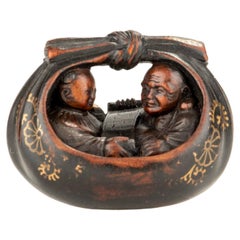
A boxwood netsuke of Hotei and a karako in the sack
Located in Milano, IT
A boxwood netsuke depicting Hotei with a karako inside his large sack, closed at the top with a knot. The god is shown with a smiling face and rounded body, while the exterior of the...
Category

Late 19th Century Japanese Antique Hardwood Sculptures and Carvings

Materials

Boxwood

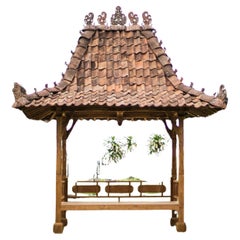
Special original teak wooden temple house - Gazebo
Located in DEVENTER, NL
Special original teak wooden temple house - Gazebo Material : wood 525 cm high Sizes of the platform: 294 cm wide and 215 cm deep Maximum sizes (at the widest point of the roof) is 4...
Category

21st Century and Contemporary Indonesian Hardwood Sculptures and Carvings

Materials

Teak

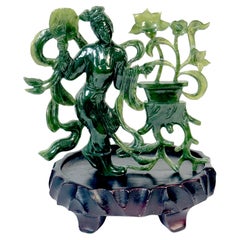
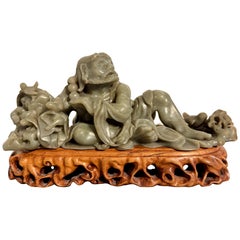
Chinese Spinach Nephrite Jade Immortal with Lotus, Mid-20th Century
Located in West Palm Beach, FL
Chinese Spinach Nephrite Jade Immortal with Lotus, Mid-20th Century Dimensions: 5” H x 5” W x 3” D (including base) A finely carved Chinese figure of a celestial maiden, sculpted f...
Category

Mid-20th Century Chinese Chinese Export Hardwood Sculptures and Carvings

Materials

Jade, Metal

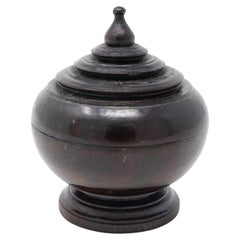
Antique Thai Hardwood Betelnut Box
Located in Point Richmond, CA
Antique Thai Hardwood Betelnut Box. A turned wood globular chedi form having a narrower pedestal base, fitted wood conical top shaped with circular tiers...
Category

Late 19th Century Thai Folk Art Antique Hardwood Sculptures and Carvings

Materials

Hardwood

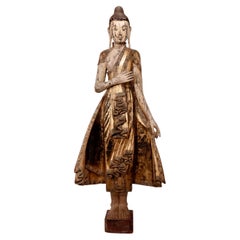
Burmese Mandalay carved wood figure of the standing Buddha
Located in Point Richmond, CA
Burmese Mandalay carved wood figure of the standing Buddha on a square base, the left hand is in the varada or boon-granting mudra the right held up towards the chest, costumed in ed...
Category

Early 20th Century Burmese Other Hardwood Sculptures and Carvings

Materials

Hardwood

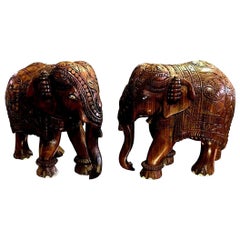
Pair of Large Heavy South India Indian Carved Hardwood Elephants with Bone Inlay
Located in Studio City, CA
Intricately crafted by a master carver. Heavy and ornate. These two would liven any setting. Quite unique and eye-catching. Dimension: 12" high, 14" wide, 7" deep.
Category

Mid-20th Century Indian Hardwood Sculptures and Carvings

Materials

Bone, Hardwood

Large Early 20th Century Chinese Carved Jade Vase
Located in Austin, TX
A large and impressive Chinese caved jade vase, Republic Period, circa 1930. Carved from one massive piece of jade. The vase carved with the He He Er Xian...
Category

Early 20th Century Chinese Qing Hardwood Sculptures and Carvings

Materials

Jade

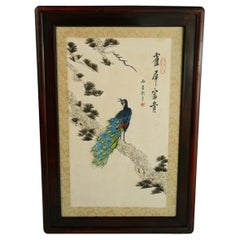
Asian Hand Made Peacock with Shells and Seeds Wall Decoration 1940
Located in Douglas Manor, NY
3-652 Asian peacock wall decoration made with shells and seeds.
Category

1940s Vintage Hardwood Sculptures and Carvings

Materials

Shell, Fruitwood

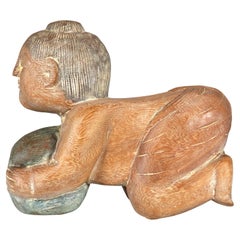
Asian Hand Carved Painted Wooden Lucky Baby Buddha on Melon
Located in Clifton Springs, NY
Vintage hand carved and hand-painted baby Buddha sculpture depicts Buddha as a boy, kneeling and hugging a large melon, ready to fall asleep. The...
Category

Mid-20th Century Asian Chinoiserie Hardwood Sculptures and Carvings

Materials

Wood, Padouk

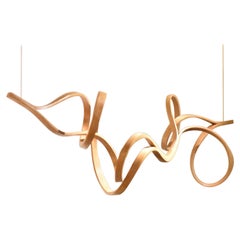
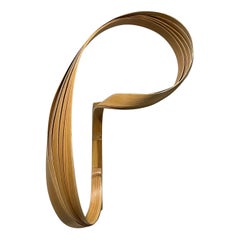
Sculpture - Wooden Sculpture - Form No. 9 - Vrksa Series
Located in Cape Girardeau, MO
The Form No. 9 of the Vrksa Series of works demonstrates the flow of wood; the emerging and the reduction of wood while retaining an organic form, creating a spectacle of shadows whe...
Category

2010s Asian Japonisme Hardwood Sculptures and Carvings

Materials

Wood, Bentwood, Ash, Oak

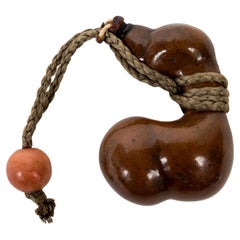
Nestuke in the form of a calabash gourd realised from an unmature cucurbitacea
Located in PARIS, FR
Netsuke made from a natural lacquered calabash. Curved around itself, it has a main bulb at the bottom and a second smaller bulb below the opening. It is narrowed in the middle, whe...
Category

Late 19th Century Japanese Meiji Antique Hardwood Sculptures and Carvings

Materials

Fruitwood

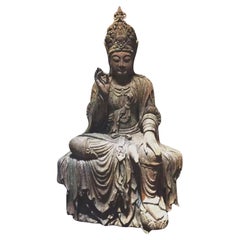
A Large Chinese Carved Wood Figure of Guanyin, Late Qing Dynasty
Located in ARMADALE, VIC
Description: A fine depiction of Guanyin, possessing the regal tranquillity that the Chinese Bodhisattva of compassion has come to be visually associated with. Marked by an urna signifying her spiritual enlightenment and crowned with a diadem depicting the Buddha Amitabha, the figure is immediately recognisable as Guanyin. Her androgynous figure is gracefully poised in the Lalit asana or “royal ease”, the pose classical in representations of the deity. The figure is asymmetric, with the weight of her supple form falling upon her left hand placed against the base, her right knee raised and left pendant. Her right hand rests upon her raised knee, delicately pinching at her draped attire. At first unassuming, this gesture may be suggestive of the Apana Mudra, the seal of purification. This Mudra is associated with physical wellbeing, fecundity and the cleansing of the body. Though she is adorned in the princely garb of dhoti, she bears features of idealised feminine beauty as prescribed in Asian art. With plump cheeks and near pouted lips, her full face gazes down upon the viewer with an empathetic and half-lidded gaze, upholding her title as ‘One who hears the cries of the world.’ Notes on the item: Guanyin is the Chinese interpretation of Avalokiteshvara, the Indian Bodhisattva of compassion. The term “Bodhisattva” is derived from the Sanskrit “Bodhi”, meaning ‘awakening’ or ‘enlightenment’, combined with “Sattva”, meaning ‘spirit’ or ‘being’, referring to one on the path to achieving enlightenment. Bodhisattvas in Mayahana Buddhism are recognised as figures who have effectively achieved enlightenment yet relinquish their accension to nirvana in order to remain amongst mankind in the ultimate act of compassion to aid as spiritual guides. As such, the Bodhisattva inhabit a liminal space between samsara and nirvana; enlightened beings that maintain a relationship with humanity that buddhas cannot, as attaining Buddhahood necessitates the abandonment of all worldly attachments, including mankind. Guanyin’s very name, ‘One who hears the cries of the world’ highlights this role as a compassionate figure who acknowledges the suffering and strife of man. Along with Mahāsthāmaprāpta, a fellow bodhisattva, Guanyin serves as an attendant to Buddha Amitabha, with these three deities recognised as the Three Sages of Western Pure Land Buddhism, a sect of Mayahana Buddhism popular in East Asia. Avalokiteshvara is commonly posited to have been adopted from Indian Buddhism into China as Guanyin around 200-400 CE, however it was the Tang dynasty (618-907) which saw the popularisation of the deity. By the Ming (1358–1644) and Qing (1644–1911) dynasties, Guanyin held the position as the most popular female deity in China. The unique state of religion in China held no monolithic canon regarding Buddhism and saw the assimilation of several belief systems, primarily Daoism, Buddhism and Confucianism. Consequently, Guanyin became a deity to be revered beyond Buddhism alone, appointed as both an official imperial deity and Daoist deity in the 12th century. Guanyin may also be seen to fulfil the role of idealised femininity as prescribed by Confucianism, with the scarcity of female Chinese deities perhaps accounting for the gradual gender shift Guanyin underwent. The Indian Avalokiteshvara is unequivocally recognised as male, whilst the supposed gender of Guanyin remains contentious. Although there is a clear shift from the masculine Avalokiteshvara towards a more feminine representation, it is unclear if Guanyin is understood to be entirely feminine, to inhabit qualities of both genders or to be elevated beyond gender entirely, embodying neither. Depictions of Guanyin are highly androgynous, which some believe lends credence towards Guanyin symbolising the unity of dualistic forces as recognised in Daoism, displaying the anthropomorphism of yin and yang. Comparative Analysis: Market comparisons of similar Qing Dynasty polychrome figures of Guanyin include lot 767 (no.2) From Christies ‘Important Chinese Ceramics and Works of Art,’ New York, 25 March 2022, with the price realised USD 52,920 (Estimate USD 20,000 – USD 30,000). Christies also auctioned a comparable polychrome Guanyin...
Category

Late 19th Century Chinese Qing Antique Hardwood Sculptures and Carvings

Materials

Hardwood

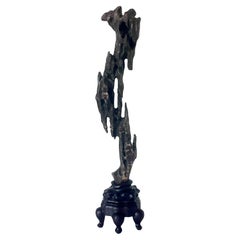
Chinese Scholar Stone Tall Slender Lingbi Rock on Display Stand
Located in Atlanta, GA
A visually arresting tall vertical scholar stone of Lingbi type balanced on a fitted wood base. The rock formation features an elegant slender form of highly sculptural surface with ...
Category

Early 20th Century Chinese Chinese Export Hardwood Sculptures and Carvings

Materials

Stone

Vintage Chinese Hardstone Carving of Damo, Early to Mid 20th Century, China
Located in Austin, TX
A wonderful vintage to near antique Chinese nephrite jade carving of Damo (Bodhidharma), with an associated carved hardwood stand, early to mid 20th century, possibly Republic Period...
Category

Mid-20th Century Chinese Qing Hardwood Sculptures and Carvings

Materials

Stone

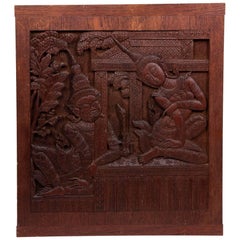
Thai Siamese Carved Teak Wood Panel of Temple Goddess
Located in New York, NY
Old Siamese hand-carved teak panel of a temple goddess and her admirer or consort, with finely detailed background.
Category

Mid-20th Century Southeast Asian Tribal Hardwood Sculptures and Carvings

Materials

Teak

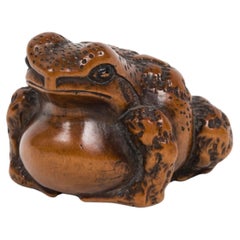
Japanese Netsuke of a croaking Toad in boxwood
Located in PARIS, FR
Netsuke of a wooden toad with its throat swollen. Made entirely in boxwood, the skin is treated with detail, the naturalistic pause suggests that the toad is croaking, the smooth tex...
Category

Late 18th Century Japanese Antique Hardwood Sculptures and Carvings

Materials

Boxwood

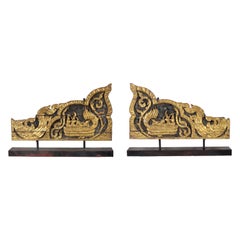
Thai Rattanakosin-Era Carved and Gilded Throne Side Panels (pair)
Located in Soquel, CA
Thai Rattanakosin-Era Carved and Gilded Throne Side Panels Ornately carved panels with gilding from Thailand. The central portion of these panels depict...
Category

Late 19th Century Thai Neoclassical Antique Hardwood Sculptures and Carvings

Materials

Gold Leaf, Metal

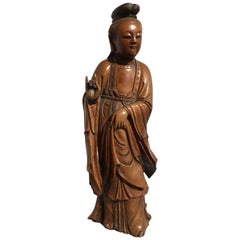
Chinese Carved Boxwood Figure of Guanyin, Mid-Qing Dynasty
Located in Austin, TX
A sublime Chinese carved boxwood figure of the Bodhisattva of Compassion, Avalokiteshvara, called Guanyin in Chinese, mid-Qing dynasty. The an...
Category

Late 18th Century Chinese Qing Antique Hardwood Sculptures and Carvings

Materials

Boxwood

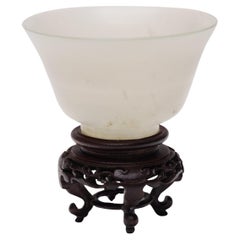
Chinese White Jade Cup with Stand
Located in Chicago, IL
Minimal and refined, this elegant Chinese cup has a simple silhouette sculpted from a single piece of luminous white jade, carefully selected for its clarity and pale color. The delicate form is shaped with a flared lip, short footed base, and thin walls that appear nearly translucent in the light. The jade cup...
Category

20th Century Chinese Minimalist Hardwood Sculptures and Carvings

Materials

Jade

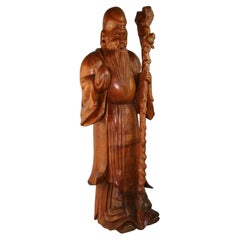
Japanese Oversized Wise Buddha Hand Carved Boxwood Sculpture Early 20th Century
Located in Douglas Manor, NY
1157 Oversized hand carved statue of Okimono of Jurojin (godof langevity) a symbol of long life carved from a solid block of boxwood.
Category

Early 1900s Antique Hardwood Sculptures and Carvings

Materials

Boxwood

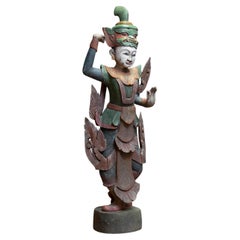
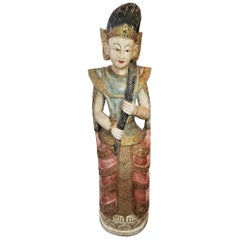
Large 19th Century Polychromed Statue of a Burmese Nat Temple Dancer
Located in Silvolde, Gelderland
Hand-carved wooden sculpture representing a traditional guardian or deity figure, often referred to as the "Lady of Popa," originating from Vietnam or Southeast Asia. This striking p...
Category

Mid-19th Century Folk Art Antique Hardwood Sculptures and Carvings

Materials

Teak

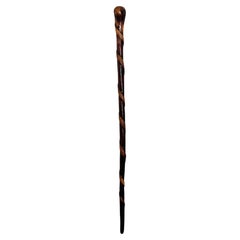
Unusual antique Victorian quality hardwood walking stick
Located in Ipswich, GB
Unusual antique Victorian quality hardwood walking stick having an unusual quality hardwood antique Victorian walking stick with a carv...
Category

Early 19th Century Victorian Antique Hardwood Sculptures and Carvings

Materials

Hardwood

Sculpture by Raka Studio in Ash Wood, Form 004
Located in Cape Girardeau, MO
The sculpture is part of a limited series of sculptural works by Raka Studio which encapsulates the Studio’s working styles created using Ash wood. The sculptures can...
Category

2010s Pakistani Hardwood Sculptures and Carvings

Materials

Wood, Bentwood, Ash

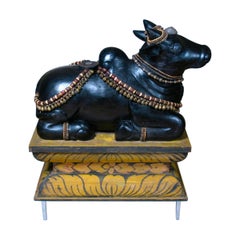
Carved Wood Sculpture of the Hindu Deity Nandi With Pedestal, Circa 1920
Located in Point Richmond, CA
South Indian carved wood sculpture depicting the Hindu Deity of Nandi, a recumbent black bull figure, known within the Hindu faith as the vehicle for Siva, often depicted in sculptur...
Category

20th Century Indian Folk Art Hardwood Sculptures and Carvings

Materials

Hardwood

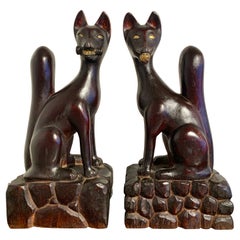
Pair Japanese Carved and Lacquered Inari Foxes, Showa Era, Dated 1951, Japan
Located in Austin, TX
A delightful and mischievous pair of Japanese carved and lacquered wood Inari foxes, kitsune, dated Showa year twenty six, corresponding to 1951, Japan. The...
Category

1950s Japanese Showa Vintage Hardwood Sculptures and Carvings

Materials

Elm

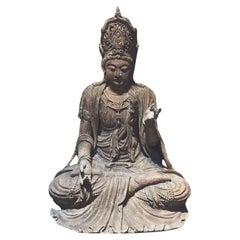
A Large Chinese Carved Wood Figure of Guanyin, Late Qing Dynasty
Located in ARMADALE, VIC
Description: A singular example of Guanyin. Deviating from the Bodhisattva’s conventional pose of ‘royal ease’, the figure is instead seated in the meditative padmasana, or ‘lotus position’, rendering this Guanyin something of a rarity. An Apana more typically associated with depictions of Buddhas, Guanyin assuming this pose immediately signifies this figure as one of particular spiritual reverence. Both feet are revealed crossed upon one another from beneath fabric which spills before her, her left palm turned upward with her hand resting upon her left knee and her right raised in a relaxed gesture. Adorned with a diadem housing a depiction of Amitabha Buddha, her own spiritual guide, she exudes an air of tranquil regality, further characterised by her numerous strings of beads and elaborately fastened dhoti, attire traditionally reserved for Indian princes. Though the figure’s dress is Indian her face is undoubtedly exemplifying artistic Chinese beauty standards. Her face is soft and rounded, full in both the lips and cheeks, with eyes that restfully peer down, as though she is watching over the worries of mankind with compassion. Notes on the item: Guanyin is the Chinese interpretation of Avalokiteshvara, the Indian Bodhisattva of compassion. The term “Bodhisattva” is derived from the Sanskrit “Bodhi”, meaning ‘awakening’ or ‘enlightenment’, combined with “Sattva”, meaning ‘spirit’ or ‘being’, referring to one on the path to achieving enlightenment. Bodhisattvas in Mayahana Buddhism are recognised as figures who have effectively achieved enlightenment yet relinquish their accension to nirvana in order to remain amongst mankind in the ultimate act of compassion to aid as spiritual guides. As such, the Bodhisattva inhabit a liminal space between samsara and nirvana; enlightened beings that maintain a relationship with humanity that buddhas cannot, as attaining Buddhahood necessitates the abandonment of all worldly attachments, including mankind. Guanyin’s very name, ‘One who hears the cries of the world’ highlights this role as a compassionate figure who acknowledges the suffering and strife of man. Along with Mahāsthāmaprāpta, a fellow bodhisattva, Guanyin serves as an attendant to Buddha Amitabha, with these three deities recognised as the Three Sages of Western Pure Land Buddhism, a sect of Mayahana Buddhism popular in East Asia. Avalokiteshvara is commonly posited to have been adopted from Indian Buddhism into China as Guanyin around 200-400 CE, however it was the Tang dynasty (618-907) which saw the popularisation of the deity. By the Ming (1358–1644) and Qing (1644–1911) dynasties, Guanyin held the position as the most popular female deity in China. The unique state of religion in China held no monolithic canon regarding Buddhism and saw the assimilation of several belief systems, primarily Daoism, Buddhism and Confucianism. Consequently, Guanyin became a deity to be revered beyond Buddhism alone, appointed as both an official imperial deity and Daoist deity in the 12th century. Guanyin may also be seen to fulfil the role of idealised femininity as prescribed by Confucianism, with the scarcity of female Chinese deities perhaps accounting for the gradual gender shift Guanyin underwent. The Indian Avalokiteshvara is unequivocally recognised as male, whilst the supposed gender of Guanyin remains contentious. Although there is a clear shift from the masculine Avalokiteshvara towards a more feminine representation, it is unclear if Guanyin is understood to be entirely feminine, to inhabit qualities of both genders or to be elevated beyond gender entirely, embodying neither. Depictions of Guanyin are highly androgynous, which some believe lends credence towards Guanyin symbolising the unity of dualistic forces as recognised in Daoism, displaying the anthropomorphism of yin and yang. Comparative Analysis: Market comparisons of similar Qing Dynasty polychrome figures of Guanyin include lot 767 (no.2) From Christies ‘Important Chinese Ceramics and Works of Art,’ New York, 25 March 2022, with the price realised USD 52,920 (Estimate USD 20,000 – USD 30,000). Christies also auctioned a comparable polychrome Guanyin...
Category

Late 19th Century Chinese Qing Antique Hardwood Sculptures and Carvings

Materials

Hardwood

A Large Chinese Carved Wood Figure of Guanyin, Late Qing Dynasty
Located in ARMADALE, VIC
An impressive depiction of Guanyin, the Bodhisattva of compassion, whose name bears the meaning ‘One who hears the cries of the world.’ The rather androgynous figure is adorned with beaded jewellery and the princely regalia of a dhoti, draped across her body and spilling out over to partially obscure what she is resting upon. The goddess’ profile exhibits idealised features of Asian artistic convention; her face is soft and rounded, with full lips and relaxed eyes that provide a serene quality of youthfulness to the figure. Adhering to Chinese iconography of Guanyin, the figure is marked by an urna on her forehead, denoting her own enlightenment, as well as a diadem displaying Buddha Amitabha, the spiritual teacher of Guanyin. Seated in the Lalit asana pose, translated as ‘royal ease’, the figure exudes a fine example of the relaxed majesty typical in the characterisation of Guanyin. Whilst the figure’s left hand is placed restfully upon the left leg pendant, the right is raised in the gesture shuni mudra, the second finger held gently against the thumb. Otherwise known as the seal of patience, this gesture indicates the figure as one intended to bestow this virtue, along with compassion and understanding, upon the beholder. Notes on the item: Guanyin is the Chinese interpretation of Avalokiteshvara, the Indian Bodhisattva of compassion. The term “Bodhisattva” is derived from the Sanskrit “Bodhi”, meaning ‘awakening’ or ‘enlightenment’, combined with “Sattva”, meaning ‘spirit’ or ‘being’, referring to one on the path to achieving enlightenment. Bodhisattvas in Mayahana Buddhism are recognised as figures who have effectively achieved enlightenment yet relinquish their accension to nirvana in order to remain amongst mankind in the ultimate act of compassion to aid as spiritual guides. As such, the Bodhisattva inhabit a liminal space between samsara and nirvana; enlightened beings that maintain a relationship with humanity that buddhas cannot, as attaining Buddhahood necessitates the abandonment of all worldly attachments, including mankind. Guanyin’s very name, ‘One who hears the cries of the world’ highlights this role as a compassionate figure who acknowledges the suffering and strife of man. Along with Mahāsthāmaprāpta, a fellow bodhisattva, Guanyin serves as an attendant to Buddha Amitabha, with these three deities recognised as the Three Sages of Western Pure Land Buddhism, a sect of Mayahana Buddhism popular in East Asia. Avalokiteshvara is commonly posited to have been adopted from Indian Buddhism into China as Guanyin around 200-400 CE, however it was the Tang dynasty (618-907) which saw the popularisation of the deity. By the Ming (1358–1644) and Qing (1644–1911) dynasties, Guanyin held the position as the most popular female deity in China. The unique state of religion in China held no monolithic canon regarding Buddhism and saw the assimilation of several belief systems, primarily Daoism, Buddhism and Confucianism. Consequently, Guanyin became a deity to be revered beyond Buddhism alone, appointed as both an official imperial deity and Daoist deity in the 12th century. Guanyin may also be seen to fulfil the role of idealised femininity as prescribed by Confucianism, with the scarcity of female Chinese deities perhaps accounting for the gradual gender shift Guanyin underwent. The Indian Avalokiteshvara is unequivocally recognised as male, whilst the supposed gender of Guanyin remains contentious. Although there is a clear shift from the masculine Avalokiteshvara towards a more feminine representation, it is unclear if Guanyin is understood to be entirely feminine, to inhabit qualities of both genders or to be elevated beyond gender entirely, embodying neither. Depictions of Guanyin are highly androgynous, which some believe lends credence towards Guanyin symbolising the unity of dualistic forces as recognised in Daoism, displaying the anthropomorphism of yin and yang. Comparative Analysis: Market comparisons of similar Qing Dynasty polychrome figures of Guanyin include lot 767 (no.2) From Christies ‘Important Chinese Ceramics and Works of Art,’ New York, 25 March 2022, with the price realised USD 52,920 (Estimate USD 20,000 – USD 30,000). Christies also auctioned a comparable polychrome Guanyin...
Category

Late 19th Century Chinese Qing Antique Hardwood Sculptures and Carvings

Materials

Hardwood

18th Century Hand-Carved Jichi Wood Guanyin Figure
Located in New York, NY
This beautiful sculpture realized in China in the 18th century depicts Guanyin, a Bodhisattva associated with compassion. The female form holds a pot in her hands. She appears draped...
Category

18th Century Chinese Qing Antique Hardwood Sculptures and Carvings

Materials

Hardwood

Early 20C Thai Goddess of Love Polychrome Statue
Located in Dallas, TX
PRESENTING A GORGEOUS Early 20C Thai Goddess of Love Polychrome Statue. Made in Thailand in the early 20th Century, circa 1920. Hand carved wooden statu...
Category

Early 20th Century Thai Country Hardwood Sculptures and Carvings

Materials

Hardwood, Giltwood, Paint

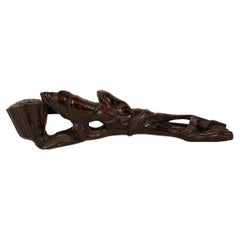
Netsuke in lacquered boxwood of a toad resting on a waterlily plant
Located in PARIS, FR
Fine netsuke in the form of a lotus flower, within whose foliage hides a small frog. The realistic treatment of the plant allows for unmistakable identification, whether by the flowe...
Category

Late 19th Century Japanese Meiji Antique Hardwood Sculptures and Carvings

Materials

Boxwood

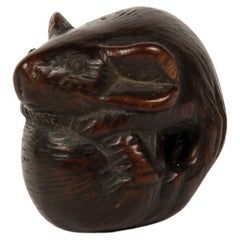
Boxwood nestuke in the form of a curled up mouse forming almost a pearl
Located in PARIS, FR
Netsuke in boxwood depicting a mouse curled up on itself, holding its tail between its tiny paws. The highly realistic rendering of the fur and the deep, worn patina emphasize the na...
Category

Late 18th Century Japanese Edo Antique Hardwood Sculptures and Carvings

Materials

Boxwood

Japanese Carved Wood Architectural Wood Panel 18th Century
Located in Douglas Manor, NY
Japanese 18th century carved wood architectural panel.
Category

Late 18th Century Antique Hardwood Sculptures and Carvings

Materials

Hardwood

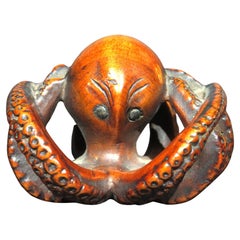
An Amusing Japanese Netsuke in the Form of an Octopus, Taisho Period (1912-1925)
Located in Ottawa, Ontario
The hand carved & stained boxwood netsuke deftly rendered in the form of an octopus with somewhat anthropomorphic features, showing black stained eyes & furrowed brow effecting an am...
Category

Early 20th Century Japanese Taisho Hardwood Sculptures and Carvings

Materials

Boxwood

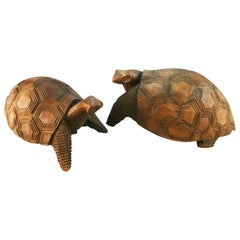
Antique Japanese Pair of Life Size Carved Wood Sea Turtles
Located in Douglas Manor, NY
Japanese hand carved wood life size turtles small 12x19x10" Large 12x22x12".
Category

1920s Vintage Hardwood Sculptures and Carvings

Materials

Hardwood

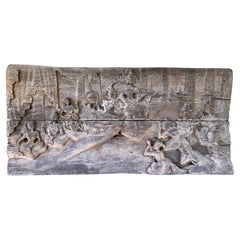
18th century Burmese Carved Teak Panel – Scene from the Life of the Buddha
Located in Fukuoka, JP
This intricately carved teak panel depicts a scene from the life of the Buddha, likely part of a narrative sequence once adorning the interior of a Burmese temple. The composition fe...
Category

18th Century Burmese Antique Hardwood Sculptures and Carvings

Materials

Teak

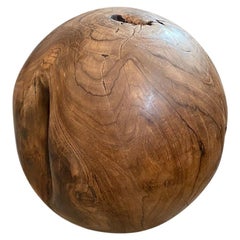
Andrianna Shamaris Teak Wood Organic Sculptural Sphere
Located in New York, NY
Natural teak wood root sphere. The outer section is polished and the inner root left smooth in contrast. We have a collection available--all vary slightly in diameter. The price refl...
Category

2010s Organic Modern Hardwood Sculptures and Carvings

Materials

Wood, Teak, Reclaimed Wood

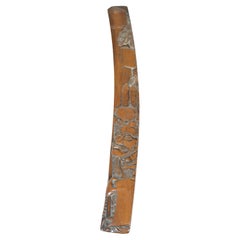
Japanese Wooden Dagger, Late 19th C
Located in Stockholm, SE
A Japanese high quality wooden dagger. The carving is made of the highest quality as often Japanese items are. There is a signature and a poem engraved on side. Comes from an old Swedish collection...
Category

Late 19th Century Japanese Edo Antique Hardwood Sculptures and Carvings

Materials

Boxwood

Japanese Professional sneezer Boxwood Netsuke
Located in PARIS, FR
Boxwood netsuke of a seated professional sneezer depicted as an old man with his right hand raised, holding an stick to tickle himself. His head is slightly raised, his eyes practica...
Category

Late 18th Century Japanese Edo Antique Hardwood Sculptures and Carvings

Materials

Boxwood

A Large and Exceptional Japanese Meiji Period Tokyo School Bronze Sculpture
Located in Queens, NY
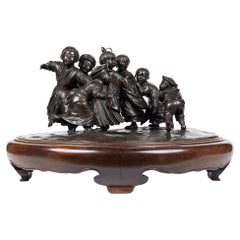
Presenting an extraordinary Large and Exceptional Japanese Meiji Period Tokyo School Bronze Sculpture depicting a delightful ensemble of six energe...
Category

19th Century Japanese Meiji Antique Hardwood Sculptures and Carvings

Materials

Bronze

Hand Painted Folk Art Table Lamp, Eva Fritz-Lindner Masterwork , One of a Kind
Located in South Burlington, VT
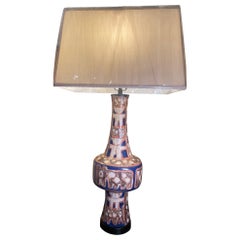
A stunning yet whimsical and unique Eva Fritz-Lindner hand painted Folk Art table lamp complete with new custom fitted linen shade. Here's a beautiful and unique way to accent your home or office, or make a charming gift to someone special. This is a unique hand painted pottery table lamp fitted with a beautiful rectangular linen shade. It is hand painted in lovely cobalt blue and cream colors designed and hand painted by the now deceased master artisan Eva Fritz-Lindner working at Staatliche Majolika-Manufaktur Karlsruhe over the past 50 years. Creative design, lovely vivid colors in cobalt blue and creams over a natural terra cotta pottery base , good opportunity to display a functional one of a kind work of art. Glaze: Fine colors that only Eva Fritz-Lindner could execute by hand Designer signature: signature i 3 on pottery base It would surely "pop" out and create pleasant conversation in splendid fashion in your favorite spot! Dimensions: table lamp with shade 33.5 inches high; shade only is 11.5 inches high x 18 inches wide and 11 inches deep. hand painted pottry base is 21 inches high and 8.5 inches diameter at mid section. We have installed this sculptural lamp with a 72 inch cord - all mounted on a handsome round hardwood stand. Quality: Very good Only one. Most of her larger pottery sculptures such as this, were likely produced in less than 25 copies Based upon research and all were hand painted individually by this artist ensuring each work of art was indeed unique. Provenance: pottery lamp base...
Category

20th Century German Folk Art Hardwood Sculptures and Carvings

Materials

Iron

Chinese Carved and Lacquered Figure of Zhenwu, Qing Dynasty, 19th century, China
Located in Austin, TX
A powerful Chinese figure of the Taoist diety Zhenwu (Xuanwu), carved and lacquered wood with applied lacquer details, Qing Dynasty, 19th century or earlier, China. Zhenwu, also kno...
Category

19th Century Chinese Qing Antique Hardwood Sculptures and Carvings

Materials

Wood, Hardwood

Small Song Dynasty Carved Wood Bodhisattva, 13th Century, China
Located in Austin, TX
A small and very fine Chinese carved sandalwood figure of a bodhisattva, possibly Avalokiteshvara (Guan Yin), Song Dynasty (960 to 1276), circa 13th ...
Category

15th Century and Earlier Chinese Antique Hardwood Sculptures and Carvings

Materials

Hardwood

Still Thinking About These?

All Recently Viewed