Items Similar to Monju Bosatsu Riding a Lion, Carved, Lacquered, Gilt Wood, Meiji Period
Want more images or videos?
Request additional images or videos from the seller
1 of 14
Monju Bosatsu Riding a Lion, Carved, Lacquered, Gilt Wood, Meiji Period
$6,700
£5,101.91
€5,874.71
CA$9,494.49
A$10,212.68
CHF 5,457.95
MX$120,378.42
NOK 68,812.01
SEK 62,907.24
DKK 43,894.02
About the Item
A wonderful Japanese carved, lacquered, and gilt wood figure of Monju Bosatsu (Manjushri), riding a Shishi (Lion), Meiji Period, circa 1880, Japan.
Monju Bosatsu, the Bodhisattva Majurshri, the embodiment of wisdom, is portrayed here in his monastic form as a disciple of the Buddha, with a shaved head and dressed in the patchwork robes of a monk. He sits in meditation, hands held in dhyana mudra while he gazes outwards from heavily lidded eyes. He is devoid of his usual attributes, the flaming sword, sutra, and lotus blossom, and is instead identified by his mount, the lion. In this form, he is considered a meditational deity.
Monju Bosatsu sits calmly and peacefully upon the back of his large mount. The Bodhisattva of Wisdom cuts a graceful and serene figure, his shaved head, plump face, and voluminous golden robes in stark contrast to the animated shishi (lion) beneath him. Monju Bosatsu has been richly lacquered with a base layer of black lacquer, then fully gilt. Wear to the gilding has revealed some of the black lacquer below, adding depth to the rich surface.
The lion is considered the vehicle of Manjushri, representing the strength of Buddhist wisdom, and serving as a protector of the Dharma. Here, the lion, called a shishi in Japan, is portrayed in a crouched position, his front paws splayed, head up and alert, a ferociously friendly smile upon his open mouth, his snout styled as a lingzhi or ruyi head . The body lacquered a deep vermillion red. The mane and tail wonderfully detailed and lacquered black.
Hand carved from a single, solid piece of wood, lacquered, and gilt.
- Dimensions:Height: 17.5 in (44.45 cm)Width: 24 in (60.96 cm)Depth: 12 in (30.48 cm)
- Style:Meiji (Of the Period)
- Materials and Techniques:
- Place of Origin:
- Period:
- Date of Manufacture:Circa 1880
- Condition:Wear consistent with age and use. Minor fading. In fine condition. Some wear to the gilding.
- Seller Location:Austin, TX
- Reference Number:1stDibs: LU894748367592
About the Seller
5.0
Platinum Seller
Premium sellers with a 4.7+ rating and 24-hour response times
Established in 2001
1stDibs seller since 2010
356 sales on 1stDibs
Typical response time: 1 hour
- ShippingRetrieving quote...Shipping from: Austin, TX
- Return Policy
More From This Seller
View AllJapanese Carved and Lacquered Wood Shogun, Edo Period, 19th Century, Japan
Located in Austin, TX
An unusual Japanese carved wood, lacquer, and gilt decorated portrait sculpture of a shogun, Edo Period, early 19th century, Japan.
The unidentified shogun (possibly Tokugawa Iey...
Category
Antique Mid-19th Century Japanese Edo Sculptures and Carvings
Materials
Wood, Lacquer
Japanese Lacquered Wood Sho Kannon, Momoyama/Edo Period, 17th Century, Japan
Located in Austin, TX
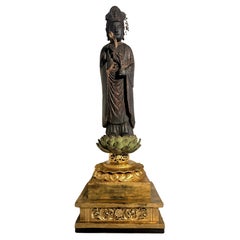
A tall and impressive Japanese carved and black lacquered figure of Sho Kannon Bosatsu, Momoyama or Edo Period, mid 17th century, on a later mid 19th century carved, painted, and gilt wood lotus...
Category
Antique Mid-17th Century Japanese Edo Sculptures and Carvings
Materials
Metal
Japanse Bronze Shishi Foo Lion by Shuzan / Hideyama, Meiji period, Japan
Located in Austin, TX
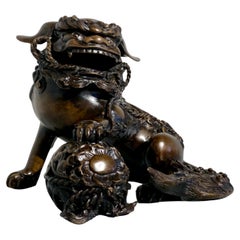
A heavy and powerfully cast Japanese bronze model of a shishi or foo lion by Hideyama / Shuzan, Meiji Period, circa 1900, Japan.
The dramatic lion, known as a shishi in Japan, is ca...
Category
Antique Early 1900s Japanese Meiji Animal Sculptures
Materials
Bronze
Chinese Carved Wood Bodhisattva Guanyin, Late Ming Dynasty, 17th Century
Located in Austin, TX
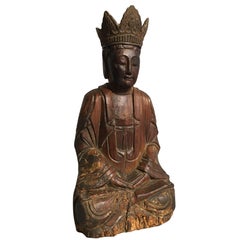
An attractive carved wood figure of the Bodhisattva Avalokiteshvara, known as Guanyin in China, late Ming Dynasty, early 17th century, China.
Guanyi...
Category
Antique Early 17th Century Chinese Ming Sculptures and Carvings
Materials
Gesso, Wood
Chinese Carved and Lacquered Figure of Zhenwu, Qing Dynasty, 19th century, China
Located in Austin, TX
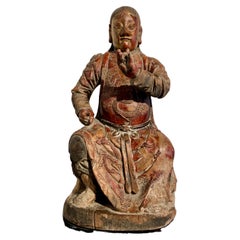
A powerful Chinese figure of the Taoist diety Zhenwu (Xuanwu), carved and lacquered wood with applied lacquer details, Qing Dynasty, 19th century or earlier, China.
Zhenwu, also kno...
Category
Antique 19th Century Chinese Qing Sculptures and Carvings
Materials
Wood, Hardwood
Small Song Dynasty Carved Wood Bodhisattva, 13th Century, China
Located in Austin, TX
A small and very fine Chinese carved sandalwood figure of a bodhisattva, possibly Avalokiteshvara (Guan Yin), Song Dynasty (960 to 1276), circa 13th ...
Category
Antique 15th Century and Earlier Chinese Sculptures and Carvings
Materials
Hardwood
You May Also Like
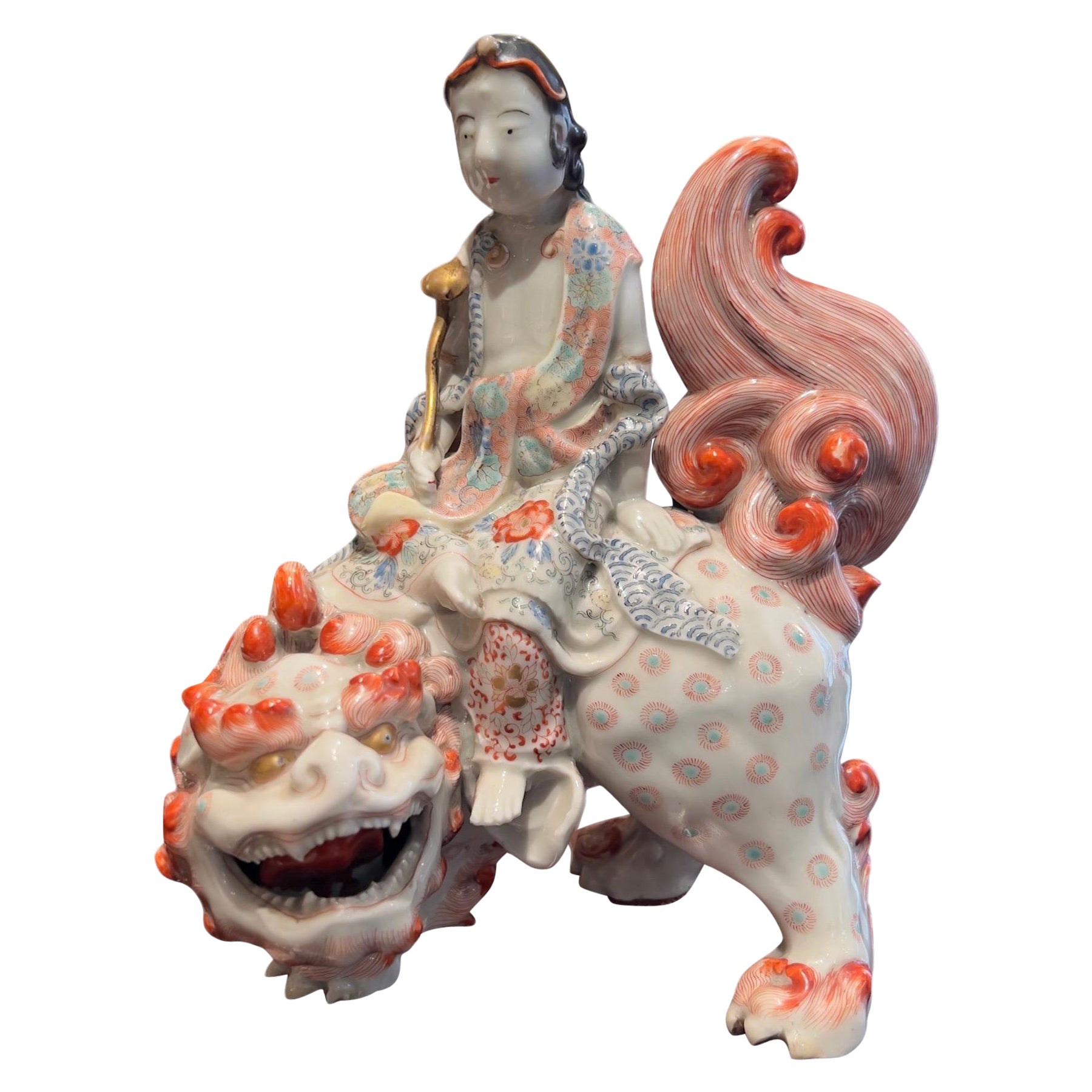
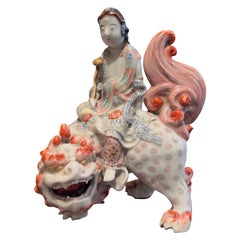
Japan, A rare Japanese Kutani figure of Kannon on a Foo Lion, Meiji Period, 19th
Located in PARIS, FR
Rare Japanese Kutani Figure: Unveiling Tranquility and Spiritual Power from Meiji Period Japan
Unveil a rare gem from Japan's historical Meiji ...
Category
Antique Late 19th Century Japanese Meiji Sculptures and Carvings
Materials
Porcelain
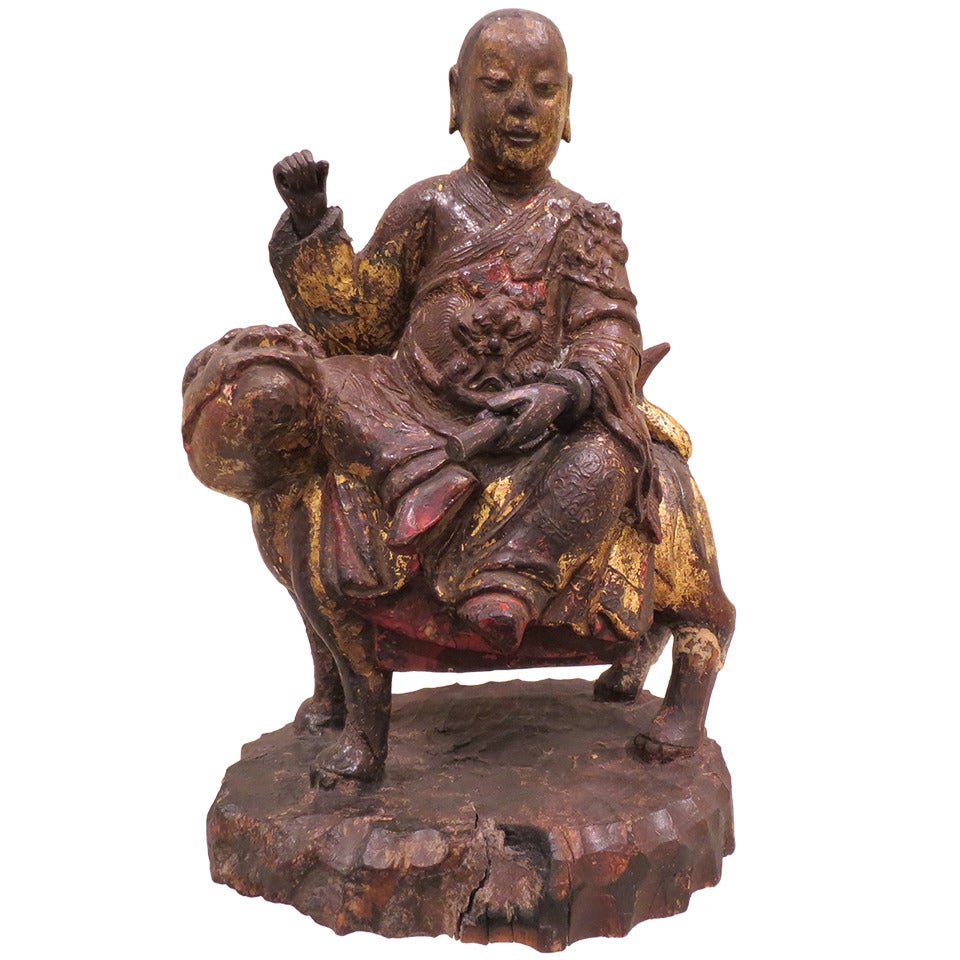
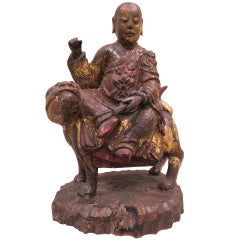
Ancient Chinese Hand-Carved Lohan Monk Buddha On Lion, Kangxi, 1661-1722
Located in Torino, IT
A Fine hand-carved and Lacquered wood figure of a Luohan Arhat, Buddha' disciple.
Seated in royal ease on a standing lion, wearing long flowing robes.
China, Kangxi Kingdom 1661-17...
Category
Antique 18th Century Chinese Qing Sculptures
Materials
Giltwood, Lacquer
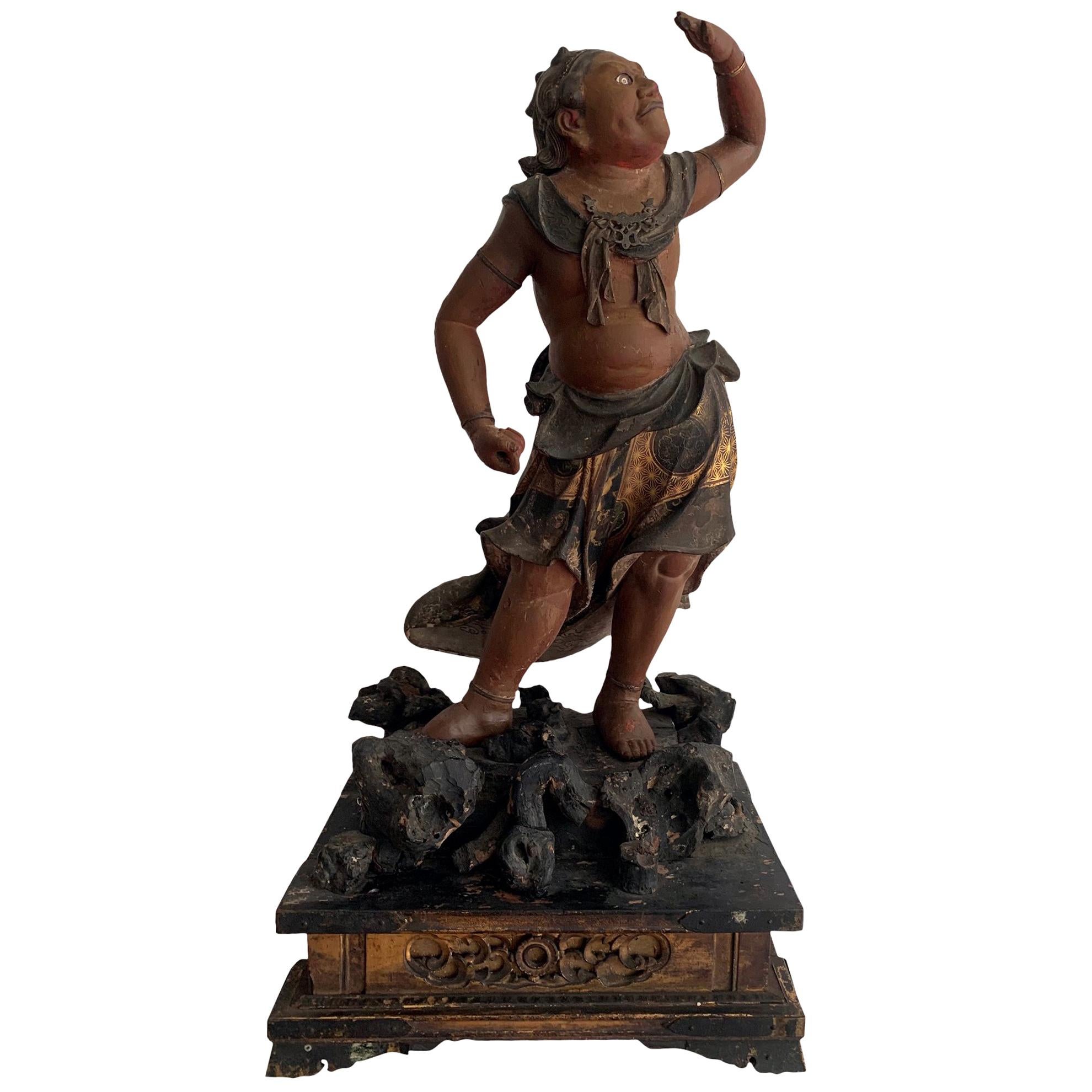
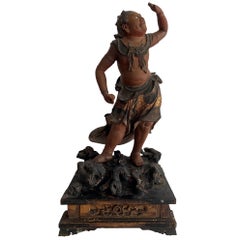
Japanese Lacquered and Gilt Wood Buddhism Statue from Edo Period
Located in Atlanta, GA
An exceptional and wood statue of Buddhism Guardian Seitaka Doji from Japan circa Edo period (1603-1868), likely the earlier part of 17th century. One of two chief attendants of Fudou Myouou (the other being Kongara Doji), the name of Seitaka Doji is a transliteration of Sanskrit "Cetaka", meaning servant, slave, and he is said to personify expedient action. He is most commonly found on the right side of Fudou, together with Kongara Doji on the left, forming the Immovable triad, Fudou Sanzon, the terror of evil doers. Seitaka largely adheres to the iconography of a wrathful youth with fleshy body and face, skin in the color of a red lotus, has his hair tied in five knots, and holds a vajra in his left hand and a vajra-club in his right hand, but the actual artistic representations of him in Japan do...
Category
Antique 17th Century Japanese Japonisme Sculptures and Carvings
Materials
Metal
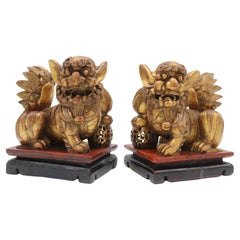
A decorative pair of carved gilt wood and lacquer Chinese Buddhist lions C 1900
Located in Central England, GB
A very pleasing and beautifully hand carved pair of Chinese Buddhist lions left and right handed and raised onto stepped rectangular plinths all carved from the same section of timbe...
Category
Early 20th Century Chinese Chinese Export Sculptures and Carvings
Materials
Giltwood, Lacquer
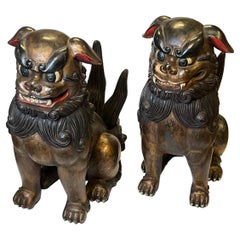
Pair Very Large Chinese or Japanese Carved Wooden Fu Lions
Located in New York, NY
Pair highly stylized large Chinese or Japanese carved wooden guardian lions (fu lions or foo dogs), hand-painted with gilt highlights.
Category
Early 20th Century Chinese Chinoiserie Animal Sculptures
Materials
Wood
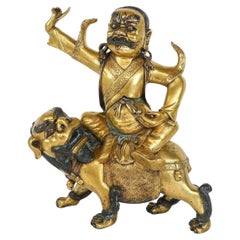
Tibetan Gilt Bronze Sculpture of Vajra Sadhu or Dorje Legpa on his lion
Located in Greenwich, CT
Tibetan Bronze Depicting Damcan on Lion, 19th Century
Gilt bronze and pigment
The Tibetan wrathful deity, also known as Damcan or Damchen (which is a generic term), possibly Dorje ...
Category
Antique Early 19th Century Tibetan Tibetan Sculptures and Carvings
Materials
Bronze