Items Similar to Nestuke in the form of a calabash gourd realised from an unmature cucurbitacea
Want more images or videos?
Request additional images or videos from the seller
1 of 7
Nestuke in the form of a calabash gourd realised from an unmature cucurbitacea
$1,433.06
£1,070.81
€1,200
CA$1,976.69
A$2,165.40
CHF 1,139.78
MX$25,844.64
NOK 14,529.35
SEK 13,282.02
DKK 9,143.06
About the Item
Netsuke made from a natural lacquered calabash.
Curved around itself, it has a main bulb at the bottom and a second smaller bulb below the opening. It is narrowed in the middle, where the silk cord is attached. Wooden stopper with red wax and coral ojime. The artist dried and emptied the calabash - hence the small hole - before covering it with lacquer to stabilize and protect it.
The calabash is a plant native to the tropical regions of Africa and Asia. It is cultivated for its gourd-shaped fruit, which once dried is used for the manufacture of various traditional objects such as kitchen utensils, containers or lamps.
The kimono being a piece of cloth mostly designed without any pocket, the small items of day-to-day life were hung on the belt almost like a chatelaine, but rather in small boxes that were part of a greater set called sagemono. In order to be kept firmly in place a netsuke was notch into the belt (obi) of the kimono, this would secure any type of sagemono and help tighten the link between social status and traditional apparel. Netsuke are small figurine made of wood, sometime ivory and are among the greatest example of the excellence of Japanese craftsmen. They are meticulously sculpted, often in precious material, and always over a long period, sometimes, up to a month. Under the Edo era, rich collectors were already fighting for the most attractive pieces, preserving these from being worn too intensively. Under the Meiji era a lot of aspects of society changed, so did fashion and with it netsuke and sagemono lost most of their utilitarian purpose only leaving the attraction one could have for any type of precious and small objects.
Japan - Meiji (1868-1912), 19th century
Netsuke: height 1.2 in / 3.8 cm - width 1.6 in / 4.5 cm - depth: 2.7 in / 7 cm
- Dimensions:Height: 1.5 in (3.8 cm)Width: 1.78 in (4.5 cm)Depth: 2.76 in (7 cm)
- Style:Meiji (Of the Period)
- Materials and Techniques:Fruitwood,Lacquered
- Place of Origin:
- Period:
- Date of Manufacture:1868-1912
- Condition:Wear consistent with age and use.
- Seller Location:PARIS, FR
- Reference Number:Seller: 2024-12321stDibs: LU8311245924112
About the Seller
No Reviews Yet
Vetted Professional Seller
Every seller passes strict standards for authenticity and reliability
Established in 2013
1stDibs seller since 2023
- ShippingRetrieving quote...Shipping from: PARIS, France
- Return Policy
More From This Seller
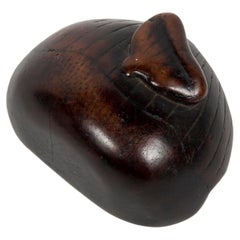
View AllJapanese Netsuke in Boxwoord in the form of two chestnut
Located in PARIS, FR
Boxwood netsuke of two chestnuts, one smaller on top of the larger.
Chestnuts are a central part of Japanese culture and gastronomy. Castanea Crenata or Japanese chestnut is an indi...
Category
Antique Early 19th Century Japanese Edo Sculptures and Carvings
Materials
Boxwood
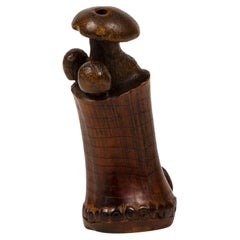
Netsuke in bamboo in the form of a mushroom
Located in PARIS, FR
Very elegant small netsuke carved from a short segment of bamboo, depicting three mushrooms caps growing at its top. Beautiful brown patina from use. Since traditional kimonos do not...
Category
Antique Late 18th Century Japanese Edo Sculptures and Carvings
Materials
Bamboo
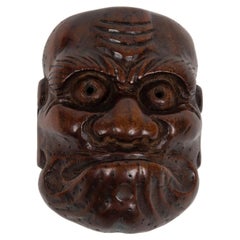
Netsuke in the form of a No mask representing the character of Obeshimi
Located in PARIS, FR
Wooden netsuke depicting the Obeshimi mask in Noh theater.
Obeshimi is a demon characterized by thick eyebrows, eyes that seem to protrude from the face and a closed mouth.
Signed ...
Category
Antique Late 19th Century Japanese Meiji Sculptures and Carvings
Materials
Boxwood
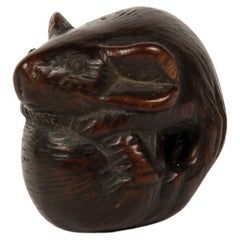
Boxwood nestuke in the form of a curled up mouse forming almost a pearl
Located in PARIS, FR
Netsuke in boxwood depicting a mouse curled up on itself, holding its tail between its tiny paws. The highly realistic rendering of the fur and the deep, worn patina emphasize the na...
Category
Antique Late 18th Century Japanese Edo Sculptures and Carvings
Materials
Boxwood
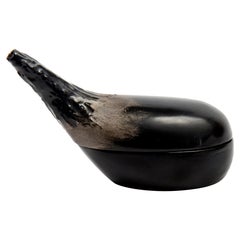
Japanese Kogo or inecens box in the form of a realistic eggplant
Located in PARIS, FR
Small lacquered wooden box in the shape of an eggplant. Top of the fruit near the leaves painted with silver pigments. Interior painted with gold pigments, signature in the center pa...
Category
20th Century Japanese Showa Lacquer
Materials
Silver
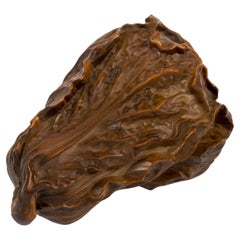
Japanese Okimono sculpture of a Chinese cabbage or Pe-Tsai realised in Boxwood
Located in PARIS, FR
Okimono of a Chinese cabbage made in boxwood. The texture and veins have been delicately detailed.
Native from China, it is an herbaceous plant of the ...
Category
Antique Late 19th Century Japanese Meiji Sculptures and Carvings
Materials
Boxwood
You May Also Like
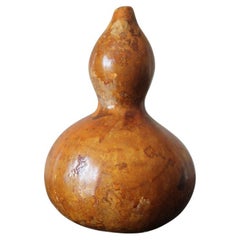
Antique Japanese Hyotan GOURD Seed.
Located in Los Angeles, CA
Antique Japanese bottle gourd sometimes called a calabash. Gourds like this were commonly used for holding water while working in the fields....
Category
Antique Mid-19th Century Japanese Organic Modern Vases
Materials
Natural Fiber
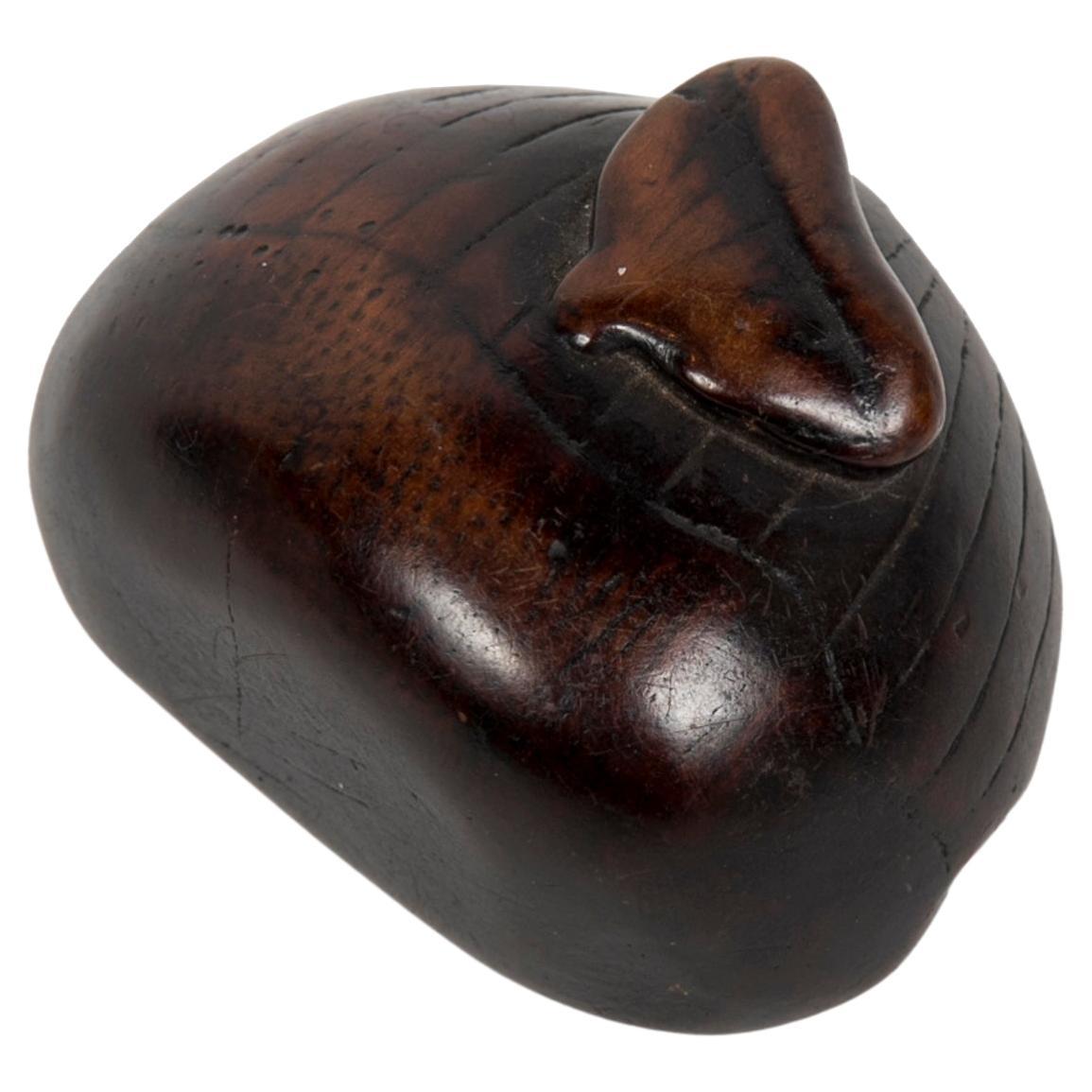
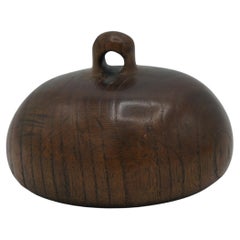
Antique Japanese Wooden Netsuke 1970s
Located in Paris, FR
This is an antique netsuke made in Japan around Showa period 1970s.
Netsuke is a miniature sculpture, originating in 17th century Japan.
Initially a simply-carved button fastener on...
Category
Vintage 1960s Japanese Showa Sculptures and Carvings
Materials
Wood
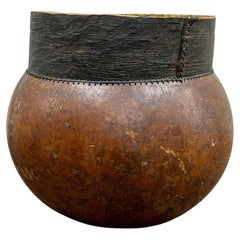
African Tribal Gourd Vessel
Located in Southampton, GB
An African Gourd Vessel; made from organic dried out gourd fruit, used throughout Africa for not only decoration but to carry water and sometimes ...
Category
Early 20th Century African Decorative Baskets
Materials
Organic Material
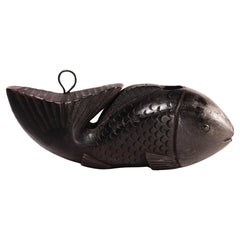
Antique Japanese Mingei Yokogi
Located in Point Richmond, CA
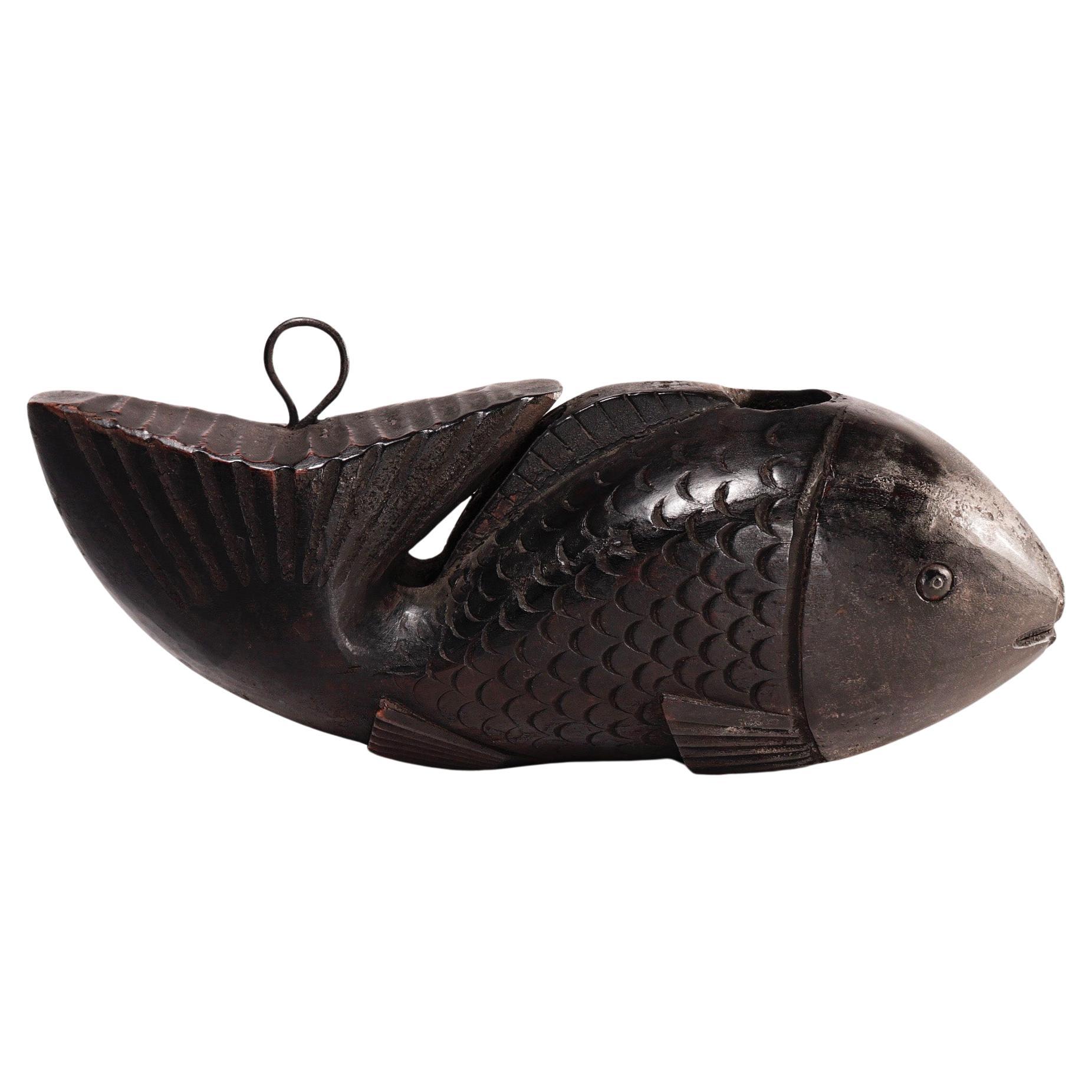
Antique Japanese Yokogi, a fish shaped fulcrum for the pot hook assembly over the hearth, a naively carved Tai (Sea Bream) with large head pierced for the hooked pole and the large tail pointed upward with a metal loop for the cord attachment, incised carving for facial details and scales, encrusted patina from use. Wood storage box made of hinoki.
Excellent condition.
5-7/8 in. high x 14-3/4 in. long x 4 in. wide.
Weight: 4 lbs. 4 oz.
Late Edo, Circa 1800.
Published in a Japanese newspaper in 1964 (article and translation available).
Provenance:
with Kingo Kondo, Kyoto 1964
Ken Domon...
Category
Antique Early 1800s Japanese Edo Sculptures and Carvings
Materials
Wood
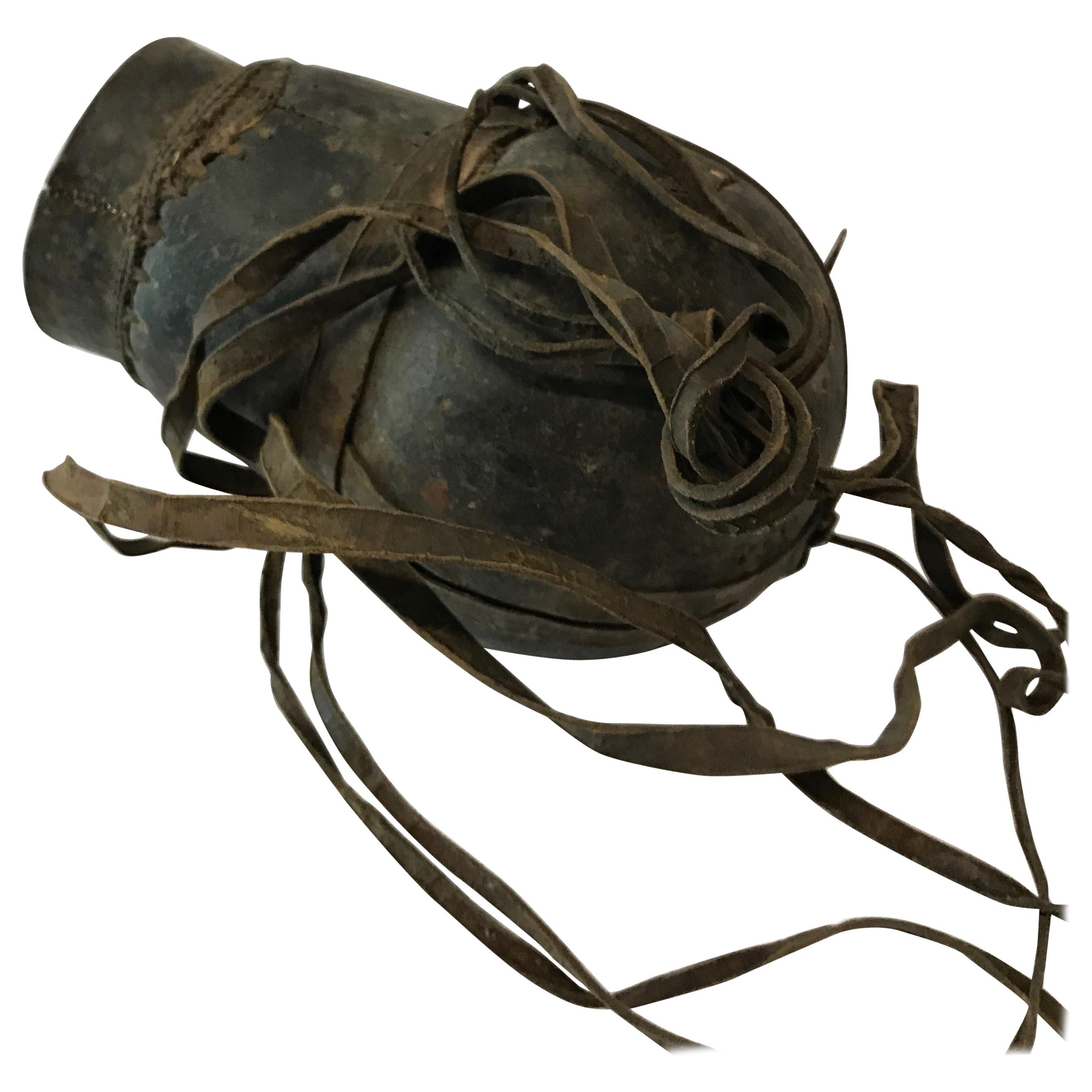
Early 20th Century African Calabash
Located in Wainscott, NY
Small leather Calabash from Africa
Dimensions: 10 in. height x 6 in. diameter with a 4.24 in. diameter opening.
Category
20th Century Congolese Decorative Baskets
Materials
Leather, Wood
$600 Sale Price
20% Off
Chinese Auspicious Gourd Carpenter Line, c. 1850
Located in Chicago, IL
Given the beauty and thoughtful design of traditional Chinese furniture, it’s no wonder that Qing-dynasty carpenter’s tools were accorded the same att...
Category
Antique Mid-19th Century Chinese Qing Mounted Objects
Materials
Iron