Items Similar to Netsuke in Boxwood in the form of a turtle hidden in its shell
Want more images or videos?
Request additional images or videos from the seller
1 of 9
Netsuke in Boxwood in the form of a turtle hidden in its shell
$2,991.61
£2,234.42
€2,500
CA$4,121.48
A$4,491.69
CHF 2,378.55
MX$53,949.96
NOK 30,112.91
SEK 27,685.86
DKK 19,045.67
About the Item
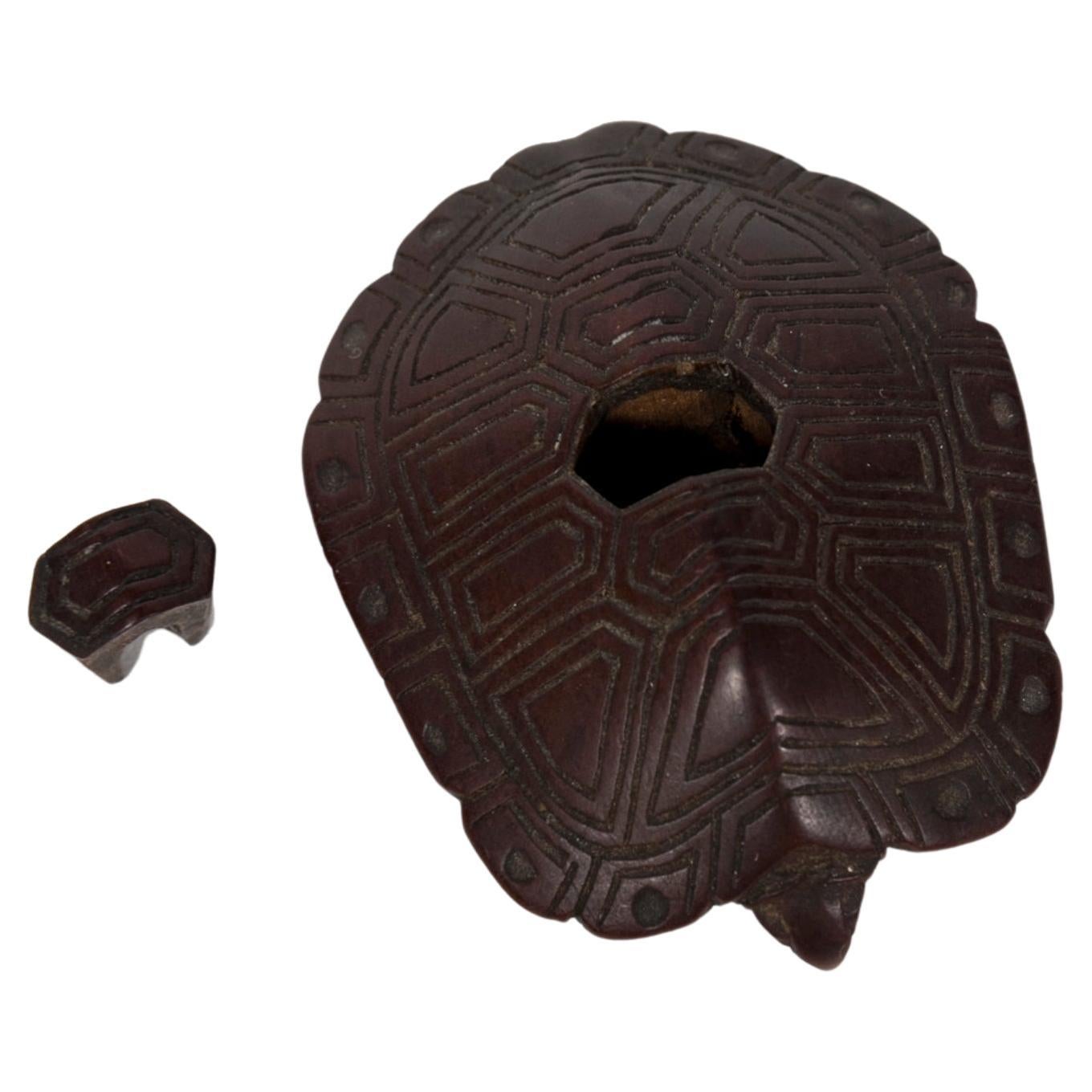
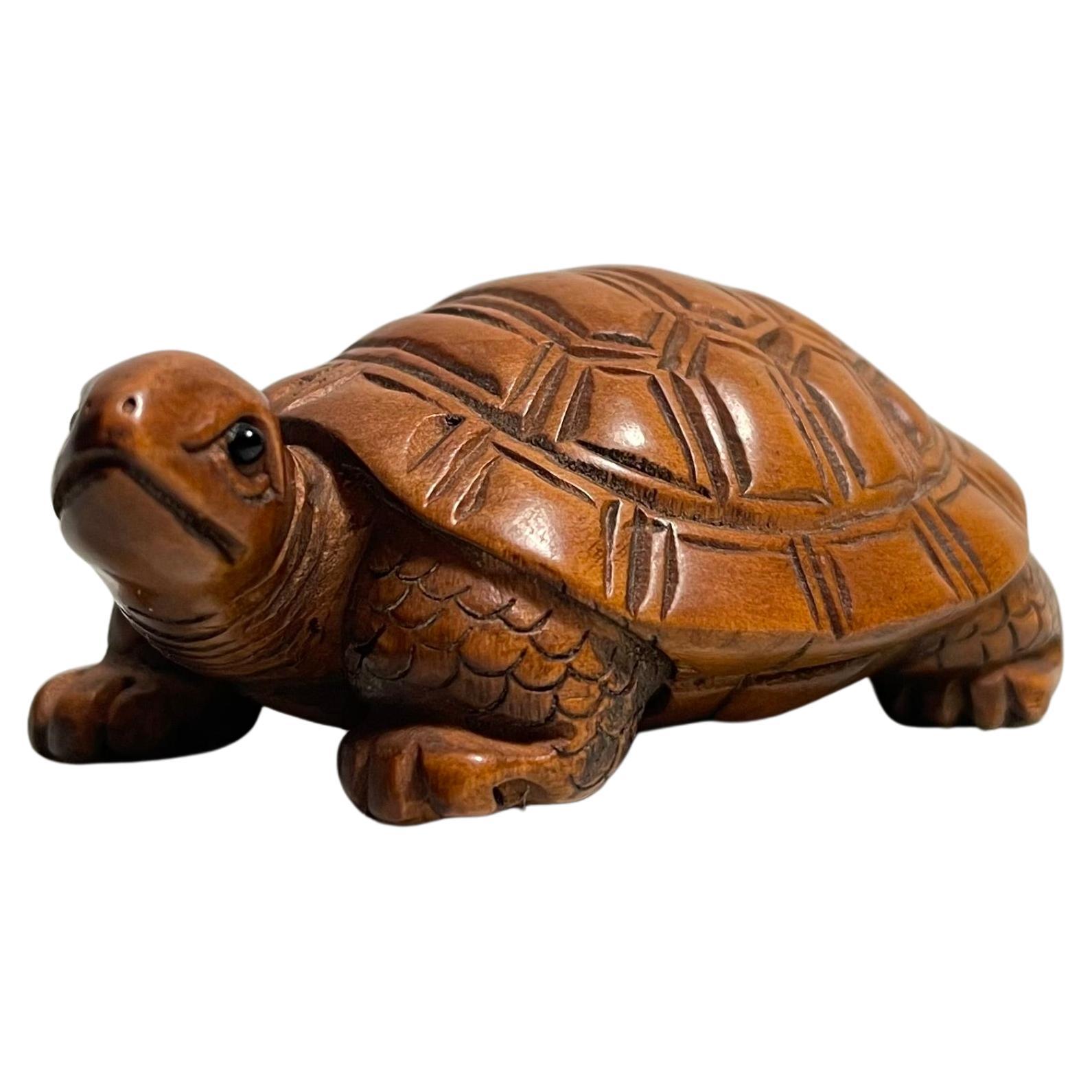
Netsuke in boxwood in the form of a tortoise hiding in its shell with only its head overstepping. Textures from the shell are executed with realism precision and a great care for details. Same goes for the scales of the skin of its legs. The central scale in the center of the shell is movable and enables the passing of a thread. In Japan, tortoise are symbol of luck and longevity, it is thought to be a creature of good omen supposed to bring 10 000 years of happiness. This animal is associated with numerous myths, the most popular dating back to the Nihon-Shoki, an antique tale of Japan and its dynasty. The legend of Urashima Taro tells the story of a man that saves a baby tortoise. To thank him, the mother of the surviving tortoise invite him in their underwater kingdom.
Japan – Edo era (1603-1868)
Height: 1.5 cm – length: 4 cm – width: 3.2 cm
- Dimensions:Height: 1.26 in (3.2 cm)Width: 1.58 in (4 cm)Depth: 0.6 in (1.5 cm)
- Style:Edo (Of the Period)
- Materials and Techniques:
- Place of Origin:
- Period:
- Date of Manufacture:1603-1868
- Condition:Wear consistent with age and use.
- Seller Location:PARIS, FR
- Reference Number:Seller: 13671stDibs: LU8311247733582
About the Seller
No Reviews Yet
Vetted Professional Seller
Every seller passes strict standards for authenticity and reliability
Established in 2013
1stDibs seller since 2023
- ShippingRetrieving quote...Shipping from: PARIS, France
- Return Policy
More From This Seller
View AllJapanese boxwood nestuke in the form of a turtle hiding in its shell
Located in PARIS, FR
Netsuke in boxwood in the form of a tortoise hiding in its shell with only its head overstepping. Textures from the shell are executed with realism precision and a great care for details. Same goes for the scales of the skin of its legs. The central scale in the center of the shell is movable and enables the passing of a thread. In Japan, tortoise are symbol of luck and longevity, it is thought to be a creature of good omen supposed to bring 10 000 years of happiness. This animal is associated with numerous myths, the most popular dating back to the Nihon-Shoki, an antique tale of Japan and its dynasty. The legend of Urashima Taro...
Category
Antique Late 19th Century Japanese Edo Sculptures and Carvings
Materials
Boxwood
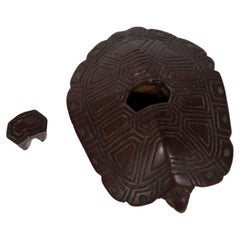
Japanese Netsuke in Boxwoord in the form of two chestnut
Located in PARIS, FR
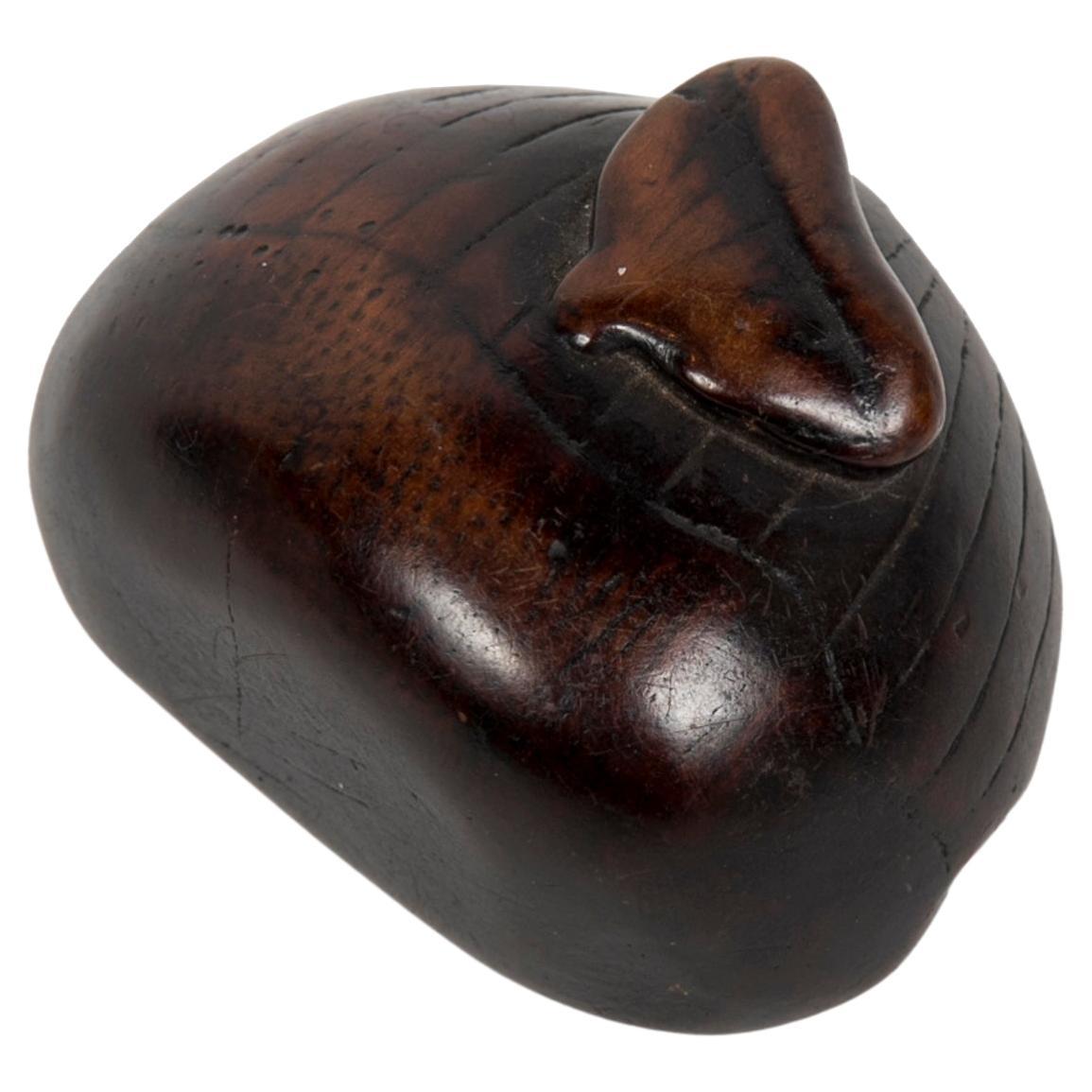
Boxwood netsuke of two chestnuts, one smaller on top of the larger.
Chestnuts are a central part of Japanese culture and gastronomy. Castanea Crenata or Japanese chestnut is an indi...
Category
Antique Early 19th Century Japanese Edo Sculptures and Carvings
Materials
Boxwood
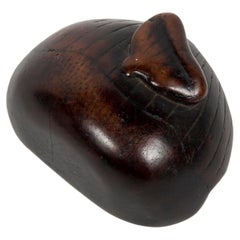
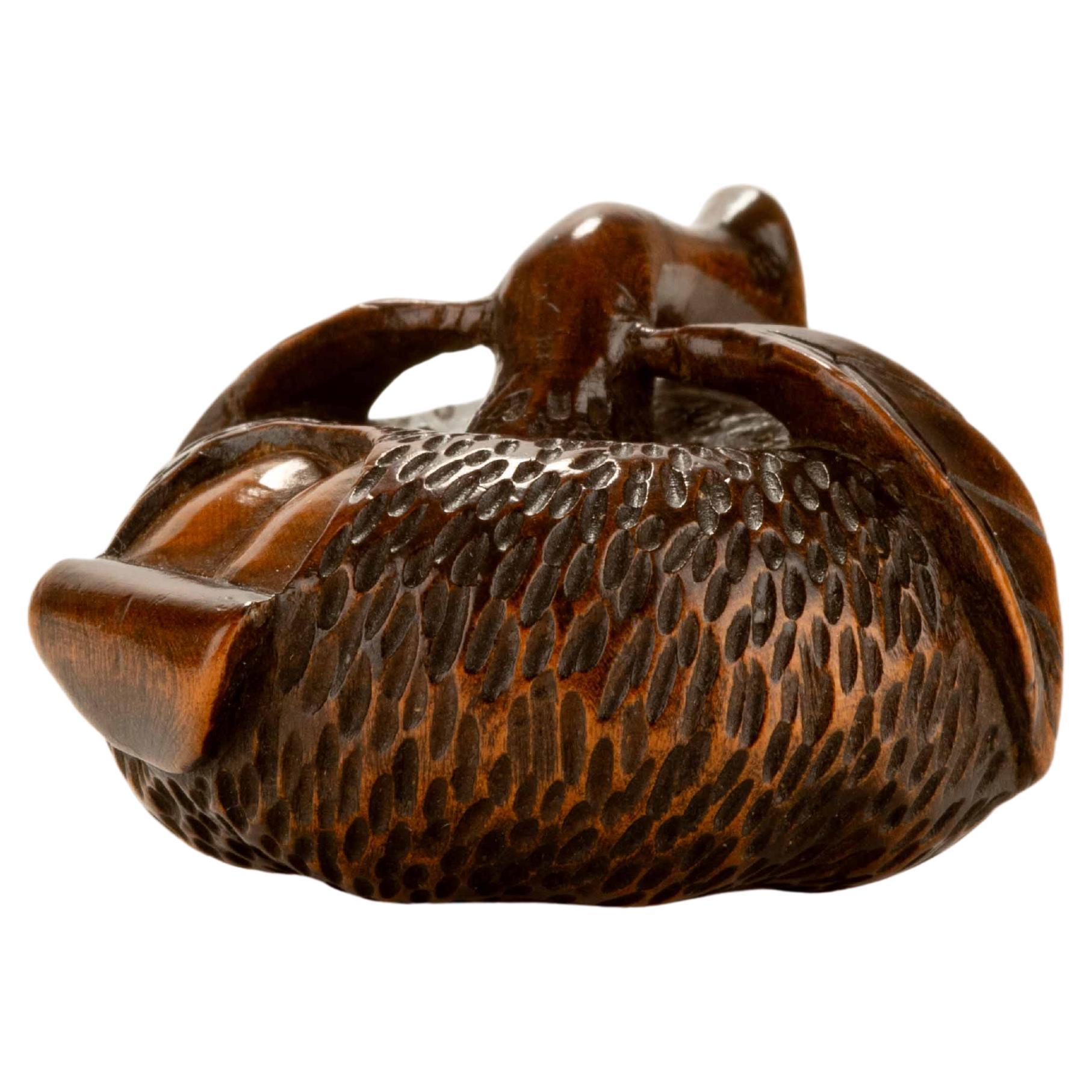
Netsuke in boxwood in the form of three clams
Located in PARIS, FR
Boxwood nestuke in the form of three clams or bivalve shells, probably of the Ruditapes philippinarum sub species that can be found all the way from Siberia to Philippines, and Japan...
Category
Antique 18th Century Japanese Edo Sculptures and Carvings
Materials
Boxwood
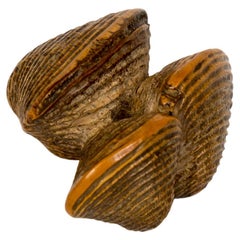
Japanese Netsuke of a croaking Toad in boxwood
Located in PARIS, FR
Netsuke of a wooden toad with its throat swollen. Made entirely in boxwood, the skin is treated with detail, the naturalistic pause suggests that the toad is croaking, the smooth tex...
Category
Antique Late 18th Century Japanese Sculptures and Carvings
Materials
Boxwood
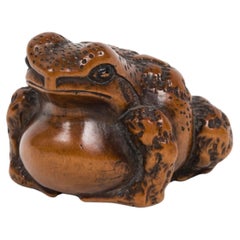
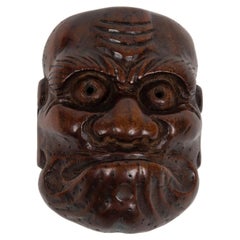
Netsuke in the form of a No mask representing the character of Obeshimi
Located in PARIS, FR
Wooden netsuke depicting the Obeshimi mask in Noh theater.
Obeshimi is a demon characterized by thick eyebrows, eyes that seem to protrude from the face and a closed mouth.
Signed ...
Category
Antique Late 19th Century Japanese Meiji Sculptures and Carvings
Materials
Boxwood
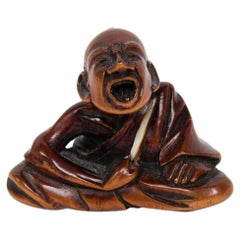
Japanese Professional sneezer Boxwood Netsuke
Located in PARIS, FR
Boxwood netsuke of a seated professional sneezer depicted as an old man with his right hand raised, holding an stick to tickle himself. His head is slightly raised, his eyes practica...
Category
Antique Late 18th Century Japanese Edo Sculptures and Carvings
Materials
Boxwood
You May Also Like
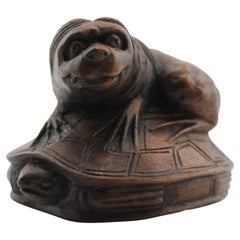
Old Wooden Netsuke Japanese Animal on Turtle Figure Meiji Period 19/20th Century
Located in Amsterdam, Noord Holland
Lovely and very detailed piece. Unsigned. Japan 19th or 20th century.
Weight: 8 grams
Provenance: Collected in the 1980’s. From the collection of Clemens Merkelbach van Enkhuizen...
Category
20th Century Japanese Meiji Animal Sculptures
Materials
Wood
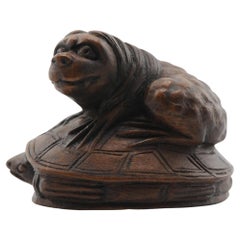
Old Wooden Netsuke 19/20th C Japanese Japan Animal on Turtle Meiji Period
Located in Amsterdam, Noord Holland
Lovely and very detailed piece. Unsigned. Japan 19th or 20th century.
Weight: 8 grams
Provenance: Collected in the 1980's. From the collection of Clemens Merkelbach van Enkhuizen, ...
Category
Antique 19th Century Japanese Meiji Ceramics
Materials
Metal, Bronze
$639 Sale Price
20% Off
Japanese Wooden Netsuke
Turtle
1980s
Ishikawa
Located in Paris, FR
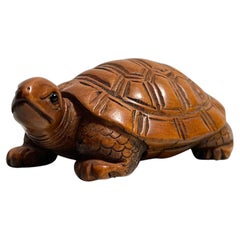
This is an antique wooden netsuke made in Japan around Showa period 1980s.
The signature is written on the back side 'Ishikawa'.
Netsuke is a miniature sculpture, originating in 17t...
Category
Vintage 1980s Japanese Showa Animal Sculptures
Materials
Wood
$392 Sale Price
20% Off
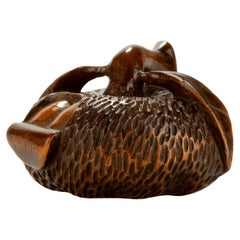
A boxwood netsuke depicting a peeled mandarin
Located in Milano, IT
A boxwood netsuke depicting a partially peeled mandarin, carved with extraordinary realism. The peel reveals the segmented interior of the fruit, with every detail carefully defined....
Category
Antique Late 19th Century Japanese Antiquities
Materials
Boxwood
Antique Edo Netsuke 18/19th C Japanese Japan Ikkosai
Different world in a cave
Located in Amsterdam, Noord Holland
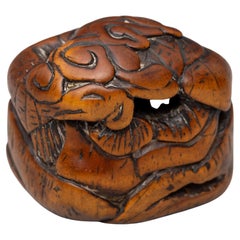
Lovely and very detailed piece. Signed Ikkosai - Different world in a cave. It looks like a cave in a human brain. Very interesting
Provenance: Collected in the 1980's. From the col...
Category
Antique 19th Century Japanese Edo Ceramics
Materials
Metal, Bronze
Old Wooden Netsuke Japanese Fruit Figure Meiji Period, 19/20th Century
Located in Amsterdam, Noord Holland
Lovely and very detailed piece. Unsigned. Japan 19th or 20th century.
Weight: 15 grams
Provenance: Collected in the 1980’s. From the collection of Clemens Merkelbach van Enkhuize...
Category
20th Century Japanese Meiji Sculptures and Carvings
Materials
Wood