Late 19th Century Sculptures and Carvings

to
32
150
89
265
9
8
2
1
742
1,174
1,699
285
603
469
167
64
8
37
26
17
46
47
38
14
10
152
88
64
39
33
252
172
90
78
50
265
265
265
3
1
1
Period: Late 19th Century
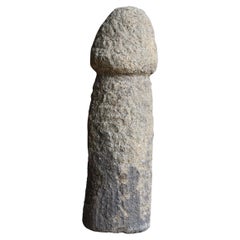
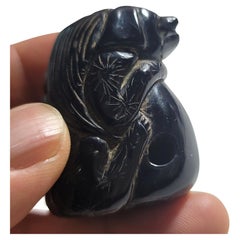
Japanese Antique Stone Carving Penis 1800s-1860s / Sculpture Wabi Sabi Mingei
Located in Chōsei District Nagara, JP
This is an old Japanese stone carving of a phallus, believed to have been made in the late Edo period (1800s–1860s). It is a rare and valuable a...
Category

Japanese Edo Antique Late 19th Century Sculptures and Carvings

Materials

Stone

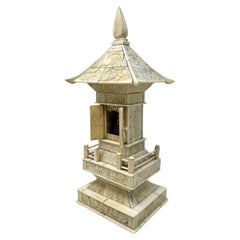
Antique Victorian Religious Chinese Export Carved Pagoda Sculpture 19th Century
Located in Dublin, Ireland
A Very Fine Quality Chinese Export Hand Carved Religous Pagoda of traditional architectural form and generous proportions, late Nineteenth Century. The overall structure beautifull...
Category

Chinese Victorian Antique Late 19th Century Sculptures and Carvings

Materials

Acrylic

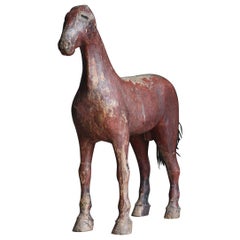
Japanese Antique Sacred Horse "Shinme" 1800s-1860s / Primitive Wabisabi
Located in Chōsei District Nagara, JP
This is an old Japanese carved wooden horse, a highly valuable piece created in the late Edo period (early 1800s–1860s). In Japan, it is known as a "Shinme" (sacred horse), a term re...
Category

Japanese Edo Antique Late 19th Century Sculptures and Carvings

Materials

Cedar, Lacquer

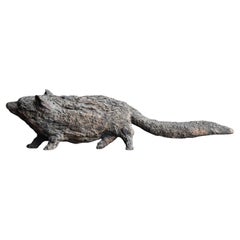
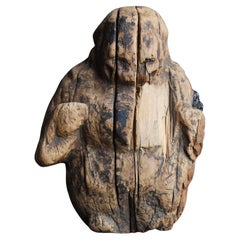
Japanese Antique Wood-Carved Tanuki Edo period 1800s-1860s / Sculpture Wabi-Sabi
Located in Chōsei District Nagara, JP
This is an old Japanese wood-carved tanuki figure. It is believed to date back to the Edo period (1800s–1860s) and is a one-of-a-kind sculpture that has quietly survived the passage ...
Category

Japanese Edo Antique Late 19th Century Sculptures and Carvings

Materials

Pine

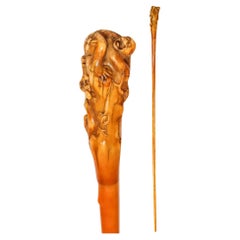
Antique Victorian Vintage Chinese Bovine Walking Stick Cane Carved Dragon
Located in Dublin, Ireland
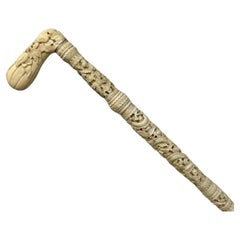
An Exceptionally Fine Example of a Chinese Export Hand Carved Bovine Walking Stick of small proportions, last quarter of the Nineteenth Century. This quite rare and exquisite “L” s...
Category

British Victorian Antique Late 19th Century Sculptures and Carvings

Materials

Acrylic

19th Century Burmese Jewel Inlaid Bronze Temple Guardian
Located in Forney, TX
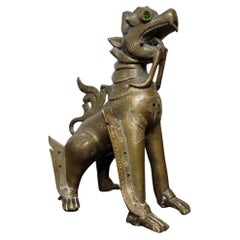
A scarce, high-quality antique Burmese jewel inlaid solid bronze chinthe sculpture. Dating to the late 19th century, likely originating in the Mandalay region of central Burma, the fearsome looking beast depicted in traditional Burmese iconography and important architecture, especially as a pair, the protective temple guardians placed flanking the entrances of Buddhist religious pagodas and monasteries. Burma; circa 1880 PROVENANCE: The estate of Mr. Wesley and Mrs. Suzanne LaFever, Beverly Hills, California. ACQUISITION: We acquired this outstanding example from the reputable auction house, Austin Auction Gallery, Austin, Texas. Fine Estates and Antiques catalog, December 2021 DESCRIPTION: Exquisitely sculpted and cast of heavy, patinated solid bronze, finely detailed and decorated throughout, intricately engraved with scrolling ornamentation and fine detailing work, old nicely aged polished finish developing a warm, mellow patina with highly desirable scattered verdigris, minor inlay losses add to the charming antique character. Stoic in stance, posed at attention proudly squatting back on its haunches, front legs straight, possibly roaring with head up and straight ahead, mouth ajar with teeth and long tongue exposed, ornate armor plating and horned mane, fanciful stylized tail, inset with Myanmar style brilliant colored mirrored glass jewels. BRIEF HISTORY / BACKGROUND: Predating the use of coins for money, brass weights cast in the shape of iconic animals like the Chinthe were commonly used to measure standard quantities of staple items. Chinthe, the Burmese word for lion, while leograph of Chinthe is an artistic highly stylized lion; the rare Southeast Asian Burmese equivalent to Foo Dogs, Japanese Komainu, Tibetan Snow Lion...
Category

Asian Antique Late 19th Century Sculptures and Carvings

Materials

Bronze

Antique Indian Dhokra Horse and Rider Sculpture
Located in Dallas, TX
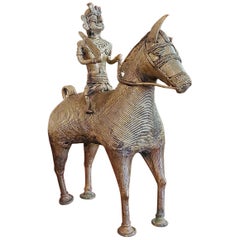
Presenting a lovely antique Indian Dhokra horse and rider sculpture. Probably from the late 19th or early 20th century as is evidenced by its natural patina and clear evidence of age. It depicts an Indian Warrior with a sword in his right hand mounted on his horse/steed. The warrior is in classical and ancient Southeast Asian Indian attire and he holds the horse’s reins in his left hand. The body of the horse is a series of lines (in the Classic Dhokra Style) and it has a tribal headdress...
Category

Indian Anglo Raj Antique Late 19th Century Sculptures and Carvings

Materials

Metal

Japanese Bronze Figure by Miyao Eisuke, Meiji Period
Located in Newark, England
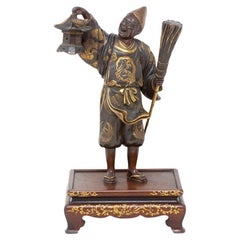
FREE WORLDWIDE SHIPPING A FINELY DETAILED JAPANESE BRONZE FIGURE BY MIYAO EISUKE, MEIJI PERIOD, CIRCA 1890. From our Japanese collection, we a...
Category

Japanese Meiji Antique Late 19th Century Sculptures and Carvings

Materials

Bronze

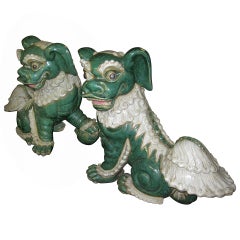
Late 19th century Pair of Glazed Porcelain Foo Dogs
Located in Savannah, GA
Extraordinary pair of fine glazed porcelain Foo dogs came to us out of an estate here in Savannah, Georgia, belonging to an old general that long ago brought them from Thailand. Used...
Category

Chinese Qing Antique Late 19th Century Sculptures and Carvings

Materials

Porcelain

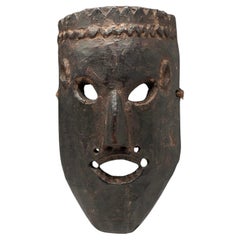
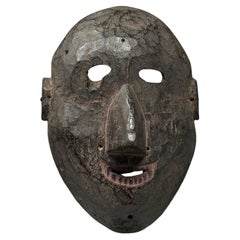
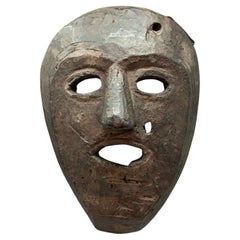
Late 19th-Early 20th Century Tribal Mask, West Nepal
Located in Point Richmond, CA
Late 19th-early 20th century Tribal mask, West Nepal A mask from West Nepal with slanted almond shaped eyes, very small ears and an oval mouth showing carved upper and lower teeth o...
Category

Nepalese Tribal Antique Late 19th Century Sculptures and Carvings

Materials

Wood

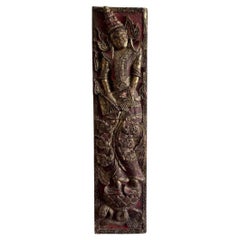
Antique Burmese Carved Wood Panel of a Court Scribe.
Located in Point Richmond, CA
Antique Burmese Carved Wood Panel of a Court Scribe. The standing heavenly being holds a manuscript with a brush in the right hand writing scriptur...
Category

Burmese Folk Art Antique Late 19th Century Sculptures and Carvings

Materials

Wood, Lacquer

A boxwood netsuke depicting a monkey with an Okame mask, signed Shinzan
Located in Milano, IT
A boxwood netsuke depicting a seated monkey in the act of putting on an inverted Okame mask, which it holds up before its face, signed Shinzan. Incised signature to the reverse. Pe...
Category

Japanese Antique Late 19th Century Sculptures and Carvings

Materials

Boxwood

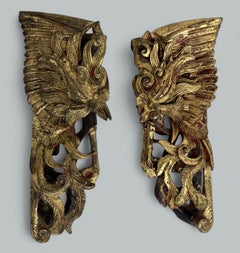
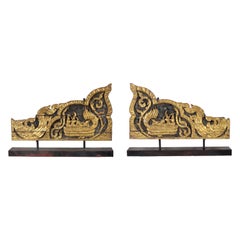
Antique Pair Chinese Export Giltwood Carvings of Crane Phoenix or Foo Dogs 19Ct
Located in Dublin, Ireland
Impressive and quite rare Pair of Hand Carved Giltwood Hardwood hanging Wall Carvings of Chinese origin, last quarter of the Nineteenth Century. Each beautiful carving depicts a bi...
Category

Chinese Chinese Export Antique Late 19th Century Sculptures and Carvings

Materials

Harewood

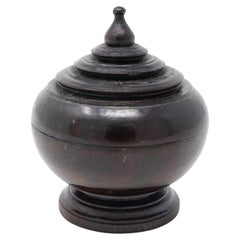
Antique Thai Hardwood Betelnut Box
Located in Point Richmond, CA
Antique Thai Hardwood Betelnut Box. A turned wood globular chedi form having a narrower pedestal base, fitted wood conical top shaped with circular tiers...
Category

Thai Folk Art Antique Late 19th Century Sculptures and Carvings

Materials

Hardwood

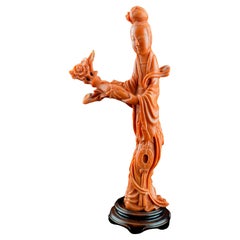
Chinese Red Coral Female Figure 19th Century
Located in Sarasota, FL
Chinese red coral carving of female figure in flowing robes. Very fine 19th century work. The figure attached to a 1" stand, and total weigh...
Category

Chinese Chinese Export Antique Late 19th Century Sculptures and Carvings

Materials

Coral

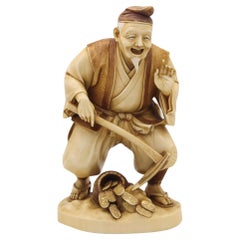
JAPAN 1890 Meiji Carved Figure of Fortune God Daikoku As a Farmer With Coins
Located in Miami, FL
A Japanese carved sculpture of Daikoku. Magnificent sculpture of the god of the fortune Daikoku WITH OVER 100 YEARS OLD, created in Japan during the Meiji period, circa 1890. The ca...
Category

Japanese Meiji Antique Late 19th Century Sculptures and Carvings

Materials

Gold

A Large Chinese Carved Wood Figure of Guanyin, Late Qing Dynasty
Located in ARMADALE, VIC
Description: A fine depiction of Guanyin, possessing the regal tranquillity that the Chinese Bodhisattva of compassion has come to be visually associated with. Marked by an urna signifying her spiritual enlightenment and crowned with a diadem depicting the Buddha Amitabha, the figure is immediately recognisable as Guanyin. Her androgynous figure is gracefully poised in the Lalit asana or “royal ease”, the pose classical in representations of the deity. The figure is asymmetric, with the weight of her supple form falling upon her left hand placed against the base, her right knee raised and left pendant. Her right hand rests upon her raised knee, delicately pinching at her draped attire. At first unassuming, this gesture may be suggestive of the Apana Mudra, the seal of purification. This Mudra is associated with physical wellbeing, fecundity and the cleansing of the body. Though she is adorned in the princely garb of dhoti, she bears features of idealised feminine beauty as prescribed in Asian art. With plump cheeks and near pouted lips, her full face gazes down upon the viewer with an empathetic and half-lidded gaze, upholding her title as ‘One who hears the cries of the world.’ Notes on the item: Guanyin is the Chinese interpretation of Avalokiteshvara, the Indian Bodhisattva of compassion. The term “Bodhisattva” is derived from the Sanskrit “Bodhi”, meaning ‘awakening’ or ‘enlightenment’, combined with “Sattva”, meaning ‘spirit’ or ‘being’, referring to one on the path to achieving enlightenment. Bodhisattvas in Mayahana Buddhism are recognised as figures who have effectively achieved enlightenment yet relinquish their accension to nirvana in order to remain amongst mankind in the ultimate act of compassion to aid as spiritual guides. As such, the Bodhisattva inhabit a liminal space between samsara and nirvana; enlightened beings that maintain a relationship with humanity that buddhas cannot, as attaining Buddhahood necessitates the abandonment of all worldly attachments, including mankind. Guanyin’s very name, ‘One who hears the cries of the world’ highlights this role as a compassionate figure who acknowledges the suffering and strife of man. Along with Mahāsthāmaprāpta, a fellow bodhisattva, Guanyin serves as an attendant to Buddha Amitabha, with these three deities recognised as the Three Sages of Western Pure Land Buddhism, a sect of Mayahana Buddhism popular in East Asia. Avalokiteshvara is commonly posited to have been adopted from Indian Buddhism into China as Guanyin around 200-400 CE, however it was the Tang dynasty (618-907) which saw the popularisation of the deity. By the Ming (1358–1644) and Qing (1644–1911) dynasties, Guanyin held the position as the most popular female deity in China. The unique state of religion in China held no monolithic canon regarding Buddhism and saw the assimilation of several belief systems, primarily Daoism, Buddhism and Confucianism. Consequently, Guanyin became a deity to be revered beyond Buddhism alone, appointed as both an official imperial deity and Daoist deity in the 12th century. Guanyin may also be seen to fulfil the role of idealised femininity as prescribed by Confucianism, with the scarcity of female Chinese deities perhaps accounting for the gradual gender shift Guanyin underwent. The Indian Avalokiteshvara is unequivocally recognised as male, whilst the supposed gender of Guanyin remains contentious. Although there is a clear shift from the masculine Avalokiteshvara towards a more feminine representation, it is unclear if Guanyin is understood to be entirely feminine, to inhabit qualities of both genders or to be elevated beyond gender entirely, embodying neither. Depictions of Guanyin are highly androgynous, which some believe lends credence towards Guanyin symbolising the unity of dualistic forces as recognised in Daoism, displaying the anthropomorphism of yin and yang. Comparative Analysis: Market comparisons of similar Qing Dynasty polychrome figures of Guanyin include lot 767 (no.2) From Christies ‘Important Chinese Ceramics and Works of Art,’ New York, 25 March 2022, with the price realised USD 52,920 (Estimate USD 20,000 – USD 30,000). Christies also auctioned a comparable polychrome Guanyin...
Category

Chinese Qing Antique Late 19th Century Sculptures and Carvings

Materials

Hardwood

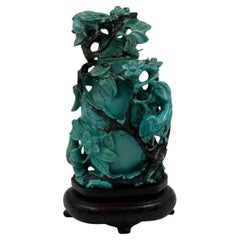
Qing Carved Turquoise Snuff Bottle
Located in Autonomous City Buenos Aires, CABA
Qing Dynasty Carved Turquoise Snuff Bottle This Qing Dynasty snuff bottle is carved from a single piece of turquoise. It features a high-reli...
Category

Chinese Qing Antique Late 19th Century Sculptures and Carvings

Materials

Stone

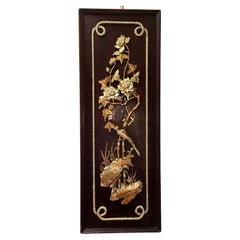
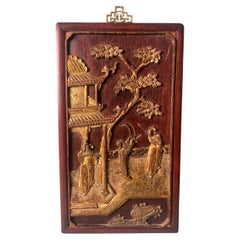
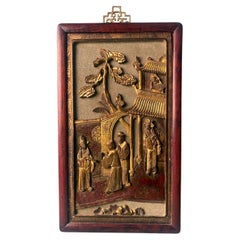
Vintage Chinese Large Hand Carved and Gilded Wood Panel
Located in Vero Beach, FL
Vintage Chinese Large Hand Carved and Gilded Wood Panel Elaborate and deeply carved wood panel dates from the end of the 19th century. The d...
Category

Chinese Chinese Export Antique Late 19th Century Sculptures and Carvings

Materials

Wood

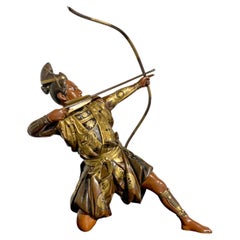
Japanese Miyao Style Gilt Bronze Samurai Archer, Meiji Period, Japan
Located in Austin, TX
A spectacular Japanese cast, carved, and parcel gilt bronze sculpture, okimono, of a kneeling samurai archer, signed Kiyotsugu (died 1894), Meiji ...
Category

Japanese Meiji Antique Late 19th Century Sculptures and Carvings

Materials

Bronze

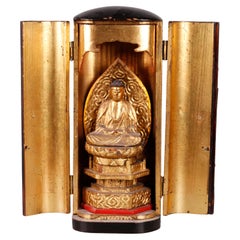
Japanese Lacquer Buddha w/ Shrine, 19th c.
Located in New York, NY
3in(D) x 4in(W) x 9in(H) are the overall dimensions of the shrine
Category

Japanese Antique Late 19th Century Sculptures and Carvings

Materials

Wood, Lacquer

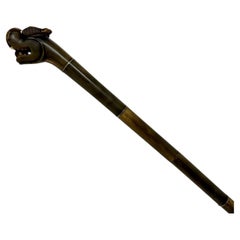
Antique Asian Chinese Horn Dragons Head Victorian Vintage Walking Stick Cane
Located in Dublin, Ireland
Very Unusual Horn Sectional Hand Carved Chinese Walking Stick or Dress Cane of outstanding quality, last half of the Nineteenth Century. The ...
Category

Chinese Victorian Antique Late 19th Century Sculptures and Carvings

Materials

Sterling Silver

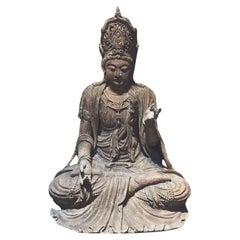
A Large Chinese Carved Wood Figure of Guanyin, Late Qing Dynasty
Located in ARMADALE, VIC
Description: A singular example of Guanyin. Deviating from the Bodhisattva’s conventional pose of ‘royal ease’, the figure is instead seated in the meditative padmasana, or ‘lotus position’, rendering this Guanyin something of a rarity. An Apana more typically associated with depictions of Buddhas, Guanyin assuming this pose immediately signifies this figure as one of particular spiritual reverence. Both feet are revealed crossed upon one another from beneath fabric which spills before her, her left palm turned upward with her hand resting upon her left knee and her right raised in a relaxed gesture. Adorned with a diadem housing a depiction of Amitabha Buddha, her own spiritual guide, she exudes an air of tranquil regality, further characterised by her numerous strings of beads and elaborately fastened dhoti, attire traditionally reserved for Indian princes. Though the figure’s dress is Indian her face is undoubtedly exemplifying artistic Chinese beauty standards. Her face is soft and rounded, full in both the lips and cheeks, with eyes that restfully peer down, as though she is watching over the worries of mankind with compassion. Notes on the item: Guanyin is the Chinese interpretation of Avalokiteshvara, the Indian Bodhisattva of compassion. The term “Bodhisattva” is derived from the Sanskrit “Bodhi”, meaning ‘awakening’ or ‘enlightenment’, combined with “Sattva”, meaning ‘spirit’ or ‘being’, referring to one on the path to achieving enlightenment. Bodhisattvas in Mayahana Buddhism are recognised as figures who have effectively achieved enlightenment yet relinquish their accension to nirvana in order to remain amongst mankind in the ultimate act of compassion to aid as spiritual guides. As such, the Bodhisattva inhabit a liminal space between samsara and nirvana; enlightened beings that maintain a relationship with humanity that buddhas cannot, as attaining Buddhahood necessitates the abandonment of all worldly attachments, including mankind. Guanyin’s very name, ‘One who hears the cries of the world’ highlights this role as a compassionate figure who acknowledges the suffering and strife of man. Along with Mahāsthāmaprāpta, a fellow bodhisattva, Guanyin serves as an attendant to Buddha Amitabha, with these three deities recognised as the Three Sages of Western Pure Land Buddhism, a sect of Mayahana Buddhism popular in East Asia. Avalokiteshvara is commonly posited to have been adopted from Indian Buddhism into China as Guanyin around 200-400 CE, however it was the Tang dynasty (618-907) which saw the popularisation of the deity. By the Ming (1358–1644) and Qing (1644–1911) dynasties, Guanyin held the position as the most popular female deity in China. The unique state of religion in China held no monolithic canon regarding Buddhism and saw the assimilation of several belief systems, primarily Daoism, Buddhism and Confucianism. Consequently, Guanyin became a deity to be revered beyond Buddhism alone, appointed as both an official imperial deity and Daoist deity in the 12th century. Guanyin may also be seen to fulfil the role of idealised femininity as prescribed by Confucianism, with the scarcity of female Chinese deities perhaps accounting for the gradual gender shift Guanyin underwent. The Indian Avalokiteshvara is unequivocally recognised as male, whilst the supposed gender of Guanyin remains contentious. Although there is a clear shift from the masculine Avalokiteshvara towards a more feminine representation, it is unclear if Guanyin is understood to be entirely feminine, to inhabit qualities of both genders or to be elevated beyond gender entirely, embodying neither. Depictions of Guanyin are highly androgynous, which some believe lends credence towards Guanyin symbolising the unity of dualistic forces as recognised in Daoism, displaying the anthropomorphism of yin and yang. Comparative Analysis: Market comparisons of similar Qing Dynasty polychrome figures of Guanyin include lot 767 (no.2) From Christies ‘Important Chinese Ceramics and Works of Art,’ New York, 25 March 2022, with the price realised USD 52,920 (Estimate USD 20,000 – USD 30,000). Christies also auctioned a comparable polychrome Guanyin...
Category

Chinese Qing Antique Late 19th Century Sculptures and Carvings

Materials

Hardwood

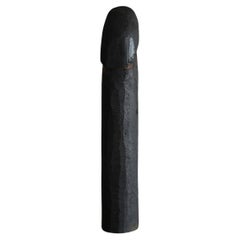
Japanese antique wooden large penis / folk belief / 1868-1920
Located in Sammu-shi, Chiba
This item is a giant wooden penis that was used in old Japanese houses from the late 19th century to the early 20th century (Meiji to Taisho eras). This i...
Category

Japanese Meiji Antique Late 19th Century Sculptures and Carvings

Materials

Cedar

Japanese Antique Wood Carving Daikokuten 1800s-1860s / Figurine Wabisabi
Located in Chōsei District Nagara, JP
This is an old Japanese wooden carving of Daikokuten, created during the Edo period (1800s–1860s). It is carved from sugi (Japanese cedar). Having endured the passage of centuries, i...
Category

Japanese Edo Antique Late 19th Century Sculptures and Carvings

Materials

Cedar

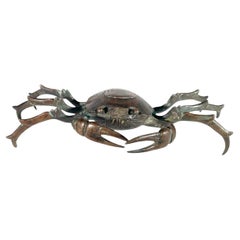
Large Japanese Meiji Period Bronze Crab (B) Okimono
Located in Chapel Hill, NC
Large Japanese naturalistically modeled bronze okimono in the form of a crab. One of 5 designated by the (B) in the title.
Category

Japanese Meiji Antique Late 19th Century Sculptures and Carvings

Materials

Bronze

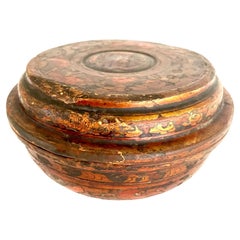
19th Century, Gilded Lacquer Tsampa Bowl from Tibet
Located in Atlanta, GA
A beautiful late 19th century lacquer covered bowl that was once used for storing the famous Tibetan barley flour (Tsampa). This beautifully handcrafted wooden bowl has a gorgeous, l...
Category

Tibetan Antique Late 19th Century Sculptures and Carvings

Materials

Wood, Lacquer, Paint

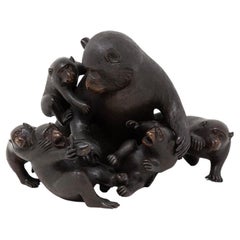
Japanese Meiji Period Bronze Monkey Group Sculpture Okimono Shosai
Located in Newark, England
Featuring Seven Japanese Macaques Form our Japanese collection, we are delighted to offer this Japanese Bronze Monkey Group by Shosai. The Japanese Bronze Group displaying a male father monkey and his infants playing around and being mischievous with Persimmon fruit. The monkeys modelled as Japanese macaque monkeys (snow monkey). The bronze okimono is beautifully patinated with a highly lifelike and naturalistic casting signed to the underside Shosai 正齊鋳. The Bronze group dates to the Meiji Period (1868-1912) circa 1885. Japanese macaque (snow monkey) is a terrestrial Old World monkey species that is native to Japan. They are known as snow monkeys because some live in areas where snow covers the ground for long periods each year hence their nickname. No other non-human primate lives further north or in a colder climate than the snow monkey. Individuals have brownish grey fur, pinkish-red faces, and short tails. Two subspecies are known and their conservation Status is of least concern. In Japan, the species is known as Nihonzaru ニホンザル, 日本 (Japan/Nihon) and saru 猿 (monkey) to distinguish it from other primates, but the Japanese macaque is the only species of monkey in Japan. The Japanese macaque features heavily in the religion, folklore, and art of Japan, as well as in proverbs and idiomatic expressions in the Japanese language. They are often seen in paintings, block prints and represented in all manner of carvings from Okimono to netsuke. Many of these art forms reside in the world’s most famous museums and collections, some of the most prominent pieces by artists such as Mori Sosen and Kawanabe Kyosai. In Shinto belief (Japan’s indigenous religion/nature religion) legendary mythical beasts known as raiju sometimes appeared as monkeys and kept Raijin (the god of lightning/storms) company. In another well known tale the three wise monkeys who warn people to “see no evil, hear no evil and speak no evil” can be seen depicted in relief over the door of the famous Tosho-gu shrine in Nikko. Meiji Period was an era of Japanese history that spanned from 1868 to 1912. It was the first half of the Empire of Japan, when the Japanese people began to build a paradigm of a modern, industrialised nation state and emergent great power, influenced by Western countries and aesthetics. As a result of radically different ideas, the changes to Japan were profound and it affected the social structure, politics, economy, military, and foreign relations across the board. The period corresponded to the reign of Emperor Meiji and was preceded by the Keio era and was succeeded by the Taisho era. Cultural Art during the Meiji Period was of particular interest to the government and they overhauled the art export market which in turn promoted Japanese arts via various world’s fairs, beginning in Vienna at the world fair in 1873. The government heavily funded the fairs and took an active role organising how Japan’s culture was presented to the world including creating a semi-public company named Kiritsu Kosho Kaisha (First Industrial Manufacturing Company). The Kiritsu Kosho Kaisha was used to promote and commercialise exports of Japanese art and established the Hakurankai Jimukyoku (Exhibition Bureau) to maintain quality standards. For the 1876 Centennial International Exhibition in Philadelphia, the Japanese government created a Centennial Office and sent a special envoy to secure space for the 30,000 items that would be displayed. The Imperial Household also took an active interest in arts and crafts, commissioning works by select artists to be given as gifts for foreign dignitaries further emphasising the high quality and importance of Japanese art. Just before the end of the 19th century in 1890, the Teishitsu Gigeiin (Artist to the Imperial Household) system was created to recognise distinguished artists. These artists were selected for their exceptionally high quality wares and talent in their own industry. Over a period of 54 years Seventy artists were appointed, amongst these were ceramicist Makuzu Kozan and cloisonné enamel artist...
Category

Japanese Meiji Antique Late 19th Century Sculptures and Carvings

Materials

Bronze

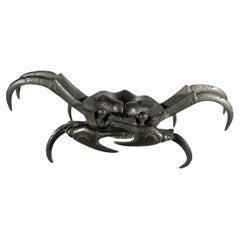
Large Japanese Meiji Period Bronze Crab (C) Okimono
Located in Chapel Hill, NC
Realistically modeled Japanese okimono of a crab raised on its toes. I of 5 designated by the (C) in the title.
Category

Japanese Meiji Antique Late 19th Century Sculptures and Carvings

Materials

Bronze

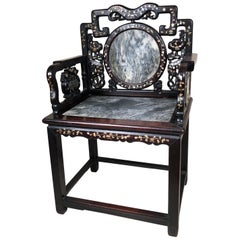
China Fine Antique Chair With Dream Stones And Mother Pearl Inlay
Located in South Burlington, VT
Finest Quality Dreamstone Inlaid Chair China- an extraordinary prolifically crafted example of an antique hand carved hardwood chair inlaid with multiple natural dream stone "paintings" plus "butterfly and mother of pearl" inlays in its hardwood arms and seat, late 19th century. This type of old Chinese furniture art form with marble inlay is centuries of years old dating as far back as the Ming dynasty (1368-1644). Fine round and rectangular dream stones depicting mountains and the natural outdoor scenery are inlaid in the seat, back and interior sides of this fine furniture example. Thin marble inlaid stone "paintings" are approximately 1/4" thick and are cut from a large slab of rough material revealing incredible patterns in soft white and gray colors. The hardwood (elmwood) frame is tenon joined. The natural stone "paintings" were hand especially for fine export chairs as in this example. Chair dimensions: Height 38.75 inches Width 25.75 inches Depth 19 inches Period : late Qing period, 19th century Provenance: Private American Chinese collection Reference: Dreaming of Dreamstones China’s Extraordinary Natural Stone Paintings, Schneible Fine Arts. Dreaming of Dreamstones – World’s first comprehensive English text publication covers China’s extraordinary natural Stone Paintings, by author and dream stone lecturer Douglas Schneible, 35 pages, softcover, ISBN 978-0-578. See photos. We have been dealing in authentic Chinese natural stone paintings...
Category

Chinese Qing Antique Late 19th Century Sculptures and Carvings

Materials

Marble

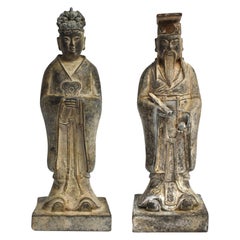
Pair of Antique Bronze Chinese Officials
Located in Somis, CA
A captivating pair of late 19th-century bronze statues depicting Chinese officials. The left figure portrays an imperial advisor, his full face adorned with almond-shaped eyes beneath arched brows and a pursed mouth, surmounted by an elaborate crown. His hands are clasped together, holding a Ruyi scepter, while he is attired in an open-neck robe. The right figure, an older advisor, shares similar facial features but is distinguished by a long beard and a flat crown, symbolizing his seniority. Clad in a closed robe befitting his age and rank, he holds a jade scepter...
Category

Chinese Tang Antique Late 19th Century Sculptures and Carvings

Materials

Bronze

Pair of Antique Bronze Chinese Officials
$1,800 Sale Price / set
25% Off
Late 19th-Early 20th Century Tribal Mask, West Nepal
Located in Point Richmond, CA
Late 19th-early 20th century Tribal mask, West Nepal A large mask from West Nepal with a small grin and bared teeth surrounded with pink powder, faint traces of which can also be se...
Category

Nepalese Tribal Antique Late 19th Century Sculptures and Carvings

Materials

Wood

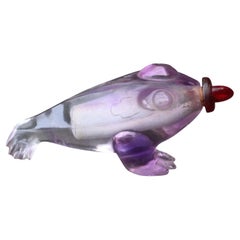
Antique Chinese Snuff Bottle Carved in Amethyst, late 19th century
Located in Bilzen, BE
Very rare Asian snuffbox in carved amethyst. Great workmanship, beautiful stone color! In good condition . Late 19th century Length 7.5 cm, height 2.6 cm
Category

Qing Antique Late 19th Century Sculptures and Carvings

Materials

Multi-gemstone

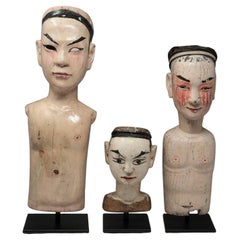
Late 19th-Early 20th Century Trio of Puppets, China
Located in Point Richmond, CA
Late 19th to early 20th century Trio of puppets, China Two puppet torsos and one puppet head from China, all mounted on custom bases. The heights are 16, 9 and 13.5 inches (40.6, 23...
Category

Chinese Chinoiserie Antique Late 19th Century Sculptures and Carvings

Materials

Wood

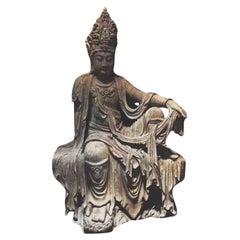
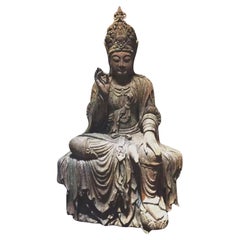
A Large Chinese Carved Wood Figure of Guanyin, Late Qing Dynasty
Located in ARMADALE, VIC
An impressive depiction of Guanyin, the Bodhisattva of compassion, whose name bears the meaning ‘One who hears the cries of the world.’ The rather androgynous figure is adorned with beaded jewellery and the princely regalia of a dhoti, draped across her body and spilling out over to partially obscure what she is resting upon. The goddess’ profile exhibits idealised features of Asian artistic convention; her face is soft and rounded, with full lips and relaxed eyes that provide a serene quality of youthfulness to the figure. Adhering to Chinese iconography of Guanyin, the figure is marked by an urna on her forehead, denoting her own enlightenment, as well as a diadem displaying Buddha Amitabha, the spiritual teacher of Guanyin. Seated in the Lalit asana pose, translated as ‘royal ease’, the figure exudes a fine example of the relaxed majesty typical in the characterisation of Guanyin. Whilst the figure’s left hand is placed restfully upon the left leg pendant, the right is raised in the gesture shuni mudra, the second finger held gently against the thumb. Otherwise known as the seal of patience, this gesture indicates the figure as one intended to bestow this virtue, along with compassion and understanding, upon the beholder. Notes on the item: Guanyin is the Chinese interpretation of Avalokiteshvara, the Indian Bodhisattva of compassion. The term “Bodhisattva” is derived from the Sanskrit “Bodhi”, meaning ‘awakening’ or ‘enlightenment’, combined with “Sattva”, meaning ‘spirit’ or ‘being’, referring to one on the path to achieving enlightenment. Bodhisattvas in Mayahana Buddhism are recognised as figures who have effectively achieved enlightenment yet relinquish their accension to nirvana in order to remain amongst mankind in the ultimate act of compassion to aid as spiritual guides. As such, the Bodhisattva inhabit a liminal space between samsara and nirvana; enlightened beings that maintain a relationship with humanity that buddhas cannot, as attaining Buddhahood necessitates the abandonment of all worldly attachments, including mankind. Guanyin’s very name, ‘One who hears the cries of the world’ highlights this role as a compassionate figure who acknowledges the suffering and strife of man. Along with Mahāsthāmaprāpta, a fellow bodhisattva, Guanyin serves as an attendant to Buddha Amitabha, with these three deities recognised as the Three Sages of Western Pure Land Buddhism, a sect of Mayahana Buddhism popular in East Asia. Avalokiteshvara is commonly posited to have been adopted from Indian Buddhism into China as Guanyin around 200-400 CE, however it was the Tang dynasty (618-907) which saw the popularisation of the deity. By the Ming (1358–1644) and Qing (1644–1911) dynasties, Guanyin held the position as the most popular female deity in China. The unique state of religion in China held no monolithic canon regarding Buddhism and saw the assimilation of several belief systems, primarily Daoism, Buddhism and Confucianism. Consequently, Guanyin became a deity to be revered beyond Buddhism alone, appointed as both an official imperial deity and Daoist deity in the 12th century. Guanyin may also be seen to fulfil the role of idealised femininity as prescribed by Confucianism, with the scarcity of female Chinese deities perhaps accounting for the gradual gender shift Guanyin underwent. The Indian Avalokiteshvara is unequivocally recognised as male, whilst the supposed gender of Guanyin remains contentious. Although there is a clear shift from the masculine Avalokiteshvara towards a more feminine representation, it is unclear if Guanyin is understood to be entirely feminine, to inhabit qualities of both genders or to be elevated beyond gender entirely, embodying neither. Depictions of Guanyin are highly androgynous, which some believe lends credence towards Guanyin symbolising the unity of dualistic forces as recognised in Daoism, displaying the anthropomorphism of yin and yang. Comparative Analysis: Market comparisons of similar Qing Dynasty polychrome figures of Guanyin include lot 767 (no.2) From Christies ‘Important Chinese Ceramics and Works of Art,’ New York, 25 March 2022, with the price realised USD 52,920 (Estimate USD 20,000 – USD 30,000). Christies also auctioned a comparable polychrome Guanyin...
Category

Chinese Qing Antique Late 19th Century Sculptures and Carvings

Materials

Hardwood

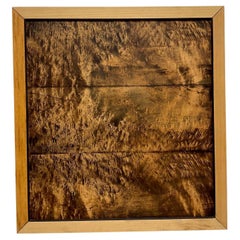
Pair of Framed Solid Burl Wood Panels from a Japanese Tsuitate, Meiji Period
Located in Fukuoka, JP
A spectacular pair of framed solid burl wood panels, originally part of a traditional Japanese tsuitate (single-panel standing screen), now presented as sculptural wall art. Each pan...
Category

Japanese Antique Late 19th Century Sculptures and Carvings

Materials

Wood, Burl

Monumental Japanese Bas Relief Carving on Natural Wood Slab
Located in Vero Beach, FL
Monumental Japanese bas relief carving on natural wood slab Palatial sized Japanese wood carving from the Meiji Period (1868-1912). This stunning sc...
Category

Japanese Japonisme Antique Late 19th Century Sculptures and Carvings

Materials

Wood, Lacquer

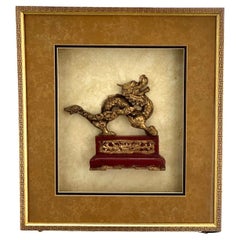
Antique Chinese Hand Carved Wood Gilt Dragon in Shadow Box.
Located in Vero Beach, FL
Antique Chinese Hand Carved Wood Gilt Dragon in Shadow Box. Chinese shadow box features a hand carved wood and gilded Dragon from the Qing Dynasty. It is mounted in a massive and de...
Category

Chinese Chinese Export Antique Late 19th Century Sculptures and Carvings

Materials

Glass, Wood

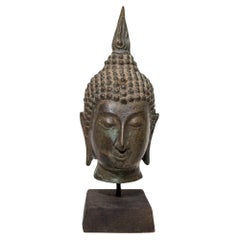
Antique Bronze Buddha Head Sculpture with Verdigris on Stand 19th C.
Located in Moreno Valley, CA
Antique Southeast Asian cast bronze buddha head sculpture with verdigris patina mounted on a black base wood stand. Bronze Sukhothai style Buddha bronze head with green patina, from ...
Category

Thai Tibetan Antique Late 19th Century Sculptures and Carvings

Materials

Bronze

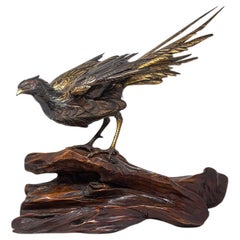
Japanese Bronze Pheasant Okimono Genryusai Seiya
Located in Newark, England
Unusual Casting of a Pheasant in Flight From our Japanese collection, we are delighted to offer this Japanese bronze okimono of a Pheasant upon a naturalistic root wood base. The Ph...
Category

Japanese Meiji Antique Late 19th Century Sculptures and Carvings

Materials

Bronze

Small Antique Bronze Buddha Head Sculpture with Verdigris on Stand
Located in Moreno Valley, CA
Small antique Southeast Asian cast bronze buddha head sculpture with verdigris patina mounted on a black base wood stand. Bronze Sukhothai style Buddha bronze head with green patina,...
Category

Thai Tibetan Antique Late 19th Century Sculptures and Carvings

Materials

Bronze

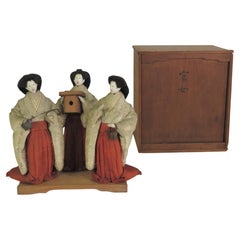
Late Edo Period Sannin-kanjyo Figures or Three Court Ladies w. Wood Box Japan
Located in Miami, FL
Late Edo Period Dolls representing Sannin-kanjyo which means the three court ladies. They support and care for the emperor (Odairi-sama) and the empre...
Category

Japanese Edo Antique Late 19th Century Sculptures and Carvings

Materials

Fabric, Wood

Qing Dynasty Exquisite Chinese Wooden Panel With Raised Figures Gold Leaf (n.2)
Located in Prato, Tuscany
We kindly invite you to read the entire description carefully, as we aim to provide detailed technical and historical information to ensure the authenticity of our items. This extrao...
Category

Chinese Chinoiserie Antique Late 19th Century Sculptures and Carvings

Materials

Wood

Japanese Wood Netsuke " The Beast", Meiji Era
Located in Norton, MA
A Japanese Antique carved netsuke "The Beast" dated around the late 19th to early 20th century.
Category

Japanese Antique Late 19th Century Sculptures and Carvings

Materials

Wood

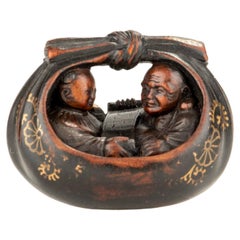
A boxwood netsuke of Hotei and a karako in the sack
Located in Milano, IT
A boxwood netsuke depicting Hotei with a karako inside his large sack, closed at the top with a knot. The god is shown with a smiling face and rounded body, while the exterior of the...
Category

Japanese Antique Late 19th Century Sculptures and Carvings

Materials

Boxwood

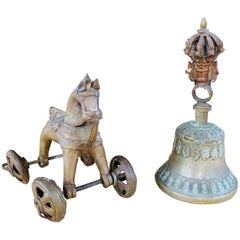
Antique Asian Cast Bronze Horse on Wheels and Tibetan Bell
Located in Plainview, NY
Antique Asian car bronze horse on 4 wheels and a bell featuring Tibetan Buddhist figures. Both pieces show patina on the surface. Dimensions: Bell: 7.5...
Category

Asian Tibetan Antique Late 19th Century Sculptures and Carvings

Materials

Metal

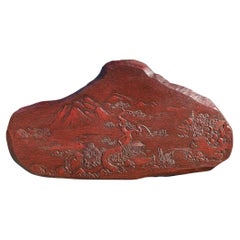
Late 19th Century Chinese Qingtian Stone (Soapstone) Carved Scholar s Brush Rest
Located in Chapel Hill, NC
Late 19th century Qingtian stone (soapstone) carved scholar's brush rest, Chinese. A landscape carving depicting tea houses among pine trees by a lake with mountains behind. Contrast...
Category

Chinese Qing Antique Late 19th Century Sculptures and Carvings

Materials

Soapstone

Late 19th-Early 20th Century Tribal Mask, West Nepal
Located in Point Richmond, CA
Late 19th-early 20th century Tribal mask, West Nepal A mask from West Nepal with a rather heart shaped facial plane. There are three large iron staples, two of which may have secure...
Category

Nepalese Tribal Antique Late 19th Century Sculptures and Carvings

Materials

Wood

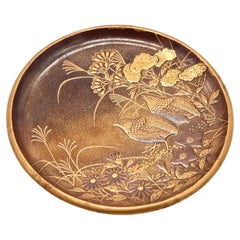
JAPAN Meiji Period 1880 Namiki Little Cabined Round Tray In Wood, Gold Silver
Located in Miami, FL
A Namiki little round cabinet tray from the Meiji period. This is an amazing and very decorative presentation round cabinet tray created in the Imperial Japan period during the earl...
Category

Japanese Meiji Antique Late 19th Century Sculptures and Carvings

Materials

Gold, Silver

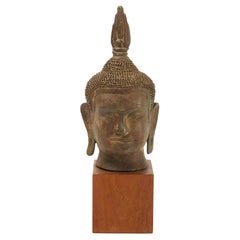
Cast Bronze Buddha Head
Located in Branford, CT
Cast bronze Buddha head. On a carved wooden pedestal. Circa 1890. H 13-3/4" W 4-1/8" D 3-1/2" including base.
Category

Thai Chinese Export Antique Late 19th Century Sculptures and Carvings

Materials

Bronze

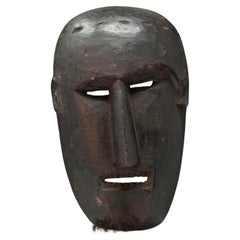
Late 19th-Early 20th Century Tribal Mask, West Nepal
Located in Point Richmond, CA
Late 19th-early 20th century Tribal mask, West Nepal A mask from West Nepal with a sharp straight nose, squinting eyes and a square mouth showing upper and lower teeth. There are re...
Category

Nepalese Tribal Antique Late 19th Century Sculptures and Carvings

Materials

Wood

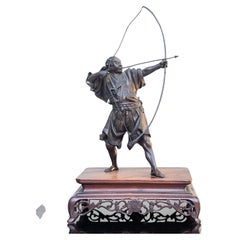
Scultura Bronzo Raffigurazione Arciere Periodo Meiji Firmata
By Saeki Yoshimitsu
Located in Milano, MI
Scultura Bronzo Raffigurazione Arciere periodo Meiji Firmata Descrizione: Scultura giapponese antica raffigurazione di arciere in bronzo realizzata...
Category

Asian Meiji Antique Late 19th Century Sculptures and Carvings

Materials

Bronze

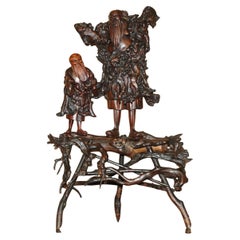
ANTIQUE CIRCA 1880 CHINESE BURR / BURL ROOT WOOD CARViNGS OF WISEMEN ON PLATFORM
Located in West Sussex, Pulborough
Royal House Antiques Royal House Antiques is delighted to offer for sale this lovely hand carved antique Burr or Burl Root wood statue of the two wisemen on a platform Please note...
Category

Chinese Chinese Export Antique Late 19th Century Sculptures and Carvings

Materials

Wood

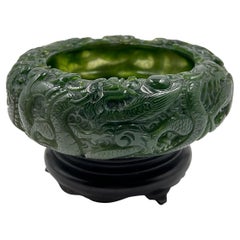
Chinese Jade Carved Bowl from the Qing Dynasty
Located in Autonomous City Buenos Aires, CABA
Chinese Carved Jade Bowl from the Qin Dynasty Circular piece, finely hand-carved in deep green jade with lighter natural veins. It features an intrica...
Category

Chinese Other Antique Late 19th Century Sculptures and Carvings

Materials

Jade

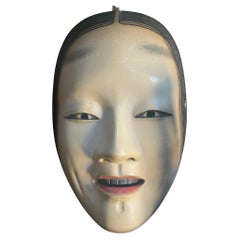
19th Century Meiji Period Japanese Zō-onna Noh Theatre Mask
Located in London, GB
Zō-onna Noh Theatre Mask, Meiji Period Noh Mask, Japanese Noh Mask, Antique Japanese Mask, Antique Noh Mask, Noh Theatre Mask, Samurai, Japanese Antique. Beautifully carved and hand...
Category

Japanese Meiji Antique Late 19th Century Sculptures and Carvings

Materials

Wood, Cypress, Lacquer, Paint

Thai Rattanakosin-Era Carved and Gilded Throne Side Panels (pair)
Located in Soquel, CA
Thai Rattanakosin-Era Carved and Gilded Throne Side Panels Ornately carved panels with gilding from Thailand. The central portion of these panels depict...
Category

Thai Neoclassical Antique Late 19th Century Sculptures and Carvings

Materials

Gold Leaf, Metal

JAPAN 1880 Meiji Highly Detailed Walking Cane With Monkeys In a Bamboo Forest
Located in Miami, FL
Waling cane from the Meiji Period (1868-1912). This is a fabulous antique walking cane created in the imperial Japan during the Meiji period (1868-1912), circa 1880's. The cane was ...
Category

Japanese Meiji Antique Late 19th Century Sculptures and Carvings

Materials

Wood

Qing Dynasty Exquisite Chinese Wooden Panel With Raised Figures And Gold Leaf
Located in Prato, Tuscany
We kindly invite you to read the entire description carefully, as we aim to provide detailed technical and historical information to ensure the authenticity of our items. This extrao...
Category

Chinese Chinoiserie Antique Late 19th Century Sculptures and Carvings

Materials

Wood

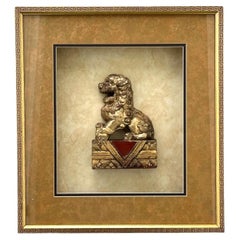
Antique Chinese Hand Carved Wood Gilt Foo Dog in Shadow Box.
Located in Vero Beach, FL
Antique Chinese Hand Carved Wood Gilt Foo Dog in Shadow Box. Chinese shadow box features a hand carved wood and gilded Foo Dog from the Qing Dynasty. It is mounted in a massive and ...
Category

Chinese Chinese Export Antique Late 19th Century Sculptures and Carvings

Materials

Glass

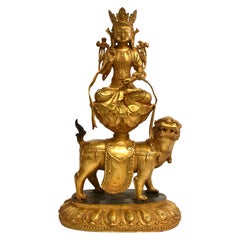
Gilt Bronze Tibetan White Tara on High Pedestal 10 lb
Located in Somis, CA
A beautiful 10 lb, gilt bronze statue of Tibetan White Tara. Seated in dhyanasana on a 4-tier lotus pedestal rising above holy beast on padmasana (single petal row lotus throne), both hands in Karana mudra to expel evils. Her small exquisite face with serene expression, with downcast eyes under high arched brows, wearing a high crown and long beaded necklaces ands rosette earrings. The beast with vivid expressions, bells and a saddle draped...
Category

Tibetan Antique Late 19th Century Sculptures and Carvings

Materials

Bronze