Qing Sculptures and Carvings

QING STYLE

The last imperial dynasty from 1644 to 1912 was a time of change in China, beginning with the invasion by Manchurian forces that ended the Ming dynasty and established the Shunzhi Emperor. The expansion of exportation and trade that had bolstered the arts during the Ming era continued, as Qing dynasty furniture involved the same attention to craftsmanship with expert construction techniques in hardwood pieces that were assembled with mortise and tenon joints rather than nails or glue. Together, these eras comprise a golden age of Chinese furniture design.

Ming-style furniture is simple and elegant with clean lines. Chairs of the period and other Ming furniture made an impression on Scandinavian modernist Hans Wegner and his streamlined seating, for example. Whereas Qing-style furniture is elaborate, with an increasing influence from the West leading to lavish carving inspired by the European Baroque and Rococo styles. And while many of the forms that define examples of the latter are common within classical Chinese furniture, such as curving and folding chairs as well as large screens, Qing designs are laden with ornamentation. Frequently, the carved motifs and inlaid designs in mother-of-pearl were auspicious, such as peonies for wealth or dragons for luck. Bats were symbols of happiness in the design of Qing furniture, with one of the characters in the word for bat, bianfu, being a homophone for fu, or “fortune.”

While several types of wood were used in the construction of Qing beds, tables, storage pieces and seating, today’s collectors know that the most prized were the rare rosewoods zitan and huanghuali. They were both sourced from Hainan, China’s largest island, and are marked by a rich luster that occurs naturally, without the application of lacquer or other decorative materials. Many of the most popular woods were imported from southeast Asia, adding to their value. Red sandalwood was also sought after for its durability and connection with Chinese medicine, with some chairs being made for health benefits.

Find a collection of antique Qing tea tables, stools, benches, decorative objects and more furniture on 1stDibs.

to
39
183
23
255
91
76
69
21
19
16
7
6
3
3
2
2
1
1
1
1
26
132
97
52
10
8
10
1
2
1
1
124
111
29
28
28
253
251
251
255
255
255
Style: Qing
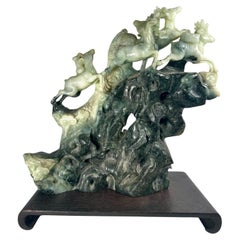
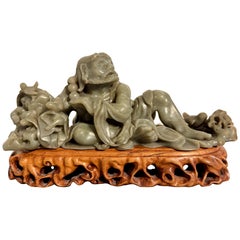
Chinese Natural Large Dushan Jade Carving Qing Dynasty
Located in Vero Beach, FL
Chinese Natural Large Dushan Jade Carving Qing Dynasty This is a superb piece of large jade carving from the 19th century. A group of deer are clim...
Category

19th Century Antique Qing Sculptures and Carvings

Materials

Jade

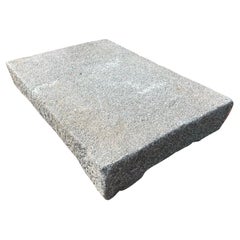
Antique Large Hand-Carved Garden Stone, 19th Century
Located in South Burlington, VT
An ideal garden ornament, sturdy weather proof planter display base or a rock solid all weather stone base for a special sculpture. From China, comes this large 20.5 inch rectangula...
Category

19th Century Chinese Antique Qing Sculptures and Carvings

Materials

Limestone

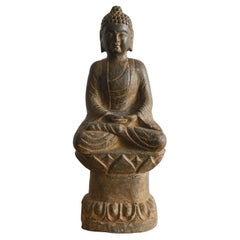
Antique Chinese stone Buddha statue / before the 19th century / Tathagata
Located in Sammu-shi, Chiba
This is a seated stone Buddha statue believed to have been made in China. While its date of creation is unclear, the weathering of the stone surface, surface wear, and texture formed...
Category

19th Century Chinese Antique Qing Sculptures and Carvings

Materials

Stone

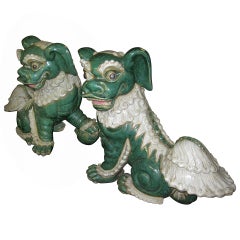
Late 19th century Pair of Glazed Porcelain Foo Dogs
Located in Savannah, GA
Extraordinary pair of fine glazed porcelain Foo dogs came to us out of an estate here in Savannah, Georgia, belonging to an old general that long ago brought them from Thailand. Used...
Category

1890s Chinese Antique Qing Sculptures and Carvings

Materials

Porcelain

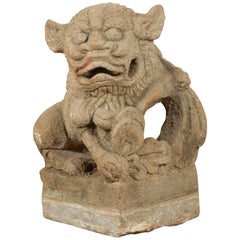
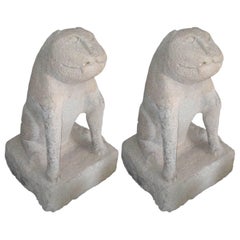
Chinese Qing Dynasty 19th Century Carved Stone Foo Dog Guardian Lion Sculpture
Located in Yonkers, NY
A Chinese Qing Dynasty period carved stone foo dog guardian lion from the 19th century, on square base. Created in China during the Qing Dynasty, this st...
Category

19th Century Chinese Antique Qing Sculptures and Carvings

Materials

Stone

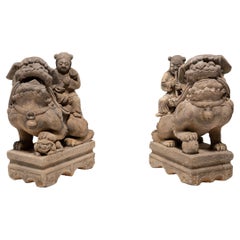
Pair of Chinese Guardian Fu Lions with Riders, c. 1850
Located in Chicago, IL
This pair of intricately carved limestone fu lions once protected the entry of a grand courtyard home in 19th-century China. Also known as shizi or foo dogs, the mythical creatures a...
Category

Mid-19th Century Chinese Antique Qing Sculptures and Carvings

Materials

Limestone

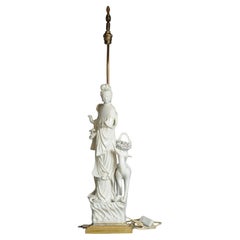
Lovely 17/18C Dehua Blanc de Chine Guanyin Statue China Chinese made into a lamp
Located in Amsterdam, Noord Holland
A lovely and large example with nice details. Made into a lamp. We didn't test if it works. Condition with restorations, all pictured. Size: statue 45CM high approx. , total height ...
Category

17th Century Chinese Antique Qing Sculptures and Carvings

Materials

Porcelain

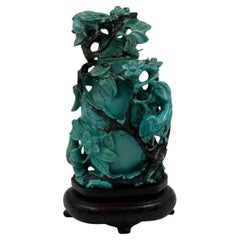
QING DYNASTY 1900 Decorative Vase Carved In Translucent Green Fluorite In Stand
Located in Miami, FL
A carved fluorite vase in wood stand. This is a beautiful decorative oblong flat vase created in the imperial China during the late Qing Dynasty period, circa 1880-1900. The piece h...
Category

Early 1900s Chinese Antique Qing Sculptures and Carvings

Materials

Multi-gemstone

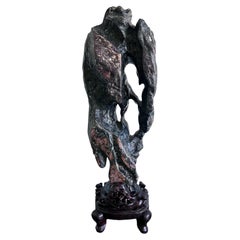
Large Chinese Scholar Rock Lingbi Stone on Display Stand
Located in Atlanta, GA
An impressive Chinese scholar Lingbi stone (also known as Gong Shi in Chinese; meditation stone and spirit rock in the West) of substantial height and mass on a carved wood display s...
Category

19th Century Chinese Antique Qing Sculptures and Carvings

Materials

Stone

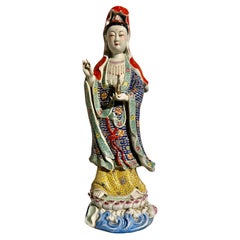
Chinese Famille Rose Enameled Porcelain Guanyin, Zeng Longsheng, 1980 s, China
Located in Austin, TX
A large and vibrantly decorated Chinese famille rose enameled porcelain figure of Guanyin, marked Zeng Longsheng (1901 - 1964), but of later manufacture...
Category

1980s Chinese Vintage Qing Sculptures and Carvings

Materials

Porcelain

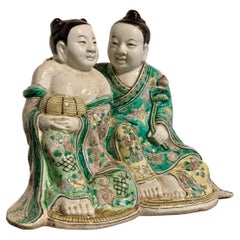
Chinese Famille Verte Porcelain He-He Er Xian Group, Early 20th Century, China
Located in Austin, TX
A delightful famille verte enameled porcelain figural group of the He-He Er Xian, the Twins of Harmony and Union, late Qing Dynasty, circa 1900, China. The He-He Er Xian are portr...
Category

Early 20th Century Chinese Qing Sculptures and Carvings

Materials

Porcelain

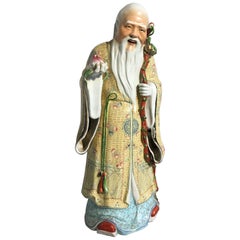
Chinese Republic Period Porcelain Figure of Shouxing, the God of Longevity
Located in Austin, TX
A finely modeled Chinese porcelain figure of the Chinese God of Longevity, Shouxing, Republic Period, early 20th century, China. The God of Longevity, called Shouxing or Shoulao, stands upright holding a dragon staff in one hand, a peach (a symbol of immortality), in the other. He is dressed in a long yellow robe...
Category

Early 20th Century Chinese Qing Sculptures and Carvings

Materials

Porcelain

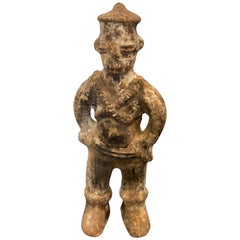
19th Century Chinese Carved Figure
Located in Southampton, NY
19th century Chinese carved figure. While this sculpture may be small it isn't lacking in its attention to detail. Across the chest of the figure you cans see two overlapping carved...
Category

19th Century Chinese Antique Qing Sculptures and Carvings

Materials

Wood

Chinese Carved Zitan Figure of a Bodhisattva, Qing Dynasty
Located in Austin, TX
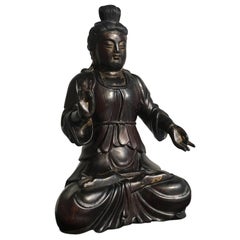
A finely carved Chinese zitan wood figure of an unidentified bodhisattva, possibly Guanyin, late Qing Dynasty, circa 1900, China. The androgynous figure has a plump, almost matronly face, with downcast eyes and a gentle smile. The hair in long tresses, gathered and tied in a high chignon. The enlightened being is portrayed seated in dhyanasana, bare feet resting on crossed legs, both soles pointing up. Thick robes billow and drape around the full figured body. The hands display...
Category

Early 20th Century Chinese Qing Sculptures and Carvings

Materials

Lapis Lazuli

Large Antique Celadon Jade Ruyi Brush Wash Hand Carved Hydra Handles Qing 19c
Located in Richmond, CA
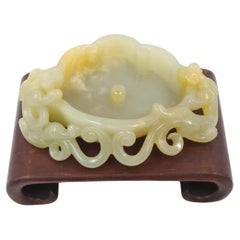
A fine antique Chinese hand carved jade brush wash, in ruyi head form, sides flanked by 2 climbing hydras, and bottom carved with three raised circles fee...
Category

19th Century Chinese Antique Qing Sculptures and Carvings

Materials

Jade

Large Chinese Carved Gilt Wood Story Panel, "Romance of the Three Kingdoms"
Located in Austin, TX
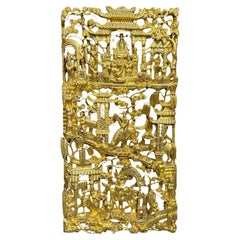
An unusually large vintage Chinese carved and pierced gilt wood story panel, early to mid 20th century, Southern China. The intricately carved panel depicts images from "The Romance...
Category

Mid-20th Century Chinese Qing Sculptures and Carvings

Materials

Metal

Chinese Carved Jade Covered Hu Vase
Located in Astoria, NY
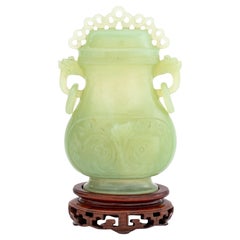
Chinese Carved Jade Covered Hu Vase, with two mask head with rings handles, incised taotie design to each side, and on a fitted carved wood stand. Overall: 7.5" H x 4.25" W x 2.25" D...
Category

Early 20th Century Chinese Qing Sculptures and Carvings

Materials

Jade

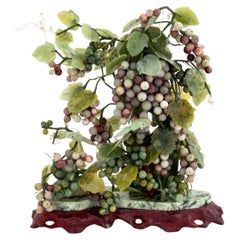
Chinese Grapevine Jade Sculpture
Located in Astoria, NY
Chinese Grapevine Jade Sculpture, mounted atop a hardwood sculpture. 15.25" H x 13.5" W x 5.5" D. Provenance: From a Fifth Avenue Collection.
Category

20th Century Chinese Qing Sculptures and Carvings

Materials

Jade

Chinese Grapevine Jade Sculpture
$850 Sale Price
34% Off
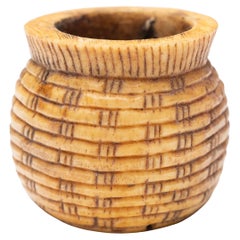
Chinese Bone Fisherman Basket Toggle, c. 1850
Located in Chicago, IL
This miniature bone carving of a woven fisherman's basket is a charming example of the decorative toggles used by Qing-dynasty men much like Japanese netsuke. Because traditional Chi...
Category

Mid-19th Century Chinese Antique Qing Sculptures and Carvings

Materials

Bone

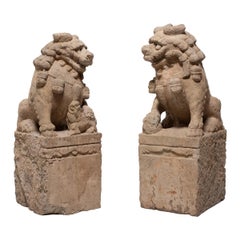
Pair of Chinese Guardian Lion Dogs, c. 1850
Located in Chicago, IL
This pair of monumental Fu-Lions, also known as shizi, once would have flanked the entrance to a Qing-dynasty home in China’s Shanxi province. One has a pearl under its foot, and the...
Category

Mid-19th Century Chinese Antique Qing Sculptures and Carvings

Materials

Limestone

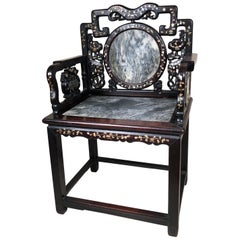
China Fine Antique Chair With Dream Stones And Mother Pearl Inlay
Located in South Burlington, VT
Finest Quality Dreamstone Inlaid Chair China- an extraordinary prolifically crafted example of an antique hand carved hardwood chair inlaid with multiple natural dream stone "paintings" plus "butterfly and mother of pearl" inlays in its hardwood arms and seat, late 19th century. This type of old Chinese furniture art form with marble inlay is centuries of years old dating as far back as the Ming dynasty (1368-1644). Fine round and rectangular dream stones depicting mountains and the natural outdoor scenery are inlaid in the seat, back and interior sides of this fine furniture example. Thin marble inlaid stone "paintings" are approximately 1/4" thick and are cut from a large slab of rough material revealing incredible patterns in soft white and gray colors. The hardwood (elmwood) frame is tenon joined. The natural stone "paintings" were hand especially for fine export chairs as in this example. Chair dimensions: Height 38.75 inches Width 25.75 inches Depth 19 inches Period : late Qing period, 19th century Provenance: Private American Chinese collection Reference: Dreaming of Dreamstones China’s Extraordinary Natural Stone Paintings, Schneible Fine Arts. Dreaming of Dreamstones – World’s first comprehensive English text publication covers China’s extraordinary natural Stone Paintings, by author and dream stone lecturer Douglas Schneible, 35 pages, softcover, ISBN 978-0-578. See photos. We have been dealing in authentic Chinese natural stone paintings...
Category

Late 19th Century Chinese Antique Qing Sculptures and Carvings

Materials

Marble

Qing Carved Turquoise Snuff Bottle
Located in Autonomous City Buenos Aires, CABA
Qing Dynasty Carved Turquoise Snuff Bottle This Qing Dynasty snuff bottle is carved from a single piece of turquoise. It features a high-reli...
Category

Late 19th Century Chinese Antique Qing Sculptures and Carvings

Materials

Stone

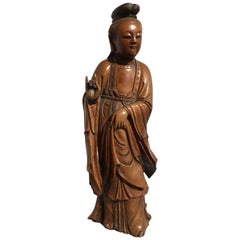
Chinese Carved Boxwood Figure of Guanyin, Mid-Qing Dynasty
Located in Austin, TX
A sublime Chinese carved boxwood figure of the Bodhisattva of Compassion, Avalokiteshvara, called Guanyin in Chinese, mid-Qing dynasty. The an...
Category

Late 18th Century Chinese Antique Qing Sculptures and Carvings

Materials

Boxwood

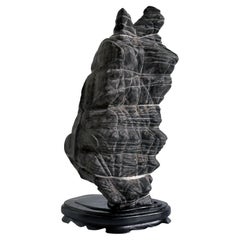
Rare Chinese Antique Black and White Lingbi Scholar Stone on Display Stand
Located in Atlanta, GA
A Chinese scholar stone of Lingbi type presented on a carved wood base. This stone takes a singular vertical form with one convex side that is largely flat, and the other side slight...
Category

19th Century Chinese Antique Qing Sculptures and Carvings

Materials

Stone

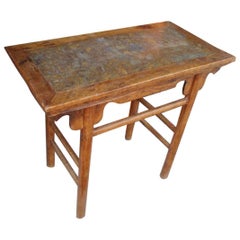
Chinese Fine Antique Hardwood Wine Table With Rare Inset Pudding Stone
Located in South Burlington, VT
China rare antique stone inlaid wine table, middle Qing dynasty (1644-1911), 18th/19th century. Elm wood (Humu) with original pudding stone inlay. All ...
Category

19th Century Chinese Antique Qing Sculptures and Carvings

Materials

Stone

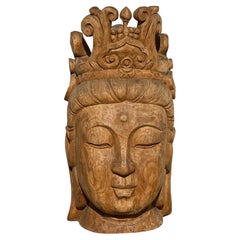
Large Zen Garden Shrine Head of Guanyin Buddha Statue
Located in San Juan Capistrano, CA
Large 20th century Chinese head of Guanyin. This piece is quite large and has been hand crafted by a skilled artisan from a single log. It measures 27 1/2” ...
Category

20th Century Chinese Qing Sculptures and Carvings

Materials

Wood

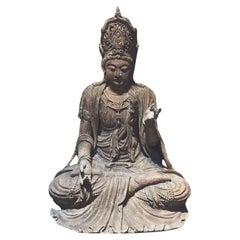
A Large Chinese Carved Wood Figure of Guanyin, Late Qing Dynasty
Located in ARMADALE, VIC
Description: A singular example of Guanyin. Deviating from the Bodhisattva’s conventional pose of ‘royal ease’, the figure is instead seated in the meditative padmasana, or ‘lotus position’, rendering this Guanyin something of a rarity. An Apana more typically associated with depictions of Buddhas, Guanyin assuming this pose immediately signifies this figure as one of particular spiritual reverence. Both feet are revealed crossed upon one another from beneath fabric which spills before her, her left palm turned upward with her hand resting upon her left knee and her right raised in a relaxed gesture. Adorned with a diadem housing a depiction of Amitabha Buddha, her own spiritual guide, she exudes an air of tranquil regality, further characterised by her numerous strings of beads and elaborately fastened dhoti, attire traditionally reserved for Indian princes. Though the figure’s dress is Indian her face is undoubtedly exemplifying artistic Chinese beauty standards. Her face is soft and rounded, full in both the lips and cheeks, with eyes that restfully peer down, as though she is watching over the worries of mankind with compassion. Notes on the item: Guanyin is the Chinese interpretation of Avalokiteshvara, the Indian Bodhisattva of compassion. The term “Bodhisattva” is derived from the Sanskrit “Bodhi”, meaning ‘awakening’ or ‘enlightenment’, combined with “Sattva”, meaning ‘spirit’ or ‘being’, referring to one on the path to achieving enlightenment. Bodhisattvas in Mayahana Buddhism are recognised as figures who have effectively achieved enlightenment yet relinquish their accension to nirvana in order to remain amongst mankind in the ultimate act of compassion to aid as spiritual guides. As such, the Bodhisattva inhabit a liminal space between samsara and nirvana; enlightened beings that maintain a relationship with humanity that buddhas cannot, as attaining Buddhahood necessitates the abandonment of all worldly attachments, including mankind. Guanyin’s very name, ‘One who hears the cries of the world’ highlights this role as a compassionate figure who acknowledges the suffering and strife of man. Along with Mahāsthāmaprāpta, a fellow bodhisattva, Guanyin serves as an attendant to Buddha Amitabha, with these three deities recognised as the Three Sages of Western Pure Land Buddhism, a sect of Mayahana Buddhism popular in East Asia. Avalokiteshvara is commonly posited to have been adopted from Indian Buddhism into China as Guanyin around 200-400 CE, however it was the Tang dynasty (618-907) which saw the popularisation of the deity. By the Ming (1358–1644) and Qing (1644–1911) dynasties, Guanyin held the position as the most popular female deity in China. The unique state of religion in China held no monolithic canon regarding Buddhism and saw the assimilation of several belief systems, primarily Daoism, Buddhism and Confucianism. Consequently, Guanyin became a deity to be revered beyond Buddhism alone, appointed as both an official imperial deity and Daoist deity in the 12th century. Guanyin may also be seen to fulfil the role of idealised femininity as prescribed by Confucianism, with the scarcity of female Chinese deities perhaps accounting for the gradual gender shift Guanyin underwent. The Indian Avalokiteshvara is unequivocally recognised as male, whilst the supposed gender of Guanyin remains contentious. Although there is a clear shift from the masculine Avalokiteshvara towards a more feminine representation, it is unclear if Guanyin is understood to be entirely feminine, to inhabit qualities of both genders or to be elevated beyond gender entirely, embodying neither. Depictions of Guanyin are highly androgynous, which some believe lends credence towards Guanyin symbolising the unity of dualistic forces as recognised in Daoism, displaying the anthropomorphism of yin and yang. Comparative Analysis: Market comparisons of similar Qing Dynasty polychrome figures of Guanyin include lot 767 (no.2) From Christies ‘Important Chinese Ceramics and Works of Art,’ New York, 25 March 2022, with the price realised USD 52,920 (Estimate USD 20,000 – USD 30,000). Christies also auctioned a comparable polychrome Guanyin...
Category

Late 19th Century Chinese Antique Qing Sculptures and Carvings

Materials

Hardwood

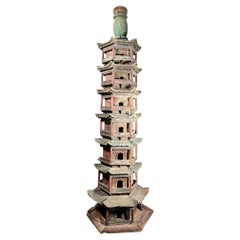
Chinese Antique Monumental Buddhist Wooden Pagoda Tower, 70 Inches
Located in South Burlington, VT
China antique monumental Wooden Pagoda, total height is 70 inches, hand carved and hand painted wood, seven hexagonal sections plus finial, late Qin...
Category

Early 20th Century Chinese Qing Sculptures and Carvings

Materials

Wood

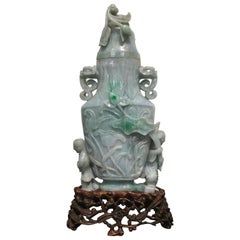
Large Early 20th Century Chinese Carved Jade Vase
Located in Austin, TX
A large and impressive Chinese caved jade vase, Republic Period, circa 1930. Carved from one massive piece of jade. The vase carved with the He He Er Xian...
Category

Early 20th Century Chinese Qing Sculptures and Carvings

Materials

Jade

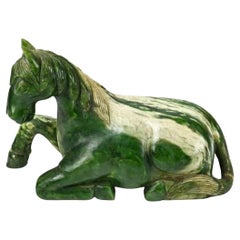
Monumental Chinese Spinach Jade Recumbent Tang Horse Rocky Variations 20th Cent.
Located in Richmond, CA
A monumental size (14kg) Chinese recumbent Tang Horse, circa mid to late 20th Century, possibly older. The sculpture is executed in Spinach Jade, a material highly prized for its dee...
Category

20th Century Chinese Qing Sculptures and Carvings

Materials

Jade

Large Horizontal Chinese Lingbi Scholar Stone on Display Stand
Located in Atlanta, GA
A Chinese scholar stone of Lingbi type in horizontal form presented on a carved conforming wood base. Impressive in size and form, this Lingbi stone manifests itself in a silouette o...
Category

19th Century Chinese Antique Qing Sculptures and Carvings

Materials

Stone

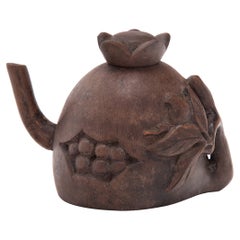
Chinese Bamboo Pomegranate Teapot, c. 1900
Located in Chicago, IL
Tea drinking has been an integral part of Chinese culture for centuries, resulting in a wide range of social customs and material traditions. In addition to tea leaves, water, and heat, the art of drinking tea (chayi) calls for a variety of teaware and utensils - both practical and decorative. This charming teapot dates to the late Qing dynasty and is hand-carved from a hollow length of bamboo in the shape of a ripe pomegranate. The handle is carved to resemble a thin branch, which forks to either side of the teapot bearing long, slender leaves. The teapot has a squat, rounded form and a dark brown finish, reminiscent of Yixing red clay teapots...
Category

Early 20th Century Chinese Qing Sculptures and Carvings

Materials

Bamboo

Late 19th Century Chinese Qingtian Stone (Soapstone) Carved Scholar s Brush Rest
Located in Chapel Hill, NC
Late 19th century Qingtian stone (soapstone) carved scholar's brush rest, Chinese. A landscape carving depicting tea houses among pine trees by a lake with mountains behind. Contrast...
Category

Late 19th Century Chinese Antique Qing Sculptures and Carvings

Materials

Soapstone

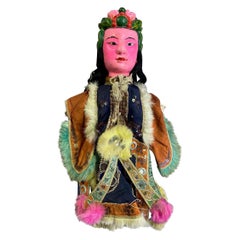
Chinese Peking Opera Theatre Puppet Marionette Doll, Early 1900s
Located in Studio City, CA
A wonderful work complete with a unique wood-carved and hand-painted face and original textile garment. From a group of 7 Chinese opera puppets, we acquired from a collector. Each puppet shows clear signs of previous stage use. Likely from the early 1900s. Would make for a great addition to any Chinese artifacts...
Category

Early 20th Century Chinese Qing Sculptures and Carvings

Materials

Textile, Wood, Paint

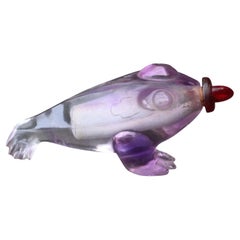
Antique Chinese Snuff Bottle Carved in Amethyst, late 19th century
Located in Bilzen, BE
Very rare Asian snuffbox in carved amethyst. Great workmanship, beautiful stone color! In good condition . Late 19th century Length 7.5 cm, height 2.6 cm
Category

Late 19th Century Antique Qing Sculptures and Carvings

Materials

Multi-gemstone

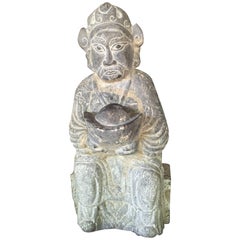
Chinese Antique Wealth And Prosperity God Caishen Sculpture
Located in South Burlington, VT
Our 34 inch tall Chinese Caishen's name is often invoked during Chinese celebrations! This is a large and unusual antique hand carved limestone Wealth God Caishen- coming from an old New England collection Hand Made and Hand Carved Measurements: 34 inches high and 15 inches wide, Period: late Qing dynasty, late 19th-early 20th century. This god grasps a silver sycee (an ancient form of silver wealth). Provenance: Coming from an old New England collection and originally acquired from a Shanghai private collection decades ago. History of China's Wealth God Caishen: Caishen's name is often invoked during the Chinese New Year celebrations! Caishen (simplified Chinese: 财神; traditional Chinese: 財神; literally: "God of Wealth") is the Chinese god...
Category

Early 20th Century Chinese Qing Sculptures and Carvings

Materials

Limestone

Chinese Antique Large Qing Hand Carved Square Stone Stool Display Pedestal, 19c.
Located in South Burlington, VT
Rare and Hard To Find 19th Century From China's Qing dynasty (1644-1912) a hard to find solid limestone finely carved square footed pedestal - perfect for displaying your indoor or ...
Category

19th Century Chinese Antique Qing Sculptures and Carvings

Materials

Stone, Limestone

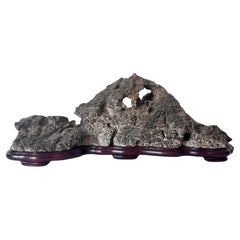
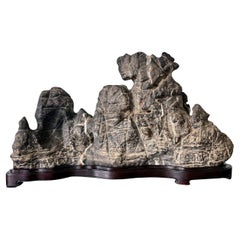
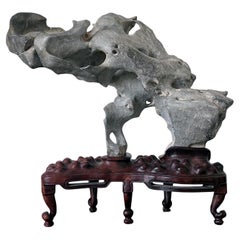
Large Chinese Horizontal Gray Lingbi Scholar Stone with Grotto on Display Stand
Located in Atlanta, GA
A wonderfully formed Chinese scholar stone of Lingbi type presented on a carved wood base with curvy conforming contour. Impressive in size and substantial in weight, this grey Lingb...
Category

19th Century Chinese Antique Qing Sculptures and Carvings

Materials

Stone

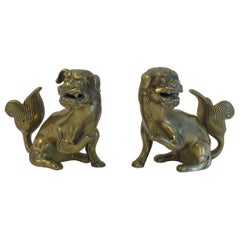
Antique PAIR of Chinese Bronze Foo Dogs good detail, Qing early 19th Century
Located in Lincoln, Lincolnshire
These are a very good PAIR of antique Chinese foo or lion dog sculptures, sometimes called temple lions, made of a brass-bronze metal alloy, with excellent detail, dating to the early 19th century, Qing period or possibly earlier back to the 18th century. They are a male and female pair, the male with the slightly larger head. These pieces are very well cast with good detail and wear, showing a very good depth of colour. Both dogs have a small hole on the top of the head for incense to be placed. Each piece weighs about 700gm unpacked Overall a lovely pair of antique Chinese Foo Dogs...
Category

19th Century Chinese Antique Qing Sculptures and Carvings

Materials

Bronze, Metal, Brass

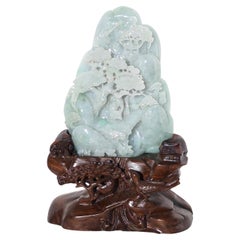
Large Chinese Natural Untreated Jadeite Mountain Carving Hardwood Stand
Located in Richmond, CA
This modern Chinese jadeite mountain, standing at an impressive 18 inches on its stand, is a remarkable piece of artistry, showcasing the exquisite craftsmanship associated with contemporary Chinese jade carving...
Category

20th Century Chinese Qing Sculptures and Carvings

Materials

Jade

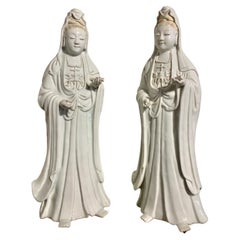
Pair Chinese White Glazed Guanyin, Qing Dynasty, 18th Century, China
Located in Austin, TX
A sublime and rare pair of Chinese white glazed porcelain figures of Guanyin, attributed to Tang Ying (1682 - 1756), Qing Dynasty, Qianlong Period, China. This ethereal pair of white glazed porcelain figures depict the revered Buddhist Goddess of Mercy, Guanyin. Guanyin is portrayed standing, wearing heavy robes that drape beautifully around her figure. Bare feet peek out from under the hem of the robes. Her hair piled in a high chignon and covered by a cowl. The treatment of the hair, finely textured, unglazed, and with remnants of darker pigment, is typical of works by Tang Yin (1682 - 1756), who was the head of the imperial porcelain works at Jingdezhen. Guanyin's beatific face is set in a serene smile, with a small, flat nose, and downcast, heavily lidded, almond shaped eyes. A simple beaded necklace graces her chest. Her hands held out, and may have once held attributes. The hands were originally removable, but have since been permanently attached. The figures crafted of a fine porcelain and glazed all over in a supple white glaze. One figure bears a label from the Rafi Mottahedeh collection to the back. Provenance: Chinese Porcelain Company...
Category

18th Century Chinese Antique Qing Sculptures and Carvings

Materials

Porcelain

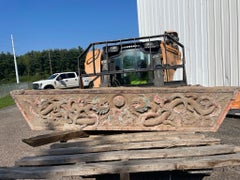
China Rare Antique Double Dragon Stone, 19thc
Located in South Burlington, VT
Here's one of the most beautiful Chinese antiques we have ever found in our travels in China over the past three decades. This is a one-of-a-kind antique sandstone lintel which when installed and displayed could be a handsome addition to your decor. It dates to the 18th century of the Qing dynasty. It still retains remnants of its original poly chrome surfaces. The carving and detail is deep and very fine. Depicted are a pair of writhing dragons competing for the fabled -wish granting jewel- and possibly water waves beneath- all auspicious signs. Dimensions: 13 inches high and 71 inches wide and 14 inches deep Photographs taken in natural light in our garden. Rare work of art. Provenance: originally found in Chengdu Province and has been part of family collection since its acquisition in 2004. Lifetime guarantee of authenticity. We are members of NAJGA- North American Japanese Garden...
Category

Early 19th Century Chinese Antique Qing Sculptures and Carvings

Materials

Sandstone

Chinese Antique Large Qing Hand Carved Round Top Stone Display Pedestal, 19thc.
Located in South Burlington, VT
Rare and Hard To Find 19th Century From China's Qing dynasty (1644-1912) a hard to find solid limestone finely carved round top pedestal - perfect for displaying your indoor or outd...
Category

19th Century Chinese Antique Qing Sculptures and Carvings

Materials

Stone, Limestone

Vintage Chinese Hardstone Carving of Damo, Early to Mid 20th Century, China
Located in Austin, TX
A wonderful vintage to near antique Chinese nephrite jade carving of Damo (Bodhidharma), with an associated carved hardwood stand, early to mid 20th century, possibly Republic Period...
Category

Mid-20th Century Chinese Qing Sculptures and Carvings

Materials

Stone

Large Gilt Bronze Statue of Bodhisattva Avalokiteshvara with Four Arms
Located in Atlanta, GA
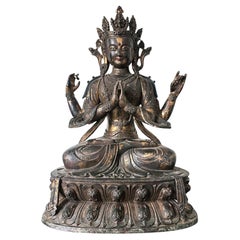
A finely cast bronze statue of Avalokiteshvara in his four-arm form with gilt and polychrome surface. The Bodhisattva of Infinite Compassion is worshiped in all Buddhism sect as one ...
Category

17th Century Chinese Antique Qing Sculptures and Carvings

Materials

Bronze

Chinese Carved Hardstone Large Chop Seals, Pair
Located in Astoria, NY
Pair of Chinese Carved Hardstone Large Chop Seals, the reticulated bases with stag vignette reliefs, the upper portions depicting an ox mother and child. 8.25" H x 3" W x 3" D. Pro...
Category

Late 19th Century Chinese Antique Qing Sculptures and Carvings

Materials

Stone

A Large Chinese Carved Wood Figure of Guanyin, Late Qing Dynasty
Located in ARMADALE, VIC
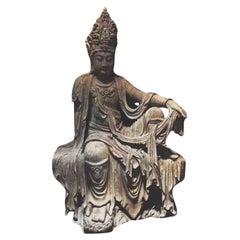
Description: A fine depiction of Guanyin, possessing the regal tranquillity that the Chinese Bodhisattva of compassion has come to be visually associated with. Marked by an urna signifying her spiritual enlightenment and crowned with a diadem depicting the Buddha Amitabha, the figure is immediately recognisable as Guanyin. Her androgynous figure is gracefully poised in the Lalit asana or “royal ease”, the pose classical in representations of the deity. The figure is asymmetric, with the weight of her supple form falling upon her left hand placed against the base, her right knee raised and left pendant. Her right hand rests upon her raised knee, delicately pinching at her draped attire. At first unassuming, this gesture may be suggestive of the Apana Mudra, the seal of purification. This Mudra is associated with physical wellbeing, fecundity and the cleansing of the body. Though she is adorned in the princely garb of dhoti, she bears features of idealised feminine beauty as prescribed in Asian art. With plump cheeks and near pouted lips, her full face gazes down upon the viewer with an empathetic and half-lidded gaze, upholding her title as ‘One who hears the cries of the world.’ Notes on the item: Guanyin is the Chinese interpretation of Avalokiteshvara, the Indian Bodhisattva of compassion. The term “Bodhisattva” is derived from the Sanskrit “Bodhi”, meaning ‘awakening’ or ‘enlightenment’, combined with “Sattva”, meaning ‘spirit’ or ‘being’, referring to one on the path to achieving enlightenment. Bodhisattvas in Mayahana Buddhism are recognised as figures who have effectively achieved enlightenment yet relinquish their accension to nirvana in order to remain amongst mankind in the ultimate act of compassion to aid as spiritual guides. As such, the Bodhisattva inhabit a liminal space between samsara and nirvana; enlightened beings that maintain a relationship with humanity that buddhas cannot, as attaining Buddhahood necessitates the abandonment of all worldly attachments, including mankind. Guanyin’s very name, ‘One who hears the cries of the world’ highlights this role as a compassionate figure who acknowledges the suffering and strife of man. Along with Mahāsthāmaprāpta, a fellow bodhisattva, Guanyin serves as an attendant to Buddha Amitabha, with these three deities recognised as the Three Sages of Western Pure Land Buddhism, a sect of Mayahana Buddhism popular in East Asia. Avalokiteshvara is commonly posited to have been adopted from Indian Buddhism into China as Guanyin around 200-400 CE, however it was the Tang dynasty (618-907) which saw the popularisation of the deity. By the Ming (1358–1644) and Qing (1644–1911) dynasties, Guanyin held the position as the most popular female deity in China. The unique state of religion in China held no monolithic canon regarding Buddhism and saw the assimilation of several belief systems, primarily Daoism, Buddhism and Confucianism. Consequently, Guanyin became a deity to be revered beyond Buddhism alone, appointed as both an official imperial deity and Daoist deity in the 12th century. Guanyin may also be seen to fulfil the role of idealised femininity as prescribed by Confucianism, with the scarcity of female Chinese deities perhaps accounting for the gradual gender shift Guanyin underwent. The Indian Avalokiteshvara is unequivocally recognised as male, whilst the supposed gender of Guanyin remains contentious. Although there is a clear shift from the masculine Avalokiteshvara towards a more feminine representation, it is unclear if Guanyin is understood to be entirely feminine, to inhabit qualities of both genders or to be elevated beyond gender entirely, embodying neither. Depictions of Guanyin are highly androgynous, which some believe lends credence towards Guanyin symbolising the unity of dualistic forces as recognised in Daoism, displaying the anthropomorphism of yin and yang. Comparative Analysis: Market comparisons of similar Qing Dynasty polychrome figures of Guanyin include lot 767 (no.2) From Christies ‘Important Chinese Ceramics and Works of Art,’ New York, 25 March 2022, with the price realised USD 52,920 (Estimate USD 20,000 – USD 30,000). Christies also auctioned a comparable polychrome Guanyin...
Category

Late 19th Century Chinese Antique Qing Sculptures and Carvings

Materials

Hardwood

QING DYNASTY 1900 Antique Archer s Ring Carved In Translucent Jade
Located in Miami, FL
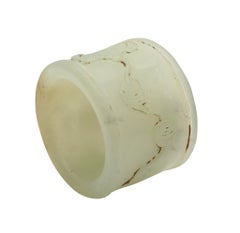
An archer's jade ring from the Qing Dynasty. This is a rare antique archer's ring created during the Qing dynasty period, back in the 19th century early 20th century The ring is mas...
Category

19th Century Chinese Antique Qing Sculptures and Carvings

Materials

Jade

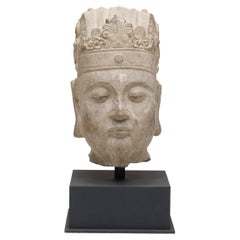
Tranquil Chinese Stone Bodhisattva Head
Located in Chicago, IL
Exuding an energy of calm and tranquility, this larger-than-life stone bust depicts a Buddhist bodhisattva in serene meditation. A disciple of the Buddha, a bodhisattva is a compassi...
Category

20th Century Chinese Qing Sculptures and Carvings

Materials

Limestone

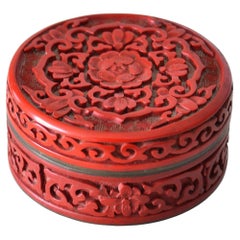
Antique Chinese Cinnabar, Brass and Enamel Box
Located in Miami, FL
A crisply carved antique Chinese red cinnabar lacquer lidded round box with blue enamel interior and brass fittings. The "dragon's blood" trinket box has a fine peony, foliate and fl...
Category

19th Century Chinese Antique Qing Sculptures and Carvings

Materials

Brass, Enamel

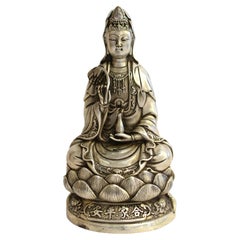
Silver Bronze Guan Yin Statue 7 Lb Avalokiteshvara Compassion
Located in Somis, CA
A large 7.15 lb Republic era silver bronze statue of the Goddess of Compassion Guan Yin. Seated on lotus throne, Bodhisattva Avalokiteshvara is depicted in the most traditional fashi...
Category

20th Century Chinese Qing Sculptures and Carvings

Materials

Bronze

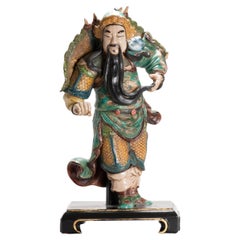
Antique Chinese Glazed Porcelain Roof Tile of a Warrior Figure, 19th C
Located in Amsterdam, Noord Holland
Chinese glazed porcelain roof tile of a warrior. The manufacture of glazed tiles was standardized in the Ming Dynasty and during the Qing Dynasty into the Republican Era, glazed tile...
Category

19th Century Chinese Antique Qing Sculptures and Carvings

Materials

Porcelain

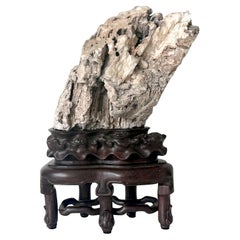
Rare Chinese Xuan Scholar Stone on Display Stand
Located in Atlanta, GA
A rare Xuan type Chinese scholar stone on a carved wood stand circa 19th century Qing dynasty. Xuan stone was traditionally collected in Xuan Zhou, Anhui Province in China. The stone...
Category

19th Century Chinese Antique Qing Sculptures and Carvings

Materials

Stone

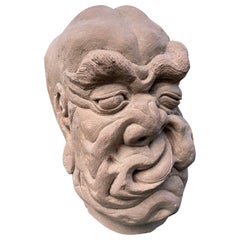
Chinese Old Fantastic Sculpture Comical Face Sculpture
Located in South Burlington, VT
One of a kind. From western China and collected some 20 years ago, comes this large hand carved red sandstone Lohan or Monk sculpture dating to circa...
Category

Early 20th Century Chinese Qing Sculptures and Carvings

Materials

Sandstone

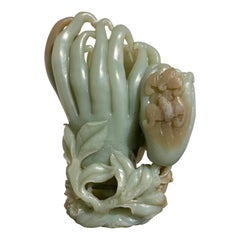
Large Chinese Carved Nephrite Jade Double Buddha s Hand Vase, Late Qing Dynasty
Located in Austin, TX
A large and graceful carved nephrite jade conjoined double vase in the form of a pair of Buddha's hands fruit (finger citron), late Qing Dynasty, circa 1900, China. The large and heavy vase carved from a single piece of celadon nephrite jade, with areas of lighter brown "sugar" skin. The vase ingeniously carved as a pair of Buddha's hand fruit, also known as finger citron, rising from a gnarled, leafy branch. The smaller Buddha's hand with a pair of bats. The Buddha's hands fruit with elegant and naturalistic curved "fingers". The "fingers wonderfully shaped and reticulated. The body of the fruit with simple stippling, in imitation of the textured surface of the real fruit. The interior of each fruit well hollowed and able to hold water. Buddha's hands fruit are auspicious in Chinese culture. Their name in Chinese "Fo Shou" is a homophone for "Happiness and Longevity. They are often placed as offerings on Buddhist altars...
Category

Early 1900s Chinese Antique Qing Sculptures and Carvings

Materials

Jade

Extraordinary Chinese Taihu Scholar Stone Rare Form on Display Stand
Located in Atlanta, GA
A stunning Taihu scholar stone in an unusual horizonal balanced form perched on a custom wood stand. The stone, in a nearly pure greyish white color, display a weathered smooth surfa...
Category

19th Century Chinese Antique Qing Sculptures and Carvings

Materials

Stone

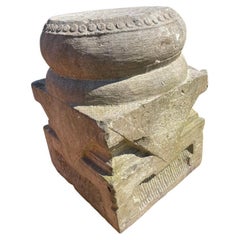
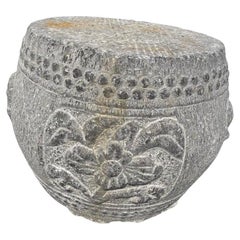
Chinese Antique Large Qing Hand Carved Stone Drum Stool Display Pedestal, 19thc.
Located in South Burlington, VT
Rare and Hard To Find 19th Century From China's Qing dynasty (1644-1912) a hard to find solid limestone finely carved "drum" pedestal - perfect for displaying your indoor or outdoor...
Category

19th Century Chinese Antique Qing Sculptures and Carvings

Materials

Stone, Limestone

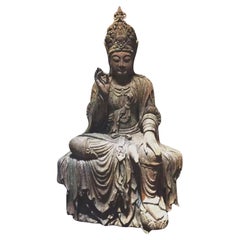
A Large Chinese Carved Wood Figure of Guanyin, Late Qing Dynasty
Located in ARMADALE, VIC
An impressive depiction of Guanyin, the Bodhisattva of compassion, whose name bears the meaning ‘One who hears the cries of the world.’ The rather androgynous figure is adorned with beaded jewellery and the princely regalia of a dhoti, draped across her body and spilling out over to partially obscure what she is resting upon. The goddess’ profile exhibits idealised features of Asian artistic convention; her face is soft and rounded, with full lips and relaxed eyes that provide a serene quality of youthfulness to the figure. Adhering to Chinese iconography of Guanyin, the figure is marked by an urna on her forehead, denoting her own enlightenment, as well as a diadem displaying Buddha Amitabha, the spiritual teacher of Guanyin. Seated in the Lalit asana pose, translated as ‘royal ease’, the figure exudes a fine example of the relaxed majesty typical in the characterisation of Guanyin. Whilst the figure’s left hand is placed restfully upon the left leg pendant, the right is raised in the gesture shuni mudra, the second finger held gently against the thumb. Otherwise known as the seal of patience, this gesture indicates the figure as one intended to bestow this virtue, along with compassion and understanding, upon the beholder. Notes on the item: Guanyin is the Chinese interpretation of Avalokiteshvara, the Indian Bodhisattva of compassion. The term “Bodhisattva” is derived from the Sanskrit “Bodhi”, meaning ‘awakening’ or ‘enlightenment’, combined with “Sattva”, meaning ‘spirit’ or ‘being’, referring to one on the path to achieving enlightenment. Bodhisattvas in Mayahana Buddhism are recognised as figures who have effectively achieved enlightenment yet relinquish their accension to nirvana in order to remain amongst mankind in the ultimate act of compassion to aid as spiritual guides. As such, the Bodhisattva inhabit a liminal space between samsara and nirvana; enlightened beings that maintain a relationship with humanity that buddhas cannot, as attaining Buddhahood necessitates the abandonment of all worldly attachments, including mankind. Guanyin’s very name, ‘One who hears the cries of the world’ highlights this role as a compassionate figure who acknowledges the suffering and strife of man. Along with Mahāsthāmaprāpta, a fellow bodhisattva, Guanyin serves as an attendant to Buddha Amitabha, with these three deities recognised as the Three Sages of Western Pure Land Buddhism, a sect of Mayahana Buddhism popular in East Asia. Avalokiteshvara is commonly posited to have been adopted from Indian Buddhism into China as Guanyin around 200-400 CE, however it was the Tang dynasty (618-907) which saw the popularisation of the deity. By the Ming (1358–1644) and Qing (1644–1911) dynasties, Guanyin held the position as the most popular female deity in China. The unique state of religion in China held no monolithic canon regarding Buddhism and saw the assimilation of several belief systems, primarily Daoism, Buddhism and Confucianism. Consequently, Guanyin became a deity to be revered beyond Buddhism alone, appointed as both an official imperial deity and Daoist deity in the 12th century. Guanyin may also be seen to fulfil the role of idealised femininity as prescribed by Confucianism, with the scarcity of female Chinese deities perhaps accounting for the gradual gender shift Guanyin underwent. The Indian Avalokiteshvara is unequivocally recognised as male, whilst the supposed gender of Guanyin remains contentious. Although there is a clear shift from the masculine Avalokiteshvara towards a more feminine representation, it is unclear if Guanyin is understood to be entirely feminine, to inhabit qualities of both genders or to be elevated beyond gender entirely, embodying neither. Depictions of Guanyin are highly androgynous, which some believe lends credence towards Guanyin symbolising the unity of dualistic forces as recognised in Daoism, displaying the anthropomorphism of yin and yang. Comparative Analysis: Market comparisons of similar Qing Dynasty polychrome figures of Guanyin include lot 767 (no.2) From Christies ‘Important Chinese Ceramics and Works of Art,’ New York, 25 March 2022, with the price realised USD 52,920 (Estimate USD 20,000 – USD 30,000). Christies also auctioned a comparable polychrome Guanyin...
Category

Late 19th Century Chinese Antique Qing Sculptures and Carvings

Materials

Hardwood

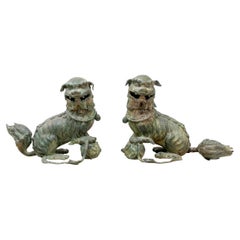
Fine Pair of Antique Chinese Cast Bronze Foo Lion Incense Burners
Located in Bridgeport, CT
Fabulous Antique Chinese Foo Lion incense burners originally purchased in Bangkok, Thailand. Patinated bronze with cloud-like tails and fierce open...
Category

19th Century Asian Antique Qing Sculptures and Carvings

Materials

Bronze

China Pair Monumental Antique Stone Spirit Pathway Tigers, Qing period 1750-1850
Located in South Burlington, VT
China Monumental Pair (2) Antique Stone “Spirit Pathway” Tigers, middle Qing period 1750-1850. Please view our video. Dimensions: 115cm, 46” high and 60cm, 24” in width. Likely utilized as spirit pathway tomb markers, these powerful, benign carved sitting effigies perched on haunches and front paws with round heads and faces exposing defined eye sockets, ears and two fangs a top bases that feature curled tails on side each whole atop a block shaped base and hand-carved from limestone whose surfaces show considerable weatherization from exposure and good age. Reference: 35 Years Collecting 35 Treasures, Schneible Fine Arts catalog Number 30, p. 66. Provenance: originally found in Fujian Province. Fujian has the distinction of being home to China’s last remaining wild tigers and famous “tiger” mountain. No wonder then that these early stone works...
Category

Late 18th Century Chinese Antique Qing Sculptures and Carvings

Materials

Limestone

Qing sculptures and carvings for sale on 1stDibs.

Find a broad range of unique Qing sculptures and carvings for sale on 1stDibs. Many of these items were first offered in the 21st Century and Contemporary, but contemporary artisans have continued to produce works inspired by this style. If you’re looking to add vintage sculptures and carvings created in this style to your space, the works available on 1stDibs include asian art and furniture, decorative objects, building and garden elements and other home furnishings, frequently crafted with stone, wood and other materials. If you’re shopping for used Qing sculptures and carvings made in a specific country, there are Asia, East Asia, and China pieces for sale on 1stDibs. It’s true that these talented designers have at times inspired knockoffs, but our experienced specialists have partnered with only top vetted sellers to offer authentic pieces that come with a buyer protection guarantee. Prices for sculptures and carvings differ depending upon multiple factors, including designer, materials, construction methods, condition and provenance. On 1stDibs, the price for these items starts at $148 and tops out at $100,000 while the average work can sell for $1,927.

Still Thinking About These?

All Recently Viewed