Items Similar to Bhutanese Silk Woven Kira Textile, Multicolor on Yellow, from the Royal Weavers
Want more images or videos?
Request additional images or videos from the seller
1 of 7
Bhutanese Silk Woven Kira Textile, Multicolor on Yellow, from the Royal Weavers
$8,000
£6,078.02
€6,984.93
CA$11,236.98
A$12,231.17
CHF 6,480.86
MX$147,098.34
NOK 82,402.48
SEK 75,512.75
DKK 52,176.98
About the Item
Bhutanese silk woven Kira textile, purple. From the Royal weavers of Bhutan, this kira textile is a rectangular weaving worn as an ankle length dress by Bhutanese women. This example was originally woven for Her Majesty Gyalyum (Queen Mother) Sangay Choden Wangchuck, who founded the Royal Textile Museum and Academy in Bhutan. Probably taking almost a year to make, this exquisite example was woven on a back strap loom in three individual panels of silk then sewn together. Given the rectangular shape of the kira, it lends itself to be mounted on the wall as a decoration or used as a throw on a bed or divan.
Measures: 60" x 100".
- Dimensions:Height: 100 in (254 cm)Width: 60 in (152.4 cm)Depth: 0.07 in (1.78 mm)
- Style:Other (In the Style Of)
- Materials and Techniques:Silk,Woven
- Place of Origin:
- Period:
- Date of Manufacture:First Decade of the 21st Century
- Condition:
- Seller Location:New York, NY
- Reference Number:Seller: FI1201stDibs: LU1531217752262
About the Seller
5.0
Vetted Professional Seller
Every seller passes strict standards for authenticity and reliability
Established in 2010
1stDibs seller since 2015
723 sales on 1stDibs
Typical response time: 2 hours
- ShippingRetrieving quote...Shipping from: New York, NY
- Return Policy
More From This Seller
View AllHandmade Vintage Cotton Suzani, Red, Maroon, and Charcoal
Located in New York, NY
Handmade Vintage Cotton Suzani, Red, Maroon, and Charcoal
Richly hand-embroidered vintage Uzbek suzani in iconic black and copper oranges.
Sun burst flowers are ringed with black scrolls on natural cotton.
Cotton embroidery in tight stitches give a lovely weight. Excellent condition, commensurate with age
Perfect as a bedcover or as a bold and beautiful wall hanging..
Approximately 70 years old...
Category
20th Century Textiles
Materials
Cotton
Rhythms of Color: Mounted Beaded Belt with Geometric Motifs and Cowrie Shells
Located in New York, NY
A vibrant, handwoven beaded belt—traditionally known as a cache-sex—crafted from multicolored glass beads arranged in a dynamic diamond motif of red, green, blue, orange, and white. ...
Category
20th Century Tribal Mounted Objects
Materials
Shell
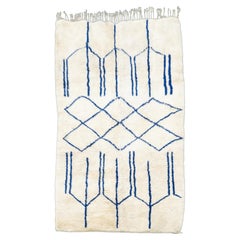
Moroccan Rug, Jean Louis Deniot
Located in New York, NY
Moroccan wool rug designed by Jean Louis Deniot.
Measures: 9' 3" x 5' 2".
Category
21st Century and Contemporary Moroccan and North African Rugs
Materials
Wool
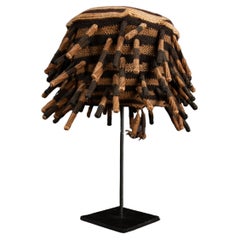
Prestige and Tradition: The Mounted Ashetu Hat of the Bamum and Bamileke People
Located in New York, NY
Adorned with spiked braids, this prestigious custom mounted Ashetu hat embodies the cultural significance of the Bamum and Bamileke people of Cameroon, Central Africa, who revered th...
Category
20th Century Cameroonian Tribal Mounted Objects
Materials
Metal
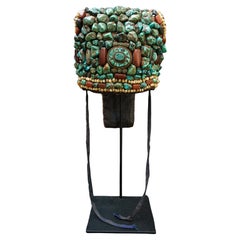
Vintage Tibetan Headdress
Located in New York, NY
Vintage tibetan headdress:
Measures: 8" x 10" x H 23".
Weighs 10 LBS.
Category
20th Century Mounted Objects
Materials
Metal
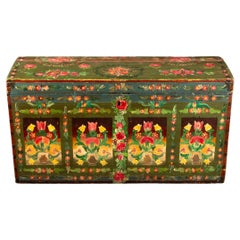
Early 19th Century Hand-Painted Floral Trunk
Located in New York, NY
This exquisite early 19th-century painted trunk showcases the artistry and craftsmanship of its era. Adorned with vibrant floral motifs, primarily featuring roses and tulips, this pi...
Category
Antique Early 19th Century American Folk Art Trunks and Luggage
Materials
Wood, Paint
You May Also Like
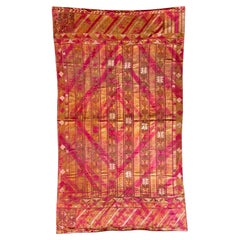
Indian Phulkari Wedding Textile, Silk
Cotton Embroidery, Punjab 1900s
Located in Jimbaran, Bali
This strikingly coloured Phulkari is from Punjab, India. It was hand-crafted from silk and cotton, with silk being used for the embroidery. Phulkari’s are a form of wedding shawl and...
Category
Early 20th Century Indian Other Textiles
Materials
Cotton, Silk
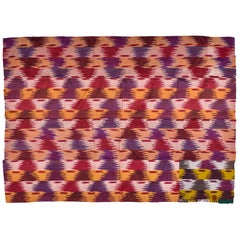
Double Layer Old Silk Ikat Uzbekistan Textil
Located in Alessandria, Piemonte
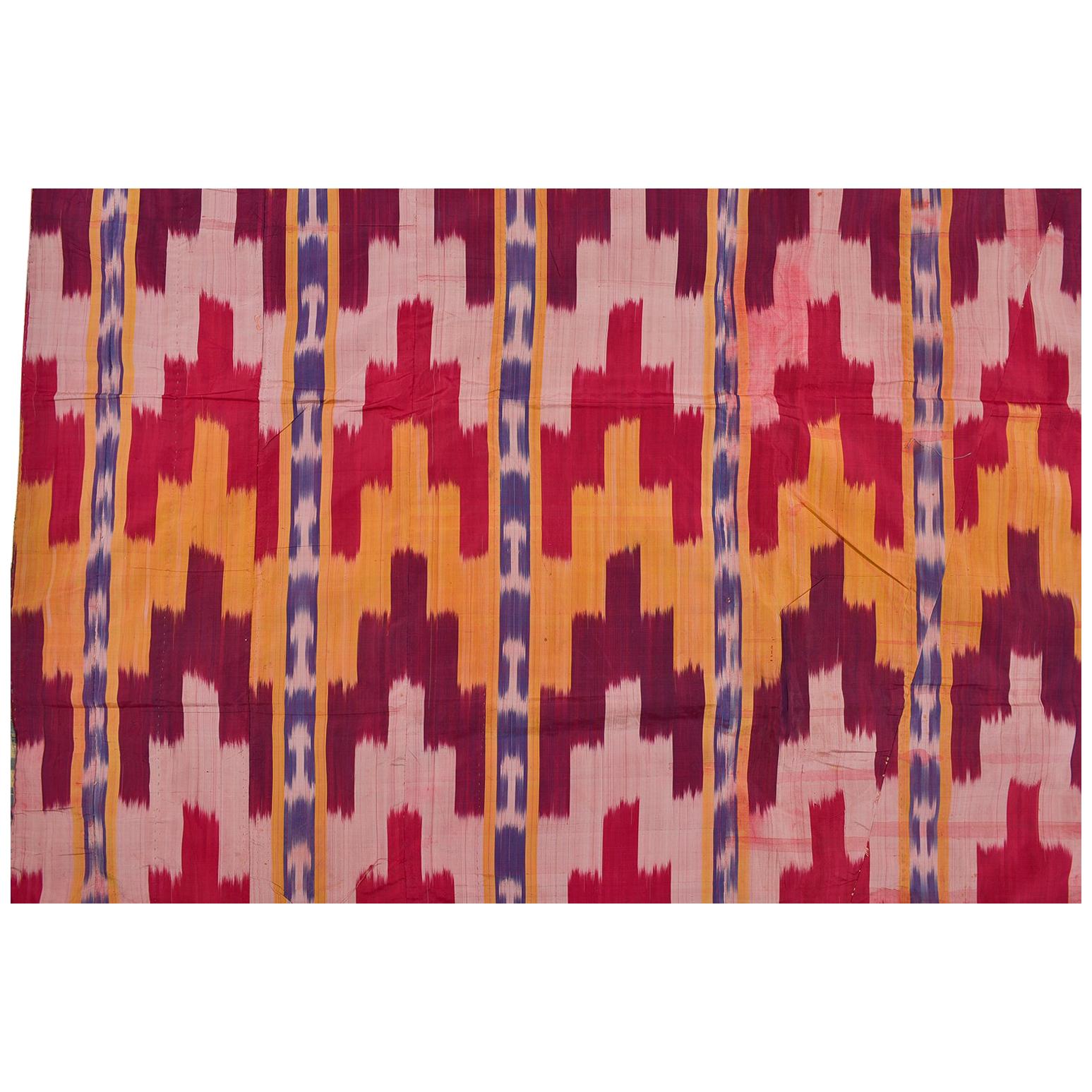
Olk Silk Uzbekistan Ikat, washed and ironed for sale - This item has TWO straight parts of fabric -
Beautiful tribal female workmanship, with bright and cheerful colors as per trad...
Category
Antique Late 19th Century Uzbek Other Textiles
Materials
Silk
$2,859 Sale Price
20% Off
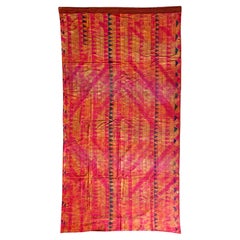
Indian Phulkari Wedding Textile, Silk
Cotton Embroidery, Punjab, 1900s
Located in Jimbaran, Bali
This strikingly coloured Phulkari is from Punjab, India. It was hand-crafted from silk and cotton, with silk being used for the embroidery. Phulkari’s are a form of wedding shawl and...
Category
Early 20th Century Indian Other Textiles
Materials
Cotton, Silk
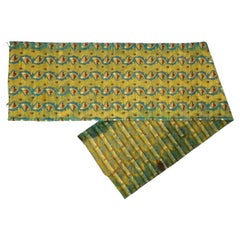
18Th Century Antique French Hand Woven Textile
Located in Long Island City, NY
An antique French hand woven embroidered textile wall hanging or table runner. The ware is adorned with floral and foliage ornaments in bright green, red and blue shades. Circa: late...
Category
Antique 18th Century Unknown Textiles
Materials
Textile
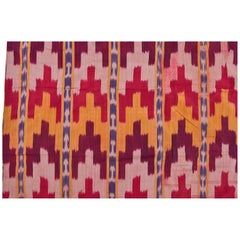
Rare Antique Silk Ikat Fergana, Dubbed with Other Silk Ikat
Located in Alessandria, Piemonte
Rare antique Fergana Uzbekistn silk ikat, dubbed with other silk light blue ikat - There is a rich bibliography on these Turkmenistan textiles -
Hanging on the wall like a tapestry, ...
Category
Antique Late 19th Century Uzbek Other Textiles
Materials
Silk
$4,003 Sale Price
20% Off
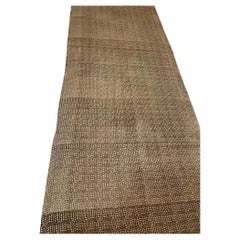
African Batik Cloth Natural Hand-woven Hand-Printed Cotton Fabric Ghana 10 Yards
Located in Moreno Valley, CA
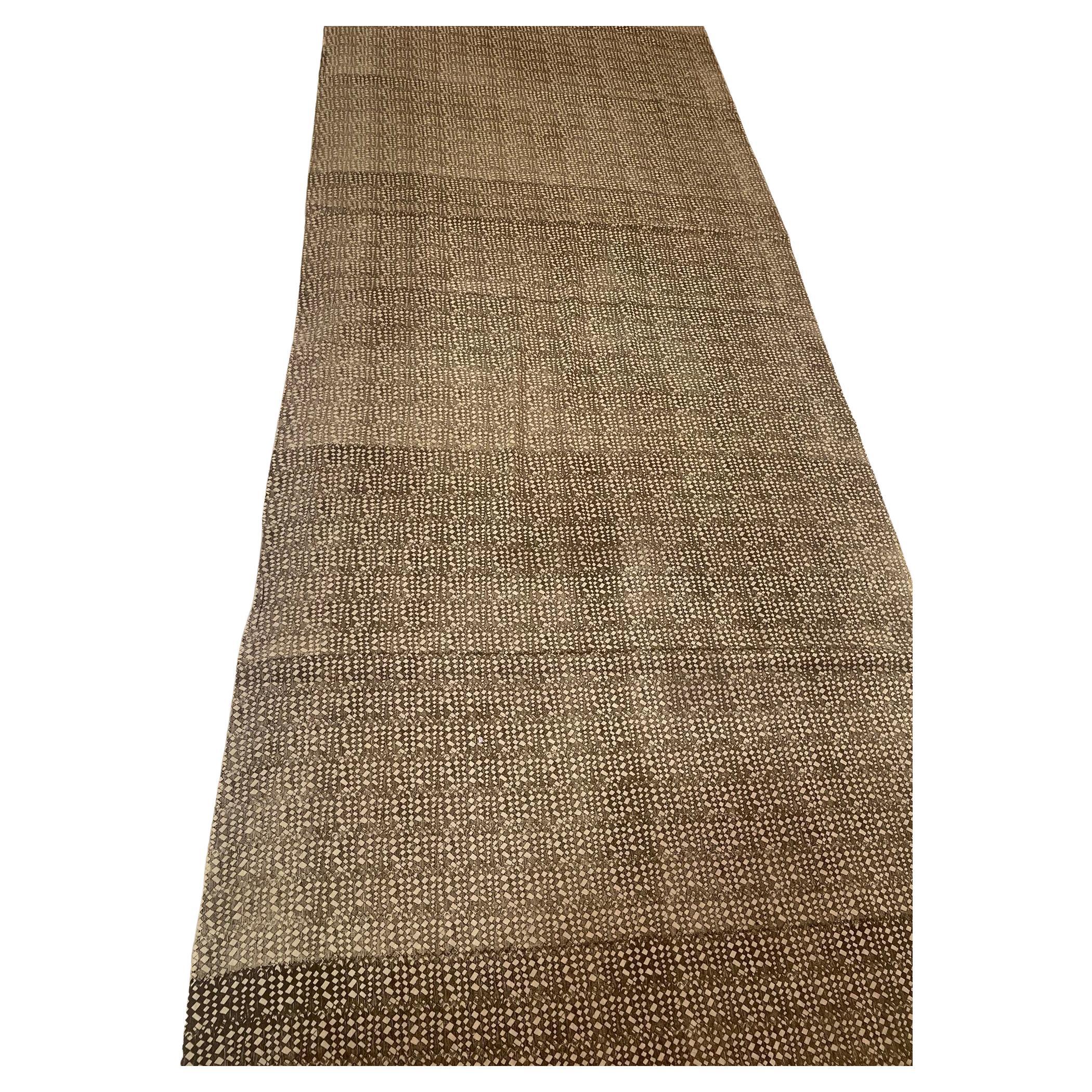
African Batik Cloth Natural Hand-woven Hand-Printed Cotton Fabric Ghana 10 yards.
Colors are organic earth tone beige and light brown in geometric design.
Non waxed fabric circa 1950s.
Hand made in Ghana Africa.
Museum Quality Original Long Piece.
380 inches, (30 ft 10 yards Long) x 46 inches Inches Wide( 4ft).
Could be use to make pillows or upholstery.
History of Batik in Africa:
Batik, a traditional fabric art technique, has a rich history in Ghana, West Africa. The practice of batik involves using wax to create intricate patterns on fabric, which is then dyed to achieve the desired design. While batik has its origins in Asia, particularly in Indonesia, it has been embraced and adapted by various African countries, including Ghana.
In Ghana, batik-making can be traced back to the mid-20th century when it gained popularity as a form of traditional textile art. The craft was introduced by artists and artisans who were inspired by the vibrant and expressive nature of batik. These early practitioners experimented with different designs, colors, and patterns, infusing local themes and motifs into their creations.
Over time, batik became an important part of Ghanaian culture and identity. It is not only used for clothing but also for various decorative and functional items such as wall hangings, tablecloths, and accessories. The art form often reflects the rich cultural heritage of Ghana, incorporating symbols, proverbs, and traditional stories into the designs.
Ghanaian batik artists often employ a combination of traditional and contemporary elements, creating a unique fusion of styles. The process of making batik involves applying hot wax to the fabric using various tools to create the desired patterns. The wax acts as a resist, preventing dye from penetrating the waxed areas. After dyeing, the wax is removed, revealing the intricate designs on the fabric.
Today, batik-making in Ghana continues to thrive as both a traditional craft and a form of artistic expression. Many artisans and designers draw inspiration from Ghana's diverse cultural landscape, incorporating elements from different regions and ethnic groups into their batik creations. The art form has also gained international recognition, with Ghanaian batik products being sought after both locally and abroad.
In summary, the history of batik in Ghana is a testament to the creativity and adaptability of artists who have embraced and transformed this traditional technique into a vibrant and culturally significant art form within the country.
HISTORY OF BATIK
In the mid-nineteenth century, the Belanda Hitam, or "Black Dutchmen," are said to have introduced batik to West Africa after serving as indentured soldiers for the Dutch in Indonesia. Returning from their conscriptions with trunks of fine Javanese batik, the opulent patterns captured the imagination of their friends and relatives. However, textile history is complex, and only a handful of recruits returned to West Africa with batik due to delayed payments.
Batik, with roots traced to Egyptian mummies, is a tradition found globally, from Southeast Asia to Japan and India. Europeans, particularly the Dutch, played a significant role in industrializing batik from the seventeenth century onward.
In West Africa, Dutch Scholar Ineke van Kessel suggests that batik arrived from India over trans-Saharan routes. Local populations, like the Yoruba in Nigeria, incorporated wax printing into their textiles. European traders brought wax and non-wax fabrics to West Africa in the seventeenth century, targeting a population ready for their consumption. European designers adapted prints for the African market...
Category
Mid-20th Century Ghanaian Folk Art Textiles
Materials
Cotton
More Ways To Browse
Woven Silk Art
Divan Bed
Bhutan Textiles
Bhutanese Kira
Kira Textile
Textile Art
Vintage Textile Art
Uzbekistan Art
Antique Chinese Silk
Woven Silk Art
Silk Embroidery Art
Antique Chinese Textile
Asian Wall Hanging
Textile Art Japan
Prayer Mat
Asian Chinese Silk Embroidered Art
Asian Silk Screen Wall Art
Vintage Embroidery Art