Items Similar to Framed Japanese Velvet Yuzen-Birodo Tapestry Panel Meiji Period
Want more images or videos?
Request additional images or videos from the seller
1 of 17
Framed Japanese Velvet Yuzen-Birodo Tapestry Panel Meiji Period
$4,000
£3,031.15
€3,493.06
CA$5,657.10
A$6,083.74
CHF 3,252.99
MX$73,368.19
NOK 41,136.26
SEK 37,480.43
DKK 26,100.87
About the Item
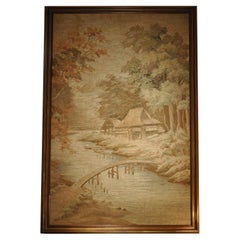
A Japanese tapestry velvet panel from Meiji period presented in a beautiful silver and gold leaf wood frame. The realistic landscape textile was created using resistant dye on cut velvet. This labor-intensive method is called Yūzen Birodo in Japanese and requires high technical precision to achieve its signature three-dimensional, "chiaroscuro" effect. The tapestry is dated to late Meiji period (circa 1900-1920s) and was made to appeal the taste of the West. By fully harnessing the technical ability of the native Japanese textile artists, the composition of the typical Japanese scenery blended in strong visual perspective and dimension found in the western landscape painting. The result, like many late Meiji Export art, is a true marvel of East-Meet-West. The romantic nocturnal landscape depicts lake cove among towering pines and under a full moon, A small foot bridge and clusters of thatched-roof houses dotted the meandering rocky coast. The resistant dye on the cut velvet was taken advantage to the fullest by the artist to create its dreamy effect in black and white like an ink painting. Although the scenery is purely Japanese, the visuality has a strong sense of dimension found in Western oil landscape painting. This unique art form at the turn of the 20th century reflected the historical context when Japanese traditional art enjoyed an unprecedented exchange with the West. The panel was matted and presented in an antiqued wood frame with silver and gold leaf.
Image size is 20.5" x 20.5".
The invention of Yuzen-Birodo was credited to Nishimura Sozaemon, the famous Kyoto textiles firm, in 1868. The velvet was woven by passing the fine metal wires parallel to the weft to raise the loop. The design was painted on the uncut velvet using resistant dye method (Yuzen). Afterward, the fabric was steamed, and the velvet was selectively cut to form the piles. The precise cutting creates a tufted pile that adds depth, texture, and a sense of perspective, often making the textile resemble a painting.
The first example of Yuzen-Birodo was exhibited at the Second National Industrial Exhibition in Tokyo in 1881 before it was exhibited in the west.
Reference: "Threads of silk and gold, Ornamental Textiles from Meiji Japan" by H. McDermott and C. Pollard, The Oxford Ashmolean Museum Catalogue Exhibition, 2012, pp. 160-169.
- Dimensions:Height: 28.75 in (73.03 cm)Width: 28.75 in (73.03 cm)Depth: 2.5 in (6.35 cm)
- Style:Meiji (Of the Period)
- Materials and Techniques:
- Place of Origin:
- Period:
- Date of Manufacture:1900-1920s
- Condition:Wear consistent with age and use. Fine condition for antique textile of this nature and age, a few very faint foxing spots and faint folding lines. Frame and mat appear in fine near new condition.
- Seller Location:Atlanta, GA
- Reference Number:1stDibs: LU945048201482
About the Seller
4.9
Platinum Seller
Premium sellers with a 4.7+ rating and 24-hour response times
Established in 2006
1stDibs seller since 2010
586 sales on 1stDibs
Typical response time: <1 hour
- ShippingRetrieving quote...Shipping from: Atlanta, GA
- Return Policy
More From This Seller
View AllJapanese Silk Embroidery Tapestry Meiji Period
Located in Atlanta, GA
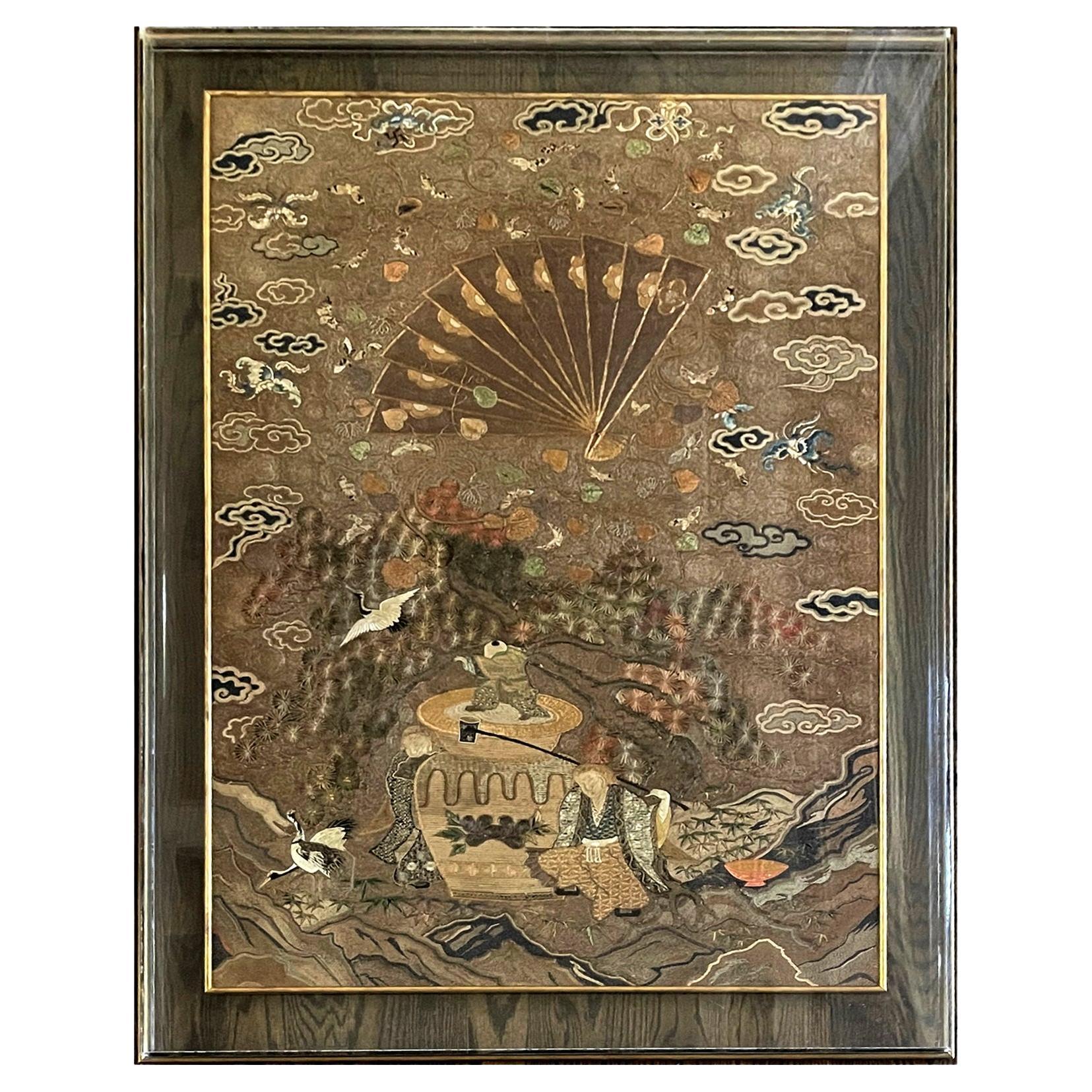
A spectacular Japanese embroidered silk panel beautifully presented in a gilt frame suspended in a lucite shadow box with gilt wood border. The silk picture is dated to 1890-1910s toward the end of Meiji Period, when Japanese started to participate international expose by presenting its best art and craft. Elaborate embroidered silk tapestry like this was very popular among westerners due to its superb craftmanship and also exotic subject matter that was often derived from classic Japanese folklore, mythology and various motifs. The tapestry on offer is such an example. It depicts an old couple...
Category
Antique 1890s Japanese Japonisme Textiles
Materials
Fabric, Silk, Lucite
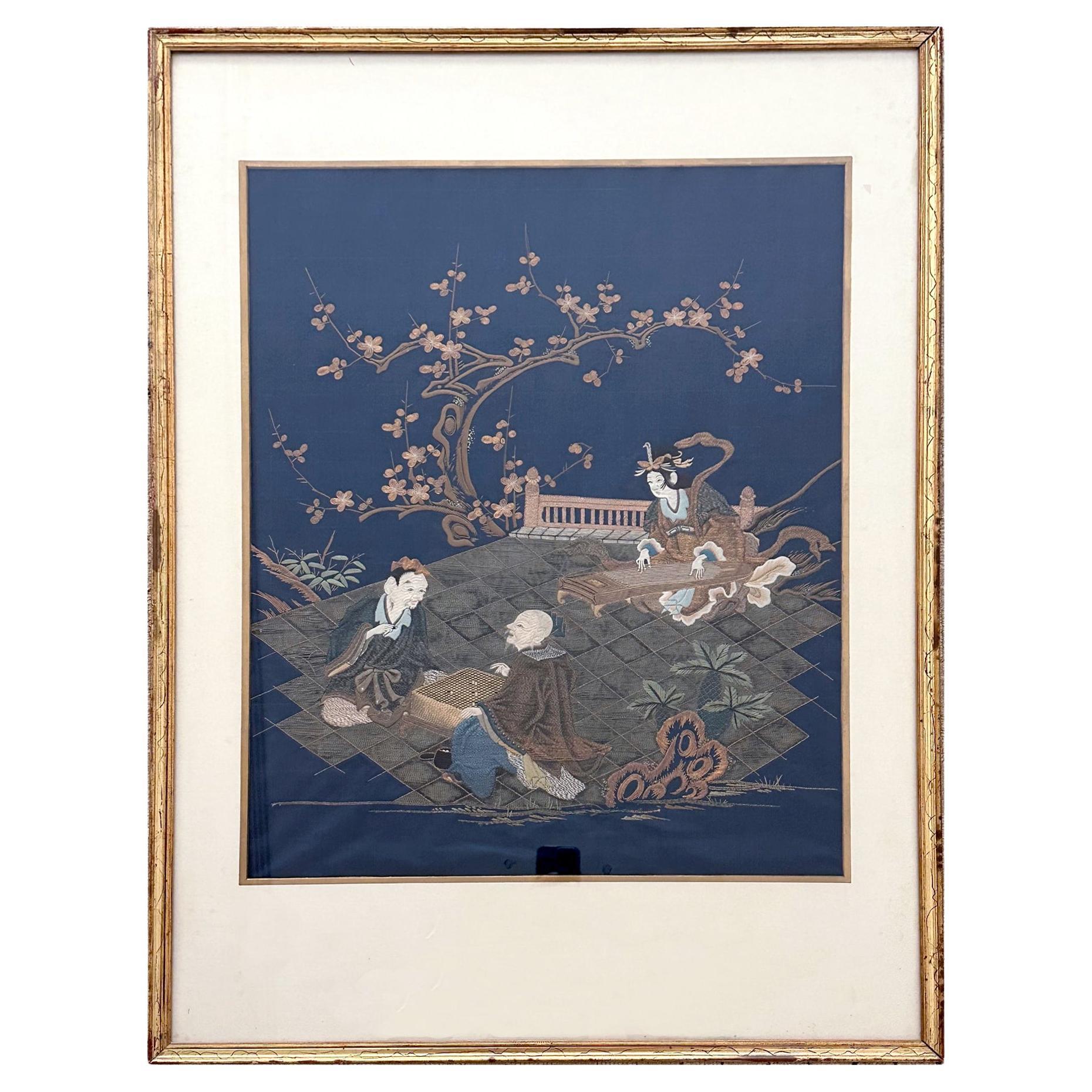
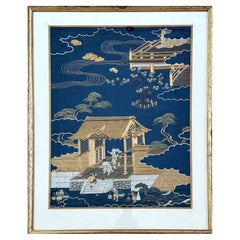
Framed Antique Japanese Embroidery Fukusa Textile Panel
Located in Atlanta, GA
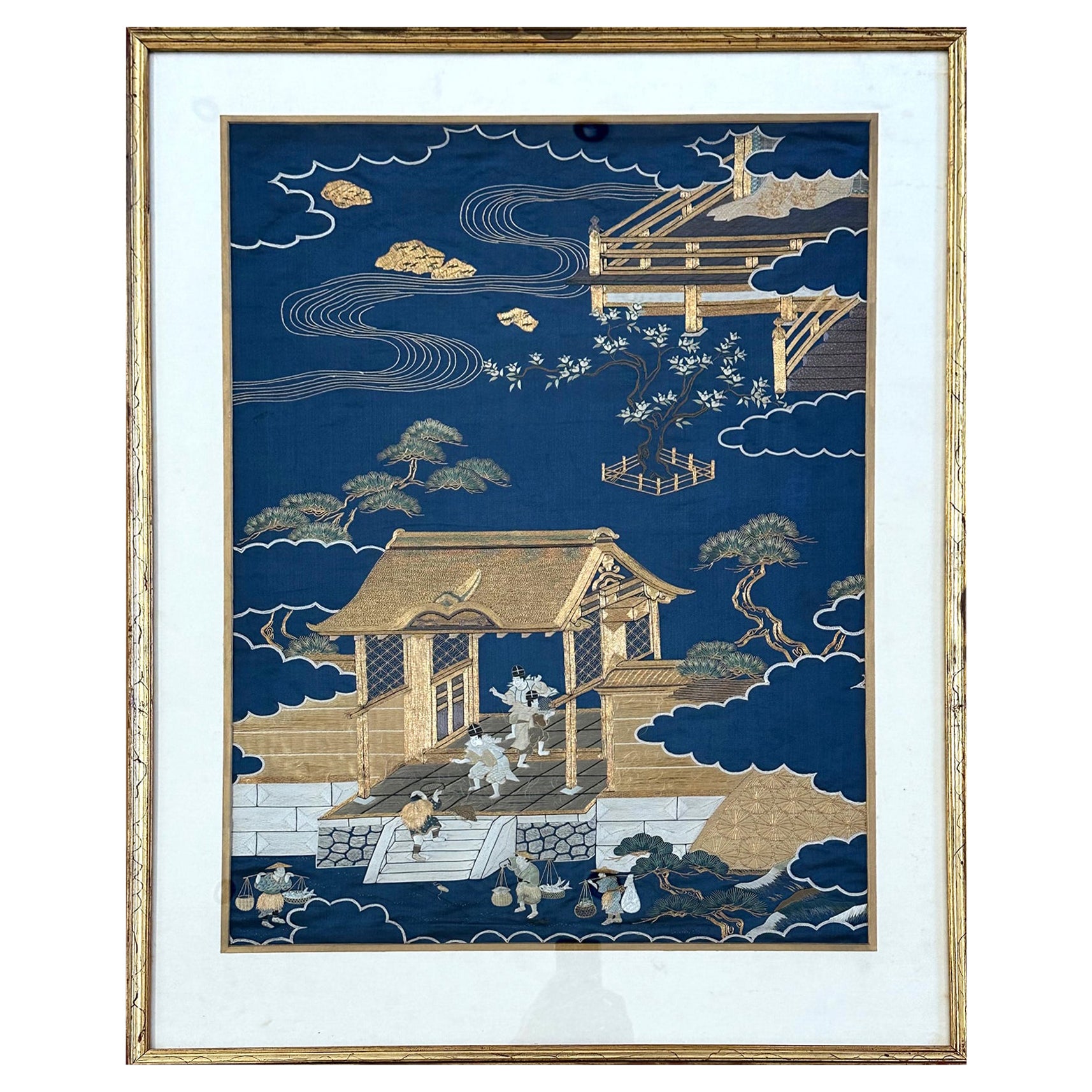
A Japanese silk Fukusa Panel housed in a gilt frame circa late 19th century of Meiji Period. Fukusa is a traditional Japanese textile art used as a wrap for presenting gifts at important occasions. On the deep blue background, the elaborate embroidery work depicts a historical scene where street vendors selling goods to a royal household or an aristocratic residence. The scene focuses on the activities at the front gate where the couriers and servants were busying carrying the goods in. A peasant with straw coat...
Category
Antique Late 19th Century Japanese Meiji Textiles
Materials
Silk, Wood
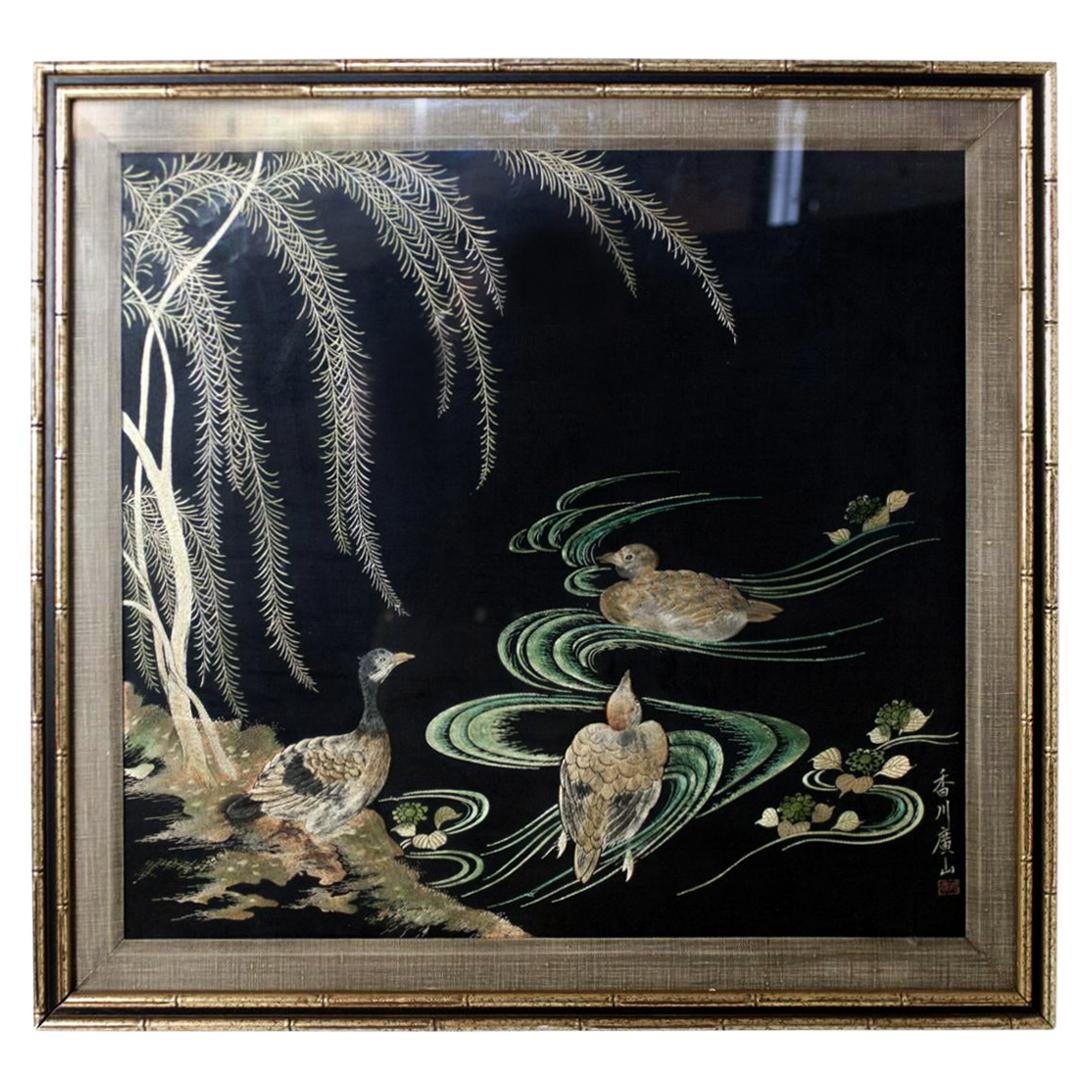
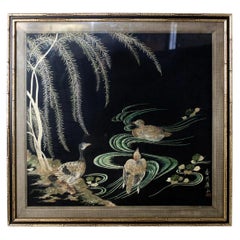
Framed Antique Japanese Embroidered Silk Panel Signed
Located in Atlanta, GA
An exquisite Japanese embroidery piece circa end of 19th-early 20th century of Meiji period. The silk panel depicts an idyllic water scenery, in which three mandarin ducks swim in th...
Category
Early 20th Century Japanese Japonisme Textiles
Materials
Silk, Wood
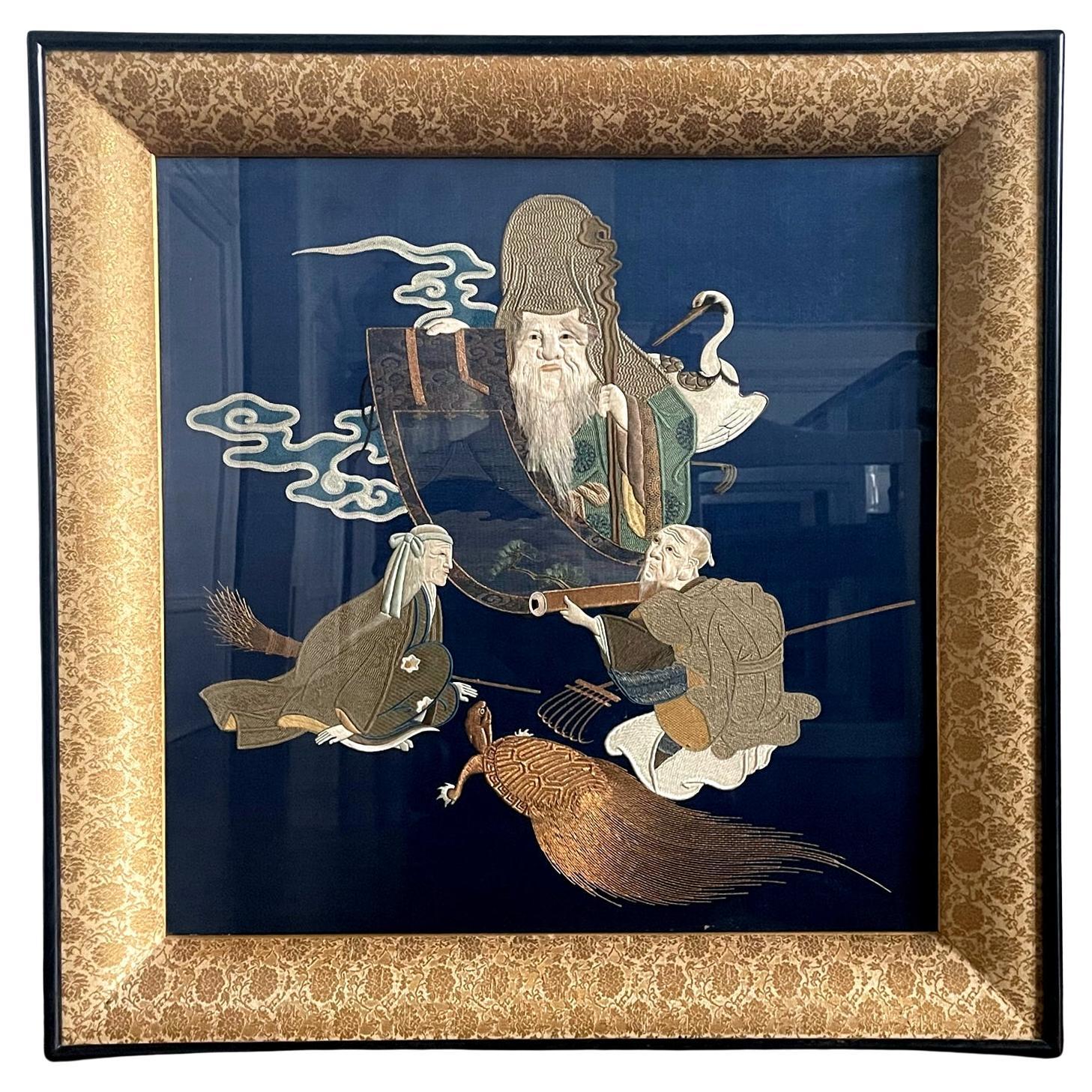
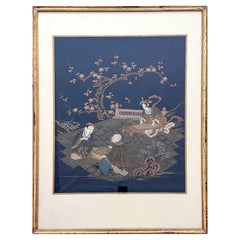
Framed Antique Japanese Embroidery Fukusa Textile Panel
Located in Atlanta, GA
A Japanese silk Fukusa Panel housed in a gilt frame circa late 19th century of Meiji Period. Fukusa is a traditional Japanese textile art used as a wrap for presenting gifts at important occasions. On the deep blue background, the elaborate embroidery work depicts three deities of the Shichifukujin (Seven Gods of Fortune...
Category
Antique Late 19th Century Japanese Meiji Textiles
Materials
Silk, Wood
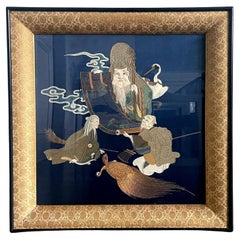
Framed Antique Japanese Embroidery Fukusa Panel
Located in Atlanta, GA
A finely embroidered Japanese silk Fukusa panel presented in a beautiful brocade-wrapped fame. Circa late 19th century of Meiji Period, Fukusa is a traditional Japanese textile...
Category
Antique Late 19th Century Japanese Meiji Textiles
Materials
Silk, Wood
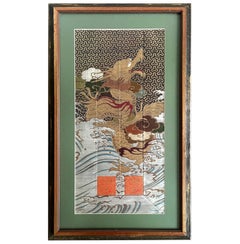
Framed Japanese Woven Textile Panel with Dragon Meiji Period
Located in Atlanta, GA
A framed Japanese woven textile circa late 19th century of Meiji Period. Likely a fragment of a priest robe or kesa, the multi-paneled textile was finely woven with gold foiled threads that depicts a five-clawed dragon slithering in the clouds and water...
Category
Antique 19th Century Japanese Meiji Textiles
Materials
Silk, Wood
You May Also Like
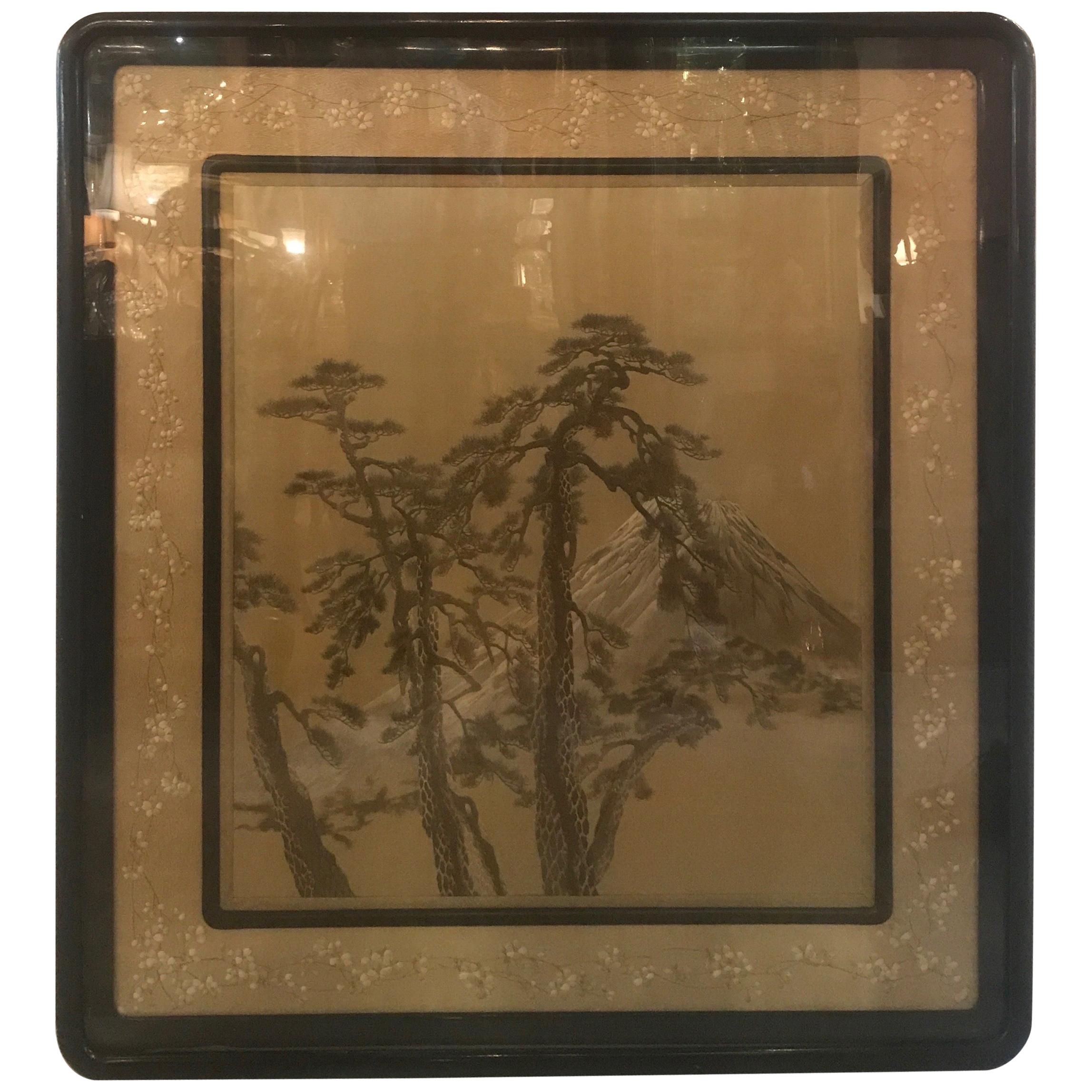
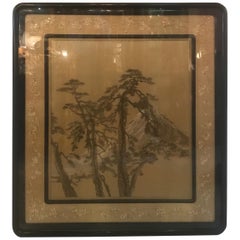
Antique Early 20th Century Japanese Hand Stitched Silk Framed Tapestry
Located in Lambertville, NJ
All hand work framed silk Japanese tapestry with embroidered boarder. A deep custom black lacquered frame. Originaly sold from Newman Galleries....
Category
Early 20th Century Japanese Meiji Textiles
Materials
Silk, Glass, Lacquer
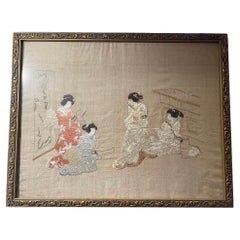
Mid-20th Century Japanese silk embroidered framed painting
Located in Delft, NL
Mid-20th Century Japanese silk embroidered framed painting
A silk embroidered painting and is framed behind glass with a scene of women in ...
Category
Mid-20th Century Japanese Paintings and Screens
Materials
Silk
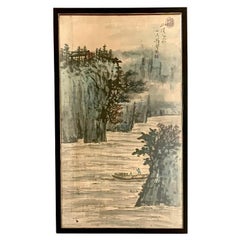
Early 20th Century Signed
Framed Chinese Batik Print
Located in Bridgeport, CT
Early 20th Century framed Chinese batik print depicting a mountain landscape with water, possibly a river or lake and a small boat figures on it. The print is signed to the upper rig...
Category
Early 20th Century Chinese Ming Textiles
Materials
Fabric, Glass, Wood
Extraordinary Antique Japanese Embroidered Tapestry
Located in West Palm Beach, FL
An extraordinary antique Japanese embroidered tapestry depicting an autumn forest scene with thatched cottage along a riverbank and Mt. Fuji in th...
Category
Antique 1890s Antiquities
Materials
Wood
Chinese Antique Signed Embroidered Silk Framed Painting
Located in Palm Springs, CA
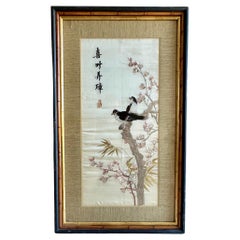
Tall framed and matted Chinese embroidered silk painting depicting birds and flowers and shrubbery. Signed with calligraphy inscription and r...
Category
Early 20th Century Chinese Paintings
Materials
Silk, Wood
Large Chinese Silk Embroidery, Framed
Located in Bradenton, FL
This tall Chinese silk embroidery depicts Asian figures and scenes of boats, bridges and Asian landscapes. Features red, green, salmon and whit...
Category
Antique 19th Century Chinese Chinese Export Tapestries
Materials
Silk