Items Similar to Japanese 19th Century Kabuki Theater Gold Dance Costume Dragon And Phoenix
Video Loading
Want more images or videos?
Request additional images or videos from the seller
1 of 17
Japanese 19th Century Kabuki Theater Gold Dance Costume Dragon And Phoenix
$3,490
£2,638.04
€3,025.94
CA$4,865.20
A$5,296.17
CHF 2,811.21
MX$63,724.34
NOK 35,621.85
SEK 32,639.68
DKK 22,597.51
About the Item
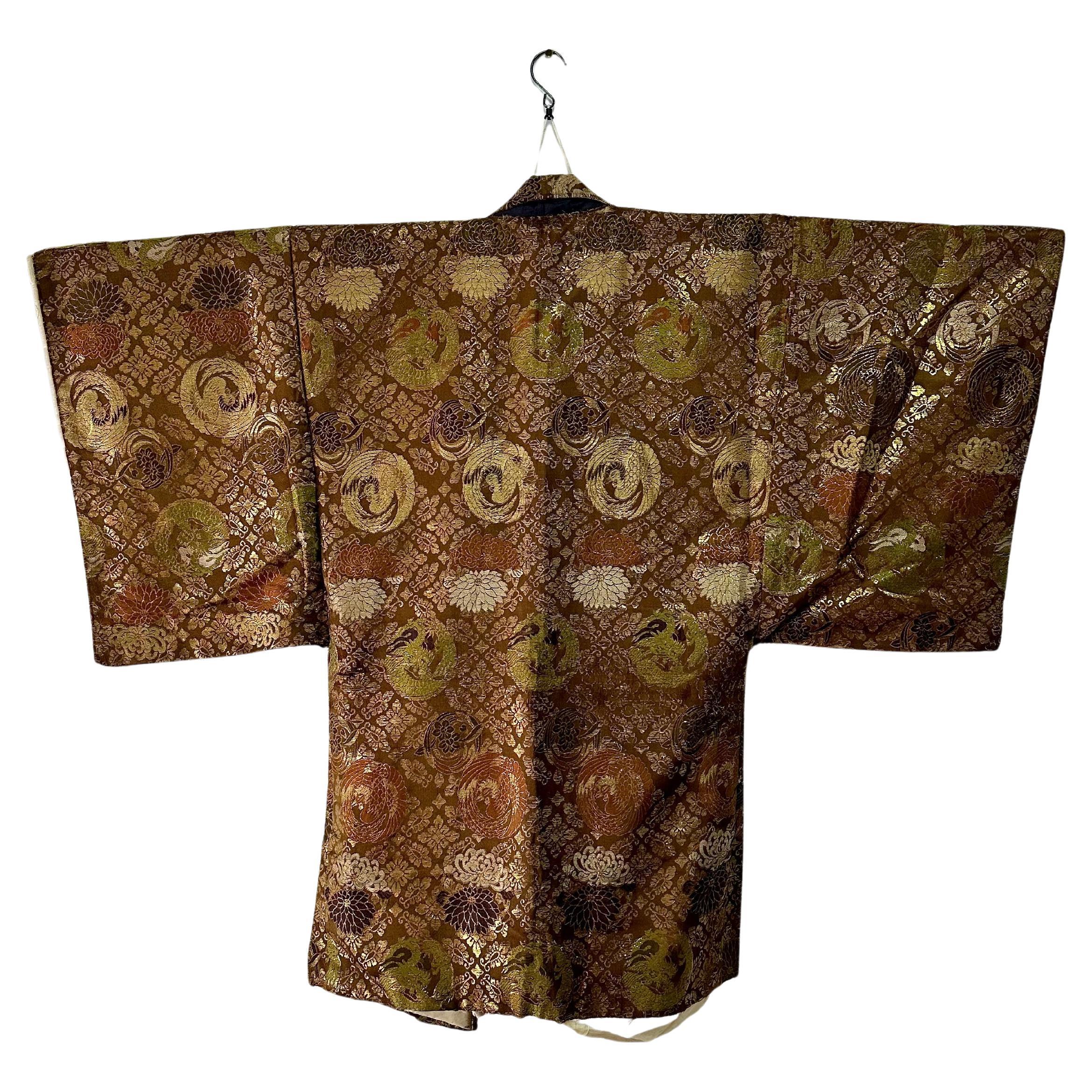
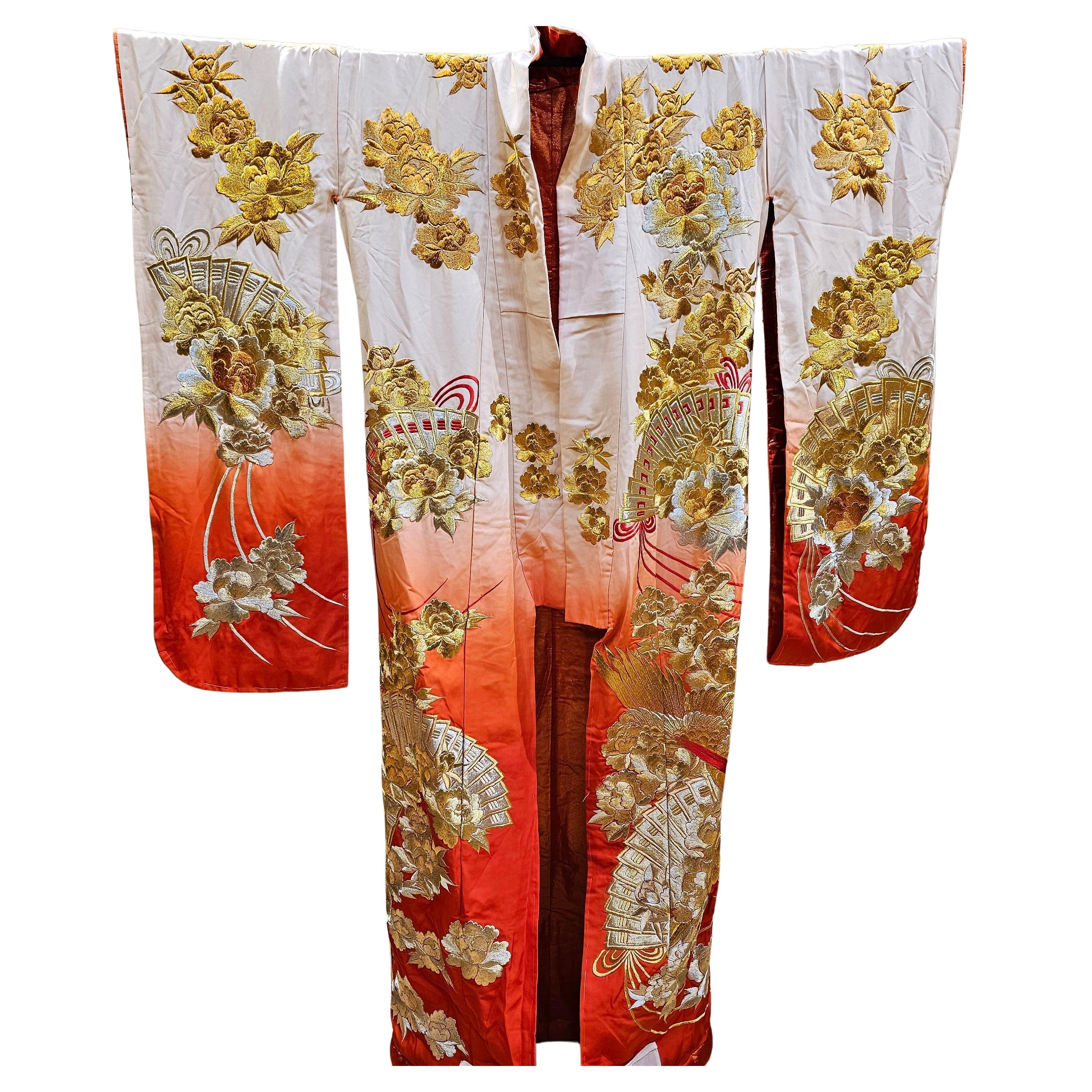
A large, glamorous and impressive Japanese Kabuki Theater Kimono Dance Costume with a handsome dragon and phoenix motif dating to the Meiji period, 19th century. Hand crafted of brown velvet, colored fabrics, shells, and prolific metallic gold woven thread this historic robe measures approximately 58 inches tall and 54 inches wide.
This unique and rare brocade gold threaded robe presents itself as an important brilliant colored textile artifact from a great Japanese dancing tradition. The interior of this historic textile possesses nominal appropriate use wear just the way we like to find them.
It would look lovely framed.
Provenance: private old American collection
About Kabuki Theater
Kabuki (歌舞伎; Japanese pronunciation: [ka.bɯ.kʲi is a classical form of Japanese theatre, mixing dramatic performance with traditional dance. Kabuki theatre is known for its heavily stylised performances, its glamorous, highly decorated costumes, and for the elaborate kumadori make-up worn by some of its performers.
Kabuki is thought to have originated in the early Edo period, when the art's founder, Izumo no Okuni, formed a female dance troupe that performed dances and light sketches in Kyoto. The art form later developed into its present all-male theatrical form after women were banned from performing in kabuki theatre in 1629. Kabuki developed throughout the late 17th century and reached its zenith in the mid-18th century.
In 2005, kabuki theatre was proclaimed by UNESCO as an intangible heritage possessing outstanding universal value. In 2008, it was inscribed in the UNESCO Representative List of the Intangible Cultural Heritage of Humanity. Thank you wikipedia.
- Dimensions:Height: 61 in (154.94 cm)Width: 54 in (137.16 cm)Depth: 1 in (2.54 cm)
- Style:Meiji (Of the Period)
- Materials and Techniques:
- Place of Origin:
- Period:
- Date of Manufacture:19th century
- Condition:Wear consistent with age and use. Minor losses.
- Seller Location:South Burlington, VT
- Reference Number:1stDibs: LU1289245553072
About the Seller
5.0
Platinum Seller
Premium sellers with a 4.7+ rating and 24-hour response times
Established in 1990
1stDibs seller since 2015
2,425 sales on 1stDibs
Typical response time: 1 hour
- ShippingRetrieving quote...Shipping from: Charlotte, VT
- Return Policy
More From This Seller
View AllJapanese Imperial Pair Dolls 1840
Located in South Burlington, VT
From our recent Japanese acquisitions
A rare couple.
These Japanese Tachibina dolls represent the simplest essential form of the imperial couple. Their beautiful faces were crafted from crushed shell called gofun coated over carved wood and their dress feature period Edo (1840) textile kimono dress.
Used as the display for the Girl’s day celebration, more specifically they are constructed of kinran brocade fabric covered paper, the heads carved of wood and covered in gofun with painted features and inset hair, the male form with outstretched arms and conical legs, the female has a cylindrical form. They come in an original kiri wood storage box.
Dimensions: Large doll 12 inches tall and 6 inches wide
Small doll...
Category
Antique Mid-19th Century Japanese Edo Sculptures and Carvings
Materials
Shell, Wood
$280 Sale Price
85% Off
Japanese Fine Antique Screen Hand Painted "Buddhist Nature" in Sumi Ink
Located in South Burlington, VT
From our recent Japanese Acquisition Travels
Praised as "the crown of poets from the eastern lands."
Japan, a good antique six-panel screen Byobu depicting hand painted on paper w...
Category
Early 20th Century Japanese Taisho Paintings and Screens
Materials
Paper
$1,440 Sale Price
40% Off
Japanese Antique Spiritual Guardian Garden Ornament Vivid Colors 19c 27 Inches
Located in South Burlington, VT
A very old circa 19th century Japanese stone guardian protector in a monumental , hand painted unusual form Fudo-Myo (Skt. Alacanatha) seated upon a rock-form dais and backed by a r...
Category
Early 20th Century Japanese Taisho Furniture
Materials
Stone
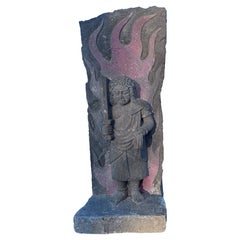
$3,040 Sale Price
20% Off
Japanese Antique Bold Hand-Painted "Two Horses" Silk Scroll, Meiji Period
Located in South Burlington, VT
A fine and bold Japanese hand-brushed, hand-painted silk scroll of two horses below plumb tree mountain- worthy of your favorite room
Hand painting on silk in simple soft pleasing co...
Category
Antique Late 19th Century Japanese Meiji Paintings and Screens
Materials
Silk
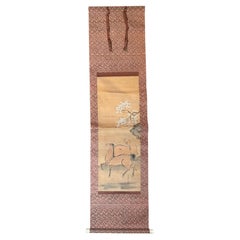
$150 Sale Price
33% Off
Japanese Antique Blue Doorway Curtain Noren for Happiness And Longevity
Located in South Burlington, VT
Symbolizing Happiness And Longevity
Japan, a rare antique hemp noren (doorway curtain) with auspicious congratulatory crane and turtle figures symbolic for happiness and longevity....
Category
Vintage 1920s Japanese Showa Textiles
Materials
Textile, Hemp
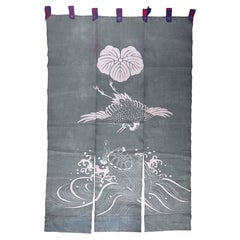
$390 Sale Price
57% Off
Japanese Antique Hand Painted Lotus And Blue Waters Screen Vibrant Colors
Located in South Burlington, VT
From our recent Japanese Acquisitions- Hard to Find Lotus Flowers
A stunning Japanese Antique Hand Painted six panel byobu screen on silk executed with lovely lotus flowers and vib...
Category
Antique 19th Century Japanese Meiji Paintings and Screens
Materials
Gold Leaf
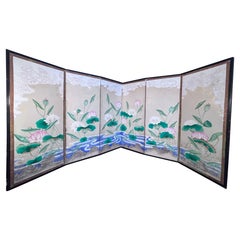
$1,320 Sale Price
20% Off
You May Also Like
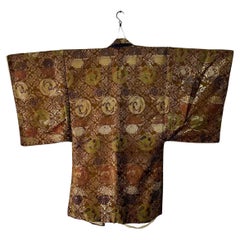
Rare 19th-Century Brocade Silk Robe for Noh Theatre Performance, Japan
Located in Fukuoka, JP
A rare and historically significant brocade silk robe from 19th-century Japan, originally created for use in Noh theatre, one of the country’s oldest and most revered performing arts...
Category
Antique 19th Century Japanese Edo Textiles
Materials
Silk
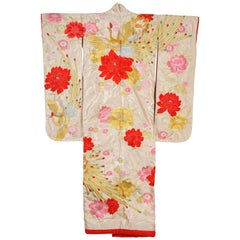
Vintage Japanese Ceremonial Kimono Gold Brocade with Flying Cranes
Located in Moreno Valley, CA
A vintage Mid-Century ivory color silk brocade collectable Japanese ceremonial kimono. One of a kind hand crafted.
Fabulous museum quality ceremonial piece in pure silk with intricat...
Category
20th Century Japanese Japonisme Textiles
Materials
Silk
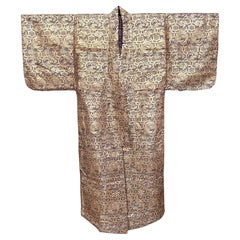
Japanese Brocade Noh Costume Kimono Robe Meiji Period
Located in Atlanta, GA
A Noh costume made from magnificent silk twill brocade woven with metallic gold threads circa 1930s. The robe is identified as "Atsuita", made for male actors in the Noh play. The luxuriant fabric has a deep blue background with golden interlocking hexagon pattern that resembles tortoise shells, the symbol of longevity. The motifs showcase three auspicious symbols in repetitive patterns: roundels of coiled dragon, phoenix and peony. The kimono robe...
Category
20th Century Japanese Meiji Textiles
Materials
Brocade, Silk
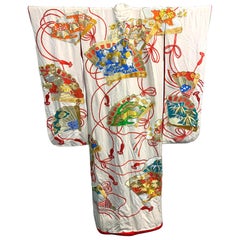
Exceptional Embroidered Vintage Japanese Ceremonial Kimono
Located in Atlanta, GA
A visually striking vintage Uchikake Wedding Kimono/Robe for ceremonial occasion, circa 1930s-1950s in the Oriental Art Deco style. The bridal garment...
Category
20th Century Japanese Japonisme Textiles
Materials
Cotton, Silk
Vintage Silk Kimono with Gold, Silver and Red Embroidery
Located in Yonkers, NY
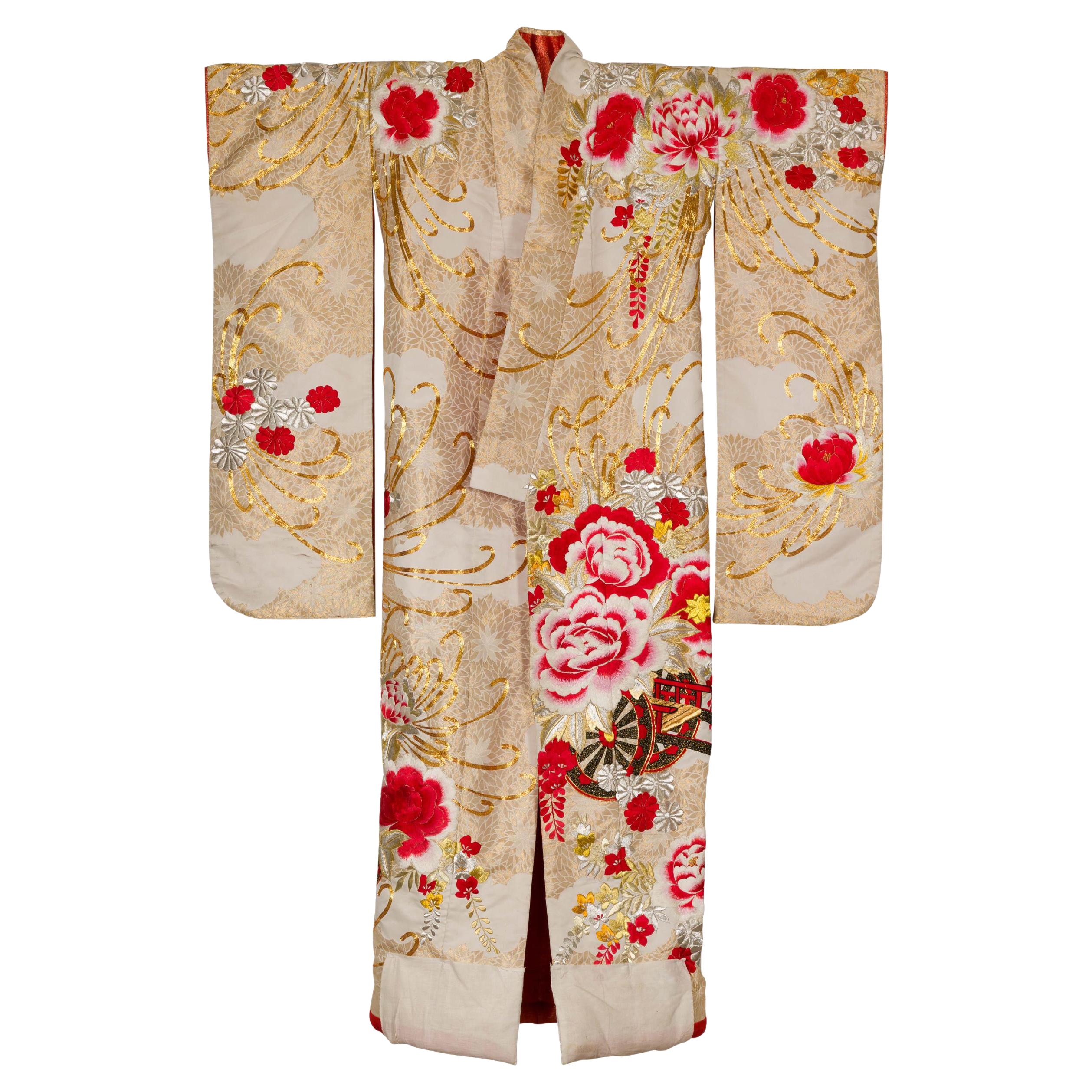
A vintage Japanese Showa era handcrafted silk brocade woman's wedding kimono circa 1940 with intricate hand-embroidered details depicting large flowers and a cart. Steeped in cultura...
Category
Mid-20th Century Japanese Showa Textiles
Materials
Brocade, Silk
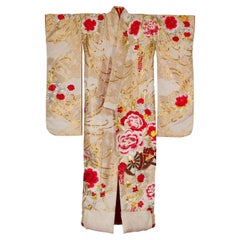
Vintage Japanese Silk Brocade Embroidery Ceremonial Kimono in Ivory, Red, Gold
Located in Barrington, IL
An exquisite and visually commanding vintage Uchikake wedding kimono from Japan, dating from the late Meiji to early Taisho period (circa 1910s–1930s). Traditionally worn by brides ...
Category
Early 20th Century Japanese Textiles
Materials
Gold
More Ways To Browse
Antique Fabrics And Textiles Fabric Textiles
Antique Theater
Female Dancer
Japanese Dragon
Antique Japanese Dragon
Dragon And Phoenix
Meiji Dragon
Woven Gold Thread
Japanese Dance
Japanese Velvet
Dragon Phoenix Gold
Wedding Kimono
Burma Textile
Chinese Silk Robe
Meiji Silk Embroider
Antique Fukusa
Antique Futon
Antique Indonesian Ikat