Items Similar to Japanese Textile Panel Double Ikat Kasuri Futon Cover
Want more images or videos?
Request additional images or videos from the seller
1 of 14
Japanese Textile Panel Double Ikat Kasuri Futon Cover
$1,600
£1,209.41
€1,387.25
CA$2,230.47
A$2,428.04
CHF 1,288.81
MX$29,214.60
NOK 16,330.93
SEK 14,963.75
DKK 10,359.89
About the Item
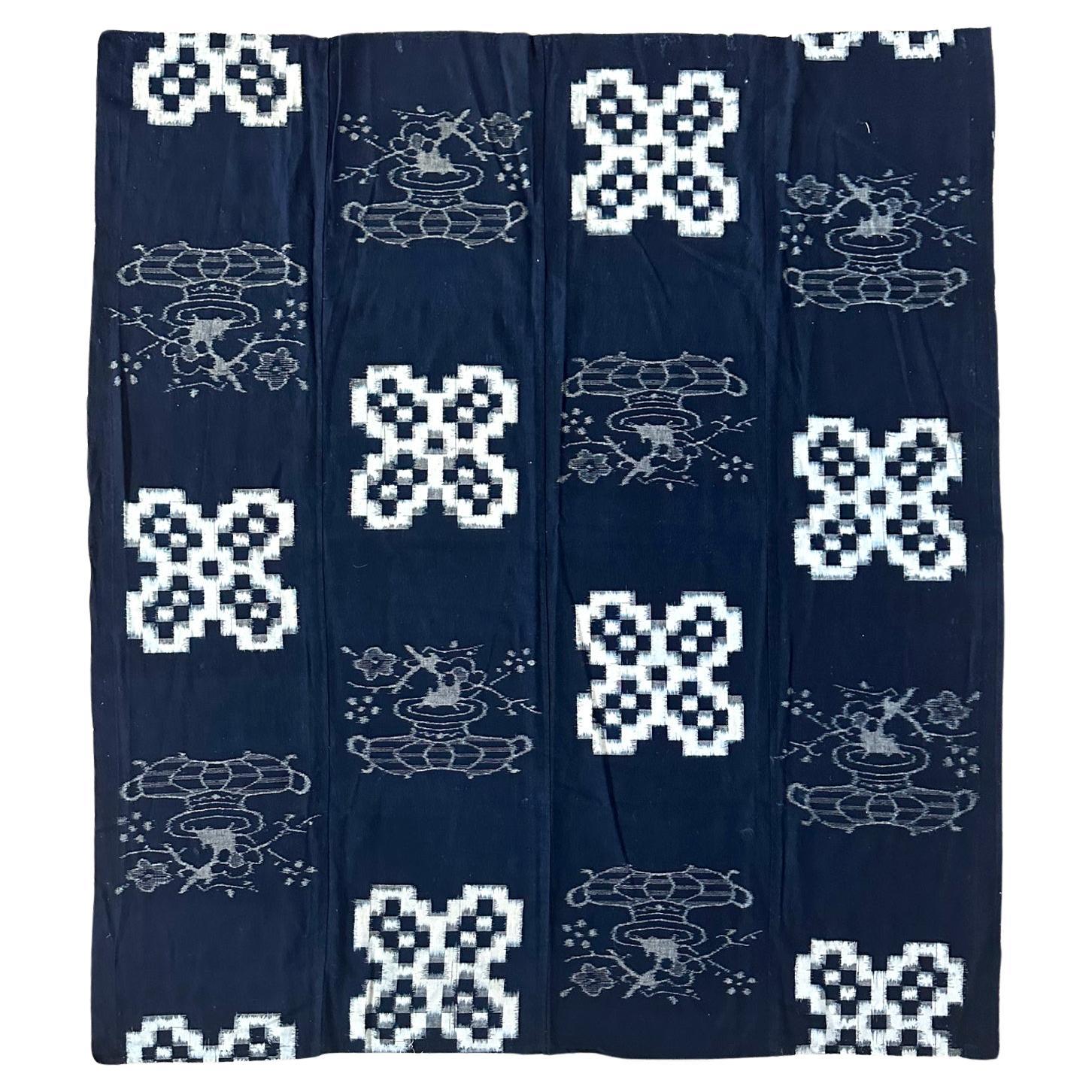
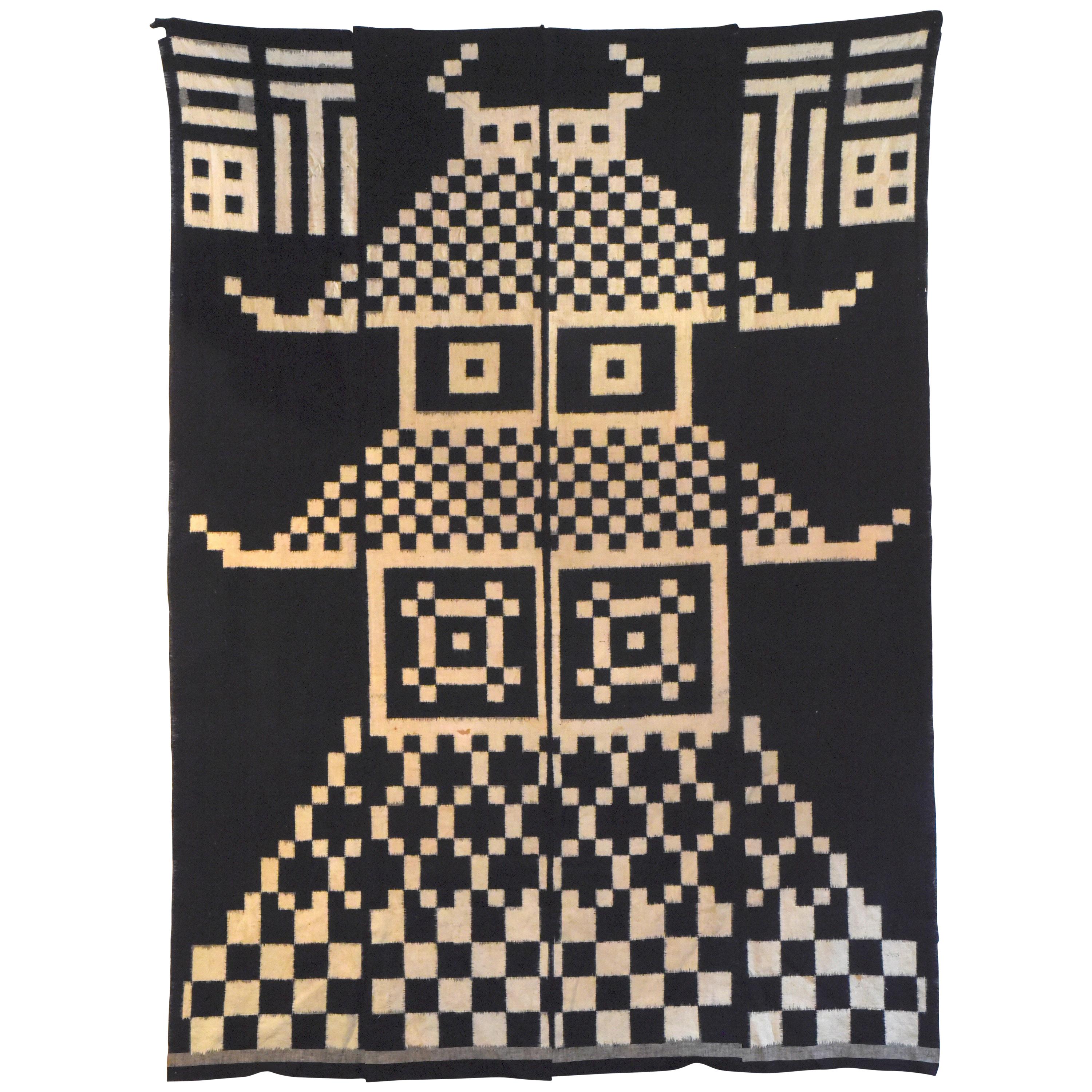
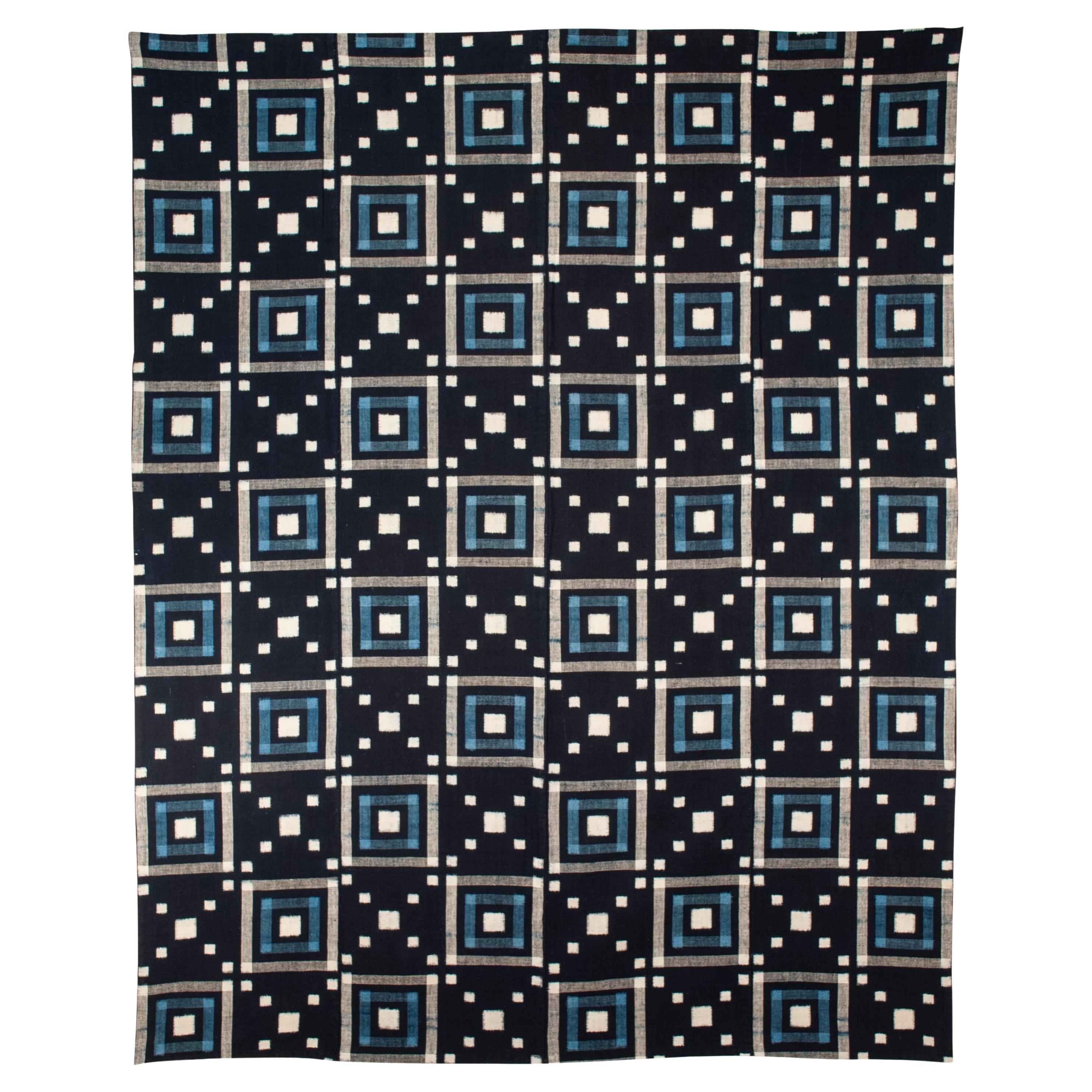
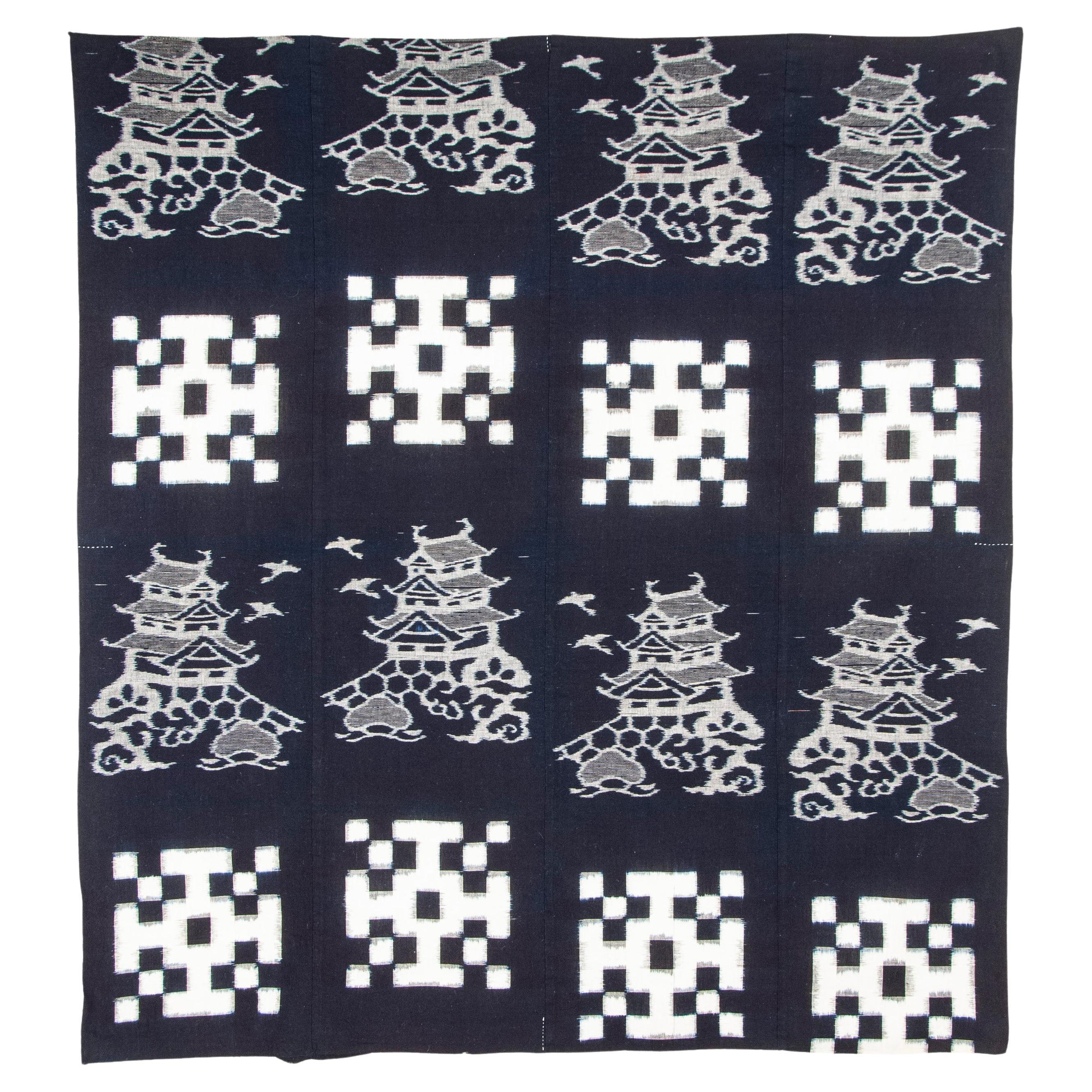
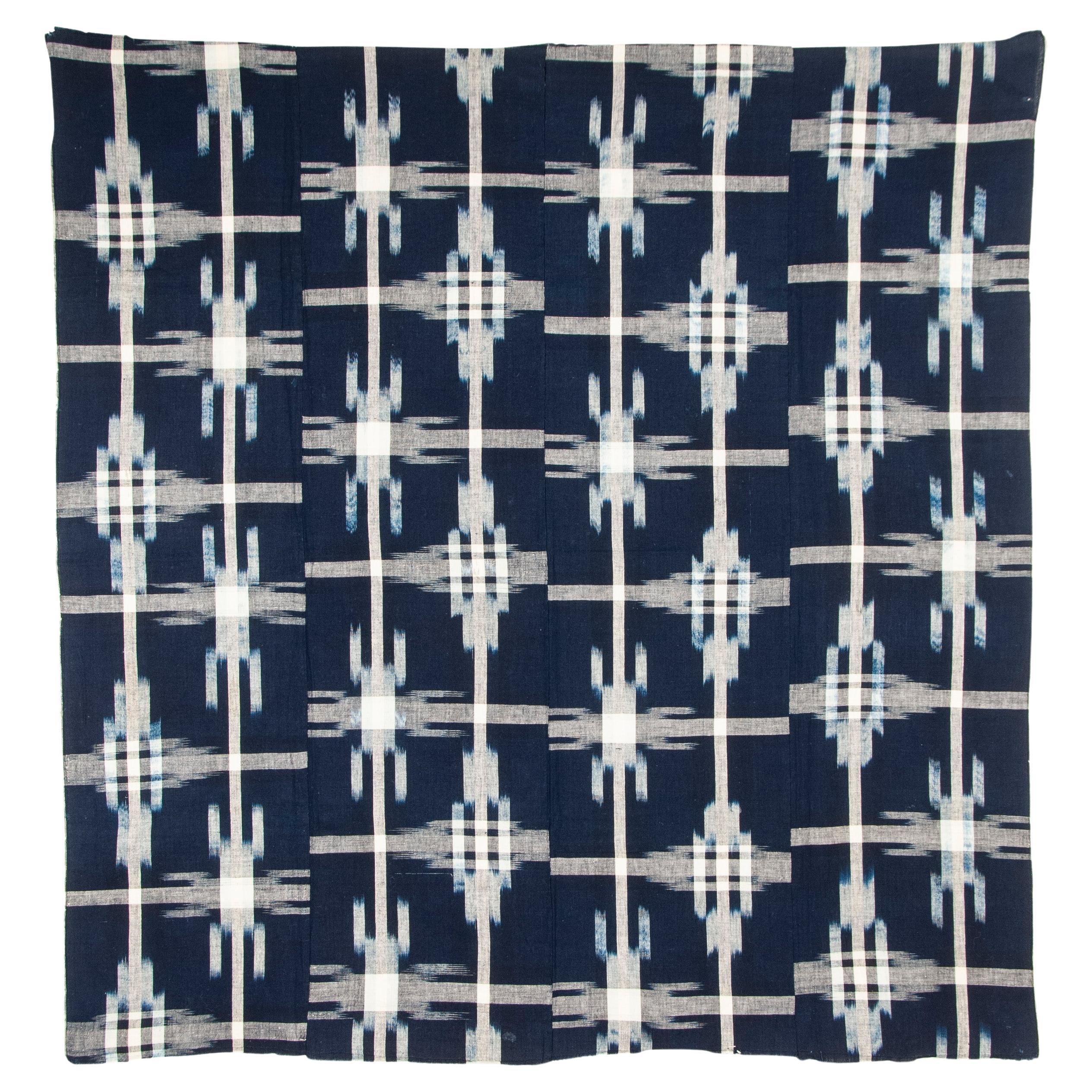
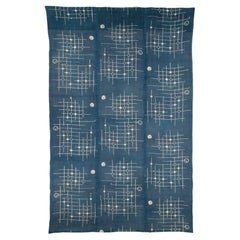
A Japanese woven cotton textile panel with white pattern on indigo background circa 1900-20s (end of Meiji to Tasho period). The panel was joined by four vertical stripes and was traditionally used to make the Futonji (futon coverlet). The weaving technique is called e-Kasuri, in this case a double ikat (Tate-Yoko Kasuri; both wefts and warps were pre-dyed to create a perfect pictorial pattern on the loom). The precision of the resistant dye was the key for such textile. On the deep indigo background, the panel is covered with two repetitive geometrical patterns, alternating between two overlapping white squares and a large, latticed diamond shape called "well-crib". The width of the stripe was often restricted by the width of the loom used for such weaving, therefore the futonji was almost always joined by four stripes. The panel, albeit nearly a century old, appears strikingly modern and will make a great wall hanging.
For two similar Kasuri futonji, see "Textile of Japan" Prestel, page 306 and 308, illustration 105 and 106.
Ikat weaving was originated in Southeast Asia and spread to Japan Mainland in the 17th century via Okinawa (14th century). The cotton production accelerated the development of the textile industry on a much larger scale by then in the Edo period when Kasuri became very popular among the general population.
- Dimensions:Height: 55 in (139.7 cm)Width: 50 in (127 cm)Depth: 0.2 in (5.08 mm)
- Style:Meiji (Of the Period)
- Materials and Techniques:
- Place of Origin:
- Period:
- Date of Manufacture:Early 20th Century
- Condition:Wear consistent with age and use. Minor losses. Good condition as a well-loved example. A small cut on one corner (about 2inch). Frays on the edge per nature of the weave. No obvious odor or stain. Folding winkles.
- Seller Location:Atlanta, GA
- Reference Number:1stDibs: LU945038699362
About the Seller
4.9
Platinum Seller
Premium sellers with a 4.7+ rating and 24-hour response times
Established in 2006
1stDibs seller since 2010
583 sales on 1stDibs
Typical response time: <1 hour
- ShippingRetrieving quote...Shipping from: Atlanta, GA
- Return Policy
More From This Seller
View AllJapanese Textile Panel Double Ikat Kasuri Futon Cover
Located in Atlanta, GA
A Japanese woven cotton textile panel with white pattern on indigo background circa 1900-20s (end of Meiji to Tasho period). The panel was joined by four vertical stripes and was tra...
Category
Early 20th Century Japanese Meiji Textiles
Materials
Cotton
Japanese Art Deco Ikat Silk Meisen Kimono
Located in Atlanta, GA
A striking and well preserved Japanese Meisen kimono hand-sewn from woven Ikat Silk circa 1920-40s (Taisho to Showa period). The kosode style kimono (sma...
Category
Early 20th Century Japanese Showa Textiles
Materials
Silk
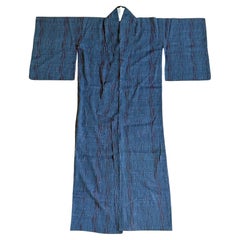
Japanese Woven Asa Double Ikat Summer Usumono Kimono Provenance
Located in Atlanta, GA
A “Natsu No Kimono” (summer kimono) also called “Usumono" (thin clothes) dated from early 20th century Taisho Period. This well-preserved garment was tailored from a woven indigo blu...
Category
Early 20th Century Japanese Taisho Textiles
Materials
Linen
Japanese Woven Asa Double Ikat Summer Usumono Kimono Provenance
Located in Atlanta, GA
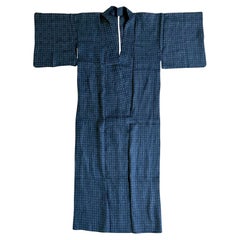
On offer is a “Natsu No Kimono” (summer kimono) also called “Usumono" (thin clothes) dated from early 20th century Taisho Period. This well-preserved garment was tailored from a wove...
Category
Early 20th Century Japanese Taisho Textiles
Materials
Hemp
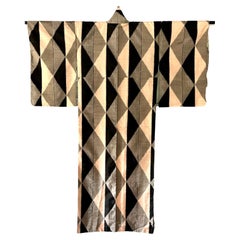
Japanese Art Deco Ikat Silk Meisen Kimono
Located in Atlanta, GA
A well preserved Japanese Meisen kimono hand-sewn from woven Ikat Silk circa 1920-30s (Taisho to early Showa period). The kosode style kimono (small slee...
Category
Early 20th Century Japanese Showa Textiles
Materials
Silk
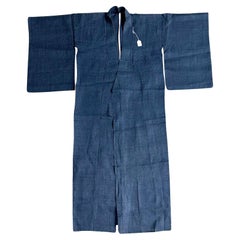
Japanese Woven Asa Double Ikat Summer Usumono Kimono Provenance
Located in Atlanta, GA
A “Natsu No Kimono” (summer kimono) also called “Usumono" (thin clothes) dated from early 20th century Taisho Period. This well-preserved garment was tailored from a woven indigo blu...
Category
Early 20th Century Japanese Taisho Textiles
Materials
Hemp
You May Also Like
Meiji Period Japanese Indigo Double Ikat Futon Cover
Located in Point Richmond, CA
Meiji period Japanese Indigo double ikat futon cover
Japanese futon cover, a double ikat pattern in four panels depicting Kumamoto Castle with im...
Category
Antique 1890s Japanese Meiji Textiles
Materials
Cotton
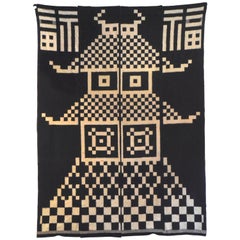
Antique Japanese Double-Ikat Futon Cover
Located in Point Richmond, CA
Antique Japanese Double-Ikat Futon Cover
This eye-dazzling hand-spun cotton, indigo-dyed 4-panel futon cover is a classic double ikat design displaying rows of concentric squares in...
Category
Early 20th Century Japanese Taisho Tribal Art
Materials
Cotton
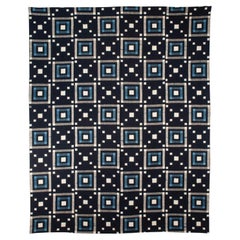
Antique Japanese Kurume Indigo-Dyed Double Ikat Futon Cover
Located in Point Richmond, CA
Antique Japanese Kurume Indigo-Dyed Double Ikat Futon Cover
Kurume double-ikat weaving was established over 200 year ago on the southern island of Kyushu, and has long been celebrat...
Category
Early 20th Century Japanese Taisho Tribal Art
Materials
Cotton
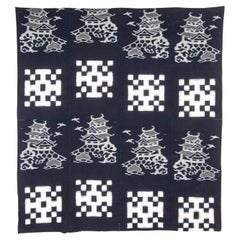
Antique Japanese Indigo-Dyed Double Ikat Futon Cover
Located in Point Richmond, CA
Antique Japanese Indigo-Dyed Double Ikat Futon Cover
This early 20th century indigo-dyed futon cover displays a large, graphically compelling lattice design created by warp and weft...
Category
Early 20th Century Japanese Taisho Tribal Art
Materials
Cotton
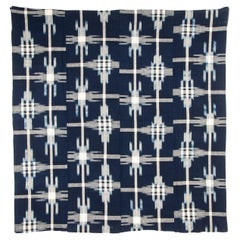
Early 20th Century Japanese Linen Go-Board Pattern Futon Cover
Located in Point Richmond, CA
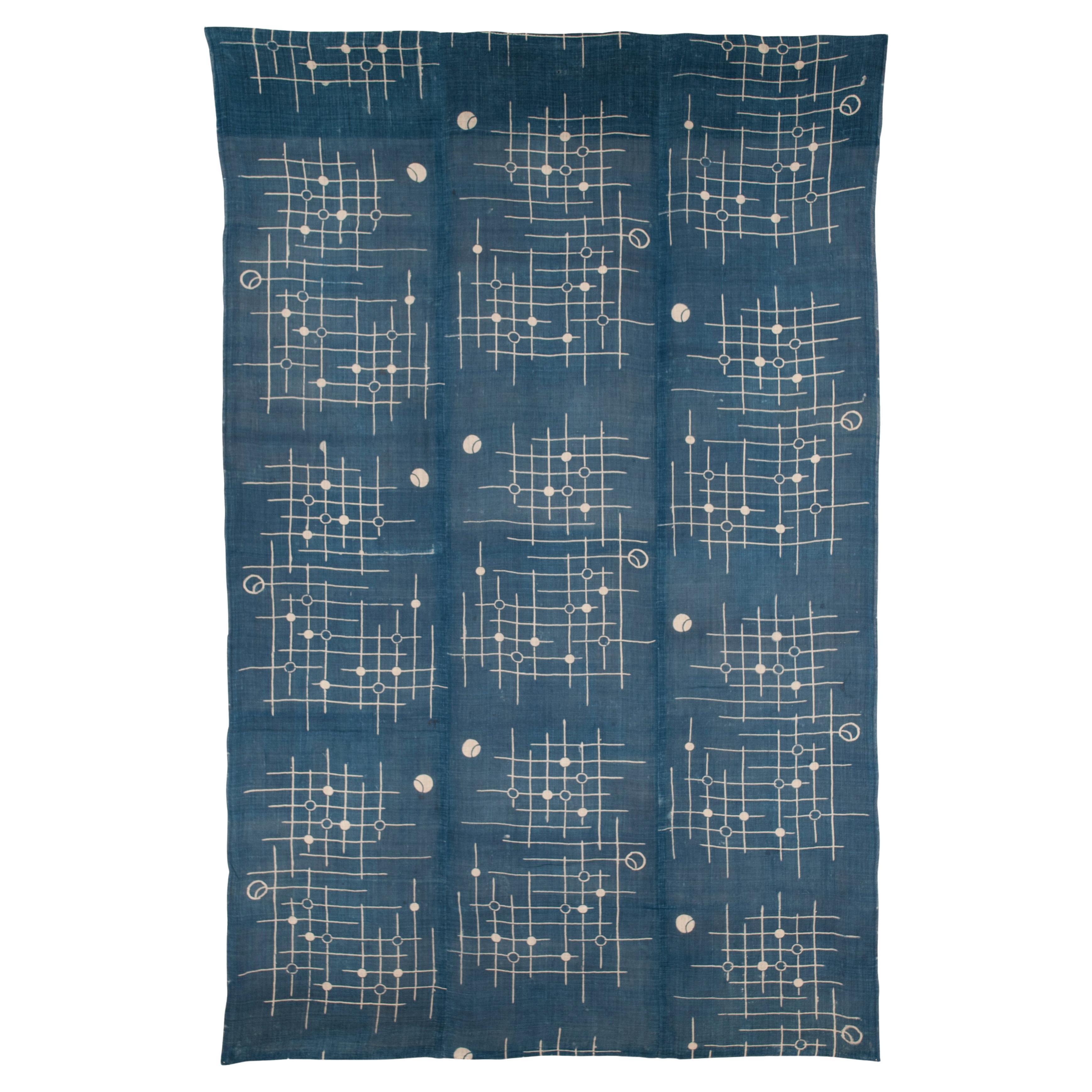
Early 20th Century Japanese linen go-board pattern futon cover
A unique example of a game-themed textile, this 3-panel futon cover is woven of very fine...
Category
Early 20th Century Japanese Meiji Textiles
Materials
Hemp
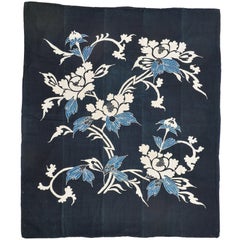
Japanese Indigo Antique Boro Futon Cover or Wall Panel
Located in Alessandria, Piemonte
Rare perfect antique collection Japanese Indigo Boro Futon cover : also to use.
The rare antique boros are now valued as pieces of art, therefore they are...
Category
Mid-20th Century Japanese Japonisme Textiles
Materials
Cotton
More Ways To Browse
Antique Woven Textile
Antique Coverlets
Japanese Meiji Panel
Used Cribs
Japanese Futon
Japanese Ikat
Used Futons
Antique Futon
Japanese Futon Cover
Embroidered Bedspread
Antique Embroidered Persian Textiles
Antique Obi
Vintage Ikat Indonesia
Framed Chinese Embroidery
Uzbek Table
Uzbekistan Table
Chinoiserie Embroidery
Qing Embroidery