Want more images or videos?
Request additional images or videos from the seller
1 of 6
Kwan Chin Batik Dye on Cloth, Signed
Kwan Chin
Price:$1,200
$1,450List Price
About the Item
- Creator:Kwan Chin (Artist)
- Dimensions:Height: 34.5 in (87.63 cm)Width: 25.5 in (64.77 cm)Depth: 1.5 in (3.81 cm)
- Style:Anglo-Indian (Of the Period)
- Materials and Techniques:Linen,Teak
- Place of Origin:
- Period:
- Date of Manufacture:1970
- Condition:Wear consistent with age and use.
- Seller Location:Ottawa, CA
- Reference Number:1stDibs: LU141727971173
About the Seller
5.0
Gold Seller
Premium sellers maintaining a 4.3+ rating and 24-hour response times
Established in 1989
1stDibs seller since 2015
465 sales on 1stDibs
Typical response time: 1 hour
Authenticity Guarantee
In the unlikely event there’s an issue with an item’s authenticity, contact us within 1 year for a full refund. DetailsMoney-Back Guarantee
If your item is not as described, is damaged in transit, or does not arrive, contact us within 7 days for a full refund. Details24-Hour Cancellation
You have a 24-hour grace period in which to reconsider your purchase, with no questions asked.Vetted Professional Sellers
Our world-class sellers must adhere to strict standards for service and quality, maintaining the integrity of our listings.Price-Match Guarantee
If you find that a seller listed the same item for a lower price elsewhere, we’ll match it.Trusted Global Delivery
Our best-in-class carrier network provides specialized shipping options worldwide, including custom delivery.You May Also Like
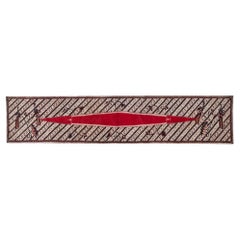
Vintage Indonesian Kemben Batik Tulis (Breast cloth), Jogja (Yogyakarta), Java
Located in Point Richmond, CA
Vintage Indonesian Kemben Batik Tulis (Breast cloth), Jogja (Yogyakarta), Java 1970.
This kemben batik has a hand-drawn design on cotton by wax resist canting. The traditional ceremo...
Category
Vintage 1970s Javanese Folk Art Textiles
Materials
Cotton
$390
H 20 in W 96 in D 0.07 in
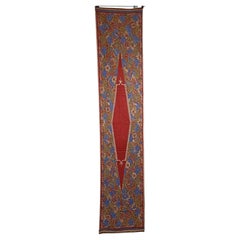
Antique Batik Tulis Temben Cloth Tiga Negri Indonesia Asian Textiles Home Decor
Located in London, GB
Antique Batik Tulis Kemben Cloth – Tiga Negri Style – Hand-Drawn Wax Resist Textile, Indonesia (1930s)
An exceptional example of traditional Indonesian textile artistry, this antiq...
Category
Early 20th Century Indonesian Textiles
Materials
Cotton
$447
H 74.81 in W 23.63 in D 0.4 in
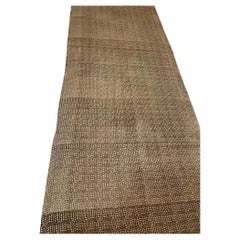
African Batik Cloth Natural Hand-woven Hand-Printed Cotton Fabric Ghana 10 Yards
Located in Moreno Valley, CA
African Batik Cloth Natural Hand-woven Hand-Printed Cotton Fabric Ghana 10 yards.
Colors are organic earth tone beige and light brown in geometric design.
Non waxed fabric circa 1950s.
Hand made in Ghana Africa.
Museum Quality Original Long Piece.
380 inches, (30 ft 10 yards Long) x 46 inches Inches Wide( 4ft).
Could be use to make pillows or upholstery.
History of Batik in Africa:
Batik, a traditional fabric art technique, has a rich history in Ghana, West Africa. The practice of batik involves using wax to create intricate patterns on fabric, which is then dyed to achieve the desired design. While batik has its origins in Asia, particularly in Indonesia, it has been embraced and adapted by various African countries, including Ghana.
In Ghana, batik-making can be traced back to the mid-20th century when it gained popularity as a form of traditional textile art. The craft was introduced by artists and artisans who were inspired by the vibrant and expressive nature of batik. These early practitioners experimented with different designs, colors, and patterns, infusing local themes and motifs into their creations.
Over time, batik became an important part of Ghanaian culture and identity. It is not only used for clothing but also for various decorative and functional items such as wall hangings, tablecloths, and accessories. The art form often reflects the rich cultural heritage of Ghana, incorporating symbols, proverbs, and traditional stories into the designs.
Ghanaian batik artists often employ a combination of traditional and contemporary elements, creating a unique fusion of styles. The process of making batik involves applying hot wax to the fabric using various tools to create the desired patterns. The wax acts as a resist, preventing dye from penetrating the waxed areas. After dyeing, the wax is removed, revealing the intricate designs on the fabric.
Today, batik-making in Ghana continues to thrive as both a traditional craft and a form of artistic expression. Many artisans and designers draw inspiration from Ghana's diverse cultural landscape, incorporating elements from different regions and ethnic groups into their batik creations. The art form has also gained international recognition, with Ghanaian batik products being sought after both locally and abroad.
In summary, the history of batik in Ghana is a testament to the creativity and adaptability of artists who have embraced and transformed this traditional technique into a vibrant and culturally significant art form within the country.
HISTORY OF BATIK
In the mid-nineteenth century, the Belanda Hitam, or "Black Dutchmen," are said to have introduced batik to West Africa after serving as indentured soldiers for the Dutch in Indonesia. Returning from their conscriptions with trunks of fine Javanese batik, the opulent patterns captured the imagination of their friends and relatives. However, textile history is complex, and only a handful of recruits returned to West Africa with batik due to delayed payments.
Batik, with roots traced to Egyptian mummies, is a tradition found globally, from Southeast Asia to Japan and India. Europeans, particularly the Dutch, played a significant role in industrializing batik from the seventeenth century onward.
In West Africa, Dutch Scholar Ineke van Kessel suggests that batik arrived from India over trans-Saharan routes. Local populations, like the Yoruba in Nigeria, incorporated wax printing into their textiles. European traders brought wax and non-wax fabrics to West Africa in the seventeenth century, targeting a population ready for their consumption. European designers adapted prints for the African market...
Category
Mid-20th Century Ghanaian Folk Art Textiles
Materials
Cotton
$1,450
H 360 in W 45.5 in D 0.05 in
Early 20th Century Signed
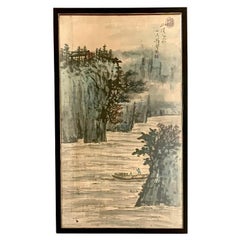
Framed Chinese Batik Painting
Located in Bridgeport, CT
Early 20th Century framed Chinese batik print depicting a mountain landscape with water, possibly a river or lake and a small boat figures on it. The print is signed to the upper rig...
Category
Early 20th Century Chinese Ming Textiles
Materials
Wood, Glass, Fabric
Indonesian Cloth
Located in Roma, IT
Indonesian cloth finely decorated with floreal motives in yellow and green on a dark blue background.
The item is not restored and is in very good co...
Category
Mid-20th Century Indonesian Modern Textiles
Materials
Textile
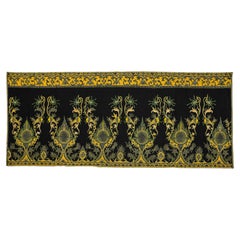
Antique Javanese Silk Batik Slendang
Located in Point Richmond, CA
Antique Javanese Silk Batik Slendang (Selendang). A shoulder cloth length of compact hand spun silk imported from China. The flora & fauna design crea...
Category
Early 20th Century Javanese Tribal Textiles
Materials
Silk
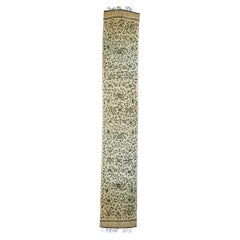
Antique Javanese Silk Batik Slendang
Located in Point Richmond, CA
Antique Javanese Silk Batik Slendang (Selendang). A shoulder cloth length of compact hand spun silk imported from China. The diagonal patterned stripe...
Category
Early 20th Century Indonesian Tribal Textiles
Materials
Silk
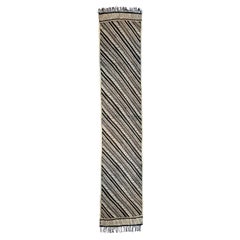
Hand-Drawn Batik Textile, from Java Indonesia
Located in Jimbaran, Bali
A fine example of a batik textile from Solo, Java, Indonesia. This textile features wonderful detailing & contrast. It features a wonderful array of flor...
Category
Early 2000s Indonesian Other Textiles
Materials
Cotton
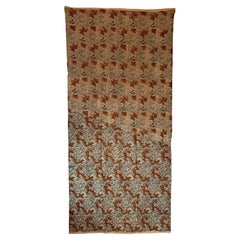
Hand-Drawn Batik Textile, from Java Indonesia
Located in Jimbaran, Bali
A fine example of a batik textile from Solo, Java, Indonesia. This textile features wonderful detailing & contrast. It features a wonderful array of flor...
Category
Early 2000s Indonesian Other Textiles
Materials
Cotton
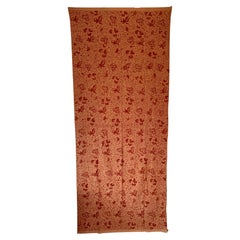
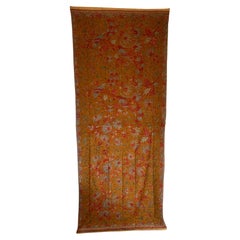
Hand-Drawn Batik Textile, from Java Indonesia
Located in Jimbaran, Bali
A fine example of a batik textile from Solo, Java, Indonesia. This textile features wonderful detailing & contrast. It features a wonderful array of flor...
Category
Early 2000s Indonesian Other Textiles
Materials
Cotton
More From This Seller
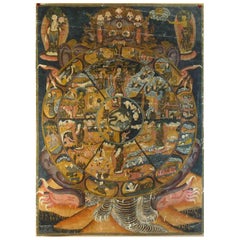
View AllTibetan Thangka Depicting the Bhavacakra, Early 20th Century
Located in Ottawa, Ontario
A Tibetan Thangka Depicting
The Bhavacakra
Early 20th century,
Color on cloth.
A thangka showing the bhavacakra
with the ancient five cyclic realms of samsara in Buddhi...
Category
Early 20th Century Chinese Chinese Export Paintings and Screens
Materials
Linen
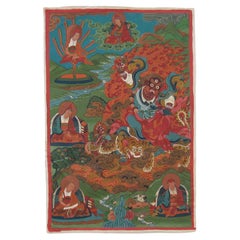
Tangka Painting of Manifestations of Padmasambhava Tibet, 20th Century
Located in Ottawa, Ontario
A TANGKA PAINTING OF MANIFESTATIONS
OF PADMASAMBHAVA
TIBET, 20TH CENTURY
He appears as the Dorje Drolo.
He rides a fierce tigress, and brandishes a vajra in his right hand
and a ritual dagger...
Category
Early 20th Century Tibetan International Style Textiles
Materials
Cotton
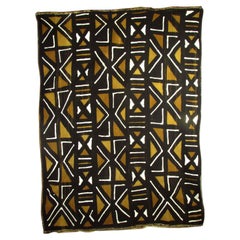
Mud Cloth
Bogolanfini
, Mali, Bamana People, Mid-20th Century
Located in Ottawa, Ontario
A mud cloth (Bogolanfini),
Mali, Bamana People
mid-20th century.
Hand woven 'discharge dyed' cotton
Approximately 71 x 52 in. (180cm. x 132cm.)
A dazzling geometric pattern...
Category
Mid-20th Century Malian Tribal Tribal Art
Materials
Fabric
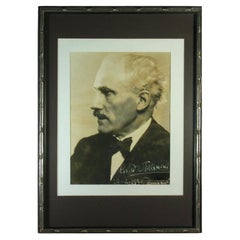
Toscanini, Arturo. (1867-1957) Signed Photograph
Located in Ottawa, Ontario
Toscanini, Arturo. (1867-1957) Signed Photograph
Striking photograph sad in odictor in profile,
" Arturo Toscanini 29-2. 1936" by Renato Toppo of New York
Size: 7" x 9" inches (17.8...
Category
Vintage 1930s American International Style Photography
Materials
Paper
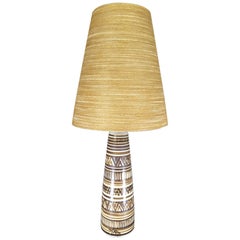
Large Signed Lotte
Gunnar Bostlund Table Lamp, Tribal Pattern, 1960s
By Lotte and Gunnar Bostlund
Located in Ottawa, Ontario
Large signed Lotte & Gunnar Bostlund table lamp, tribal pattern from the 1960s.
The lamp is hand painted in geometric patterns on a glazed stoneware, Original shade, harp and finia...
Category
Mid-20th Century Canadian Mid-Century Modern Table Lamps
Materials
Stoneware
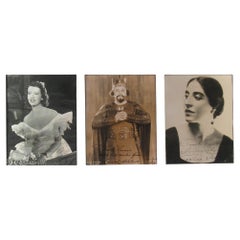
Lily Pons Lauritz Melchior Dusolina Giannini 3 Signed Opera Promo Photographs
Located in Ottawa, Ontario
3 signed promotional photograph of opera singers
LILY PONS, LAURITZ MELCHIOR, DUSOLINA GIANNINI
1930's, approx. 7.5 x 9 in. (19 x 23 cm.)
Charming photograph of Alice Joséphine PONS...
Category
Vintage 1930s American International Style Photography
Materials
Paper
Still Thinking About These?
All Recently ViewedMore Ways To Browse
Indian Batik
Framed Asian Tapestry
Qing Dynasty Badge
Antique Chinese Brocade
Japanese Fukusa
Japanese Wedding Kimono
Antique Chinese Embroidery Panel
Antique Japanese Indigo
Japanese Futon Cover
Lame Furniture
Bamboo Mat
Chinese Kesi
Kesi Silk Chinese
Antique Chinese Silk Robes
Ikat Timor
Japanese Fukusa Textile Art
Japanese Sashiko
Moorish Shoes