Sub-Saharan African Textiles
to
4
2
7
4
1
7
5
1
4
4
4
4
1
6,126
1,278
425
425
405
7
7
7
1
Place of Origin: Sub-Saharan African
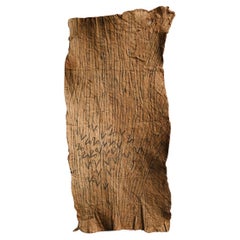
Old African Tapa (barkcloth) /20th century/Mbuti Barkcloth Textile/Tapestry
Located in Sammu-shi, Chiba
This cloth was made by the Mbuti people, a pygmy tribe living in the Democratic Republic of the Congo. The Mbuti are hunter-gatherers who live in the Ituri rainforest, a tropical rai...
Category
20th Century Other Sub-Saharan African Textiles
Materials
Other
African Batik Cloth Natural Hand-woven Hand-Printed Cotton Fabric Ghana 10 Yards
Located in Moreno Valley, CA
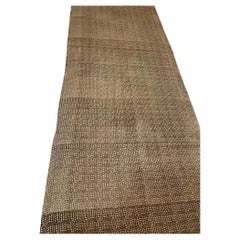
African Batik Cloth Natural Hand-woven Hand-Printed Cotton Fabric Ghana 10 yards.
Colors are organic earth tone beige and light brown in geometric design.
Non waxed fabric circa 1950s.
Hand made in Ghana Africa.
Museum Quality Original Long Piece.
380 inches, (30 ft 10 yards Long) x 46 inches Inches Wide( 4ft).
Could be use to make pillows or upholstery.
History of Batik in Africa:
Batik, a traditional fabric art technique, has a rich history in Ghana, West Africa. The practice of batik involves using wax to create intricate patterns on fabric, which is then dyed to achieve the desired design. While batik has its origins in Asia, particularly in Indonesia, it has been embraced and adapted by various African countries, including Ghana.
In Ghana, batik-making can be traced back to the mid-20th century when it gained popularity as a form of traditional textile art. The craft was introduced by artists and artisans who were inspired by the vibrant and expressive nature of batik. These early practitioners experimented with different designs, colors, and patterns, infusing local themes and motifs into their creations.
Over time, batik became an important part of Ghanaian culture and identity. It is not only used for clothing but also for various decorative and functional items such as wall hangings, tablecloths, and accessories. The art form often reflects the rich cultural heritage of Ghana, incorporating symbols, proverbs, and traditional stories into the designs.
Ghanaian batik artists often employ a combination of traditional and contemporary elements, creating a unique fusion of styles. The process of making batik involves applying hot wax to the fabric using various tools to create the desired patterns. The wax acts as a resist, preventing dye from penetrating the waxed areas. After dyeing, the wax is removed, revealing the intricate designs on the fabric.
Today, batik-making in Ghana continues to thrive as both a traditional craft and a form of artistic expression. Many artisans and designers draw inspiration from Ghana's diverse cultural landscape, incorporating elements from different regions and ethnic groups into their batik creations. The art form has also gained international recognition, with Ghanaian batik products being sought after both locally and abroad.
In summary, the history of batik in Ghana is a testament to the creativity and adaptability of artists who have embraced and transformed this traditional technique into a vibrant and culturally significant art form within the country.
HISTORY OF BATIK
In the mid-nineteenth century, the Belanda Hitam, or "Black Dutchmen," are said to have introduced batik to West Africa after serving as indentured soldiers for the Dutch in Indonesia. Returning from their conscriptions with trunks of fine Javanese batik, the opulent patterns captured the imagination of their friends and relatives. However, textile history is complex, and only a handful of recruits returned to West Africa with batik due to delayed payments.
Batik, with roots traced to Egyptian mummies, is a tradition found globally, from Southeast Asia to Japan and India. Europeans, particularly the Dutch, played a significant role in industrializing batik from the seventeenth century onward.
In West Africa, Dutch Scholar Ineke van Kessel suggests that batik arrived from India over trans-Saharan routes. Local populations, like the Yoruba in Nigeria, incorporated wax printing into their textiles. European traders brought wax and non-wax fabrics to West Africa in the seventeenth century, targeting a population ready for their consumption. European designers adapted prints for the African market...
Category
Mid-20th Century Folk Art Sub-Saharan African Textiles
Materials
Cotton
Woven African Tribal Bogalan Mud Cloth Textile
Located in Moreno Valley, CA
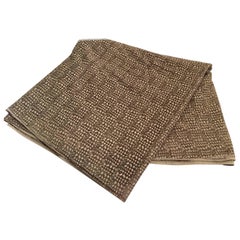
Handwoven Bogolan mud cloth textile from Mali, Africa, Bambara.
It is a handwoven tribal cotton fabric traditionally dyed with fermented mud.
Woven Afr...
Category
20th Century Folk Art Sub-Saharan African Textiles
Materials
Cotton
African Kuba Textile Panel for Wall or Table or Backrest Covering
Located in Alessandria, Piemonte
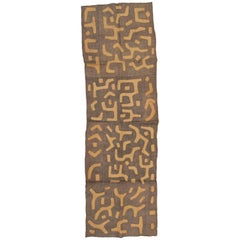
Vintage Handwoven and hand died raffia panel - Suitable for wall decoration over a bed or leaning on a long table
B/ 1658-1.
Category
1930s Tribal Vintage Sub-Saharan African Textiles
Materials
Raffia
African Textile Kuba, suitable for table or Wall Hanging or Backrest Covering
By Kuba
Located in Alessandria, Piemonte
B/1676. Old African textile from Kuba, Zaire: with small shells as ornament.
An IDEA: use this item as backrest covering of a sofa !
Category
Mid-20th Century Folk Art Sub-Saharan African Textiles
Materials
Cotton, Raffia

African Textile Panel with Shells
Located in Alessandria, Piemonte
Old African textile panel with shells,: You can mount on a panel for wall, or place on table, or mount as lampshade. Its colors are sunny. It's wonderful for a sea-house !
B/1677-1
Category
Mid-20th Century Modern Sub-Saharan African Textiles
Materials
Raffia
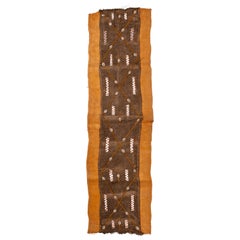
African Textile by Kuba, Zaire - for Backrest Cover
Located in Alessandria, Piemonte
B/874/1 - Vintage African Kuba textile, suitable for Wall hanging or table -
An IDEA: use this item as backrest covering of a sofa !
Category
Mid-20th Century Folk Art Sub-Saharan African Textiles
Materials
Raffia, Cotton
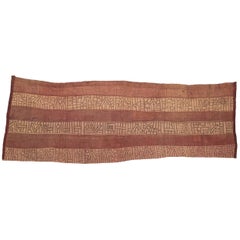
Related Items
Central Asian Embroidered Textile, “Suzani”, Mid 20th Century
Located in Jimbaran, Bali
This textile is a “Suzani” from Central Asian nomadic peoples primarily from Kazakhstan, Tajikistan and Uzbekistan. Suzanis are embroidered textiles composed of mainly Cotton. They a...
Category
Mid-20th Century Other Sub-Saharan African Textiles
Materials
Cotton
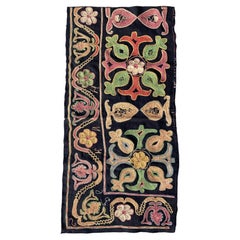

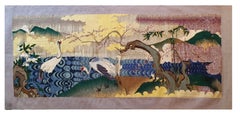
Framed Antique Japanese Silk Embroidery Fukusa Textile Panel
Located in Atlanta, GA
A Japanese Fukusa Panel with tassels displayed in a gilt frame circa Meiji Period. Fukusa is a traditional Japanese textile art used as a...
Category
Late 19th Century Meiji Antique Sub-Saharan African Textiles
Materials
Silk, Wood

Hand-Drawn Batik Textile, from Java Indonesia
Located in Jimbaran, Bali
A fine example of a batik textile from Solo, Java, Indonesia. This textile features wonderful detailing & contrast. It features a wonderful array of flor...
Category
Early 2000s Other Sub-Saharan African Textiles
Materials
Cotton
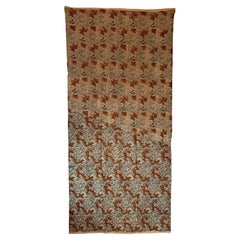
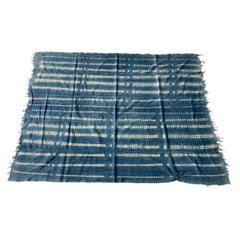
Antique Indigo Mali Textile
Located in New York, NY
African Mali indigo textile circa 1950. Handwoven, vegetable dyed cotton. We only select the best.
This soft textile was sourced in the spirit of Wabi-Sabi, a Japanese philosophy th...
Category
Mid-20th Century Tribal Sub-Saharan African Textiles
Materials
Cotton
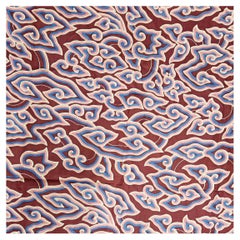
Vintage Hand Painted Oriental Cloud Batik Indonesian Textiles Interior Design
Located in London, GB
Fine Hand printed Oriental cloud batik
A Indonesian Cirebon batik hand printed in a traditional Chinese cloud style with graduated blue and red
Perfect...
Category
Mid-20th Century Sub-Saharan African Textiles
Materials
Cotton
$268
H 82.68 in W 37.8 in D 0.4 in
Tapestry of the 20th Century - N° 766
By Royal Manufacture of Aubusson
Located in Paris, FR
Modern tapestry of the 20th century in perfect condition of conservation.
Negotiable price and free delivery.
Dimension: 150 cm x 78 cm.
Category
1970s Mid-Century Modern Vintage Sub-Saharan African Textiles
Materials
Wool
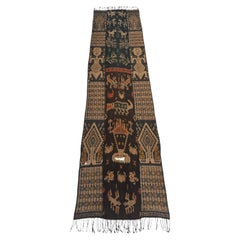
Ikat Textile from Sumba Island Stunning Tribal Motifs, Indonesia
Located in Jimbaran, Bali
This exquisite ikat textile from Sumba Island, Indonesia, is a handwoven treasure that speaks to centuries of tradition, artistry, and cultural...
Category
1950s Other Vintage Sub-Saharan African Textiles
Materials
Yarn
$2,200
H 99.22 in W 23.23 in D 0.02 in
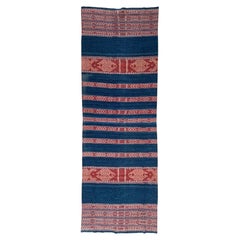
Ikat Textile from Timor with Naturally Coloured Dye
Tribal Motifs, Indonesia
Located in Jimbaran, Bali
This Ikat textile originates from the Island of Timor, Indonesia. It is hand-woven using naturally dyed yarns via a method passed on through generations. The blue foreground brings t...
Category
Mid-20th Century Other Sub-Saharan African Textiles
Materials
Yarn
$1,250
H 63.78 in W 21.26 in D 0.02 in
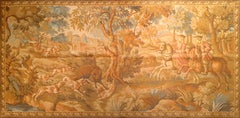
797 - Tapestry of the 20th Century
By Aubusson Manufacture
Located in Paris, FR
Mechanical Tapestry of the 20th century in perfect condition of conservation.
Negotiable price and free delivery.
Dimension: 150 x 7...
Category
1970s Art Deco Vintage Sub-Saharan African Textiles
Materials
Wool
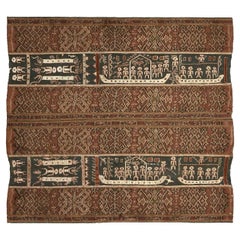
Ikat and Embroidery Textile Panel from Sumatra Indonesia
Located in Atlanta, GA
An Indonesia textile panel professionally presented on a linen canvas. It can be taken off from the canvas for easy and economical shipping upon req...
Category
20th Century Tribal Sub-Saharan African Textiles
Materials
Cotton
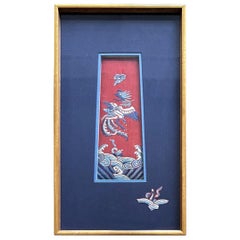
Framed Antique Embroidery Chinese Textile Qing Dynasty Provenance
Located in Atlanta, GA
A piece of beautiful antique textile fragments from China, circa 19th century Qing dynasty, artistically displayed in a giltwood frame with co...
Category
Early 19th Century Chinese Export Antique Sub-Saharan African Textiles
Materials
Silk, Giltwood
Ikat Textile from Sumba Island Stunning Tribal Motifs, Indonesia
Located in Jimbaran, Bali
This Ikat textile originates from the Island of Sumba, Indonesia. It is hand-woven using naturally dyed yarns via a method passed on through generations. It features a stunning array...
Category
1950s Other Vintage Sub-Saharan African Textiles
Materials
Yarn
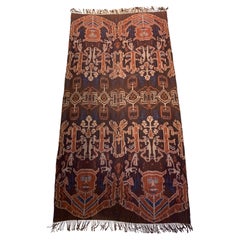
$1,480
H 87.41 in W 38.59 in D 0.02 in
Previously Available Items
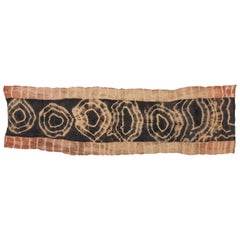
Vintage African Kuba Textile Panel for Wall or Table
Located in Alessandria, Piemonte
Unusual vintage African Kuba textile, suitable for a modern wall panel, a long table or to make pillows -
B/1660.
Category
1950s Folk Art Vintage Sub-Saharan African Textiles
Materials
Raffia
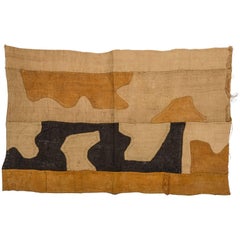
African Textile Kuba Zaire, Suitable for Table, Pillow or Wall Hanging
Located in Alessandria, Piemonte
B/1702, vintage Kuba textile, from Zaire.
Ideal for pillows or wall panel.
Category
Mid-20th Century Folk Art Sub-Saharan African Textiles
Materials
Raffia
H 33.47 in W 20.87 in L 33.47 in
Still Thinking About These?
All Recently ViewedMore Ways To Browse
Lame Furniture
Bamboo Mat
Chinese Kesi
Kesi Silk Chinese
Antique Chinese Silk Robes
Ikat Timor
Japanese Fukusa Textile Art
Japanese Sashiko
Moorish Shoes
Vintage Japanese Wedding Kimono
Baby Carrier
Chinese Embroidered Collar
Kimono Meiji
Moroccan Robe
Moroccan Slippers
Qing Dynasty Clothing
Antique Chinese Embroidered Panels
Japanese Silk Embroidered Birds Framed