Items Similar to Large Antique Stoneware Keystone Attributed to Blanchard
Want more images or videos?
Request additional images or videos from the seller
1 of 9
Large Antique Stoneware Keystone Attributed to Blanchard
$12,989.52
£9,475
€11,135.56
CA$17,992.27
A$19,278.43
CHF 10,341.53
MX$228,355.72
NOK 130,452.60
SEK 119,343.95
DKK 83,184.03
About the Item
A very large and unusual antique stoneware keystone attributed to Blanchard (unsigned), circa 1865.
This huge keystone stands at 3ft tall and is detailed with the mask of a heavily bearded male. With imposing, deep-set eyes, a pronounced nose and bushy eyebrows, the mask has an air of influence and greatness, the horns to the head and foliage headdress reminiscent of a mythical deity of Greek or Roman legend.
Though unsigned other than a roughly marked ‘M’ to the very top, we are attributing this to the 19th century English terracotta manufacturer, Mark Henry Blanchard, for several reasons.
Other than the colour and style appearing typical of Blanchard works, various examples of this keystone can be found in the architecture of Horniman Circle, Mumbai, India. These can be seen in a photo taken between 1850 and 1870 by Francis Frith of the Circle in Bombay that forms part of the V&A collections.
Formerly known as Bombay Green in the 18th century and later Elphinstone Circle until 1968, Horniman Circle and its gardens were designed by the British in the late 1860s and completed in 1870 during British colonial rule. Reminiscent of Bath’s Royal Crescent, the buildings were designed by James Scott, Chief Engineer of the Elphinstone Land Co, and reflect the Victorian Gothic and neoclassical architectural styles that were favoured by the British during the mid 19th century.
At this time, there is evidence to show that various wares from reputable British makers including Minton, Maw
Co and Blashfield were exported to India for architectural installations.
A historical record (pictured) by Lynn Pearson from The Tiles
Architectural Ceramics Society (TACS) details decorative tile and terracotta exports by British manufacturers during the 19th century. It states:
“Terracotta was also popular in Bombay in the 1860s, when a lavish scheme of terracotta decoration was carried out in the city’s Victoria Gardens; this included the Sassoon Clock Tower, which incorporated Minton tiles but was made from terracotta supplied by John Blashfield’s Stamford works in Lincolnshire. The London terracotta manufacturer Mark Henry Blanchard had been involved slightly earlier, supplying wares in 1865 for the Horniman Circle, a prestigious development in the centre of Bombay.”
For this reason, we are confidently attributing this keystone to Blanchard.
Additional Dimensions
Width at base: 25 cm (9.84 in)
Width at top: 53.5 cm (21.06 in)
- Attributed to:Blanchard (Maker)
- Dimensions:Height: 36.23 in (92 cm)Width: 21.07 in (53.5 cm)Depth: 13 in (33 cm)
- Style:Georgian (In the Style Of)
- Materials and Techniques:
- Place of Origin:
- Period:
- Date of Manufacture:1865
- Condition:Good structural condition. Minor chips and weathering to outside edges. Details of the mask are in excellent condition for its age and purpose. Originally would have been set approximately 16cm into a wall.
- Seller Location:Wormelow, GB
- Reference Number:Seller: 9359351stDibs: LU2096342303392
About the Seller
4.9
Platinum Seller
Premium sellers with a 4.7+ rating and 24-hour response times
Established in 2006
1stDibs seller since 2016
791 sales on 1stDibs
Typical response time: 5 hours
- ShippingRetrieving quote...Shipping from: Wormelow, United Kingdom
- Return Policy
More From This Seller
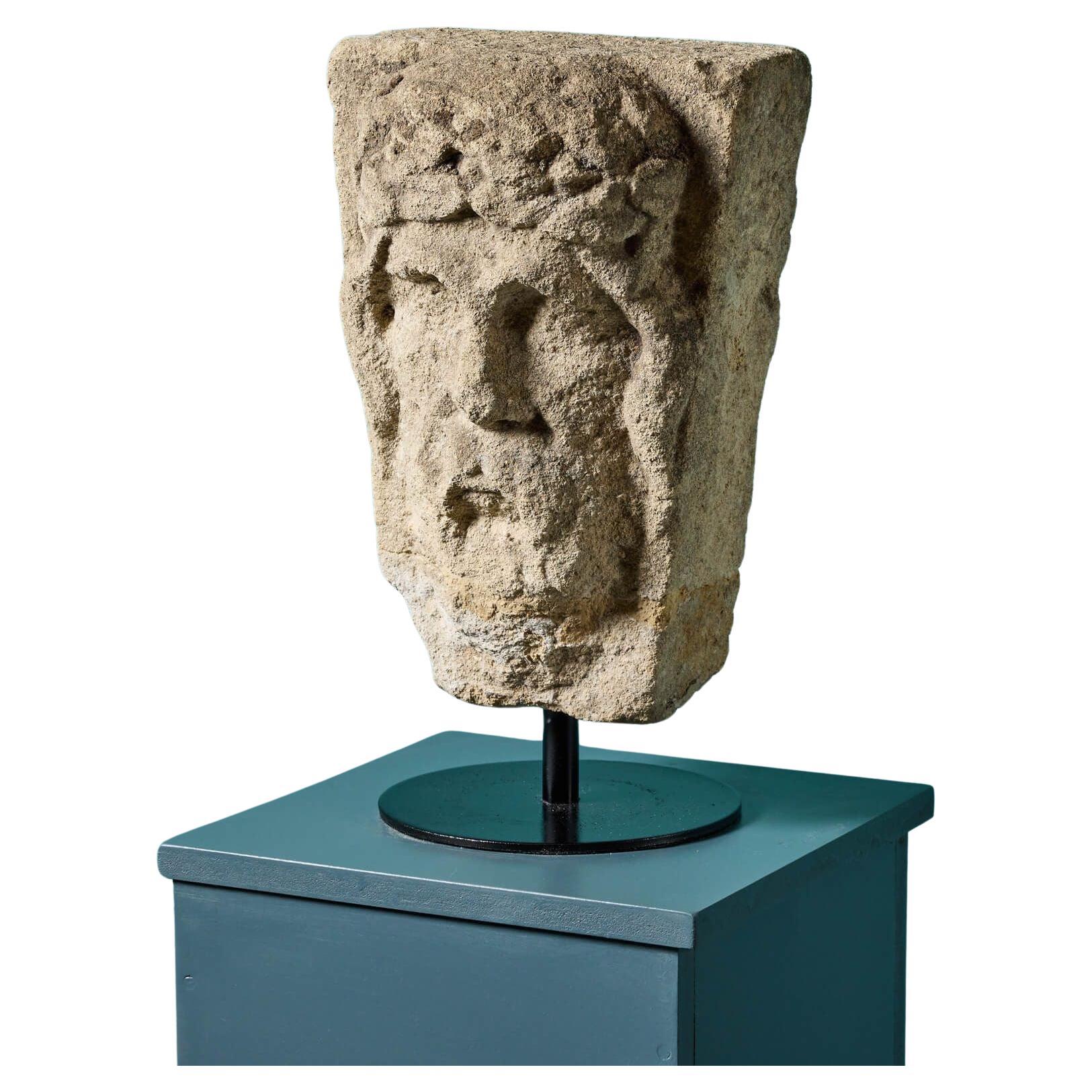
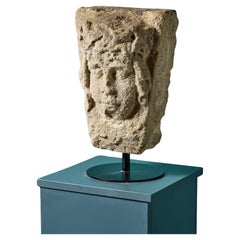
View AllAntique Limestone Keystone of an English King
Located in Wormelow, Herefordshire
An antique carved limestone keystones of an English king, salvaged from a period building in East Anglia.
Displayed on a modern steel stand in a sleek black finish, this keystone is...
Category
Antique Mid-18th Century English Georgian Mounted Objects
Materials
Stone, Limestone, Steel
Scottish Buff Terracotta Antique Planter
Located in Wormelow, Herefordshire
A handsome buff terracotta antique planter originating from Scotland. This 150-year-old antique terracotta pot dates from the mid 19th century....
Category
Antique Mid-19th Century Scottish Victorian Urns
Materials
Terracotta
Antique Carved Limestone Keystone of a Queen
Located in Wormelow, Herefordshire
An antique carved limestone keystones of a Queen, salvaged from a period building in East Anglia.
Displayed on a modern steel stand in a sleek black finish, this keystone is an impr...
Category
Antique Mid-18th Century English Georgian Mounted Objects
Materials
Stone, Limestone, Steel
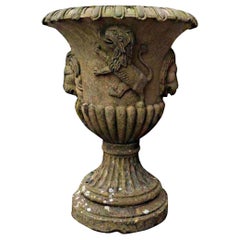
Antique English Carved Yorkstone Urn
Located in Wormelow, Herefordshire
An early 19th century antique English carved Yorkstone urn, hand-carved with rampant lions, lion masks and gadrooning on a fluted socle base. Th...
Category
Antique Early 19th Century English Georgian Urns
Materials
Stone, Sandstone
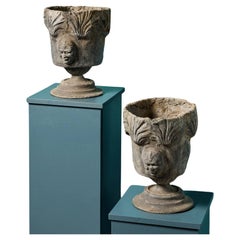
Pair of Antique Georgian Style Garden Planters
Located in Wormelow, Herefordshire
Two antique Georgian style garden urns or planters made from cast lead circa 1800. These unusual antique urns are of a matching design, each decorated with masks to the front and sta...
Category
Antique Early 19th Century English Georgian Planters and Jardinieres
Materials
Lead, Metal
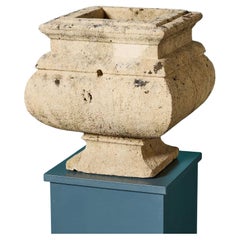
Antique Regency Style Cotswold Limestone Planter
Located in Wormelow, Herefordshire
Originating from the mid 19th century, this antique regency style Cotswold limestone planter is an elegant addition to any garden with its beautiful curves and natural stone colour.
...
Category
Antique Mid-19th Century English Georgian Planters and Jardinieres
Materials
Stone, Limestone
You May Also Like
Monumental English Edwardian Portland Stone Keystone
Located in London, GB
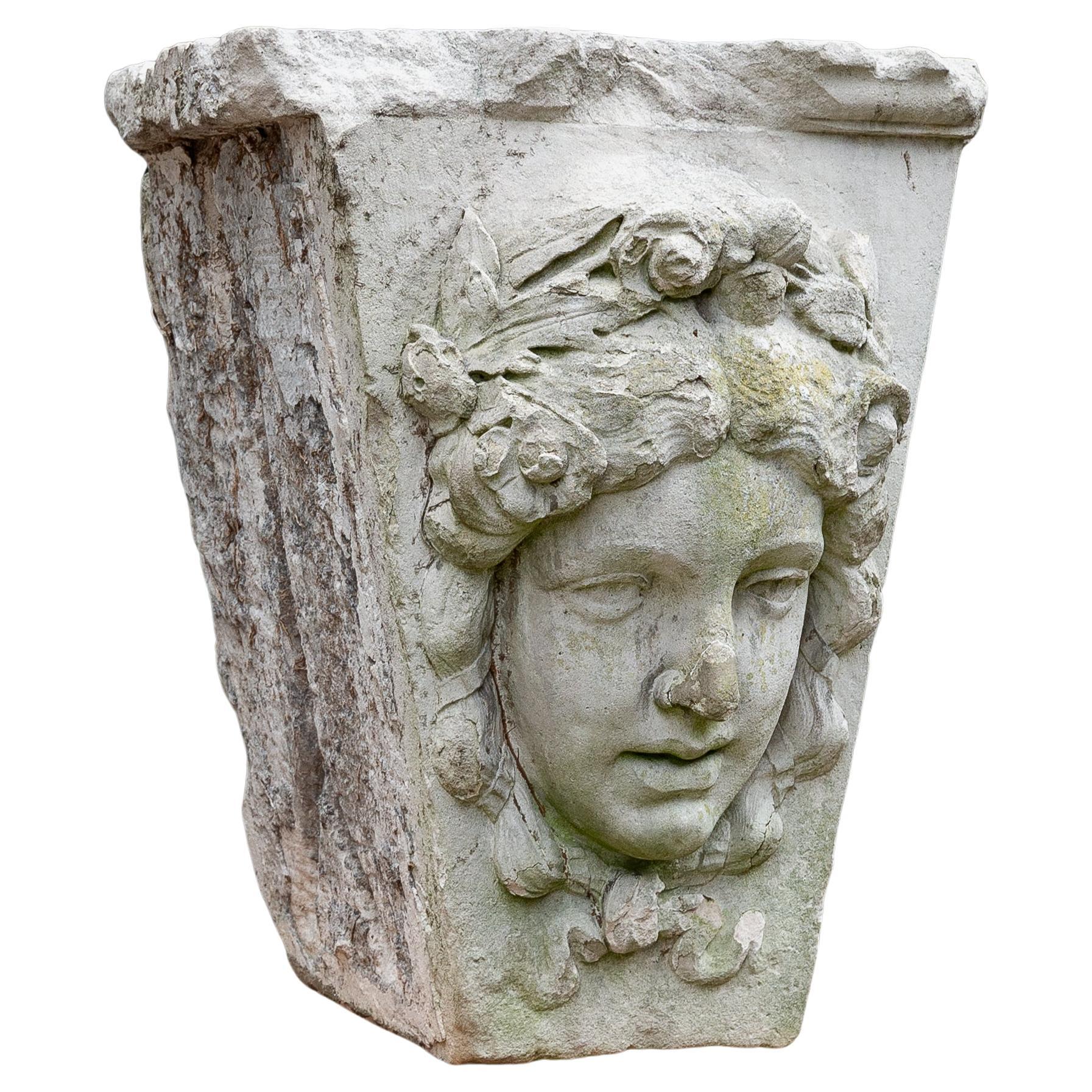
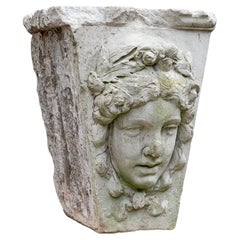
An enormous, English carved Portland Stone keystone, Edwardian c.1905, with a female mask to the front.
Of astonishing and imposing scale, wear as expected, repaired nose.
Category
Early 20th Century English Classical Roman Architectural Elements
Materials
Limestone
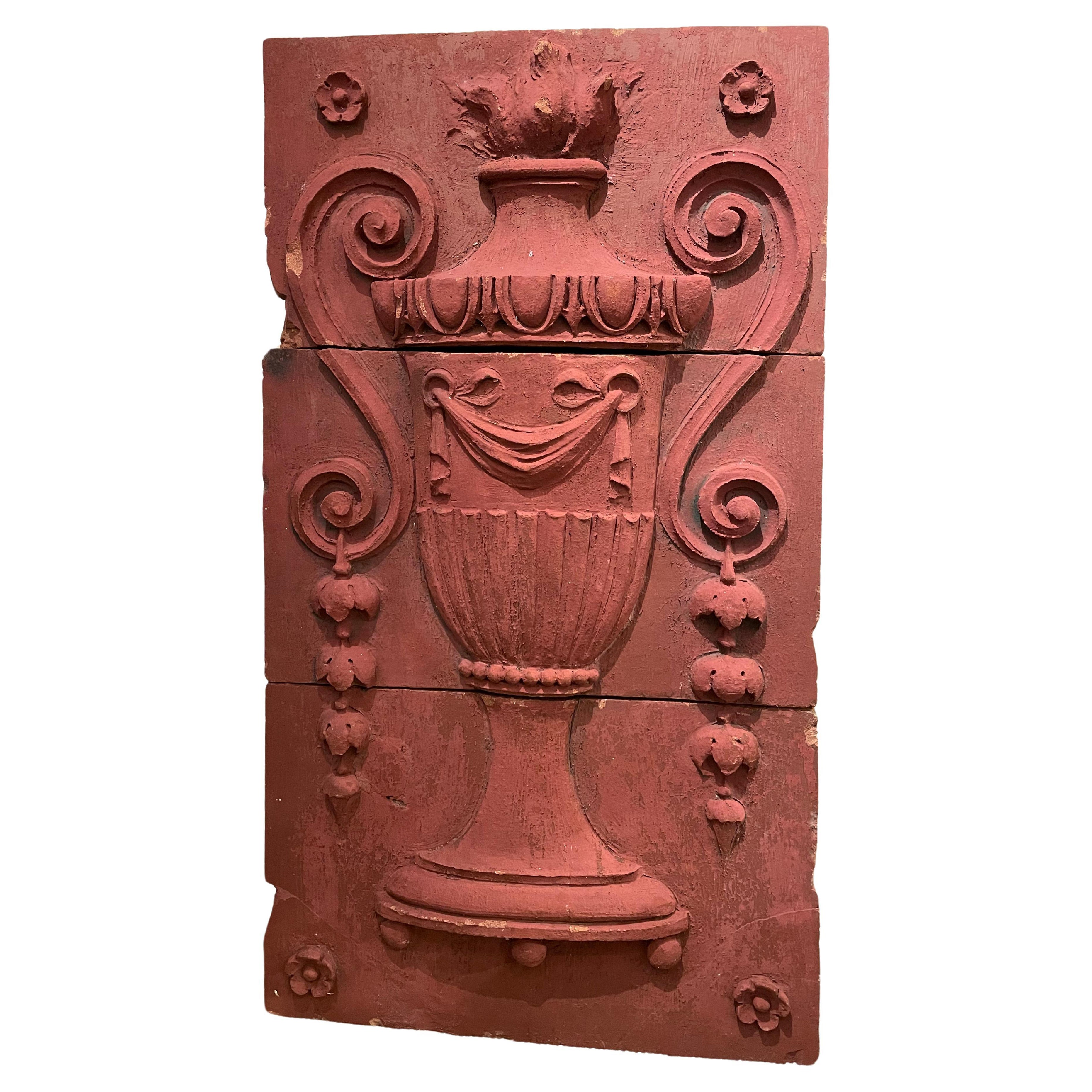
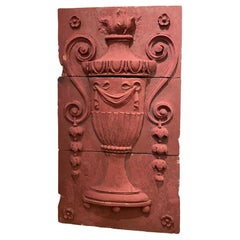
19th Century Neoclassical Terracotta Urn Architectural Relief, Large Scale
Located in Stamford, CT
19th century terracotta architectural decorative relief of a neoclassical style flaming two handled urn retaining the original red paint. The beautifully realized large scale classical urn shown in deep relief with arabesque handles with bell flowers hanging, egg and dart border, swag drapery tied...
Category
Antique Late 19th Century American Neoclassical Architectural Elements
Materials
Terracotta, Paint
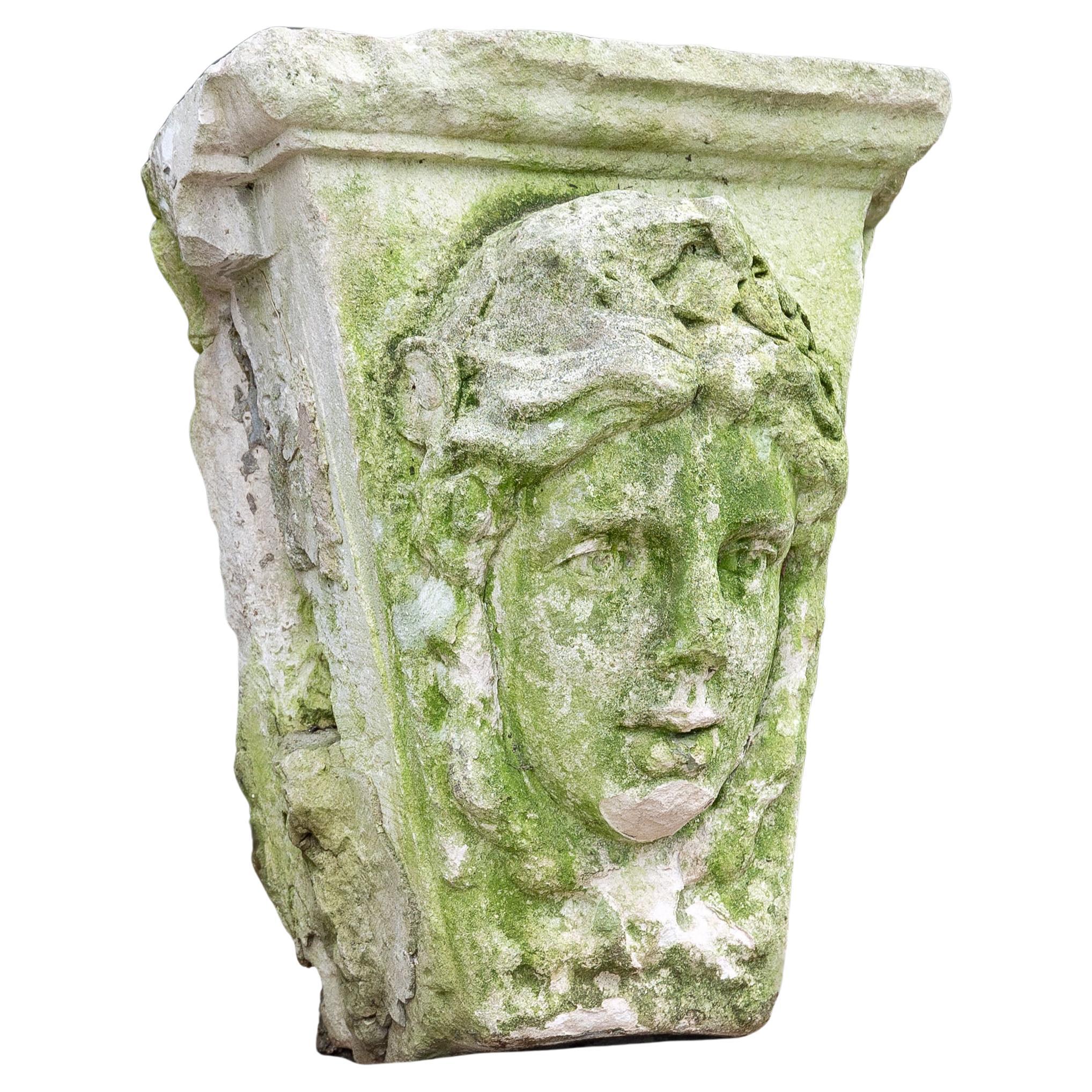
Eighteenth Century Carved Portland Stone Keystone
Located in London, GB
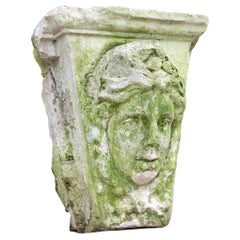
A large carved Portland stone keystone, likely eighteenth century, the tapered form with female mask carved to the front face.
Category
Antique Late 18th Century British Classical Roman Architectural Elements
Materials
Limestone
XL 17th Century Terra Cotta Jardinière
Located in Brecht, BE
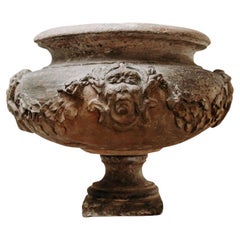
One of the best I have come across in almost 30 years of being in this business,
Weathered grotesk figures on the terra cotta jardinière, foun...
Category
Antique Late 17th Century Italian Planters and Jardinieres
Materials
Terracotta
French Classical Revival Limestone Planter, Finely Carved Limestone Jardiniere
By Jean-Baptiste Carpeaux
Located in Miami, FL
French Classical Revival Limestone Planter Signed Perriard, Signed and dated,
Finely Carved French Limestone Jardiniere,
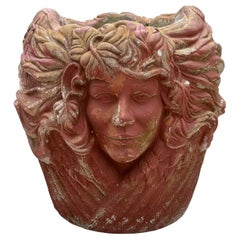
Roman or Greek Mythological Style Head Limestone Planter
A striking French Classical Revival planter or jardinière sculpted in the form of a mythological female head. Beautifully cast in reconstituted limestone with flowing hair adorned with vine leaves, this sculptural vessel evokes ancient Roman and Greek deities—particularly figures such as Daphne or Medusa, symbolizing transformation and nature.
The piece bears a richly aged natural mineral patina from outdoor exposure, enhancing its authenticity and texture. Its craftsmanship reflects the French sculptural tradition of the late 20th century, when artists revived neoclassical forms for elegant garden and architectural décor.
Perfect as a statement garden urn, decorative indoor planter, or sculptural accent, it combines fine-art presence with functional charm. This signed French Classical Revival garden urn, mythological head planter, Medusa head urn, reconstituted stone jardiniere, French neoclassical bust...
Category
Mid-20th Century French Neoclassical Revival Planters and Jardinieres
Materials
Limestone
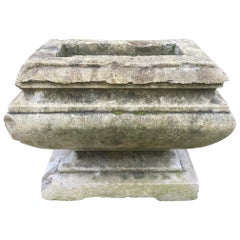
17th C. Hand Carved Stone Planter Jardinière Decorative Antiques Center Piece LA
Located in West Hollywood, CA
17th C. Hand Carved Stone Planter Jardinière Decorative Antiques Center Piece LA . Beautiful Circa late 1600’s carved limestone Vasque jardi...
Category
Antique 17th Century French Planters and Jardinieres
Materials
Stone, Limestone
$7,040 Sale Price
20% Off
More Ways To Browse
Bombay Antique
Antique Keystone
Minton Tile
Minton Antique Tiles
Antique Tower Clock
Antique India Exports
18th Century English Tall Clock
Roman Capital
18th Century Corbels
Antique Corbels And Brackets
Architectural Appliques
Architectural Wood Pediment
Coat Of Arms Stone
Deco Architectural Panel
Iron Window Guard
Jean Prouve Panel
Limestone Capital
Plaster Capital