Items Similar to Carved limestone garden seat in Mesoamerican style
Want more images or videos?
Request additional images or videos from the seller
1 of 9
Carved limestone garden seat in Mesoamerican style
$10,639.23
£7,918.72
€8,950
CA$14,755.54
A$15,885.69
CHF 8,507.09
MX$191,416.87
NOK 107,335.96
SEK 98,229.73
DKK 68,215.54
About the Item
Unique early 20th-century garden seat, crafted from carved limestone in the style of Mesoamerican art. The design is inspired by traditional Chacmool figures, giving it a distinctive and historical appearance.
Thanks to its sculptural form and substantial size, this garden seat makes a striking addition to a garden, terrace, or interior with an artistic or eclectic style. An authentic example of early 20th-century Mesoamerican-inspired stone carving.
Dimensions:
Height: 88 cm
Width: 116.5 cm
Depth: 62 cm
BT-74
- Dimensions:Height: 34.65 in (88 cm)Width: 45.87 in (116.5 cm)Depth: 24.41 in (62 cm)
- Materials and Techniques:
- Place of Origin:
- Period:
- Date of Manufacture:early 20th Century
- Condition:Wear consistent with age and use.
- Seller Location:Baambrugge, NL
- Reference Number:Seller: BT-741stDibs: LU933346905212
About the Seller
5.0
Gold Seller
Premium sellers maintaining a 4.3+ rating and 24-hour response times
Established in 1967
1stDibs seller since 2012
143 sales on 1stDibs
Typical response time: 11 hours
- ShippingRetrieving quote...Shipping from: Baambrugge, Netherlands
- Return Policy
More From This Seller
View AllPair of Antique Italian Carved Wooden Pedestals
Located in Baambrugge, NL
Pair of antique carved wooden pedestals.Italian column parts made into plinths. Beautifully carved wooden details with grape vines. Old patina in soft color tones such as cream, pink...
Category
Antique 18th Century Italian Pedestals and Columns
Materials
Wood
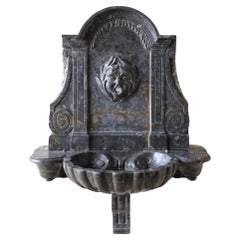
Large Hand-hewn St. Cyr Marble Wall Fountain from the 18th Century
Located in Baambrugge, NL
Exquisite, rare, hand-hewn St. Cyr marble wall fountain from the 18th century. This remarkable piece features a spout intricately crafted in the shape of a river god, cascading water...
Category
Antique 18th Century French Fountains
Materials
Marble
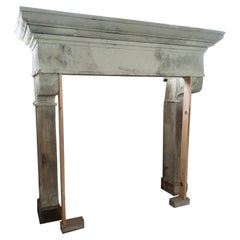
Antique Italian Limestone Fireplace from the 19th Century
Located in Baambrugge, NL
An Antique Italian Limestone Fireplace from the 19th century. With its substantial size, reminiscent of a castle hearth, and elegant fluted jambs, this fireplace is a striking addition to any space and brings a touch of historical charm to your home.
Specifications:
Dimensions: H 190 x W 202 x D 72 cm
Inner Dimensions: H 144 x W 142 cm
Enhance your living space with the timeless appeal of this historic fireplace...
Category
Antique 19th Century Italian Fireplaces and Mantels
Materials
Limestone, Sandstone
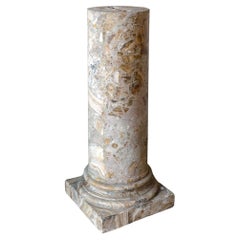
19th Century Italian Brecciated Marble Column or Pedestal
Located in Baambrugge, NL
19th Century Italian brecciated marble column or pedestal. The marble is soft yellow pink tones. The base is round with a square base.
h 116 x diameter 33 cm
base: l 46 x w 46 cm
Category
Antique 19th Century Italian Pedestals and Columns
Materials
Breccia Marble
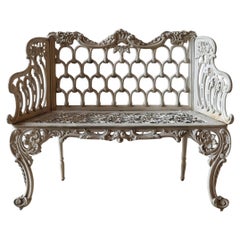
19th Century English Cast Iron
Love Seat
Garden Bench
Located in Baambrugge, NL
Authentic, compact English garden bench (love seat) made of heavy cast iron with a romantic and ornate design. This antique outdoor furniture is characterized by detailed flora and f...
Category
Antique Late 19th Century English Patio and Garden Furniture
Materials
Iron
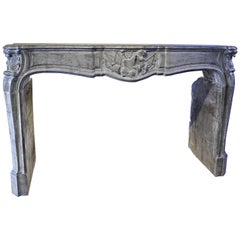
Large and Rare 18th Century French Baroque Limestone Fireplace or Mantelpiece
Located in Baambrugge, NL
A rare 18th century French Baroque polished limestone (Pierre de Bourgogne) fireplace or mantelpiece of monumental size with early "coquilles" on the corners and various heraldic att...
Category
Antique 18th Century French Baroque Fireplaces and Mantels
Materials
Limestone
You May Also Like
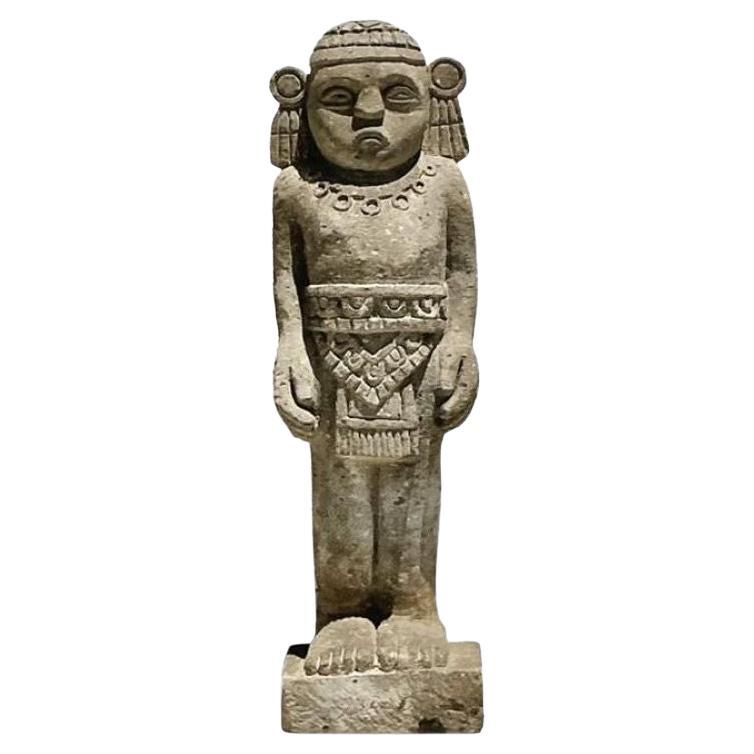
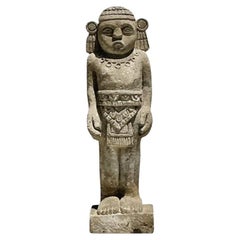
Vintage Boho Monumental Mayan Carved Stone Sculpture of Man
Located in West Palm Beach, FL
Immerse your space in the rich history and artistic power of this Vintage Boho Monumental Mayan Carved Stone Sculpture of Man. This extraordinary piece, hand-carved from substantial ...
Category
Early 20th Century Mexican Figurative Sculptures
Materials
Stone
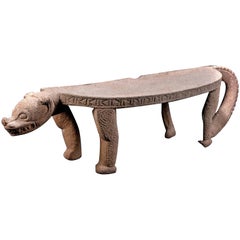
Published Pre-Columbian Nicoya Ceremonial Stone Seat, Ex Arizona Museum
Located in San Pedro Garza Garcia, Nuevo Leon
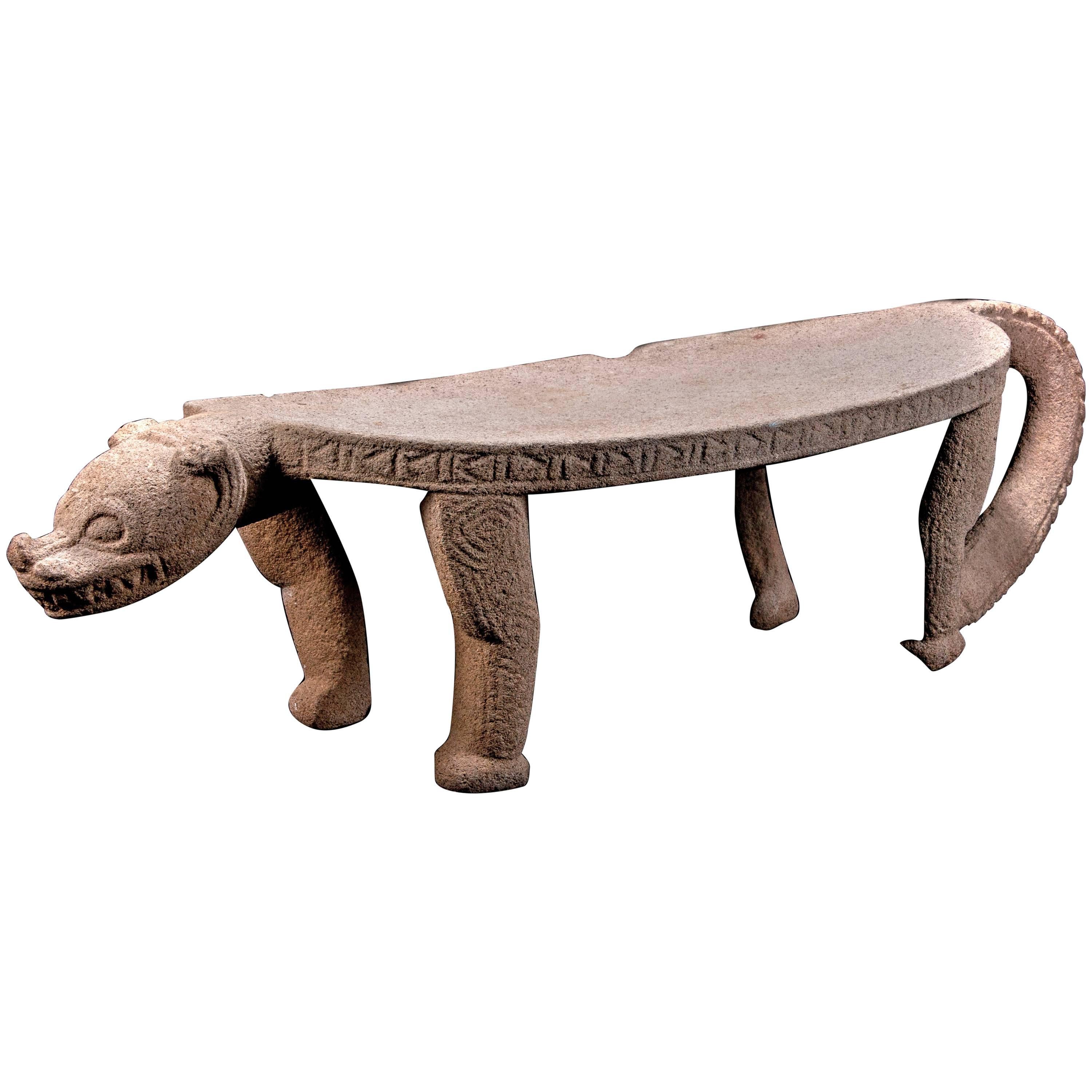
Nicoya Ceremonial Basalt Stone Seat in Shape of a Jaguar. Published in the Arizona Museum.
This large and finely carved example of Costa Rican skill and craftsmanship is in the form of a jaguar which may have been a lineage or clan symbol - as also was the crocodile - according to 16th-century Spanish conquistadors. There are so many features that make this masterpiece so unique. The most realistic depiction is the face with its head captured in a pose that is threatening and fierce.
Sculptors in ancient Central America developed elaborate metate forms that were associated with high status and wealth. They were commonly placed within graves of prominent individuals. Certain ancient rituals must have incorporated this activity and required special metates to be created for this purpose. It may have also served as a throne for the ruler, for whom the assurance of the fertility of his land and people would have been paramount.
Even today, stone metates...
Category
Antique 15th Century and Earlier Pre-Columbian Animal Sculptures
Materials
Stone
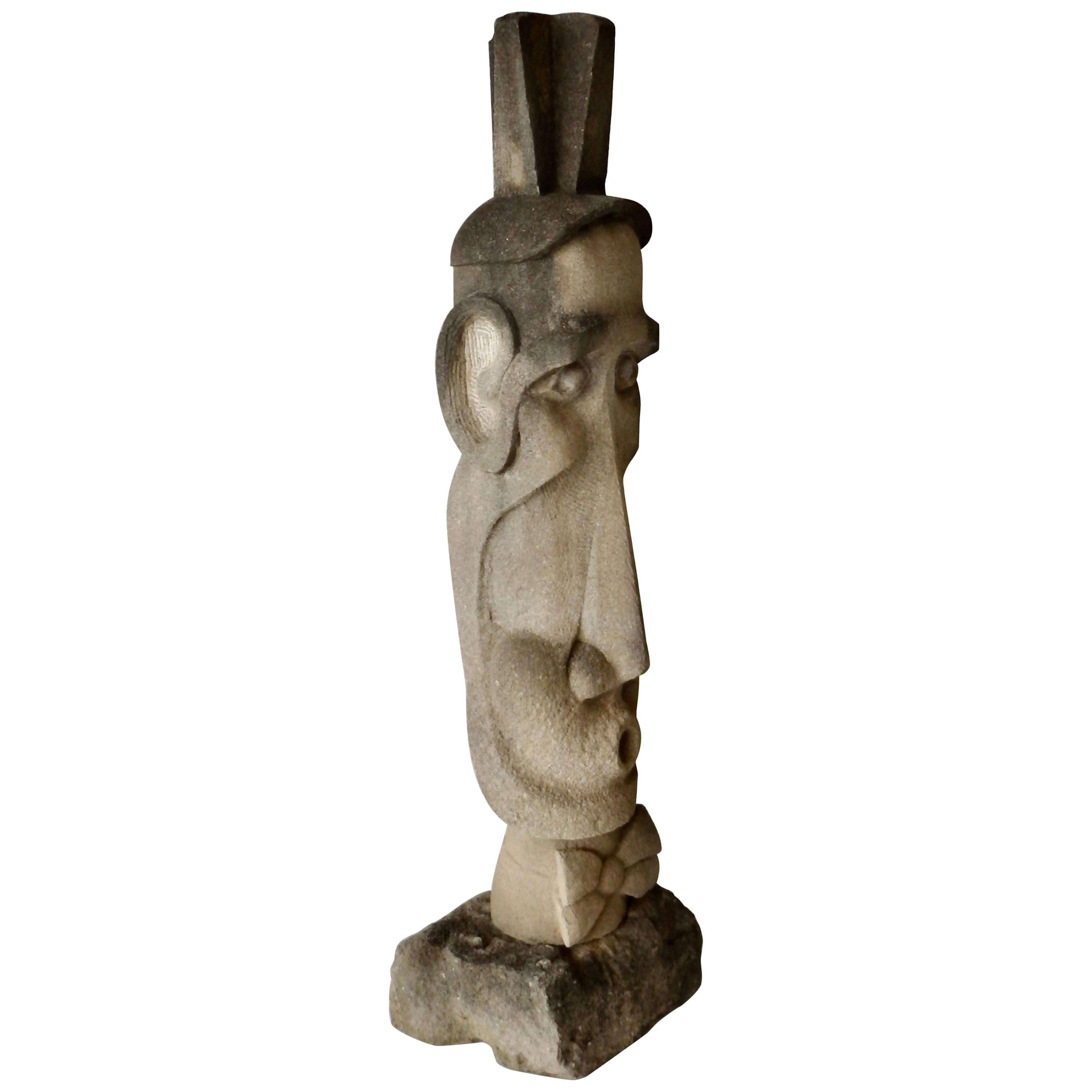
Whimsical Carved Stone Garden Lawn Sculpture
Located in Ferndale, MI
Interesting fun whimsical carved stone garden sculpture. Base measures: 12 x 9 at 6" tall.
Category
Mid-20th Century American Mid-Century Modern Figurative Sculptures
Materials
Stone
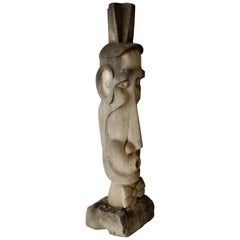
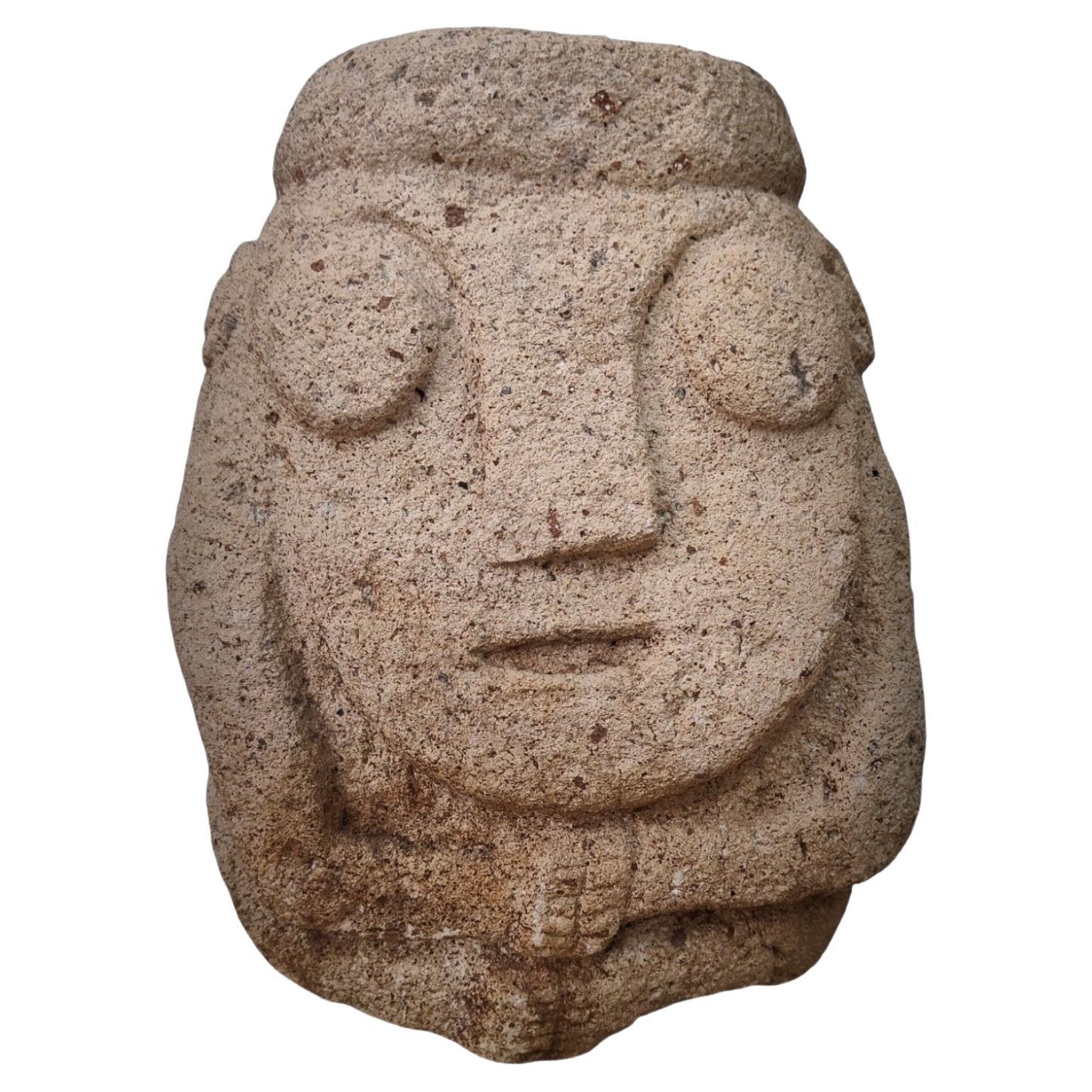
Stone Carved Anthropomorphic Sculpture From The Recuay Culture Peru 400bc-400ac
Located in Madrid, ES
ANTHROPOMORPHIC SCULPTURE CARVED IN STONE OF THE RECUAY CULTURE PERU 400BC-400AC
Recuay is an archaeological culture of Ancient Peru that developed in the Sierra of the current Peruvian department of Áncash between 200 AD. C. until 600 d. C. It corresponds to the stage called Regional Developments, it has also been called the Huaylas or Santa culture.
Like the other Early Intermediate cultures, little is known about this culture. The most accepted position is that it was an extension of the Chavin culture, after the influence of the "White on Red" style in the region. Regarding the political aspect of the recuay, there is a hypothesis that questions their autonomy and maintains that Recuay would be part of one of the many political units that made up the Moche state.
The recuay style, characterized by its ceramics and stone sculpture, was initially described by Eduard Seler in 1893, based on ceramic specimens brought to the Ethnographic Museum in Berlin by Mariano M. Macedo. Seler named this style of pottery Recuay, based on the report that these pieces had been found in the town of Recuay. Later studies showed that this characteristic pottery was not originally from Recuay but from Copa, near Carhuaz, for which reason the name change to that of this town was proposed. Eventually the name of Huaylas was used for this culture. In 1919 Julio C. Tello explored the area and recovered lithic sculptures and Recuay-type ceramics. In the 1960s Rafael Larco Hoyle proposed changing the names of Recuay and Copa to Santa, arguing that the Recuay style had originated in the coastal regions of the Santa Valley. However, the name Recuay has persisted.
Its chronology is also highly debatable. The time of its origin between 0 and 200 AD is discussed. C. and its end or collapse is commonly set to 600 d. C. probably caused by the invasion of the Huari conquerors.
It encompassed almost the entire Callejón de Huaylas, a narrow valley fed by the Santa River and enclosed between two mountain ranges, the Cordillera Blanca to the west and the Cordillera Negra to the east. Its influence extended to the east to the Marañón river basin and to the west to the upper parts of the Santa, Casma and Huarmey valleys. To the north it reached the town of Pashash, in the province of Pallasca.
The Copa area, Marca district, Recuay province, Ancash department seems to have been the center or main nucleus of cohesion of this culture. The name of the culture would then be justified, derived from the province of the same name. Other important settlements were those of Huilcahuaín (near the current city of Ancash), Cátac, Araucay, Tambo, Jancu, Upayacu and Pashash (near the current city of Cabana).
Its main form of expression of art was through stone work (carving and masonry), inherited from its predecessor, the Chavín culture. In addition, they made sculptures in lumps that represent warriors with shields or trophy heads, with which they decorated their complex architectural constructions. They also made white clay pottery...
Category
Antique 15th Century and Earlier Figurative Sculptures
Materials
Stone
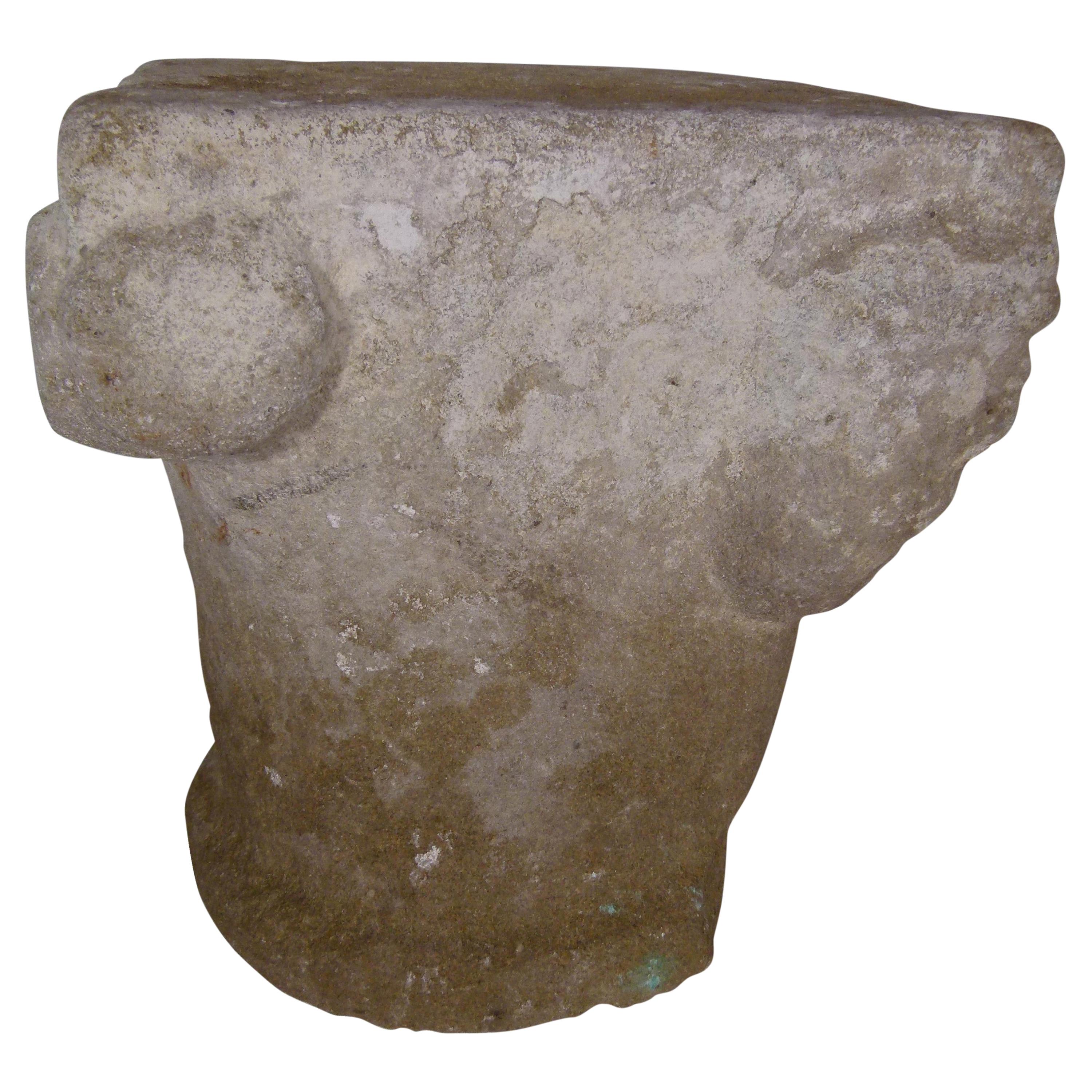
Romanesque Hand Carved Limestone Capital from Spain
Located in Vulpellac, Girona
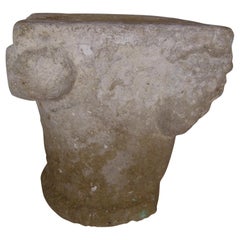
Beautiful Romanesque hand carved Capital with two faces figures - one is missing - and two round spheres.
A unique piece for your collection.
Beautiful Spanish Romanesque...
Category
Antique 15th Century and Earlier Spanish Other Architectural Elements
Materials
Limestone
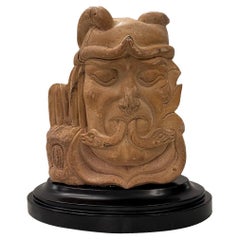
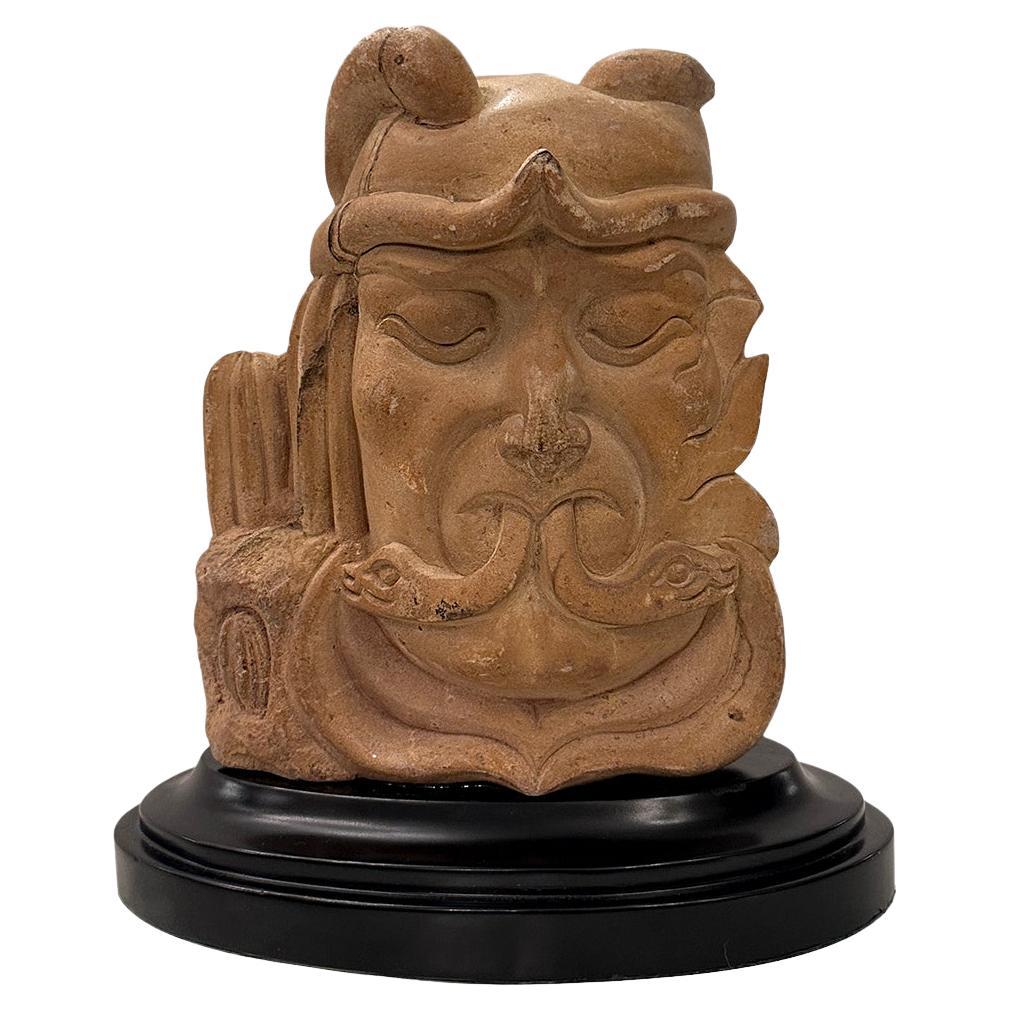
Midcentury Stone Sculpture
Located in New York, NY
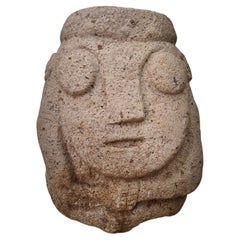
A circa 1950's Mexican stone sculpture on a wood base.
Measurements:
Height: 10"
Width: 9"
Depth: 5.75
Category
Vintage 1950s Mexican Statues
Materials
Stone