Items Similar to Large Antique Indian Hindu Temple Nandi Bull Bronze Copper Alloy Statue
Want more images or videos?
Request additional images or videos from the seller
1 of 21
Large Antique Indian Hindu Temple Nandi Bull Bronze Copper Alloy Statue
$3,500
£2,667.06
€3,075.86
CA$4,971.05
A$5,341.11
CHF 2,865.50
MX$62,924.46
About the Item
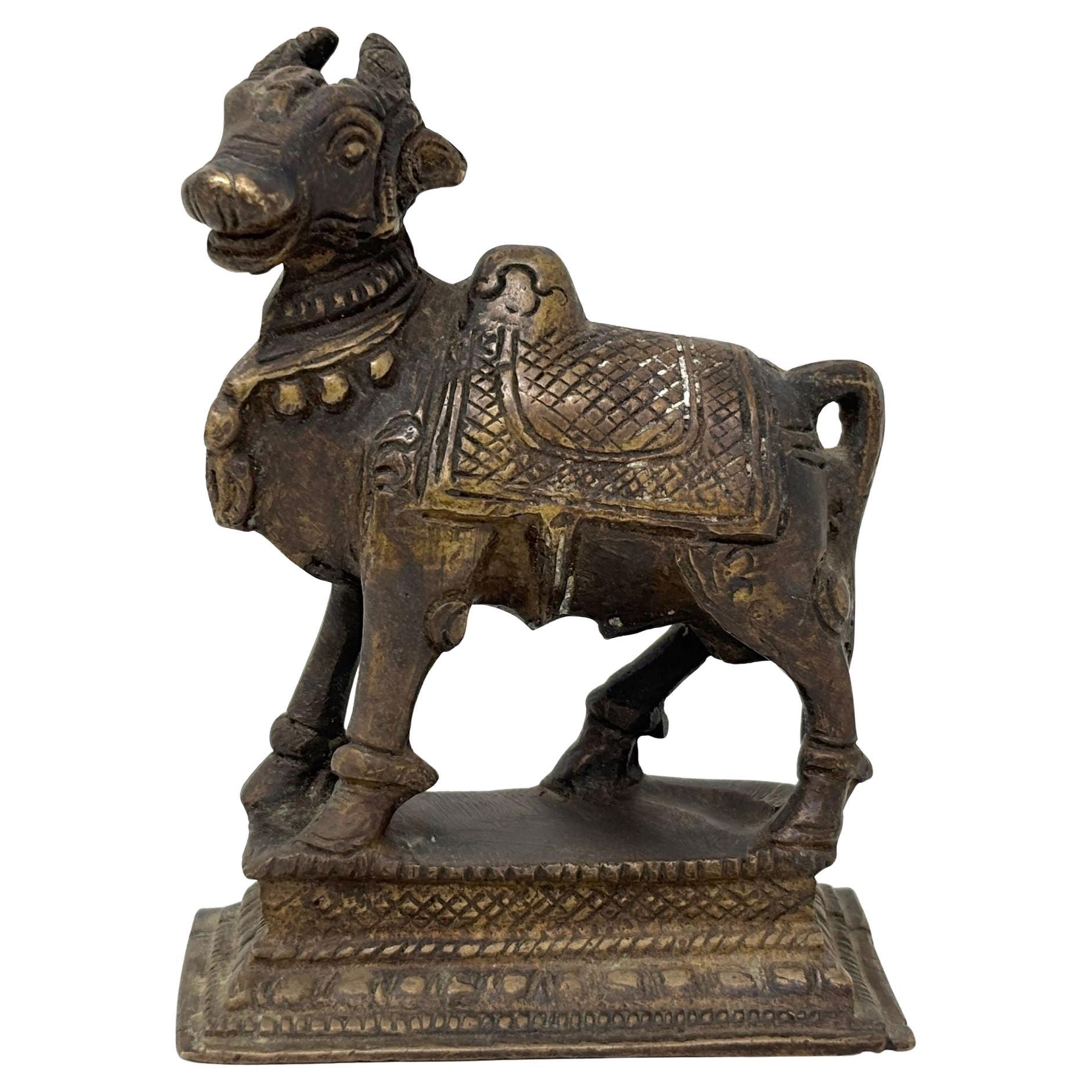
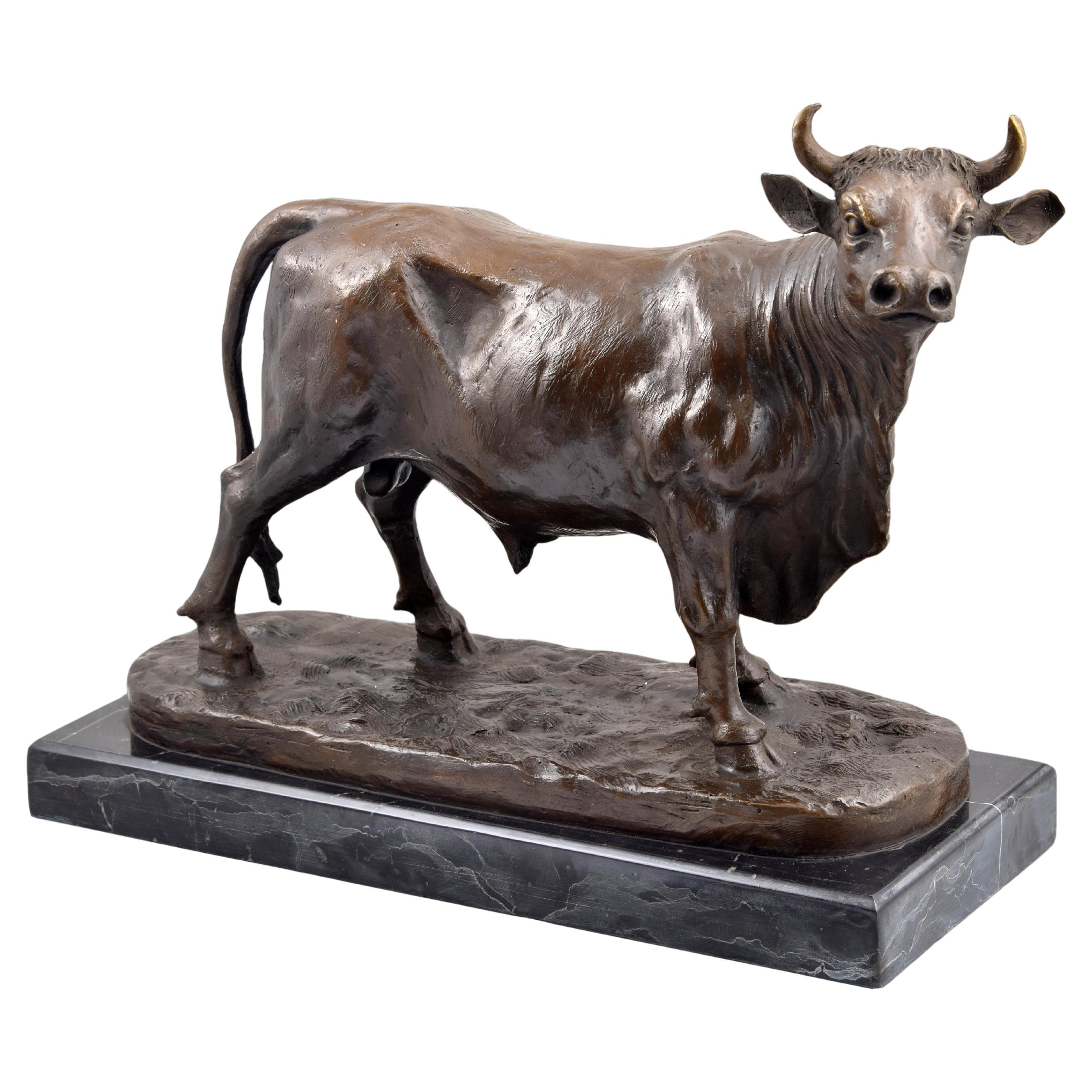
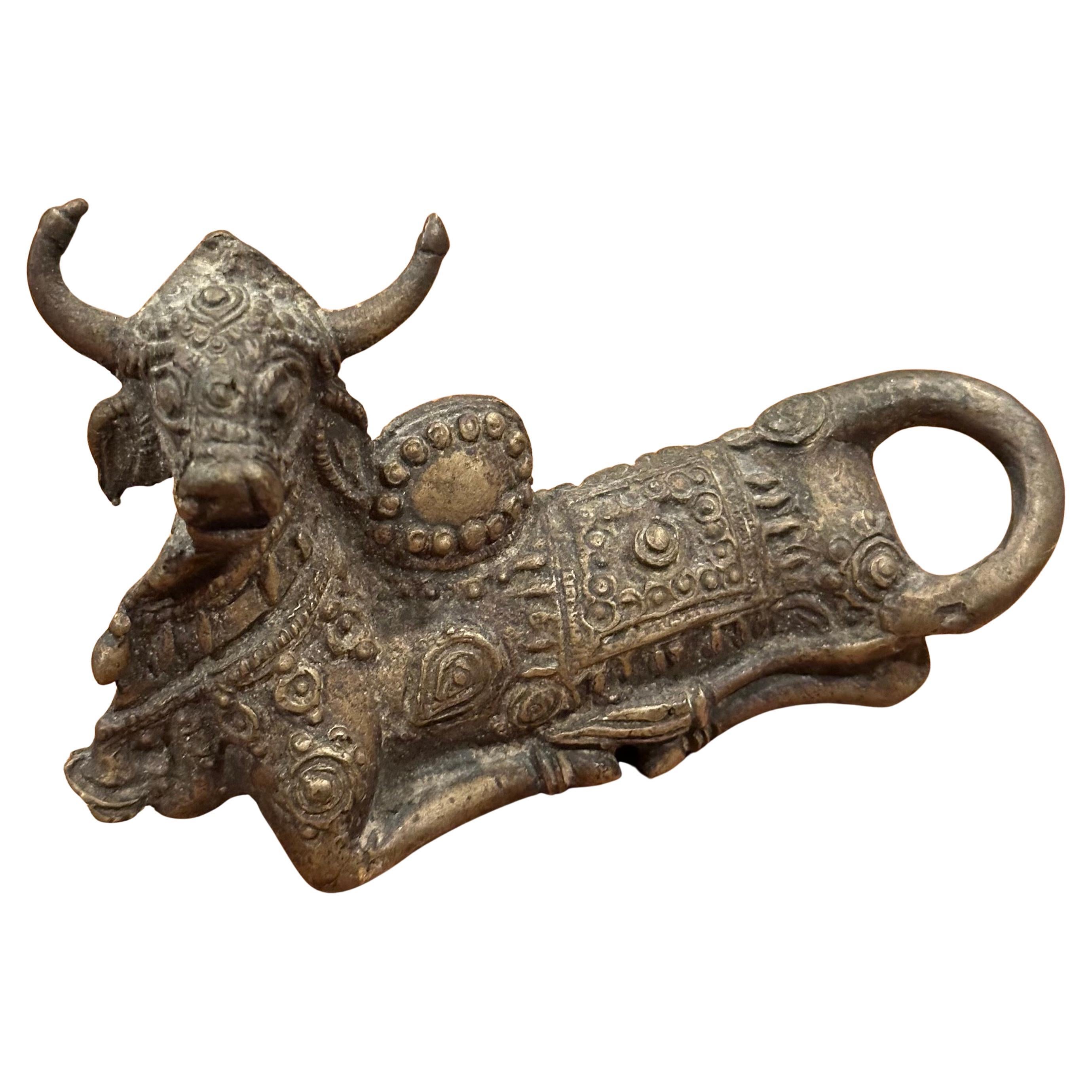
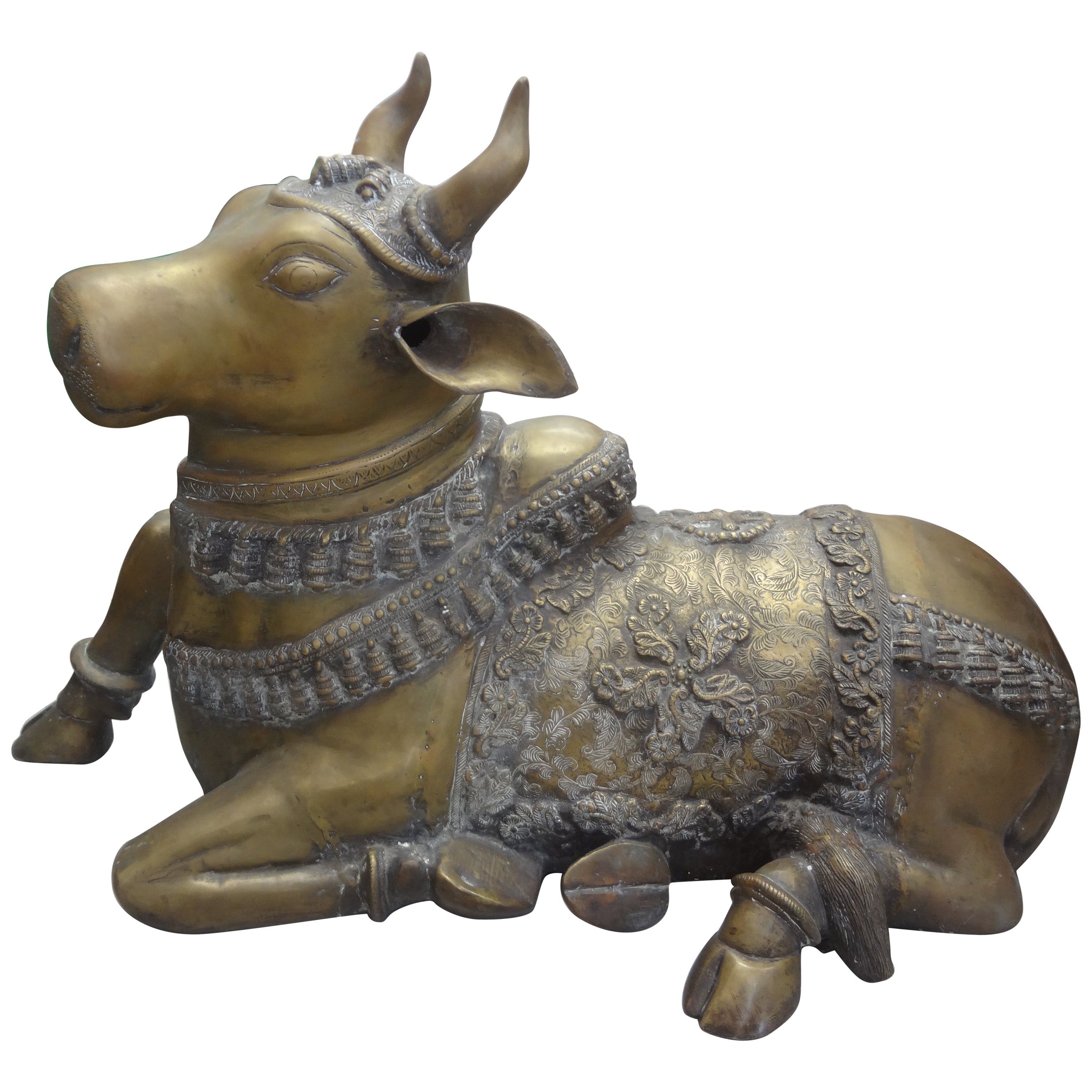
A large and most impressive antique Indian early bronze copper alloy Hindu temple vahana statue / sculpture.
India, likely Deccan region, 16th-19th century, exceptionally executed figural work depicting Nandi Bull (devine steer / mythical horned cow), a significant figure in Hinduism, vehicle (mount) of diety Lord Shiva, symbol of devotion, and an important part of Hindu culture and philosophy.
This rare high quality example, heavy, nearly solid, in stylized Brahman bull animal form, the naturalistic rendering with meticulous attention to authentic detail throughout, including proper facial features and comprehensive muscular structure, beaded jewelry decoration, natural looking horns, utter and teats, curved tail, and integral hoof feet. Attractive antique metalwork with warm alloy tonal variations, ehanced by beautifully aged worn weathered heavily patinated bronze
copper alloy accented by scattered visually striking verdigris bluish green patina.
Dimensions: (approx)
24" Tall, 29" Wide, 11" Deep
Probably 70lbs
Ideal for both indoor and outdoor use
History:
NANDI: THE DIVINE STEED AND SYMBOL OF DEVOTION
Introduction
In the rich tapestry of Hindu mythology, few figures carry the depth of symbolism and spiritual significance as Nandi, the divine bull. As the sacred mount of Lord Shiva, Nandi occupies a revered place in Hindu culture and philosophy.
In this blog post, we will delve into the multifaceted significance of Nandi, exploring the spiritual, cultural, and symbolic dimensions that make this celestial creature an indispensable part of the Hindu pantheon.
The Vahana of Lord Shiva:
Nandi's most prominent role is that of the vahana, or vehicle, of Lord Shiva, one of the principal deities in Hinduism. In this capacity, Nandi is not just a physical mount but a symbol of unwavering devotion and loyalty. The inseparable bond between Lord Shiva and Nandi signifies the importance of humility, obedience, and dedication on the spiritual path.
Symbol of Strength and Virility:
Depicted as a powerful and muscular bull, Nandi embodies strength and virility. The bull is a symbol of fertility and abundance in Hindu culture, representing the life-sustaining forces of nature. Nandi's robust form serves as a reminder of the inherent power within all living beings and the vital energy that sustains the universe.
Guardian of Shiva's Abode:
In many Shiva temples, one often encounters a prominent statue of Nandi positioned at the entrance. This is not merely decorative; it is symbolic of Nandi's role as the gatekeeper to Lord Shiva's abode. Devotees believe that Nandi safeguards the sanctity of the sacred space and acts as a spiritual protector, warding off negative energies.
A Beacon of Spiritual Discipline:
Nandi's demeanor and presence are reflective of spiritual discipline and meditation. Often depicted in a state of deep contemplation, Nandi serves as an inspiration for seekers on the spiritual path. The bull's stillness and focused gaze symbolize the importance of inner reflection and concentration as essential components of the journey toward self-realization.
Cultural and Artistic Significance:
Beyond its spiritual and religious connotations, Nandi holds immense cultural and artistic significance. Sculptors and artists across centuries have crafted intricate depictions of Nandi, showcasing the depth of Hindu artistic heritage. The various poses and expressions of Nandi in art not only tell stories from mythology but also contribute to the aesthetic richness of temples and cultural artifacts.
Nandi's demeanor and presence are reflective of spiritual discipline and meditation. Often depicted in a state of deep contemplation, Nandi serves as an inspiration for seekers on the spiritual path. The bull's stillness and focused gaze symbolize the importance of inner reflection and concentration as essential components of the journey toward self-realization.
Cultural and Artistic Significance:
Beyond its spiritual connotations, Nandi holds immense cultural and artistic significance. Sculptors and artists across centuries have crafted intricate depictions of Nandi, showcasing the depth of Hindu artistic heritage. The various poses and expressions of Nandi in art not only tell stories from mythology but also contribute to the aesthetic richness of temples and cultural artifacts.
Festivals and Celebrations:
Nandi is also celebrated in festivals like Maha Shivaratri, where devotees pay homage to Lord Shiva and his divine mount. During these festivities, the spiritual significance of Nandi is magnified, with rituals, prayers, and processions that honor the inseparable bond between the bull and the lord.
Conclusion:
In conclusion, Nandi is far more than a mythical creature or a decorative element in Hindu iconography. As the loyal steed of Lord Shiva, Nandi symbolizes profound spiritual truths, embodying qualities of devotion, strength, and discipline.
Whether gracing the entrance of a temple or adorning the altar in a devotee's home, the significance of Nandi extends beyond religious boundaries, touching the hearts and minds of those who seek inspiration on their spiritual journey.
The divine presence of Nandi serves as a timeless reminder of the enduring values that enrich the human experience.
Various Possibilities:
Ideal for both use as an interior / indoor sculpture or exterior / outside / outdoors / patio statue, monumental / slightly smaller than life-size, great in your home prayer room or as a whimsical floor standing accent, placed in your library, study or office to quickly add rich cultural interest, conversational intrigue and unique historical depth, at the entrance door / entryway similar to a Chinese foo dog or Asian guardian lion to protect your home, as a one-of-a-kind garden ornament, powerful gargoyle like architectural element, yard art, or on display at a museum, exhibition, art gallery or educational institution.
- Dimensions:Height: 29 in (73.66 cm)Width: 24 in (60.96 cm)Depth: 11 in (27.94 cm)
- Style:Folk Art (In the Style Of)
- Materials and Techniques:
- Place of Origin:
- Period:
- Date of Manufacture:16th-19th century
- Condition:Wear consistent with age and use. Minor losses. Minor fading. Great original antique condition with beautifully aged heavily weathered patina. Strong, sturdy, stable. Age appropriate scattered oxidation, scuffs, scratches, patinated worn finish, verdigris. Wear consistent w/age, use, handling, exposure.
- Seller Location:Forney, TX
- Reference Number:1stDibs: LU5977241917522
About the Seller
4.8
Platinum Seller
Premium sellers with a 4.7+ rating and 24-hour response times
Established in 2013
1stDibs seller since 2021
318 sales on 1stDibs
Typical response time: 1 hour
- ShippingRetrieving quote...Shipping from: Forney, TX
- Return Policy
More From This Seller
View All19th Century Hindu Nandi Temple Guardian, Architectural Ornament
Located in Forney, TX
A monumental Hindu Nandi temple gate-guardian architectural ornament, born in India, dating to the 19th century, hand carved and painted, richly detailed, polychrome decorated, the wooden sculpture depicting Nandi, a sacred bull, gatekeeper, and vahana religious deity figure.
Provenance:
Acquired from The Neiman Marcus Corporate Art Collection. Details below.
Dimensions: (approx)
49.5" x 43" x 12"
An important religious folk art work, the Nandi is of carved wood and gessoed cloth, then hand-painted. In Hindu religion, Nandi is the mythical mount of Shiva. The four legs represent truth, righteousness, peace and love.
More than a means of conveyance, Nandi is considered Shiva's constant companion on all his travels, so much so that in any temple dedicated to Shiva, there is a sculpture of Nandi. This symbol is a deity in its own right, and in India there are temples dedicated exclusively to Nandi.
In Hindu symbolism, the bull represents both strength and ignorance. The white or light color of the bull symbolizes purity and justice. Symbolically, the seated Nandi towards sanctum in Shiva temples, represents an individual jiva (soul) and the message that the jiva should always be focused on the Parameshwara. From the yogic perspective, Nandi is the mind dedicated to Shiva, the absolute. In other words, to understand and absorb light, the experience, and the wisdom is Nandi, which is the guru within. The fact that Shiva uses it as a mount symbolizes how this divine figure removes ignorance while instilling strength and wisdom.
A superb example, the life size work is in great overall shape, and presents wonderfully, having beautifully aged patina over the whole, highly desirable original, worn, rustic, naturally distressed, chippy paint, craquelure finish, that's delicate, and enhances the artistic antique character and rich historic depth.
Detailed Condition Report:
Fragile / delicate by design. Loss to one ear, age related checking and separation to carvings, fabric to hind quarters is released and tattered with minor loss, rubbing to paint throughout with wear indicative of age and use; later grey painted mounting blocks are attached to back and hooves.
White glove in-home shipping/delivery available.
Pickup available near Dallas, Texas
Additional Provenance:
Property from the Neiman Marcus Collection. Acquired from Heritage Auction, Design District Gallery, Dallas, Texas.
From The Dallas Morning Newspaper; April 12th, 2021
Neiman Marcus is selling some of its history and valuables that have been displayed and stored for decades as part of the luxury retailer’s corporate art collection.
The Neiman Marcus corporate art collection dates back to 1951, when Stanley Marcus (1905-2002), a life long avid art collector, purchased Mariposa, a large mobile by Alexander Calder and started a long tradition of buying original artwork for new stores as they opened. The Mariposa sold at a Sotheby’s auction last month fetching $18.2 million. The items are being offered through Sotheby's auction house, NYC, New York and Heritage Auction, Dallas, Texas.
Many of the pieces were personally collected by Stanley Marcus from the 1960s through the 1980s.
Some of the pieces are from corporate spaces, stores and the company’s archives, among the items are important antique textiles, tribal robes...
Category
Antique 19th Century Indian Folk Art Sculptures and Carvings
Materials
Gesso, Wood, Paint
Large Antique Indonesian Balinese Javanese Carved Temple Deer Figure Sculpture
Located in Forney, TX
A rare and most charming authentic old Indonesian menjangan/kidang temple deer
19th century, Bali or Java, Sunda Indonesia islands, Southeast Asia
Kn...
Category
Antique 19th Century Indonesian Folk Art Sculptures and Carvings
Materials
Wood, Antler
Large Antique East African Carved Wood
Bronze Antelope Deer Folk Art Sculpture
Located in Forney, TX
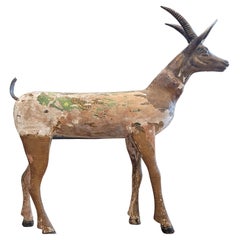
A large, rare, and most impressive antique hand carved and painted wood and metal stylized antelope African folk art sculpture with beautifully aged distressed patina.
Handmade in East Africa, dating to around the late 19th / early 20th century, possibly earlier, this scarce, one-of-a-kind, museum quality work, features a richly detailed patinated bronze head and tail with etched textural elements, tall ears and faux ringed...
Category
Antique Late 19th Century African Folk Art Sculptures and Carvings
Materials
Bronze
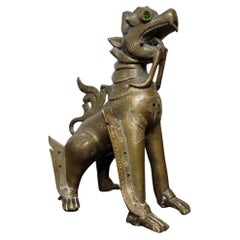
19th Century Burmese Jewel Inlaid Bronze Temple Guardian
Located in Forney, TX
A scarce, high-quality antique Burmese jewel inlaid solid bronze chinthe sculpture.
Dating to the late 19th century, likely originating in the Mandalay region of central Burma, the fearsome looking beast depicted in traditional Burmese iconography and important architecture, especially as a pair, the protective temple guardians placed flanking the entrances of Buddhist religious pagodas and monasteries.
Burma; circa 1880
PROVENANCE:
The estate of Mr. Wesley and Mrs. Suzanne LaFever, Beverly Hills, California.
ACQUISITION:
We acquired this outstanding example from the reputable auction house, Austin Auction Gallery, Austin, Texas. Fine Estates and Antiques catalog, December 2021
DESCRIPTION:
Exquisitely sculpted and cast of heavy, patinated solid bronze, finely detailed and decorated throughout, intricately engraved with scrolling ornamentation and fine detailing work, old nicely aged polished finish developing a warm, mellow patina with highly desirable scattered verdigris, minor inlay losses add to the charming antique character.
Stoic in stance, posed at attention proudly squatting back on its haunches, front legs straight, possibly roaring with head up and straight ahead, mouth ajar with teeth and long tongue exposed, ornate armor plating and horned mane, fanciful stylized tail, inset with Myanmar style brilliant colored mirrored glass jewels.
BRIEF HISTORY / BACKGROUND:
Predating the use of coins for money, brass weights cast in the shape of iconic animals like the Chinthe were commonly used to measure standard quantities of staple items.
Chinthe, the Burmese word for lion, while leograph of Chinthe is an artistic highly stylized lion; the rare Southeast Asian Burmese equivalent to Foo Dogs, Japanese Komainu, Tibetan Snow Lion...
Category
Antique Late 19th Century Asian Sculptures and Carvings
Materials
Bronze
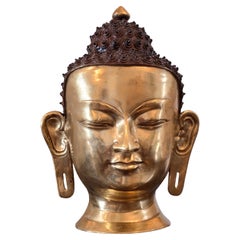
Large Life-size South Asian Nepali Gilded Patinated Brass Buddha Head Statue
Located in Forney, TX
A fine quality and visually striking life-size Nepalese Buddha head with beautifully aged warm patina.
Exceptionally executed in brass/bronze with brilliant gold gilt / antique cop...
Category
20th Century South Asian Figurative Sculptures
Materials
Brass, Bronze
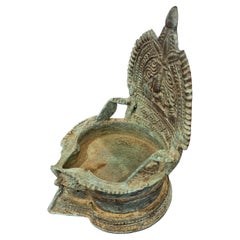
Antique Indian Patinated Bronze Oil Lamp 19th Century South India
Located in Forney, TX
A charming early patinated metal oil lamp, India, 19th century or earlier.
Most likely originating in the South Indian state of Tamil Nadu, richly cast using the renowned ancient b...
Category
Antique 19th Century Indian Anglo-Indian Metalwork
Materials
Bronze
You May Also Like
Vintage Bronze Hindu Bronze "Nandi Bull" Cow Sculpture
Located in Moreno Valley, CA
Vintage Patinated Hindu Bronze "Nandi Bull" Sculpture, circa 1950s.
An Indian vintage Nandi bull sculpture from the mid 20th century, with carved motifs a...
Category
Mid-20th Century Indian Folk Art Animal Sculptures
Materials
Bronze
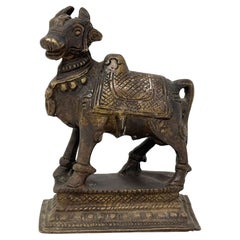
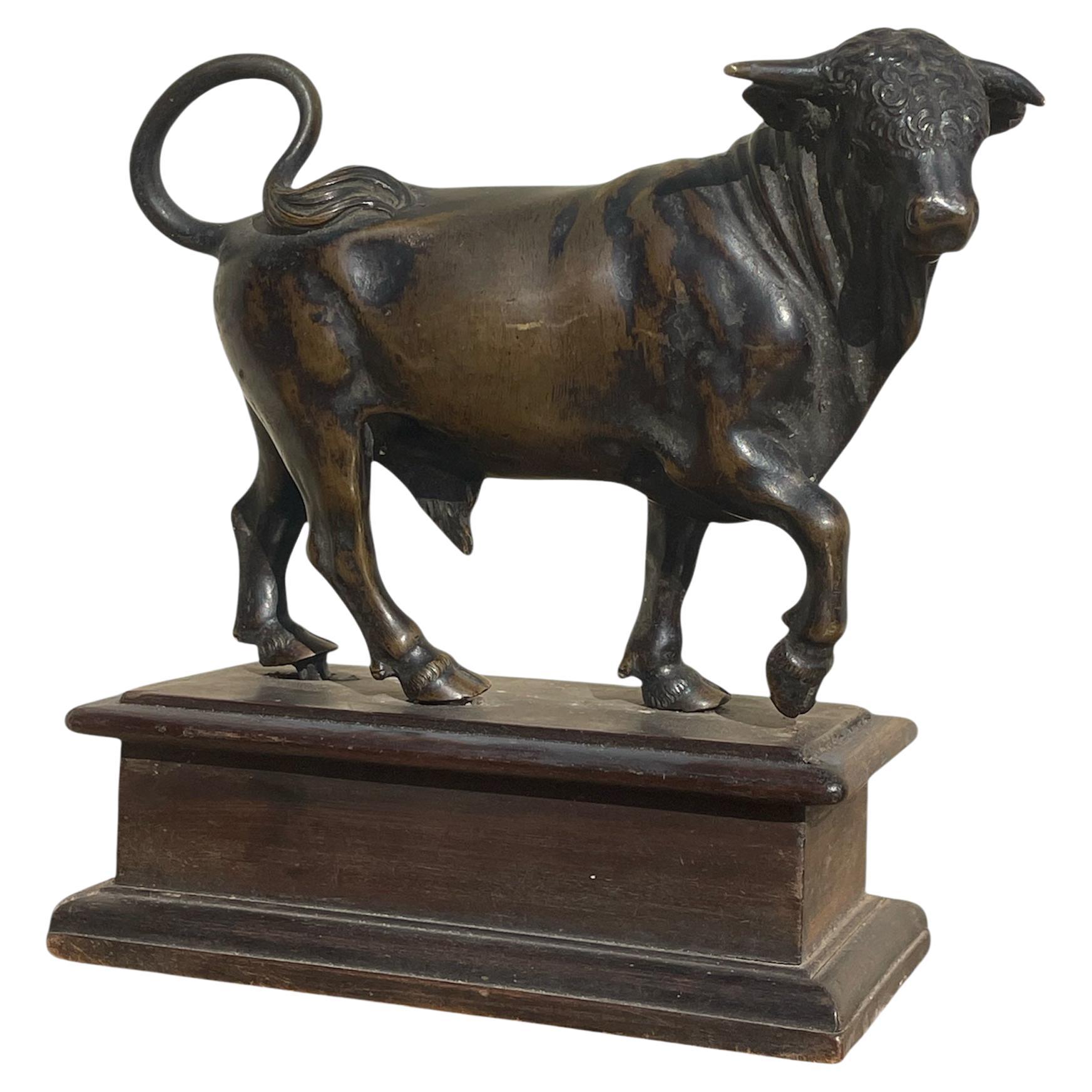
Indian Bull. Bronze, Marble.
Located in Madrid, ES
Lost wax casting. Base in marble.
On the oval base rises the figure of the animal, located facing forward. This type of small sculptures in bronze were already highly appreciated in ...
Category
20th Century European Other Animal Sculptures
Materials
Marble, Bronze
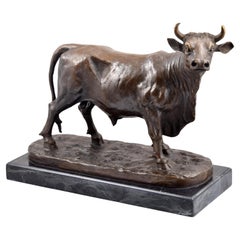
Vintage Patinated Hindu Bronze "Nandi Bull" Sculpture
Located in San Diego, CA
Vintage patinated Hindu bronze "Nandi Bull" sculpture, circa 1950s. The piece is in good vintage condition with a great patina and measures 4.5"W x 1.5"D ...
Category
Mid-20th Century Indian Sculptures and Carvings
Materials
Bronze
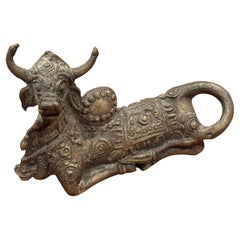
Vintage Anglo-Indian Brass Cow Sculpture
Located in Houston, TX
Vintage Anglo-Indian brass cow sculpture.
Beautiful detail and patina to the brass.
Great conversation piece!
Category
Vintage 1950s Indian Anglo-Indian Animal Sculptures
Materials
Brass
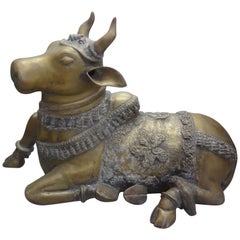
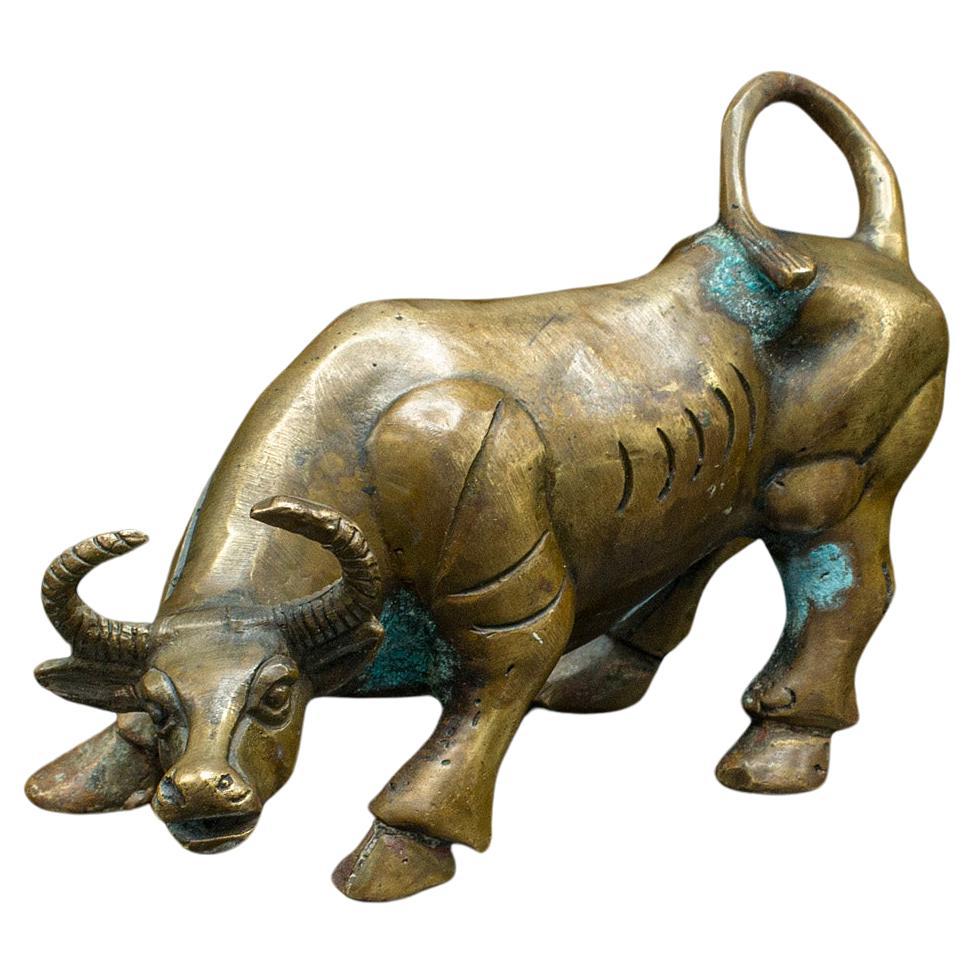
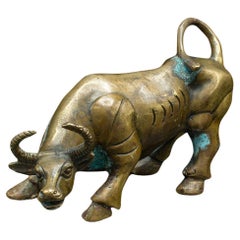
Small Antique Decorative Water Buffalo, Malayan, Bronze, Victorian, Circa 1900
Located in Hele, Devon, GB
This is a small antique decorative water buffalo. A Malayan, bronze figure, dating to the Victorian period, circa 1900.
Distinctive stance with a nicely patinated appearance
Display...
Category
Antique Late 19th Century Asian Animal Sculptures
Materials
Bronze
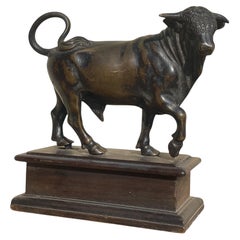
17th Century - Bronze Bull After Jean De Bologne
By Jean de Bologne
Located in Beaune, FR
Bronze bull dating from the 17th century, model after Jean De Bologne. Entirely original and in good condition.
Dimensions
Total Height 16,5cm
Bronze Height 11,5cm
Bronze Lengh...
Category
Antique 17th Century French Animal Sculptures
Materials
Bronze
More Ways To Browse
19th Century Bronze Statue
Copper Mold
Hand Forged Bronze
Cast Bronze Statues
Bronze Bull
Antique Copper Molds
Large Bronze Statues
Chinese Guardian
19th Century Life Size Bronze Sculpture
Small Antique Statue
Antique Shiva
Antique Metal Statues
Gold Large Statue
Chinese Foo Lions
Chinese Guardian Lion
Indian Statues
19th Century Indian Bronze
Indian Antique Bronze