Carved Building and Garden Elements

to
652
2,348
1,323
3,399
297
76
Height
to
Width
to
208
176
171
167
154
105
103
72
51
43
26
20
19
19
16
6
2
1,096
1,615
688
373
320
129
78
29
9
22
11
9
23
13
5
4
4
2,584
1,308
1,136
600
281
3,045
1,301
746
535
376
3,772
3,604
3,626
34
23
15
12
9
Technique: Carved
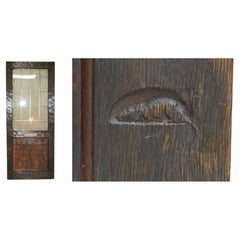
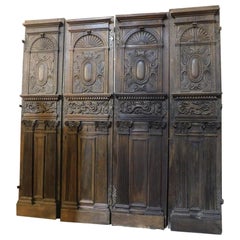
FULLY RESTORED ANTIQUE CIRCA 1920 s ROBERT MOUSEMAN THOMPSON FRONT OR BACK DOOR
Located in West Sussex, Pulborough
Royal House Antiques Royal House Antiques is delighted to offer for sale this super rare, highly collectible, fully restored, circa 1920’s Robert Mouseman Thompson front or back doo...
Category

1920s English Country Vintage Carved Building and Garden Elements

Materials

Oak

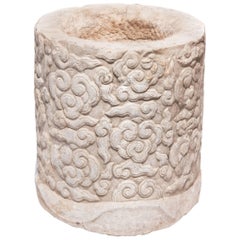
Chinese Celestial Cloud Column Base, c. 1750
Located in Chicago, IL
This 18th century architectural object, hand-carved out of a single block of white marble, is intricately finished with an all-over celestial cloud motif—an ancient and auspicious Bu...
Category

Mid-18th Century Chinese Qing Antique Carved Building and Garden Elements

Materials

Marble

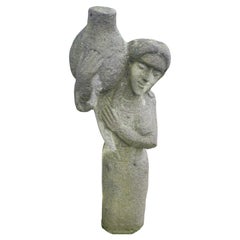
Art Deco Carved Stone Figure of a Woman with an Urn C1930
Located in Port Jervis, NY
Fabulous hand carved stone figure of a woman with an urn on her shoulder. She is smiling and looking quite pleasant. All work is hand chilseled. In excellent antique condition with m...
Category

1930s Spanish Art Deco Vintage Carved Building and Garden Elements

Materials

Stone

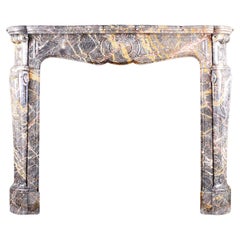
Antique Louis XV Pompadour Fireplace Surround, circa 1870
Located in London, GB
Antique Louis Xv pompadour fireplace surround, circa 1870 Measures: External width 53? – 134.6 cm External height 43” – 109.2 cm Depth 15? – 38...
Category

Late 19th Century French Rococo Revival Antique Carved Building and Garden Elements

Materials

Marble

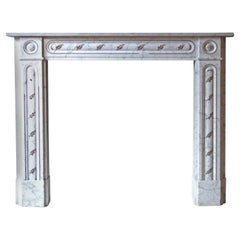
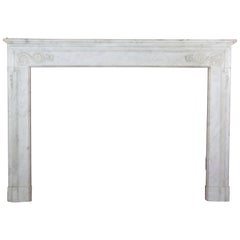
Waldorf Astoria Hotel Marble Mantel White Carrara English Regency
Located in New York, NY
This English Regency style mantel is carved from white marble with graceful white veining. A curved groove frame runs across the apron and down each leg, and circular medallions feat...
Category

1880s French Regency Antique Carved Building and Garden Elements

Materials

Carrara Marble

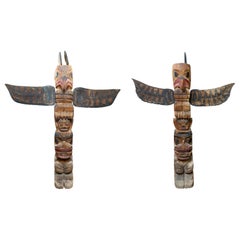
Massive Pair Native Salish Carved Totems
Located in Coeur d Alene, ID
Matched pair of Salish Native American totem poles. Both identical. Carved as a thunderbird with spread rings separately carved and attached perched on the head of a human over a sea...
Category

Late 20th Century American Native American Carved Building and Garden Elements

Materials

Cedar

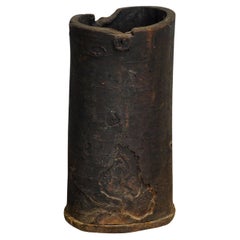
Primitive storage barrel/planter, circa 1900
Located in Amsterdam, Noord Holland
Primitive storage barrel made from a Carpathian tree trunk, used for storing grain, etc. The trunk is hollowed out by hand. A beautiful object suitable for use as a large planter. Ma...
Category

Early 20th Century Hungarian Industrial Carved Building and Garden Elements

Materials

Beech

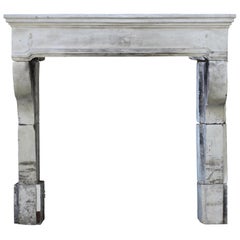
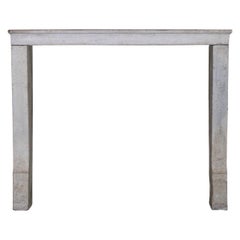
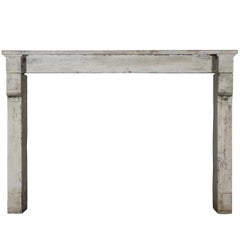
French Grand Country Limestone Antique Fireplace Surround
Located in Beervelde, BE
This country fireplace mantel (fireplace) is quite large and high. It is a Louis XIII fireplace in limestone with graffiti remains on the front and remains of the original patina. T...
Category

17th Century French Louis XIII Antique Carved Building and Garden Elements

Materials

Limestone

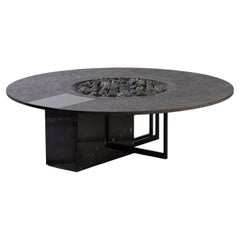
Umo Fire Pit
Located in Zapopan, Jalisco
UMO, a volcanic stone fire pit/sculpture created by expert craftspeople, armed by chisel and hammer, chipping away to create symmetry, balance, function...
Category

2010s Mexican Minimalist Carved Building and Garden Elements

Materials

Stone

Umo Fire Pit
Umo Fire Pit
$17,300 / item
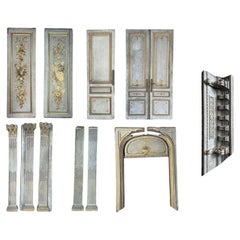
René Gaillard (architect), Aimé Octobre (sculptor), Regency-Style Painted
By Rene Gaillard
Located in SAINT-OUEN-SUR-SEINE, FR
This extraordinary Régence-style woodwork was designed by René Gaillard and Aimé Octobre, and is dated 1919. It comes from a room that would have measured...
Category

1910s French Regency Vintage Carved Building and Garden Elements

Materials

Wood

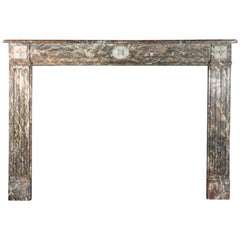
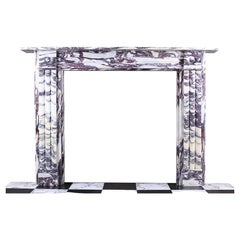
Fine European Original Antique Classic Marble Fireplace Surround
Located in Beervelde, BE
This fireplace surround has very fine details. Its marble is a Belgian marble from the Ardennes; the details are made out of statuary marble. The front has been very nicely carved. A...
Category

18th Century Belgian Louis XVI Antique Carved Building and Garden Elements

Materials

Marble, Statuary Marble

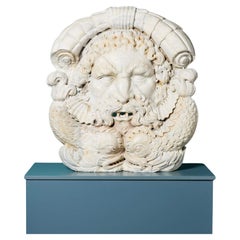
Monumental Carrara Marble Wall Mascaron of Poseidon
Located in Wormelow, Herefordshire
A large and monumental Italian carved Carrara marble mascaron of Poseidon or Neptune after the late 16th century ‘Fontana del Mascherone’ by Bartolomeo Bassi. At more than 90cm tall ...
Category

20th Century Italian Grand Tour Carved Building and Garden Elements

Materials

Marble, Carrara Marble

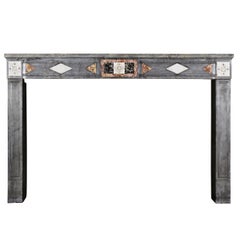
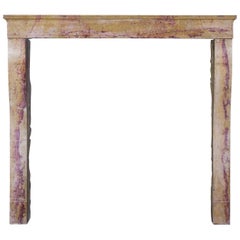
Timeless French Antique Fireplace Surround in Limestone
Located in Beervelde, BE
This refined Louis XVI period antique fireplace mantle from the Burgundy region has been built in hard stone with Brêche Violet marble inlay. Measurements: 145 cm EW 57.08", 105 ...
Category

18th Century French Louis XVI Antique Carved Building and Garden Elements

Materials

Stone, Marble

French Louis XVI Style Antique Chic Antique Marble Fireplace Mantel
Located in Beervelde, BE
This exclusive and rich colourful marble fireplace surround is a prefect match for a contemporary eclectic chic interior design concept. The Louis XVI style is classic and high in qu...
Category

19th Century French Louis XVI Antique Carved Building and Garden Elements

Materials

Marble

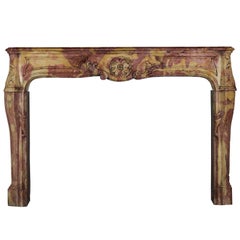
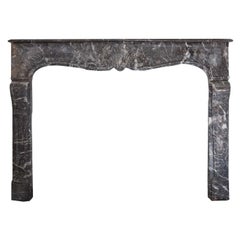
Pompadour Style Classic Belgian Fireplace Surround
Located in Beervelde, BE
This fine Pompadour style vintage fireplace mantle has been made out of brown Belgian marble. It is from the 19th century and was installed in...
Category

19th Century French Louis XV Antique Carved Building and Garden Elements

Materials

Marble

Petite Fine French Country Style Limestone Fireplace Surround
Located in Beervelde, BE
A unusual small original antique French country hard limestone LXIII style fireplace surround. Perfect for a small space. Measures: 100 cm EW 39.37" 128 cm EH 50.39" 73 cm IW 28....
Category

19th Century French Louis XIII Antique Carved Building and Garden Elements

Materials

Limestone

Small French Country Limestone Antique Fireplace Surround
Located in Beervelde, BE
A small and fine burgundy bicolor hard stone vintage fireplace surround. The surface is hammered and tailler. It was built in the Louis XIII period, 17th century. Measures: 130,5 cm ...
Category

17th Century French Louis XIII Antique Carved Building and Garden Elements

Materials

Stone

Fine 19th Century European Antique Marble Fireplace Surround
Located in Beervelde, BE
This Louis XIV style fireplace surround, in colored marble is a pre-Art Deco style. The straight line and round corner are typical of that period. Works...
Category

Late 19th Century Belgian Louis XIV Antique Carved Building and Garden Elements

Materials

Marble

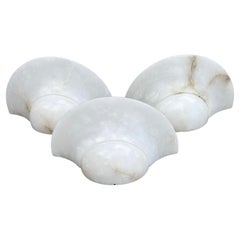
Set of 3 Mid-Century Era, Art Deco Style, Great Condition Alabaster Wall Sconces
Located in Lisse, NL
Set of three Mid-Century large alabaster wall lamps, 1970s. An ideal collection of three alabaster wall lamps. perfect for an interior design project seeking timeless elegance and ...
Category

Mid-20th Century European Art Deco Carved Building and Garden Elements

Materials

Alabaster, Metal

Fine European Rustic Antique Fireplace Surround with Marble Inlays
Located in Beervelde, BE
One of a kind Italian antique fireplace surround with statuary and Brocatelle marble inlay. This is a statement piece! Great for a country l...
Category

18th Century Italian Louis XVI Antique Carved Building and Garden Elements

Materials

Stone, Marble

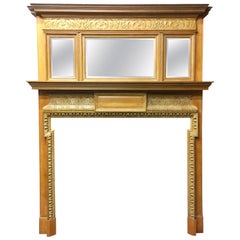
Antique Victorian 19th Century Pine Fireplace Surround and Overmantel Mirror
Located in Edinburgh, GB
A large and attractive late 19th century Pine & Gesso fireplace surround complete with its original over mantel mirror. The triple bevelled mirror sits within separate frames featuri...
Category

1890s English Victorian Antique Carved Building and Garden Elements

Materials

Pine

19th Century Fine French Rustic Limestone Antique Fireplace Surround
Located in Beervelde, BE
A fine French rustic fireplace surround with remaining patina. Its Louis Philippe period style of the 19th century and condition is suitable for a French country living interior desi...
Category

19th Century French Louis Philippe Antique Carved Building and Garden Elements

Materials

Limestone

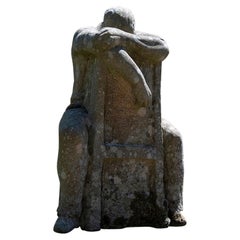
Sculpture Sandstone Carved Figurative The Thinker
Located in BUNGAY, SUFFOLK
The Thinker Mid-Century Modern, sandstone sculpture depicting a seated man, artist unknown This Mid-Century Modern interpretation of The Thinker interprets the pain, release and liberation associated with free-thinking. The man conveys vulnerability, tenderness and acceptance, his body yielding into the support of the chair creating a sense of rest and peace. Provenance: Private Collection acquired from The Hidden Gallery, Scotland Measures: Height 50cm.,20" Length 33cm., 15" Depth 22cm., 81/2" The Thinker - Auguste Rodin (1840 -1917). Cast made by Fonderie Alexis Rudier in 1904. Transfered to the musée Rodin in 1922. When conceived in 1880 in its original size (approx. 70 cm) as the crowning element of The Gates of Hell, seated on the tympanum, The Thinker was entitled The Poet. He represented Dante, author of the Divine Comedy which had inspired The Gates, leaning forward to observe the circles of Hell, while meditating on his work. The Thinker was therefore initially both a being with a tortured body, almost a damned soul, and a free-thinking man, determined to transcend his suffering through poetry. The pose of this figure owes much to Carpeaux’s Ugolino (1861) and to the seated portrait of Lorenzo de’ Medici carved by Michelangelo (1526-31). While remaining in place on the monumental Gates...
Category

20th Century English Mid-Century Modern Carved Building and Garden Elements

Materials

Sandstone

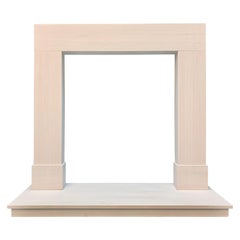
Simple Period Limestone Fireplace Surround
Located in Edinburgh, GB
A simple period limestone fireplace surround. Consisting of a lintel and two supporting jambs, all resting on plain foot blocks. This typ...
Category

1960s English Arts and Crafts Vintage Carved Building and Garden Elements

Materials

Limestone

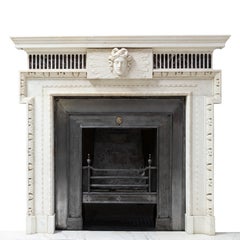
Aged Georgian Style Carved Pine Fireplace Surround.
Located in Edinburgh, GB
A Georgian style carved pine fireplace, a moulded shelf sits above a frieze with reeded panels and a central tablet with a carved acanthus decoration, flanked by capitols featuring f...
Category

1930s English Georgian Vintage Carved Building and Garden Elements

Materials

Pine

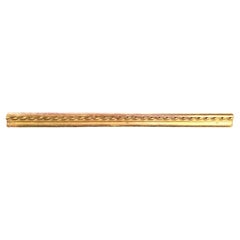
Long Giltwood Turned Rope Giltwood Dentil Fragment
Located in Nashville, TN
Just shy of 5 foot, this carved wood room dentil fragment is matte gilt and water gilt. Probably salvaged from a paneled room boiserie in very good physical condition. Presents very ...
Category

Early 1900s French Louis XVI Antique Carved Building and Garden Elements

Materials

Giltwood

Fine French Fireplace Mantle in Hard Limestone for Modern Interior
Located in Beervelde, BE
Small French Louis Phillipe demi-lune antique fireplace surround from the 19th century. A honey color hard limestone which reflects the light of the room and brings authenticity in t...
Category

19th Century French Louis Philippe Antique Carved Building and Garden Elements

Materials

Stone

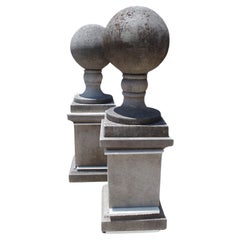
Pair Of Tall Carved Italian Limestone Ball Finials On Pedestals
Located in Dallas, TX
Hand-carved from Italian limestone, this pair of ball finials on pedestals measure over four feet tall. Both balls are roughly 15 inches in diameter and sit atop a square plinth. Ben...
Category

21st Century and Contemporary Italian Carved Building and Garden Elements

Materials

Stone, Limestone

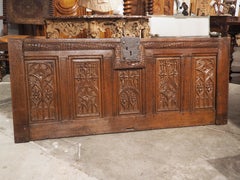
Period Gothic Oak Trunk or Chest Façade from Picardie France, circa 1550
Located in Dallas, TX
Often when centuries-old trunks did not survive the passage of time, 19th-century menuisiers (French woodworkers) would salvage the surviving wood and carve new furniture such as desks and similar trunks. The facade was typically the most ornate section of these antique trunks, making intact frontages highly valued antiques. Hand-carved from oak in Picardie, France, circa 1550, this period Gothic architectural is a beautiful example of an antique trunk facade that was not incorporated into a more recent furnishing. Picardie is a former administrative region in northern France that is home to many Gothic cathedrals. The Amiens Cathedral (mid-13th century) is the largest standing cathedral in Europe and is truly a masterpiece of Gothic architecture. Our trunk frontage has five vertically oriented inset panels embellished with various forms of Gothic tracery, including high-arching niches...
Category

16th Century French Gothic Antique Carved Building and Garden Elements

Materials

Metal, Iron

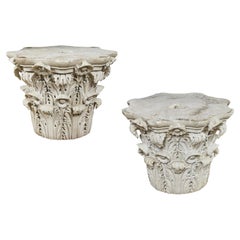
Pair of Roman Carrara Marble Capitals (sold seperately)
Located in Los Angeles, CA
Pair of Roman, elaborately hand-carved, Carrara marble, Corinthian capitals. Sold separately.
Category

1820s Antique Carved Building and Garden Elements

Materials

Carrara Marble

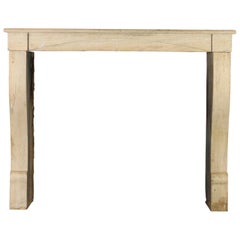
Fine Timely Antique French Fireplace Surround in Limestone
Located in Beervelde, BE
This is a red toned Burgundy hard limestone fireplace surround. It is simple, plain, yet elegant. It is in 3 solid blocks. Works perfect with modern and contemporary art work. Measu...
Category

Early 19th Century French Louis Philippe Antique Carved Building and Garden Elements

Materials

Stone

18th Century Burgundy Hardstone Antique Fireplace Mantel
Located in Beervelde, BE
This original Burgundy hard stone antique fireplace surround is of a high quality and was installed in a panelled room. Measures; 179 cm EW 70,47" 116 cm EH 45,67" 146 cm IW 5...
Category

18th Century French Regency Antique Carved Building and Garden Elements

Materials

Stone

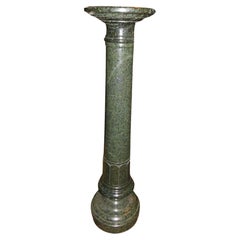
Column, statue holder, carved in Verde Alpi marble, Italy
Located in Cuneo, Italy (CN)
Ancient antique vintage column, cylindrical statue holder, carved in Verde Alpi marble, from Italy, original from the 19th century, ideal as a support base for statues, objects, pock...
Category

19th Century Italian Antique Carved Building and Garden Elements

Materials

Marble

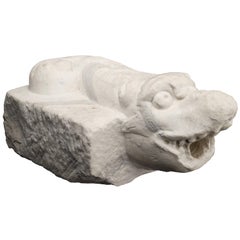
Italian Ancient Marble Sculpture Fountain, Late 16th Century
Located in Milano, IT
Sea monster Carrara marble mouth fountain Italy, late 16th century It measures 13.8 x 31.5 x 18.9 in (35 x 80 x 48 cm) State of conservation: some small evident gaps and widespread signs of wear due to outdoor exposure. The gray marks crossing it do not come from restoration, but are rather the natural veins of the marble. This work has some morphological characteristics typically associated with the iconography of the sea monster: an elongated muzzle, sharp teeth, protruding eyes, elongated ears, and a coiled serpent's tail. An in-depth series of studies on artistic depictions of the sea monster attempted to verify how this symbol evolved in antiquity in the European and Mediterranean contexts and how it gradually changed its image and function over time. The iconography itself is mutable and imaginative and its history is rich with cultural and artistic exchange, as well as the overlapping of ideas. This occurred so much that it is difficult to accurately pinpoint the "types" that satisfactorily represent its various developments. However, we can try to summarize the main figures, starting from the biblical Leviathan and the marine creature that swallowed Jonah (in the Christian version, this figure was to become a whale or a "big fish", the “ketos mega”, translation of the Hebrew “dag gadol”). Other specimens ranged from the dragons mentioned in the Iliad (which were winged and had legs) to "ketos” (also from Greek mythology), the terrifying being from whose Latinized name (“cetus”) derives the word "cetacean". See J. Boardman, “Very Like a Whale” - Classical Sea Monsters, in Monsters and Demons in the Ancient and Medieval Worlds, in Papers presented in Honor of Edith Porada, Mainz am Rhein 1987, pp. 73-84). In Italy the monster underwent yet further variations: it can be found in Etruscan art on the front of some sarcophagi representing the companion of souls, while among the Romans we find the “Pistrice” (cited by Plinio in Naturalis Historia PLIN., Nat., II 9, 8 and by Virgilio in Eneide: VERG., Aen., III, 427), which appeared in the shape of a stylized hippocampus or a very large monstrous cetacean and evolved into a hideous being with a dragon's head and long webbed fins. During the Middle Ages, the sea monster was the object of new transformations: at this time, it is often winged, the head is stretched like a crocodile, the front legs are often very sharp fins - sometimes real paws - until the image merges with dragons, the typical figures of medieval visionary spirituality widely found throughout Europe (on this topic and much more, see: Baltrušaitis, J., Il Medioevo fantastico. Antichità ed esotismi nell’arte gotica, Gli Adelphi 1997). In Italy during the 15th and 16th centuries, the revival of classicism - representative of the humanistic and Renaissance periods - led to a different reading of these "creatures". Indeed, the sea monster was also to find widespread use as an isolated decorative motif, especially in numerous fountains and sculptures where dolphins or sea monsters were used as a characterizing element linked to water (on this theme see: Chet Van Duzer, Sea Monsters on Medieval and Renaissance Maps, London, The British library, 2013). From the morphological point of view, the "sea monsters" of this period are mostly depicted as hybrid figures, in which the body of a mythological or real being (a hippocampus, a sea snake, a dolphin), is joined to a head with a rather indistinct appearance. It was usually characterized by large upright ears, an elongated snout, sharp teeth and globular, protruding eyes; a complex and indefinite figure, both from the symbolic point of view and from that of its genesis. The work we are examining is placed as a cross between the medieval sea serpent and the Renaissance dolphin, with stylistic features which recall the snake as often used in heraldry (such as the "snake" depicted in the coat of arms of the Visconti - the lords and then dukes of Milan between 1277 and 1447 - and which, for some, may be derived from the representations of the “Pistrice” that swallowed Jonah). In the search for sources, Renaissance cartography and in particular woodcuts should not be neglected. See for example the monsters of Olaus Magnus, from the editions of the “Historia de gentibus septentrionalibus” (“History of the peoples of the north”) and the natural histories of Conrad Gesner, Ulisse...
Category

16th Century Italian Renaissance Antique Carved Building and Garden Elements

Materials

Carrara Marble

Fine European Antique Fireplace Surround in Carrara Marble
Located in Beervelde, BE
This vintage antique chimney piece in white Carrara marble is a Louis XVI style from the 19th century. It was installed in a library in a Parisian apartment. Measurements: 150 cm Ext...
Category

19th Century French Louis XVI Antique Carved Building and Garden Elements

Materials

Carrara Marble

17th Century Antique Fireplace Mantle in Burgundy Hard Stone
Located in Beervelde, BE
One of a kind. Fabulous fireplace surround in bicolor hard stone from the wine region of France. The details of the carving on the jambs and front are very Fine and unusual. Watch c...
Category

17th Century French Louis XIV Antique Carved Building and Garden Elements

Materials

Stone

Original Timeless French Antique Fireplace Surround in Stone
Located in Beervelde, BE
Very nice antique reclaimed fireplace surround with straight lines from the Beaujolais region. Coming from the town Buxy. The Buxy stone w...
Category

19th Century French Louis Philippe Antique Carved Building and Garden Elements

Materials

Stone

set of 2 entrance doors, main doors in richly carved walnut wood, Italy
Located in Cuneo, Italy (CN)
Antique set of 2 entrance doors, main door in precious walnut wood, richly carved, with rich carved panels with leafy curl decorations, with columns in the lower part. They can also ...
Category

19th Century Italian Antique Carved Building and Garden Elements

Materials

Walnut

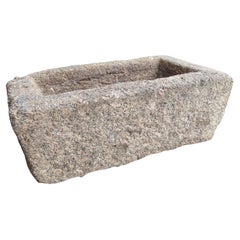
Antique Weathered Rectangular Granite Trough from Brittany, France, 19th Century
Located in Dallas, TX
More information coming soon… A large granite trough, hand-carved in Brittany, France, during the 1800s. The stone has inherent contour to the sides and a unique patination consisti...
Category

19th Century French Antique Carved Building and Garden Elements

Materials

Stone, Granite

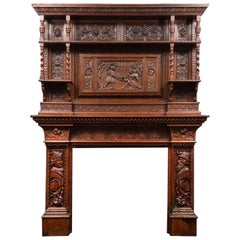
An antique oak fireplace surround, made in the Jacobean style.
Located in Tyrone, Northern Ireland
A large and highly carved antique oak fireplace surround, made in the Jacobean style. Produced in England during the 19th century incorp...
Category

19th Century English Renaissance Revival Antique Carved Building and Garden Elements

Materials

Oak

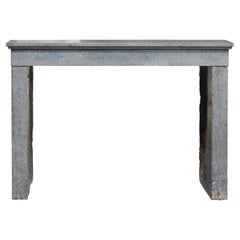
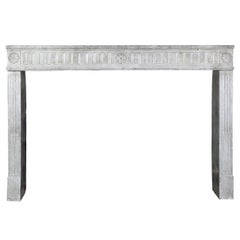
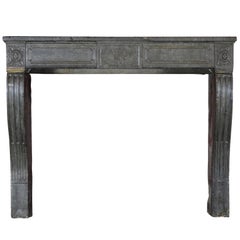
18th Century Louis XVI Burgundy Blue-Grey Stone Antique Fireplace
Located in Beervelde, BE
This is a 18th century original antique fireplace surround made out of a blue-grey Burgundy hard stone. It was built in the Louis XVI period. It consists of three solid blocks of sto...
Category

Late 18th Century French Louis XVI Antique Carved Building and Garden Elements

Materials

Stone

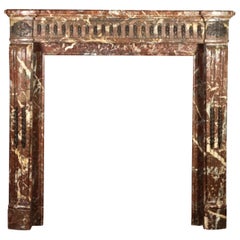
Petite Small Classic Antique Fireplace Surround in Belgian Marble
Located in Beervelde, BE
Original antique fireplace mantle in a Belgian brown color marble with brass bijouterie. A little jewel of its time period. The fronton is coming into the room. Perfect for a small F...
Category

18th Century Belgian Louis XVI Antique Carved Building and Garden Elements

Materials

Marble

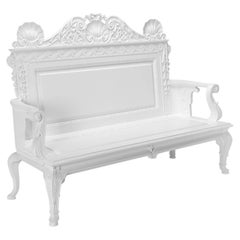
Garden or Hall Benches in the manner of William Kent
Located in Sturminster Marshall, Dorset
A pair of fine carved teak garden or hall benches in the manner of William Kent. Panelled backs and seats with scallop shell crests above Vitruvian scroll frieze, acanthus scroll arm...
Category

21st Century and Contemporary English George II Carved Building and Garden Elements

Materials

Mahogany

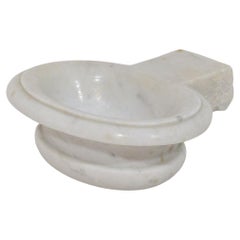
Small 18th Century Italian Baroque Marble Holy Water Font or Stoup
Located in Buisson, FR
Beautiful small Baroque marble holy water font or stoup, Unique and original period piece. Italy, circa 1750. Weathered condition. H:6cm W:17cm D:12-17cm
Category

18th Century Italian Baroque Antique Carved Building and Garden Elements

Materials

Marble

Antique 19th Century English Fireplace Marble Mantel
Located in New York, NY
An exquisite example of early 19th-century English craftsmanship, this Neoclassical marble Fireplace mantel combines stately proportions with refined decorative details. Crafted from...
Category

Late 18th Century English Neoclassical Antique Carved Building and Garden Elements

Materials

Marble

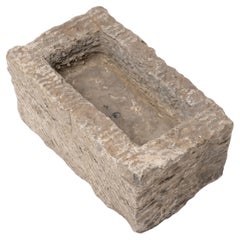
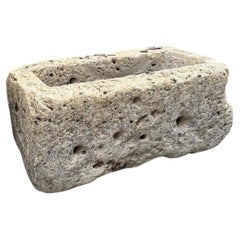
Chinese Stone Courtyard Trough, c. 1850
Located in Chicago, IL
Once a common sight in courtyards throughout rural China, this textured stone vessel was used as a grain or water trough for chickens and other barnyard fowl. Chiseled from a block o...
Category

Mid-19th Century Chinese Minimalist Antique Carved Building and Garden Elements

Materials

Limestone

Double-Slip Georgian Style Fireplace Surround Italian Violette Brescia Marble
Located in London, GB
Large Double-Slip Georgian Style Fireplace Surround in finest quality Italian Violette Brescia Marble. Measures: Depth: 8” – 20.3 cm External Height...
Category

21st Century and Contemporary British Georgian Carved Building and Garden Elements

Materials

Marble

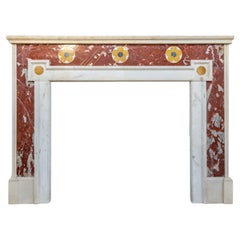
Splendid Antique Carved Marble Chimneypiece William Kent
Located in Ware, GB
This magnificent chimneypiece is carved from fine statuary marble with contrasting inlaid thumbnails of dark Rosso Lavanto across the frieze. The signature motifs, expert craftsmans...
Category

18th Century British Georgian Antique Carved Building and Garden Elements

Materials

Statuary Marble

Farm Sink Hand Carved Stone Container Fountain Trough Basin Planter Antique LA
Located in West Hollywood, CA
Farm Sink Hand Carved stone container Jardinière Trough Basin Planter Antique LA . 18th Century water fountain Basin Of Hand Carved Stone container . beautiful Color and patina keeps changing with the light and the seasons . Weight approximately 373 Lbs. This trough could be installed with a simple bronze metal spout or a carved stone fountain head , we have many options of them , in order to create a charming garden water fountain for your pets or to have it as a dog bowl . A nice size stone trough from Provence . The centuries left its marks on this container and a very nice patina . Installed will be the focal point of any landscape design laid on gravel or mounted as a kitchen Farm sink...
Category

18th Century French Antique Carved Building and Garden Elements

Materials

Stone, Limestone

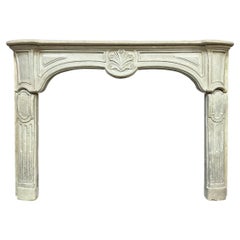
An Antique 18th century Provincial French Stone Fireplace Mantel
Located in London, GB
An 18th century French Caen Stone Provincial Fireplace. The cantered jambs with stop fluted front panels and carved raised panels. The frieze serpentine in design with raised panelle...
Category

1780s French French Provincial Antique Carved Building and Garden Elements

Materials

Stone

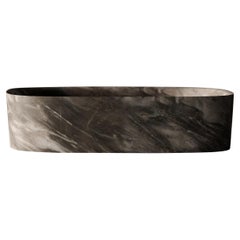
Basin "Panama" Made in Grigio Bardiglio Marble
Located in Beverly Hills, CA
The Tailor Collection boasts a unique assortment of elements that draw inspiration from the world of tailoring. Expertly crafted by the talented Pibamarmi Style Office, these pieces ...
Category

21st Century and Contemporary Italian Modern Carved Building and Garden Elements

Materials

Marble

18th Century Original Antique Fireplace Mantel
Located in Beervelde, BE
Phenomenal fireplace surround from the free mason compagnon in bicolor burgundy hard stone. The carving is very fine and very unusual. Measures: 142.5 cm EW 56.10", 112 cm EH...
Category

18th Century French Directoire Antique Carved Building and Garden Elements

Materials

Stone

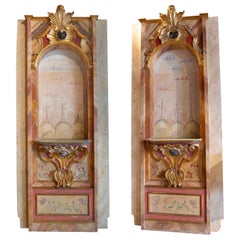
18th Pair of Italian Painted and Gilded Niches
Located in Marbella, ES
An elegant pair of carved, gilded, and polychrome wood wall niches with a central shelf and interior pictorial decoration featuring floral and landscape motifs. The pieces retain the...
Category

18th Century Italian Antique Carved Building and Garden Elements

Materials

Wood

18th Century Louis XVI Style Anne s Marble Fireplace Mantel
Located in Southall, GB
Rare 18th century antique French Louis XVI fireplace mantel. Hand-carved in desirable St Anne's marble. Delicately carved recessed Jambs and Frieze; with elegantly carved centre shel...
Category

18th Century French Louis XVI Antique Carved Building and Garden Elements

Materials

Marble

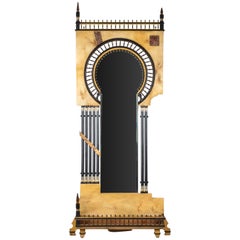
Late 19th Century Large Full Length Key Hole Mirror by Carlo Bugatti
Located in Shrewsbury, GB
Many of Carlo Bugatti's superior pieces were commissioned by a number of the Royal Houses of Europe, some of the Great Estates of America and Europe and some of the most successful families from around the world. including such amazing one of a kind example such as this important and rare majestic Carlo Bugatti Keyhole Mirror...
Category

20th Century Italian Carved Building and Garden Elements

Materials

Copper

19th Century French Designed by Nature Stone Antique Fireplace Surround
Located in Beervelde, BE
The bicolor hard limestone for this antique fireplace surround is a Burgundy Corton stone flecked with violet colored veins. We call it designed by nature for a rustic, French country room. We can provide the hearth in original antique Burgundy dalles with original ancient surfaces...
Category

Early 19th Century French Louis Philippe Antique Carved Building and Garden Elements

Materials

Stone

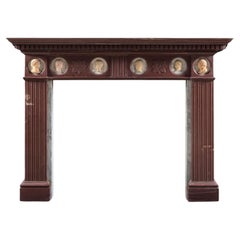
A Highly Important Empire Period Rosso Antico Chimneypiece with Portrait Reliefs
Located in London, GB
A Highly Important Empire Period Rosso Antico Chimneypiece Inset with Specimen Marble Portrait Reliefs of Roman Emperors The carved and veneered surround comprising a moulded shelf supported by a bold dentil cornice, above an inverted breakfront frieze carved with a central triglyph panel, flanked by a pair of rosettes carved in shallow relief, the frieze mounted with six carved hardstone profile portrait medallions of Roman Emperors, the stop-fluted jambs raised on moulded footblocks; in excellent condition with small restorations commensurate with age and use; the pale inclusions in the stone naturally formed. This spectacular neoclassical marble chimneypiece is carved from Rosso antico, the frieze inset with six portrait reliefs of Roman Emperors, each carved in marmo giallo on a bardiglio background, five variously incised: VESPASIANUS, TIBERIVS, OTHO, JULIUS CAESAR, TITUS. Rosso antico (marmor taenarium) is first recorded as being quarried in 1700 BC at Akra Tainaron (Cape Matapan), Greece.¹ The majority of this stone, however, was extracted throughout the Roman period, when it was one of the most coveted materials for carving due to its rich red colouring and association with highly prized Egyptian ‘Imperial’ Porphyry.² Rosso antico was chosen in antiquity for portrait busts, notably depicting Bacchic subjects such as Dionysus and satyrs due to its rich red wine colour which symbolised conviviality whilst conveying the education and cultivated taste of the owner.³ In the Renaissance, Rosso antico was also used for architectural detail on important buildings, such as the steps leading up to the choir in the medieval church of S. Prassede, and the large columns at the entrance to the Camera dell'Aurora.⁴ In 121 AD, G. Suetonius Tranquillus, secretary to Emperor Hadrian, wrote a biographical history of the first twelve emperors of Rome entitled De vita Caesarum (The Twelve Caesars). A Renaissance edition of Tranquillus’ work was published in 1470, followed by further reprints and translations into all the main European languages. Many of these were illustrated with prints of emperors taken from coins and statues, or imagined by the artist based on Tranquillus’ accounts. These interpretations were copied, in turn, by Renaissance designers for medals, Limoges enamels, and busts, as well as paintings such as the Eleven Caesars, a series of eleven half-length portraits of Roman emperors made by Titian in 1536–40 for Federico II, Duke of Mantua.⁵ These paintings were later given to King Charles I, before being passed in the Commonwealth to the Kings of Spain. Unfortunately, the series was destroyed in the catastrophic fire of 1734 at the Royal Alcazar of Madrid, and is now only known through copies and engravings.⁶ From the middle of the 17th century until the end of the 18th century, there was an insatiable demand for marble carvings, often sold as Roman or assembled from ancient fragments, thus perpetuating the reverence for antiquity that was the quintessence of the Grand Tour. Rosso antico was in extremely short supply, even after the ancient quarries at Skutari were rediscovered in 1830, and remained one of the most highly valued of all stones. Described in 1776 as ‘dark red; scarce and dear’, it was mostly used for small objects such as Grand Tour desk ornaments, inevitably using material re-cut from classical fragments, due to its rarity, as was the case with porphyry.⁷ The portrait roundels on this chimneypiece are typical of those produced in Rome and Florence in hardstones, semi-precious stones, gold, silver, bronze, and mother-of-pearl, which, being easily transportable, would be taken home from the Grand Tour to be mounted within wooden, gilded or brass frames, as fashion dictated.⁸ A group of gold portraits of Caesars, dating from around 1660, are in the Museo Nazionale del Bargello in Florence. Images of Roman emperors were not limited to Italy, England and France, however, as examples executed in Deshima for the Dutch East India Company (Verenigde Oost-Indische Compagnie) show. Medallions depicting Roman emperors, invariably made of black and gold Japanese hiramakie or takamakie lacquer on copper, were produced for the Dutch market at the end of the 18th century. Examples can be found in the Rijksmuseum, Amsterdam.⁹ There are two possible sources for the Imperial profiles on the chimneypiece: the engravings of The Twelve Caesars by Marcantonio Raimondi, or the Imperatorum Imagines by Hubert Golz.¹⁰ The portrait medallions also bear remarkable resemblance to a set of eighteen carved portrait reliefs of Roman Emperors, also of marmo giallo, almost certainly bought by David Ker (1742–1811) of Portavo, Co. Down, on his Grand Tour between 1792–4 in either Florence or Rome. Ker’s diary entry for 17th October 1793 is interesting as it reveals that he was offering his brother a choice of chimneypiece designs, which further supports a Roman origin for the offered example.¹¹ Indeed, fire surrounds incorporating antique fragments had been promoted from the late 1760s by Giovanni Battista Piranesi (1720–78), encouraged by Rome-trained architects including Robert Adam (d.1792). One such example, inset with mythological tablets carved from Rosso antico, was acquired by the 9th Earl of Exeter from Piranesi himself for Burghley House.¹² Another can be found at Islington House, Dorset.¹³ A third, inset with giallo antico and Rosso antico, follows Piranesi’s engraved design dated 1769 for a fire surround mounted with three marble portrait reliefs.¹⁴ It should be re-emphasised that Rosso antico was so precious that it was only ever used for small tablets or details rather than an entire chimneypiece, as with the offered example; likewise, while portrait reliefs are occasionally seen on the jambs of Italian surrounds, it is exceptionally rare to see the frieze mounted with a group, especially of this scale: the combination indicates an architectural commission by an extremely wealthy patron. The sophisticated lines of this chimneypiece epitomise the French Empire influence on the Italian states at the turn of the 18th century. This idiosyncratic ‘Roman’ taste is encapsulated by that of Napoleon, who identified with Rome’s Imperial past. Napoleon’s desire to establish a visual link between himself and Roman emperors is demonstrated by the portraits of his court painter, Jacques-Louis David, inspired by portraits of Emperor Augustus. This Imperial taste extended to architecture, furniture and porcelain, the latter two of which are combined in a group of magnificent ormolu-mounted guéridons commissioned in Sèvres between 1803–11, made to immortalise Napoleon’s reign.¹⁵ The second guéridon in the series, the Table des Grands Capitaines (Table of the Great Commanders of Antiquity), commissioned in 1806, is made almost entirely of hard-paste Sèvres porcelain. The top, painted in imitation of sardonyx, is centred by a portrait cameo of Alexander the Great, surrounded by twelve smaller heads of commanders and philosophers from antiquity: Pericles, Scipio Africanus, Pompey, Augustus, Septimus Severus, Constantine, Trajan, Caesar, Mithridates, Hannibal, Themistocles and Miltiades.¹⁶ Louis XVIII presented the table to the Prince Regent (later King George IV) in 1817 as a token of appreciation for Napoleon’s defeat two years earlier, and George IV treasured it so highly that it became part of the ceremonial backdrop for all his state portraits. The table remains in the Royal Collection.¹⁷ This chimneypiece remained, until recently, in the possession of a noble Dutch family, who acquired it from the owners of a bombed Knightsbridge house in the 1940s; unfortunately, its provenance prior to this has been lost. The use of Rosso antico on this scale, inset with these splendid Imperial profile medallions, appears unparalleled. 1. J. B. Grossman, 'Looking at Greek and Roman Sculpture in Stone' (Los Angeles, 2003). Grossman states that this material was ‘...quarried in three places during antiquity: on Cape Tainaron present day Matapan on the Peloponnese of Greece; on Crete; and at the site of Iasos in Asia Minor. 2. L. Lazzarini, ‘Rosso antico and other red marbles used in antiquity: a characterization study’, Marble, Art Historical and Scientific Perspectives on Ancient Sculpture’ (1990), 237–252. C. Gorgoni, L. Lazzarini, P. Pallante, ‘New archaeometric data on Rosso antico and other red marbles used in antiquity, ASMOSIA VI, Interdisciplinary Studies on Ancient Stone’ (2002), pp. 199–206. J. Deér, trans. G.A. Gilhoff, The Dynastic Porphyry Tombs of the Norman Period in Sicily (Cambridge, 1959), p. 144. R. Gnoli, Marmora Romana (Rome, 1988), pp. 187–191. 3. A notable example is a satyr from the Emperor Hadrian's villa at Tivoli, now in the Capitoline Museum, Rome. Another is the head of a satyr in the Minneapolis Institute of Arts, accession no. 2006.110. See T. Opper, Hadrian. Empire and Conflict (London, 2008), p. 165, fig. 149. 4. De Luca, Marmi antichi (Rome, 1998), p. 126. Faustino Corsi, Catalogo ragionato d’una collezione di pietre di decorazione (Rome, 1833), p. 93. 5. For related Limoges medallions, see set of ten circular Limoges enamel medallions depicting Roman emperors, en grisaille with gilding, from the workshop of Jacques I Laudin, sold Christie’s London, Fine Renaissance Bronzes and Works of Art, 19 December, 1977, lot 95. 6. See set of drawings sold Sotheby’s London, Of Royal and Noble Descent, 24 February, 2015, lot 184. 7. J. J. Ferber, Raspe’s Travels through Italy in the Years 1771–1772 (London, 1776), p. 218. 8. See Sotheby’s London, Pelham, the Public and the Private, 8 March 2016, lot 75: ‘A set of twelve mother-of-pearl cameos of Roman Emperors, Southern Italian, early 19th century’ 9. Oliver Impey, Christiaan J.A. Jörg, Cynthia Viallé, Japanese Export Lacquer 1580–1850 (Amsterdam, 2005) pp. 48–57, no. 56 & 57. 10. For a further reference, see the candlesticks by Jacques I Laudin in the Waters Art Gallery, illustrated in P. Verdier, Catalogue of the Painted Enamels of the Renaissance (Baltimore, 1967), p. 389, nos. 207 & 208. 11. John Ingamells, A Dictionary of British and Irish travellers in Italy 1701–1800 (London, 1997), pp. 572–3. 12. Oliver Impey, Four Centuries of Decorative Arts from Burghley House (Virginia, 1998), p. 53, fig. 23. 13. Country Life, 12 June, 1997, p. 162, figs. 9–11. 14. A. González-Palacios, Il Tempio del Gusto, Roma e il Regno delle due Sicilie, Vol. II (Milan, 1984), pp. 592–93, p. 260. 15. S. Grandjean, 'Napoleonic Tables...
Category

Early 19th Century English Empire Antique Carved Building and Garden Elements

Materials

Marble

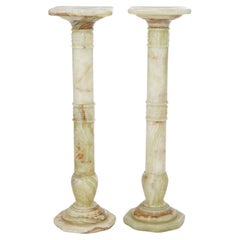
Antique Pair of Classical Carved Onyx Sculpture Display Pedestals Early 20th C
Located in Big Flats, NY
A pair of antique Classical pedestals offer onyx construction in Grecian form with square display platforms over banded bases with octagonal...
Category

Early 20th Century Carved Building and Garden Elements

Materials

Onyx

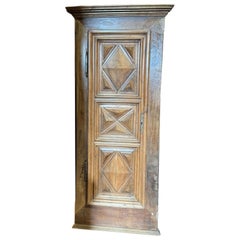
Wall cabinet, single leaf placard, carved diamond-pointed panels
Located in Cuneo, Italy (CN)
Antique wall-mounted, placard, single-door closet front, with beautiful carved diamond-pointed panels, walnut wood, smooth back as it stood inside the wall. Original from the 1700s E...
Category

18th Century Italian Antique Carved Building and Garden Elements

Materials

Nutwood

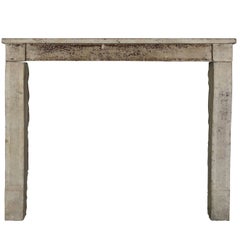
17th Century Antique Fireplace Mantel in Burgundy Hard Stone
Located in Beervelde, BE
This rustic burgundy hard stone fireplace surround has been boucharder and tailer. The original remains of the paint is an nice extra. Perfect for a country style interior. Measures...
Category

17th Century French Louis XIII Antique Carved Building and Garden Elements

Materials

Limestone

Still Thinking About These?

All Recently Viewed