Hand-Carved Building and Garden Elements

to
510
1,576
889
2,334
162
51
Height
to
Width
to
133
116
110
106
87
79
46
42
41
25
14
14
13
11
9
6
1
828
1,079
427
213
206
64
61
10
3
10
3
6
6
1
4
1
3
1,707
869
795
407
204
2,089
919
549
309
279
2,547
2,461
2,474
12
9
6
5
5
Technique: Hand-Carved
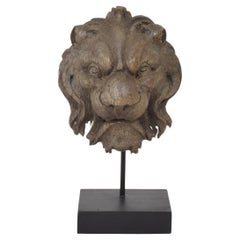
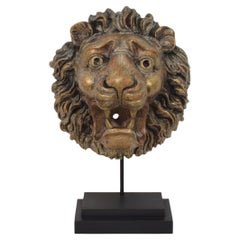
Small 19th Century French Carved Oak Lion Head
Located in Buisson, FR
Beautiful small hand carved oak lion head with a strong expression.. Wonderful period piece with a beautiful weathered look. France circa 1850-1900 Measurements include the wooden ba...
Category

19th Century French Antique Hand-Carved Building and Garden Elements

Materials

Oak

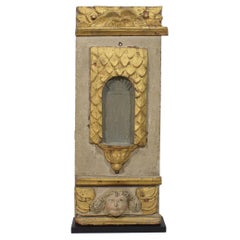
17th Century French Carved Oak Baroque Altar Niche with Angel Head
Located in Buisson, FR
Unique carved oak Baroque altar niche with its original color and gilding. France, circa 1650-1700. Weathered, small losses Measurement includes the wooden base. H:65cm W:27,5cm D...
Category

17th Century French Baroque Antique Hand-Carved Building and Garden Elements

Materials

Wood

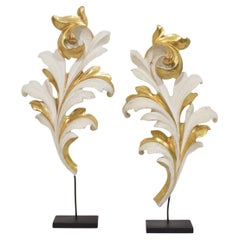
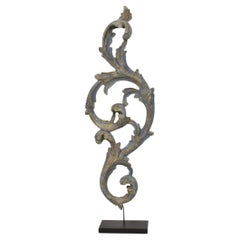
Pair Italian 18/19th Century Hand Carved Giltwood Acanthus Leaf Curl Ornaments
Located in Buisson, FR
Beautiful handcarved giltwood acanthus leaf curl ornaments that once adorned a chapel .Original period pieces that due their high age have a wonderful weathered look. Italy circa 178...
Category

18th Century Italian Antique Hand-Carved Building and Garden Elements

Materials

Wood

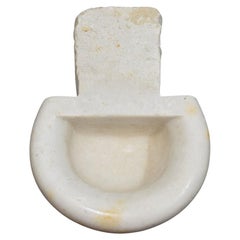
18th Century Italian Baroque Marble Holy Water Font or Stoup
Located in Buisson, FR
Beautiful Baroque marble holy water font or stoup, Unique and original period piece. Italy, circa 1750 H:12cm W:24,5cm D:18-33cm
Category

18th Century Italian Baroque Antique Hand-Carved Building and Garden Elements

Materials

Marble

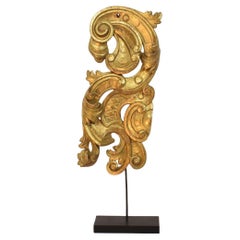
Pair 18th Century Italian Hand Carved Giltwood Baroque Curl Ornaments
Located in Buisson, FR
Beautiful pair hand carved giltwood baroque ornaments that once adorned a chapel or a church. Italy, circa 1750. Weathered, small losses and old repair. Measurement includes the wood...
Category

18th Century Italian Baroque Antique Hand-Carved Building and Garden Elements

Materials

Wood

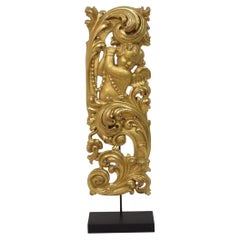
Large 18th Century Italian Hand Carved Giltwood Baroque Curl Ornament With Angel
Located in Buisson, FR
Beautiful and large handcarved giltwood baroque ornament that once adorned a chapel or a church. It represents an baroque angel between acanthus leaves. Amazing period piece in a ver...
Category

18th Century Italian Baroque Antique Hand-Carved Building and Garden Elements

Materials

Wood

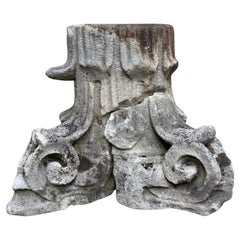
18th Century Italian Carved Limestone Corinthian Capital
Located in Stamford, CT
18th century Italian Neoclassical carved limestone Corinthian capital. Weathered and broken, this architectural fragment makes an resonant outdoor or indoor decorative element. Gre...
Category

Late 18th Century Italian Neoclassical Antique Hand-Carved Building and Garden Elements

Materials

Limestone

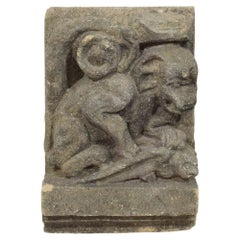
Medieval Gothic French Carved Stone Crowned Gargoyle Panel
Located in Buisson, FR
Original period piece. Extremely rare find. Carved stone gargouille Panel depicting a crowned gargoyle standing on a bird. Gargoyle, a word derived from the French 15th century word ...
Category

15th Century and Earlier French Gothic Antique Hand-Carved Building and Garden Elements

Materials

Stone

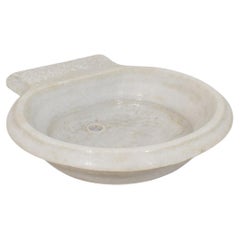
Italian White Marble 18th Century Water Basin or Sink
Located in Buisson, FR
Beautiful and very rare hand-carved white marble water basin or sink, Italy, circa 1750-1800. Weathered. H:11cm W:38cm D:32,5-38,5cm
Category

18th Century Italian Antique Hand-Carved Building and Garden Elements

Materials

Marble

Italian Medieval Romanesque Carved Marble Capital Fragment
Located in Buisson, FR
Rare and beautiful small medieval treasure. Hand carved Romanesque marble capital, Italy, circa 1250-1400. Weathered, small losses. More photo's available on request. H:15,5cm W:16c...
Category

15th Century and Earlier Italian Medieval Antique Hand-Carved Building and Garden Elements

Materials

Marble

Large 18th Century Italian Hand Carved Giltwood Baroque Curl Ornament
Located in Buisson, FR
Beautiful and large handcarved giltwood baroque ornament that once adorned a chapel or a church. Italy, circa 1750. Weathered/ small losses and old repairs. Measurement includes the ...
Category

18th Century Italian Baroque Antique Hand-Carved Building and Garden Elements

Materials

Wood

18th Century Italian Baroque Hand-carved Limestone Holy Water Font or Stoup
Located in Buisson, FR
Beautiful Baroque hand carved limestone holy water font or stoup, Unique and original period piece. Italy, circa 1750. Good but weathered condition just as it should. Measures: H:10c...
Category

18th Century Italian Baroque Antique Hand-Carved Building and Garden Elements

Materials

Limestone

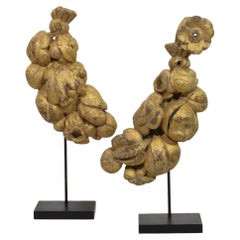
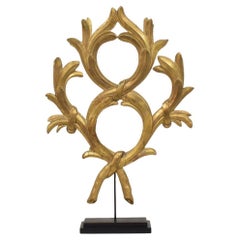
Pair 17/18th Century French Gilded Carved Oak Baroque Ornaments
Located in Buisson, FR
Wonderful pair of two baroque gilt oak ornaments, France, circa 1650-1750. Weathered and small losses. Measurement here below of the largest one and includes the wooden base.
Category

17th Century French Baroque Antique Hand-Carved Building and Garden Elements

Materials

Oak

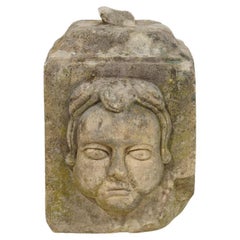
French 17th/ 18th Century Baroque Hand Carved Stone Head Ornament
Located in Buisson, FR
Wonderful 17th/ 18th century baroque hand carved stone head ornament. lovely folk art style. France circa 1650-1750. Weathered and some small losses. H:24cm W:16cm D:20cm
Category

17th Century French Baroque Antique Hand-Carved Building and Garden Elements

Materials

Stone

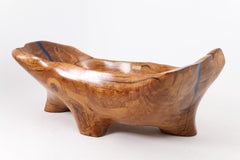
Live Edge Bathtub Carved from Single Piece of Wood, Fully Functional, Logniture
Located in Stara Gradiška, HR
NOTE: This specific bathtub has been sold. It is presented here as a testament to the monumental, one-of-a-kind functional art we can create. We invite you to contact us to commissio...
Category

21st Century and Contemporary Croatian Organic Modern Hand-Carved Building and Garden Elements

Materials

Wood, Oak

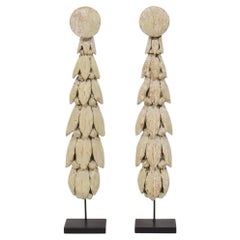
Pair Late 18th Century French Neoclassical Carved Wooden Ornaments
Located in Buisson, FR
Beautiful pair 18th century neoclassical carved wooden ornaments. France circa 1780. Weathered, small losses and old repairs. Measurements are individual and include the wooden base....
Category

Late 18th Century French Neoclassical Antique Hand-Carved Building and Garden Elements

Materials

Wood

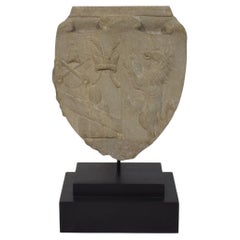
17th / 18th Century Italian Carved Stone Coat of Arms With Unicorn
Located in Buisson, FR
Very beautiful hand carved stone coat of arms with a unicorn. Italy, circa 1650-1750. Weathered. Measurement here below is inclusive the wooden base. H:45,5cm W:27cm D:18,5cm
Category

17th Century Italian Baroque Antique Hand-Carved Building and Garden Elements

Materials

Stone

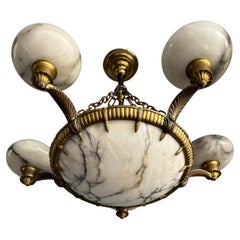
Beautiful Art Deco Bronze Chandelier Pendant with 5 Round Alabaster Shades
Located in Lisse, NL
Striking and practical size alabaster pendant light for the perfect atmosphere. If you’re looking for a chandelier that brings both beauty and character to your home, this antique A...
Category

Early 20th Century French Art Deco Hand-Carved Building and Garden Elements

Materials

Alabaster, Metal, Brass, Bronze

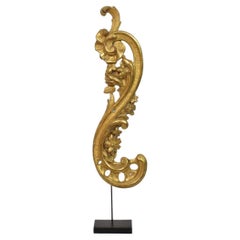
18th Century Italian Hand Carved Giltwood Baroque Curl Ornament
Located in Buisson, FR
Beautiful handcarved giltwood baroque ornament that once adorned a chapel or a church. Italy, circa 1750. Weathered condition. Measurement includes the wooden base.
Category

18th Century Italian Baroque Antique Hand-Carved Building and Garden Elements

Materials

Wood

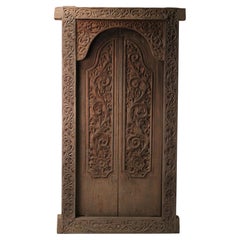
Hand Carved Folk art Balinese teak door, original frame late 19th -early 20th C
Located in London, GB
Rare Antique Balinese Carved Teak Door in Original Frame, circa 1900 A rare antique Balinese carved teak door with its complete original frame, dati...
Category

Late 19th Century Balinese Folk Art Antique Hand-Carved Building and Garden Elements

Materials

Teak

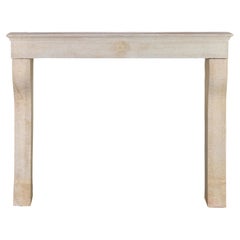
Slow Living Fine Rustic Limestone Fireplace Mantel
Located in Beervelde, BE
This original 19th-century French fireplace mantel, carved from soft-toned limestone, epitomises understated elegance. The hand-carved surface bears authentic tooling marks, enhancin...
Category

19th Century French Louis XIII Antique Hand-Carved Building and Garden Elements

Materials

Stone, Limestone

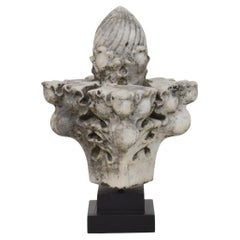
French 19th Century Neo Gothic Marble finial
Located in Buisson, FR
Wonderful small architectural fragment. White marble finial in Gothic style. France circa 1850. weathered. Measurements include the wooden base.
Category

19th Century French Gothic Revival Antique Hand-Carved Building and Garden Elements

Materials

Marble

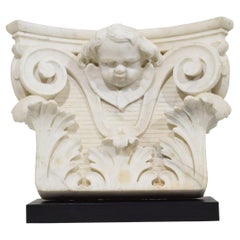
French, 17th / 18th Century, Carved White Marble Capital With Angel Head
Located in Buisson, FR
Spectacular hand-carved white marble capital with angel head. Beautiful weathered white marble . France circa 1650- 1750 Weathered Measurements include the wooden pedestal
Category

18th Century French Antique Hand-Carved Building and Garden Elements

Materials

Marble

Italian 19th Century Hand Carved Wooden Baroque Style Curl Ornament
Located in Buisson, FR
Beautiful handcarved baroque style ornament that once adorned a chapel or a church with a stunning blue color. Italy, circa 1850. Weathered. Measurement includes the wooden base. H:7...
Category

19th Century Italian Baroque Antique Hand-Carved Building and Garden Elements

Materials

Wood

21st Century French Petite Octagonal Central Limestone Fountain
Located in West Palm Beach, FL
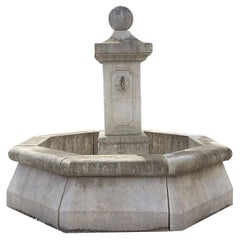
The very traditional octagonal garden fountain was hand carved in limestone after an 18th century original (fountain du reservoir) and can still be seen nowadays in the French villag...
Category

21st Century and Contemporary French Hand-Carved Building and Garden Elements

Materials

Limestone

George Trollope Sons fireplace room, Paris Exhibition 1878 Gold Medal Winner
Located in London, GB
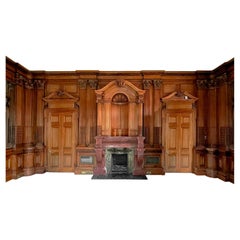
George Trollope and Sons. Exhibited at the Paris Universal Exhibition in 1878 winning a Gold Medal for Excellence. The set forms the four sides of a complete panelled room that was exhibited as a boudoir room or petit salon at the Paris Exhibition 1878 . The main feature and centrepiece of this boudoir room is the Rosso Antico marble fireplace surmounted by an open display niche carved in cedar wood. Each side of the room is composed of various panels and are as follows: One side with a grand Rosso Antico marble fireplace flanked by two doorways. One side with French doors originally opening onto a balcony, flanked by two large bookshelves. One side with a window flanked by two mirrors. The opposite side with three large mirrors. The complete room measures: 21 ft / 6.4 m wide, 17 ft / 5.18 m deep, and 12 ft / 3.65 m high. It could also be used in a number of different combinations to suit various room layouts. The mirrors could be replaced with windows or further bookcases. Each side is decorated with various sizes of finely carved panels and holds ornate Corinthian style columns surmounted with cherubim's on the capitals. Three cherubs are formed at the top of each corner with three columns, at the column bases there are circular carved pedestals to display statues. Published & illustrated in the ‘Illustrated Catalogue of the Paris International Exhibition’. The main part of this room, the Rosso Antico marble fireplace is surmounted by a large open display niche carved in cedar wood are illustrated with a line drawing in the Paris Universal Exhibition catalogue on page 209. The whereabouts of the seminaked caryatids and the marble bust of Alexander Pope are unknown. The bust of Alexander Pope was copied from the original one in Westminster Abbey, London. The Corinthian columns now flanking the niche above the fireplace are also in cedar wood having the identical carved fluting to the rest of the room and were made to replace the caryatid figures. Those Corinthian columns are period to the room and can only have been made shortly after it arrived back to London and before it was reassembled and fitted into the house built by George Trollope and Sons in the 1880's, and where we removed it all from. George Trollope made clever use of Alexander Pope's early 18th-century poetical successes in Great Britain and France by using ‘The Rape of Lock’, a mock-heroic narrative poem Pope wrote in 1712 about Petre who cut off a lock of Arabella’s hair without her permission, as the theme of the boudoir room or petit salon at the 1878 Paris Exhibition. In the original exhibition display of the room set, tapestries depicting the Rape of Lock were hung where the mirrors are now positioned. Alexander Pope's The Rape of the Lock is a humorous indictment of the vanities and idleness of 18th-century high society. Basing his poem on an actual incident among two families of his acquaintance, Pope intended his verses to quench hot tempers and to encourage his friends to laugh at their own foolishness. The poem is an outstanding example in the English language of the genre of mock-epic. The 'epic' was considered one of the most serious of literary forms; it had been applied, in the classical period, to the trivialities of love and war. Pope’s mock-epic is not to mock the form itself, but to mock his society in its very failure to rise to epic standards, exposing its pettiness by casting it against the grandeur of the traditional epic subjects and the bravery and fortitude of epic heroes: Pope’s mock-heroic treatment in The Rape of the Lock underlines the ridiculousness of a society in which values have lost all proportion, and the trivial is handled with the gravity and solemnity that ought to be accorded to truly important issues. The 18th-century society in this poem fails to distinguish between things that are important and things that are not. The poem mocks the men it portrays by representing them as unworthy of a heroic culture. Therefore the mock-epic follows the epic in that its main concerns are serious and moral. The point that the theme must now be satirical rather than earnest is symptomatic of how far the culture has fallen. Retaining the original exhibition label The back of the panelling still retains two original labels printed with the 'Union Jack' and printed adjacent to it, 'The Secretary Royal British Commission for the Universal Exhibition 1878 Champ de Mars Paris'. Adjacent to that and below, printed and written in ink vertically: Exhibitor: (and signed in ink) George Trollope & Sons. Address: (written in ink) Halkin Street West. London. Allotment in Block: (written in ink) a2. In the printed floor plan 'a2 square' is in the very first line to the right of the floor plan and handwritten in ink with a 'diamond shape' also written with '101' within it. This pin points where George Trollope's stand was located. With thousands of items being displayed at the Exhibition, this label would have been the floor plan for the craftsmen, so they knew the correct place to install the boudoir room or petit salon. The firm continued expanding house building and interior decoration side of the business and by 1849 was also trading as an estate agency, letting and controlling property for the Grosvenor Estates. A separate branch of cabinet-makers, bearing the family name, was opened at West Halkin Street, London. becoming known as 'The Museum of Decorative Arts' (looked after by George Robinson). Here Trollope and Sons also sold high-class antique furniture made by other makers. In 1851, the firm became formally known as George Trollope and Sons. West Halkin Street, London. The address was recorded in the listing for the firm in The Furniture Gazette Directory, 1876 & 1877. Period Press Coverage & Art Critic Review. everal newspapers also thoroughly describe George Trollope and Son's stand including the different tapestries that were hung where the mirrors are now, illustrating the poem 'The Rape of Lock', by Alexander Pope. Marius Vachon, a French Art Critic and journalist, who wrote for the journal ‘La France’ published an extensive review of the Trollope and Sons stand in a book called Les Merveilles de l'Exposition de 1878 (The Wonders of the 1878 Exhibition). Note: In the World Fairs translation it states door frame, Marius Vachon had originally written ‘chambranle’ in French, 'chambranle' loosely translates to a frame around something, and should read in its correct context: ‘fireplace in rosso antico’. We have taken the extract below written by Marius Vachon in its translated form from: Les Merveilles de l'Exposition de 1878, (The Wonders of the 1878 Exhibition). This puts into perspective the importance of this fine quality room interior when he viewed it at the exhibition in 1878: Marius Vachon: English furniture is very curious to observe; irreproachable from the point of view of execution, the furniture of our neighbours always reaches the last degree of respectability and comfort. One thing to be noticed is that for large pieces of furniture, the English upholsterer is transformed into a sort of architect; everything he makes takes on a monumental aspect. The first object that catches the eye when one enters the furniture class is the beautiful boudoir-salon exhibited by Mr. Trollope. The boudoir (or petit salon), of carved cedar wood, is an attempt to reproduce the style which prevailed in England during the first decade of Queen Anne's reign, and all the details have been studied, but not copied, from examples of decorative work of the time. The fireplace is in "rosso antico" movement, and the ceiling is in portable plaster. The panels painted on canvas represent scenes from the heroic-comic poem "The Abduction of the Hairpin," (The Rape of Lock) written by Alexander Pope in 1712, the eighth year of Queen Anne's reign, in which the customs and mores of the time are satirized in a pleasing manner. The apotheosis of the Loop and its sidereal transformations will form the decoration of the ceiling. In these illustrations of Pope's charming poem, the costumes and accessories have been taken from models of the time; and the bust of the poet, copied from his tomb in Westminster Abbey, occupies the niche in the centre of the mantelpiece. M. Marius Vachon, the period writer of the above continues with: Now we shall mention at random the magnificent dining table of Messrs. Johnston and Co., their oak mantelpiece, their boudoir table; Mr. Watt's drawing-room mantelpiece stepped in the old style and imitating the Japanese; Mr. James Shoolbred's great The Decorative Arts Society on Trollope and Sons The boudoir or petit salon is mentioned again in the Decorative Arts Society: Trollope did not exhibit such highly rated objects at the 1878 Paris Exhibition as at previous exhibitions; items included a large mirror frame carved in limewood in Renaissance style and a satinwood cabinet in Adam revival style, with a similar armchair (illus. Meyer (2006), p. 242) and probably two rooms; one was a boudoir in cedar wood in Queen Anne style and the other was a boudoir decorated by the firm in the theme of Pope’s The Rape of Lock. In the above extract, it is quite clear that the two rooms mentioned are in fact the very same room, because the fireplace and niche are illustrated in The Paris Universal Exhibition catalogue on page 209 and Marius Vachon describes the rest of the room set in the above… Trollope and Sons exhibition pieces listed and described by Meyer in an article he wrote for: The Decorative Arts Society 1850 to present, Journal 25 in 2001., where he points out the importance of George Trollope and Sons and mentions a table by Trollope exhibited at the 1867 exhibition that sold for £40,000 in 1996. He also mentions a cabinet exhibited by Trollope at the International Exhibition of 1862 that sold at Sotheby's in 1997 for £150,000. Interest was not as strong in the 1990's as it is today for rare exhibition pieces, high quality items were abundant back then, it was a golden era when the most beautiful works of art just kept coming onto the market. But there are exceptions as in this instance, when a unique, gold medal-winning exhibition work of art comes onto the market for the very first time. Meyer continued researching and writing about the great exhibitions and released his book in 2006, 'The Great Exhibitions, London, New York, Paris and Philadelphia 1851- 1900, where he mentions only in passing, The Boudoir Room or Petite Salon exhibited by Trollope, he even states that an image was not reproduced and that Trollope's exhibits in 1878 were not up to the quality and class of the items Trollope exhibited in London in 1862 and Paris in 1868. This is probably because Meyer didn't know of the line drawing illustrating the Roso Antico Fireplace, Niche and Panelling reproduced in The Illustrated Catalogue of the Paris International Exhibition 1878 shown in the above which Geering recently uncovered. John Meyer continues in the DAS journal: Undoubtedly they (Trollope) are a firm worthy of further research as they were right at the forefront of the furniture business in London from 1860 to 1880. Our research shows that the Petite Boudoir was awarded the gold medal for excellence in 1878 (see Journal La Liberté 23-10-1878 with the list of all medals attributed), something George Trollope and Sons did not achieve at the London 1862 and the Paris 1867 exhibitions. Jonathan Meyer joined Bonham's in 1977. He was Director at Sotheby's in charge of 19th Century Furniture from 1994 to June 2007. He was also chairman of the Fine Arts Faculty for The Royal Institute of Chartered Surveyors. In the original description from the article in Les Merveilles de l’exposition de 1878, M. Marius Vachon states: The first object that catches the eye when one enters the (English) furniture class is the beautiful boudoir-salon exhibited by Mr. Trollope. Suggesting, it was in his opinion the very best on display in the English section, and being awarded the gold medal for excellence can only add weight to this. Adjacent to the original label that was printed by The Secretary - Royal British Commission for the Universal Exhibition 1878 in stencil ‘TO BE KEPT’, i.e. ‘to be returned’. This confirms why it came back to London. We removed the Boudoir Room or Petite Salon from a Trollope house, part of a grand high-class housing estate in London which around the time of the exhibition Trollope and Sons were in the process of building, and where the room set was installed directly after it returned from the exhibition in 1878 until now. Worthy of note is the machines that did the carving for the Boudoir Room or Petite Salon and also did all of the decorative carving (most of which was linenfold carving) for the Houses of Parliament, London. This machine, the engraving and description of which we copy from Engineering, was specially designed by its inventor, Mr. Jordan, for assisting in the production of the vast amount of carved decorations required for the walls and ceilings of the Houses of Parliament, London, and it was so employed during the entire progress of the work. The late Sir Charles Barry was so well satisfied with it, that he frequently declared it would have been impossible to have accomplished the work without it. The Department of Woods and Forests employed five of the machines at the Government Works, Thames Bank, for several years; and the machines have now passed into the hands of Messrs. George Trollope and Son, and are still used in the same building. They also exhibited the new technique of xylatechnography and sgraffito, methods of impressing coloured design into soft wood and engraving veneer to reveal the base wood. The newspaper, La Liberte October, 23rd 1878 listing the medal winners of the Paris 1878 exhibition. Third column, ''GROUPE III MOBILIER ET ACCESSOIRES'', (GROUP III FURNITURE AND ACCESSORIES). Medailles d'or. (Gold Medals) where G Trollope et fils (G Trollope and Sons...
Category

1870s Antique Hand-Carved Building and Garden Elements

Materials

Marble

19th-Century Parisian Marble Fireplace in Bleu Fleuri Authentic French Mantel
Located in Beervelde, BE
Discover an exceptional piece of French architectural history with this authentic 19th-century Parisian fireplace surround, crafted from the rare an...
Category

19th Century French Louis XIV Antique Hand-Carved Building and Garden Elements

Materials

Marble

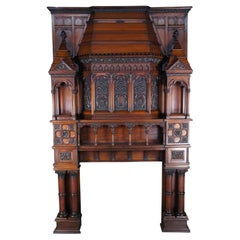
Monumental Rare Antique Renaissance Revival Gothic Walnut Fireplace Mantel 11 FT
Located in Dayton, OH
Very large and exceedingly rare English Renaissance Revival fireplace mantel, circa 1860s. Made of hand carved walnut featuring a gothic cathedral design. The fireplace portion is ...
Category

Mid-19th Century Gothic Antique Hand-Carved Building and Garden Elements

Materials

Walnut

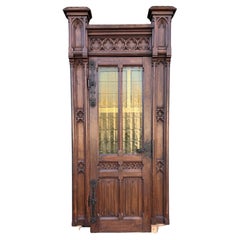
Impressive Antique Hand Carved Oak Gothic Revival Door Complete with Wall Frame
Located in Lisse, NL
Stunning Gothic architectural door with strong iron hardware in original frame. This striking and all hand carved door was originally probably part of a church or monastery and the ...
Category

19th Century European Gothic Revival Antique Hand-Carved Building and Garden Elements

Materials

Iron

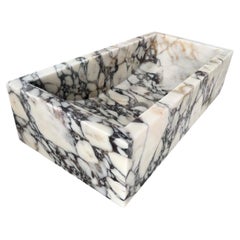
Solid Calacatta Viola Marble Sibk - Handmade Wall Mounted Viola Sink
Located in İnegöl, TR
Calacatta Viola marble sinks are crafted from high-quality, Italy-sourced natural stone. Due to the natural formation process of the marble, each piece features a unique veining patt...
Category

21st Century and Contemporary Turkish Charles II Hand-Carved Building and Garden Elements

Materials

Stone, Marble

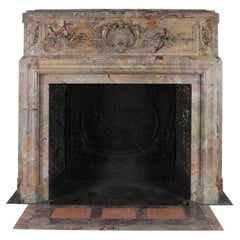
Palatial Statement Chimney Piece In Sarrancolin Marble For Luxury Design
Located in Beervelde, BE
This stunning 18th-century period fireplace mantel, sculpted in exclusive Royal Sarrancolin Fantastico marble, showcases intricate carvings and decorations, including a central shell...
Category

18th Century Belgian Baroque Antique Hand-Carved Building and Garden Elements

Materials

Marble

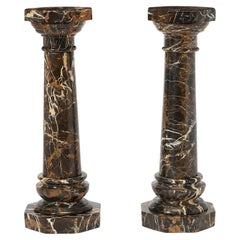
Pair of rare Noir Saint Laurent Marble Pedestals
Located in New York, NY
A refined pair of rare Noir Saint Laurent marble pedestals, with a clean and timeless design ideal for displaying sculptures, urns, or decorative objects. The square form and substan...
Category

19th Century Italian Neoclassical Antique Hand-Carved Building and Garden Elements

Materials

Marble

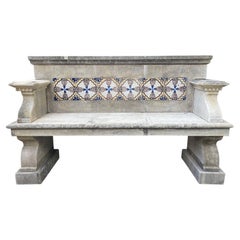
21st Century European Mosaic Garden Bench Saone
Located in West Palm Beach, FL
A Neo-classical garden bench in hand carved limestone. The back is decorated with vintage tiles from France. The armrests have a dentil decorative pattern and the feet have in-swept ...
Category

21st Century and Contemporary European Neoclassical Hand-Carved Building and Garden Elements

Materials

Limestone

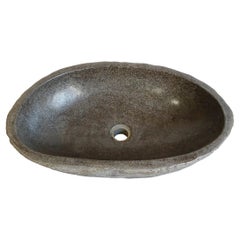
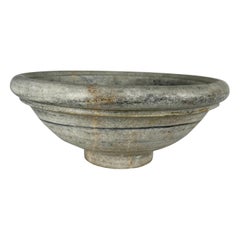
Stone Sink or Basin from Indonesia
Located in New York, NY
A solid stone sink or basin, hand-crafted in Indonesia. Hand-carved from volcanic rock, the outside of the piece preserves its naturally rugged stone texture in yellow and light be...
Category

2010s Indonesian Organic Modern Hand-Carved Building and Garden Elements

Materials

Stone

19th Century French Carved Wooden Lion Head
Located in Buisson, FR
Amazing hand carved wooden lion head with a strong expression.. Wonderful period piece with traces of old color. France circa 1850-1900 Weathered. measurements include the wooden bas...
Category

19th Century French Antique Hand-Carved Building and Garden Elements

Materials

Wood

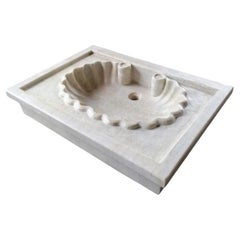
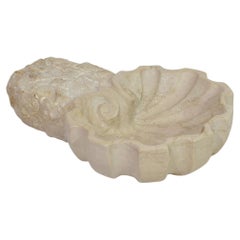
Solid Marble Shell Sink Basin
Located in Cranbrook, Kent
Classical Marble Sink Basin The shell is hand carved and Integrated into one square block of marble 20th century, we have one other the same which could work along side as a pair if...
Category

20th Century Classical Greek Hand-Carved Building and Garden Elements

Materials

Carrara Marble

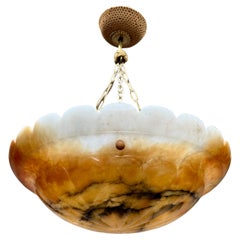
ART DECO 19.6” Diameter Perfectly Balanced White Black Alabaster Pendant Light
Located in Lisse, NL
Beautiful Art Deco White Black Veins Alabaster Pendant Light Fixture with Rope Matching Canopy (circa 1910–1920). This rare design and fairly large chandelier from the h...
Category

Early 20th Century Italian Art Deco Hand-Carved Building and Garden Elements

Materials

Alabaster, Brass, Wire

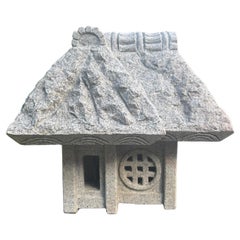
Japanese Old Granite Garden House Stone Minka Lantern
Located in South Burlington, VT
Here's a beautiful and unique way to accent your indoor or outdoor garden space with this Minka Farmhouse stone lantern from old Japan! This is a hand carved lantern of one of Jap...
Category

Mid-20th Century Japanese Showa Hand-Carved Building and Garden Elements

Materials

Stone

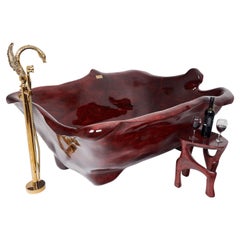
Live Edge Bathtub Carved from Single Piece of Wood, Fully Functional, Logniture
Located in Stara Gradiška, HR
Unique functional sculpture carved from a single piece of wood in the shape of a bathtub. This magnificent bathtub is carved by artists with basic wood carving power tools with dedic...
Category

21st Century and Contemporary Croatian Organic Modern Hand-Carved Building and Garden Elements

Materials

Wood

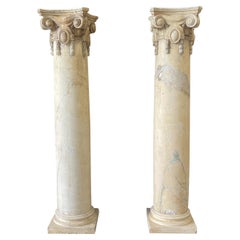
19th Century Italian Pair of Antique Ionic Style Monumental Marble Columns
Located in West Palm Beach, FL
A pair of late 19th Century, antique Italian Ionic style columns, meticulously hand carved from solid marble, in good condition. These monumental architectural elements feature class...
Category

Mid-19th Century Italian Antique Hand-Carved Building and Garden Elements

Materials

Marble

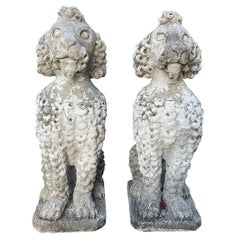
20th Century Vintage Pair of French Dog Poodle Garden Statues
Located in West Palm Beach, FL
A pair of vintage French poodle garden statues in a seated and attentive position, in good condition. The garden ornaments are hand carved limesto...
Category

Early 20th Century French Hand-Carved Building and Garden Elements

Materials

Limestone

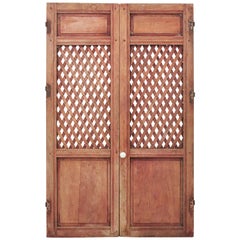
Spanish Carved Wood Lattice Rustic Doors, Pair
Located in Barcelona, ES
Antique Spanish 19th century cupboard rustic doors with lattice and carved panels, early 19th century. These antique doors come from a cottage house in Galicia at the North coast of Spain. They were part of an antique lattice...
Category

Early 19th Century Spanish Rustic Antique Hand-Carved Building and Garden Elements

Materials

Wood

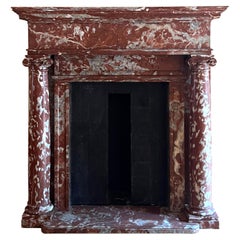
Antique Red Languedoc Marble Fireplace Surround For Grand Interior Decor
Located in Beervelde, BE
This Rouge Languedoc marble fireplace embodies the Renaissance Revival style with its intricate detailing and craftsmanship. The deep red marble, accented with striking white veining...
Category

19th Century Belgian Renaissance Revival Antique Hand-Carved Building and Garden Elements

Materials

Marble

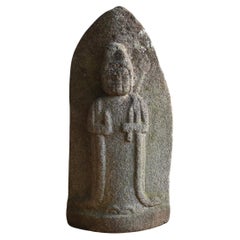
Japanese Edo Period Kannon Stone Buddha/1700-1850/Garden Ornament
Located in Sammu-shi, Chiba
We are pleased to present a simple stone Buddha of Kannon Bosatsu, made in Japan during the Edo period (circa 1700-1850). Kannon Bosatsu is known in Buddhism as a merciful savior wh...
Category

18th Century Japanese Edo Antique Hand-Carved Building and Garden Elements

Materials

Stone, Granite

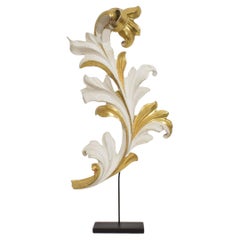
Italian 18/19th Century Hand Carved Giltwood Acanthus Leaf Curl Ornament
Located in Buisson, FR
Beautiful handcarved giltwood acanthus leaf curl ornament that once adorned a chapel .Original period piece that due it’s high age has a wonderful weathered look. Italy circa 1780/...
Category

18th Century Italian Antique Hand-Carved Building and Garden Elements

Materials

Wood

Large 18th Century Italian Neoclassical Carved Giltwood Ornament
Located in Buisson, FR
Beautiful 18th century neoclassical giltwood ornament. Italy circa 1780. Weathered,small losses and old repairs. Measurements include the wooden base. H:67cm W:45cm D:9cm
Category

18th Century Italian Neoclassical Antique Hand-Carved Building and Garden Elements

Materials

Wood

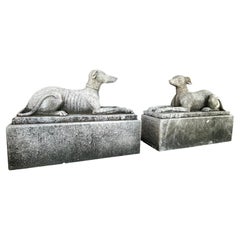
20th Century British Vintage Pair of Whippet Garden Limestone Statues
Located in West Palm Beach, FL
A pair of hand carved limestone English whippets or greyhounds like. The antique garden statues have raised heads, and in an alert extended posi...
Category

Early 20th Century English Hand-Carved Building and Garden Elements

Materials

Limestone

15th C Gothic Tabernacle 4 ft.+ Rare Architectural Religious Art, Museum Quality
Located in Vero Beach, FL
15th century period Gothic Tabernacle, extremely rare (Medieval) architectural religious art, museum quality ecclesiastical altar piece. This is an ...
Category

15th Century and Earlier German Medieval Antique Hand-Carved Building and Garden Elements

Materials

Wood, Paint

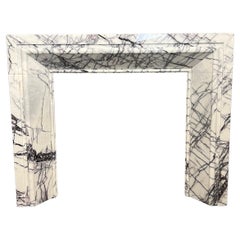
21st Century Lilac Breche Marble Fireplace Surround
Located in London, GB
21st Century Lilac Viola Marble Fireplace Surround A spectacular Lilac Viola Breche marble fireplace surround, showcasing one of the most visually dramatic and sought-after marbles i...
Category

21st Century and Contemporary British Modern Hand-Carved Building and Garden Elements

Materials

Marble, Breccia Marble

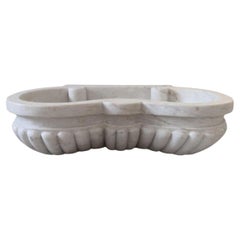
Classical Solid Marble Sink Basin
Located in Cranbrook, Kent
Classical Marble Sink Basin Serpentine fronted character piece with deep gadroon style carving 24" wide Limited Stock
Category

21st Century and Contemporary Italian Greco Roman Hand-Carved Building and Garden Elements

Materials

Carrara Marble

Italian Round Limestone Sink-Early 20th Century
Located in Los Angeles, CA
Italian early 20th century round shaped carved limestone sink with drain hole.
Category

20th Century Italian Classical Roman Hand-Carved Building and Garden Elements

Materials

Limestone

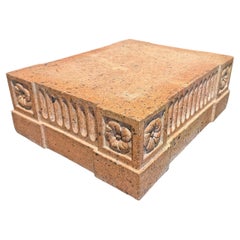
Pink Stone Architectural Plinth
Located in Chicago, IL
Carved from warm pink Cantera stone, this architectural fragment—likely Mexican in origin—offers a beautifully weathered glimpse into classical design. Rectangular in form and substa...
Category

20th Century Mexican Neoclassical Hand-Carved Building and Garden Elements

Materials

Stone

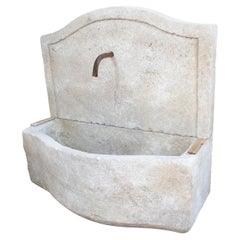
Charleval 2-Piece Limestone Wall Fountain from Provence, France
Located in Dallas, TX
More information coming soon… A perfect fountain for a smaller area, this wall fountain was hand carved in two sections of limestone in Provence, France. The shaped basin has been p...
Category

21st Century and Contemporary French Hand-Carved Building and Garden Elements

Materials

Stone, Limestone, Metal, Iron

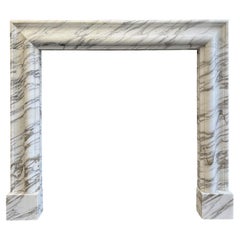
An Arabescato Marble Bolection Fireplace Mantle
Located in London, GB
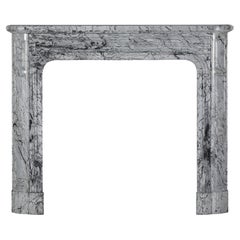
A well proportioned Bolection fireplace surround in Italian Arabescato Corchia marble. The warm variegated colours of the veining showing nicely from the pale creamy background colou...
Category

2010s English Queen Anne Hand-Carved Building and Garden Elements

Materials

Marble

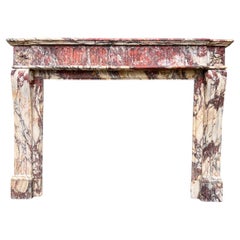
A Large Louis XVI Breche Marble Fireplace Mantel
Located in London, GB
A large and highly variegated Breche de Saint Maximin marble fireplace from the very late 18th century. Rich in colours of purple, creams, white, gold and deep reds. The console jamb...
Category

Late 18th Century French Louis XVI Antique Hand-Carved Building and Garden Elements

Materials

Marble

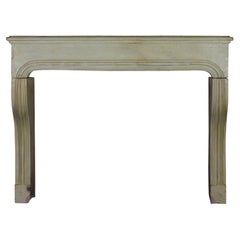
18th Century French Farmhouse Interior Stone Fireplace Mantel
Located in Beervelde, BE
Original French sandstone fireplace surround. Timeless texture of the surface. The Fronton has been professionally repaired. Rest is perfect imperfection restoration and artempo cond...
Category

18th Century French Louis XIV Antique Hand-Carved Building and Garden Elements

Materials

Limestone, Sandstone

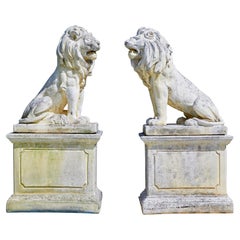
Fine pair of mid century carved stone lion statues
Located in Debenham, Suffolk
Fine pair of mid century carved stone lions circa 1970. Made from re-constituted stone and have been outside our shop ever since. Lions with slight differing stances, fixed to pede...
Category

Late 20th Century Italian Georgian Hand-Carved Building and Garden Elements

Materials

Stone

Large Great Design, Antique Koi Fish Color Like, Alabaster Shade Pendant Light
Located in Lisse, NL
One of a kind light fixture with a stunning “ flameboyant “ alabaster shade. This top-class Art Deco pendant features a hand-carved alabaster dish shade, showcasing stunning natural...
Category

Early 20th Century Italian Art Deco Hand-Carved Building and Garden Elements

Materials

Alabaster, Metal

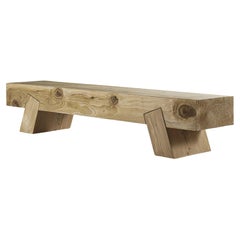
Outdoor Bench Crafted From Solid Block of Scented Cedar Wood
Located in NEW YORK, NY
This bench embodies simplicity with its essential and geometric lines, featuring a substantial beam as its seat. The focal point is the material itself: a single block of solid cedar...
Category

21st Century and Contemporary Italian Modern Hand-Carved Building and Garden Elements

Materials

Cedar

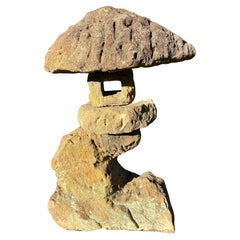
Japanese Unusual Stone Spirit Lantern 35 Inches , portable
Located in South Burlington, VT
From our recent Japanese acquisitions Japan, an unusual and handsome red stone spirit lantern in a mountain style and measuring: 35 inches high and 24 inches wide at bottom, four p...
Category

Mid-20th Century Japanese Showa Hand-Carved Building and Garden Elements

Materials

Stone, Sandstone

Still Thinking About These?

All Recently Viewed