Hand-Crafted Windows
to
7
25
17
48
Height
to
Width
to
9
8
7
4
3
1
20
28
10
13
3
3
1
2
1
1
6
36
27
26
16
16
28
15
14
13
13
48
48
48
Technique: Hand-Crafted
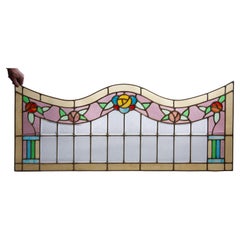
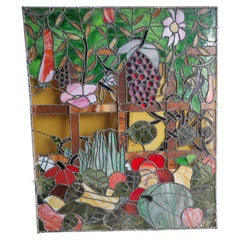
Art Deco Stained Flower Quirlande Glass Window in Etched Glass and Brass
Located in Antwerp, BE
A 1920s Flower Quirlande glass window in various glass, etched glasses, red glass, yellow, amber, pink, green, and blue decorations. Stylized flowers are decorated on a pillar, with ...
Category
1920s Belgian Art Deco Vintage Hand-Crafted Windows
Materials
Brass
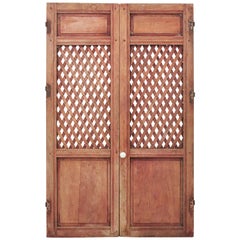
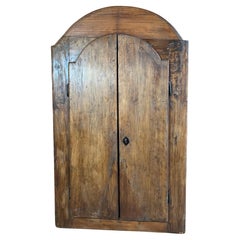
Spanish Carved Wood Lattice Rustic Doors, Pair
Located in Barcelona, ES
Antique Spanish 19th century cupboard rustic doors with lattice and carved panels, early 19th century.
These antique doors come from a cottage house in Galicia at the North coast of Spain. They were part of an antique lattice...
Category
Early 19th Century Spanish Rustic Antique Hand-Crafted Windows
Materials
Wood
Stained Glass Window Art Deco
Located in Antwerp, BE
Stained glass in Art Deco decor tiled.T he stained glass window is best illuminated with lighting or hung in front of the window to capture the nuances as the day progresses.
Category
1930s French Art Deco Vintage Hand-Crafted Windows
Materials
Art Glass, Cut Glass

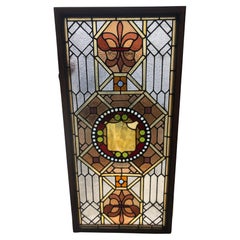
Early 20th Century Stained Glass Window in a Wood Frame
Located in Stamford, CT
Beautiful Antique Early 20th Century leaded stained glass window with a Jeweled center and Fleur De Lis pattern on the top and bottom. It is in gr...
Category
Early 20th Century American Hand-Crafted Windows
Materials
Lead

$2,600 Sale Price
20% Off
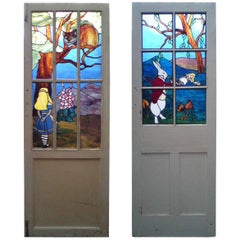
Alice in Wonderland, A Five Piece Suite of Stained and Leaded Glass Doors.
Located in London, GB
Alice in Wonderland incredible suite of stained and leaded glass set in the original doors and windows,.
Please note this suite is in two listings and the price here is for the five pieces in both listings.
A one-off commission was removed from a large house in England.
In this listing, there are two doors with upper stained glass panels with Alice in Wonderland and the Smiling Cheshire Cat sitting in a tree and another door with The Mad Hatter...
Category
Late 20th Century English Mid-Century Modern Hand-Crafted Windows
Materials
Stained Glass
19th Century French Napoleon III Period Wrought Iron Balustrade, Window Guard
Located in Dallas, TX
19th Century French Napoleon III Period wrought iron Balustrade ~ Window Guard is a stunning work of the metalsmith's art! Hand-crafted during the middle of the 19th century, it feat...
Category
Mid-19th Century French Napoleon III Antique Hand-Crafted Windows
Materials
Wrought Iron
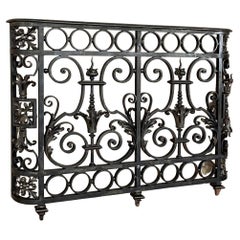
Selection of eight restored 19th C Neo-Gothic Stained-Glass Windows
Located in Leuven , BE
The Color Experience: Stained-glass windows
“Color is a power which directly influences the soul” (Wassili Kandinsky, Moskou 1866 – Neuilly-sur-Seine, 1944)
“Color! What a deep and mysterious language, the language of dreams!” (« La couleur ! Quelle langue profonde et mystérieuse, le langage des rêves », Paul Gauguin, Paris, 1848-Fatu-Hiva, 1903)
‘Color and feeling’, ‘color and meaning’, these are concepts that have gone together since time immemorial. Artists and craftsmen have a special bond with color. After all, it is a means of expression that can have a real reinforcing effect. Especially linking color with light offers unlimited possibilities. Glaziers and glass painters have tried to master both these ‘instruments’ for centuries.
The set of beautifully restored neo-Gothic windows in our collection are enough reason for us to let these works of art figure in a broader story. As a bonus, we would like to introduce you to the contemporary stained-glass artist and stained-glass restorer, Daniël Theys. whose workshop is in Sint-Pieters-Rode (Belgium). He talked to us about the materials and techniques he used for the restoration of our set of neo-Gothic stained-glass windows. A fascinating look at the tricks of the trade from a specialist!
A bird’s eye view of the history of the European stained-glass window.
Although the Romans already used translucent glass plates to cover wall openings, the stained-glass window reached its peak in Europe between 1150 and 1500. A period also known as the era of the cathedrals. At that time, stained-glass windows became more than just a way to let in the light, and to keep the space closed off. From now on, their functionality was also found in their didactic value. The biblical and saints’ stories that adorned the stained-glass windows became a kind of poor man’s bible. They brought, as it were, the knowledge of the holy scriptures in an understandable, pictorial way. At the same time, the colored light provided additional symbolism. The invading light was interpreted as a manifestation of God. It is also no coincidence that the main altar was bathed in light. It was the place where the most important sacrament was celebrated, that of the Eucharist. How were these magical colors obtained? Well, during the 12th and 13th centuries, metal oxides gave color to the glass. Copper, for example, produced different colors in the various stages of oxidation. The metal could color the glass light blue, green and even red. It should be noted that from the 13th century onwards, clear glass, which was cheaper and at the same time allowed more light into the buildings, was used more often. A century later, in the years 1400 to 1500, glass painters frequently painted onto the glass with a ‘stain’ of silver chloride or sulfide. The painted piece of glass was heat-treated in a furnace. The heating process ensured that the silver ions migrated into the glass and became suspended within the glass network. The stain gave colors ranging from a pale yellow to a rather deep red. This new technique allowed glaziers to get more than one color on a single glass fragment. The shades produced by painting in silver chloride were well suited for depicting golden crowns, scepters and other gilded objects and ornaments. But the most important advantage of the technique was the fact that the glass painter could now make transitions from yellow tones to white without having to apply separations with lead strips! This also improved the legibility of the pictured scene.
You can imagine that the labor-intensive process of the production of stained-glass windows was a very costly affair and therefore it was often patrons who donated them to a church or a chapel. The benefactors were usually eager to propagate their social status and were moved by concern for their salvation.
In the 16th century, stained-glass windows also began to appear in secular buildings such as town halls, the homes of the wealthy and commercial premises such as inns. It is striking that during this period the use of lead strips that border many parts of the image was further reduced in favor of real painting on stained glass. This was due to an increasing love of detail. For example, one wanted realistically painted portrait heads. Working with enamel paints was cumbersome. Each newly applied color had to be burned into the glass before another color or overpainting could be applied. It was not only the coloring of the glass that was complicated, the process of obtaining flat glass plates required many steps as well. The glazier blew a glass bulb with a blowpipe and then cut it open. Finally, each half of the sphere was turned around so fast that it became a disc. In later periods, the glazier blew out his glass bulb into a cylinder. Once the cylinder had cooled, its closed ends were removed, and the long sides were cut open. The pieces of glass obtained were then heated and flattened. During the 16th century, there was a division of labor between the stained-glass designer, the glazier, and the glass painter. It happened as well that the stained-glass artist used prints as models for his stained-glass windows. Whoever drew the design, the glazier always needed a model on the right scale, the so-called cartoon. On the cartoon, the lead strips were clearly marked, and the use of colors was indicated. Contracts at the time show that the price of stained-glass windows was calculated per square foot. The price per square foot included the labor and material costs. The price of the cartoon was not included.
In the 17th century, the work of glass painters remained important. At the same time, there was a growing popularity of stained-glass windows with heraldic themes. In the Low Countries there were several high-quality glass painters active.
During the 18th century, glass painting went downhill in our regions. The French occupation of the Southern Netherlands resulted in the destruction and sale of religious stained-glass windows.
It was only around the middle of the 19th century that the young Belgian state experienced a revival of stained glass. The renewed interest in the Middle Ages, the so-called ‘gothic revival’, caused a wave of restoration of old stained-glass windows of churches and orders for neo-gothic stained-glass windows. The Sint-Lucas art schools in Belgium played an important role in this. Industrial developments in the glass and steel industries naturally had an important hand in the popularity of stained-glass windows. Stained-glass had a wide range of uses; think of stained glasses in winter gardens, domes, windows, and doors of large mansions. Significant glazier’ studios arose in several larger Belgian cities. In Brussels, for example, you had the workshops of Capronnier and Colpaert, in Bruges the studios of Coucke and Dobbelaere, in Ghent the companies of Ganton-Defoin or Ladon. During the 19th century, glaziers followed the style developments in the visual arts. For example, the number of windows in Art Nouveau and Art Deco style is large. The restored stained-glass windows with male and female saints that we offer for sale, come from a building in Laeken, near Brussels. They probably decorated the space of a church, chapel, convent, or Catholic school. In the results of the interview with glass restorer Daniël Theys, you will learn more about the particularities of these splendid windows.
Chatting and browsing in the workshop of Daniël Theys
The Belgian Glass restorer and glass blower, Daniël Theys (), made a career switch at a later age and has been active in the profession since 1987. He is an important player in the field of stained-glass window art in Belgium. Moreover, he is the only one in the country who still masters the technique of glass etching. Daniël Theys receives many commissions from small parish churches to restore old stained-glass windows to their former glory. He made a name for himself in that niche and that is how Spectandum brought the set of 19th century stained glass windows to his workshop for reconstruction. They were delivered in old numbered wooden crates and Daniel had to start puzzling.
Numbered wooden crates with sections of the stained-glass windows
Normally a glazier starts working from a drawing with a scale of 1:1 (full size drawing), but in this case each piece had to be cataloged and photographed. The smaller pieces were grouped on the light box and photographed in their entirety. Then Daniël made a drawing of the remaining pieces that he had puzzled together with great care.
Smaller pieces identified and grouped on the light box
The restauration guidelines of the Agency for Monuments and Landscapes are not always the same as those of a restorer. For this reconstruction, Daniël primarily considered the purpose of the stained-glass windows. It had to be an aesthetic and salable set of stained-glass windows, so the choice of filling the gaps with neutral glass or epoxy was not really an option. Theys left well-executed previous restorations untouched. The windows may have been repaired three or four times in the past.
Piece of a cloak with glass shards from different periods (restorations)
Another problem Daniel faced during the restoration was the fact that some small parts of the old grisaille had been eaten away by microorganisms. The defect – caused by moisture – can be seen from the discoloration of the grisaille. The black-brown color is turned red.
This fragment shows well how the brown grisaille has turned red due to the attack of micro-organisms
The stained-glass windows of the 19th century are made of ‘in the mass-colored’ glass. This means that the colors were added to the liquid glass during its production process. This type of glass differs from glass colored with enamel paint, which became popular from the interwar period. The latter process involves applying enamel paint (this is a glass powder with a metal oxide to which a medium has been added) to the colorless glass. When firing the glass with the enamel paint, the powder fuses with the glass. The colors of email painted glass are less intense and less brilliant than those of ‘in the mass-colored glass’.
Jars with colored powder for the enamel paints
For the restoration Daniël only worked with mouth-blown glass, both with ‘in the mass-colored glass’ and with ‘verre plaqué’. This is blown glass composed of several layers of different shades. Over the years, Theys built up a large stock of old blown glass. Colored blown glass always has sliding shades. For example, a red piece of glass can have a color transition from bright red to light orange. These differences in shades are the result of the different thicknesses of the piece of glass. It allows the glazier to use a wide variety of shades.
The purple-red foliage with light blue accents was obtained by etching away parts of a piece ‘verre plaqué’. A small part of the lower glass layer is exposed.
The windows were completely re-leaded by the restorer because there was virtually no ‘lead net’ preserved. In general, lead strips only have a limited lifespan because of oxidation processes. Daniël removed the old lead remnants and placed new lead profiles. Then he applied putty between the glass fragments and the lead strips to seal the lead. A window must be made watertight. The current condition of the windows is excellent.
Decorative glass part with original lead remnants
New lead strip
The set of stained-glass windows we present today, originally consisted of windows of 5 to 6 m high. After all, they originally adorned a neo-gothic church. Since the original dimensions are not suitable for private buildings, it was decided to only restore the figurative representation.
The original spire of one of the windows
Thanks to a suspension eye, the window can be hung. There is also the possibility to place the window in an upright position.
Thanks to the craftsmanship of the Theys-Studio, we can once again enjoy the brilliance of color!
Looking for the missing link
The set of 19th-century stained-glass windows came into the possession of Spectandum without a clear provenance. The renowned Leuven antiques dealer, Cornelius Engelen, recalls that the windows came from a church in Laeken. There is no solid starting point for a search for the provenance. Based on the style of the stained-glass windows – most probably the late 19th century -, their religious iconography, and their original shape (pointed arch windows) and dimensions (5 to 6 cm high), we can assume that they were once displayed in a (neo-)gothic cult building. On the one hand, the stained-glass windows may have been removed after storm damage or other calamities, on the other they may have been taken away during a renovation or a demolition of a church. The Church of Our Lady in Laeken is the most famous church building in that municipality that could qualify. In the early 1920s, the central windows of the transept were badly damaged by a hurricane. Today, glass fragments of these windows (dating from 1893-1894) with the names of the sixteen missing saints and an arch infill of the western window are officially known. It would be interesting to find out if our set of eight saints once were part of the transept of Our Lady in Laeken. Research in the records of the church administrators could provide clarification. Knowing that most neo-gothic stained-glass windows from the Church of Our Lady come from the Jules Dobbelaere’s glass studio in Bruges, it is useful to consult that company’s archive as well. It is kept in the KADOC (Documentation and research center for religion, culture and; in Leuven. Of course, the sizes and shape of the stone window openings of the transept can also provide an indication. If we stylistically compare the grisailles of the set of stained-glass windows with the work of Jules Dobbelaere, we do see some relationship. Especially with a stained-glass window in the chapel of Our Lady of the Saint Anthony Church in Aalst.
Another line of research that we could follow, is that of the iconography of the series. One of the saints depicted is Saint Roch. There once was a Saint-Roch church in Laeken with 19th-century stained-glass windows from the Brussels studio of Jean-Baptiste Capronnier. The company archive of the glaziers François and Jean-Baptiste Capronnier is owned by the Flemish government and can be consulted in the above-mentioned KADOC. We already searched the sales catalog of 1892, in which Capronnier’s drawings and cartoons are described one by one. The saints that are represented in our set of windows, does not correspond with the names of the saints mentioned for the church of St. Roch in Laeken. Building on this argument, it can be concluded that the eight saints were not destined for this house of worship.
In the absence of lavishly illustrated monographs on the various glazier-companies in Belgium, the execution of a comparative study of the stained-glass windows is time-consuming and complex. Although a limited number of old photos of stained-glass windows can still be found in the database ‘Balat’ of the KIK-IRPA (), this remains far too limited to get a good picture of the output of the various companies.
19th C, Saint, Neo-Gothic Stained-Glass Window with Saint Martin, Belgium, 163 x 73 cm
Most people know Saint Martin (Szombathely, ca. 316 – Candes, 397) as the Roman Tribune who cut his cloak in two with his sword and gave one half to a beggar. The artist of the stained-glass window has opted for a different, less common iconographic representation here. Saint Martin is presented as a bishop with a miter and staff. According to a legend, Martin was lured to the city of Tours with a trick to consecrate him as a bishop. He refused the ecclesiastical office and hid in a barn with some geese. The birds betrayed him with their twittering. In the end Martin received his episcopal consecration. The goose at the feet of the saint clearly refers to this event.
19th C, Saint, Neo-Gothic Stained-Glass Window with St. Angela, Belgium, 163 x 73 cm
Angela de Merici was an Italian woman who taught young women religion, health care, and household skills. She founded the monastic community of the Ursulines. They played an important social role as founders of schools and orphanages. Saint Angela died in Brescia in 1540. It should therefore come as no surprise that the saint on the stained-glass-window is depicted with
a girl by her side.
19th C, Saint, Neo-Gothic Stained-Glass Window with Charles Borromeo, Belgium, 163 x 73 cm
Charles Borromeo (Milan, 1538-1584) grew up in a noble family. He was already made Cardinal and Archbishop of Milan at the age of 24. With his writings he contributed to the implementation of the Church reforms determined at the Council of Trent. Among other things, he released a new catechism. With his book on the design of church buildings, “Instructiones Fabriacae et Supellectilis Ecclesiasticae”, he left a mark on Baroque church construction. At the outbreak of the plague in his diocese in 1576, he devoted himself to the care of those affected. Hence, people sometimes pray to him when they have been hit by a serious illness.
19th C, Saint, Neo-Gothic Stained-Glass Window with St. Roch, Belgium, 163 x 73 cm
Saint Roch (Montpellier, 1295? /1350? -1327? /1380?) was born with a port-wine stain in the shape of a cross on his left hip. It was interpreted as a sign from God. After the dead of his parents, he gave his money to the poor and went on to live the life of pilgrim. He cared for plague sufferers and healed some of them by making a sign of the cross. He is especially invoked as protector against the plague.
19th C, Neo-Gothic Stained-Glass Window with St. Bernard of Clairvaux, Belgium, 163 x 73 cm
Bernard of Clairvaux (Fontaines, 1090-Clairvaux, 1153) decided to become a monk at the age of 21. In 1112 he entered in the monastery of Cîtaux. He was soon commissioned by the abbot to find a new monastery in Clairvaux. Because of his intellectual capacities and eloquence, he was consulted by various ecclesiastical and secular leaders. He ensured the expansion of the Cistercian order throughout Europe. As a Doctor of the Church, he wrote many tracts and sermons and established a new rule for the Templars. Above all, he was concerned with the discipline of the clergy. Therefore, he wrote a spiritual manual for the priests and bishops. Saint Bernard can be seen as a true mystic. He envisioned the union of the human soul with God as the most important goal in life. According to a legend, Bernard once had a vision in which the Blessed Virgin appeared to him and strengthened him with her mother’s milk. In the arts, the saint is mainly depicted with an abbot’s staff and a book with the Cistercian rule. His vision was also often portrayed.
19th C, Neo-Gothic Stained-Glass Window with St. John Berchmans, Belgium, 163 x 73 cm
The Belgian Jan Berchmans (Diest, 1599-Rome, 1621) was the eldest of five children. When his mother became seriously ill, he initially took care of her, but at the age of nine he was housed with the town’s priest. After a few years he moved to Mechelen to become the servant of a canon. It also gave him the opportunity to begin his studies in the seminary for priests. He eventually joined the Jesuits of Mechelen. He got their permission to study philosophy in Rome. In the Eternal City, he visited working-class neighbourhoods to teach the children about God. He died of an illness at the age of 22. Saint Jan Berchmans is the patron saint of school children and students.
19th C, Neo-Gothic Stained-Glass Window with Saint Clare...
Category
19th Century Belgian Gothic Revival Antique Hand-Crafted Windows
Materials
Art Glass, Stained Glass
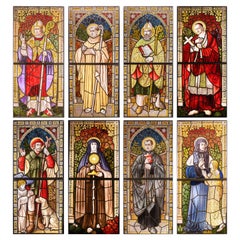
Pair Of Rare Art Nouveau Stain Glass Windows With Scrolling Tulip
Bud Motif
Located in Vancouver, British Columbia
Hard to capture the beauty of these rare stained glass Art Nouveau windows. They come alive when let by natural sunlight to display dazzling warm hu...
Category
Early 1900s English Art Nouveau Antique Hand-Crafted Windows
Materials
Stained Glass
$2,560 Sale Price / set
20% Off
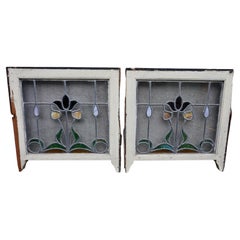
Antique Wrought Iron Framed Stained Glass Window / Door
Located in Chicago, IL
Antique Wrought-Iron Framed Stained Glass Window/Door
Category
Mid-20th Century Unknown Art Nouveau Hand-Crafted Windows
Materials
Wrought Iron
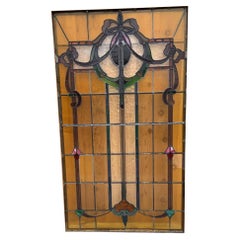
19th-Century Rustic Tuscan Window in Solid Wood Original Wrought Iron Hardware
Located in Firenze, IT
Authentic 19th-century Tuscan window in solid chestnut with original wrought iron fittings. A rare architectural salvage piece, ideal as a mirror, wall décor, or bespoke cabinet door...
Category
19th Century Italian Rustic Antique Hand-Crafted Windows
Materials
Wrought Iron
Seven Mid Century Modern Abstract Stained Glass Windows C1960
Located in Port Jervis, NY
Amazing set of 7 abstract chunky stained glass windows set in a clay composition. 57 x 27.75 x 3/4 inches thick these windows are substantial and an amazing architectural feature whi...
Category
1960s American Mid-Century Modern Vintage Hand-Crafted Windows
Materials
Clay, Stained Glass
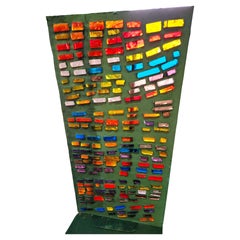
Midcentury Stained Glass Window Panels by Rainbow Studios NY, circa 1965 #5
Located in Port Jervis, NY
Mid-Century Modern adaption of stained glass window panels by Rainbow Studios NY. 6 available just one in this listing, see other listings for the entir...
Category
1960s American Arts and Crafts Vintage Hand-Crafted Windows
Materials
Lead
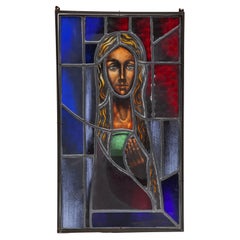
Art Deco Stained Glass, Belgium Artist, 1930s
By Leo Vingerhoets 1
Located in Antwerp, BE
A beautiful woman portrait in the glass closed. A stained glass technique in glass gives a magical atmosphere when light falls and changes the color palette intensity during the course of the day. An Antique stained glass panel...
Category
Mid-20th Century Belgian Art Deco Hand-Crafted Windows
Materials
Art Glass, Stained Glass
Midcentury Stained Glass Window Panels by Rainbow Studios NY, circa 1965 #3
Located in Port Jervis, NY
Spectacular window panels by Rainbow Studios NY.
Windows were created for a house in Nyack NY which overlooks the Hudson River. Amazing craftsmanship ...
Category
1960s American Mid-Century Modern Vintage Hand-Crafted Windows
Materials
Lead
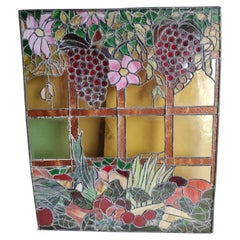
Alice in Wonderland, A Five Piece Suite of Stained and Leaded Glass Doors.
Located in London, GB
Alice in Wonderland a beautiful suite of stained and leaded glass set in the original doors and windows.
Please note this suite is in two listings and the price here is for the five pieces in both listings.
A one-off commission was removed from a large house in England.
The entire suite consists of these two windows with the king and queen of clubs...
Category
Late 20th Century English Mid-Century Modern Hand-Crafted Windows
Materials
Stained Glass
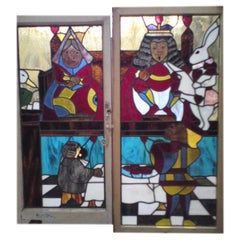
Pair Mid-19th Century French Hand-Forged Wrought Iron Framed Panels
Located in Dallas, TX
Pair mid-19th century French hand-forged wrought iron framed panels were painstakingly crafted by an obviously talented metal smith out of red-hot iron to create an artistic window accent that also happens to be exceedingly secure! Hand-forged during the Napoleon III Period which was the beginning of the heydays of the Belle Epoque, each panel is constructed using rivets which is difficult, tedious, and requires considerable skill, but results in a finished work that literally transcends time itself! The classically-inspired architecture of the works are undeniable, as is the subtle French touch in the elegant scrollwork and curvatures. Each is mounted in its original solid pine framework, and because they are hand-forged, are very slightly different in size which is only immediately apparent when they're placed right next to each other. Perfect for adding a timeless Old World touch to your interior or exterior decor...
Category
Mid-19th Century French Napoleon III Antique Hand-Crafted Windows
Materials
Wrought Iron
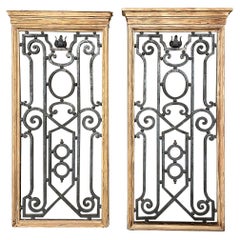
Pair of Leaded Glass Windows in Wood Frames
Located in Denton, TX
Stained glass windows with a bamboo motif in satin black wood frames each one is 36.25" wide.
The last two pictures show both pair of windows. Priced for each pair. Each window is 36...
Category
20th Century Unknown Organic Modern Hand-Crafted Windows
Materials
Lead
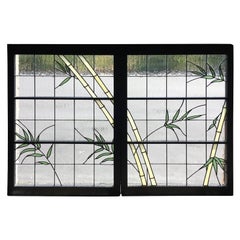
$1,800 / set
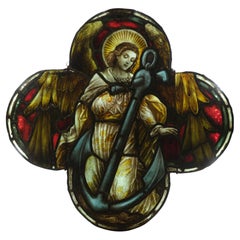
Late 19th Century Quatrefoil Stained Glass Angel With Anchor
Located in Norwich, GB
Late 19th Century quatrefoil stained glass angel with anchor. Circa 1880.
Excellent composition, in original unrestored condition. The glass will ...
Category
19th Century Victorian Antique Hand-Crafted Windows
Materials
Lead
Pair of Atkinson Bros Religious Stained Glass Windows c.1925
Located in Wormelow, Herefordshire
A fantastic pair of 2.1m tall religious stained glass windows designed by early 20th century stained glass manufacturers, Atkinson Brothers of Newcastle-Upon-Tyne (signed), and manuf...
Category
Early 20th Century English Victorian Hand-Crafted Windows
Materials
Lead

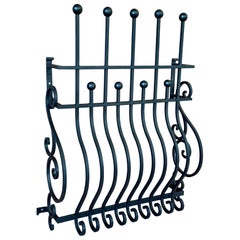
Mid-20th Century Hand-Forged Iron Window Grilles With Sculptural Scrollwork-Pair
Located in North Fort Myers, FL
Slightly different but equally fabulous, this single vintage window grille features the same bold curves and scrolled base, but with a simplified straight-top silhouette. A statement...
Category
Mid-20th Century American Mid-Century Modern Hand-Crafted Windows
Materials
Wrought Iron
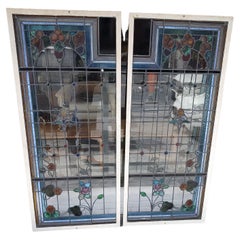
Mid 20th Century Stained Glass Windows Fruit
Leaves, Jewels
Located in Port Jervis, NY
Fabulous set of 4 leaded and stained glass windows. Excellent craftsmanship and design in the framework of these 4 windows. Red cherrie...
Category
1950s American Art Nouveau Vintage Hand-Crafted Windows
Materials
Lead
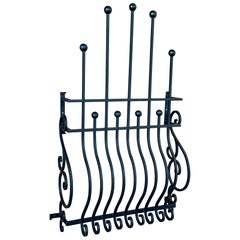
Mid-20th Century Hand-Forged Iron Window Grille With Sculptural Scrollwork
Located in North Fort Myers, FL
This single vintage wrought iron grille perfectly complements the listed pair with the same bold scroll detailing and staggered top finials. Use as a standalone architectural accent ...
Category
Mid-20th Century American Mid-Century Modern Hand-Crafted Windows
Materials
Wrought Iron
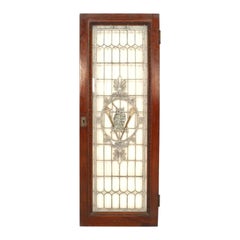
American Victorian Mahogany Owl Window
Located in Queens, NY
American Victorian large mahogany framed leaded glass window with owl design.
Category
Late 19th Century American Victorian Antique Hand-Crafted Windows
Materials
Glass
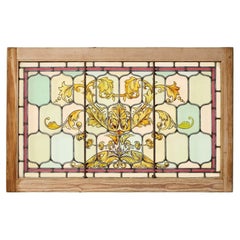
Antique Victorian Stained Glass Window
Located in Wormelow, Herefordshire
A beautifully hand painted antique stained glass panel in the victorian style with a detailed floral design. At over 130 years old, this b...
Category
19th Century English Victorian Antique Hand-Crafted Windows
Materials
Glass, Stained Glass
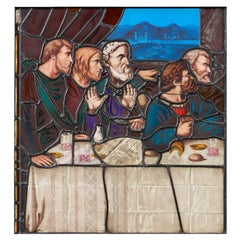
Last Supper Stained Glass Window After Leonardo Da Vinci
By Leonardo da Vinci
Located in Wormelow, Herefordshire
A stained glass window depicting a part of Leonardo da Vinci’s Last Supper scene. A stunning late 19th century, colourful take on the famous religious painting.
This ecclesiastical ...
Category
Late 19th Century English Victorian Antique Hand-Crafted Windows
Materials
Metal, Lead
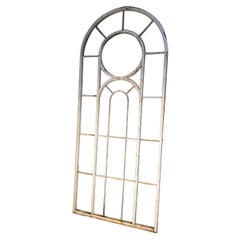
1890 Arched Wooden Gothic Church Window Frame
Located in Surrey, BC
Wooden arched church window retaining old white paint with great balanced details.
Salvaged from an old church in Montreal.
Category
Late 19th Century Canadian Gothic Antique Hand-Crafted Windows
Materials
Softwood
Pair 19th Century Framed Oval Stained Glass Windows
Located in Dallas, TX
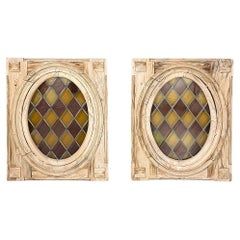
Pair 19th Century Framed Oval Stained Glass Windows will make the perfect finishing touch to your remodeling or building project! Each oval window consists of amber and light eggplant colored diamond-shaped panes, or in Louisiana parlance, Purple and Gold! Each window is surrounded by oval molding, then survives in its original rectangular frame which is chamfered on the sides and fitted with pyramidal rosettes on each corner to add visual interest and a three dimensional aspect. Use them as exterior...
Category
1870s French Napoleon III Antique Hand-Crafted Windows
Materials
Stained Glass, Pine
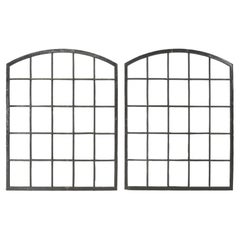
Antique Pair of French Cast iron Arch Top Windows c1800
s Require new Glazing
Located in BENSENVILLE, IL
Antique Pair of French Industrial Arched Top Cast Iron Windows Frames from the late 1800's. Because they are Cast Iron Metal Windows it is difficult to know the exact date they were ...
Category
1880s French Industrial Antique Hand-Crafted Windows
Materials
Iron
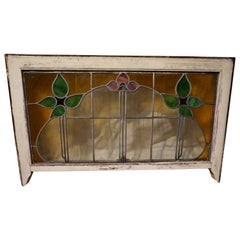
Large Arts
Crafts Stained Glass Window with Floral Theme
Located in Vancouver, British Columbia
Arts & Crafts Large stained glass window circa 1900-10. Beautiful archway shape highlighted by warm floral motifs. Good original condition. ...
Category
1910s English Arts and Crafts Vintage Hand-Crafted Windows
Materials
Stained Glass
$2,880 Sale Price
20% Off
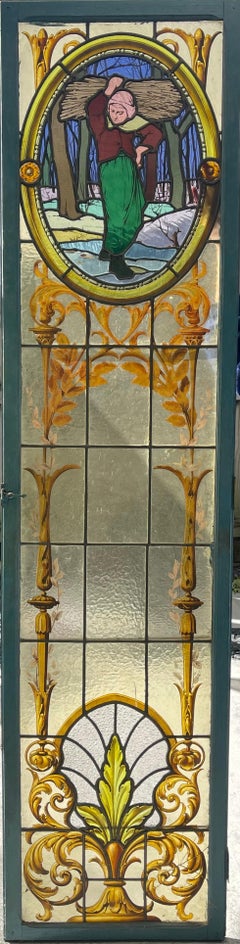
French 19th Century Leaded Stained Glass Window
Located in palm beach, FL
Beautiful old stained glass window from 1890 representing a countryside scene. At its base a work of glass in the form of a shell reveals a va...
Category
1880s French Belle Époque Antique Hand-Crafted Windows
Materials
Lead
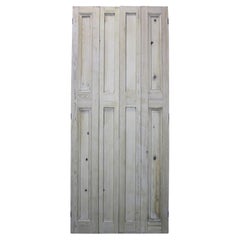
Set of Reclaimed Victorian Pine Window Shutters
Located in Wormelow, Herefordshire
A set of salvaged pine window shutters
Additional Dimensions:
Width 112-115 cm (sides cut to an angle).
Category
Late 19th Century English Victorian Antique Hand-Crafted Windows
Materials
Wood, Pine
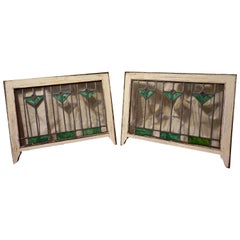
Rare Arts
Crafts Stained Glass Windows with Two-Tone Geometric Floral Theme
Located in Vancouver, British Columbia
True Arts & Crafts two-tone geometric pair of stained glass windows. Subtle workmanship which exudes simplified elegance. In very good or...
Category
Early 1900s English Arts and Crafts Antique Hand-Crafted Windows
Materials
Stained Glass
$3,920 Sale Price / set
20% Off
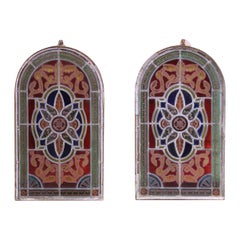
Pair of 19th Century French Napoleon III Painted and Stained Glass Windows
Located in Dallas, TX
Crafted in France circa 1850, this exquisite pair of antique arched stained glass windows exemplifies mid-19th-century artistry from the Napoleon III period. Each panel features a ri...
Category
Mid-19th Century French Antique Hand-Crafted Windows
Materials
Lead
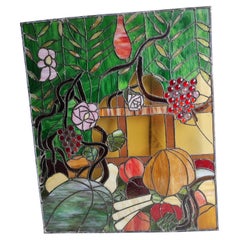
Midcentury Stained Glass Window Panels by Rainbow Studios NY, circa 1965 #1
Located in Port Jervis, NY
Spectacular set of 6 stained glass window panels by Rainbow Studios NY. This listing is for one panel. All other panels are listed separately. Amazing c...
Category
1960s American Mid-Century Modern Vintage Hand-Crafted Windows
Materials
Lead
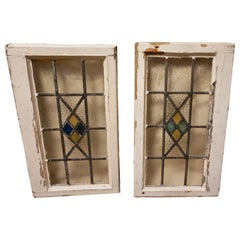
Pair of Art Deco Stained Glass Windows with Geometric Motif
Located in Vancouver, British Columbia
Elegant Art Deco stained glass windows with geometric motifs and pebbled translucent glass. Nice specimens from the period. Sturdy frames...
Category
1920s English Art Deco Vintage Hand-Crafted Windows
Materials
Stained Glass
$2,080 Sale Price
20% Off
Reclaimed Abstract Stained Glass Panel
Located in Wormelow, Herefordshire
A reclaimed abstract stained glass panel crafted with vivid colours and themes of birds.
This vibrant and exciting piece has is made up of hundreds of small coloured sections that r...
Category
Late 20th Century English Mid-Century Modern Hand-Crafted Windows
Materials
Metal, Lead
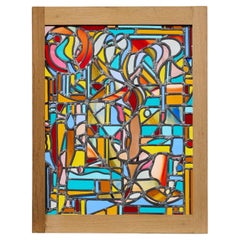
Midcentury Stained Glass Window Panels by Rainbow Studios NY, circa 1965 #2
Located in Port Jervis, NY
Stunning set of stained glass window panels. This listing is for 1 panel. We have 6 available, all in separate listings. Fabulous colors a...
Category
1960s American Arts and Crafts Vintage Hand-Crafted Windows
Materials
Lead
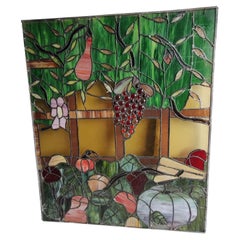
Set of 3 Antique Solid Pine Windows with Hand-Rolled Glass
Located in Dallas, TX
Set of 3 Antique solid pine windows with hand-rolled glass are perfect for finishing out your decorating plans, inside or out! Stripped and ready to stain or paint, or just leave natural, they can make an exquisite room divider, a wall hanging, or can be used to actually enclose a window frame. Hand-crafted, each features hand-rolled glass panes and old lock...
Category
Early 1900s French Rustic Antique Hand-Crafted Windows
Materials
Glass, Pine
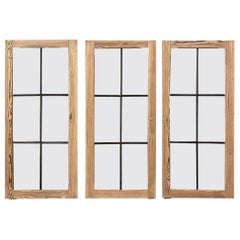
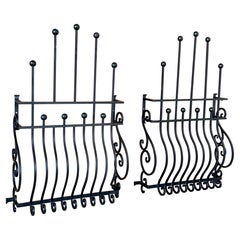
Mid-20th Century Hand-Forged Iron Window Grilles With Sculptural Scrollwork-Pair
Located in North Fort Myers, FL
Striking and sculptural, this vintage pair of wrought iron window grilles features bold scrollwork and a dramatic staggered finial design. Finished in a matte black powder coat, they...
Category
Mid-20th Century American Mid-Century Modern Hand-Crafted Windows
Materials
Metal
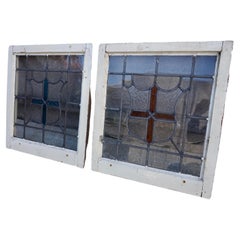
Pair of English Arts
Crafts Stain Glass Windows with Crest Shields
Located in Vancouver, British Columbia
Rare Arts & Crafts pair of stained glass windows with shield motif. Beautifully constructed and in good original condition with no wood r...
Category
Late 19th Century English Arts and Crafts Antique Hand-Crafted Windows
Materials
Stained Glass
$2,320 Sale Price / set
20% Off
Mid-Century Modern Stained Glass Window #6 by Rainbow Studios NY, circa 1965
Located in Port Jervis, NY
Fabulous stained glass windows, 6 available, one posted separately in this listing. Rainbow Studios of Nyack NY did them in the mid sixties for a home i...
Category
1960s American Arts and Crafts Vintage Hand-Crafted Windows
Materials
Lead
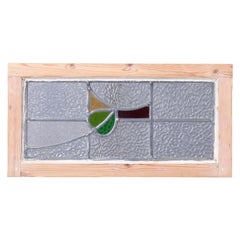
Antique Arts
Crafts Leaded Stained Glass Window, Stylized Floral Design, c1920
Located in Big Flats, NY
An antique Arts and Crafts leaded stained glass window panel offers central stylized floral and foliate element, seated in wood frame, c1920
Measures - 11''H x 22''W x 1.5''D.
This s...
Category
Early 20th Century American Arts and Crafts Hand-Crafted Windows
Materials
Lead
$440 Sale Price
20% Off
Antique Swedish Set
6
Painted Shutters Gustavian Grey One Side, White on Other
Located in BENSENVILLE, IL
Set of (6) antique Swedish shutters (best guess) in old paint with original wrought iron hardware. There is your typical Gustavian grey (we call it French putty grey) on one side and...
Category
1880s Swedish Country Antique Hand-Crafted Windows
Materials
Iron
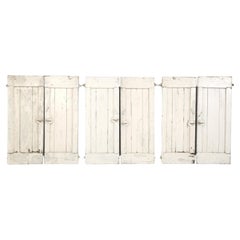
American Victorian Blue Leaded Glass Windows
Located in Queens, NY
6 American Victorian iron casement windows with blue leaded glass and arch design (PRICED EACH)
Category
Late 19th Century American Victorian Antique Hand-Crafted Windows
Materials
Glass
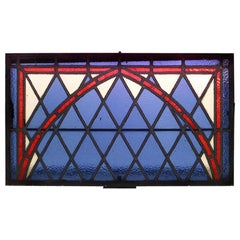
$950 / item
Rustic Antique Indian Architectural M-o-p Inlaid Teak Window
Located in Forney, TX
A beautiful antique Indian architectural m-o-p inlaid carved teak window.
India, late 19th / early 20th century, primitive hand-crafted ...
Category
Early 20th Century Indian British Colonial Hand-Crafted Windows
Materials
Mother-of-Pearl, Teak
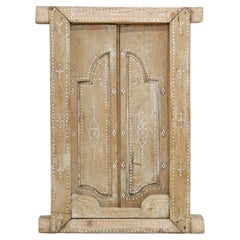
Antique Stained
Etched Glass Window
Located in Wormelow, Herefordshire
A stunning 2.45m tall (8ft) antique stained and etched glass window, reclaimed from a house in Derbyshire.
Dating to circa 1890, this beautiful Victorian window features white, red ...
Category
Late 19th Century English Edwardian Antique Hand-Crafted Windows
Materials
Glass, Stained Glass, Pine

OLD INDiAN PAINTED WOOD WINDOW FRAME FLOWER AND VASE
Located in Pulborough, GB
We are delighted to offer for sale this Lovely Old Indian Hand Painted Wood Window Decoration
An old Indian-painted wood window frame depicting a flower and vase design showcases ...
Category
20th Century Indian Hand-Crafted Windows
Materials
Hardwood
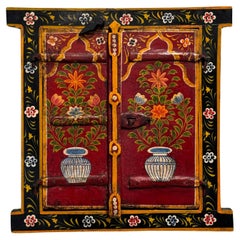
19th Century circa 1860 French Stained Glass Lead Lined Window Hand Made
Located in West Sussex, Pulborough
We are delighted to offer for sale this lovely circa 1860 French stained glass window
A good looking well made and decorative piece, I b...
Category
1860s French High Victorian Antique Hand-Crafted Windows
Materials
Lead
More Ways To Browse
Fleur De Lis Stained Glass
Cast Iron Window
Church Arch
Stained Glass Window Green
Tiffany Glass Window
Antique Leaded Glass Transom Windows
Antique Stained Glass Jewels
Leaded Glass Transom
Stained Glass Christ
Stained Glass Shield
Stained Glass Window Blue
Tiffany Stained Glass Windows
Antique Steel Windows
Antique Window Sashes
Church Stained Glass Panel
Dormer Window
Quatrefoil Window
Stained Glass Window Three