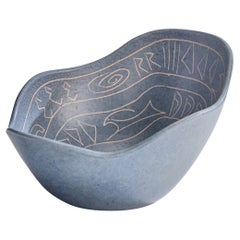
Items Similar to Federigo Fabbrini Asymmetrical Ceramic Bowl, Italy 1950s
Video Loading
Want more images or videos?
Request additional images or videos from the seller
1 of 13
Federigo Fabbrini Asymmetrical Ceramic Bowl, Italy 1950s
$2,250
£1,716.69
€1,954.32
CA$3,162.40
A$3,476.25
CHF 1,825.01
MX$41,335.09
NOK 23,437.32
SEK 21,348.87
DKK 14,601.91
About the Item
Vintage ceramic bowl, dish, or vessel features Picasso Esque abstract figural decoration, executed with thin sgraffito outlines on matte black background surface and juxtaposed by colored enamel glaze in teal, blue, and white with lava-like, drip texture and semi-gloss finish. The main decor, a bust of a young woman or a girl, surrounded by flowering branches, shows a considerable influence of Marcello Fantoni, in particular, his distinct, Modern graphic interpretation of a subject that echoes both the contemporary Italian Mid Century Modern design and art and the historic elements, such as the rough quality of the material and angular forms that could be interpreted as archaic-looking. The successful fusion of different stylistic and cultural references demonstrates a strong understanding of the ceramic medium and various decoration techniques.
The asymmetrical form of the bowl accentuates and frames the main motif, adding a portrait like qualities to the decor; the intentionally unrefined surfaces of clearly hand-farmed vessel juxtapose the Modernist glaze design. The outer surfaces of the bowl are done in monochromatic white glaze.
The bowl is clearly signed on the underside and marked with the remnants of the original gallery sticker.
The important early work of the artist, with sculptural form, high quality craftsmanship, and statement piece presence, will make a great gift to a collector or a design enthusiast and a perfect addition to a wide range of interiors, from Traditional to Organic Modern, Modernist, Transitional, Scandinavian Modern, Collected, or Contemporary.
Federigo Fabbrini (b. 1928), trained as an architect, began his relationship with ceramics in 1948 as a decorator at the Bellagio di Castello Company (Florence), and as an enamel decorator and modeler at Marcello Fantoni's studio. In 1952 he participated in the Exhibition of Crafts in Florence with his own designs, and in 1953 he worked for a ceramic cooperative in Montelupo Fiorentino, where he met Aldo Londi and Bruno Bagnoli; later he started his collaboration with Vinicio Brogi, another former Fantoni collaborator and founder of Il Coccio studio. In 1957-58, together with his wife Tina, he founded Studio Ceramiche Fabbrini; his early works were characterized by free form shapes and vitrified glazes, while his later works focused on simple, more functional objects with opaque, thick glazes. Those minimalist objects with refined glazes were shown at the International Exhibition of Ostend and won prizes at the XVII National Competition of Ceramics in Faenza in 1959.
From 1963 to 1966, together with his friend Mario Molli, Fabbrini run the Galleria Aquilone in Florence, that focused on the relationship between art and craftsmanship, and in the following years became an art collective, with participation of Claudio Popovic, Paolo Masi, Cioni, Armidelli, and Glattfelder. The gallery, frequented by Giovanni Michelucci, Corrado Cagli, and Ettore Sottsass, exhibited the works of Guasti, Masi, and Guarneri and held debates with the participation of Battisti, Gatt, Celant, Lumachi and others contemporary artists. Fabbrini had shared design interests with the artists of the famous Laboratorio Pesaro, a Bauhaus-inspired experimental studio dedicated to research into ceramic prototypes for industry in accordance with the changing requirements of modern society, formed in 1961 by Nanni Valentini, Roberto Pieraccini and Franco Bucci. Bucci (1933-2002) continued to design ceramics for industry, and, in collaboration with Ettore Sottsass, also realized important designs for Villeroy
Boch and Ceramica Iris. While items by the Laboratorio Pesaro won prizes at national competition, such as the Concorso Nazionale della Ceramica in Faenza, most have remained on an experimental level and never entered serial production.
In late 1960s, Helen Von Boch saw some of Fabbrini's ceramics at the Competition of Faenza and invited him and Franco Bucci to collaborate with Villeroy
Boch in Mettlach; in four years, from 1969 to 1973, Fabbrini created several porcelain services; in 1972 together with Helen Von Boch he designed the iconic modular set of melamine plates and flatware, called “La Bomba”, that was exhibited at the Museum of Modern Art in New York. From 1976 to 1996 his works were produced by Franco Bucci's studio in Pesaro, including his series Pupi and Theatrini; Theatrini was a collaboration with Bruno Gambone. In 1993, Fabbrini closed his workshop in Florence, but continued to collaborate with Gambone. Since 1996 his works have been produced by the Camala studio, in Fiesole, run by Brunella Sciulli.
Bibliography: Ceramica Italiana deI Novecento by Franco Bertoni and Jolanda Silvestrini
- Dimensions:Height: 2.25 in (5.72 cm)Width: 8.15 in (20.71 cm)Depth: 6.95 in (17.66 cm)
- Style:Mid-Century Modern (Of the Period)
- Materials and Techniques:
- Place of Origin:
- Period:
- Date of Manufacture:1950s
- Condition:Wear consistent with age and use.
- Seller Location:Clifton Springs, NY
- Reference Number:1stDibs: LU4421147713862
Roman Erlikh
Roman Erlikh is a professional woodworker with over 20 years’ experience. Roman Erlikh Studio creates bespoke and limited edition contemporary furniture and art objects. His first furniture collections were inspired by traditional Art Deco and Biedermeier styles interpreted through a modern lifestyle demands. Stepping away from merely utilitarian view of everyday objects, his recent collections are filled with meaningful textual context while incorporating traditional and modern woodworking techniques. Roman is using practical function as a common denominator to create emotionally charged art objects, blurring the boundary between art and function. While appreciating possibilities of ordinary materials, Roman is developing new mixed media multilayered composite varnishes and utilizes decorative gilding and mica veneer to actively engage ambient light, giving an additional aspect to relation of his objects to their environment. The decision to work in custom format was based on environmental concerns and opposition to culture of mass production and pure consumerism. The choice of materials was heavily influenced by sustainability and environmental concerns. All objects are made locally in the Brooklyn Navy Yard workshop. Elimination of storage and transportation needs for mass-produced furniture in lieu of creating a custom made objects on demand allows us to reduce waste of materials and energy.
About the Seller
5.0
Platinum Seller
Premium sellers with a 4.7+ rating and 24-hour response times
Established in 2011
1stDibs seller since 2019
277 sales on 1stDibs
Typical response time: <1 hour
- ShippingRetrieving quote...Shipping from: Clifton Springs, NY
- Return Policy
More From This Seller
View AllRare Mastad Norway Footed Bowl Scandinavian Pewter 1950s
By Mastad Pewter Norway
Located in Clifton Springs, NY
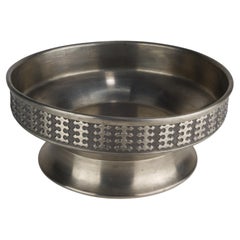
Rare Mastad Norway Footed Bowl in Scandinavian Midcentury Modern style was made by Mastad Norway in 1950s. It has wide, stable base, patterned sides, and is signed with manufacturer's logo on the bottom. It's in a good condition with light wear consistent with age and use.
The Mastad Tinnvarefabrikk was founded in 1870 in the town of Orje, Norway. Mastad Norway Pewter objects are well-known for their detailed and elegant metalwork. The company boasts a rich history in the field of Scandinavian metal artistry.
We are listing Mastad Norway pair of pewter candle sticks...
Category
Mid-20th Century Norwegian Mid-Century Modern Decorative Bowls
Materials
Pewter
David Auld Asymmetrical Carved Wood Bowl, 1960s
By David Auld
Located in Clifton Springs, NY
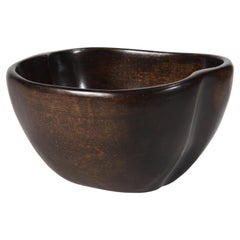
Sculptural Organic Modern carved wooden bowl features asymmetrical shape with soft, flowing outline and curved rim; minimal design of the bowl accentuates the beautiful natural grai...
Category
Mid-20th Century Haitian Mid-Century Modern Decorative Bowls
Materials
Wood, Fruitwood
David Auld Asymmetrical Carved Wood Bowl, 1960s
By David Auld
Located in Clifton Springs, NY
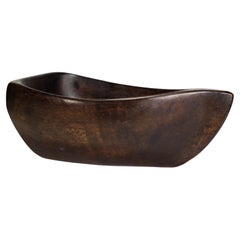
Sculptural Organic Modern carved wooden bowl features asymmetrical shape with soft, flowing outline; minimal design of the bowl accentuates the beautiful natural grain of the wood a...
Category
Mid-20th Century Haitian Mid-Century Modern Decorative Bowls
Materials
Wood, Teak
AVEM Murano Glass Bizantino Tutti Frutti Bowl Ashtray 1950s
By Arte Vetraria Muranese (AVEM)
Located in Clifton Springs, NY
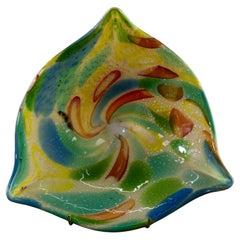
Murano glass free-form bowl or ashtray with 3-way crimped rim was made in 1950s in Italy by AVEM (Arte Vetraria Muranese). It has typical tutti frutti poly-chrome interior with mixture of murine in colorful swirls and silver leaf inclusions and solid peach...
Category
Mid-20th Century Italian Mid-Century Modern Decorative Bowls
Materials
Art Glass, Glass, Murano Glass, Sommerso
David Auld Asymmetrical Carved Wood Bowl with Handle, 1960s
By David Auld
Located in Clifton Springs, NY
Sculptural Organic Modern carved wooden bowl features asymmetrical shape with soft, flowing outline and short handle; minimal design of the bowl accentuates the beautiful natural gr...
Category
Mid-20th Century Haitian Mid-Century Modern Decorative Bowls
Materials
Wood, Fruitwood
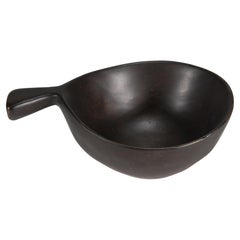
Modernist Teal Blue and White Cased Glass Asymmetrical Bowl
Located in Clifton Springs, NY
Biomorphic bowl with asymmetrically folded side features a combination of teal blue and white colors. The white glass is encased in teal blue glass in sommerso technique, with some ...
Category
20th Century Mid-Century Modern Decorative Bowls
Materials
Art Glass, Sommerso
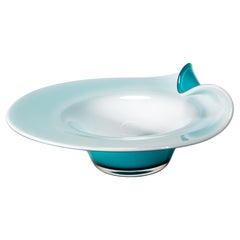
You May Also Like
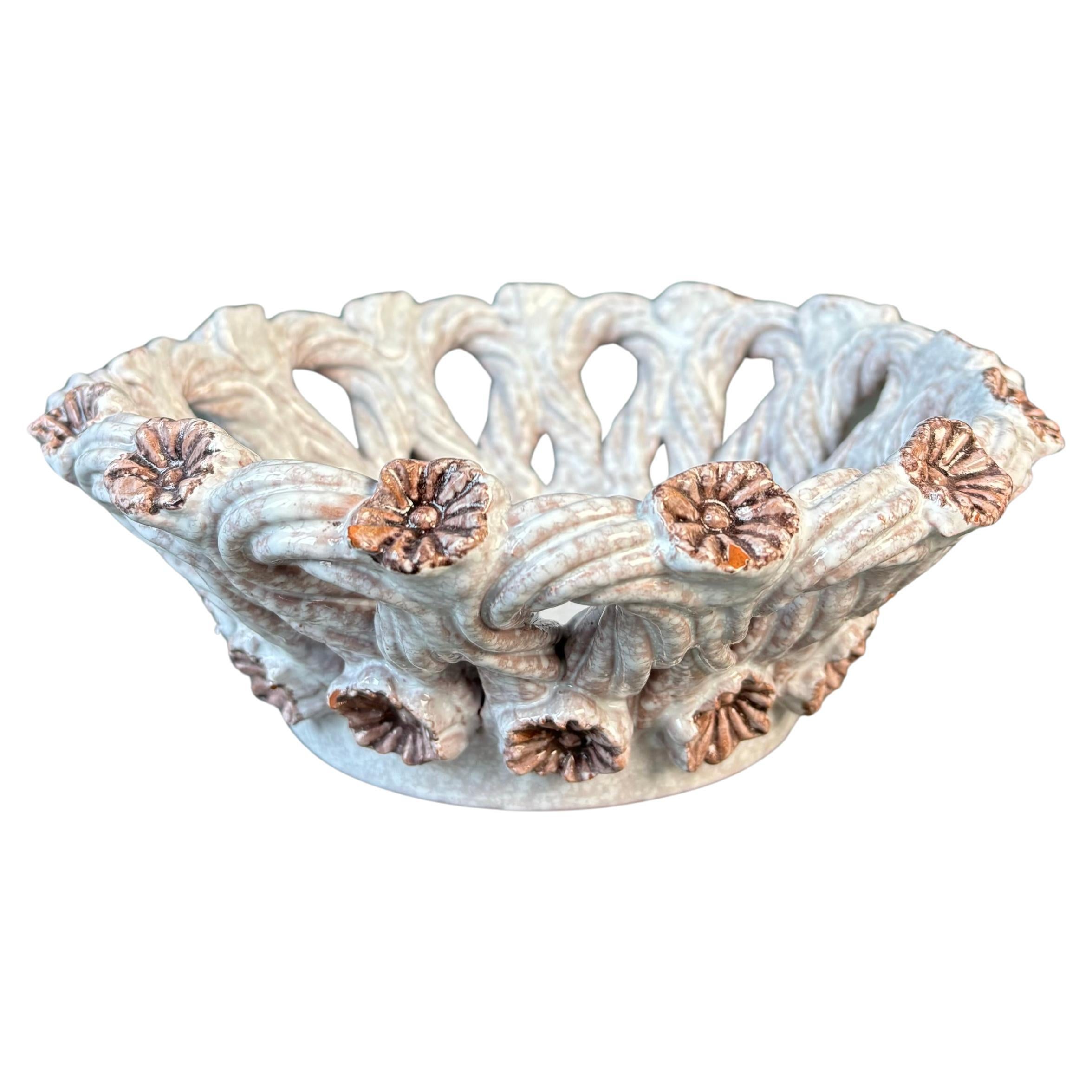
1950s Italian Braided Ceramic Decorative Bowl
By Fratelli Fanciullacci
Located in Copenhagen, DK
Vintage Italian braided ceramic bowl attributed to Fratelli Fanciullacci. Soft braided decorations covered in dusty white glaze with small brown f...
Category
Mid-20th Century Italian French Provincial Decorative Bowls
Materials
Ceramic, Pottery
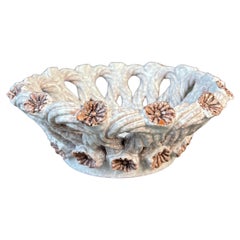
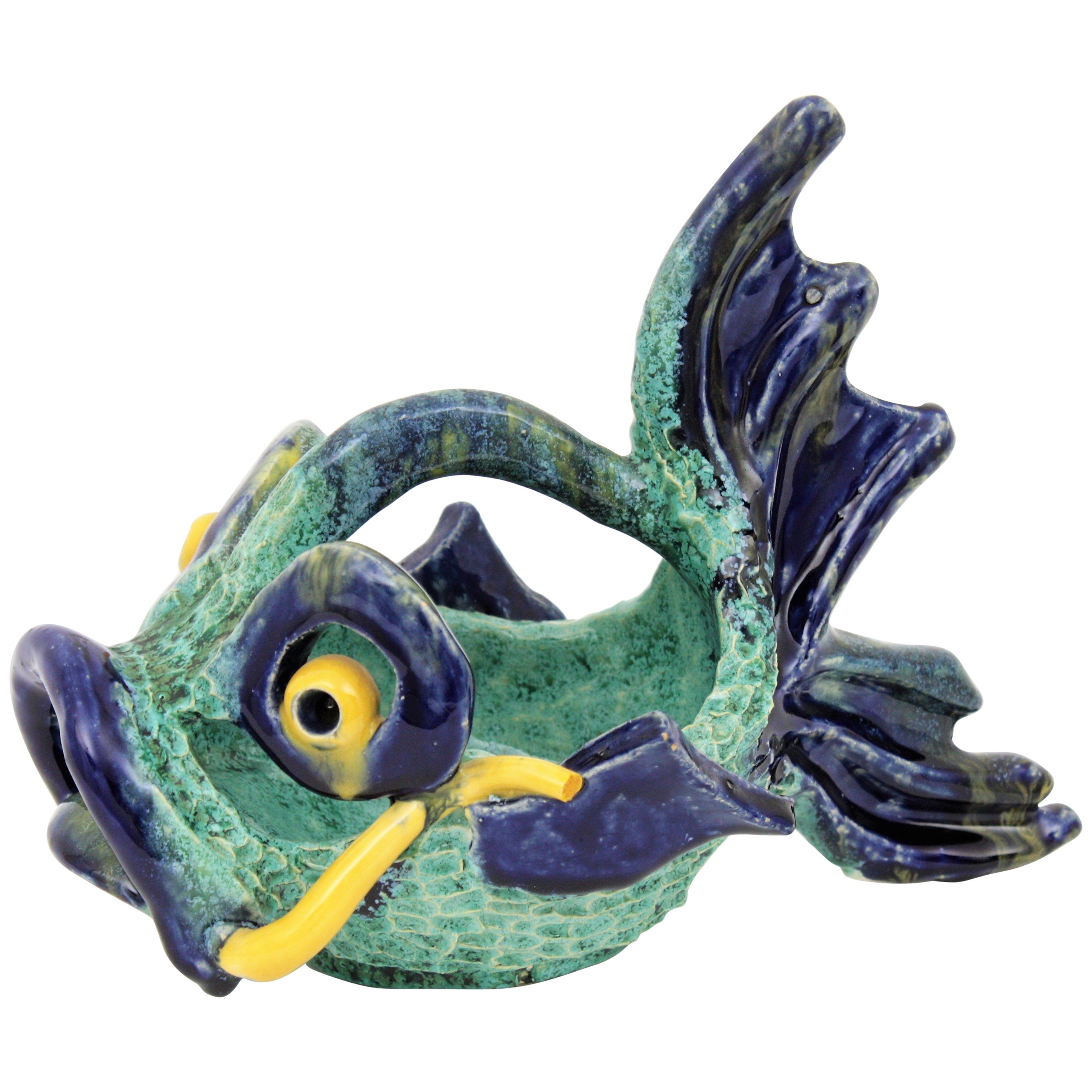
1950s Italian Glazed Ceramic Fish Shaped Bowl Sculpture
Located in Barcelona, ES
Funny glazed ceramic fish shaped bowl or vide-poche fish sculpture, Italy, 1950s.
This eye-catching fish figure sculpture / bowl has a beautiful design with yellow and navy blue acc...
Category
Mid-20th Century Italian Mid-Century Modern Animal Sculptures
Materials
Ceramic
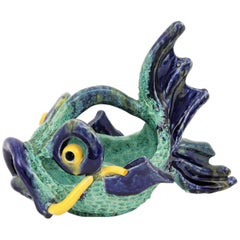
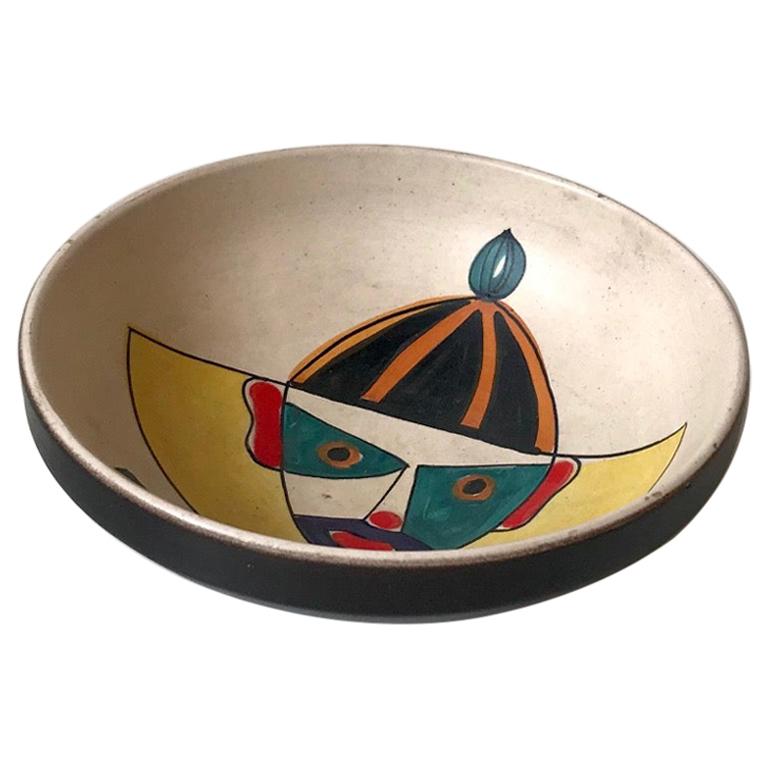
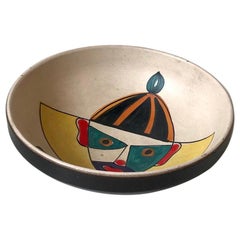
Italian Modern Ceramic Sugar Bowl with Harlequin, 1950s
Located in Esbjerg, DK
Small footed black ceramic bowl with white interior and a handprinted motif of a Harlequin. Anonymous maker/design. Stamped Italy and has a design number to the base.
Category
Vintage 1950s Italian Mid-Century Modern Decorative Bowls
Materials
Ceramic
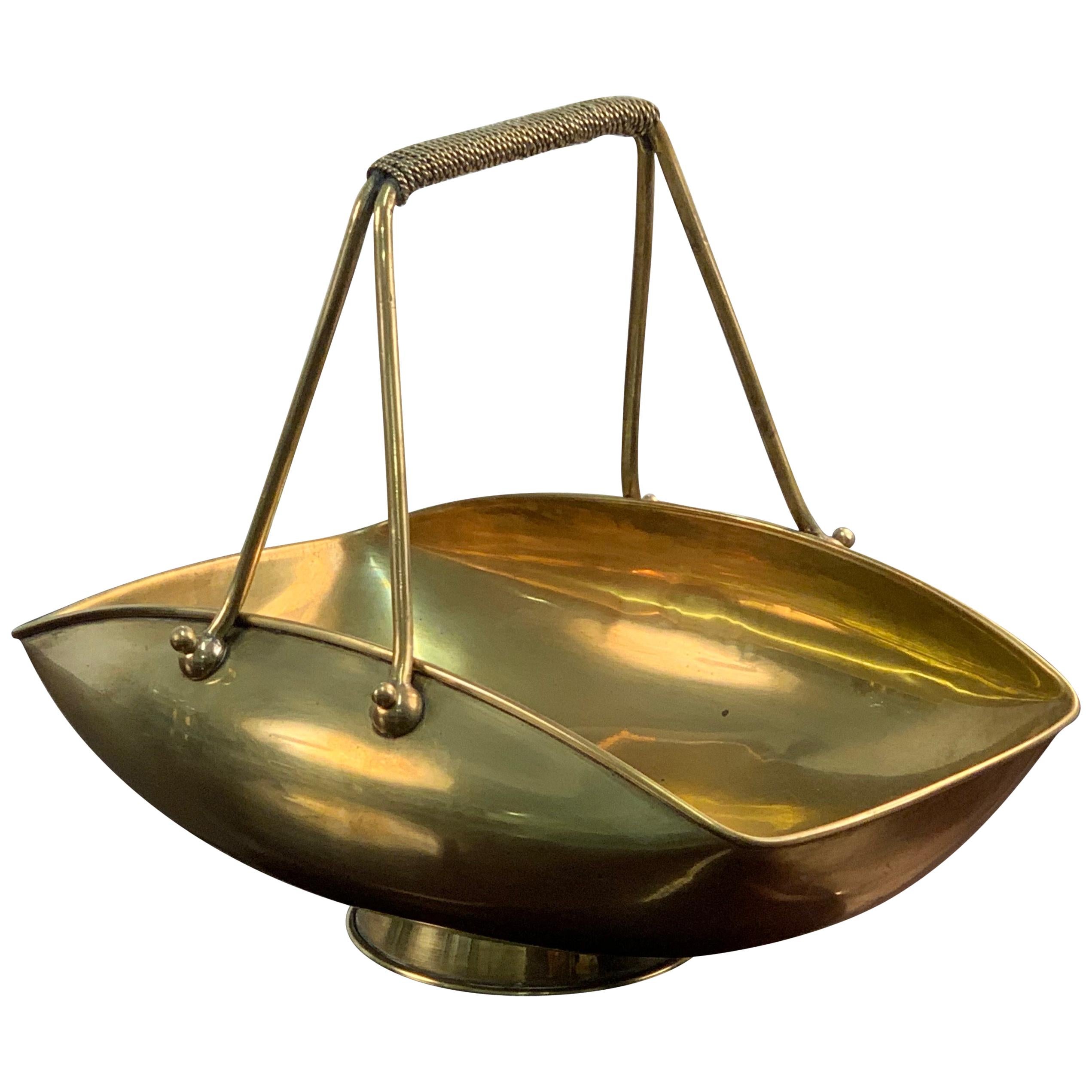
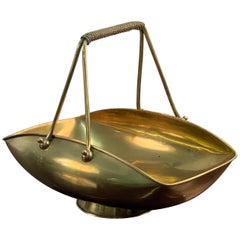
Italian Brass Centerpiece from the 1950s, Bowl, Italy, 1950s
Located in Roma, IT
Elegant Italian centerpiece from the 1950s. Finished very well. The handle has a brass string that accentuates the beauty of the work.
Good condition.
Category
Mid-20th Century Italian Mid-Century Modern Centerpieces
Materials
Brass
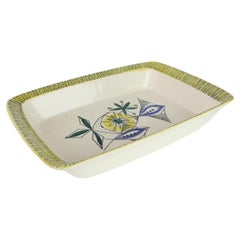
Norway Ceramic Bowl, Bambus Ildfast, 1950s
By Ildfast
Located in Praha, CZ
Made in Norway.
Made of keramic.
Good original condition.
Category
Vintage 1950s Norwegian Mid-Century Modern Decorative Bowls
Materials
Ceramic
Krukmakaren i Ystad, Bowl, Ceramic, Sweden, 1950s
Located in High Point, NC
An organic blue-glazed ceramic bowl produced by Krukmakaren I Ystad, Sweden, c. 1950s.
Overall Dimensions (inches): 4.0"H x 6.0"W x 6.5"DAll items ship from High Point, North Carolina.
Category
Vintage 1950s Swedish Mid-Century Modern Decorative Bowls
Materials
Ceramic