Items Similar to Italian 1940s Crystal Bowl, Milan, circa 1940
Video Loading
Want more images or videos?
Request additional images or videos from the seller
1 of 20
Italian 1940s Crystal Bowl, Milan, circa 1940
$4,796.33
£3,558.44
€4,000
CA$6,578.50
A$7,160.86
CHF 3,798.47
MX$86,207.85
NOK 48,230.60
SEK 44,139.63
DKK 30,472.50
About the Item
Crystal bowl with silver and coral decorative elements
Eliseo Mangili (1890-1977)
Milan, circa 1940
It measures 4.8 in high x Ø 8.26 in; foot Ø 4.33 in (12.2 x Ø 21 cm; Ø foot 11 cm)
5.51 lb (2.55 kg)
The rounded bowl narrows and rests on a flared foot with a polygonal section in blue crystal. The bowl itself is crafted in transparent crystal and continues the polygonal motif. The base of the bowl is decorated with a series of engraved blue arches which somewhat overlap creating a corolla and with five vertical cusps of the same colour. The rim is accented with a triple cut line around the entire circumference.
A silver band representing a currant branch wraps the “waist” where the foot joins the bowl with currants made of orange coral.
The bowl features the following marks along the silver band which defines its narrowing towards the foot. These help us date the work:
1) a lozenge with the abbreviation of the province (MI); Roman fasces; the number 08. This was the mark in force after the promulgation of the law of 5 February 1934 n. 305, which provided for the use of a uniform mark for the identification of the silversmith and of the province. In this case it is the Milanese smith Eliseo Mangili during the period 1935-1944.
2) 800 without a border. Title in thousandths of silver.
Eliseo Mangili was one of the most talented goldsmiths flanking Alfredo Ravasco (1873-1958) in his activity until the 1920s. After the experience of the Libyan war and the Great War, he decided to continue his career independently by opening a laboratory in Milan first in Via Filodrammatici, then in via del Lauro, and finally in via dei Bossi. He always kept in touch with Ravasco, who was among his best customers. In 1963 he opened a shop in Via Manzoni 24 after participating in the Italian Jewelry Exhibition in Paris in 1962. He died in Milan in 1977. (See: Melissa Gabardi, Il gioiello italiano del XX secolo, Catalogo della mostra al Museo Poldi Pezzoli, Milano, 24 November 2016-2020 marzo 2017, p. 316).
- Creator:Eliseo Mangili (Maker)
- Dimensions:Height: 4.81 in (12.2 cm)Diameter: 8.27 in (21 cm)
- Style:Other (Of the Period)
- Materials and Techniques:
- Place of Origin:
- Period:
- Date of Manufacture:circa 1940
- Condition:Minor fading.
- Seller Location:Milano, IT
- Reference Number:1stDibs: LU4352217987522
About the Seller
4.3
Vetted Professional Seller
Every seller passes strict standards for authenticity and reliability
Established in 1860
1stDibs seller since 2018
23 sales on 1stDibs
Typical response time: 3 hours
Associations
International Confederation of Art and Antique Dealers
Associations
- ShippingRetrieving quote...Shipping from: Milano, Italy
- Return Policy
More From This Seller
View AllAncient Italian Renaissance Maiolica Crespina, Faenza, 1580 Circa
Located in Milano, IT
Crespina
Faenza, last quarter of the 16th century
Maiolica painted in two colors, light blue and yellow, on a thick, rich layer of white enamel.
It measures 2.24 in (5.7 cm) in height, 6.10 in (15.5 cm) in diameter.
lb 0.55 (kg 0.25)
State of conservation: mimetic restoration.
The small cup has a raised central “umbone”, a perforated brim and a shaped rim. It rests on a high jutting foot. The "crespina" shape, in some inventories is cited as "tacce de frute" (fruit cups). It was particularly appreciated in the Renaissance and has variants based on the formal types and the different sizes. The decoration, made according to the dictates of the “compendiario” style, used few standardized colors: blue and yellow on a thick white and shiny enamel, deliberately chosen as the colour which was most reminiscent of silver. This choice derived from a trend in creative design of the era: the shapes used in the molds were often taken from metal objects. An idea which would last throughout the Renaissance.
The work shows, in the middle of the “umbone”, a winged putto stepping forward while playing a long thin trumpet.
The depiction of the putto is fully representative of the repertoire of the Faenza workshops of the sixteenth century.
Some specimens with this type of decoration have been published in a volume by Carmen Ravanelli Guidotti: there appears the whole productive repertoire of this fundamental moment of transition between the taste for the “istoriato” style and the great simplification of decoration in the “compendiario” period. This style, in its simplicity, however, saw its expression in a rather varied collection of decorative subjects, including old-fashioned busts...
Category
Antique 16th Century Italian Renaissance Ceramics
Materials
Maiolica
Ancient Italian Maiolica Faenza, Ferniani Factory, Circa 1700
By Ferniani Factory
Located in Milano, IT
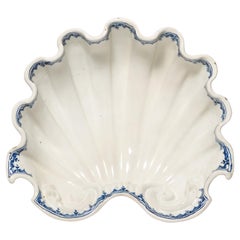
Centerpiece light blue maiolica shell
Ferniani factory, early period: 1693-1776
Faenza, 1700 circa
5.5 in x 14.72 in x 13.77 in (14 cm x 37.4 cm X cm 35)
lb 4.40 (kg 2)
State of con...
Category
Antique Early 1700s Italian Baroque Ceramics
Materials
Maiolica
Ancient Italian Maiolica Faenza, Ferniani Factory, Circa 1700
By Ferniani Factory
Located in Milano, IT
Centerpiece white maiolica shell
Ferniani factory, early period: 1693-1776
Faenza, circa 1700
Measures: 5.6 in x 14.72 in x 13.46 in (14.3 cm x 37.4...
Category
Antique Early 1700s Italian Baroque Ceramics
Materials
Maiolica
Italian Maiolica Cup Ferretti Lodi, circa 1770 - 1780
By Antonio Ferretti
Located in Milano, IT
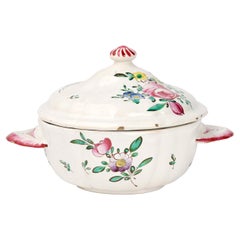
Maiolica puerperal cup
Antonio Ferretti Manufacture
Lodi, Circa 1770 - 1780
Maiolica polychrome decorated “a piccolo fuoco” (third fire).
It measures: 4.3 x 6.8 x 5.3 in (11 x 17,5 x 13,5 cm)
Weight: 0.78 lb (358 g)
State of conservation: some closed pass-through fêlures on the cup, barely visible on the outside. Some use chips on the edge of the lid, two of which are more marked.
From about the mid-sixteenth century, the puerperal soup tureen or puerperal cup became one of the most popular wedding gifts in central Italy. As an auspicious symbol, it replaced the birth table (“desco da parto”) which, on the occasion of high-ranking marriages, from the thirteenth century, had been painted by famous artists, especially in Tuscany.
In France this same tureen is called "écuelle de mariée", as it is given to spouses as a sign of fertility.
During the eighteenth century this custom spread even outside Italy to all social levels. Depending on availability and rank, it was made of different materials: precious metals, maiolica, porcelain, glass, pewter, etc.
Beginning in the mid-twentieth century, the custom of this symbolic homage gradually disappeared, although famous designers such as Gio Ponti and Giuseppe Gariboldi, even as recently as the 1940s, revisited a model of a small puerperal soup bowl for the Ginori and, also in Italy in 1940, in a national competition for young potters, one of the themes of the test was indeed a modern model of a puerperal cup as an auspicious gift.
This particular cup was also called a "service cup" or "puerperal vase" or "stuffed cup" - the windows were sealed with straw to prevent drafts of air for women in labor.
In the eighteenth century the line of the puerpera cup was simplified, so much so that it took the form of a small tureen with two handles - the typical broth cup...
Category
Antique 1770s Italian Rococo Ceramics
Materials
Maiolica
Ancient Maiolica Cup, Rubati Manufacture, Milan, Circa 1770 - 1780
By Pasquale Rubati
Located in Milano, IT
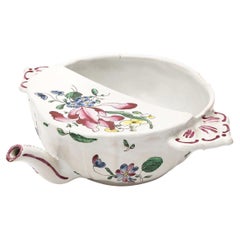
Sick cup
Pasquale Rubati Manufacture
Milan, Circa 1770 - 1780
Maiolica decorated in polychrome “a piccolo fuoco” (third fire)
It measures: h 2.36 x 7.4 x 7.87 (h 6 x 19 x 20 cm)
...
Category
Antique 1770s Italian Rococo Ceramics
Materials
Maiolica
Italian Maiolica Ancient Tureen, Lodi, 1770-1780
By Antonio Ferretti
Located in Milano, IT
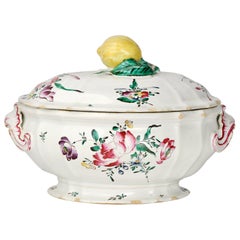
Maiolica tureen
Antonio Ferretti Manufacture
Lodi, circa 1770-1780
Maiolica polychrome decorated “a piccolo fuoco” (third fire).
It measures 9.05 x 12.59 x 9.05 in (23 x 32 x 23 cm)
...
Category
Antique 1770s Italian Rococo Ceramics
Materials
Maiolica
You May Also Like
Vintage Decorative Bowl, English, Glass, Fruit Dish, Centrepiece, Circa 1930
Located in Hele, Devon, GB
This is a vintage decorative bowl. An English, glass fruit dish, dating to the early 20th century, circa 1930.
Offers superb colour and tast...
Category
Early 20th Century British Decorative Bowls
Materials
Glass
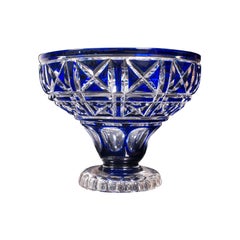
Elegant Cut Crystal Bowl Czechoslovakia, 20th Century
Located in Praha, CZ
This stunning cut crystal bowl is a fine example of exquisite craftsmanship from former Czechoslovakia. Featuring intricate hand-cut patterns and brilliant clarity, it combines timel...
Category
20th Century Czech Mid-Century Modern Decorative Bowls
Materials
Crystal

Art Deco Style French Cut Crystal Bowl
Located in Prato, Tuscany
Charming and elegant centerpiece bowl with base, crafted between 1949 and 1951 in an artisan workshop in the Nancy district of France — an area renowned for its high concentration of...
Category
Mid-20th Century French Art Deco Centerpieces
Materials
Crystal
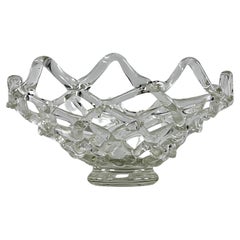
Art Deco, Large Murano Intreccio Glass Centerpiece by Barovier&Toso, Italy 1940
By Ercole Barovier, Barovier&Toso
Located in Catania, CT
Great vintage condition with normal trace of age and use for this murano intreccio glass centerpiece designed by Ercole Barovier and produced in Italy during the 40s
Category
Early 20th Century Italian Art Deco Decorative Bowls
Materials
Murano Glass
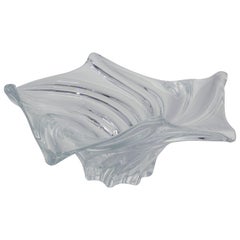
Vannes 1950s Crystal Bowl
By Art Vannes
Located in Buchanan, NY
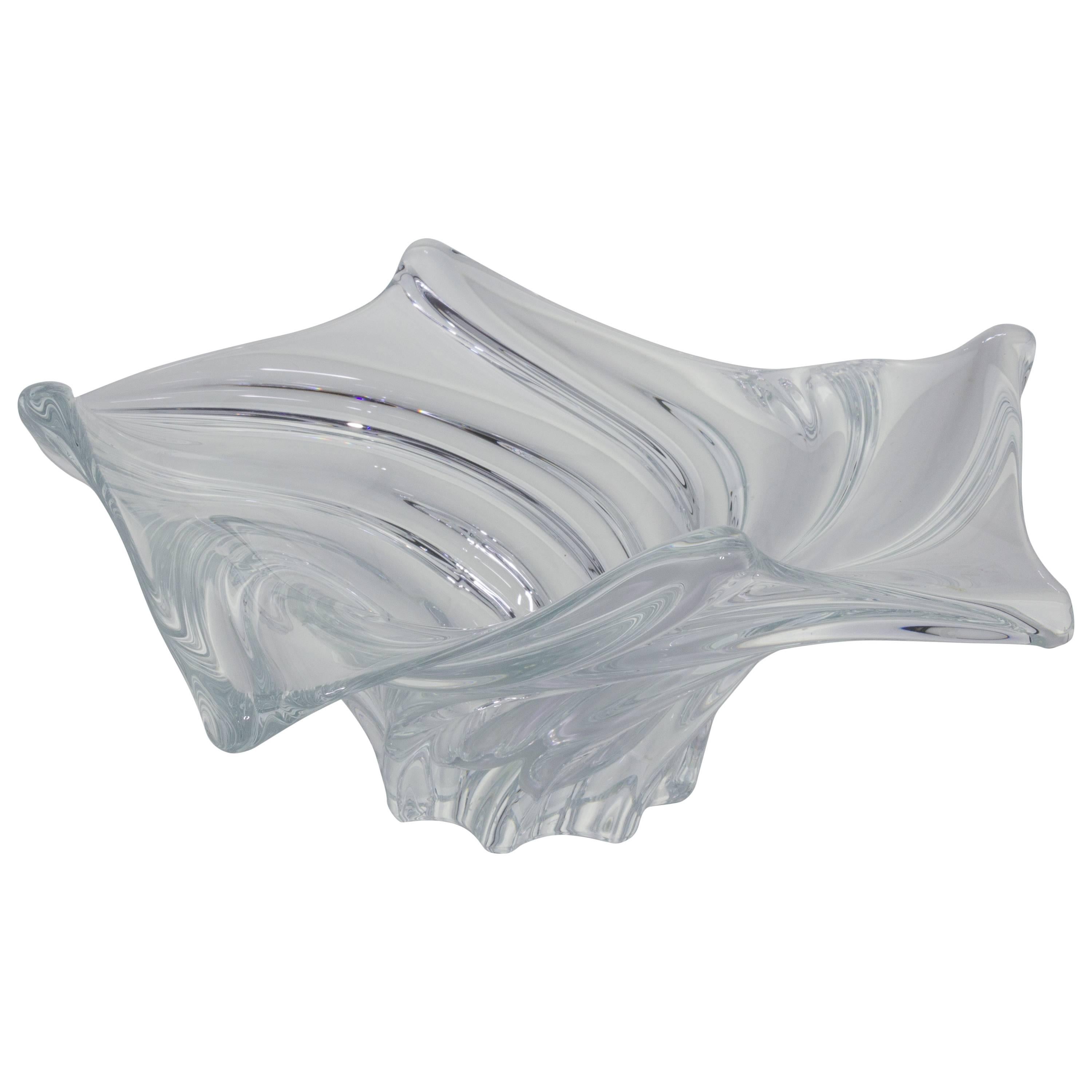
French Vannes 1950s crystal bowl in a swirled rib design with six ribbed points.
Category
Vintage 1950s French Mid-Century Modern Decorative Bowls
Materials
Art Glass
Art Deco Crystal Bowl by Pierre D
Avesn, Emerald Green, France, 1930s
By Pierre D
Avesn
Located in Brooklyn, NY
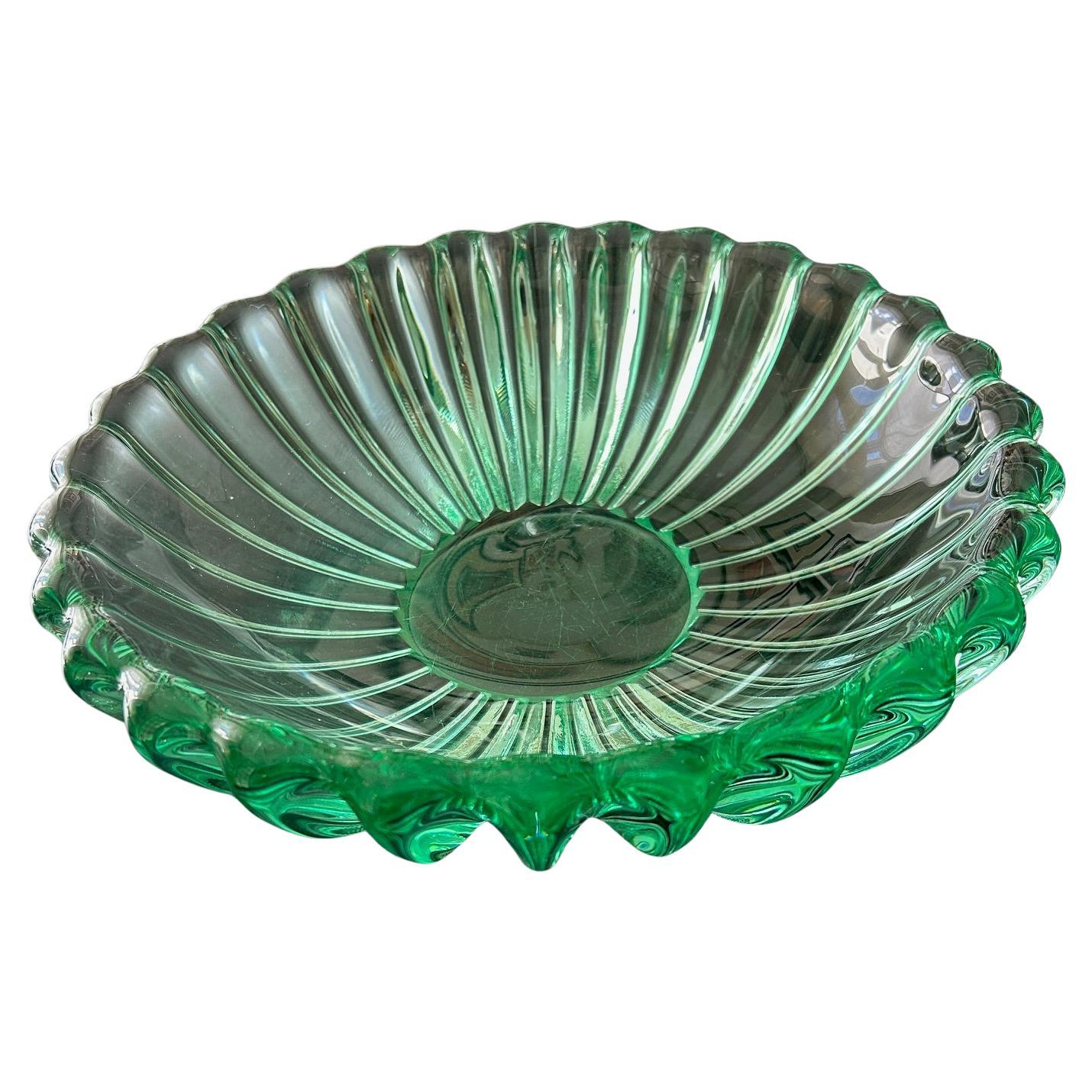
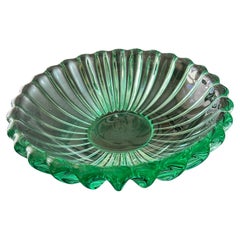
Large Art Deco bowl by Pierre d'Avesn - Emerald green.
A rare and sculptural piece of Art Deco design, this large pressed-molded glass bowl is distinguished by its emerald green hue...
Category
Mid-20th Century French Art Deco Decorative Bowls
Materials
Crystal
More Ways To Browse
Blue Vintage Italian Glass Bowl
Murano Blue Basket
Danish Studio Pottery
Catchall Dish
Large Decorative Plate
Brown Murano Bowls
Mid Century Enamel On Copper
Vintage Candy Dish
Shallow Bowl
Rorstrand Bowl
Antique English Basket
Green Hand Blown Glass Bowl
Swedish Midcentury Ceramic Bowl
Modern Fruit Bowl
Murano Art Glass Large Bowl
Antique Bronze Bowl
Large Ceramic Decorative Bowl
Brown Pottery Bowls