Items Similar to A Large
Longquan
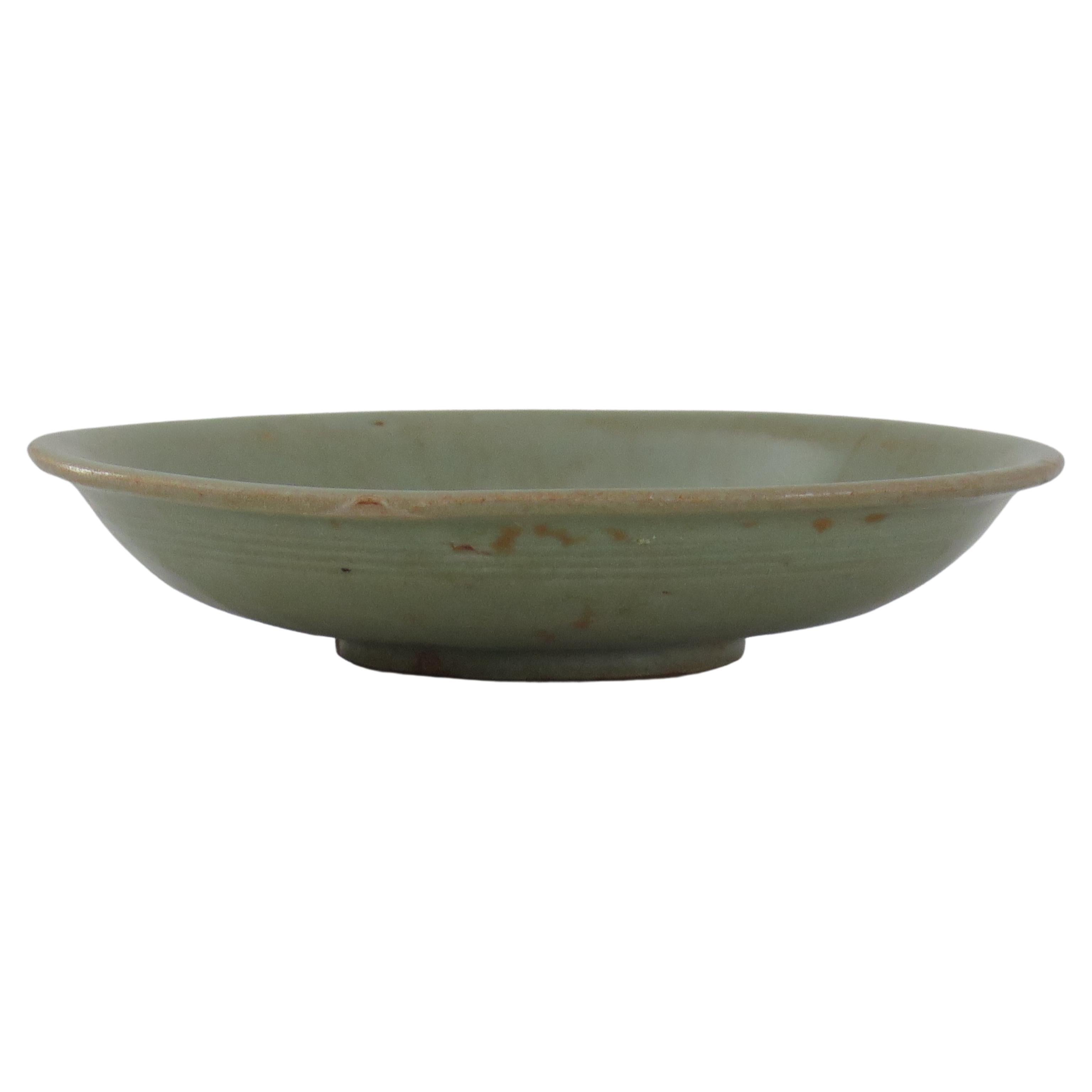
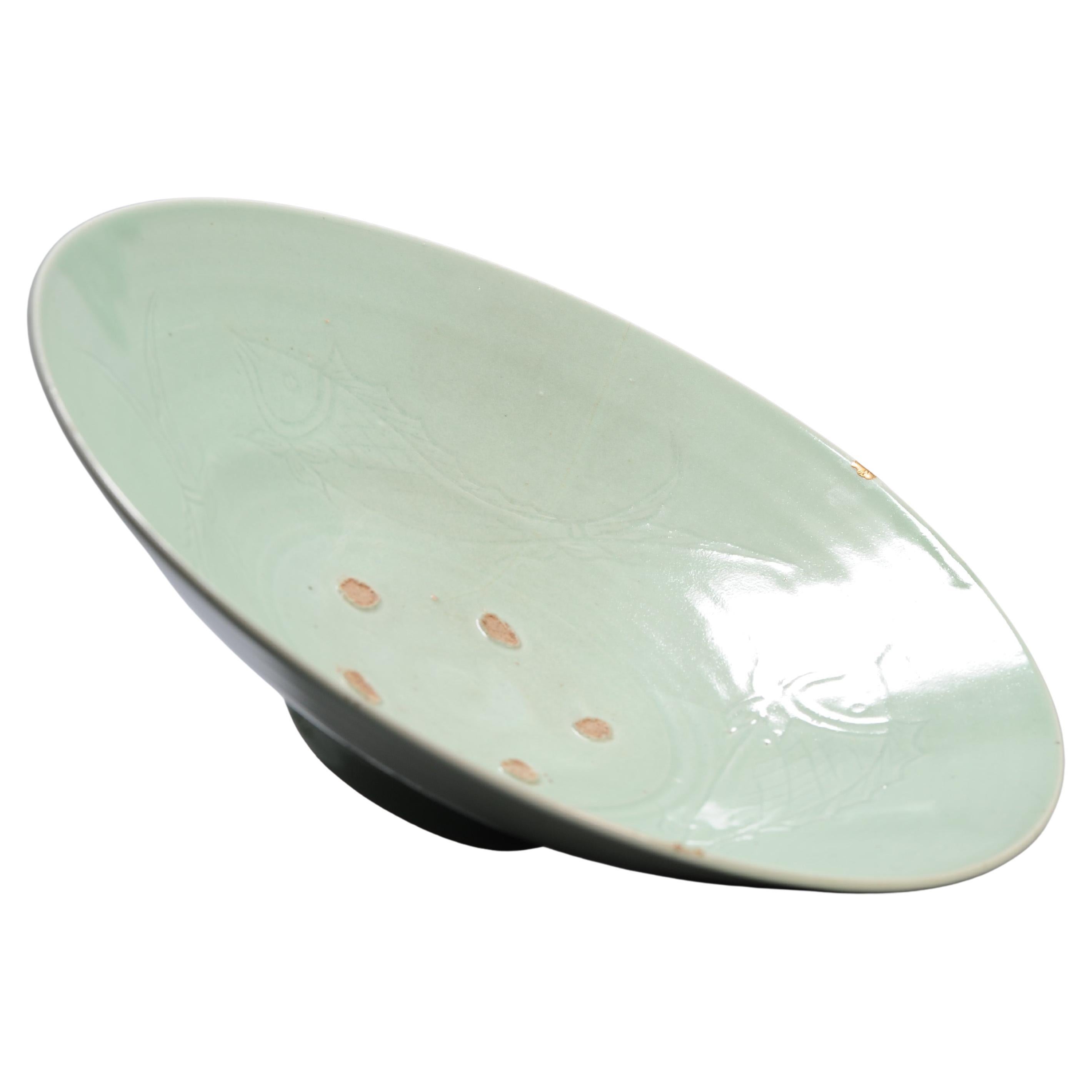
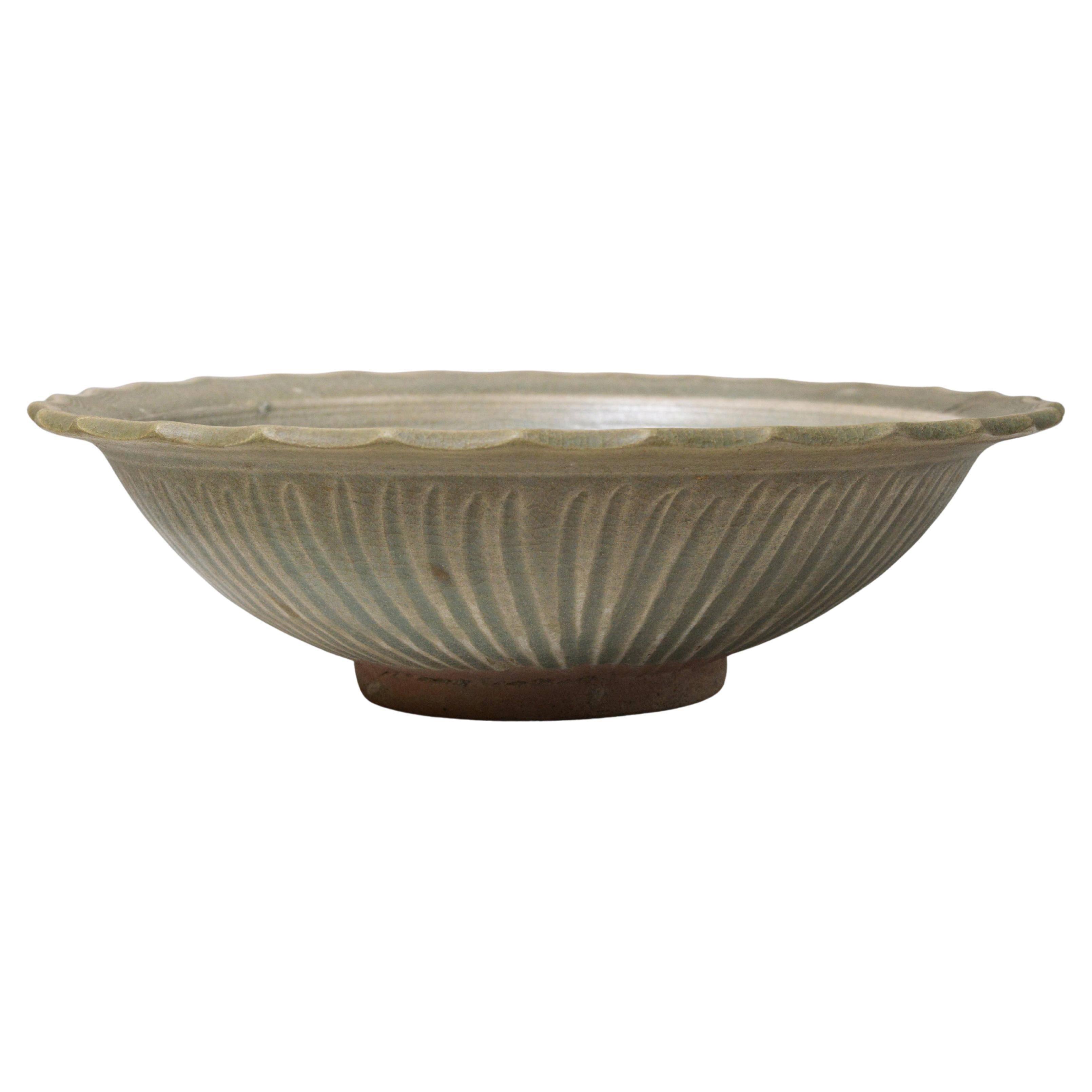
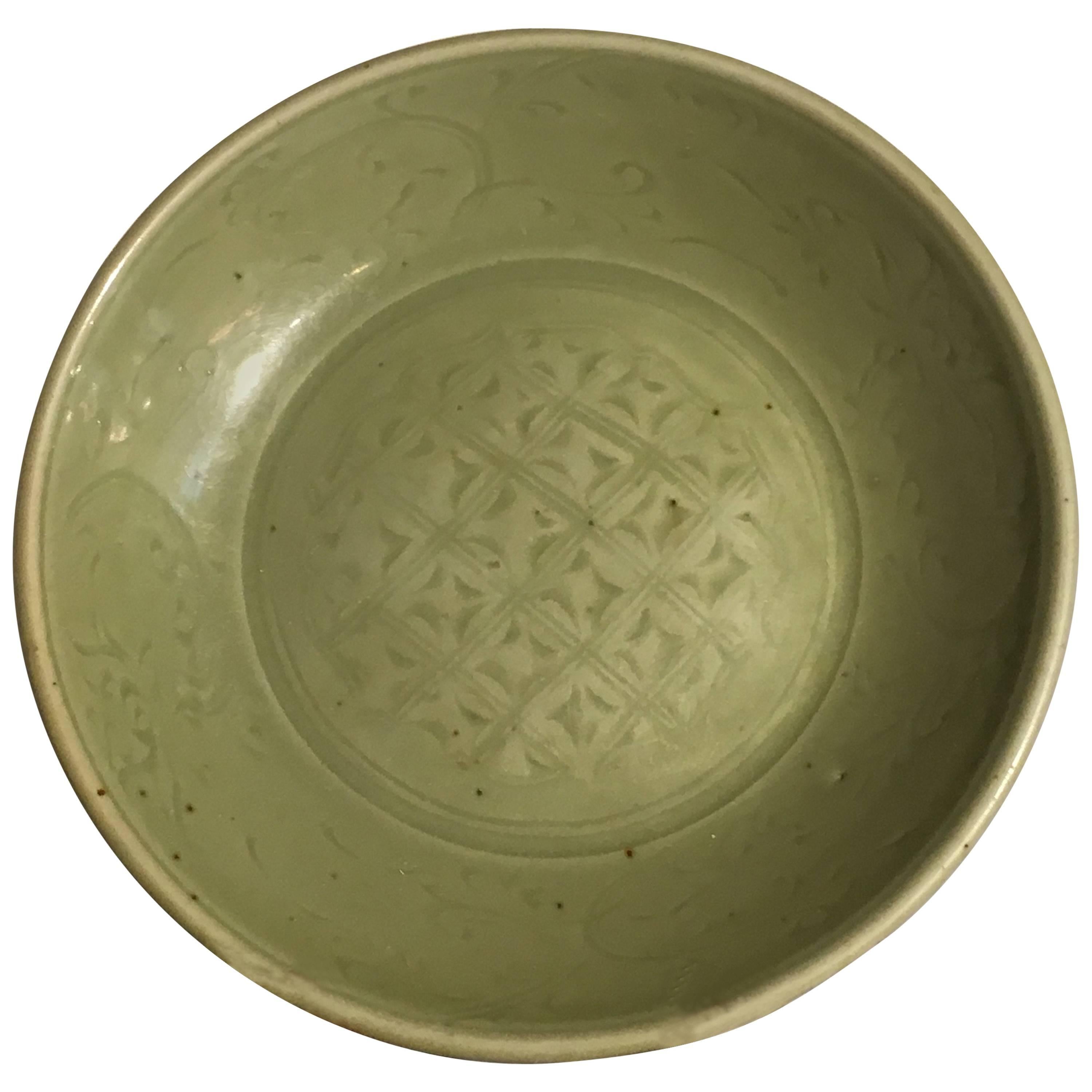
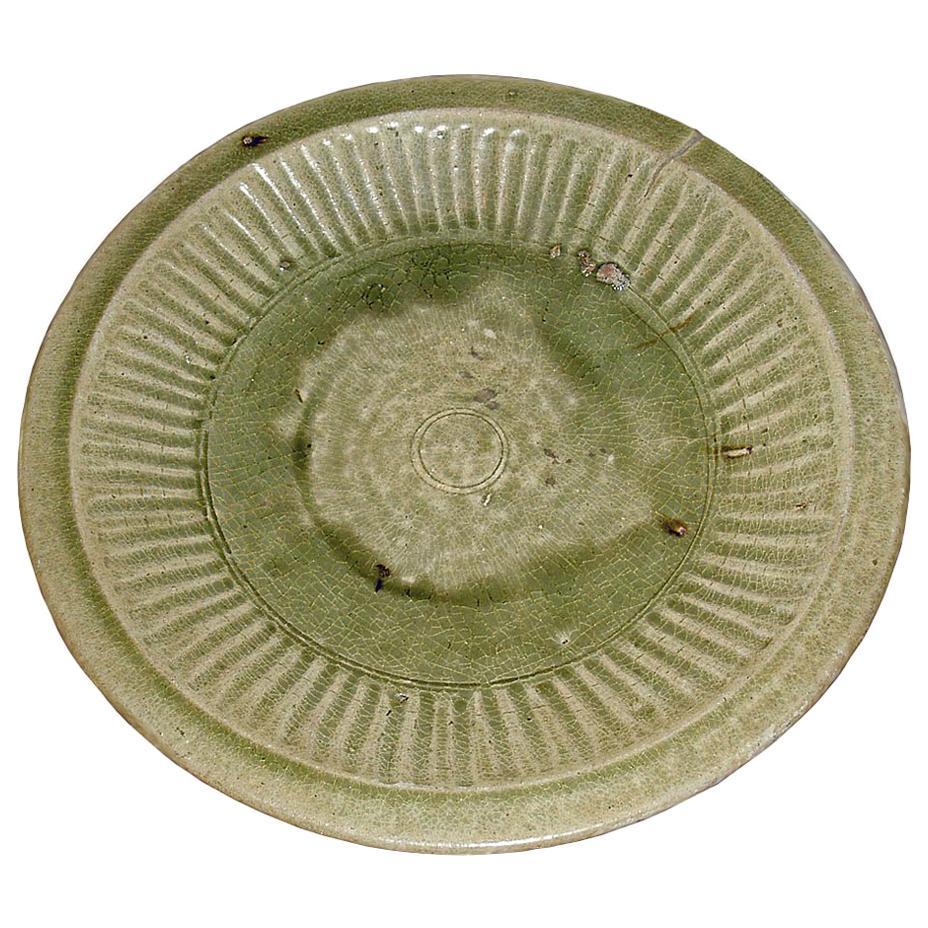
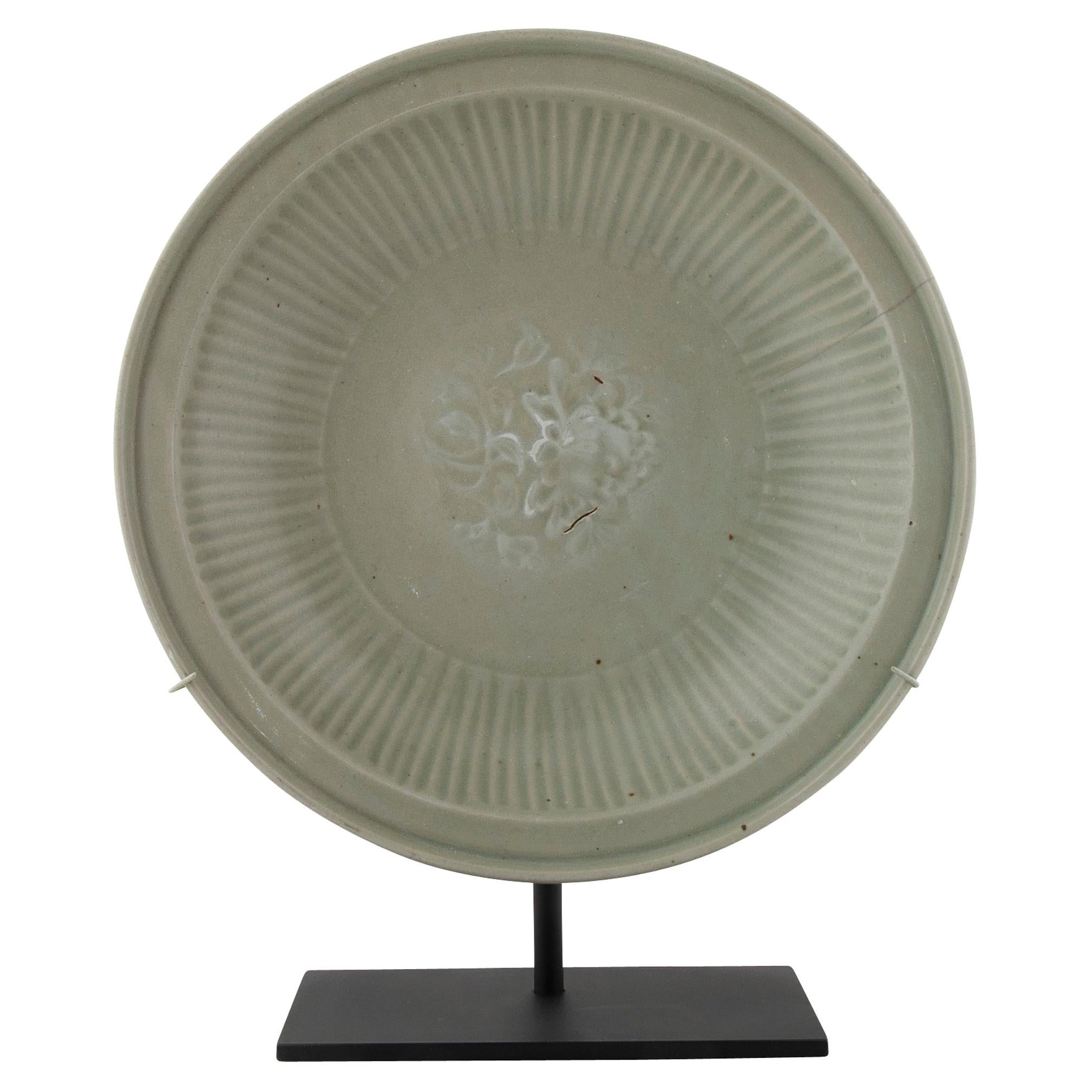
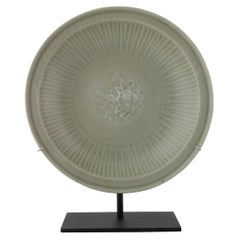
Celadon Dish, Ming Dynasty, 15th century
Want more images or videos?
Request additional images or videos from the seller
1 of 12
A Large
Longquan
Celadon Dish, Ming Dynasty, 15th century
$5,990
£4,477.68
€5,165.10
CA$8,386.01
A$8,861.20
CHF 4,765.60
MX$106,085.07
NOK 59,707.41
SEK 54,683.32
DKK 38,577.28
About the Item
The heavily potted dish is molded in the central roundel below the fluted cavetto and the everted rim with lipped edge, and is covered overall with a glaze of sea-green color, except for the unglazed ring on the base. The wood stand is not included with the item.
Period: Ming Dynasty (1368~1644)
Region: Longquan, China
Medium: Celadon
Type: Dish
Provenance : Acquired in late 1990s from Hongkong
Reference :
1) Christies NEW YORK 22–23 MAR 2018 - Fine Chinese Ceramics and Works of Art - Lot 722
2) Sotheby's Paris 11 December 2020 - Arts d'Asie - Lot 8
(Price realised : 4,032 EUR / Type : Closely related)
3) Christies LONDON 21–28 MAY 2020 - The Art of China - Lot 31
(Price realised : 5,250 GBP / Type : Closely related)
* Ming Dynasty Longquan Celadon
Longquan celadon from the Ming Dynasty typically exhibits a more robust and heavier stoneware body compared to its Song Dynasty predecessors. The Ming era saw an evolution in celadon glaze, achieving a wider spectrum of green hues, from olive to bluish-greens. Ming celadons often had thicker glaze applications, sometimes featuring multiple layers and even multiple firings to attain depth and richness in the glaze.
In contrast, Song Dynasty Longquan celadons are known for their more refined and thinner bodies, with a glaze palette that tends toward more subtle and more uniform green shades. The shapes of Song celadons were usually simpler, emphasizing the glaze's quality and texture.
During the Song period, there was also a greater emphasis on subtle and elegant forms, with less ornate decoration compared to the Ming pieces, which showcased more elaborate decorative motifs, including incised or moulded patterns. Song Dynasty Longquan wares were also highly prized for their thin walls and lightness, reflecting a high level of technical mastery in pottery-making.
Overall, while both dynasties produced celadons of exceptional quality, the Ming Longquan celadons are distinguished by their bolder forms and more varied glaze effects, while the Song Dynasty celadons are celebrated for their simplicity and the pure beauty of their glazes.
- Dimensions:Height: 2.88 in (7.3 cm)Diameter: 13.39 in (34 cm)
- Style:Ming (Of the Period)
- Materials and Techniques:Celadon,Glazed
- Place of Origin:
- Period:
- Date of Manufacture:15th century
- Condition:Minor fading. The wood stand is not included with the item.
- Seller Location:seoul, KR
- Reference Number:1stDibs: LU9577240436852
About the Seller
4.8
Vetted Professional Seller
Every seller passes strict standards for authenticity and reliability
Established in 1999
1stDibs seller since 2023
46 sales on 1stDibs
Typical response time: <1 hour
- ShippingRetrieving quote...Shipping from: seoul, Korea South
- Return Policy
More From This Seller
View AllA Longquan Celadon-Glazed
Dragon
Dish, Yuan Dynasty
Located in seoul, KR
The dish is decorated to the centre with a moulded appliqué dragon chasing the flaming pearl surrounded by a carved stylised foliage band at the cavetto. The moulded fluted exterior ...
Category
Antique 15th Century and Earlier Hong Kong Ming Antiquities
Materials
Celadon
Small Celadon Chrysanthemum Dish, Five Dynasties/Song Dynasty
Located in seoul, KR
Potted with the fluted sides rising from a recessed base, carved to the interior with Chrysanthemum, covered overall with a grayish-green glaze, save for a ring to the underside left unglazed to reveal the gray stoneware...
Category
Antique 15th Century and Earlier Hong Kong Ming Antiquities
Materials
Celadon

Celadon Bowl with Incised Lotus Patterns, Song Dynasty
Located in seoul, KR
Beneath the soft grayish-green glaze, incised lotus design emerges. The surface is adorned with flowing lines depicting lotus flowers and leaves, rendered in a refined carving techni...
Category
Antique 15th Century and Earlier East Asian Antiquities
Materials
Celadon
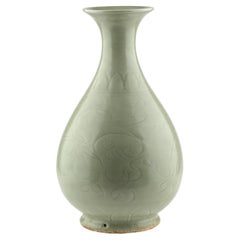
A Large Carved Longquan Celadon Yuhuchunping, Yuan-Ming Dynasty
Located in seoul, KR
The bulbous body is adorned with elegantly carved floral motifs, with intertwining vines and flowers forming a natural, flowing pattern. The base is left unglazed. The cracking on th...
Category
Antique 15th Century and Earlier East Asian Ming Antiquities
Materials
Celadon
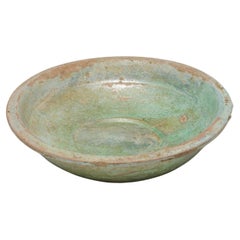
Green-Glazed Dish, Han Dynasty
Located in seoul, KR
This Han Dynasty green-glazed dish exhibits significant signs of wear, indicative of its age and the long passage of time it has witnessed. The glaze, once vibrant, now shows substan...
Category
Antique 15th Century and Earlier Hong Kong Han Antiquities
Materials
Earthenware
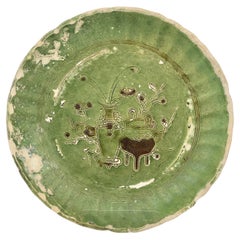
Green-Glazed Earthenware Dish Circa 1725, Qing Dynasty, Yongzheng Reign
Located in seoul, KR
It is the rare earthenware among those excavated from the Ca Mau Ship, and it is a green-glaze work that is especially unique. Although it is in very worn condition, it is a valuable...
Category
Antique 1720s Vietnamese Qing Antiquities
Materials
Earthenware
You May Also Like
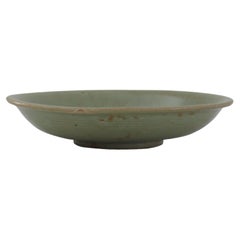
Chinese Stoneware Bowl or Dish Longquan Celadon Incised, Yuan Dynasty 1271-1368
Located in Lincoln, Lincolnshire
This is a very old interesting Chinese stoneware Longquan Celadon bowl or plate with incised decoration, which we date to the Yuan Dynasty, circa 1300.
The bowl is well potted on a low foot.
The bowl is an olive green colour having a celadon glaze with incised decoration to its centre of what looks like a flower stem and additionally three incised string lines to the outer wall. Unglazed parts fire to a terracotta brown colour as with the base section
The piece is unmarked but for similar pieces see the superb book: Chinese Ceramics by He Li published by Thames & Hudson, 1996; pages 164 to 184.
NOTES
Longquan is a city in South west China. These wares were produced over a long time period from 959 to 1550; which covers the Northern Song, Southern Song...
Category
Antique 15th Century and Earlier Chinese Other Ceramics
Materials
Stoneware
Rare Antique Edo period Japan Japanese Porcelain Celadon Plate Arita Dish
Located in Amsterdam, Noord Holland
Sharing with you this very nice edo period example with carved fish design.
Storage Box included
Unmarked at base
Arita ware, also known as Arita-yaki, has its origins in 1616, whe...
Category
Antique 17th Century Edo Decorative Dishes and Vide-Poche
Materials
Porcelain
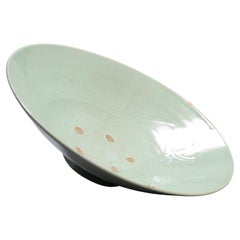
$2,128 Sale Price
56% Off
Rare Chinese Celadon Glaze Dish 14th Century Museum Quality Large Decorated
Located in Sweden, SE
In China, the term qingci "青瓷" (literally meaning blue-green porcelain) is used to designate ceramic objects of gray-green color, with the first character representing blue or blue-green color "青". Various epithets were used to describe this color: "heavenly azure" "天青" (tian qing), "dusty blue" "粉青" (fen qing), or "after the rain passes, the sky becomes blue" - yu guo tian qing "雨過天青", which idiomatically means the arrival of good times after troubles.
The characteristic gray-green color is obtained by adding iron oxide to the glaze. During the chemical reaction in reduction firing (i.e., without oxygen access) of the ceramics, the iron contained in the glaze acquires a blue, gray, or greenish hue. During the Song (宋), Yuan (元), and Ming (明) dynasties, the art of Chinese celadon ceramics...
Category
Antique 15th Century and Earlier Chinese Chinese Export Decorative Dishe...
Materials
Ceramic
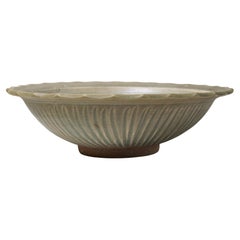
Ming Dynasty Longquan Celadon Dish with Geometric Design, 15th Century
Located in Austin, TX
A heavily potted and richly glazed celadon dish, Longquan kilns, early Ming Dynasty, mid 15th century, China.
The large dish glazed in a deep olive cela...
Category
Antique 15th Century and Earlier Chinese Ming Ceramics
Materials
Ceramic
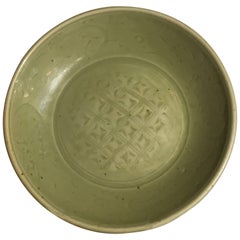
Thai Celadon Plate, 15th Century
Located in New York, NY
A rare celadon plate from the kilns of Sangkhalok, one of the main centers of Thai ceramics during the Sukhotai period (1230-1438)
Well preserved for i...
Category
Antique 15th Century and Earlier Thai Other Decorative Dishes and Vide-P...
Materials
Celadon
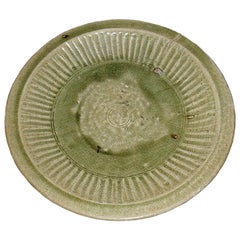
$1,370 Sale Price
30% Off
Large Chinese Celadon Shallow Bowl with Central Incised Peony Element
Located in Stamford, CT
Large Chinese celadon shallow bowl with central incised peony element, early 20th century.
Category
Antique 19th Century Chinese Archaistic Ceramics
Materials
Ceramic
More Ways To Browse
Antique 15th Century Furniture
Song Dynasty
Ring On Stand
Large Celadon
Ming Dynasty Bedroom Furniture
Celadon Dish
Ming Celadon
Ming Dynasty Dish
Ming Dynasty Celadons
Antique Dresden Dishes
Antique Egg Dishes
Art Nouveau Vanity Tray
Hot Air Balloon Basket
Iridescent Glass Dish
Jacques Adnet Catchall
Leather Valet Tray
Metal Leaf Dish
Miguel Pineda Enamel